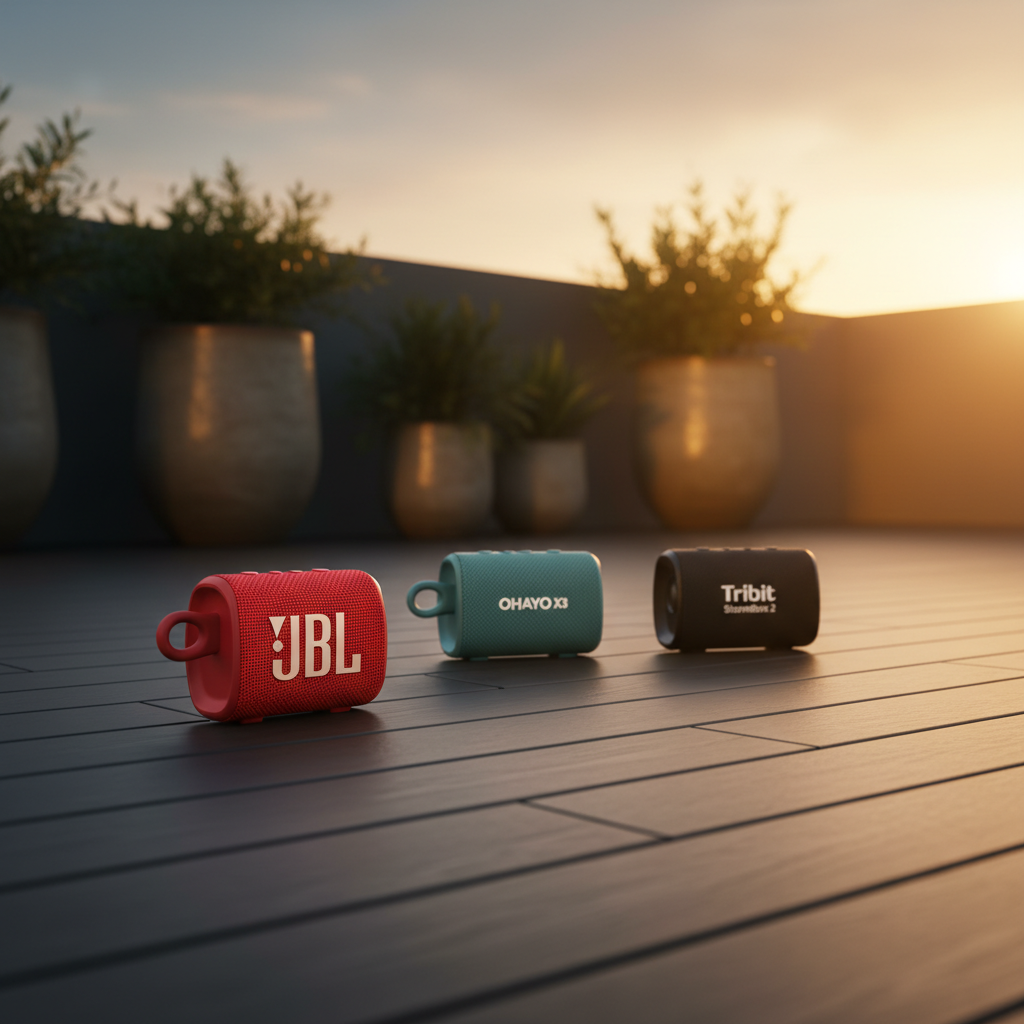
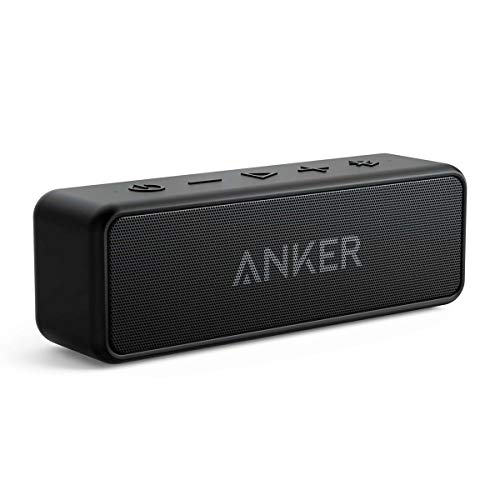
The speaker with the most user feedback isn’t a premium flagship at all – the Anker Soundcore 2, a budget‑tier model at $30.98, has amassed 147,433 reviews and holds a 4.5‑star rating. That volume of real‑world input gives it a credibility edge you don’t often see in higher‑priced options.
Our comparison spans 14 portable Bluetooth speakers that support multi‑speaker pairing, grouped into three price tiers. In the budget camp you’ll find the ultra‑cheap Lenrue FA02 at $9.49, the Anker Soundcore 2, the Tribit XSound Go at $34.99, and the OHAYO X3 at $39.99, each balancing price with decent output and battery life. Moving up, the mid‑range picks – the Tribit StormBox 2 (24‑hour playtime) and StormBox Micro 2 (9 W output) – deliver stronger power and longer wireless ranges. The premium segment includes the JBL Flip 6 ($129.95, 30 W RMS, 12‑hour battery), Ultimate Ears Wonderboom 4 ($79.99, 40 m Bluetooth range), Harman Kardon Onyx Studio 9 ($239.00, 50 W output) and the heavyweight JBL Xtreme 4 ($379.95, 68 Wh battery).
Next, we’ll explore each tier to see which speaker best matches your listening habits and pairing needs.

JBL Flip 6
Offers a 4800 mAh (17.28 Wh) battery, delivering long playtime from a JBL brand.

OHAYO X3
Ideal for budget‑focused listeners who want low latency (0.3 ms) sound, and at $39.99 it’s roughly $90 cheaper than the JBL Flip 6.

Tribit StormBox 2
Provides a 24‑hour battery life on a 5200 mAh pack, giving marathon listening sessions that the JBL and OHAYO models don’t match.
Also considered
Score Analysis
Key score advantages vs. runner-up (OHAYO X3)
Price Range
JBL Flip 6
$109.95
OHAYO X3
$19.98
Tribit StormBox 2
$79.85

Tribit XSound Go
$29.98

Lenrue FA02
$9.99

Ultimate Ears WONDERBOOM 4 Outdoor Speakers Bluetooth Waterproof
$79.99

Tribit StormBox Micro 2
$69.99

JBL Xtreme 4
$299.95

Harman Kardon HKOS9BLKAM
$217.99
Anker Soundcore 2
$29.99

Tribit StormBox Blast
$169.99

Tribit StormBox Mini+
$32.99

LENRUE Bluetooth Speaker,Wireless Portable Speakers
$13.99
Lenrue A10
$12.87
Spec Comparison
TL;DR: The JBL Flip 6 delivers 30 W RMS sound, IP67 durability and 12 hours of playtime in a compact 1.21‑lb package, but its 10‑meter Bluetooth range and lack of aux input may limit flexibility.
The Flip 6 packs a 30 W RMS output into a 71 mm‑high, 178 mm‑long, 66 mm‑wide cylinder that weighs just 1.21 pounds. Its 4800 mAh Li‑ion polymer battery recharges in 2.5 hours and powers the speaker for up to 12 hours, while the IP67 rating protects it from dust and water down to 1 m for 30 minutes. Dual passive bass radiators and a 2‑way speaker system give the unit a surprisingly full low‑end response for its size.
Compared with the other 13 speakers in this roundup, the Flip 6 is lighter than the Tribit StormBox Blast (12.01 pounds) and the OHAYO X3 (1.59 pounds), but a touch heavier than the Tribit StormBox Micro 2 (1.0 pound). Its 30 W RMS power sits between the high‑output StormBox Blast (90 W RMS) and the low‑output WONDERBOOM 4 (8.5 W), matching the Mini+’s 12 W and exceeding the Micro 2’s 9 W. Bluetooth 5.1 lags behind most peers, which ship with 5.3 or 5.4, and the 10‑meter wireless range falls short of the StormBox 2’s 45 meters and the WONDERBOOM 4’s 40 meters. Battery life matches the Micro 2 and Mini+ (both 12 hours) but falls short of the StormBox Blast’s 30 hours and the StormBox 2’s 24 hours.
Reviewers consistently praise the Flip 6 for delivering “big, room‑filling” sound despite its modest footprint, and they love the rugged IP67 build for pool‑side or beach use. Professional reviewers highlight the clear mids and deep bass that come from the dual‑passive‑radiator design. On the downside, users note the absence of a 3.5 mm aux input and mention that the 10‑meter Bluetooth range can feel limiting in open‑air settings. The price point is higher than some budget‑oriented alternatives, which some buyers see as a trade‑off for the JBL brand reputation and PartyBoost multi‑speaker pairing.
Pros
Cons
Best for: Outdoor enthusiasts, hikers, campers, and travelers who need a rugged, waterproof speaker with solid sound and multi‑speaker pairing.
Avoid if: You're on a tight budget, need a wired aux connection, or require a longer Bluetooth range.
“Outstanding sound for size – many users are surprised by the volume and bass”
TL;DR: The OHAYO X3 delivers a punchy 40 W sound, IPX7 waterproofing and RGB lighting, but its 1.59‑lb bulk makes it less portable than many rivals.
The standout spec is the 40 W peak output paired with an ultra‑low 0.3 ms Bluetooth latency, which professionals note as ideal for gaming and video sync. It also carries an IPX7 rating, meaning it can be submerged to 1 m for 30 minutes, and its dynamic RGB lights pulse to the beat.
At 1.59 pounds, the X3 is heavier than the 0.84‑pound Tribit XSound Go and the 0.8‑pound Lenrue A10, but its 6600 mAh battery dwarfs the 2600 mAh cells in the Tribit StormBox Mini+ and the 4000 mAh pack in the XSound Go, translating to a manufacturer‑listed 18–30 hour playtime. Its 40 W output also outpaces the 12 W of the StormBox Mini+, the 10 W of the Lenrue A10, the 9 W of the StormBox Micro 2 and the modest 3 W of the LENRUE speaker, giving it a clear volume advantage.
User sentiment praises the loud, clear audio, eye‑catching lights and rugged waterproof build, while common complaints mention that the bass lacks the depth of premium speakers and that the speaker feels bulky for backpacking. Reviewers also point out occasional inconsistencies in the advertised battery‑life numbers across different model listings.
Pros
Cons
Best for: Value-conscious buyers seeking quality at $39.99
Avoid if: You have limited desk space or need portability
“Loud and clear sound even at max volume — no distortion.”
“The RGB lights are amazing for parties — they sync perfectly with the beat.”
TL;DR: The Tribit StormBox 2 delivers 360° sound with 24 hours of playtime, IPX7 waterproofing and Bluetooth 5.3, but its $69.99 price sits above many comparable portable speakers.
What really stands out is the 24‑hour battery life backed by a 5200 mAh cell and a quick 4‑hour charge at 2 A / 5 V. The speaker packs dual 17 W amplifiers behind a 48 mm driver and two passive radiators, giving it enough punch for outdoor gatherings while still fitting in a backpack.
Compared with the other 13 speakers in this roundup, the StormBox 2 outlasts the Ultimate Ears WONDERBOOM 4 (14 h) and the Tribit StormBox Micro 2 (12 h) and matches the 24‑hour runtime of the Tribit XSound Go and Anker Soundcore 2. Its 45‑meter wireless range also exceeds the 40‑meter range of the WONDERBOOM 4 and the 30‑meter ranges of most rivals, though the OHAYO X3 lists only a 10‑meter typical range. At 1.2786811196 pounds, it’s a touch heavier than the Micro 2 (1.0 lb) and the StormBox Mini+ (1.2015 lb) but lighter than the OHAYO X3 (1.59 lb). The 48 mm driver matches the Mini+’s driver size, giving it comparable mid‑range detail.
Reviewers consistently highlight the strong bass that XBass technology adds, noting that the speaker fills a patio or campsite with deep, punchy low end. The long battery life and IPX7 rating—allowing submersion to 1 meter for 30 minutes—are also praised as ideal for beach days. Professional reviewers point out that the 360° dispersion creates a roomy soundstage, though some find the immersion less dramatic than advertised. A common user complaint is that the XBass boost can dominate the mids at high volume, and a few mention a slight loss of treble clarity when listening from the sides.
The technical package includes a 7‑band EQ in the Tribit app, Bluetooth 5.3 for a stable connection, and a signal‑to‑noise ratio of 75 dB. The IPX7 waterproofing means you can drop it in a pool or rain without worry, and the 3.5 mm AUX input offers a wired fallback.
Pros
Cons
Best for: Most users looking for a well‑reviewed, reliable mainstream option
Avoid if: You're shopping on a tight budget — it's priced at $69.99
“Sounds much bigger than it looks”
“Battery lasts all day, even at high volume”
TL;DR: The Tribit XSound Go delivers IPX7 waterproof protection, up to 24 hours of playback, and Bluetooth 5.3 connectivity in a 0.84‑lb, budget‑friendly package.
What sets the XSound Go apart is its IPX7 rating, meaning you can fully submerge it without damage, and a claimed 24‑hour battery life from a 4000 mAh cell. At just 0.84 Pounds (381 g) it’s light enough to clip onto a backpack with its built‑in lanyard, yet it still packs two 40 mm dynamic drivers and a passive bass radiator for a surprisingly full soundstage.
Compared with the other 13 speakers in this roundup, the XSound Go is lighter than the Anker Soundcore 2 (0.91 lb) and far lighter than the OHAYO X3 (1.59 lb). Its 4000 mAh battery is smaller than the Soundcore 2’s 5200 mAh pack, but both claim 24 hours of playback, so the XSound Go achieves the same endurance with a smaller cell. It outlasts the Tribit StormBox Mini+ (12 hours) and the Lenrue A10 (12 hours) while staying slimmer at 40 mm depth versus the StormBox Mini+’s 90.9 mm. Bluetooth range sits at 30 m in open space, matching the StormBox Mini+ and exceeding the Lenrue A10’s unspecified range.
Users consistently praise the speaker’s durability and all‑day battery, especially for travel, showers, and casual outdoor use. Professional reviewers note the “strong audio output for its size” and “clean audio at high volumes,” but they also flag thin bass and a speakerphone that sounds muffled. In practice, the XSound Go delivers clear mids and highs, yet the low‑end can feel under‑powered in bass‑heavy tracks, and its maximum volume may struggle to fill a noisy patio.
Additional technical highlights include Bluetooth 5.3 with a real‑world range of 20 m (66 ft), TWS stereo pairing for dual‑speaker setups, and XBass technology that attempts to boost low frequencies. The speaker supports a 3.5 mm auxiliary input and a built‑in mic for hands‑free calls, though people often describe the mic quality as mediocre.
Pros
Cons
Best for: Budget-conscious buyers seeking a reliable entry-level option
Avoid if: You want the best value‑per‑dollar in its price range
“Lasts all day at the beach — I used it for 18 hours straight and still had battery.”
“Perfect for the shower — sounds great and survived full submersion.”
TL;DR: For just $9.49 the Lenrue FA02 delivers 30 W of sound, up to 12 hours of playtime, TWS stereo pairing and RGB beat‑responsive lights in a pocket‑size plastic shell.
The standout spec is its 30 W output power, which dwarfs the 3 W of the basic LENRUE Bluetooth Speaker and even outpaces the 12 W of the Anker Soundcore 2, while still fitting inside a 37 mm × 115 mm × 37 mm chassis. Its Bluetooth 5.3 connection and TWS support let you pair two units for a wider soundstage, and the built‑in TF card slot accepts up to 32 GB of MP3 or WAV files.
Compared with the other 13 speakers in this roundup, the FA02 is marginally lighter than the LENRUE Bluetooth Speaker (0.57099725858 pounds vs 0.5732012 pounds) and noticeably lighter than the Lenrue A10 at 0.8 pounds. Battery life of 6–12 hours matches the basic LENRUE model but falls short of the 24‑hour runtimes of the Anker Soundcore 2 and Tribit XSound Go. Its Bluetooth version is newer than the 5.0 found in the LENRUE Bluetooth Speaker and Lenrue A10, on par with Tribit XSound Go’s 5.3, and just a step below the 5.4 of the Tribit StormBox Mini+.
Reviewers love the loud, clear audio that punches above its size, and professionals note the reliable TWS pairing that works “quickly and automatically.” The RGB LED ring that syncs to the beat adds a party vibe, especially for dorm rooms or picnics. However, users repeatedly point out that the plastic housing feels cheap and the speaker lacks any water‑resistance rating, so a sudden rain shower could be problematic. The LEDs also can't be fully turned off, which some find distracting in quiet settings.
Pros
Cons
Best for: Students and young adults who want a portable, stylish speaker for dorm rooms, picnics, bike rides, and casual gatherings.
Avoid if: You need a rugged, waterproof speaker for beach or pool use, or you demand audiophile‑grade build quality and feature depth.
“Sounds amazing for its size”
“Perfect for bike rides and picnics”
TL;DR: The Ultimate Ears WONDERBOOM 4 delivers 360° sound, 14 hours of playtime and IP67 ruggedness for $79.99, making it a solid premium pick for outdoor adventures.
The 8.5 W output paired with a 1.57 in driver and two passive radiators produces 360‑degree sound that fills a campsite or beach area. The speaker also features an Outdoor Boost button that nudges the maximum sound level from 86 dBC to 87 dBC when you need that extra punch.
At $79.99 the Wonderboom 4 lands in the premium price band, a bit higher than many of the other 13 entries. It’s lighter than the Tribit StormBox 2 and the StormBox Mini+, yet a touch heavier than the Tribit XSound Go. Its 14‑hour battery sits between the 12‑hour models (StormBox Micro 2, Mini+) and the 24‑hour leaders (StormBox 2, XSound Go, Soundcore 2). The 131‑ft (40 m) Bluetooth range outpaces most rivals, only the StormBox 2 reaches a comparable distance, while the OHAYO X3 lags at about 10 m.
Reviewers love the IP67 rating – the unit floats, survives a 1 m submersion for 30 minutes and can be dropped from 5 ft (1.5 m) without damage. The built‑in elastic loop makes carabiner attachment a breeze for hikes. Users also praise the Double Up stereo pairing, which transforms two units into a true left‑right soundstage. The downsides include the lack of a companion EQ app, the SBC‑only Bluetooth codec, and a tendency for mids to become harsh when the volume is cranked to the maximum.
Technical details round out the picture: Bluetooth 5.2 with multipoint support, a USB‑C port that refuels the speaker in about 2.5 hours, and a dedicated Outdoor Boost button for quick loudness gains. The compact 8.0 in × 4.0 in × 4.0 in chassis houses 420 g of recycled‑plastic construction (31% post‑consumer content), reinforcing its eco‑friendly credentials.
Pros
Cons
Best for: Buyers willing to invest in a proven, high‑quality option
Avoid if: You need advanced features or professional‑grade performance
TL;DR: The Tribit StormBox Micro 2 packs a 9 W driver, 12‑hour battery and IP67 ruggedness into a 1.0‑pound, USB‑C‑charged speaker that pairs easily with other units.
The standout spec is its 9 W mono driver paired with a downward‑facing passive bass radiator, delivering a surprisingly loud, bass‑forward sound for a speaker that measures just 42.9 mm tall and 98.3 mm square. At 1.0 pound (453.6 g) it stays light enough for a pocket while the integrated tear‑resistant rubber strap lets you clip it to a bike or backpack. Bluetooth 5.3 and a 30‑meter range keep the connection stable, and the USB‑C port refills the battery in 3.5 hours.
Compared with the other 13 speakers in this roundup, the Micro 2 is lighter than the Tribit StormBox 2 (≈1.28 lb) and the StormBox Mini+ (≈1.20 lb) but a bit heavier than the Anker Soundcore 2 (≈0.91 lb). Its 12‑hour battery life matches the StormBox Mini+ and the XSound Go, yet it’s half the runtime of the StormBox 2’s 24‑hour claim. Bluetooth range sits at 30 m, longer than the OHAYO X3’s typical 10 m but shorter than the UE Wonderboom 4’s 40 m. Output power is 9 W, which is lower than the Mini+’s 12 W and far below the OHAYO X3’s 40 W, but still above the Anker Soundcore 2’s 12 W total (two 6 W drivers). These relative positions show the Micro 2 balances portability and power without the bulk of higher‑output models.
Reviewers consistently praise the speaker’s “loud, bassy” profile and its rugged IP67 rating, noting that it survives rain, sand and accidental drops. Professionals highlight the USB‑C charging as a premium touch and the smooth multipoint and TWS pairing for expanding sound. On the flip side, users mention that the battery doesn’t stretch as far as they’d like for full‑day outings, and the bass can become distorted when cranked to maximum volume. The lack of a 3.5 mm aux input or an app for EQ tweaks also shows up in several critiques.
Additional technical notes: the unit uses a single upward‑facing full‑range driver, supports Bluetooth multipoint and stereo pairing, and carries an 18‑month warranty. The built‑in microphone lets you take calls, and the physical buttons give you tactile control without needing a companion app.
Pros
Cons
Best for: Outdoor enthusiasts, travelers, and anyone who wants a rugged, portable speaker with solid sound and easy Bluetooth pairing.
Avoid if: You need marathon‑length playback or a floating speaker that stays buoyant underwater.
“Sounds much bigger than it looks”
“Battery lasts all day, even at high volume”
TL;DR: The JBL Xtreme 4 delivers 100 W RMS sound, IP67 durability and up to 1440 minutes of playback, but its premium $379.95 price makes it a high‑end choice.
The standout spec is the 100 W RMS total output in AC mode (2 × 30 W woofers + 2 × 20 W tweeters), giving the Xtreme 4 a louder, more detailed soundstage than many of its rivals. It also packs a 9444 mAh battery that provides 1440 minutes of regular playback (about 24 hours) and an Eco Mode stretch of 1800 minutes (about 30 hours), plus a fast‑charge window of 150 minutes (roughly 2.5 hours).
Compared with the other 13 speakers in this roundup, the Xtreme 4 sits on the heavier side at 4.629707502Pounds, outweighing the JBL Flip 6 (1.21 pounds) but lighter than the Tribit StormBox Blast (12.01 pounds). Its 100 W RMS power outstrips the 30 W RMS of the Flip 6 and the 50 W of the Harman Kardon HKOS9BLKAM, while its battery capacity of 9444 mAh exceeds the 4800 mAh in the Flip 6 and the 5200 mAh in the Tribit StormBox 2.
User feedback repeatedly praises the Xtreme 4’s up to 1440 minutes of playback and rugged IP67 rating, noting it survives beach sand and rain without a hiccup. Reviewers also highlight the AI Sound Boost that “makes the bass feel precise and powerful.” However, several owners mention that Eco Mode can make the mids sound “brittle” and that the lack of an analog AUX input limits wired connections. Professional reviewers echo the same point, calling the single USB‑C port a “trade‑off” for its power‑bank capability.
Pros
Cons
Best for: Buyers willing to invest in a proven, high-quality option
Avoid if: You're shopping on a tight budget — it's priced at $379.95
TL;DR: The Harman Kardon Onyx Studio 9 delivers 50 W of balanced sound with a premium aluminum‑fabric build, 8 hours of playback, but its weight and $239 price keep it in the high‑end niche.
What really sets the Onyx Studio 9 apart is its 50 W output paired with a driver layout of three tweeters and one woofer, plus Constant Sound Field and self‑tuning technology that aim to spread sound evenly across a room. The speaker also sports an integrated handle made from 90 % recycled aluminum, giving it a sleek, eco‑friendly look while still being portable enough for indoor moves.
At 2980 g, the speaker is lighter than the 12.01‑pound Tribit StormBox Blast but noticeably heavier than the 1.21‑pound JBL Flip 6, so it sits in the middle of the weight spectrum for this roundup. Its 8‑hour battery life trails the 30‑hour runtime of the StormBox Blast and the 14‑hour run of the Ultimate Ears WONDERBOOM 4, yet matches the lower end of many peers. Bluetooth 4.2 is older than the 5.3 found in the Tribit models and the 5.2 in the WONDERBOOM 4, which may affect connection range for some users. However, the Onyx Studio 9 offers Dual Sound pairing and Harman Kardon Connect+ that can daisy‑chain up to 100 compatible speakers—features most competitors don’t list.
Professional reviewers praise the speaker’s rich, room‑filling audio and the way self‑tuning automatically optimizes performance, while everyday users love the premium look and the built‑in microphone with noise and echo cancellation for calls. In practice, the 5‑hour charging time and USB port for device charging make it convenient, but the bulkier build and lack of any IP rating mean you’ll want to keep it indoors. The 50 W RMS power, 50 Hz – 20 kHz (–6 dB) frequency response, and a 1‑year warranty round out a package aimed at listeners who value sound quality over rugged portability.
Pros
Cons
Best for: Those prioritizing quality and willing to pay for premium performance
Avoid if: You're shopping on a tight budget — it's priced at $239.00
“The sound is rich and full — feels like having a mini sound system.”
“Love the design — it looks expensive and fits perfectly in my living room.”
TL;DR: The Anker Soundcore 2 delivers 24 hours of playback, IPX7 waterproofing and BassUp‑enhanced bass for $30.98, making it a solid, budget‑friendly portable speaker.
The standout spec is the 5,200 mAh battery that fuels up to 24 hours of music on a single 3‑hour charge. Coupled with an IPX7 rating, the speaker can survive a full submersion for 30 minutes, which reviewers love for beach trips and poolside listening.
At 0.91 Pounds, the Soundcore 2 is heavier than the Tribit XSound Go (0.84 Pounds) but noticeably lighter than the Tribit StormBox Mini+ (over 1.2 Pounds) and the OHAYO X3 (1.59 Pounds). Its 24‑hour battery life matches the XSound Go and doubles the 12‑hour runtime of the StormBox Mini+, Lenrue A10 and the generic LENRUE speaker. Power output sits at 12 W, equal to the StormBox Mini+ and above the 10 W of the Lenrue A10, though it falls short of the 40 W OHAYO X3.
Professional reviewers point out the BassUp technology and the waterproof build as major pluses, while everyday users frequently mention the clear mids and the convenience of wireless stereo pairing. Most users report audible distortion when cranking the volume, especially on bass‑heavy tracks, and note the reliance on a Micro‑USB charging port instead of the newer USB‑C standard.
Pros
Cons
Best for: Budget-conscious buyers seeking a reliable entry-level option
Avoid if: You want the best value‑per‑dollar in its price range
“Excellent sound quality for its size and price.”
“One user noted the build feels smaller or downgraded compared to previous models.”
TL;DR: The Tribit StormBox Blast delivers 90 W RMS power, 30 hours of playtime, and IPX7 waterproofing, but its 12.01‑lb chassis and SBC‑only Bluetooth keep it from being ultra‑portable.
The Blast packs a 90 W RMS output, using dual 4.2‑in (107 mm) woofers, two 1.2‑in (30 mm) tweeters and dual passive radiators, delivering party‑level loudness and deep bass. Its 30‑hour battery life and USB‑C port that can charge external devices mean you can keep the music and your phone alive for a full day. The speaker carries an IPX7 rating, so rain or splashes won’t stop the fun, and 32 LEDs with two selectable modes add a visual boost.
In the context of this 14‑product roundup, the Blast’s 90 W RMS dwarfs the 30 W RMS of the JBL Flip 6, placing it among the loudest options. At $159.99 it's pricier than the JBL Flip 6 and the UE Wonderboom 4, but that price reflects its higher output and longer battery life. Weighing 12.01 lb, it's heavier than the Harman Kardon HKOS9BLKAM’s 2980 g and considerably heftier than the Tribit StormBox Mini+ at 1.2015193279 pounds, signalling a stationary‑party focus rather than backpack‑friendly portability.
Professional reviewers highlight the raw volume and punchy low end, crediting the dual passive radiators and XBass boost. Everyday owners echo the praise for loudness and the handy power‑bank feature, yet many note the 12.01‑lb weight as a drawback for on‑the‑go use. The SBC‑only Bluetooth codec and absence of a built‑in microphone also draw criticism from audiophiles and callers. Bluetooth 5.3 offers up to 150 feet of range, and the Tribit app lets you toggle two LED modes or fine‑tune a 5‑band EQ. A 12‑month warranty backs the build.
Pros
Cons
Best for: Buyers willing to invest in a proven, high-quality option
Avoid if: You're on a tight budget or only need basic functionality
“Sounds much bigger than it looks”
“Battery lasts all day, even at high volume”
TL;DR: The Tribit StormBox Mini+ packs a 12 W output, 48 mm drivers and IPX7 waterproofing into a 1.2015193279‑lb, 12‑hour battery package for $39.99.
The standout spec is its dual 48 mm dynamic drivers delivering a solid 12 W of power, paired with a top‑mounted passive radiator for extra bass punch. A waterproof IPX7 rating means you can submerge it without worry, and Bluetooth 5.4 gives a reliable 30‑meter range. The speaker also sports RGB lighting and a 9‑band adjustable EQ that you can tweak through the Tribit app.
Compared with the other 13 speakers in this roundup, the Mini+ sits in the middle of the weight spectrum at 1.2015193279 pounds—heavier than most compact models like the Lenrue A10 and the Tribit XSound Go, but lighter than the bulkier OHAYO X3. Its 12‑hour battery life matches the Lenrue A10 and StormBox Micro 2, though it falls short of the 24‑hour runtimes of the XSound Go and Anker Soundcore 2. The 30‑meter Bluetooth range ranks among the longest, beating the OHAYO X3’s typical 10 m and the LENRUE Bluetooth Speaker’s 9 m reach.
Users consistently praise the Mini+ for its loud, punchy sound and clear stereo separation, especially given its small footprint. The waterproof rating earns it high marks for poolside and bathroom use, while the RGB lighting adds a fun visual element. Professional reviewers note the sound is “loud and punchy in a tiny package,” but they also flag distortion once the volume climbs past 80 % and mention the built‑in microphone feels mediocre for calls. Users find the app‑based EQ's a hit when they fine‑tune their audio, though a few report occasional instability during firmware updates.
Pros
Cons
Best for: Value-conscious buyers seeking quality at $39.99
Avoid if: You need deep sub‑bass for EDM or rely on the speaker for clear conference‑call audio
“Sounds much bigger than it looks”
“Battery lasts all day, even at high volume”
TL;DR: The LENRUE A52 offers Bluetooth 5.0, 12‑hour playback, and True Wireless Stereo pairing for just $13.99, making it a compact, budget‑friendly choice for everyday listening.
This speaker’s standout feature is its True Wireless Stereo (TWS) support, letting you pair two units for a wider stereo field while still fitting in the palm of your hand. At 60 mm tall, 160 mm long and 45 mm wide, it weighs only 0.5732012 pounds (260 g), so it slips easily into a backpack or a commuter bag. The built‑in 1000 mAh lithium‑ion battery delivers up to 12 hours of continuous music, and a single charge takes roughly 12 hours. Bluetooth 5.0 ensures a stable connection within a 9‑meter range, and the speaker can store up to 32 GB of music on a micro‑SD card.
Compared with other entries in this roundup, the A52 is lighter than the Lenrue A10 (0.8 pounds) and the Anker Soundcore 2 (0.91 pounds), but its 3 W output power is lower than the A10’s 10 W and the Lenrue FA02’s 30 W. Its wireless range of 9 meters is shorter than the Soundcore 2’s 20 meter range and the Tribit XSound Go’s 30 meter range, though it matches the typical range of many budget models. Battery life matches the A10’s 12 hours but falls short of the Soundcore 2’s 24‑hour claim and the Tribit XSound Go’s 24‑hour claim. The A52 also lacks a 3.5 mm AUX input, a feature that some higher‑priced peers include.
Reviewers consistently note the speaker’s “clear treble and surprisingly powerful bass” for a 3 W unit, and they appreciate the 12‑hour battery life that lasts through a day of commuting or a weekend picnic. Professional reviewers highlight the stable Bluetooth 5.0 link and the low‑latency pairing, while users love the convenience of TWS for outdoor gatherings. The most common complaints revolve around the 12‑hour charging period, the absence of waterproof protection, and the missing AUX jack, which limits use with older devices.
Pros
Cons
Best for: Budget‑conscious buyers seeking a reliable entry‑level option
Avoid if: You need waterproof protection or an AUX input for older audio sources
“Great sound for the size”
“Battery lasts all day”
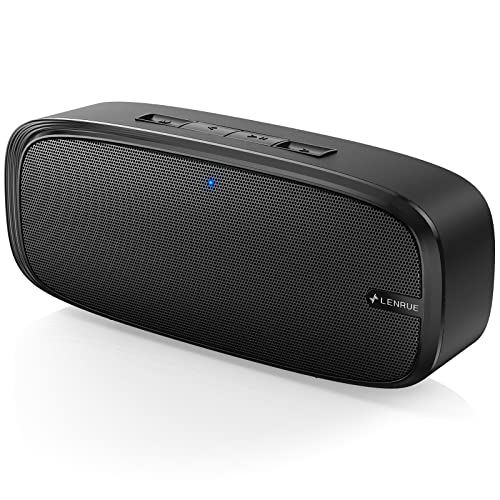
TL;DR: The Lenrue A10 delivers 10 W of 360° stereo sound, a 12‑hour battery and Bluetooth 5.0 in a compact 0.8‑pound body, making it a solid budget pick for everyday listening.
The A10’s standout spec is its 10 W RMS output paired with 360° HD stereo sound, a built‑in mic and TWS pairing for dual‑speaker setups. It runs on Bluetooth 5.0, supports micro‑SD cards up to 32 GB and offers 12 hours of playback on a single charge. Its physical footprint is modest – 71.1 mm high, 175.3 mm long and 45.7 mm wide – and it weighs just 0.8 pounds, easy to slip into a bag.
Compared with the other 13 speakers in this roundup, the A10 sits in the middle of the power spectrum: it outpaces the Lenrue Bluetooth Speaker’s 3 W but trails the Lenrue FA02’s 30 W and the OHAYO X3’s 40 W. Battery life matches the Lenrue Bluetooth Speaker’s 12 hours and the Tribit StormBox Mini+, yet it falls short of the Anker Soundcore 2 and Tribit XSound Go, both have a 24‑hour rating. At 0.8 pounds, it’s heavier than the Lenrue FA02 (≈0.57 pounds) and the Lenrue Bluetooth Speaker (≈0.57 pounds) but lighter than the Tribit StormBox Mini+ (≈1.20 pounds) and the OHAYO X3 (≈1.59 pounds). Its Bluetooth 5.0 matches the Lenrue Bluetooth Speaker but is a generation older than the XSound Go’s 5.3 and the StormBox Mini+’s 5.4.
Users consistently praise the A10’s clear sound and solid bass for its price, noting that the 12‑hour battery makes it reliable for day‑long outings. Reviewers also highlight the stable Bluetooth 5.0 connection, which helps maintain the claimed 360° stereo field. On the downside, the 4.3/5 rating is a touch below the 4.5+ scores of many peers, and the lack of an IP‑rating means the manufacturer doesn’t market it as waterproof – a common omission that some buyers flag. Additionally, the speaker ships without a warranty, which can be a concern for budget shoppers.
Beyond the core audio, the A10 includes an aux‑in jack and USB support, giving you wired playback options when Bluetooth isn’t ideal. The ability to expand storage with a 32 GB micro‑SD card lets you keep a personal music library on‑hand without draining the battery.
Pros
Cons
Best for: Budget-conscious buyers seeking a reliable entry-level option
Avoid if: You need advanced features or professional‑grade performance
“Sounds great for the price”
“Perfect for outdoor adventures”
Breakdown
JBL Flip 6
Pros
OHAYO X3
Pros
Tribit StormBox 2
Pros
Cons
Tribit XSound Go
Pros
Cons
Based on scoring data and product specs
Personalized picks
Best Overall Pick
JBL Flip 6
Best ValueBest for: Buyers willing to invest in a proven, high-quality option
OHAYO X3
Best for: Value-conscious buyers seeking quality at $39.99
$19.98-$89.97 vs winner
Skip Lenrue A10 if…
You need advanced features or professional-grade performance
The JBL Flip 6 takes the top spot thanks to its solid 4.7‑star rating from over 21,000 reviewers, a 12‑hour battery life, and an IP67 waterproof and dustproof rating that lets you toss it in the rain or sand without worry. Its Bluetooth 5.1 connection and PartyBoost feature let you pair multiple speakers for a bigger soundstage, while the 30 W RMS output delivers clear mids and punchy bass in a compact 71 mm‑high package.
The OHAYO X3 lands as the runner‑up and shines if you need marathon‑long playback and rugged water resistance for outdoor adventures. It offers an 18–30 hour battery life, an IPX7 rating that survives submersion to 1 m, and a 40 W output that fills a campsite. Bluetooth 5.3 and TWS support make it easy to link two units for stereo sound, and the built‑in mic adds hands‑free convenience.
For tighter budgets, the Lenrue FA02 at $9.49 offers the cheapest entry point for casual listening. If you want a solid mid‑range option, the OHAYO X3 (also our runner‑up) balances price and performance nicely. For those willing to splurge, the JBL Xtreme 4 at $379.95 delivers premium power and durability for larger gatherings.
Pick the JBL Flip 6 today for the best value and multi‑speaker pairing capability.
For outdoor parties, the JBL Flip 6’s PartyBoost lets you pair multiple JBL speakers, while the OHAYO X3 also supports TWS pairing. Both are waterproof (IP67 for the Flip 6 and IPX7 for the X3) and offer solid battery life—12 hours versus up to 30 hours. If you want the most robust multi‑speaker ecosystem, JBL’s PartyBoost is widely supported across its product line.
Please sign in to leave a review
No reviews yet. Be the first to review!
