⚡ Quick Answer
It might surprise you that the budget‑friendly Deeyaple Portable Bluetooth Speaker, priced at $19.99, carries a solid 4.7/5 rating from nearly 5,000 reviewers. That score sits shoulder‑to‑shoulder with the $99.99 Soundcore Boom 2’s 4.7 rating and even the $109.95 JBL Flip 6’s 4.7 rating, proving a low price doesn’t automatically mean a compromise in user satisfaction.
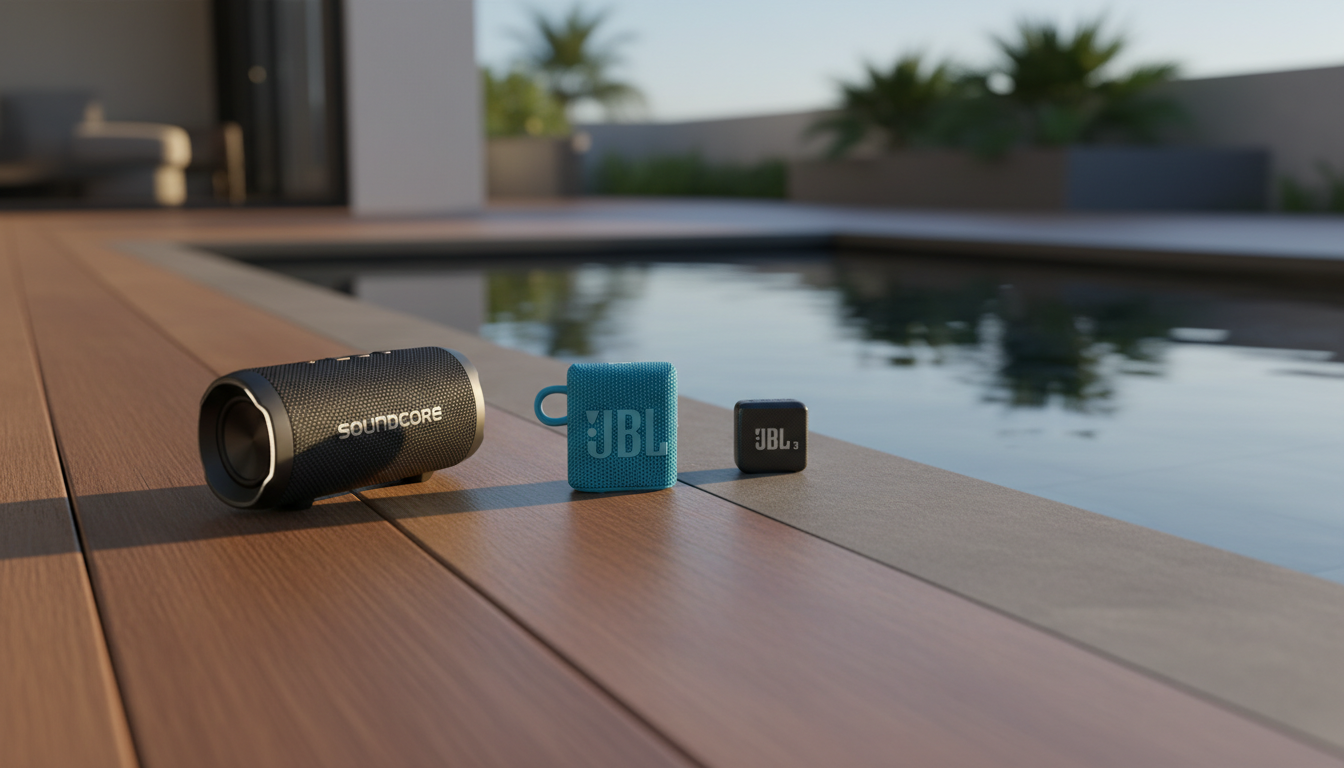
A total of 12 waterproof speakers span three price tiers. The budget tier includes Deeyaple, Soundcore Select 4 Go, Cambridge SoundWorks OontZ Angle 3 White, and Anker Soundcore 2, all under $40. Mid‑range options are the JBL Go 3 at $39.99 and Cambridge SoundWorks OontZ Ultra at $39.99. The premium tier rounds out the list with JBL Clip 4 ($64.95), Soundcore Boom 2 Black ($99.99), JBL Flip 6 ($109.95), and Bose SoundLink Color II ($150.00), each offering stronger output power, longer battery life, or higher waterproof ratings.
The following breakdown shows how each model performs in real‑world scenarios—whether you’re packing for a beach day, setting up a backyard movie night, or need a compact speaker for a commuter bag.

Soundcore Boom 2 Black
Delivers up to 80 W output power, giving room‑filling sound for its price.

JBL Go 3
Ideal for commuters or pocket‑sized listening, and at $39.99 it’s about $60 less than the Soundcore Boom 2, offering $60 savings for a tiny speaker.

JBL Flip 6
Stands out with a 4800 mAh battery, promising longer playback than the Boom 2 or Go 3, and a solid 30 W output for richer sound.
Also considered
Score Analysis
Key score advantages vs. runner-up (JBL Go 3)
Price Range
Soundcore Boom 2 Black
$119.99
JBL Go 3
$34.95
JBL Flip 6
$109.95

Deeyaple Portable Bluetooth Speaker
$19.99

Cambridge SoundWorks OontZ Ultra
$39.99

Soundcore Select 4 Go
$24.99

JBL Clip 4
$54.95
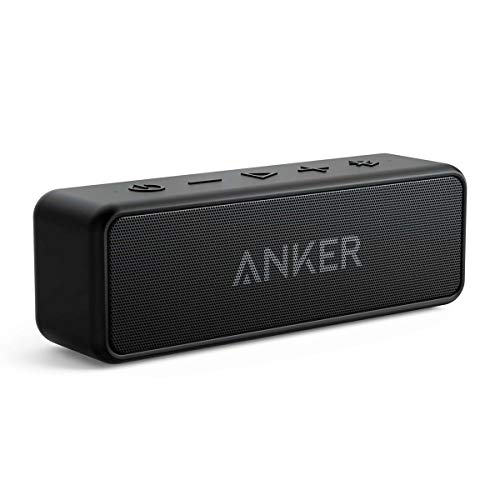
Anker Soundcore 2
$29.99
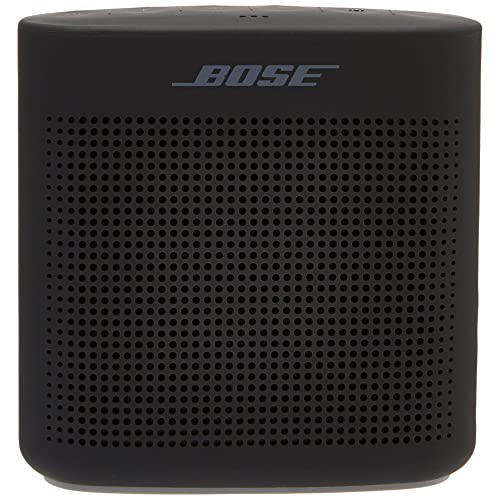
Bose SoundLink Color II
$150.00

Cambridge SoundWorks OontZ Angle 3 White
$24.96

DOSS SoundBox Touch
$29.99

Sony ULT Field 3 Black
$142.95
Spec Comparison
TL;DR: The Soundcore Boom 2 delivers a booming 80 W of bass‑heavy sound, 24‑hour playtime and IPX7 waterproofing, but its 3.66 lb weight can feel bulky on long treks.
The standout spec is its 80 W maximum output power, boosted by BassUp 2.0 technology, while the base output sits at 60 W. Coupled with a 50 W subwoofer and 15 W tweeters, the 2.1 stereo setup fills a large outdoor space. The speaker also carries an IPX7 rating and is floatable, and it packs a 24‑hour battery for marathon listening sessions.
Compared with the other eleven speakers, the Boom 2 is heavier than the JBL Flip 6 (1.21 lb) and far heavier than the ultra‑light JBL Clip 4 (0.527 lb). Its 24‑hour battery life doubles the 12‑hour runtime of the Flip 6 and far exceeds the 5‑hour life of the JBL Go 3. The 80 W max output dwarfs the 30 W of the Flip 6 and the 5 W of the Clip 4, giving it a clear power advantage. While most rivals don’t list an IP rating, the Boom 2’s IPX7 certification and floatability set it apart for wet‑weather use.
Professional reviewers highlight the speaker’s punchy bass and the PartyCast 2.0 feature that links up to 100+ speakers for massive parties. Users love the built‑in power bank and the app‑controlled RGB lighting, but they also note that the 3.66 lb weight can feel dense on long hikes and that the bass may overwhelm mids at full volume. Bluetooth 5.3 and customizable Pro EQ add modern connectivity and sound‑tuning options.
Pros
Cons
Best for: Buyers willing to invest in a proven, high‑quality option
Avoid if: You're on a tight budget or only need basic functionality
“Impressive bass and sound quality, especially given the size... takes it from 60W to 80W output”
“the perfect portable Bluetooth speaker”
TL;DR: The JBL Go 3 packs a 40 mm driver, IP67 protection and 5‑hour playtime into a 0.46‑pound, pocket‑sized speaker that earns a 4.8‑star rating from over 50 k reviewers.
The IP67 rating means the unit resists water and dust while it's only 0.46 pounds (209 g). Its 40 mm driver delivers 3 W of output power, and the built‑in rechargeable Li‑ion battery lasts about 5 hours before a 1.5‑hour charge tops it up again.
Compared with the other eleven speakers, the Go 3 is considerably lighter than the Cambridge SoundWorks OontZ Ultra (over 1 pound) and the Anker Soundcore 2 (0.91 pounds). However, its 5‑hour battery life is shorter than the 20‑hour life of the OontZ Ultra and the 24‑hour life of the Soundcore 2. The Go 3’s 3 W output also sits below the 14 W of the OontZ Ultra, but its compact 86 mm height and 69 mm length make it far smaller than the OontZ Ultra’s 165 mm length.
Professional reviewers praise the Go 3 for “strong bass response and surprisingly crisp highs” that feel larger than the tiny enclosure, and everyday users echo the sentiment, noting the “big, punchy audio” that fits in a backpack. The built‑in noise‑cancelling speakerphone and 3.5 mm audio input provide practical versatility. On the downside, the limited 5‑hour battery and the modest 3 W output mean the speaker can run out of juice quickly at higher volumes, and the bass loses detail when pushed to the max.
Pros
Cons
Best for: Travelers, gym‑goers, or anyone who wants a highly portable, well‑reviewed speaker with solid sound and water protection.
Avoid if: You need extended playback time, high volume for large gatherings, or a speaker with significantly higher power output.
TL;DR: The JBL Flip 6 packs 30 W of output, 12 hours of playtime and an IP67 waterproof rating into a 1.21‑lb cylinder, making it a solid premium portable speaker for outdoor fun.
At the heart of the Flip 6 is a 30 W output stage paired with dual passive radiators, which the manufacturer says delivers deep, bass‑heavy sound despite the speaker’s compact size. The battery holds 4800 mAh (17.28 Wh) and delivers 12 hours of continuous playback, while the IP67 rating guarantees full protection against dust and submersion in water.
Compared with the other contenders, the Flip 6 sits in the middle of the weight range: it’s heavier than the ultra‑light JBL Clip 4 (0.527 lb) and JBL Go 3 (0.46 lb) but far lighter than the Soundcore Boom 2 (≈3.66 lb) and Sony ULT Field 3 (2.69 lb). Its 12‑hour battery life outlasts the Bose SoundLink Color II (up to 8 hours) and JBL Go 3 (5 hours) but falls short of the 24‑hour runtimes claimed by Soundcore Boom 2 and Sony ULT Field 3. In terms of raw power, the Flip 6’s 30 W sits below Soundcore Boom 2’s 60 W base output and the 80 W maximum, yet it tops the 5 W of the Clip 4 and the 3 W of the Go 3.
Users consistently praise the Flip 6 for its punchy bass and the confidence that comes from an IP67 rating—making it ideal for pool parties, beach trips, or a rainy hike. Professional reviewers note the “surprisingly powerful stereo sound” and the effectiveness of the built‑in bass radiator. The main criticisms focus on a Bluetooth range that doesn’t stretch as far as some rivals and occasional bass distortion when the volume is cranked to the maximum. The lack of an app‑based EQ also shows up in consumer feedback.
Beyond power and durability, the speaker offers a frequency response of 63 Hz – 20 kHz and a signal‑to‑noise ratio above 80 dB, ensuring clear audio even at higher volumes. Bluetooth 5.1 with A2DP 1.3 and AVRCP 1.6 profiles provides reliable wireless connectivity, and the PartyBoost feature lets you link multiple JBL speakers for a larger soundstage.
Pros
Cons
Best for: Buyers willing to invest in a proven, high-quality option
Avoid if: You're on a tight budget or only need basic functionality
“Dimensions spot-on for portability.”
TL;DR: The Deeyaple A10 offers a 15 W IP67‑rated, ultra‑light Bluetooth speaker for $19.99, delivering solid sound, touch controls and a handy lanyard, though its 33 ft range and modest 2500 mAh battery fall short of some rivals.
At just $19.99, the Deeyaple A10 packs a 15 W RMS output into a 3.15 in × 4.33 in rectangular prism that weighs only 0.77 lb. Its IP67 rating means it'll survive rain, splashes and dust, making it a true outdoor companion.
That 15 W exceeds the 12 W RMS listed for Cambridge SoundWorks OontZ Angle 3 and the 12 W peak of Anker Soundcore 2, putting it ahead of many budget rivals. The 33 ft Bluetooth range is shorter than the 100 ft range of the OontZ Angle 3 and the 30‑meter range of Soundcore Select 4 Go, but still sufficient for typical room use. The 2500 mAh battery sits between the 2200 mAh cells of OontZ Angle 3 and DOSS SoundBox Touch and the larger 5200 mAh pack in the Anker model.
Professional reviewers note the speaker’s surprisingly loud mids and tight lows for its size, calling it “almost like a can of soda in your hand.” Users echo this, praising the sturdy rubber‑edged case, the built‑in lanyard for backpack attachment, and the IP67 rating that survives beach or poolside drops. Touch controls and music‑synced LED lighting add a fun, modern touch.
The dynamic driver covers a low‑end frequency response of 80 Hz, while the 75 dB signal‑to‑noise ratio keeps background hiss low. Bluetooth 5.3 ensures a stable connection, and TWS pairing lets you link two A10 units for a wider soundstage. It supports hands‑free calling, and the included power cable and lanyard round out the package.
Pros
Cons
Best for: Budget‑conscious buyers seeking a reliable entry‑level option
Avoid if: You need ultra‑high volume output for large parties
“almost like a can of soda in your hand”
TL;DR: The Cambridge SoundWorks OontZ Ultra packs 14 W of sound, IPX7 waterproof protection and up to 20 hours of playtime into a 1.06‑lb, $39.99 speaker, making it a solid all‑rounder for outdoor listening.
What really sets the OontZ Ultra apart is its 14 W RMS output paired with a proprietary bass radiator, delivering noticeably richer low‑end than many sub‑$40 competitors. The speaker carries an IPX7 rating, so you can submerge it up to 1 m for 30 minutes without worry, and the built‑in USB‑C charging cable provides a quick top‑up before a day at the beach.
At 1.06 lb, the Ultra is heavier than the JBL Go 3 (0.46 lb) but lighter than the DOSS SoundBox Touch (1.23 lb). Its 14 W power outstrips JBL’s 3 W and matches the Anker Soundcore 2’s 12 W peak, while the 20‑hour battery life eclipses JBL’s 5 hour run‑time and lines up with DOSS’s 20‑hour claim. The 100‑ft Bluetooth range (30.5 m) also exceeds the Anker’s 20‑meter range, giving you more freedom to move the source device around.
Reviewers consistently praise the Ultra’s loud, bass‑rich audio and its rugged waterproof build. Professional reviewers note the tight frequency‑response accuracy (slope ‑0.45 dB, std. err. 2.77 dB) and the convenience of TWS pairing for stereo setups. They also point out downsides such as the 170 ms Android latency, which can make video sync noticeable, and the lack of multi‑device Bluetooth pairing, limiting you to one source at a time. Some users also report occasional drop‑outs when the connection exceeds roughly 30 ft or when Wi‑Fi interference is present.
Pros
Cons
Best for: Budget‑conscious listeners who need a rugged, portable speaker with strong bass and long battery life for outdoor activities.
Avoid if: You require ultra‑low latency for gaming or video, or you need simultaneous multi‑device Bluetooth connections.
“one of the best sounding under $40... EVER!”
TL;DR: The Soundcore Select 4 Go packs a 5 W driver, IP67 waterproofing and a 20‑hour battery into a 0.58‑lb, strap‑ready speaker that’s perfect for solo adventures and shower playlists.
This tiny cylinder features a 5 W output and an 11.51 cm driver, delivering punchy, clear sound that reviewers say feels surprisingly full for its size. The built‑in 9‑band EQ in the Soundcore app lets you fine‑tune that sound, while Bluetooth 5.3 keeps the connection stable up to 30 meters.
Compared with the other eleven speakers in the roundup, the Select 4 Go is lighter than the Cambridge OontZ Angle 3 (0.58 lb vs 0.59 lb) and noticeably lighter than the Deeyaple model (0.58 lb vs 0.77 lb). Its 5 W output is modest next to the OontZ Angle 3’s 12 W or the DOSS SoundBox Touch’s 12 W total, but the 20‑hour battery life matches the DOSS and exceeds the JBL Go 3’s 5‑hour claim. While several peers list no IP rating, the Select 4 Go’s IP67 rating and 3.3‑ft floatable depth give it a waterproof advantage that the others lack.
User sentiment highlights the speaker’s “punchy, clear audio with surprisingly strong bass” despite the modest wattage. Professional reviewers praise the customizable EQ and the reliable TWS pairing. The most common drawbacks are the limited maximum volume—making it less suitable for large groups—and occasional Bluetooth hiccups at the edge of its 30‑meter range. A minor inconvenience is the absence of a wall charger in the box.
Additional technical context includes a 2.4 Ah battery that reaches full charge in 4.5 hours via USB‑C, touch controls for playback, and an integrated carry strap for clipping to bags or helmets. The speaker’s compact dimensions (4.72 × 3.23 × 1.89 in) keep it truly portable for any pocket‑sized adventure.
Pros
Cons
Best for: Solo adventurers, shower users, and casual outdoor enthusiasts who need a tiny, rugged, budget‑friendly speaker.
Avoid if: You need loud volume for parties or professional‑grade performance in noisy environments.
“Ideal for solo swimming or showers”
“Stereo sound, deep bass via passive radiator, and durable waterproof design”
TL;DR: The JBL Clip 4 delivers 5 W of sound, a rugged IP67 rating, and a built‑in carabiner in a 0.527‑lb package, with up to 10 hours of playback on a single charge.
Its integrated carabiner stands out, letting you clip the speaker to a backpack, bike rack, or belt loop without extra accessories. At 0.527 pounds (240 g) it’s light enough to carry all day, while the IP67 rating protects it from rain, splashes, and dust. It pushes 5 W of output across a 100 Hz‑20 kHz range and can run for 10 hours before needing a recharge, with a quick 3‑hour USB‑C charge.
Compared with the other eleven speakers, the Clip 4 sits between the JBL Go 3’s 3 W output and the Cambridge SoundWorks OontZ Ultra’s 14 W. Its 10‑hour battery life is half of the OontZ Ultra’s 20 hours but double the Go 3’s 5‑hour run‑time. In weight, it’s a touch heavier than the 0.46‑pound Go 3 yet far lighter than the 1.058‑pound OontZ Ultra, making it one of the most portable options in the set.
User feedback averages a 4.8‑star rating from 34,868 reviews. Reviewers love the clip‑on convenience and the confidence that the IP67 rating brings to outdoor adventures. Professional reviewers note the speaker’s “serious musical punch” for its size, while many users point out that bass can feel thin and mids a bit hollow, and the lack of an EQ or party‑mode limits customization.
On the technical side, the Clip 4 runs Bluetooth 5.1 with A2DP 1.3 and AVRCP 1.6 profiles, ensuring stable connections. It includes speakerphone noise‑and‑echo canceling and touch‑button call controls, adding hands‑free functionality without extra hardware. The compact dimensions—46 mm depth, 135 mm height, and 86 mm width—keep it pocket‑friendly without sacrificing durability.
Pros
Cons
Best for: Most users looking for a well-reviewed, reliable mainstream option
Avoid if: You're shopping on a tight budget — it's priced at $64.95
TL;DR: The Anker Soundcore 2 packs 24 hours of playback, IPX7 waterproofing and BassUp‑enhanced sound into a 0.91‑pound, Bluetooth 5.0 speaker that’s ideal for budget‑friendly outdoor use.
The standout spec is its 24‑hour battery life on a single charge, letting you stream all day without hunting for an outlet. Coupled with an IPX7 rating, the speaker survives full submersion for up to 30 minutes, which reviewers praise as “best‑in‑class for the price segment.” Bluetooth 5.0 ensures a stable 20‑meter wireless range, and the built‑in DSP keeps distortion low even at higher volumes.
At 0.91 pounds, the Soundcore 2 is heavier than the ultra‑light JBL Go 3 (0.46 pounds) and the Cambridge OontZ Angle 3 (0.59 pounds), but it’s noticeably lighter than the DOSS SoundBox Touch (1.23 pounds) and the OontZ Ultra (1.06 pounds). Its 165 mm width makes it wider than the OontZ Angle 3’s 71 mm width, yet it remains slimmer than the DOSS’s 2.9‑inch width. Battery‑wise, it matches the OontZ Angle 3’s 24‑hour claim while outlasting the DOSS SoundBox Touch and OontZ Ultra, both list 20 hours.
Everyday users love the “loud, bass‑heavy sound” and the simple button layout, while professional reviewers highlight the BassUp algorithm and the patented spiral bass port for deep, distortion‑free lows. The lack of aptX Low Latency is a common criticism, especially for gamers who need tight audio sync. Users also note occasional Bluetooth hiccups and wish for richer treble, but most agree the rugged design and long run time outweigh these quirks.
Pros
Cons
Best for: Budget-conscious buyers seeking a reliable entry-level option
Avoid if: You need high‑resolution codecs, extensive EQ customization, or premium driver materials for audiophile‑grade listening
TL;DR: The Bose SoundLink Color II delivers 8 hours of playback in a splash‑resistant, ultra‑compact package, but its modest bass and $150 price make it a premium‑tier choice.
The speaker’s IPX4 splash‑resistant silicone shell lets you toss it onto a pool deck or into a gym bag without worrying about light rain or accidental splashes. Its dimensions—5.25 in H × 5.00 in W × 2.25 in D—keep the footprint tiny, while the 1.2 lb (540 g) weight means it’s truly one‑hand portable.
Compared with the other eleven contenders, the Color II sits in the middle of the weight range: it’s heavier than the 0.527‑lb JBL Clip 4 but about the same as the 1.21‑lb JBL Flip 6, and considerably lighter than the 2.69‑lb Sony ULT Field 3. Battery life at up to 8 hours trails the 12‑hour JBL Flip 6, the 10‑hour Clip 4, and the 24‑hour Sony and Soundcore models, yet it still outlasts the 5‑hour JBL Go 3. Its IPX4 rating provides splash protection, while the Cambridge SoundWorks OontZ Ultra lists a 1 m waterproof depth, offering a deeper water‑resistance level.
Users frequently praise how easy the speaker is to grab and go, noting the voice‑guided Bluetooth pairing and the Bose Connect app for quick setup. Professional reviewers highlight the low‑latency Bluetooth performance—43 ms on iOS and 118 ms on Android—and the ability to pair two devices at once, remembering the last eight. However, many mention that the low‑frequency extension caps at 88.5 Hz, leaving bass feeling thin, and that treble rolls off early, which can make the sound feel less full in larger rooms.
Pros
Cons
Best for: Buyers willing to invest in a proven, high-quality option
Avoid if: You're on a tight budget or only need basic functionality
TL;DR: The OontZ Angle 3 offers 12 W of sound, IPX5 splash protection and a 24‑hour battery for $24.99, making it a lightweight, budget‑friendly Bluetooth speaker with a solid 100‑ft range.
The speaker packs a 12 W RMS output into a compact 66 mm × 135 mm × 71 mm frame that weighs just 0.5875 pounds. Its Bluetooth 5.4 connection reaches up to 100 ft, and the IPX5 rating guards against splashes—enough for a day at the beach or a backyard grill.
Compared with other models in this roundup, the Angle 3 is heavier than the JBL Go 3 (0.46 lb) but lighter than the Deeyaple speaker (0.77 lb) and the Anker Soundcore 2 (0.91 lb). Its 12 W output matches the DOSS SoundBox Touch and exceeds the JBL Go 3’s 3 W, yet it falls short of the Deeyaple’s 15 W. Battery life tops most peers at 24 hours, tying with the Anker Soundcore 2 and beating the Soundcore Select 4 Go (20 h) and DOSS (20 h). The downside is a 14‑hour charge via Micro‑USB, which is considerably longer than the 4‑hour charge of the Soundcore Select 4 Go and the 1.5‑hour charge of the JBL Go 3.
Everyday users rave about the speaker’s portability and all‑day playtime, noting the sound feels “loud and clear” for its size. Professional reviewers point out the bass richness that outperforms many cheap competitors, and they've appreciated the ability to pair two units for true stereo sound. However, critics consistently mention the long recharge time and wish they'd have a USB‑C port. The IPX5 rating also draws comments from those who'd prefer the deeper sub‑mersion protection of IPX7 models.
Pros
Cons
Best for: Budget-conscious buyers seeking a reliable entry-level option
Avoid if: You need ultra‑fast charging, deep‑bass performance, or the highest waterproof rating (IPX7)
“one of the best sounding under $40... EVER!”
TL;DR: The DOSS SoundBox Touch packs a 12 W stereo output, IPX5 splash resistance and up to 20 hours of playtime into a 1.23‑lb, touch‑controlled box for under $32.
The standout spec delivers 12 W total output from dual 6 W drivers, paired with an 18 kHz frequency response and less than 1 % harmonic distortion. Those numbers give the speaker a surprisingly full soundstage for its 6.6 × 2.9 × 2.7‑inch footprint, and the IPX5 rating means a splash won’t ruin a day at the pool.
Compared with the other eleven entries, the SoundBox Touch is heavier than most – the Anker Soundcore 2 weighs 0.91 lb and the JBL Go 3 only 0.46 lb – but its battery capacity of 2200 mAh matches the Cambridge OontZ Angle 3 and exceeds the Deeyaple’s 2500 mAh only slightly. The Anker’s 5200 mAh cell outlasts it, while the Soundcore Select 4 Go’s 2.4 Ah pack offers a bit more juice. In terms of waterproofing, its IPX5 rating sits between the OontZ Ultra’s 1 m submersion rating and the non‑water‑rated competitors.
Reviewers repeatedly praise the “shaking‑the‑table” bass and the convenience of the capacitive touch panel, plus the built‑in microphone for hands‑free calls. Reviewers often call the 20‑hour battery life at 50 % volume “reliable for all‑day outings.” On the downside, reviewers flag the Bluetooth 4.0 connection for noticeable latency during video playback, and some wish the bass depth were richer. Reviewers describe the plastic enclosure as “fragile,” and note the micro‑USB charging port feels dated compared with newer USB‑C options.
Additional technical context includes a microSD card slot for local media, an AUX input with a supplied male‑to‑male cable, and a charging time of 3–4 hours via the micro USB port. The speaker’s <1 % harmonic distortion helps keep vocals clear even at higher volumes, while the dual drivers aim to deliver balanced stereo imaging in a compact package.
Pros
Cons
Best for: Budget‑conscious buyers seeking a reliable entry‑level option
Avoid if: You need audiophile‑level bass depth, ultra‑rugged durability, or the latest USB‑C charging for fast power replenishment
TL;DR: The Sony ULT Field 3 delivers 24‑hour battery life, IP67 waterproof protection, and a three‑mode bass‑boost button in a rugged 2.69‑pound package, making it a solid choice for outdoor parties.
What really sets the FIELD 3 apart is its marathon‑long 24‑hour battery paired with a rapid 10‑minute quick‑charge that can add up to two hours of playback. Sony builds the speaker to survive dust and water with an IP67 rating, and the dedicated ULT button lets you toggle three bass‑boost modes for extra low‑frequency punch. At 79 mm deep, 114 mm tall and 257 mm wide, it packs a sizable driver array into a 2.69‑pound chassis.
Compared with the other eleven entries, the FIELD 3 is noticeably heavier than the Bose SoundLink Color II (1.2 lb), JBL Flip 6 (1.21 lb), JBL Clip 4 (0.527 lb), Cambridge SoundWorks OontZ Ultra (1.058 lb) and JBL Go 3 (0.46 lb). Its 24‑hour runtime also outlasts the 12‑hour battery of the JBL Flip 6 and the 5‑hour runtime of the JBL Go 3, matching only the Soundcore Boom 2’s 24‑hour claim. While most competitors list modest waterproof specs or none at all, the FIELD 3’s IP67 rating stands out as the strongest protection in the set. The trade‑off comes as a higher price point than most of the lineup.
Users consistently praise the deep, booming bass that the ULT button delivers, along with the built‑in party lights that add visual flair to gatherings. Reviewers note that the rugged design and rust‑proof construction make it a go‑to for camping trips and beach parties. A common complaint is that battery life can shrink when the bass boost is set to maximum or the volume is cranked high, which aligns with professional observations about runtime variability. Reviewers also mention the weight, while adding stability, as a downside for those who need ultra‑light portability.
Beyond the core specs, Sony equips the FIELD 3 with Party Connect, allowing you to link up to 100 compatible speakers for synchronized playback—ideal for large‑scale events. A shoulder strap is included for easier transport, and the three‑mode ULT button provides quick bass adjustments without digging into an app.
Pros
Cons
Best for: Buyers willing to invest in a proven, high‑quality option
Avoid if: You're on a tight budget or only need basic functionality
“No cons reported,”
“deep, booming bass”
Breakdown
Soundcore Boom 2 Black
Pros
JBL Go 3
Pros
JBL Flip 6
Pros
Deeyaple Portable Bluetooth Speaker
Pros
Based on scoring data and product specs
Personalized picks
Best Overall Pick
Soundcore Boom 2 Black
Best OverallBest for: Buyers willing to invest in a proven, high-quality option
JBL Go 3
Best for: Most users looking for a well-reviewed, reliable mainstream option
$34.95-$85.04 vs winner
Skip Sony ULT Field 3 Black if…
You're on a tight budget or only need basic functionality
We’re naming the Soundcore Boom 2 Black the clear winner. Its IPX7 waterproof rating means you can toss it in a pool without worry, while the 24‑hour battery life keeps the party going all day. The speaker pushes a maximum output of 80 W, delivering strong sound for outdoor gatherings.
The runner‑up is the JBL Go 3, perfect if you need a pocket‑sized, dust‑proof companion for travel or a desk. It carries an IP67 rating, weighs just 0.46 pounds, and offers up to 5 hours of playback on a single charge—ideal for short trips or commutes.
Looking at budget tiers, the Deeyaple Portable Bluetooth Speaker shines as the best value at $19.99, giving you basic Bluetooth functionality without breaking the bank. For a solid mid‑range pick, the JBL Go 3 (also our runner‑up) balances price and performance at $39.99. If you’re willing to splurge, the Bose SoundLink Color II stands out as the premium option at $150.00, offering a brand‑trusted audio experience.
Pick the Soundcore Boom 2 Black for the most versatile, waterproof speaker and enjoy powerful sound wherever you go.
The Soundcore Boom 2 lists a battery life of 24 hours, which is the longest among the speakers. By comparison, the JBL Flip 6 offers about 12 hours and the JBL Go 3 only about 5 hours of playback.
No reviews yet — be the first to share your experience.
Please sign in to leave a review