⚡ Quick Answer
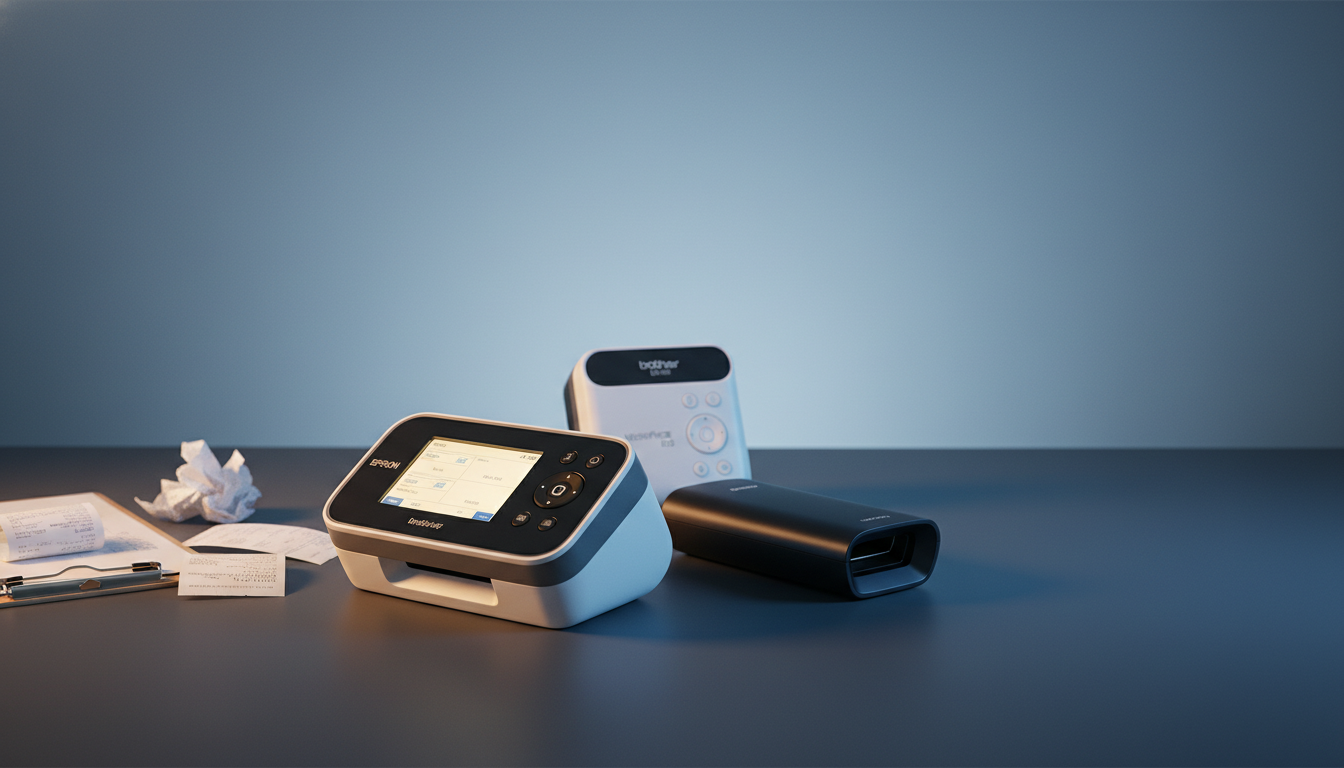
Among 9 handheld scanners, the mid‑range Epson WorkForce ES‑50, listed at $129.00, carries a 4.3‑star rating—exactly the high score seen on premium models that cost up to $229.99. Weighing just 0.59 lb and fitting in a pocket‑sized 10.7 × 1.8 × 1.3‑inch envelope, it shows a top‑tier price tag isn’t required for a 4.3‑star rating.
The lineup spans three price tiers. Budget choices like the Anncary Portable Document Scanner ($52.19) and Brother DS‑640 ($109.99) give you basic single‑sheet scanning with compact dimensions. Mid‑range options, including the Epson WorkForce ES‑50 and HP HPPS100 ($139.99), add features such as auto‑skew correction and faster 15‑ppm speeds. Premium picks—Epson RapidReceipt RR‑60, Canon imageFORMULA P‑215II Black, and HP PS150—bring higher optical resolutions, duplex feeders, and wireless connectivity, but they also sit in the premium price range.
Below we break down each model’s strengths, weaknesses, and ideal use cases so you can match a scanner to your travel, office, or hobby needs.
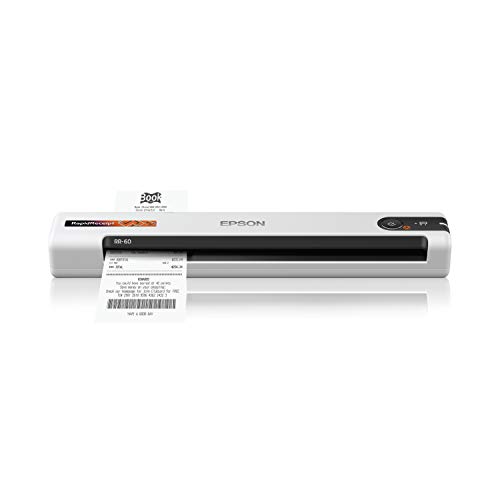
Epson RapidReceipt RR-60
It's compact 1.8 in depth keeps the scanner slim enough to slip into any bag, making on‑the‑go scanning effortless.

Brother DS-640
Designed for budget‑conscious users, the DS‑640 delivers reliable entry‑level performance at $109.99—about $70 less than the RapidReceipt.

Epson WorkForce ES-50
The ES‑50 matches the RapidReceipt’s 1.8 in depth but retails for $129.00, offering a similarly sized scanner at a lower price point.
Also considered
Score Analysis
Key score advantages vs. runner-up (Brother DS-640)
Price Range
Epson RapidReceipt RR-60
$229.99
Brother DS-640
$134.99
Epson WorkForce ES-50
$129.99
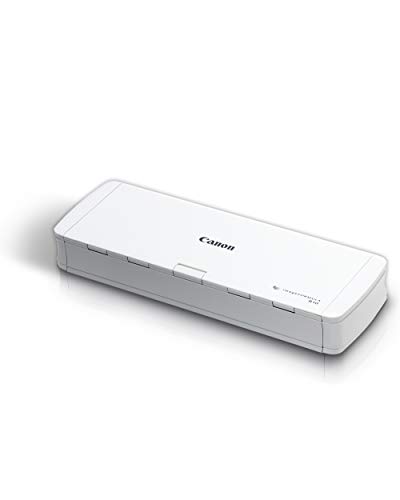
Canon imageFORMULA R10
$180.15

Canon imageFORMULA P-215II Black
$212.80

HP HPPS100
Out of Stock
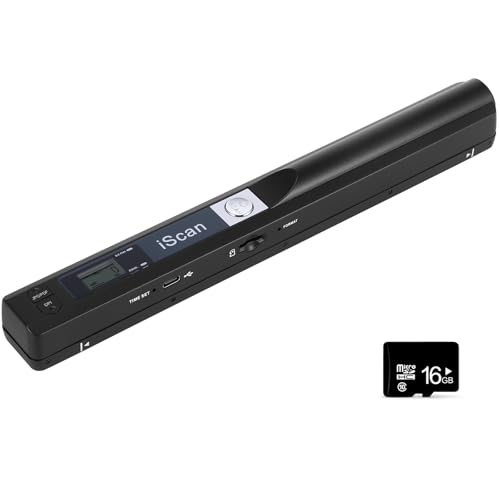
Anncary Portable Document Scanner
$54.14

HP PS150
$229.99
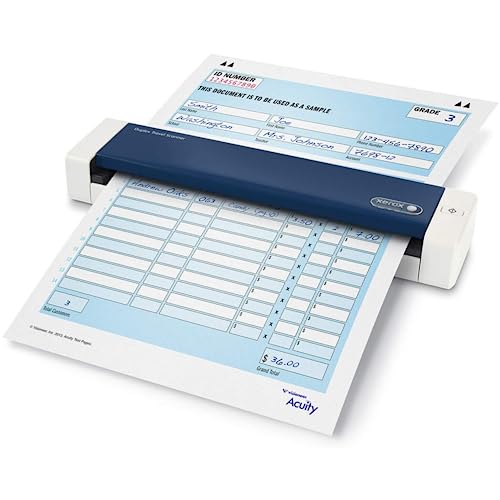
Visioneer XTS-D
$119.99
Spec Comparison
TL;DR: The Epson RapidReceipt RR-60 is a ultra‑compact, USB‑powered scanner that handles single‑sheet receipts up to 72 inches long, offers 1200 dpi optical resolution and 10 ppm speed, but lacks a multi‑page feeder or wireless connectivity.
What really sets the RR‑60 apart is its ability to scan documents as long as 8.5 × 72 in while staying under 0.59 lb (267 g). Its chassis measures just 10.7 in × 1.8 in × 1.3 in, so it slides easily into a laptop bag. Epson pairs the hardware with ScanSmart AI software that extracts receipt data automatically, turning long paper trails into searchable PDFs.
Compared with the other eight scanners in this roundup, the RR‑60 weighs considerably less than the Canon imageFORMULA R10 (over 2 lb) and matches Epson’s WorkForce ES‑50 at 0.59 lb. It weighs more than the HP HPPS100 at 0.1875 lb, but stays far lighter than the HP PS150, listed at 590 g. In optical resolution the RR‑60 leads the pack at 1200 dpi, outpacing the 600 dpi of the Canon R10 and the 300 dpi of the HP PS150, Visioneer XTS‑D and others. Its scan speed of 10 ppm falls below the 12–14 ppm of the Canon R10 and the 15–16 ppm of HP and Brother models, yet it remains fast enough for on‑the‑go receipt capture.
Users consistently praise the ability to feed very long receipts and the AI‑driven data extraction, noting that it cuts down manual entry for accounting tasks. Critics frequently point out the single‑sheet feeder and the lack of Wi‑Fi or an internal battery, which means you must stay tethered to a USB‑powered host. The device’s daily duty cycle of 300 sheets and its Energy‑Star certification (operating at just 2.1 W) draw modest power for mobile professionals.
Pros
Cons
Best for: Mobile professionals, small‑business owners, accountants and frequent travelers who need to digitize long receipts or single documents while on the move.
Avoid if: You run a high‑volume office, require a multi‑page automatic feeder, or need wireless or battery‑powered scanning.
TL;DR: The Brother DS‑640 offers 600 DPI scans, USB‑powered portability, and built‑in OCR for $109.99, making it a solid handheld choice for travelers and occasional home‑office scanning.
The standout spec is its 600 DPI optical resolution, which delivers crisp text and color detail, and the scanner can capture a single page in just 3 seconds. At a weight of 466.5 g and a compact footprint of 35.56 mm × 55.88 mm × 302.26 mm, it's truly living up to the “portable” label.
Compared with the eight other scanners in this roundup, the DS‑640 is lighter than the Visioneer XTS‑D (1021 g) but heavier than the Epson WorkForce ES‑50 (0.59 lb). It lacks the duplex capability that Visioneer offers and also does not include an automatic document feeder; some higher‑priced peers include those features. However, its 600 DPI resolution outpaces Visioneer’s 300 dpi and sits comfortably below the HP PS100’s 1200 dpi, giving it a solid middle ground for everyday documents.
User feedback repeatedly praises the fast 3‑second page scan and the reliable OCR that creates searchable PDFs without extra software. Reviewers note the convenience of a USB‑only power source, eliminating the need for an external brick. The main complaints revolve around the missing duplex function and occasional paper jams when feeding thicker media, which can slow down multi‑page jobs.
Pros
Cons
Best for: Travelers, home‑office workers, and anyone who needs quick, portable scanning of single‑page items.
Avoid if: You require duplex scanning, high‑volume batch scanning, or an automatic document feeder.
“great little scanner... 3 seconds per page”
“clear images... no bulky all-in-one needed”
TL;DR: The Epson WorkForce ES‑50 is a $129, 0.59‑lb USB‑powered scanner delivering 600 dpi scans in a 10.7‑in wide, pocket‑friendly package, ideal for quick on‑the‑go document capture.
At just 0.59 pounds and 10.7 inches wide, the ES‑50 squeezes a 600 dpi optical sensor, automatic feed mode and one‑touch scanning into a truly portable shape. It runs off USB 2.0, so you'll never need a wall adapter, and it can handle documents up to 8.5 × 72 inches with a scan time of 5.5 seconds per page at its native resolution.
Compared with the other eight scanners in this roundup, Visioneer’s XTS‑D weighs 2.25 lb while the ES‑50 tips the scales at 0.59 lb, and HP’s HPPS100 comes in at just 0.1875 lb. HP’s 15 ppm and Brother’s 16 ppm outpace its 10 ppm simplex speed, but Epson’s RapidReceipt matches it at 10 ppm. In terms of resolution, it aligns with most peers at 600 dpi, though HP and RapidReceipt offer a higher 1200 dpi option. Width‑wise it’s narrower than HP’s 11.6‑in model, making it easier to slip into a laptop bag.
Reviewers consistently praise the scanner’s ultra‑compact design and USB‑powered convenience, noting that it outperforms phone apps for receipts and small documents. Professional reviewers highlight the solid 600 dpi output and reliable OCR, while also pointing out the slow effective duplex speed of 1.6 ppm and the lack of wireless connectivity. Users appreciate the auto‑skew correction and automatic feed mode, though many say color scans can look oversaturated and that multi‑page jobs feel labor‑intensive.
Pros
Cons
Best for: Mobile professionals, travelers, and home users who need quick, occasional scans of single sheets.
Avoid if: You need high‑volume, duplex, or wireless scanning capabilities.
“fits in bags, survives cold weather/truck use”
“perfect handling of varied paper without jams”
TL;DR: The Canon imageFORMULA R10 is a USB‑powered portable scanner delivering 600 dpi duplex scans at up to 14 ipm, with a 20‑sheet ADF and a compact white design.
The standout feature of the R10 is its single‑pass duplex capability paired with a 600 dpi optical resolution. It can scan black‑and‑white documents at 14 ipm and color pages at 9 ipm, all while drawing just 0.5 A from a USB port. The built‑in 20‑sheet ADF means you can feed a small batch without stopping, and the device weighs 2.20 lb (0.9 kg), making it sturdy enough for travel yet still portable.
Compared with the eight other scanners in this roundup, the R10 sits in the mid‑range of size and performance. It's heavier than ultra‑light models like the HP PS100 (0.19 lb) and Epson ES‑50 (0.59 lb), but it's slightly lighter than Visioneer’s XTS‑D (2.25 lb). Its 600 dpi resolution matches the Brother DS‑640 and Canon P‑215II, though the HP PS100 and Epson RR‑60 provide 1200 dpi. In terms of speed, the R10’s 14 ipm duplex rate is faster than the Epson RR‑60’s 10 ppm but slower than the HP PS100’s 15 ppm, placing it comfortably in the middle of the pack.
Reviewers consistently praise the R10’s USB‑only power setup, noting that it eliminates the need for a wall outlet and simplifies on‑the‑go scanning. The RGB LED illumination and CMOS CIS 1‑line sensor deliver clear, consistent scans across receipts, business cards, and embossed plastic cards. Users also appreciate the energy‑saving mode that drops consumption to 1.5 W. The main criticism revolves around its $156.15 price tag, which is higher than many budget‑oriented handheld scanners, and the weight, that can feel bulky in a small backpack.
Pros
Cons
Best for: Mobile professionals, remote workers, and students who need reliable duplex scanning without a power outlet.
Avoid if: You require the highest possible resolution or a ultra‑light scanner for tight travel packs.
TL;DR: The Canon imageFORMULA P‑215II packs a 20‑sheet ADF, 600 dpi optical resolution and USB‑bus power into a 1 lb, ultra‑portable scanner for $224, ideal for mobile professionals who value quality over bulk.
What really sets the P‑215II apart is its combination of a 20‑sheet automatic document feeder and 600 dpi optical resolution, both driven by a CMOS CIS 1‑line sensor with an RGB LED light source. The unit runs entirely from USB 3.0 (up to 7.0 W) or USB 2.0, so you don't need an external power brick, and it weighs just 1.0009 pounds (1000 g). Scanning speeds reach 15 ppm simplex and 30 ipm duplex at 200 dpi over USB 3.0, making quick duplex jobs painless.
Compared with the eight other scanners in this roundup, the P‑215II is lighter than the HP PS150 (1.3 lb) and the Epson RapidReceipt RR‑60 (1.19 lb), but heavier than the ultra‑light HP HPPS100 (0.1875 lb) and Epson WorkForce ES‑50 (0.59 lb). It also out‑weighs the Visioneer XTS‑D (2.25 lb) and Canon R10 (2.20 lb) while being just a shade lighter than the Brother DS‑640 (1.029 lb). Its $224 price tag places it in the premium tier of the group, which is higher than many of the budget‑oriented peers.
Professional reviewers praise the scanner’s compact form factor and plug‑and‑play USB connectivity, noting that it slips easily into a briefcase or laptop bag. Users consistently mention the convenience of scanning business cards, embossed cards and postcards on the go, thanks to the built‑in card‑scanning capability and the separation‑pad paper feed. The bundled software suite, which includes a business‑card organizer and cloud‑service integration (Dropbox, Google Drive, OneDrive, Box, QuickBooks Online, Evernote, SharePoint), adds real‑world workflow value.
The device operates between 10 °C and 32.5 °C and tolerates 25–80 % relative humidity, so it handles typical office and travel environments. It draws modest power when idle (off power 0.1 W, sleep 1.5 W), and the scanner can run directly from a laptop’s USB port without a separate adapter. Canon backs it with a one‑year advanced exchange warranty, reinforcing confidence in its durability for daily duty cycles of 500–700 scans.
Pros
Cons
Best for: Those who prioritize high‑resolution, duplex scanning in a lightweight, USB‑powered package and are willing to pay a premium for portable quality.
Avoid if: You need a high‑volume workhorse, wireless or battery operation, or a lower‑cost scanner for occasional use.
TL;DR: The HP HPPS100 is a feather‑light, USB‑powered handheld scanner that delivers 1200 dpi maximum resolution and handles full‑size 8.5 × 14 in documents, but it only scans one side at a time and lacks wireless connectivity.
The standout spec of the HP PS100 is its 1200 dpi maximum resolution, giving you crisp captures of photos, receipts, and business cards. It also reaches a respectable 15 ppm scanning speed while staying under a half‑pound, with a listed weight of 0.1875 lb and a slim 1.4‑inch height, making it easy to slip into a laptop bag.
Compared with the eight other scanners in this roundup, the HP PS100 is the lightest – the Epson WorkForce ES‑50 weighs 0.59 lb, the Brother DS‑640 1.029 lb, and the Canon imageFORMULA R10 over 2 lb. Its depth of 2.0 in is slightly deeper than Epson’s 1.8 in, and its width of 11.6 in exceeds Epson’s 10.7 in, giving a bit more surface for larger sheets. While most rivals offer automatic document feeders or duplex modes, the HP relies on a manual feed and simplex scanning only.
User feedback consistently praises the scanner’s portability and the included HP WorkScan software, which smoothly creates PDF or JPG files. Reviewers also note the convenience of a USB‑2.0 bus‑powered design that eliminates the need for an external power brick. On the downside, many users call out the lack of duplex scanning and the absence of any wireless option, which can slow down high‑volume tasks that require flipping pages manually.
Pros
Cons
Best for: Mobile professionals who need a lightweight, high‑resolution scanner for occasional document capture on the go.
Avoid if: You're shopping on a tight budget — it's priced at $139.99.
TL;DR: The Anncary Portable Document Scanner offers a 900 DPI wand‑style scan, microSD storage up to 32 GB, and a feather‑light 148 g build for just $52.19, making it a budget‑friendly travel companion.
At the heart of this scanner is a selectable 900 DPI optical resolution, which tops the 600 DPI of the Brother DS‑640 and the 300 DPI of the Visioneer XTS‑D. It stores images directly on a microSD card of up to 32 GB, so you can scan away without a laptop. The device runs on two AA batteries, powers off automatically when idle, and features real‑time distortion detection to keep handheld scans looking straight.
When you line it up against the eight other handheld scanners in this roundup, the Anncary is noticeably lighter—its 148 g chassis is under 0.5 lb, only a touch heavier than the HP HPPS100 at 0.1875 lb and far lighter than the Visioneer XTS‑D (2.25 lb) or Canon R10 (2.20 lb). Its 255 mm length also makes it the most compact wand, shorter than the Brother’s 302.26 mm and Visioneer’s 292.1 mm bodies. In terms of resolution, it sits above most budget options but below the 1200 DPI models like HP HPPS100 and Epson RapidReceipt RR‑60.
User feedback repeatedly praises the scanner’s ultra‑portable form factor and the convenience of plug‑and‑play USB 2.0 connectivity—no driver installation needed. Reviewers also like the clear JPEG and PDF output, but several note the extra cost of buying AA batteries and a compatible microSD card, which you must provide. A few users mention a learning curve to keep the wand steady for crisp scans, and battery life can feel short during extended trips.
Pros
Cons
Best for: Shoppers on a tight budget who want the most for their money
Avoid if: You need to scan large batches, bound books, or require a high‑volume office solution
TL;DR: The HP PS150 scans double‑sided pages in 4 seconds at 300 dpi, offers Wi‑Fi and USB, but its premium $229.99 price and 590 g weight make it a higher‑end portable option.
The standout feature of the HP PS150 is its automatic duplex scanning, which captures both sides of a sheet in a single pass. It completes a page in just 4 seconds and delivers 300 dpi resolution at a scanning speed of 15 ppm, giving you quick, readable copies of contracts, receipts, or notes while on the move.
At 590 g (1.3 lb) the PS150 sits in the middle of the weight range for this roundup. It’s heavier than the ultra‑light Epson RR‑60 and Anncary models, yet lighter than the bulkier Canon P‑215II and Visioneer XTS‑D units. Its width of 312 mm also makes it wider than most peers, which can affect how easily it fits into a small bag.
User feedback averages 4.3 stars from 40 reviews, with reviewers praising the convenience of Wi‑Fi and USB connectivity and the time saved by duplex scanning. Professional reviewers highlight the reliable lithium‑ion battery and the included HP WorkScan software as solid additions for field work. Some users note that the $229.99 price tag feels steep compared with lighter, less expensive alternatives.
The scanner stores scanned data in 4 MB of flash memory and 64 MB of SDRAM, enough for short bursts of scanning before transferring files. It handles paper from 2 × 2.9 in up to legal‑size 8.5 × 14 in, and the 2‑year limited warranty adds peace of mind for mobile professionals.
Pros
Cons
Best for: Those prioritizing quality and willing to pay for premium performance
Avoid if: You're on a tight budget or only need basic functionality
TL;DR: The Xerox Visioneer XTS‑D is a USB‑powered, duplex‑capable handheld scanner that weighs 2.25 lb, scans a color page in 8 seconds at 300 dpi, and costs $119.99.
The standout feature of the XTS‑D is its automatic duplex scanning combined with a truly portable form factor. At just 2.25 pounds (1021 g) and measuring 40.6 mm high, 292.1 mm long and 66.0 mm wide, it slides easily into a laptop bag. It runs on USB power alone, so you never need a wall outlet, and it handles media up to 8.5 × 32 inches while still accepting tiny 1.5 × 1.5 in documents. The scanner delivers a full‑color page in 8 seconds at a listed 300 dpi resolution.
Compared with the other eight scanners in this roundup, the XTS‑D sits in the mid‑weight range. It’s heavier than the Epson WorkForce ES‑50 (0.59 lb) and the HP HPPS100 (0.1875 lb), but lighter than the Canon imageFORMULA R10 (about 2.2 lb). Its length of 292.1 mm is a touch shorter than the Brother DS‑640’s 302.26 mm, while its height of 40.6 mm is comparable to the Epson ES‑50’s 33 mm height. In terms of price, it lands in the budget tier, though some peers offer more features for a similar cost.
Users consistently praise the XTS‑D’s compactness and the convenience of USB‑only operation, noting that it “fits in a travel bag” and “requires no external power brick.” Professional reviewers highlight the plug‑and‑play experience and the included drivers that make scanning on both PC and Mac straightforward. However, the single‑sheet ADF draws criticism; reviewers mention that “batch scanning is cumbersome” and that the device feels “slow for high‑volume tasks.” The 3.7‑star rating from 77 reviews reflects a mix of appreciation for portability and disappointment with limited throughput.
Under the hood, the scanner uses a Contact Image Sensor (CIS) with LED illumination, delivering the listed 300 dpi optical resolution. It connects via a USB 2.0 Type‑B interface and carries an Energy Star 8.0 certification, indicating low power draw. The bundled OCR suite (PaperPort, OmniPage) lets you create searchable PDFs on the go, a feature often highlighted by power users.
Pros
Cons
Best for: Entry-level buyers or those on a tight budget
Avoid if: Reliability and user satisfaction are your top concerns
Breakdown
Epson RapidReceipt RR-60
Pros
Brother DS-640
Pros
Epson WorkForce ES-50
Pros
Canon imageFORMULA R10
Pros
Cons
Based on scoring data and product specs
Personalized picks
Best Overall Pick
Epson RapidReceipt RR-60
Best OverallBest for: Audiophiles and enthusiasts seeking premium sound quality and advanced features
Brother DS-640
Best for: Budget-conscious buyers seeking a reliable entry-level option
$134.99-$95.00 vs winner
Skip Visioneer XTS-D if…
Reliability and user satisfaction are your top concerns
The Epson RapidReceipt RR‑60 takes the top spot. It pulls a 4.2‑star rating from 1,309 reviewers, delivers a solid 10 ppm scan speed, and captures detail at 1200 dpi. At just 0.59 lb (267 g) it’s light enough to slip into a laptop bag, and you won’t wear it out on a busy workday.
The Brother DS‑640 lands as runner‑up, perfect if you need to scan receipts, ID cards or photos on the move. It weighs 466.5 g, shoots a single page in about 3 seconds (16 ppm), and includes OCR support for searchable PDFs—great for field agents or frequent travelers.
For tighter budgets, the Anncary Portable Document Scanner offers the best value at $52.19, handling occasional scans without breaking the bank. The Epson WorkForce ES‑50 serves as a strong mid‑range pick at $129.00, balancing speed and portability for small office use. If you crave premium features and don’t mind the higher price, the HP PS150 stands out at $229.99, delivering top‑tier performance for heavy‑duty scanning.
Choose the Epson RapidReceipt RR‑60 today for fast, reliable handheld scanning at 10 ppm wherever you go.
The Epson RapidReceipt RR‑60 handles documents up to 72 inches long, making it ideal for long receipts and roll‑fed paper. Its 1200 dpi optical resolution also captures fine detail, while most other models top out at standard 8.5‑inch lengths.
No reviews yet — be the first to share your experience.
Please sign in to leave a review