⚡ Quick Answer
Finding a portable drive that keeps your files safe while staying easy to lug around can be a juggling act. In this roundup we compared 11 external hard drives that all ship with AES‑256 hardware encryption, so you get government‑level protection without extra software. The lineup spans four budget picks under $130, two mid‑range models around $150, and four premium options that push past $200.
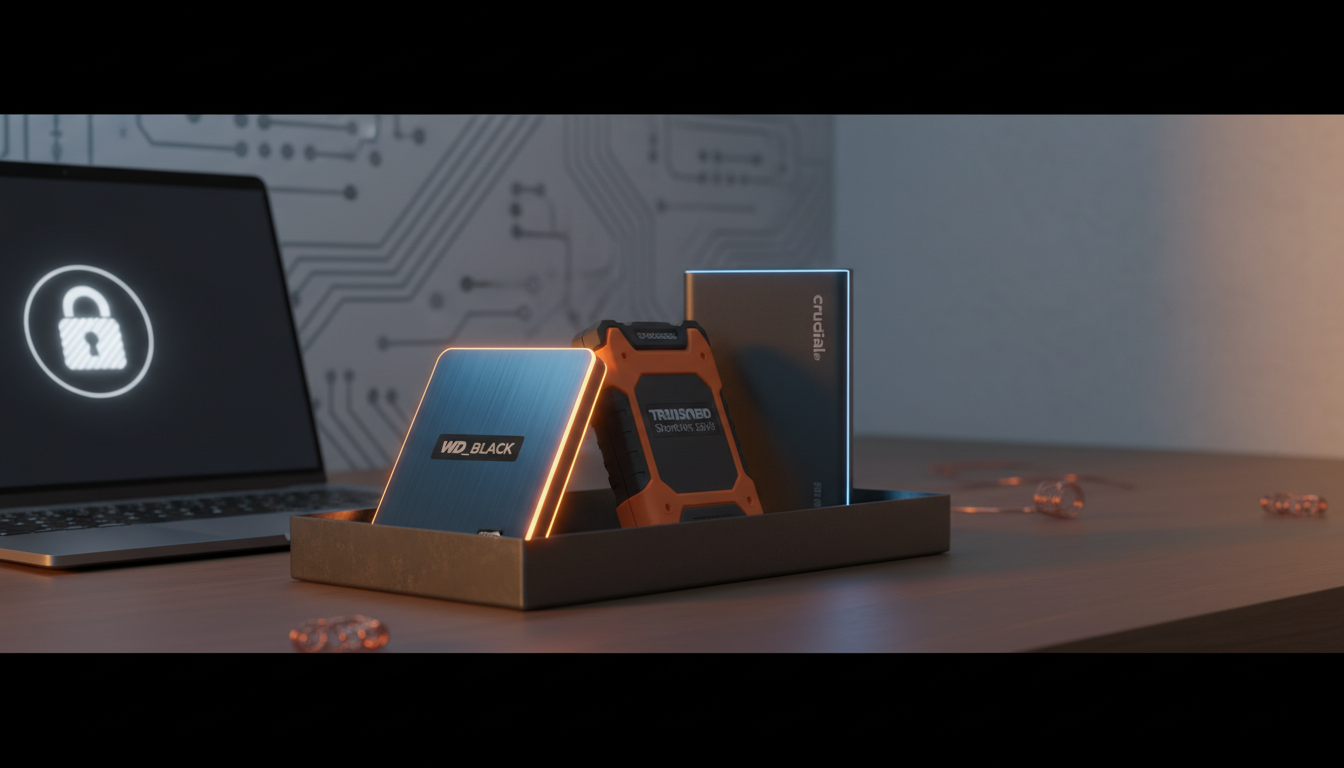
If you’re a photographer hopping between shoots, the rugged Transcend StoreJet 25H3’s three‑stage shock system and 5 Gbps USB 3.1 Gen 1 interface make on‑site backups feel sturdy. For a home office or media hoarder, the WD My Passport 5TB offers a generous 5 TB capacity at $159.95 and a built‑in LED indicator, balancing price and space. Gamers and video editors who crave speed can look to the SSD‑class drives like the Samsung T9, which advertises up to 2 000 MB/s reads in a 122 g chassis.
Below we break down each tier, highlight the strengths and drawbacks, and help you match a drive to your workflow. Keep reading to see which model aligns with your security needs and travel habits.

WD My Passport 5TB
It's compact 19.05 mm height makes it easy to slip into a laptop bag while offering 5 TB of storage.

Transcend StoreJet 25H3
Ideal for travelers who need a sturdier drive, the StoreJet 25H3 packs a 5 Gbps transfer rate and comes in at $145.99—about $14 less than the WD My Passport.
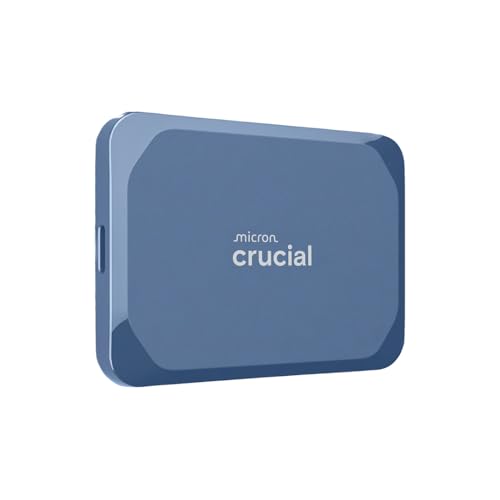
Crucial X10 8TB
Stands out with a 20 Gbps USB‑C interface and 8 TB capacity, catering to audiophiles and enthusiasts who demand ultra‑fast transfers despite its larger 49.8 mm depth.
Also considered
Score Analysis
Key score advantages vs. runner-up (Transcend StoreJet 25H3)
Price Range
WD My Passport 5TB
$159.95
Transcend StoreJet 25H3
$277.97
Crucial X10 8TB
$845.99
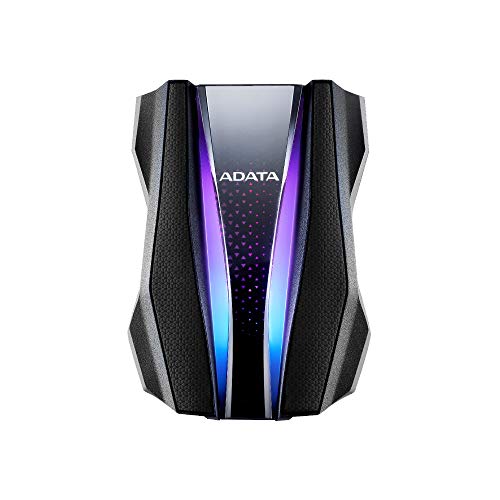
ADATA HD770G 2TB
$119.17
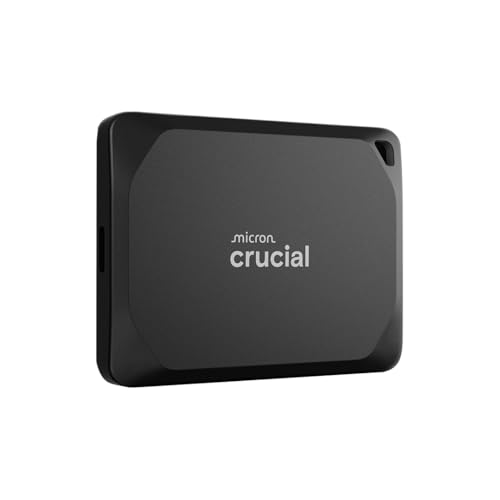
Crucial X10 Pro
$182.43
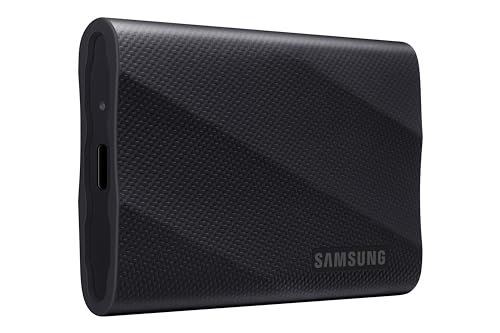
Samsung T9
$224.99

Silicon Power Armor A60
$129.99

Seagate One Touch 2TB
$69.99

ADATA External Hard Drive 1TB
$110.86

Buffalo MiniStation PGF 5TB
$159.99
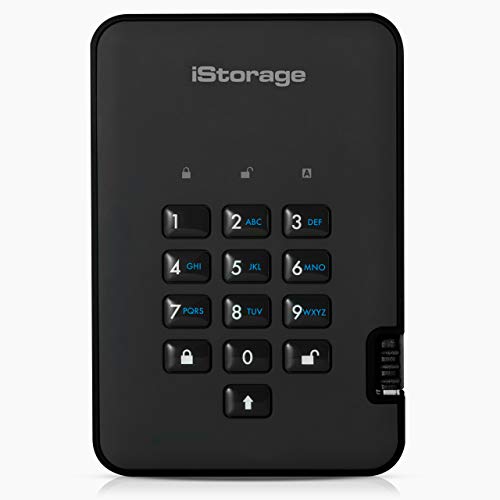
iStorage diskAshur2
$366.95
Spec Comparison
TL;DR: The WD My Passport 5TB packs a massive 5 TB of storage, AES‑256 hardware encryption, and up to 138 MB/s read speed into a 0.46‑lb, bus‑powered drive that’s ideal for secure, portable backups.
The standout feature is its 5 TB capacity combined with 256‑bit AES hardware encryption and password protection, delivering a secure vault for large media libraries. At just 19.05 mm tall, 107.19 mm long and 74.93 mm wide, the drive slips into a pocket while staying under 0.5 lb (210 g); it's one of the lightest high‑capacity options in this lineup.
Compared with the other ten entries, the My Passport weighs less than the Transcend StoreJet 25H3 and the Silicon Power Armor A60, and its dimensions beat the Buffalo MiniStation PGF 5TB. While its USB 3.0 Micro‑B connector is older than the USB‑C options on some rivals, the included USB 3.0 Micro‑B to USB‑A cable keeps it bus‑powered and eliminates the need for an external adapter.
Users consistently praise the drive’s reliable 5 TB space and the bundled backup software that includes ransomware defense. Professional reviewers note the consistent read performance of up to 138 MB/s and write speeds of up to 128 MB/s, as well as the convenient LED activity indicator. Some criticism focuses on the plastic chassis feeling cheap and the Micro‑B port requiring an adapter for newer USB‑C devices, while a few users have reported occasional firmware hiccups with the backup software.
Pros
Cons
Best for: Most users looking for a well‑reviewed, reliable mainstream option
Avoid if: You need advanced features or professional‑grade performance
“Large storage, reliability, ease of use, portability, and fast transfers for media/games/backups”
TL;DR: The Transcend StoreJet 25H3 offers 4 TB of rugged storage with 256‑bit AES encryption, three‑stage shock protection, and 5 Gbps USB 3.1 performance, though its 0.68 lb weight makes it bulkier than many portable drives.
The standout feature is its three‑stage military‑grade shock protection—silicone case, internal damper, and reinforced housing—that professionals cite as superior to typical rugged drives. It pairs that durability with 256‑bit AES hardware encryption and a 4 TB capacity, while the USB 3.1 Gen 1 (UASP) interface delivers up to 5 Gbps transfer rates.
At 0.68 lb (308 g) the StoreJet 25H3 is heavier than the WD My Passport, which weighs about 0.46 lb, and its dimensions (131.8 mm × 80.8 mm × 24.5 mm) are larger than the My Passport’s 107.19 mm × 74.93 mm × 19.05 mm profile. Capacity‑wise it sits between the 5 TB models from WD and Buffalo and the smaller 1 TB–2 TB offerings from ADATA and Crucial, giving it a mid‑range sweet spot. Encryption matches the WD’s AES‑256 hardware solution, while its USB‑Micro‑B cable differs from the USB‑C‑compatible Silicon Power Armor A60.
Professional reviewers praise the drive’s shock system and the bundled one‑touch backup plus Transcend Elite management software, saying they streamline workflows. Consumer sentiment notes the same durability but mentions the 0.68 lb weight and 24.5 mm thickness can feel bulky for extended pocket carry, and they point out the lack of independent reliability data such as MTBF figures. The mechanical HDD design also means it won’t hit SSD‑level speeds, which some users expect from newer portable storage.
The unit operates between 5 °C and 55 °C, runs on a 5 V supply, and comes with a three‑year limited warranty. Its 256‑bit AES encryption, one‑touch backup button, and included Transcend Elite and RecoveRx software round out a feature set aimed at creators who need both security and ruggedness on the go.
Pros
Cons
Best for: Photographers, videographers, field engineers, and other professionals who need rugged, high‑capacity storage with strong encryption.
Avoid if: You need ultra‑slim, lightweight storage, SSD‑level performance, or a drive that relies solely on USB‑C connectivity.
TL;DR: The Crucial X10 8TB packs 8 TB of storage into a 49.8 mm × 9.9 mm × 64.8 mm, IP65‑rated SSD with 256‑bit AES encryption and up to 2100 MB/s reads, but it costs $786.52.
The standout spec is the combination of an 8 TB capacity and a truly pocket‑sized chassis—just 49.8 mm deep, 9.9 mm high and 64.8 mm wide—making it one of the smallest drives at this size. It also carries an IP65 dust‑and‑water rating and survives drops from up to 3 m, while offering 256‑bit AES hardware encryption for secure data.
Compared with the other ten entries, the X10 is markedly lighter at roughly 0.07 lb (32 g) versus the iStorage diskAshur2’s 0.72 lb and the Samsung T9’s 122 g. Its dimensions are shorter than the diskAshur2’s 124 mm depth and 19 mm height, and slimmer than the T9’s 14 mm height. Manufacturer lists a 2100 MB/s sequential read and 2000 MB/s write, far outpacing the diskAshur2’s 171 MB/s read and 148 MB/s write, and matching the T9’s advertised 2000 MB/s read. It leads the pack with 8 TB versus 5 TB on the diskAshur2, Buffalo MiniStation, and WD My Passport, and 1 TB on the Samsung T9 and Crucial X10 Pro.
Users love the “tiny footprint” and the ability to carry a full‑size media library on a key‑chain‑sized device. Reviewers note the premium price and that true 20 Gbps performance only appears on rare USB 3.2 Gen 2x2 hosts, so many see speeds settle around 10 Gbps. Reviewers also note the strong IP65 rating and 3 m drop protection as a big plus for field work.
Pros
Cons
Best for: Content creators, photographers, videographers, travelers, and gamers who need massive, secure portable storage in an ultra‑compact, rugged package.
Avoid if: You lack a USB 3.2 Gen 2x2 (20 Gbps) host or are shopping on a tight budget—the drive is priced at $786.52.
“the smallest 8TB drive imaginable”
“overhyped for non-20 Gbps hosts”
TL;DR: The ADATA HD770G 2TB offers rugged IP68 protection, 1.22 m drop resistance, AES‑256‑bit encryption and RGB lighting in a 2 TB, 0.60‑lb mechanical drive for $108.45.
This drive’s standout feature is its military‑grade durability: it meets MIL‑STD‑810G, survives drops up to 1.22 m (4 ft), and carries an IP68 rating that protects against water up to 2 m for two hours and dust.
Compared with the other ten entries, the HD770G is heavier than the ADATA 1TB model (about 0.60 lb vs 0.31 lb) and the Silicon Power Armor A60 (0.60 lb vs 0.50 lb), but lighter than the Transcend StoreJet 25H3 (around 0.68 lb). It also packs more capacity than the Seagate One Touch 2TB and the WD My Passport 5TB, while offering a higher waterproof rating than most peers, many of which list only basic splash resistance or no IP rating at all.
Reviewers frequently praise the triple‑layer anti‑shock construction and the eye‑catching RGB lighting, calling the drive a solid choice for gamers on the go. The same reviews note the slower transfer speeds inherent to a 5400 RPM mechanical drive and that the internal battery adds weight and a small maintenance consideration.
Pros
Cons
Best for: Gamers and mobile users who need rugged, high‑capacity external storage with eye‑catching RGB lighting.
Avoid if: You prioritize maximum transfer speed, ultra‑light weight, or the best value‑per‑dollar in this segment.
TL;DR: The Crucial X10 Pro 1 TB delivers up to 2100 MB/s read and 2000 MB/s write in a 65 × 50 × 10 mm, 42 g aluminum case with 256‑bit AES encryption and IP55 protection.
The standout spec is its USB 3.2 Gen 2x2 Type‑C interface that supports a 20 Gbps data rate, enabling the advertised sequential read speed of 2100 MB/s and write speed of 2000 MB/s. Coupled with 256‑bit AES hardware encryption and an IP55 water‑dust rating, the drive targets demanding on‑the‑go creators.
Compared with the other ten entries, the X10 Pro is lighter than the Samsung T9 (122 g) and far lighter than the WD My Passport (210 g) or Transcend StoreJet (308 g). Its 10 mm height and 65 mm length also make it the most compact option, beating the ADATA External Hard Drive’s 10.3 mm height and the Silicon Power Armor A60’s 86 mm height. Only the X10 Pro lists an IP55 rating, giving it a durability edge over peers that don’t disclose any ingress protection.
Users rave about the near‑internal SSD performance—delivering up to 2100 MB/s reads—noting the drive feels “pocket‑sized” and works across Windows, macOS, Android, iPad, Linux, PlayStation, Xbox and more. Common complaints focus on the need for a native USB 3.2 Gen 2x2 port to hit full speeds, noticeable heat during long writes, and a plain metal aesthetic. Professional reviewers echo the speed praise while pointing out the lack of a disclosed TBW endurance rating.
Because it draws power directly from the USB bus, you don’t need an external adapter, and it ships with a USB‑C cable, Mylio Photos Plus (3 months) and Acronis True Image software. The anodized aluminum chassis with a rubberized soft‑touch base and an activity LED gives it a premium feel, while the 7.5 ft (2 m) drop resistance provides extra peace of mind.
Pros
Cons
Best for: Those prioritizing quality and willing to pay for premium performance
Avoid if: Reliability and user satisfaction are your top concerns
“the smallest 8TB drive imaginable”
“overhyped for non-20 Gbps hosts”
TL;DR: The Samsung T9 1 TB portable SSD delivers up to 2,000 MB/s reads, 1,950 MB/s writes, AES‑256 encryption, and a rugged 122 g, 88 × 60 × 14 mm design for fast, secure on‑the‑go storage.
The standout spec is its USB 3.2 Gen 2x2 (20 Gbps) interface, which Samsung advertises as capable of sequential reads up to 2,000 MB/s and writes up to 1,950 MB/s (sustaining 1,000 MB/s after TurboWrite). Housed in a 122 g aluminum‑rubber shell measuring 88 mm × 60 mm × 14 mm, the drive feels solid yet fits comfortably in a pocket or laptop bag.
Compared with the other ten contenders, the T9 is heavier than the ultra‑light Crucial X10 Pro (42 g) but still lighter than the WD My Passport 5 TB (210 g). Its 1 TB capacity matches the ADATA External Hard Drive and the Crucial model, while offering faster native speeds than the ADATA’s USB 3.2 Gen 1 interface. The price point sits above the ADATA and Crucial drives, reflecting its premium 20 Gbps link and metal construction.
Reviewers consistently praise the drive’s speed and durability. Professional outlets note the “premium aluminum‑rubber build” and “no throttling during intensive workloads,” while consumer comments highlight the rapid transfer of large media files. The main criticism is that the advertised top speed only appears when paired with a USB 3.2 Gen 2x2 host; older ports revert to slower performance.
Beyond raw speed, the T9 includes AES‑256‑bit hardware encryption, a 3‑meter drop rating, and 1,500 G shock resistance, so it's suitable for field work. Samsung’s Dynamic Thermal Guard helps keep temperatures low during long transfers, and UASP support ensures efficient command processing over USB.
Pros
Cons
Best for: Content creators, photographers, videographers, gamers, and professionals who need fast, portable storage with built‑in hardware encryption.
Avoid if: Your computer lacks a USB 3.2 Gen 2x2 port, you’re seeking the cheapest or lightest drive, or you need capacities larger than 1 TB.
TL;DR: The Silicon Power Armor A60 offers 4 TB of rugged, 256‑bit AES‑encrypted storage in a waterproof, crush‑proof case, but its bulk and USB‑3.0 speed keep it from being the lightest or fastest option.
The standout feature is its durability: the drive survives a 122 cm drop on 26 contact points, endures up to 500 kg of static load, and carries an IP68 rating for water and dust resistance. It also packs a 4 TB WD Blue Mobile HDD and 256‑bit AES hardware encryption, all while delivering a maximum transfer rate of 5 Gbps.
Compared with the other ten drives in this roundup, the Armor A60 is heavier than the ADATA 1 TB model (0.31 lb) and the Seagate One Touch (0.33 lb), yet lighter than the Transcend StoreJet 25H3 (0.68 lb) and ADATA HD770G (0.60 lb). Its 86 mm height and 139 mm length make it taller than most peers – the Transcend sits at 24.4 mm high and the Seagate One Touch at 11.7 mm – so it isn’t the most pocket‑friendly choice.
Reviewers consistently praise the rugged enclosure and the peace of mind that comes from 256‑bit AES encryption, especially for outdoor work and field backups. However, users also note the drive’s 228 g (0.50 lb) weight and relatively thick profile as drawbacks for daily carry, and they mention occasional cable‑connection hiccups and the audible spin of the mechanical HDD during transfers.
Professional reviewers point to the MIL‑STD‑810G certified drop test and the IP68 rating, which together promise immersion up to 1.5 m for 60 minutes and protection against dust ingress. The built‑in 500 kg crush resistance adds an extra layer of security for rough handling, while the sustained transfer speed of 120–130 MB/s aligns with typical 5400 RPM HDD performance.
Pros
Cons
Best for: Outdoor professionals, field workers, and travelers who need rugged, high‑capacity storage with built‑in encryption.
Avoid if: You need the lightest, fastest SSD‑type drive or the absolute best value‑per‑dollar in this price segment.
“really amazing 120–130 MB/s speeds”
“massive storage for backups/photos/videos”
TL;DR: The Seagate One Touch 2TB offers 2 TB of storage, 256‑bit AES hardware encryption and plug‑and‑play USB 3.2 Gen 1 at a $69.99 price point, all in a 148 g, 11.7 mm thin package.
The drive’s standout feature is its password‑activated 256‑bit AES‑256 hardware encryption, which professional reviewers call “government‑level” security for a portable HDD. It ships with 2 TB of capacity for $69.99 and weighs just 148 g (about 0.33 lb), making it one of the lightest options in this lineup.
Compared with peers, the One Touch is slimmer at 11.7 mm high versus the ADATA HD770G’s 26 mm height, and it’s lighter than the ADATA HD770G’s listed 0.60 lb. Its weight is roughly on par with the ADATA 1TB model’s 0.31 lb, while the Silicon Power Armor A60 tips in at about 0.50 lb, making Seagate’s unit one of the lighter choices. Unlike the Armor A60, which includes a USB‑C compatible cable, the One Touch relies on a 457.2 mm micro‑USB 3.0 to USB‑A cable, so you’ll need an adapter for newer USB‑C‑only laptops.
User sentiment highlights the drive’s straightforward plug‑and‑play experience across Windows, macOS and Chromebook, and many appreciate the bundled three‑year Rescue Data Recovery Services plus trial subscriptions to Dropbox, Mylio and Adobe Creative Cloud. However, macOS users often mention the extra step of reformatting for Time Machine, and the 5400 RPM spindle speed creates a bottleneck for heavy‑duty tasks like 4K video editing.
Pros
Cons
Best for: Photographers, travelers, families, or anyone needing secure, portable backup on a budget.
Avoid if: You need high‑speed performance for professional video editing, gaming, or rely exclusively on USB‑C connections.
“Ease of use, Storage, Reliability, Size, USB”
TL;DR: The ADATA 1 TB HV300 packs AES‑256 encryption, shock‑sensor protection and a 10.3 mm ultra‑slim profile into a 0.31‑lb drive that earns a 4.8‑star rating from 411 reviewers.
What really stands out is the built‑in 256‑bit AES hardware encryption combined with a shock sensor, all housed in a chassis only 10.3 mm thick. At 125.7 mm wide and 80.5 mm deep, it slides easily into a laptop sleeve, while the 139.8 g (0.31 lb) weight makes it one of the lightest options in the lineup.
Compared with the other ten drives, the HV300 is lighter than the Seagate One Touch (≈0.33 lb) and considerably lighter than the ADATA HD770G (≈0.60 lb), Silicon Power Armor (≈0.50 lb), Transcend StoreJet (≈0.68 lb), WD My Passport (≈0.46 lb) and Buffalo MiniStation (weight not listed). Its 10.3 mm thickness is also far slimmer than the ADATA HD770G’s 26 mm height, the Silicon Power Armor’s 86 mm height, and the Transcend StoreJet’s 24.4 mm height, giving it a clear advantage for pocket‑sized portability. Capacity‑wise, it offers 1 TB, which is less than the 2 TB found in the ADATA HD770G, but the price point keeps it competitive for users who don’t need massive storage.
Reviewers consistently praise the drive’s “pocket‑friendly” size and the peace of mind from AES‑256 encryption. Reviewers highlight the shock‑sensor protection as a useful safeguard for commuters and travelers. Some users note that the $110.88 price feels a bit high for a single‑terabyte drive, especially when larger‑capacity rivals drop below $100, but the high 4.8‑star rating and 411 positive reviews suggest most owners feel the trade‑off is worth it. The drive draws power from a 5 V USB connection at 900 mA and includes ADATA’s Backup ToGO software for easy data management.
Pros
Cons
Best for: Entry-level buyers or those on a tight budget
Avoid if: You need advanced features or professional‑grade performance
TL;DR: The Buffalo MiniStation PGF offers 5 TB of portable storage in a compact 1‑in‑high, 5‑in‑long, 3‑in‑wide chassis, with hardware password protection, shock resistance, and a three‑year warranty for $159.99.
The drive’s standout spec is its 5 TB capacity packed into a 1.0 in × 5.0 in × 3.0 in footprint, making it one of the larger‑capacity portable HDDs while staying pocket‑friendly. It also includes “Lock and Go” hardware password protection and a chassis that survives drops of up to 2 ft, which reviewers praise for peace of mind on the road.
Compared with the other ten options, the MiniStation matches the WD My Passport’s 5 TB size but is a bit taller than the WD’s 19.05 mm height. It’s pricier than the Transcend StoreJet 25H3 and the ADATA 1 TB model, yet its dimensions are similar to the Silicon Power Armor A60’s bulkier body. The MiniStation doesn’t list its weight, while peers range from a feather‑light 42 g (Crucial X10 Pro) to about 308 g (Transcend). So if weight is a key factor, you’ll need to check the actual heft before buying.
User feedback highlights the high‑capacity storage and the rugged “drops up to 2 ft” chassis as major positives. Reviewers also note the built‑in LED that signals password status and predicts drive failure, adding a layer of proactive security. On the downside, the mechanical HDD architecture means transfer speeds lag behind SSD‑based rivals, and the USB 3.2 Gen 1 port limits you to a standard Type‑A connection—no USB‑C or Thunderbolt support.
Pros
Cons
Best for: Professionals and travelers who need a rugged, high‑capacity portable drive with built‑in hardware encryption.
Avoid if: You prioritize the fastest SSD‑class transfer speeds, require USB‑C/Thunderbolt ports, or need an ultra‑lightweight solution.
TL;DR: The iStorage diskAshur2 packs 5 TB of storage, AES‑XTS 256‑bit hardware encryption with a built‑in PIN keypad, and an IP56‑rated, tamper‑proof chassis, but its premium price and 325 g weight make it a niche choice.
The standout feature is its full‑disk AES‑XTS 256‑bit encryption that runs on a dedicated hardware processor and is accessed via a 7‑15 digit PIN keypad. The drive also includes an active shield epoxy coating, brute‑force protection, and a self‑destruct mechanism that wipes the drive after too many incorrect PIN attempts. Capacity sits at a generous 5 TB, while read and write speeds list 171 MB/s and 148 MB/s respectively.
When you line it up against the other ten contenders, the diskAshur2 weighs noticeably more than the SSD‑based Samsung T9, Crucial X10 Pro, and Silicon Power Armor A60, all of which weigh well under 250 g. It also trails the Samsung T9 and Crucial X10 Pro in raw transfer speeds, which achieve gigabytes‑per‑second range. Compared with the WD My Passport, Buffalo MiniStation, and Transcend StoreJet, it offers a stronger encryption suite—those models either rely on password protection or lack the built‑in keypad and self‑destruct feature. In short, it sits at the premium end of the price spectrum and provides more security‑focused specs than most peers.
Customer chatter highlights the hardware‑only encryption as a major plus, especially for users who need cross‑platform compatibility without installing software. Reviewers also note that the 325 g weight feels “bulky” for a portable drive, and some mention that the keypad can wear with frequent use. The lack of dedicated management software is another recurring comment, meaning you’ll rely on the drive’s built‑in protections alone.
Beyond encryption, the diskAshur2 features an IP56 rating, protecting it from dust and water jets, and it operates from 0 °C up to 70 °C. Power is drawn directly from the USB port, so no external adapter is required. The anti‑tamper active shield monitors voltage and temperature, and the device is certified to FIPS PUB 197, Common Criteria EAL5+, and ISO 9001:2015, underscoring its suitability for demanding security environments.
Pros
Cons
Best for: Those prioritizing quality and willing to pay for premium performance
Avoid if: You're on a tight budget or only need basic functionality
Breakdown
WD My Passport 5TB
Pros
Transcend StoreJet 25H3
Pros
Crucial X10 8TB
Pros
Cons
ADATA HD770G 2TB
Pros
Cons
Based on scoring data and product specs
Personalized picks
Best Overall Pick
WD My Passport 5TB
Best OverallBest for: Most users looking for a well-reviewed, reliable mainstream option
Transcend StoreJet 25H3
Best for: Most users looking for a well-reviewed, reliable mainstream option
$277.97+$118.02 vs winner
Skip iStorage diskAshur2 if…
You're on a tight budget or only need basic functionality
WD My Passport 5TB takes the top spot thanks to its 5 TB of storage, AES‑256 hardware encryption with password protection, and a solid 4.5/5 rating from 101,519 reviews. At just 210 g (0.46 lb) it stays lightweight, and the included USB 3.0 Micro‑B cable lets you power it straight from the host without an extra adapter.
The Transcend StoreJet 25H3 lands as the runner‑up, ideal if you need a rugged drive for on‑the‑go work. Its 4 TB capacity pairs with 256‑bit AES encryption, and the three‑stage military‑grade shock protection (silicone case, internal damper, reinforced casing) helps survive drops. USB 3.1 Gen 1 (5 Gbps) ensures fast transfers while you travel.
For tighter budgets, the Seagate One Touch 2TB offers a very low $69.99 entry point, making basic encrypted backup affordable. If you’re willing to spend more for top‑tier capacity, the Crucial X10 8TB stands out as the premium alternative at $786.52, delivering 8 TB of storage for power users.
Pick the WD My Passport 5TB today and secure your data with confidence.
The ADATA HD770G and the Silicon Power Armor A60 both carry an IP68 rating, meaning they can survive immersion in water up to 2 m for two hours (ADATA) and are dust‑tight (Silicon Power). If you also need shock protection, the ADATA HD770G adds MIL‑STD‑810G certification and a 1.22 m drop rating, making it the most rugged choice for wet environments.
No reviews yet — be the first to share your experience.
Please sign in to leave a review