⚡ Quick Answer
🏆 Best Overall
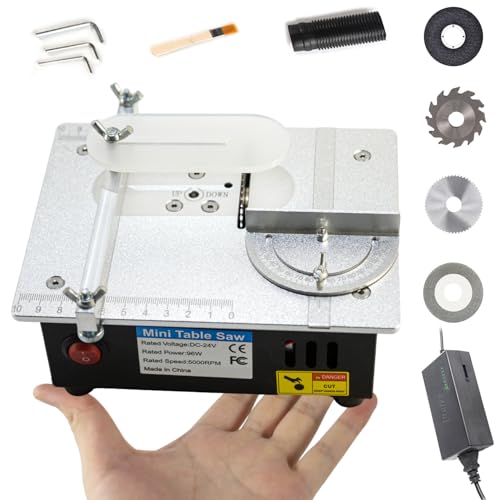
Rtovzon Mini Table Saw
$56.99
Choosing a table saw today means juggling everything from a $55.99 hobby‑grade unit to a $729.00 jobsite powerhouse. In this roundup we line up 12 models, sorted into budget, mid‑range and premium tiers. The budget lane begins with the Rtovzon Mini at just $55.99, while the mid‑range bracket features the DEWALT DWE7485 and SKIL TS6307 at $329.00 each. Premium contenders start around $429.00 and climb to the $729.00 DEWALT DWE7491X.
The Rtovzon Mini packs a 96 A motor, 6000 RPM no‑load speed and a 2.48 in blade that reaches a 0.59 in cut depth, all on a desktop‑type stand that weighs just 4.08 lb. Its aluminum‑alloy table and safety bezel make it a tidy companion for model making or PCB work. By contrast, the DEWALT DWE7485 brings a 15 A motor, 5800 RPM spin, an 8.25 in blade and a 24.5 in right‑hand rip capacity, housed in a portable metal frame that tips the scales at 54 lb.
From ultra‑light mini units to heavyweight jobsite rigs, each saw brings a different mix of power, portability and price. Keep reading as we break down the specs, user feedback and ideal use cases for every model.
Rtovzon Mini Table Saw
Its Blade Teeth: 44 deliver precise cuts for detailed work, making it the top overall value.

DEWALT DWE7485
Ideal for pros or serious DIYers who need a reliable, well‑reviewed saw; it costs roughly $273 more than the Rtovzon Mini Table Saw.
SKIL SPT99T
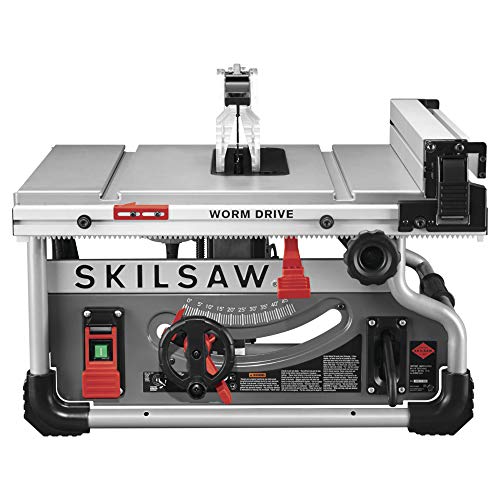
Stands out with a 6‑foot cord, letting you work farther from outlets—an advantage the other two compact saws don’t provide.
Also considered
TL;DR: The DEWALT DWE7485 packs a 15 Amp, 5800 RPM motor and a 24.5‑in right‑side rip capacity into a 54‑lb metal‑cage package, delivering professional‑grade accuracy and safety at a mid‑range price.
The standout spec is the 15 Amp motor that spins at 5800 RPM, paired with an 8‑¼‑in blade and a 2.5‑in max depth at 90°. Those numbers give the saw the torque to slice through 4 × 8 plywood sheets while keeping the cut clean. Its rack & pinion telescoping fence adds precise, repeatable positioning, and the right‑side rip capacity of 24.5 in lets you handle full‑sheet material without a separate support table.
Compared with the other eleven contenders, the DWE7485 is a bit heavier than the 40‑lb SKIL TS6308 but still lighter than the 60‑lb Evolution R10TS. Its 5800 RPM motor outpaces the 4,600 RPM motor of the SKIL TS6307 and the 5,500 RPM motor of the Bosch PROFACTOR, giving it a clear edge in cutting speed. While the SKIL TS6307 sports a larger 10‑in blade, the DEWALT’s 8‑¼‑in blade is standard for jobsite saws and benefits from the same 5/8‑in arbor size found on most peers. The 6‑foot cord matches the length on the SKIL SPT99T, ensuring ample reach on the jobsite.
Reviewers consistently praise the saw’s fence accuracy and the built‑in safety brake plus power‑loss reset, noting that these features make it feel as safe as a stationary shop saw. Professionals highlight the ability to rip full‑size sheets thanks to the 24.5‑in capacity, while everyday users appreciate the compact 22.75 × 22.75 × 26.7 in footprint for tight jobsite corners. The main complaints focus on dust management—there’s no dedicated port—and the limited 12‑in left‑side rip, which can restrict some wide‑board operations. The metal roll cage and three‑year limited warranty round out a robust, job‑ready package.
Pros
Cons
Best for: Most users looking for a well‑reviewed, reliable mainstream option — the DEWALT DWE7485 offers Motor Power: 15 Amp
Avoid if: You need advanced features or professional‑grade performance
“Rips 4x8 sheets like butter”
“Fence is dead accurate and smooth”
TL;DR: The SKIL TS6307 packs a 15‑amp motor, 10‑inch blade and a folding stand into a 51‑lb portable saw that delivers 25.5‑inch rip capacity and solid user praise for jobsite flexibility.
The standout spec is the 15 A motor paired with a 4,600 RPM no‑load speed, which lets the 10‑inch blade reach a maximum 3.5‑inch depth at 0° bevel. Combined with a 24‑tooth blade, it handles hardwood ripping without bogging down, and the -2° to 47° bevel range adds versatile angled cuts.
In the twelve‑product roundup, the TS6307 sits heavier than the 40‑lb SKIL TS6308 but lighter than the 54‑lb DEWALT DWE7485, striking a middle ground for portability. Its 25.5‑inch total rip capacity outpaces the compact Zericuf Mini Table Saw and matches the longer reach of the Evolution R10TS, while still fitting on the folding stand that collapses to a 28.74 × 27.17 × 32 in footprint when deployed.
Reviewers consistently highlight the folding stand as a real time‑saver on job sites, noting that the rack‑and‑pinion fence provides quick, precise adjustments. Professionals point out the 15‑amp motor’s ability to slice through hardwoods, and everyday users appreciate the included push stick, dust port and riving knife for safer, cleaner cuts. The main trade‑off is the limited rip capacity compared with full‑size stationary saws, which some woodworkers may find restrictive for very wide panels.
Pros
Cons
Best for: Most users looking for a well‑reviewed, reliable mainstream option — the SKIL TS6307 offers Blade Teeth: 24T
TL;DR: The SKIL SPT99T packs a 15 A dual‑field motor, 8.25‑in blade and 2.6 in max cut depth into a portable 51.15‑lb all‑metal frame for strong ripping on the jobsite.
What really sets this saw apart is its 15 A Dual‑Field motor that spins at 5300 RPM, paired with an 8.25 in blade and a 2.6 in maximum cutting depth at 90°. The rack‑and‑pinion fence delivers precise adjustments, while the smart guard system with anti‑kickback adds safety. At 51.15 lb (59 lb assembled) it stays compact enough for a portable stand, yet heavy enough to stay stable during heavy ripping.
Compared with the other eleven entries, the SPT99T is lighter than the Evolution R10TS’s roughly 60 lb frame and heavier than the ultra‑light Zericuf mini saw at 8.6 lb. Its blade size matches the Bosch PROFACTOR and DEWALT DWE7485 (both 8.25 in) but is smaller than the 10‑in blades on Evolution and the SKIL TS6307, which gives those models a deeper 3.4‑in cut capability. The SPT99T’s 2.6 in depth still exceeds the 2.5 in depth of the Bosch and DEWALT units, and its 25‑in right‑side rip capacity is on par with Evolution’s 26 in and longer than most compact peers.
Reviewers consistently praise the worm‑drive torque for ripping sheet goods quickly, and they appreciate the rack‑and‑pinion fence for smooth, repeatable cuts. Professional testers note the saw feels like a “compact powerhouse” on cramped job sites. The most common complaint is the 8.25 in blade limiting cuts on material thicker than 2.6 in, and some users find the 59‑lb assembled weight a bit cumbersome to move around. The basic dust port also draws remarks for lacking advanced filtration.
Pros
Cons
Best for: Those prioritizing quality and willing to pay for premium performance — the SKIL SPT99T offers Rip Capacity (Left): 12 inches
Avoid if: You need deep cuts on thick hardwoods exceeding 2.6 in or require advanced dust‑collection and dado capabilities.
TL;DR: The DEWALT DWE7491X delivers a 15 Amp motor, 32.5 in rip capacity and a sturdy rolling stand, but its 87 lb weight and $729 price make it a premium choice for serious woodworkers.
At the heart of the DWE7491X is a 15 Amp motor paired with a 10 in, 24‑tooth blade, giving a maximum 90° cut depth of 3.125 in. Its right‑hand rip capacity stretches to 32.5 in, while the left side offers 24 in, letting you tackle full‑size 4×8 sheets without extra support. The rack & pinion telescoping fence and flip‑over ripping fence combine for smooth, repeatable adjustments, and the 2.5 in dust port helps keep the work area cleaner.
Compared with the other eleven entries, the DWE7491X is noticeably heavier than the Bosch PROFACTOR at 53.55 lb and the Evolution R10TS at 60 lb, and also heavier than the SKIL SPT99T and TS6307 models at around 51 lb. Its 32.5 in right‑hand rip capacity exceeds the 26 in rip capacity listed for the Evolution R10TS, giving it an edge for large‑sheet work. While many of the compact peers feature 8¼ in blades, the DWE7491X’s 10 in blade and larger table (21.875 × 26.375 in) provide more cutting surface than the SKIL TS6308’s 8¼ in blade setup.
Users consistently praise the easy fence adjustments and the stability of the rolling stand, noting that setup on a jobsite is quick and reliable. The 15 Amp motor earns frequent mentions for handling dense hardwoods without bogging down. However, reviewers also flag the 87 lb (90 lb alternative source) weight as a hurdle for solo transport, and the 30° left‑right miter range draws criticism for limiting angled cuts on trim work. Professional reviewers highlight the site‑pro modular guard as a safety plus, while also reminding users that full‑sheet outfeed support is still required.
Additional technical details include a 2.5 in dust port for vacuum attachment, a 0.625 in arbor, and a 4700 RPM no‑load speed that keeps the blade humming smoothly. The overall dimensions of 26.75 × 26.75 × 30.25 in make the unit sizable but manageable on a workshop bench, and the included accessories—rolling stand, push stick, miter gauge, rip fence, blade wrenches, and blade guard—cover most immediate needs.
Pros
Cons
Best for: Those prioritizing quality and willing to pay for premium performance — the DEWALT DWE7491X offers Blade Teeth: 24
TL;DR: The Bosch PROFACTOR delivers cordless, brushless power with a 5,500 RPM motor, 8.25‑in blade and 25 in right‑side rip capacity, but its $499 price and 53.55 lb weight make it a premium, job‑site‑focused saw.
The standout feature is its 18 V BITURBO brushless motor that spins at 5,500 RPM, driving an 8.25‑in carbide‑tipped blade with a maximum 2.5 in depth of cut at 90°. The rack‑and‑pinion fence lets you micro‑adjust cuts, and the saw offers a 12 in left‑side and 25 in right‑side rip capacity, enough for 2×4 and 2×6 lumber.
Compared with the other eleven contenders, the PROFACTOR sits near the heavier end at 53.55 lb—lighter than the 87 lb DEWALT DWE7491X and the 60 lb Evolution R10TS, but heavier than the 40 lb SKIL TS6308 and the 51.15 lb SKIL SPT99T. Its 8.25‑in blade matches the SKIL SPT99T and DEWALT DWE7485, yet falls short of the 10‑in blades on Evolution and SKIL TS6307. The 25‑in right‑side rip capacity is just shy of Evolution’s 26‑in reach, positioning it solidly among the mid‑range options.
Professional reviewers highlight the cordless convenience paired with corded‑equivalent performance, and they commend the rack‑and‑pinion fence for its precision. Users appreciate the Smart Guard System’s restart protection, soft‑start and electric motor brake, but several note that the tool ships without a charger and that you’ll need an 8.0 Ah or 12.0 Ah battery to unlock its full power. At 53.55 lb, the saw is portable yet still feels substantial on a jobsite.
Pros
Cons
Best for: Those prioritizing quality and willing to pay for premium performance — the Bosch PROFACTOR offers Rip Capacity (Left): 12 inches
Avoid if: You're on a tight budget, don't already own Bosch 18 V batteries, or need a lightweight, basic table saw
TL;DR: At $55.99, the Rtovzon Mini Table Saw packs a 2.48‑in blade, 6000 RPM motor and 4.08 lb weight into a desktop‑friendly package that’s ideal for hobby‑level precision cuts.
The saw’s standout spec is its 6000 RPM no‑load speed paired with seven adjustable speed levels, letting you dial in the right RPM for wood, acrylic or PCB. Its 2.48 in, 44‑tooth alloy‑steel blade reaches a cutting depth of 0.59 in at a full 180° angle, while the aluminum‑alloy table keeps the tool stable on a workbench.
Compared with the other eleven entries, the Rtovzon is notably lighter—at 4.08 lb it’s well under the Jeth Mini Table Saw’s roughly 7.72 lb and the Saker Mini Table Saw’s about 6.11 lb. Its blade is smaller than Jeth’s 4‑in blade, but the cutting depth matches Jeth’s 0.6 in capability. Across the board it’s the most budget‑friendly, undercutting every competitor’s listed price.
Users consistently praise the quiet operation, easy speed‑and‑depth adjustments, and the fact that four 44‑tooth blades and a miter gauge come in the box. Professional reviewers note it excels on thin‑material projects like dollhouse wood or acrylic, but they also flag the minimal safety guards that leave the blade exposed. Many hobbyists mention the tool struggles with material thicker than 15 mm and that the tabletop can wobble on uneven surfaces.
Pros
Cons
Best for: Hobbyists, model makers, and crafters needing precision cuts on thin materials; the Rtovzon Mini Table Saw offers Blade Teeth: 44
Avoid if: You need powerful performance or professional‑grade features for thick or heavy-duty cutting.
“Very quiet... works pretty well”
“useful but many safety flaws”
TL;DR: The Saker Mini Table Saw packs a 100 W motor and 6000 RPM speed into a 4.3 × 7.08 × 6.3‑inch desktop unit for precise cuts on small materials, but its shallow 0.63‑inch depth limits larger projects.
What really stands out is the 100 W pure‑copper motor that spins up to 6000 RPM and offers seven speed settings, giving you enough torque to slice thin wood, PCBs, plastic, and even soft metal. The blade diameter is 2.48 in (63 mm) and the cutting depth tops out at 0.63 in (16 mm), which matches the tool’s focus on hobby‑scale work.
Compared with the other eleven entries, the Saker is lighter than the Jeth Mini Table Saw (7.72 lb) but heavier than the ultra‑light Rtovzon Mini Table Saw. Its overall footprint (4.3 × 7.08 × 6.3 in) is shorter than the Jeth’s 7.5‑inch length and taller than the Rtovzon’s 75 mm height, placing it in the middle of the size spectrum. While the Nicklaua model is bulkier (115 mm height, 200 mm width) and the Zericuf weighs more, the Saker offers a solid set of specs for its price tier.
Users on DIY forums praise the tool’s versatility: the four included blades (PCB, HSS, alloy, resin) let you tackle a range of thin materials, and the soft‑shaft attachment expands the machine into sanding and engraving. Professional reviewers note the 90‑degree bevel range and transparent safety guard as handy for detailed craft work. However, several comments warn that the 0.63‑inch cutting depth makes the saw unsuitable for larger boards or deep cuts, a limitation that aligns with the “small‑scale” positioning of the product.
Additional technical touches include a cast‑iron table for stability, anti‑slip feet, and clear panel markings that help you set cuts accurately. The 120 V power requirement and 0.13 A draw are standard for a desktop unit, and the 7‑speed dial lets you fine‑tune the blade speed for different materials.
Pros
Cons
Best for: Entry-level buyers or those on a tight budget — the Saker Mini Table Saw offers Motor Power: 100 W
Avoid if: Reliability and user satisfaction are your top concerns
TL;DR: The Nicklaua Mini Table Saw packs a 7000 RPM motor, 4.33 in blade and transparent shield into a 7.08 × 4.3 × 6.2 in desktop unit for $89.99, earning a solid 4‑star rating from 165 reviewers.
Nicklaua's Mini Table Saw stands out with a 7000 RPM 96 W motor that drives a 4.33 in blade, delivering up to a 0‑90° bevel range and a 1.14 in maximum cut depth. The unit measures 7.08 × 4.3 × 6.2 in and weighs 11.02 lb, making it easy to place on a bench or fold into a small workshop.
At $89.99 it sits above the $55.99 Rtovzon but below the $129.89 Zericuf, offering a larger blade diameter than the Rtovzon’s 63 mm and a deeper 1.14 in cut compared with the Rtovzon’s 15 mm depth. It’s heavier than the 1.85 kg Rtovzon yet lighter than the 40‑lb SKIL TS6308, and it provides a higher no‑load speed than the Saker’s 6000 rpm while matching its seven speed‑setting count.
Reviewers appreciate the compact footprint and the included multi‑function accessories – four blades, a drill chuck and a soft‑shaft – which let them cut, grind, polish and drill without swapping tools. Professional reviewers note the clean, precise cuts on thin materials, but they also warn that the 1.14 in depth limits the saw to hobby‑scale projects and that the 7000 RPM spin can feel intimidating for beginners. Some users have mentioned missing fence parts on arrival, echoing the “tiny table and fence” criticism.
The saw’s desktop stand includes an integrated ruler and angle scale for quick measurements, while a transparent safety shield keeps debris out of sight. Powered by a 12‑24 V source, the tool offers seven adjustable speed steps, letting you dial in the right RPM for wood, plastic or metal. Its 0.63‑in arbor accommodates the included 16 mm bore blade and standard Dremel‑type bits.
Pros
Cons
Best for: Entry-level buyers or those on a tight budget — the Nicklaua Mini Table Saw offers Cutting Angle: 0-90 degrees
Avoid if: Reliability and user satisfaction are your top concerns
TL;DR: The Jeth Mini Table Saw packs a 4‑inch blade, 60 W motor and multi‑tool attachments into a 7.5 × 4.72 × 5.51‑inch, 7.72‑lb package for $66.99, ideal for hobbyists who don’t need deep cuts.
What really sets this saw apart is its 4.0 in blade paired with a 4,500 RPM no‑load speed and a 60 W DC motor. The tool can cut up to 0.6 in deep at 90°, and it also doubles as a built‑in disc sander, polisher and rotary attachment, all powered from a single motor. Safety isn’t an afterthought either—the unit ships with a blade guard and a clear eye guard, plus a bench‑top stand for stable work.
In the twelve‑item roundup, the Jeth sits between the ultra‑light Rtovzon (weighing 1.85 kg) and the heavier Zericuf model (8.6 lb). It’s also lighter than the Saker’s 6.11 lb and far lighter than the full‑size SKIL TS6308 at 40 lb. Its overall footprint of 7.5 × 4.72 × 5.51 in makes it more compact than the larger bench saws, yet it still offers two miter slots and a dedicated miter gauge for angled cuts.
Reviewers appreciate the “comprehensive accessories” package – two blades, a sander, a rotary attachment and a miter gauge – which many say speeds up setup for small projects. Professional reviewers highlight the adjustable voltage output on the power adapter, calling the speed‑control feature a practical touch for hobby work. However, the 4.2‑star average from 127 reviews hints that some users find the limited 0.6‑in cutting depth and modest 60 W motor insufficient for harder woods.
Pros
Cons
Best for: Entry-level buyers or those on a tight budget — the Jeth Mini Table Saw offers Blade Diameter: 100mm (4 inches)
Avoid if: You need powerful performance or professional‑grade features
TL;DR: The Zericuf Mini Table Saw packs a 200 W dual‑motor system, 12,000 RPM speed and a 7‑level dial into a compact 4.0 × 6.5 × 7.99‑in chassis for $129.89, making it a solid mid‑range choice for hobbyists.
The standout feature is its dual 795 motors that together deliver 200 W of power, letting the saw reach a no‑load speed of 12,000 RPM and offering seven voltage‑adjustable speed levels. Its cutting depth of 1.02 in and 3.35‑in blade give you enough reach for thin wood, plastic and hobby‑grade materials, while the built‑in rotary chuck supports a 3.15‑in sanding disc for finishing work.
At $129.89, the Zericuf is significantly pricier than the $55.99 Rtovzon Mini Table Saw, but it also provides a higher wattage (200 W vs. the Rtovzon’s lower‑powered motor) and a sturdier build. It weighs 8.6 lb, making it heavier than the 6.1‑lb Saker Mini Table Saw yet far lighter than the 40‑lb SKIL TS6308. Its overall dimensions of 4.0 × 6.5 × 7.99 in keep it portable enough for a small workshop, while still offering a larger worktable length of 12 cm compared with many ultra‑compact rivals.
Reviewers appreciate the easy accessory swaps – the blade changes through a small two‑screw window and the included chuck, sanding disc and fence come ready to go. The independent dual switches are praised for safety, and the shock‑absorbing rubber feet help keep the unit stable on a bench. Professional reviewers note that the dual‑motor design “double[s] the output over single‑motor competitors,” delivering smoother cuts on thin materials. However, users repeatedly mention the inability to run both cutting and rotary functions at the same time, and some find the voltage‑based speed dial less precise than a digital controller. The CE certification and 12‑month warranty add confidence for casual makers.
Pros
Cons
Best for: Hobbyists, crafters and beginners who need a balanced saw with a 90‑degree cutting angle and built‑in sanding capability.
Avoid if: You require heavy‑duty power for thick lumber or need a tool that can run cutting and sanding functions at the same time.
“great for projects”
“compact table saw for DIY crafts”
TL;DR: The SKIL TS6308 offers a 15‑Amp motor, 8¼‑inch blade, and rack‑and‑pinion fence at 40 lb, delivering solid power and portability for DIY projects at a mid‑range price.
The standout spec is its 15 Amp motor paired with a 5000 RPM no‑load speed, giving the saw enough torque to cut dense lumber and sheet goods. Weighing 40 lb and built on an aluminum tabletop, it balances sturdiness with a footprint of 22.83 × 12.99 × 25.98 in, making it a genuinely portable jobsite companion.
Compared with the other eleven entries, the TS6308 sits between the ultra‑light mini saws and the heavier full‑size models. It’s lighter than the DEWALT DWE7485 (54 lb) and the larger SKIL TS6307 (51.15 lb), yet considerably heavier than the Zericuf Mini (8.6 lb), Saker Mini (≈6 lb) and Nicklaua Mini (5000 g). Its 8¼‑inch blade outmatches the mini saws’ 63 mm‑85 mm blades but falls short of the TS6307’s 10‑inch blade. The 2.5 in maximum cut depth matches the DEWALT’s 2.5 in spec, while the TS6307 can reach 3.5 in, and the mini saws are limited to roughly 1 in or less. The 5000 RPM spindle speed also exceeds the TS6307’s 4600 RPM, giving it a slight edge in blade velocity.
Users consistently highlight the saw’s easy transport, the punchy 15 Amp motor, and the smooth rack‑and‑pinion fence that keeps cuts parallel and accurate. Reviewers appreciate the included safety guard, anti‑kickback pawls, and the miter gauge, noting they feel well‑equipped right out of the box. The most common downside mentioned is the 2.5 in depth ceiling, which prevents full 4×4 cuts, and the smaller 8¼‑inch blade that limits versatility for heavier professional work.
The machine’s aluminum table adds rigidity, while the safety switch, guard system and anti‑kickback pawls address typical workshop hazards. With a 0.625 in arbor and a max dado width of 5/8 in, it can handle standard groove cuts, and the 24‑tooth blade delivers clean finishes on most DIY tasks.
Pros
Cons
Best for: Most users seeking a balanced, mainstream option — the SKIL TS6308 offers Motor Power: 15 Amps
“best beginner saw”
TL;DR: The Evolution R10TS packs a 15‑amp motor, 10‑inch TCT blade with 40 teeth, and a 26‑inch rip capacity into a portable jobsite saw, but its 60‑lb weight and $475 price put it at the premium end of the market.
The standout spec is the 10‑inch tungsten‑carbide‑tipped blade paired with a 15 A motor that spins at 3,300 RPM, delivering a respectable 3‑3/8‑inch maximum cut depth and a 26‑inch rip capacity. Those numbers let you tackle wood, mild steel, aluminum, and composites without swapping blades.
Compared with the other eleven contenders, the R10TS is larger—its overall dimensions are 29 × 29 × 15 inches—so it sits bigger than the Bosch (24 × 22.75 × 13 in) and the SKIL TS6308 (25.98 × 22.83 × 12.99 in). At 60.00 pounds it’s heavier than most compact models such as the SKIL TS6308 (40 lb) and the DEWALT DWE7485 (54 lb), though lighter than the DEWALT DWE7491X (87 lb). The saw also offers a 10‑inch blade, whereas many peers stick with 8‑¼‑inch blades, giving you more cutting power at the cost of a higher price point.
Professional reviewers praise the multi‑material capability and the dual rack‑and‑pinion fence that provides micro‑adjustable positioning. Users repeatedly note that the saw’s accuracy hinges on proper calibration out of the box—checking the base plate flatness and fence alignment is essential. Safety‑focused features like the electronic blade brake, soft‑start, and overload protection add confidence for jobsite work.
Additional technical touches include integrated carry handles for transport, onboard storage for the TCT blade, guard, and outfeed support bar, and a geared bevel selector that covers a 0°–45° range. The steel work table (13.4 × 22.7 in) gives you a solid platform for precise cuts.
Pros
Cons
Best for: Those prioritizing quality and willing to pay for premium performance — the Evolution R10TS offers Blade Teeth: 40
Avoid if: You're shopping on a tight budget — it's priced at $475.00
Breakdown
Rtovzon Mini Table Saw
Pros
DEWALT DWE7485
Pros
SKIL SPT99T
Pros

SKIL TS6307
Pros
Based on scoring data and product specs
Personalized picks
Best Overall Pick
Rtovzon Mini Table Saw
Best OverallBest for: Users with specific technical requirements or compatibility needs — the Rtovzon Mini Table Saw offers Blade Teeth: 44
DEWALT DWE7485
Best for: Most users looking for a well-reviewed, reliable mainstream option — the DEWALT DWE7485 offers Motor Power: 15 Amp
$329.00+$272.01 vs winner
Skip Saker Mini Table Saw if…
Reliability and user satisfaction are your top concerns
We’re naming the Rtovzon Mini Table Saw the clear winner. At just 4.08 lb it’s feather‑light, its 2.48‑in blade spins at a no‑load speed of 6000 RPM, and it can cut up to 0.59 in deep at 90°, all for a list price of $55.99. Those specs give you a portable, fast‑cutting tool that still handles wood, acrylic and even thin aluminum.
The DEWALT DWE7485 earns runner‑up honors if you need a full‑size saw for bigger projects. It delivers a 2.5 in max cut depth and a 24.5 in right‑side rip capacity, letting you tackle 2×4s and larger panels. Its 8.25‑in blade, metal table and 120 V motor power keep cuts consistent, while the rack‑&‑pinion telescoping fence adds precision on the shop floor.
Other budget‑friendly choices round out the lineup:
Pick the Rtovzon Mini Table Saw today and get a capable, portable cutter without breaking the bank.
The Rtovzon offers a max cut depth of 0.59 in at 90°, while the DEWALT reaches 2.5 in, so the DEWALT can handle thicker material. For hobby‑level cuts on wood, PCB or acrylic, the Rtovzon’s shallower depth is usually sufficient.
No reviews yet — be the first to share your experience.
Please sign in to leave a review


