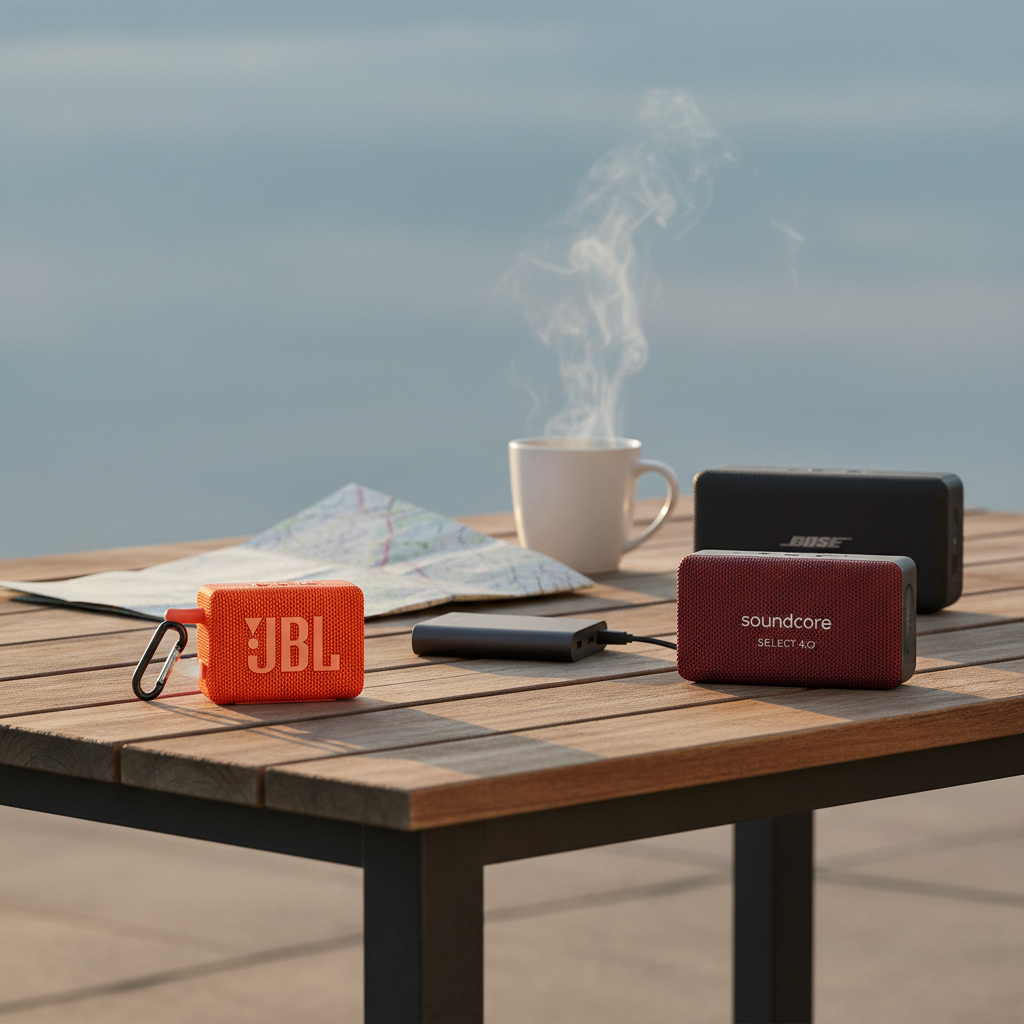
We’ve lined up 12 portable speakers that promise marathon‑long playback, so you can keep the soundtrack going from a morning hike to a late‑night campfire. The JBL Clip 5 leads the pack with a 4.8‑star rating from 7,061 reviewers and up to 15 hours of playtime when you enable Playtime Boost, all for $59.95. If you need even more juice, the JBL Charge 6 stretches to 28 hours on a single charge, though it sits at the premium $199.95 price point.
Our selection spans three price tiers: budget‑friendly options like the Anker Soundcore A3102 at $22.99 and the Soundcore Select 4 Go for $24.99; solid mid‑range choices such as the Soundcore Anker 3 at $59.99 and the Motion 300 at $79.99; and premium powerhouses including the Bose SoundLink Flex at $159.00 and the Soundcore Boom 2 Plus for $189.99. Across the board, battery life ranges from 12 to 28 hours, and most models carry an IP‑rated water resistance for poolside or shower use.
Next we’ll break down each model’s strengths, so you can match the right endurance and sound profile to your lifestyle.

JBL Clip 5
Provides 7 watts of output power, delivering clear sound for a compact portable speaker.

Soundcore Select 4 Go
Tailored for budget‑conscious listeners, it retails at $24.99—roughly $35 cheaper than the JBL Clip 5.
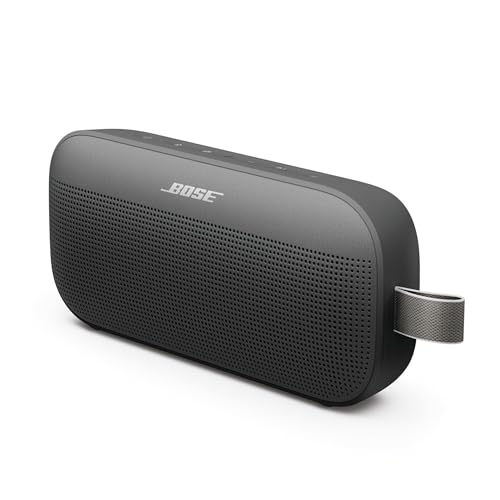
Bose SoundLink Flex 2nd Gen Black
Stands out with a 12‑hour battery life and a 4‑hour charge, perfect for extended outings.
Also considered
Score Analysis
Key score advantages vs. runner-up (Soundcore Select 4)
Price Range
JBL Clip 5
$79.95
Soundcore Select 4 Go
$34.99
Bose SoundLink Flex 2nd Gen Black
$129.00

JBL Charge 6
$159.95

Soundcore Anker 3
$59.99

JBL Flip 7 Purple
$109.95

Tribit XSound Go Black
$29.98
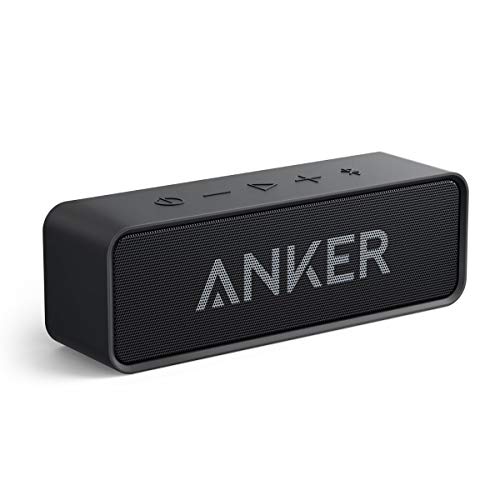
Anker Soundcore A3102
$24.99
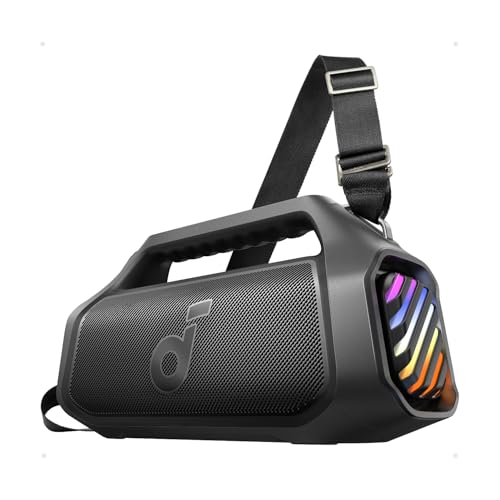
Soundcore Boom 2 Plus
$179.99

Soundcore Motion 300
$79.99

Sony ULT Field 1
$69.95

Sony SRS-XB100 Black
$63.00
Spec Comparison
TL;DR: The JBL Clip 5 packs an 86 mm driver, IP67 waterproofing and up to 15 hours of boosted playtime into a 0.628 lb, clip‑on design that’s perfect for on‑the‑go listening.
The standout spec is the 86 mm elliptical driver paired with 7 watts of output power, delivering deeper bass than you’d expect from a speaker that weighs just 0.6283174467 pounds (285 g). Its IP67 rating means it can survive a full meter of water for half an hour, and the integrated carabiner lets you attach it to a backpack or bike without extra accessories.
Compared with the other eleven speakers in this roundup, the Clip 5 is lighter than most of the bulkier models such as the Soundcore Motion 300, yet a touch heavier than the ultra‑light Soundcore Select 4 Go. Battery life sits in the middle of the pack—12 hours standard, extended to 15 hours with Playtime Boost—while some rivals push 24 hours but are larger and heavier. Its Bluetooth 5.3 connection is newer than the 5.0 that a few competitors use, and the 10‑meter wireless range matches the baseline for most other units.
Reviewers consistently praise the Clip 5’s ruggedness and the “surprisingly powerful” sound for its size, noting the deep bass and clear mids as a professional‑review highlight. The same users point out that the speaker can’t stand upright on a flat surface, lacks a built‑in microphone for calls, and that iOS users must rely on the JBL Portable app to see battery level. In practice, the fast 3‑hour USB‑C charge and eco‑friendly post‑consumer recycled housing add convenience and a feel‑good factor for environmentally conscious buyers.
Pros
Cons
Best for: Outdoor enthusiasts, travelers, and fitness fans who need a rugged, clip‑on speaker with solid sound and long battery life.
Avoid if: You need a speaker for large gatherings or require a built‑in mic for calls.
TL;DR: The Soundcore Select 4 Go offers IP67 waterproof protection, a 20‑hour battery and 30‑meter Bluetooth range at a $24.99 price, making it a solid budget choice for outdoor and shower use.
This speaker’s standout spec is its IP67 rating combined with a floatable design, letting you submerge it up to 1 meter for 30 minutes without worry. The 2400 mAh battery provides up to 20 hours of playback, and the 45 mm dynamic driver delivers mono sound while keeping the unit at just 0.58125 Pounds.
Compared with the other eleven entries, the Select 4 Go is lighter than the Anker Soundcore A3102 (0.79 Pounds) and more compact than its 165 mm length. Its 30‑meter Bluetooth range matches the Tribit XSound Go and exceeds the 20‑meter range of the A3102. Battery life sits between the 24‑hour leaders (A3102, Tribit, Soundcore Anker 3) and the shorter 12‑hour Sony SRS‑XB100, while the output power of 5 W is modest against the JBL Clip 5’s 7 W but typical for this price tier.
Reviewers love the ruggedness – the floatable body and IP67 seal receive repeated praise for shower and poolside use. The built‑in 9‑band EQ in the Soundcore app receives kudos for letting you fine‑tune the sound, and TWS pairing adds a stereo option when you have two units. On the downside, users note that the rubber feet can detach and the physical buttons lack backlighting, making low‑light operation tricky.
Pros
Cons
Best for: Shower enthusiasts, hikers, campers, travelers, gym‑goers, students and anyone needing a rugged, long‑lasting speaker on a budget.
Avoid if: You prioritize high‑fidelity stereo sound, premium build materials, or backlit controls.
TL;DR: The Bose SoundLink Flex 2nd Gen delivers 12 hours of playback, IP67 waterproofing and Bluetooth 5.3 in a compact 590 g package, but its price sits at a premium level.
The speaker’s standout spec is its IP67 rating combined with a 1 m submersible depth, meaning you can drop it in a pool for up to 30 minutes without worry. Its 12‑hour battery life and 4‑hour charging time let you enjoy a full day of music on a single charge, while the 9 m Bluetooth range keeps a reliable link to your phone.
Compared with peers, the Flex is slightly heavier than the JBL Flip 7 (1.30 lb vs 1.23 lb) and offers a modest 12‑hour battery versus the Flip 7’s 14‑hour standard runtime. Its Bluetooth reach of 9 m is also shorter than the Flip 7’s 100‑meter wireless range, but it matches the Sony ULT Field 1’s 10‑meter typical stable range. The Flex’s price point is higher than budget‑focused options like the Soundcore Anker 3, yet it carries the Bose brand’s premium reputation.
Users consistently praise the rugged build – the silicone‑wrapped body, floating ability and drop resistance earn high marks from outdoor enthusiasts. Reviewers highlight the automatic PositionIQ tuning that adapts sound to how you place the speaker, and the multipoint Bluetooth 5.3 connectivity that lets two devices pair simultaneously. On the downside, many note the lack of a 3.5 mm AUX input and describe the control buttons as “mushy,” limiting tactile feedback during quick adjustments.
From a technical standpoint, the Flex houses a single custom transducer with two passive radiators, delivering balanced, high‑fidelity audio in a hand‑sized form factor (120.65 mm × 71.12 mm × 218.44 mm). The built‑in mic with echo reduction also supports voice calls, and the USB‑C charging interface aligns with modern accessories.
Pros
Cons
Best for: Buyers willing to invest in a proven, high‑quality option
Avoid if: You're on a tight budget or only need basic functionality
“Survived a drop in the pool and kept playing”
“Perfect for camping — loud, clear, and tough”
TL;DR: The JBL Charge 6 offers 28 hours of playback, IP68 ruggedness and AI‑boosted sound, but its $199.95 price and bulkier build make it a premium pick for outdoor audio lovers.
What really sets the Charge 6 apart is its marathon battery life – up to 28 hours on a single charge – and a fast‑charging boost that adds 150 minutes of playtime after just 10 minutes on the USB‑C port. The speaker also packs a 45 W output, AI Sound Boost for richer bass, and an IP68 rating that protects against dust, water (1.5 m for 30 minutes) and a 1‑meter drop onto concrete.
Compared with the other eleven speakers in this roundup, the Charge 6 is heavier than the Bose SoundLink Flex (about 1.3 lb) and the JBL Flip 7 (1.23 lb), yet far lighter than the Soundcore Boom 2 Plus at 8.38 lb. Its 28‑hour battery life outlasts the Boom 2 Plus’s 24‑hour low‑power mode, the Flip 7’s 16 hours, the Bose Flex’s 12 hours, the Sony ULT Field 1’s roughly 12 hours, the Motion 300’s 13 hours and the Anker 3’s 24 hours. While its 45 W output tops the Flip 7’s 25 W, it sits below the Boom 2 Plus’s 100 W‑140 W range. Only the Charge 6 lists an IP68 rating, giving it a durability edge over the others.
User feedback repeatedly praises the deep bass and rugged build, noting that the speaker holds up at beaches, pools and campsites. Reviewers also appreciate the built‑in 4722 mAh powerbank and the quick‑charge feature, though several mention the missing USB‑C charging cable and the need to use the JBL Portable App for lossless playback and firmware updates. The 94 mm × 229 mm × 99 mm footprint and 2.18‑lb weight make it bulkier than many competitors, a trade‑off some users accept for the extra playtime.
Pros
Cons
Best for: Buyers willing to invest in a proven, high‑quality option
Avoid if: You're shopping on a tight budget — it's priced at $199.95
“The bass is deep and punchy — sounds much bigger than it looks.”
“Used it at the beach and pool — survived sand, water, and drops with no issues.”
TL;DR: The Soundcore Anker 3 delivers 16 W of stereo sound, IPX7 waterproofing and a 24‑hour playtime from its 6,700 mAh battery, all for $59.99.
What really stands out is the 24‑hour playtime backed by a 6,700 mAh battery and a quick 4‑hour charge via USB‑C. Paired with 16 W total output power, 4 Ω impedance and dual passive radiators, the speaker delivers strong sound despite its compact 175 mm × 61 mm × 56 mm footprint. The rubberized silicone finish and IPX7 rating mean you can toss it on a beach or a campsite without worrying about splashes.
Compared with the other eleven speakers in this roundup, the Anker 3 is heavier than the JBL Clip 5 (which weighs about 0.63 lb) but lighter than the Soundcore Motion 300 at 1.71 lb. Its 24‑hour battery life tops the JBL Clip 5’s 12‑hour claim and the Sony SRS‑XB100’s 16‑hour runtime, while matching the Tribit XSound Go’s 24‑hour figure. Bluetooth range sits at 10 m, aligning with the JBL and Sony models that also list a 10‑meter range.
Users consistently praise the rugged IPX7 waterproofing and the BassUp technology that adds extra low‑end thump for a speaker this size. Professional reviewers note the reliable Bluetooth 5.0 connection and reduced latency, making it a solid choice for outdoor playlists. The most common complaint is audible distortion when cranking the volume, especially on bass‑heavy tracks, which some listeners find distracting.
Pros
Cons
Best for: Outdoor enthusiasts, travelers, and anyone who wants a well‑reviewed, waterproof speaker with marathon battery life.
Avoid if: You need a compact desk speaker, multi‑room syncing, or distortion‑free high‑volume performance.
“Great sound for the price”
“Battery lasts forever”
TL;DR: The JBL Flip 7 delivers 25 W RMS sound, IP68 durability and up to 16 hours of playback, making it a solid, eco‑friendly choice for on‑the‑go listeners who value long battery life.
The Flip 7 packs a 25 W RMS driver and JBL’s AI Sound Boost, which reviewers say cleans up mids and reduces distortion at higher volumes. Its IP68 rating protects against dust, drops from 1 meter and submersion to 1.5 meters for 30 minutes, so you can toss it into a backpack, a rain‑soaked campsite, or even a poolside lounge without worry. Bluetooth 5.4 gives a 100‑meter wireless range, and the built‑in USB‑C port lets you stream lossless audio directly.
Compared with other speakers in this roundup, the Flip 7 offers a longer standard battery life (14 hours) than the Bose SoundLink Flex 2nd Gen’s 12 hours, and it charges in just 2.5 hours versus the Bose’s 4‑hour charge. At 1.23 lb the JBL is slightly lighter than the Bose (about 1.30 lb) but heavier than the ultra‑compact Soundcore Anker 3 (0.82 lb). Its dimensions (182.626 mm W × 71.12 mm D × 68.58 mm H) keep it small enough for a bike‑rack loop while still delivering more power than the 0.82‑lb competitor.
Professional reviewers praise the AI Sound Boost and the industry‑leading IP68 rating, noting that the speaker sounds clear for its size. Everyday owners echo the durability praise and love the 16‑hour max playtime, yet several mention that the speaker doesn’t include a USB‑C cable and that the bass feels thin in open‑air settings. Volume peaks are respectable but don’t match the louder, outdoor‑focused models, and a handful of units show slightly varied battery endurance.
Pros
Cons
Best for: Outdoor enthusiasts, travelers, fitness‑goers and audio purists who want a durable, portable speaker with long battery life.
Avoid if: You need very high SPL for big events, deep bass punch, or are on a tight budget.
“Amazing sound for a small speaker”
“Fantastic sound, size, and color”
TL;DR: The Tribit XSound Go offers IPX7 waterproof protection, 24‑hour battery life, and Bluetooth 5.3 in a compact 0.84‑pound package, making it a solid budget pick for on‑the‑go listening.
What really stands out is the combination of a 4000 mAh battery that the manufacturer says powers the speaker for up to 24 hours and a rugged IPX7 rating that lets you submerge it in water for up to 30 minutes. The unit packs two 40 mm dynamic drivers plus a passive bass radiator, and it runs on Bluetooth 5.3 with an advertised wireless range of 30 m in open space.
Compared with the other eleven speakers in this roundup, the XSound Go sits near the lighter end of the spectrum and carries a modest set of features. It offers a longer claimed playtime than many peers, while its Bluetooth range and IPX7 rating give it an edge over models that list shorter ranges or lower waterproof ratings. Its physical‑button control and built‑in lanyard also make it more portable than several bulkier competitors.
Users consistently praise the durability and all‑day battery life, especially for showers, beach trips, and backpack travel. Professional reviewers note the strong audio output for its size and the clean soundstage at higher volumes, but they also point out thin bass and a speakerphone that struggles with clarity. In real‑world use, the volume might feel modest outdoors, so it'll shine best in intimate settings rather than large‑scale parties.
Pros
Cons
Best for: Outdoor enthusiasts, travelers, and shower users who need a lightweight, waterproof speaker with long battery life.
Avoid if: You want deep bass, party‑level loudness, or the absolute best value‑per‑dollar in this price tier.
“Lasts all day at the beach — I used it for 18 hours straight and still had battery.”
“Perfect for the shower — sounds great and survived full submersion.”
TL;DR: The Anker Soundcore A3102 delivers up to 24 hours of playback, IPX5 splash protection, and Bluetooth 5.0 in a compact 380 g package for just $22.99.
This speaker’s standout spec is its 24‑hour battery life, powered by a 4400 mAh lithium‑ion cell and a modest 6 W RMS output. At 48 mm tall, 165 mm long and 53 mm wide, it weighs 0.79 pounds (380 g), making it easy to slip into a backpack for a day out.
Compared with the other eleven entries, the A3102 matches the Tribit XSound Go’s 24‑hour runtime but outlasts the Soundcore Select 4 Go (20 h), Sony SRS‑XB100 (16 h), JBL Clip 5 (12‑15 h) and Motion 300 (13 h). Its 20 m Bluetooth range sits between the 30 m range of the Select 4 Go and Tribit, and the 10 m range of Sony, JBL and the Anker 3. At 0.79 pounds it’s heavier than the Select 4 Go (0.58 lb) and JBL Clip 5 (0.63 lb) but lighter than the Tribit (0.84 lb) and Anker 3 (0.82 lb). The charging time of 24 hours is notably longer than the 4‑5 hour charges of most rivals.
Users consistently praise the speaker’s “breathtaking stereo sound” and the BassUp DSP‑enhanced bass that the patented spiral port provides, noting less than 1 % total harmonic distortion even at higher volumes. Professional reviewers echo the low distortion claim and the reliable Bluetooth 5.0 connection. On the flip side, many owners flag the ultra‑slow 24‑hour charge and the micro‑USB input as dated, while some find the BassUp processing a bit over‑emphasized.
Technical highlights include dual high‑sensitivity drivers, a built‑in microphone for hands‑free calls, and IPX5 water resistance that handles splashes and light rain. The speaker ships with a micro‑USB charging cable and a quick‑start guide, and it comes with a 12‑month limited warranty.
Pros
Cons
Best for: Budget‑conscious buyers seeking a reliable entry‑level option
Avoid if: You need advanced features or professional‑grade performance
“Battery life is impressive and reliable for camping trips.”
“Charging takes forever – 24 hours is impractical.”
TL;DR: The Soundcore Boom 2 Plus delivers 140 W peak power, IPX7 waterproofing and up to 20 hours of playback, but its 8.38‑lb bulk and plastic build keep it from being a lightweight travel companion.
What really sets this speaker apart is its 140 W peak output with BassUp 2.0, backed by two 4.5‑inch woofers and two 1‑inch tweeters. Even at the standard 100 W level the sound is loud enough for outdoor gatherings, and the IPX7 rating means it’ll survive full submersion and even float.
Compared with the other eleven entries, the Boom 2 Plus is noticeably heavier than the JBL Flip 7 and the Bose SoundLink Flex, and it carries a premium price tag. However, it offers more output power than those models and a longer battery capacity of 12,000 mAh, which translates to 20 hours of standard playback—far beyond the typical 12‑hour range of many peers.
Professional reviewers say the speaker’s “powerful sound with full bass” and the customizable 9‑band EQ in the Soundcore app. Users love the dual RGB LEDs that pulse to the beat, but several mention that the passive radiators can rattle when cranked to maximum volume, and the hard‑plastic enclosure feels less premium than metal‑cased rivals. The bright LEDs also draw a bit more power, shortening the already generous battery life.
Beyond raw power, the Boom 2 Plus packs a 12,000 mAh battery that charges in just 3 hours via 30 W fast‑charge, and it can double as a 10 W power bank. Bluetooth 5.3 gives a maximum range of 100 meters, while PartyCast 2.0 lets you sync up to 100+ speakers for massive soundscapes. Control is handled through physical push buttons or the Soundcore app, and a built‑in microphone supports hands‑free calls.
Pros
Cons
Best for: Buyers willing to invest in a proven, high‑quality option
Avoid if: You're shopping on a tight budget — it's priced at $189.99
“Gets incredibly loud and the bass is deep and punchy”
“At max volume, the sides vibrate and buzz — not distortion, but annoying”
TL;DR: The Soundcore Motion 300 offers 30 W of stereo sound, IPX7 waterproofing, and up to 13 hours of playback, making it a solid, well‑reviewed portable speaker for outdoor use.
The standout spec is the 30 W total output that dual 48 mm full‑range drivers deliver, paired with LDAC‑enabled Hi‑Res audio support. At 1.71 pounds (776 g) it feels sturdy, and the IPX7 rating lets you submerge it up to 1 m for 30 minutes without a hiccup.
Its 3350 mAh battery sits between the 2900 mAh of the Sony ULT Field 1 and the 6700 mAh of the Soundcore Anker 3, translating to a manufacturer‑listed 13‑hour playtime—slightly longer than Sony’s 12 hours but shorter than the 24‑hour runs of the Anker 3 and Tribit XSound Go. The 4‑hour USB‑C charge is faster than Sony’s ~5‑hour charge yet slower than JBL Clip 5’s 3‑hour charge. Weighing 1.71 pounds, it’s heavier than the ultra‑light JBL Clip 5 and the Soundcore Anker 3, but its 100‑meter Bluetooth range dwarfs the 30‑meter range of Sony ULT and Tribit XSound Go, and the 10‑meter range of several competitors.
Reviewers consistently praise the Motion 300’s loud, clear audio and reliable waterproofing, noting the built‑in speakerphone and the Soundcore app’s 9‑band EQ as handy extras. Professional reviewers highlight the strong Bluetooth streaming quality thanks to LDAC, while everyday users love the sturdy PC+ABS body and silicone strap for hanging. The main criticisms focus on the BassUp button, which can thin or distort bass at high volumes, the absence of an AUX input for wired sources, and the lack of an IP6X dust‑proof rating.
Pros
Cons
Best for: Outdoor enthusiasts, hikers, beachgoers, and anyone who wants a well‑reviewed, rugged speaker with strong sound and a long Bluetooth range.
Avoid if: You need dust‑proof (IP6X) protection, rely on a wired AUX connection, or prefer deep bass without potential distortion at high volume.
“Loud and clear sound for such a small speaker.”
“Love the waterproof feature—use it in the shower daily.”
TL;DR: The Sony ULT Field 1 delivers two‑way sound with a dedicated bass‑boost button, IP67 waterproofing and up to 12 hours of bass‑enhanced playback in a compact 206 × 76 × 76 mm package for $87.98.
The speaker’s two‑way driver system—an 83 × 42 mm woofer paired with a 16 mm tweeter and two passive radiators—creates a balanced soundstage while the ULT button amps the low end. It runs on a 2900 mAh battery that provides up to 12 hours of playtime when the bass‑boost mode is active, and a quick‑charge routine adds 3 hours of music after just 10 minutes on the USB‑C cable.
Compared with the other eleven speakers in this roundup, the ULT Field 1 is heavier than the ultra‑light JBL Clip 5, but its battery endurance tops most rivals: it reaches a real‑world playback of up to 28 hours 45 minutes without ULT, outlasting the Soundcore Motion 300 (13 hours) and the Tribit XSound Go (24 hours). Its price sits above budget‑friendly options like the JBL Clip 5, yet it offers a richer driver configuration than many competitors that list only a single driver.
Professional reviewers praise the speaker’s “strong natural sound tuning” and “superior bass quality” thanks to the ULT button, while everyday users love the rugged IP67 rating and the convenience of a detachable strap. The main criticisms focus on the battery dropping to roughly 12 hours when ULT is engaged, a companion app that lacks deep EQ controls, and the absence of aptX codec support.
Pros
Cons
Best for: Most users looking for a well‑reviewed, reliable mainstream option
TL;DR: The Sony SRS‑XB100 is a feather‑light, IP67‑rated Bluetooth speaker that delivers clear sound with a 5 cm driver, offers 16 hours of playtime, and packs a USB‑C charge in just 4.5 hours.
What really stands out is the combination of a compact 3.0 × 4.41‑inch chassis and a single 5 cm (2‑inch) dynamic driver that pushes 2 Watts of power, while the IP67 rating protects it (dustproof and waterproof to 1 meter for 30 minutes). The speaker runs on a rechargeable lithium‑ion cell that promises up to 16 hours of continuous playback and refills in 4.5 hours via the included 1‑foot USB‑C cable.
Compared with the other eleven speakers in this roundup, the SRS‑XB100 is notably lighter than the Tribit XSound Go (0.84 lb) and smaller than most, making it easy to slip into a backpack. Its 10‑meter Bluetooth range matches the JBL Clip 5 and Soundcore Anker 3, but falls short of the 30‑meter range some rivals claim. Battery life at 16 hours is respectable yet shorter than the 20‑hour to 24‑hour runs of several competitors, and its 2‑W output is modest next to the 5‑W to 16‑W figures other models list.
Professional reviewers highlight the speaker’s “rich, crisp sound for its class” and praise the built‑in speakerphone with echo cancellation. Everyday users love the tiny footprint, durability, and clear calls, but they frequently note the absence of a companion EQ app, the short 1‑foot charging cable, and a tendency for the unit to vibrate on hard surfaces at high volume. Reviews describe bass response as limited below 100 Hz, which aligns with the modest 2‑W power and single driver design.
On the connectivity side, the SRS‑XB100 runs Bluetooth 5.3, supports SBC and AAC codecs, and features Google Fast Pair for quick device pairing. A removable fabric strap adds mounting flexibility, while the upward‑firing driver and downward‑aimed passive radiator aim to maximize the small enclosure’s acoustic output.
Pros
Cons
Best for: Budget-conscious buyers seeking a reliable entry-level option
“So small but sounds amazing for its size”
“Perfect for travel, beach, or shower”
Breakdown
JBL Clip 5
Pros
Soundcore Select 4 Go
Pros
Bose SoundLink Flex 2nd Gen Black
Pros
JBL Charge 6
Pros
Cons
Based on scoring data and product specs
Personalized picks
Best Overall Pick
JBL Clip 5
Best OverallBest for: Home and office users seeking a balance of features and value
Soundcore Select 4 Go
Best for: Budget-conscious buyers seeking a reliable entry-level option
$34.99-$44.96 vs winner
Skip Soundcore Motion 300 if…
You have limited desk space or need portability
The JBL Clip 5 earns the top spot thanks to its solid 12‑hour battery life (15 hours with the boost mode), a rugged IP67 rating that lets you submerge it for 30 minutes, and the latest Bluetooth 5.3 for a reliable connection. At just 0.63 lb, it’s light enough to clip onto a bag, yet it still pumps out 7 watts from an 86 mm driver for clear, punchy sound.
The Soundcore Select 4 Go ranks as the runner‑up, especially if you need marathon‑long playback on a shoestring budget. Its 20‑hour battery outlasts most competitors, and the IP67 rating means you can toss it in a pool without worry. Bluetooth 5.4 and a compact 45 mm driver keep it handy for travel or backyard hangouts.
For tight‑budget shoppers, the Anker Soundcore A3102 delivers decent volume at the lowest price point. If you’re willing to spend more for a bigger, louder speaker, the JBL Charge 6 serves as the premium alternative with a larger form factor and higher output.
Choose the JBL Clip 5 and enjoy up to 12 hours of music wherever you go.
The Soundcore Select 4 Go lists a battery life of up to 20 hours, which exceeds the JBL Clip 5’s 12 hours (15 hours with boost). For even longer playback, the larger JBL Charge 6 reaches 28 hours, but the Select 4 Go is the longest‑lasting compact option.
Please sign in to leave a review
No reviews yet. Be the first to review!
