⚡ Quick Answer
Eleven portable SSDs that gamers might stash in a backpack or clip to a controller make up this list, and the numbers are eye‑popping. The fastest drives hit up to 2,000 MB/s sequential read and write speeds, while the most popular model – the Samsung T7 1TB – carries a 4.7‑star rating from 37,622 reviewers. Prices stretch from a budget‑friendly $59.99 for the Buffalo 500 GB unit up to $709.18 for the high‑capacity Samsung T9.
To help you navigate, the options fall into three price tiers. On the budget end you’ll find the Buffalo 500 GB ($59.99) and Lexar SL500 1TB ($99.95), both delivering reliable performance for casual gaming loads. The mid‑range tier features the Samsung T7 1TB ($185.00) and WD Black P40 ($190.47), which balance speed and durability for most game libraries. Premium choices like the Samsung T9 4TB ($709.18) and Transcend ESD410 2TB ($489.99) push the envelope with 2,000 MB/s transfers and rugged designs for on‑the‑go creators.
Below is a breakdown of each drive’s specs, strengths, and ideal gaming scenarios to help match the right SSD to your play style.
Samsung T7 1TB
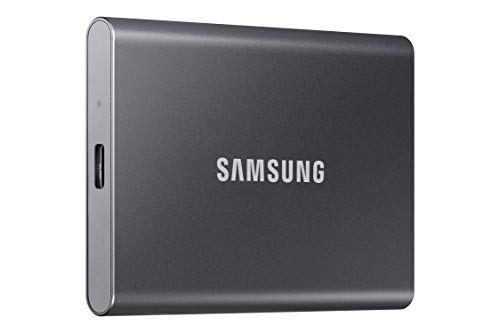
Its ultra‑thin 8 mm profile makes the Samsung T7 1TB easy to slip into any gaming rig or backpack, delivering high‑capacity storage without adding bulk.
Samsung T9
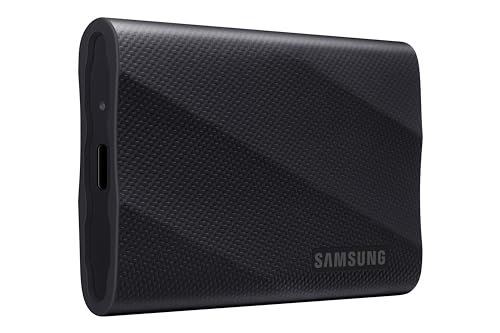
The Samsung T9 targets power users who demand premium performance and durability, but at $709.18 it costs about $524 more than the top‑rated Samsung T7.
Buffalo External SSD 500GB USB-C
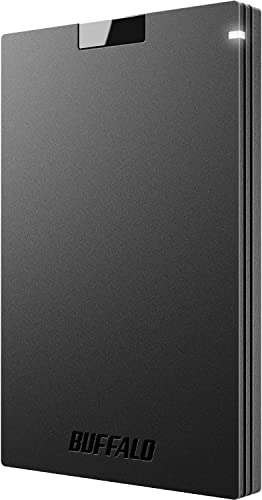
Buffalo’s 500 GB USB‑C SSD stands out with a budget‑friendly $59.99 price and solid 4.4‑star rating, offering a compact, entry‑level option for gamers on a tight budget.
Also considered
Score Analysis
Key score advantages vs. runner-up (Samsung T9)
Price Range
Samsung T7 1TB
$274.99
Samsung T9
$975.98
Buffalo External SSD 500GB USB-C
$79.99
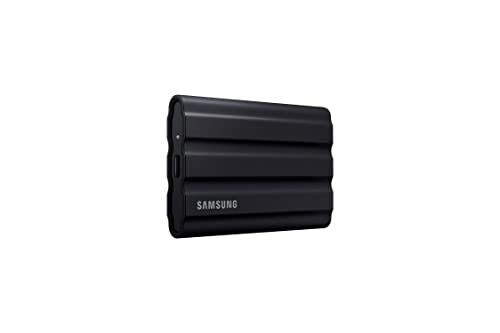
Samsung T7 Shield 2TB
$495.00

Lexar SL500 1TB
$190.97

Western Digital P40
$229.00

Crucial X6
$149.99

Buffalo External SSD 1TB
$149.99

Transcend ESD410 2TB
$487.04

SanDisk Extreme 2TB USB-C
Out of Stock

Fikwot 1TB External SSD
$119.99
Spec Comparison
TL;DR: The Samsung T7 1TB delivers 1,050 MB/s read, 1,000 MB/s write speeds in a 58 g aluminum shell, offering secure, fast storage for gamers on the go.
The Samsung T7 1TB packs a 1,050 MB/s sequential read and 1,000 MB/s sequential write speed through a USB 3.2 Gen 2 (10 Gbps) interface, letting large game libraries load quickly. It also includes AES‑256‑bit hardware encryption and a Dynamic Thermal Guard system with ePCM technology to keep temperatures in check.
At 0.13 lb the drive is lighter than the Western Digital P40 (0.17 lb) and the SanDisk Extreme (0.15 lb), but a touch heavier than the Crucial X6 (0.09 lb) and Lexar SL500 (0.095 lb). Its 8 mm profile's slimmer than the WD P40’s 13 mm and comparable to the Lexar’s 7.6 mm. Speed‑wise, its 1,050 MB/s read sits below the advertised 2,000 MB/s of the WD P40 and Lexar SL500, matches the 1,050 MB/s of the Fikwot, and outpaces the 800 MB/s of the Crucial X6 and 600 MB/s of the Buffalo stick.
Everyday users praise the drive’s rapid 4K video and game file transfers, noting the pocket‑sized aluminum body feels rugged enough for travel. Some reviewers point out occasional heat during long high‑speed transfers, and the weight's sometimes reported between 50 g and 72 g, which can be confusing. Reviewers also note the lack of fingerprint authentication as a missing premium feature.
Pros
Cons
Best for: Most users looking for a well-reviewed, reliable mainstream option
Avoid if: You need advanced features or professional‑grade performance
TL;DR: The Samsung T9 offers 4 TB of storage with up to 2,000 MB/s read and write speeds via a USB 3.2 Gen 2x2 (20 Gbps) interface, wrapped in a rugged 0.27‑pound body and backed by a 5‑year warranty.
The standout spec is the 4 TB capacity paired with a maximum sequential read and write speed of 2,000 MB/s, thanks to the USB 3.2 Gen 2x2 (20 Gbps) interface. At 122 g (0.27 pounds) the drive remains pocket‑sized, and Samsung’s Dynamic Thermal Guard helps keep temperatures in check during sustained transfers.
Compared with the other ten SSDs in this roundup, the T9 doubles the storage of the Transcend ESD410 (2 TB) and the Samsung T7 Shield (2 TB), while matching their 3 m drop resistance. Its 2,000 MB/s write speed outpaces the T7 Shield’s 1,000 MB/s and the SanDisk Extreme’s 1,000 MB/s, and it exceeds the WD P40’s sustained 500 MB/s. However, at 0.27 pounds it weighs more than the Transcend ESD410 (0.1433004703 pounds), the Samsung T7 Shield (0.21384839414 pounds) and the ultra‑light Crucial X6 (0.0881849048 pounds). The T9’s dimensions (14 mm depth, 60 mm height, 88 mm width) are larger than the T7 Shield’s 12.5 × 57 × 86 mm footprint, but still compact enough for a gaming rig’s carry‑case.
Reviewers consistently praise the rapid 2,000 MB/s performance for loading large game libraries and moving 4K video assets, noting that the AES‑256‑bit hardware encryption adds a layer of security for saved game files. Reviewers praise the included 18‑inch USB‑C cables for durability, though several users mention they feel short when the drive sits on a desk. Professionals also point out that full‑speed transfers require a host with USB 3.2 Gen 2x2 support; otherwise speeds drop to around 1,000 MB/s on older ports.
Pros
Cons
Best for: Buyers willing to invest in a proven, high‑quality option
Avoid if: You're shopping on a tight budget — it's priced at $709.18
“ultra-fast real-world speeds for video editing/backups”
TL;DR: The Buffalo 500 GB USB‑C SSD packs a solid‑state drive in a compact 12.7 mm‑high case for $59.99, offering shock‑resistance, USB 3.2 connectivity and a three‑year warranty.
The standout spec is the 500 GB capacity paired with a USB 3.2 interface, which lets you move game files and media quickly without the bulk of a larger external drive. Its dimensions—12.7 mm tall, 116.84 mm long and 76.2 mm wide—make it one of the larger‑footprint SSDs in this list, but the compact form factor still fits easily in a backpack or console dock.
Compared with its peers, the Buffalo sits taller and longer than the Lexar SL500 1TB (which measures 7.6 mm × 83.8 mm × 53.3 mm) while being slightly thinner than the Western Digital P40’s 13 mm height. It lacks the retractable stick design of the Buffalo 1TB model and offers half the capacity of the 1‑TB competitors, but it also comes at a lower price point than most of the 1‑TB options. While several rivals advertise USB 3.2 Gen 2 speeds, Buffalo lists its interface simply as USB 3.2, indicating a more modest transfer ceiling.
Professional reviewers praise its “fast sequential read speeds up to 340 MB/s and write speeds up to 320 MB/s,” noting that the rugged, shock‑resistant enclosure holds up to drops and rough handling. Buffalo supports PS4, PS5, Windows, macOS, Chrome OS and even Xbox, and includes both USB‑C and USB‑A ports. The three‑year warranty (registered) adds confidence for gamers who plan to shuttle the drive between consoles and a PC.
Pros
Cons
Best for: Budget‑conscious buyers seeking a reliable entry‑level option
Avoid if: You need the fastest Gen 2 transfer rates or larger than 500 GB storage capacity
TL;DR: Samsung's T7 Shield 2TB packs 2 TB of storage, up to 1,050 MB/s read speeds, IP65 water‑dust resistance and 3 m drop protection in a rugged, rubber‑cased SSD for $399.99.
The standout feature is its durability: an IP65 rating and a durable rubber exterior protect the drive from water, dust and drops up to 3 m, while the Dynamic Thermal Guard keeps the drive cool during long transfers.
Compared with the other ten SSDs in this roundup, the T7 Shield is heavier at about 0.21 lb, making it the bulkiest option. Its read/write speeds sit between the ultra‑fast Transcend ESD410 (≈1,941 MB/s read) and the slower Crucial X6 (≈800 MB/s read). The price point is higher than most peers, positioning it as a premium, rugged choice rather than a budget‑focused drive.
Reviewers consistently praise the drive’s ruggedness and water resistance, calling it ideal for field photographers and gamers who travel with large libraries. Professional reviewers note the Dynamic Thermal Guard’s role in maintaining stable transfer rates during heavy workloads. A recurring complaint involves occasional connectivity hiccups with certain adapters or OS versions, and some users feel the cost is steep compared to non‑rugged alternatives.
Pros
Cons
Best for: Professional photographers, video creators, gamers with large libraries, and travelers who need a durable, high‑capacity SSD.
Avoid if: You prioritize the lightest possible weight, ultra‑budget pricing, or don’t need rugged, water‑resistant protection.
TL;DR: The Lexar SL500 1TB delivers up to 2000 MB/s reads in an ultra‑thin 7.6 mm aluminum case, but real‑world writes often trail the advertised 1800 MB/s.
The standout spec is the USB 3.2 Gen 2x2 interface that promises a theoretical 20 Gbit/s bandwidth, enabling the advertised read speed of up to 2000 MB/s and write speed of up to 1800 MB/s. At just 43 g (0.095 lb) and 7.6 mm thick, the drive feels like a premium key‑fob rather than a bulky external SSD.
Compared with the other ten SSDs in this roundup, the SL500 is thinner than the Buffalo 1TB (10.16 mm) and lighter than the Western Digital P40 (0.17 lb) while being only slightly heavier than the Crucial X6 (0.088 lb). Its advertised sequential speeds outpace the Buffalo (600 MB/s), Fikwot (up to 1050 MB/s), and Crucial (up to 800 MB/s), and sit alongside the WD P40’s 2000 MB/s claim. However, its price point sits in the budget tier, so it doesn’t always beat the value‑per‑dollar of rivals that offer lower speeds at similar cost.
Reviewers consistently praise the magnetic iPhone attachment, the rugged IP54/IP65 rating, and the 50 G shock resistance for field work. Users love the pocket‑friendly form factor for on‑the‑go gaming libraries, yet many note that sustained write performance can dip below the advertised 1800 MB/s, especially on hosts that lack USB 3.2 Gen 2x2. The modest 38 GB pSLC cache can limit long‑duration transfers.
Pros
Cons
Best for: Entry-level buyers or those on a tight budget
Avoid if: You want the best value‑per‑dollar in its price range
TL;DR: The WD Black P40 1TB Game Drive packs 2000 MB/s advertised speed, a rugged aluminum case with RGB lighting, and solid 4.6‑star ratings, but costs a touch more than similar SSDs.
The standout spec is the advertised sequential speed of 2000 MB/s, reachable through the USB 3.2 Gen 2x2 (20 Gbps) interface. At 1 TB of capacity it sits in a compact 13 mm‑high, 107 mm‑long, 51 mm‑wide aluminum shell, and the two‑light‑bar RGB system can be set to cycle, breathing or rainbow modes.
Compared with other picks in the roundup, the P40 is slightly pricier than the Samsung T7 and a bit heavier than the T7’s 0.13‑pound chassis. It also outweighs the ultra‑light Crucial X6, which tips the scales at roughly 0.09 pounds. Where it shines is speed: its 2000 MB/s claim is nearly double the Samsung T7’s 1,050 MB/s read rating and well above the Crucial X6’s 800 MB/s ceiling.
Reviewers consistently praise the drive’s fast transfers and eye‑catching lighting, noting it’s a go‑to for moving large game libraries. A common critique notes the drop from an 850 MB/s burst write rate to about 500 MB/s during sustained transfers, and the need for a USB 3.2 Gen 2x2 port to hit full speed. The unit also runs warm under heavy load, which some users mention.
Beyond speed, the P40 survives drops up to 2000 mm (≈2 m) thanks to its aluminum build, ships with a 61 cm USB‑C cable and a USB‑C‑to‑USB‑A adapter, and comes pre‑formatted in exFAT for easy cross‑platform use. Compatibility spans PC, Mac, PS4, PS5, Xbox Series X|S and Xbox One, while the WD Black Dashboard software offers health monitoring on Windows.
Pros
Cons
Best for: PC gamers and multi‑platform users who need a well‑reviewed, fast portable SSD with eye‑catching lighting.
Avoid if: You rely on direct next‑gen console performance, lack a USB 3.2 Gen 2x2 connection, or are looking for the cheapest option.
“go‑to external device”
TL;DR: The Crucial X6 1 TB portable SSD packs 800 MB/s speeds into a feather‑light 40 g chassis that survives drops up to 6.5 ft, making it a solid mid‑range choice for gamers on the go.
The standout feature is its ultra‑lightweight design – the drive weighs just 40 g and measures only 2.72 in × 2.52 in × 0.43 in, so it slides easily into a pocket or a small gaming bag. It also offers a drop rating of 6.5 ft (2 m), hardware‑based encryption, and a USB 3.2 Gen 2 (USB‑C) interface that promises up to 800 MB/s sequential read and write speeds, all backed by a 3‑year limited warranty.
When you line it up against the other ten SSDs in this roundup, the X6 is lighter than the Buffalo External SSD 1TB (68 g), Samsung T7 (58 g), and Western Digital P40 (77 g), and only marginally lighter than the Lexar SL500 (43 g). Its 800 MB/s speed sits between the slower 600 MB/s of the Buffalo stick and the much faster 1,050 MB/s read of the Samsung T7, while the Fikwot’s advertised 2,000 MB/s is well above what the X6 can deliver.
Users consistently praise the X6 for its pocket‑size portability and the confidence that comes from its rugged drop resistance, noting it feels “lighter than a set of keys.” However, many also report that real‑world transfer rates tend to hover around 540–550 MB/s, falling short of the advertised 800 MB/s ceiling. Professional reviewers point out that the internal SATA/NVMe‑bridge architecture and the USB 3.2 Gen 2 interface limit the drive’s ability to reach ultra‑high‑end speeds, which aligns with the feedback from power users seeking near‑1 GB/s performance.
Beyond speed, the X6 includes 1500 G non‑operating and 3.1 G operating shock resistance, extreme temperature tolerance, and 3.1 G vibration resistance. Its built‑in hardware encryption adds a layer of data security, and the drive works with PC, Mac, PS4, PS5, Xbox One, Xbox, Android, and Windows 8.1 or later, making it a versatile companion for a wide range of gaming platforms.
Pros
Cons
Best for: Most users looking for a well‑reviewed, reliable mainstream option
Avoid if: You need advanced features or professional‑grade performance
“Extremely portable and lightweight, lighter than my car keys.”
TL;DR: The Buffalo 1 TB External SSD packs a 600 MB/s USB 3.2 Gen 2 drive into a rugged, retractable stick design, offering solid console compatibility at a budget‑friendly price.
What really stands out is the advertised transfer speed of 600 MB/s combined with a full 1 TB of storage. The 10.16 mm‑high stick‑style case houses the drive, which retracts when not in use, and it weighs just 68 g, making it easy to slip into a backpack or console carry‑case.
Against the other ten SSDs in this roundup, Buffalo lands in the middle of the weight spectrum – lighter than the 0.5 kg Fikwot and the 0.13‑lb Samsung T7, but heavier than the 0.095‑lb Lexar SL500 and the 0.088‑lb Crucial X6. Its 600 MB/s speed trails the Lexar’s up‑to‑2000 MB/s claim and Samsung’s 1050 MB/s read rate, yet it still outpaces older USB 3.0 drives that sit below 500 MB/s. Pricing puts it alongside the Lexar and Fikwot, so you won’t pay a premium for the higher speeds those rivals advertise.
Users consistently praise the drive’s sturdy build and drop‑proof design, noting that the cover‑to‑cover shock protection survives the occasional tumble. Reviewers also highlight its broad compatibility – it works with PS4, PS5, Windows, and macOS right out of the box, which many gamers appreciate for faster load times. Professional reviewers call it the best budget external SSD for gaming, while also pointing out that you must apply a firmware update to unlock the full 600 MB/s performance.
The SSD connects via USB 3.2 Gen 2, offering both USB‑C and USB‑A plugs, and comes with a three‑year warranty after registration. Released in April 2021, the stick‑form factor makes it a practical choice for on‑the‑go storage without needing a bulky case.
Pros
Cons
Best for: Budget‑conscious buyers seeking a reliable entry‑level option
Avoid if: You need advanced features or professional‑grade performance
TL;DR: The Transcend ESD410 2 TB portable SSD delivers up to 2000 MB/s read/write over a 20 Gbps USB 3.2 Gen 2x2 interface, packs a rugged MIL‑STD‑810G, IPX5 design in a 65 g, 14.5 mm chassis, and includes 256‑bit AES encryption with a 5‑year warranty.
The drive’s headline spec is its 2000 MB/s maximum read and write speeds, enabled by a USB 3.2 Gen 2x2 (20 Gbps) connection and a 64 GB pSLC cache that fuels burst performance. At 2 TB capacity it also offers 256‑bit AES hardware encryption and an IPX5 water‑resistant rating, all within a 14.5 mm thick, 42 mm wide, 79 mm long shell.
At $489.99, the ESD410 costs more than the Samsung T7 Shield and SanDisk Extreme, yet it undercuts the Samsung T9’s higher price tag. Weighing 65 g, it’s lighter than the Samsung T7 Shield (98 g) and WD P40 (77 g) but heavier than the Crucial X6 (40 g). Its 20 Gbps interface doubles the bandwidth of the Samsung T7 Shield’s 10 Gbps USB 3.2 Gen 2 link, and its advertised 2000 MB/s peak speeds outpace most rivals that list up to 1,050 MB/s (Samsung T7 Shield) or 1,000 MB/s (SanDisk Extreme), matching the advertised 2000 MB/s of the WD P40.
Reviewers consistently praise the rugged build, noting the MIL‑STD‑810G shock rating and 3 m drop protection as ideal for fieldwork and travel. Professional feedback highlights the drive’s suitability for 4K/8K video editing, while users flag that sustained write speeds fall to around 1.1 GB/s once the 64 GB cache is depleted. They also warn that the full 2000 MB/s performance requires a host with a USB 3.2 Gen 2x2 port.
Additional technical details include a 5 V operating voltage, an operating temperature range of 0 °C to 60 °C, and an exFAT file‑system format ready for cross‑platform use. The five‑year limited warranty rounds out a package aimed at creators who need both speed and durability.
Pros
Cons
Best for: Those prioritizing quality and willing to pay for premium performance
Avoid if: You need advanced features or professional‑grade performance
TL;DR: The SanDisk Extreme 2TB USB‑C delivers 2 TB of rugged storage with up to 1000 MB/s read speeds, IP65 protection and a 5‑year warranty, but its read ceiling is slower than many internal SSDs.
The standout spec is its 3 m (≈9.8 ft) drop protection combined with an IP65 water‑dust rating, making it one of the most sturdy portable SSDs in the lineup. At 0.15 pounds (68 g) it stays feather‑light while offering a generous 2 TB capacity and sequential read speeds of up to 1000 MB/s over a USB 3.2 Gen 2 (USB‑C) interface.
Compared with the other ten entries, SanDisk’s read speed trails the Western Digital P40’s advertised 2000 MB/s and the Lexar SL500’s 2000 MB/s claim, yet it outpaces the Crucial X6’s 800 MB/s. Its 2 TB storage is roughly double the 1 TB most competitors ship, and its weight sits between Samsung’s lighter 0.13 pound T7 and Western Digital’s heavier 0.17 pound P40. Unlike many rivals, it also carries an official PlayStation 5 license and a 5‑year limited warranty, adding peace of mind for console gamers.
Reviewers consistently praise the rapid game transfers enabled by the 1000 MB/s read ceiling and applaud the IP65 rating and 3 m drop resistance as “very sturdy” for a portable drive. Professional outlets note the compact 9.7 mm height and sub‑2.5 oz weight as highly portable. However, they also point out that the read ceiling is far below the PS5’s internal NVMe speeds and that SanDisk doesn't publish a sequential write speed, leaving write performance unclear.
Pros
Cons
Best for: PS5 owners and mobile gamers who need rugged, high‑capacity portable storage and value the official console licensing.
Avoid if: You require the fastest possible internal SSD speeds, need guaranteed write performance, or are on a tight budget.
TL;DR: The Fikwot 1TB External SSD offers up to 1050 MB/s read/write, a magnetic iPhone attachment, and 2 m drop resistance, but its larger size and heat under load may steer power users toward faster, lighter rivals.
Fikwot advertises a USB‑C read speed of up to 2000 MB/s, while the overall data transfer rate caps at 1050 MB/s for both read and write. Coupled with a 0.5 Kilograms aluminum alloy body and a magnetic mount for iPhone 15/16 Pro, the drive targets mobile creators who need quick file swaps without a bulky case.
Compared with the ten other SSDs in this roundup, the Fikwot weighs noticeably more than the Buffalo 1TB (68 g) and Lexar SL500 (43 g) and measures larger than the Samsung T7 (8 mm × 57 mm × 85 mm). Its 1050 MB/s transfer speed outpaces the Buffalo’s 600 MB/s and Crucial X6’s 800 MB/s, yet falls short of the Lexar and Western Digital P40’s advertised 2000 MB/s peaks. In short, it sits in the middle of the performance spectrum while carrying a bulkier form factor.
Professional reviewers praise the magnetic attachment for hands‑free phone use and the aluminum casing for efficient heat dissipation, but many users note that the drive can warm up during large transfers and that real‑world speeds often hover around 1000 MB/s when using the included USB‑A cable. It draws power from the USB bus, works across macOS, Windows, Android, iPhone, PS5, PS4 Pro, and Xbox, and includes a five‑year warranty, giving solid peace of mind for everyday portability.
Pros
Cons
Best for: Entry-level buyers or those on a tight budget
Avoid if: You need advanced features or professional‑grade performance
Breakdown
Samsung T7 1TB
Pros
Samsung T9
Pros
Cons
Buffalo External SSD 500GB USB-C
Pros
Samsung T7 Shield 2TB
Pros
Based on scoring data and product specs
Personalized picks
Best Overall Pick
Samsung T7 1TB
Best OverallBest for: Most users looking for a well-reviewed, reliable mainstream option
Samsung T9
Best for: Buyers willing to invest in a proven, high-quality option
$975.98+$700.99 vs winner
Skip Fikwot 1TB External SSD if…
You need advanced features or professional-grade performance
Samsung’s T7 1 TB SSD takes the top spot for portable gaming storage. It ships with a 4.7‑star rating from 37,622 reviewers, delivers up to 1,050 MB/s sequential reads and 1,000 MB/s writes, and weighs just 58 g (0.13 lb), so it slides into any backpack without adding bulk. The drive also offers 2 m drop resistance, AES 256‑bit hardware encryption, and Samsung’s Dynamic Thermal Guard to keep temps in check during long install sessions.
The runner‑up is the Samsung T9, which excels when you need the fastest possible transfers for massive game libraries. Its USB 3.2 Gen 2×2 interface pushes both read and write speeds to 2,000 MB/s, and the 3 m drop resistance plus a 5‑year limited warranty give extra peace of mind for heavy‑duty use. At $709.18 it’s a premium choice for gamers who won’t compromise on speed.
For tighter budgets, the Buffalo External SSD 500 GB USB‑C at $59.99 offers a cheap entry point that still beats traditional hard drives. If you’re willing to stretch a bit for top‑tier performance, the Samsung T9 remains the best premium alternative, delivering the highest speeds in the lineup.
Grab the Samsung T7 now and give your games the fast, reliable storage they deserve.
The Samsung T7 1 TB is priced at $185 and delivers solid performance with read speeds around 1,050 MB/s and write speeds near 1,000 MB/s. Its lightweight 58 g design, AES‑256 hardware encryption, and 2 m drop resistance make it a well‑rounded, cost‑effective choice for most gaming setups.
No reviews yet — be the first to share your experience.
Please sign in to leave a review