⚡ Quick Answer
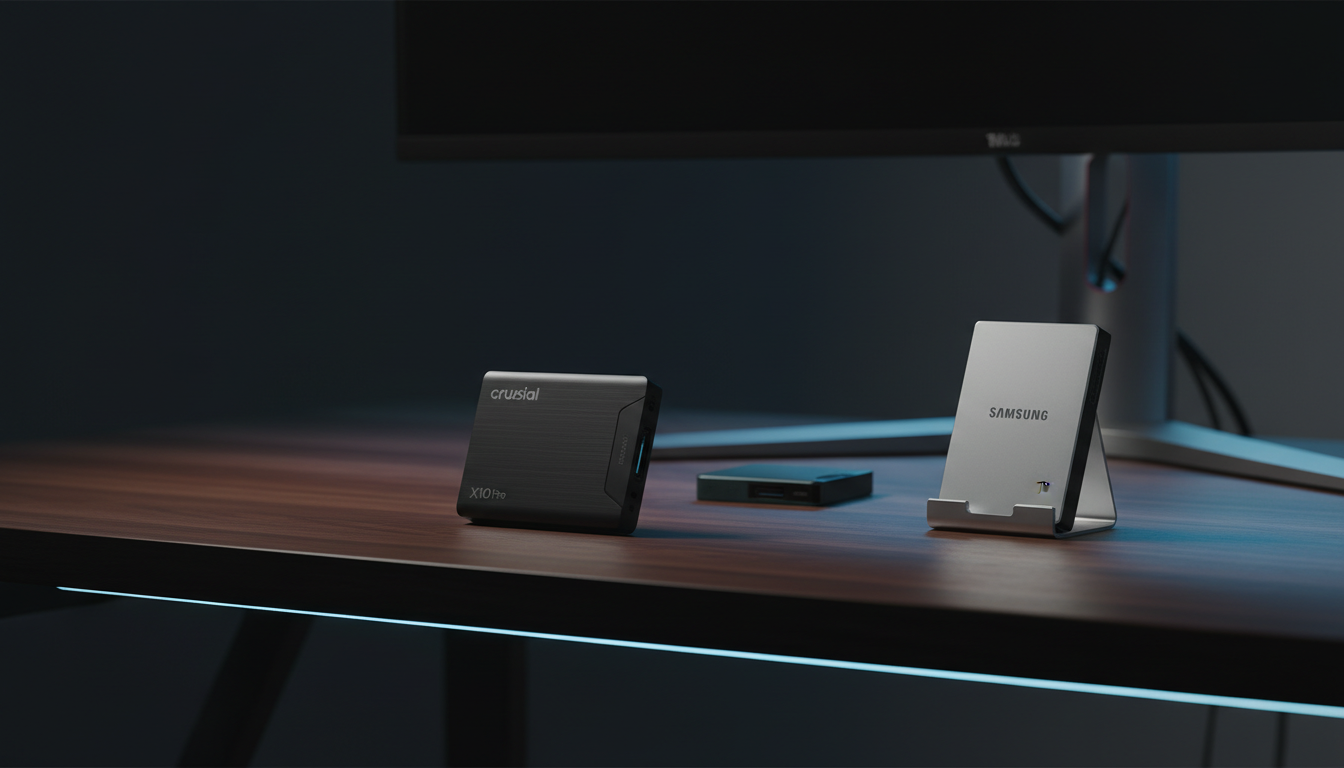
Eight portable SSDs span the full price spectrum—from the $121.01 Crucial X9 Pro at the budget end to the $786.52 Crucial X10 8TB flagship. The lineup splits into budget (Crucial X9 Pro, Crucial X9, SSK Portable SSD), mid‑range (SanDisk Extreme, Samsung T9) and premium (SanDisk Extreme PRO, Kingston XS1000R 2TB, Crucial X10). All eight carry solid 4.4 / 5 or higher ratings, with the top‑tier X10 offering a sequential read speed of 2100 MB/s and write speed near 2000 MB/s.
Speed, durability and size are the main factors considered. Most drives hit around 1050 MB/s read/write, but the Samsung T9 and SanDisk Extreme PRO push toward 2000 MB/s. Drop protection ranges from 7.5 ft (Crucial X9) up to 3 m on several models, and weights sit between 30 g and 122 g, making them easy to slip into a pocket or backpack.
Below you’ll find a closer look at each option so you can match capacity, performance and price to your specific workflow.
Crucial X10 8TB
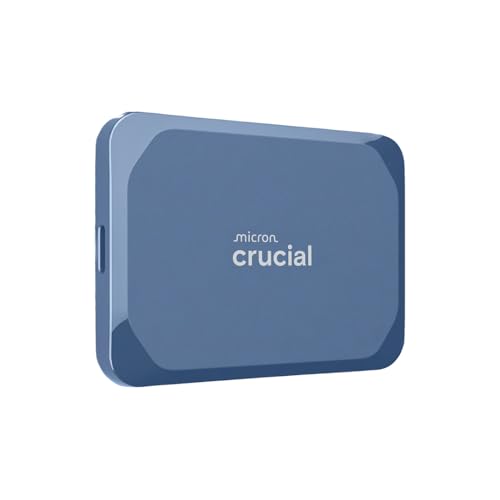
Its USB 3.2 Gen 2x2 (20 Gbps) USB‑C interface delivers the fastest transfer speeds among the contenders, making it ideal for massive 8 TB workloads.
Samsung T9
Perfect for buyers who want a proven, high‑quality SSD without the premium price—at $224.99 it’s roughly $561 cheaper than the top pick.

Crucial X9
Stands out with 7.5 ft (2.3 m) drop protection and a slim 10 mm height, offering rugged, portable storage at a budget price.
Also considered
Score Analysis
Key score advantages vs. runner-up (Samsung T9)
Price Range
Crucial X10 8TB
$845.99
Samsung T9
$271.37
Crucial X9
$143.22
SanDisk Extreme PRO
$209.99
SanDisk Extreme
$179.17

Crucial X9 Pro
$146.06

Kingston XS1000R 2TB
$267.79

SSK Portable SSD
$159.99
Spec Comparison
TL;DR: The Crucial X10 packs 8 TB into a 9.9 mm‑thin, IP65‑rated case, hits 2100 MB/s reads, but it needs a 20 Gbps host and it's priced at $786.52.
The X10 packs its massive 8 TB capacity into a chassis that’s only 9.9 mm high, 49.8 mm deep and 64.8 mm wide, weighing about 0.07 lb (32 g). It delivers sequential reads up to 2100 MB/s and writes up to 2000 MB/s, with sustained rates of 907 MB/s read and 960 MB/s write, all backed by 256‑bit AES hardware encryption.
Compared with the other seven drives, the X10 dwarfs the 2 TB Kingston XS1000R and the 1 TB models from Samsung, SanDisk and SSK in capacity. Its 2100 MB/s read outpaces the 2000 MB/s of the SanDisk Extreme PRO and Samsung T9, and far exceeds the 1050 MB/s ceiling of the Kingston and SSK units. The USB 3.2 Gen 2x2 (20 Gbps) interface matches the top‑tier ports Samsung T9 and SanDisk Extreme PRO use, while its weight matches the SSK Portable SSD and is lighter than the Samsung T9’s 122 g build.
Reviewers love how the X10 squeezes an 8 TB library into a pocket‑sized shell and praise the IP65 dust‑ and water‑resistance plus the 3 m (9.8 ft) drop rating for on‑the‑go shoots. Professionals note the drive’s potential 2 GB/s reads on compatible hosts, yet many users report that most laptops only deliver about 1 GB/s because 20 Gbps ports are still rare. Sustained transfer speeds also tend to fall short of the headline peaks, and many gripe about the missing USB‑A adapter.
Beyond speed, the X10 ships with a USB‑C to USB‑C cable, a quick‑start guide, and three months each of Mylio Photos+ and Acronis True Image software. The three‑year limited warranty and the rugged aluminum uni‑body add confidence for creators who travel or work in demanding environments.
Pros
Cons
Best for: Content creators, photographers, videographers, travelers, and gamers who need massive portable storage and rugged durability.
Avoid if: You don’t have a USB 3.2 Gen 2x2 (20 Gbps) host, prioritize sustained raw speed over portability, or are on a tight budget — it’s priced at $786.52.
“the smallest 8TB drive imaginable”
“overhyped for non-20 Gbps hosts”
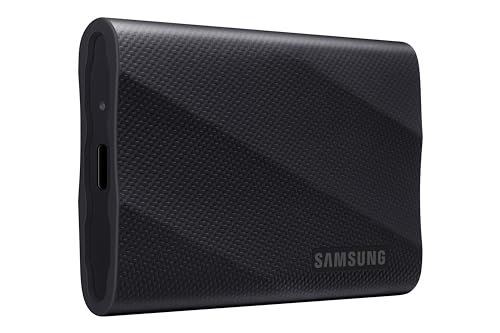
TL;DR: The Samsung T9 1 TB portable SSD packs a 20 Gbps USB 3.2 Gen 2x2 interface, delivering up to 2,000 MB/s read and 1,950 MB/s write in a rugged 122 g aluminum‑rubber case.
The standout spec is the 20 Gbps USB 3.2 Gen 2x2 interface, which lets the drive hit up to 2,000 MB/s sequential read and 1,950 MB/s sequential write, while sustaining 1,000 MB/s after the TurboWrite buffer fills. At 1 TB capacity the T9 stays compact at 88 mm × 60 mm × 14 mm and weighs 122 g, making it easy to slip into a laptop bag.
Compared with the seven rivals, the T9’s read speed matches the SanDisk Extreme PRO and exceeds the Kingston XS1000R, SanDisk Extreme, SSK, and Crucial X9 models, which top out around 1,050 MB/s. Only the Crucial X10 8 TB reaches a higher 2,100 MB/s read, but it’s a larger, higher‑capacity unit. In terms of heft, the T9 is heavier than the Kingston (28.7 g), SanDisk Extreme PRO (77.5 g), and the sub‑40 g Crucial options, and its 14 mm thickness is greater than the Extreme PRO’s 10.4 mm profile.
Professional reviewers note the aluminum‑rubber chassis feels premium and the Dynamic Thermal Guard prevents throttling during long transfers. Users appreciate the 3‑meter drop resistance and 1,500 G shock rating for on‑the‑go work, while the AES‑256‑bit hardware encryption adds peace of mind for sensitive data. The main trade‑off is that the advertised top speeds appear only when the host supports USB 3.2 Gen 2x2; older ports will revert to slower performance.
Pros
Cons
Best for: Buyers willing to invest in a proven, high‑quality option
Avoid if: You're on a tight budget or only need basic functionality
TL;DR: The Crucial X9 packs 1 TB of storage into a 65 × 50 × 10 mm, 32 g case, delivering 1050 MB/s read/write speeds and 7.5 ft drop protection for a budget‑friendly portable SSD.
The X9’s most eye‑catching spec is its ultra‑compact footprint—just 65 mm long, 50 mm wide and 10 mm thick—and a feather‑light 32 g (0.07 lb) chassis. It also offers a full 1 TB of capacity and guarantees 1050 MB/s for both sequential reads and writes via a USB 3.2 Gen 2 (10 Gb/s) interface. The drive carries an IP55 rating and survives drops from up to 7.5 ft (2.3 m), and it's genuinely rugged for everyday travel.
Compared with the other seven SSDs in this roundup, the X9 is lighter than the SanDisk Extreme (52 g) and the Samsung T9 (122 g), but a touch heavier than the SSK Portable SSD (30 g). Its 10 mm thickness is slimmer than the Samsung T9’s 14 mm height and comparable to the SanDisk Extreme’s 0.38 in (≈9.7 mm) thickness. Speed‑wise, it matches the SSK’s 1050 MB/s read rate but falls short of the Samsung T9’s 2000 MB/s and the SanDisk Extreme PRO’s 2000 MB/s. Drop protection of 7.5 ft exceeds the SSK’s 4‑ft rating and equals the X9 Pro’s claim, while the SanDisk Extreme offers a longer 3‑meter drop rating.
Users consistently praise the X9’s pocket‑size convenience and plug‑and‑play ease across Windows, macOS, Android, iOS, Linux, Xbox and PlayStation. Professional reviewers highlight the drive’s compact dimensions and the fact that real‑world sequential reads hover near the advertised 1050 MB/s, confirming its performance credibility. A common note says that while the write speed matches the read speed on paper, sustained write workloads don't keep pace with higher‑end models that use faster USB 3.2 Gen 2x2 interfaces.
Technically, the X9 connects via USB‑C and includes a USB‑C to‑C cable, drawing power directly from the host port, so no external battery is needed. The 3‑year limited warranty and bundled software (Mylio Photos Plus and Acronis True Image, each for three months) add extra value for creators who need quick backups on the go.
Pros
Cons
Best for: Budget-conscious buyers seeking a reliable entry-level option
Avoid if: You need the absolute highest performance or a drive built around the newer USB 3.2 Gen 2x2 standard
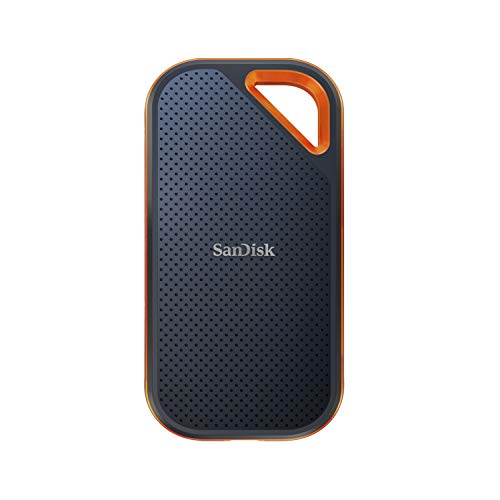
TL;DR: The SanDisk Extreme PRO 1 TB Portable SSD delivers 2000 MB/s read/write speeds, IP65‑rated ruggedness, and 128‑bit AES encryption, all in a forged‑aluminum case for $224.99.
The standout spec is its guaranteed 2000 MB/s sequential read and write performance, putting it in the same league as the fastest drives on the market. Coupled with a forged‑aluminum chassis, an IP65 water‑ and dust‑resistance rating, and drop protection up to 3 meters, it’s built to survive the toughest field jobs.
Compared with the other seven SSDs in this roundup, the Extreme PRO matches the Samsung T9’s top‑tier speeds while surpassing the Kingston XS1000R, SanDisk Extreme, SSK, Crucial X9 and X9 Pro, all of which list maximum speeds around 1050 MB/s. It weighs more than many of those models—those drives weigh as little as 0.066 pounds—so it isn’t the lightest option, but its premium build justifies the extra heft. Its 4.4‑star rating from 16,524 reviewers falls just below the 4.6‑star scores of several rivals.
Professional reviewers praise the drive for consistently hitting its advertised 2000 MB/s rates, noting the pocket‑size form factor (110.7 mm × 57.9 mm × 10.4 mm) and the inclusion of a carabiner loop that makes it easy to clip onto gear. The 128‑bit AES encryption and five‑year limited warranty add a layer of security and peace of mind that creators and photographers value.
Pros
Cons
Best for: Professionals and creators who need ultra‑fast transfers, strong durability, and built‑in encryption.
Avoid if: You prioritize the lightest, lowest‑priced SSD above performance and durability.
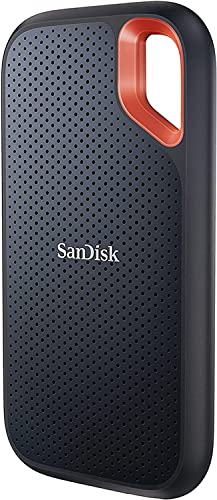
TL;DR: The SanDisk Extreme 1 TB Portable SSD delivers 1050 MB/s reads, 1000 MB/s writes, IP65 resistance, and a feather‑light 52 g chassis for creators on the move.
The drive packs a full 1 TB of storage in a 3.97" × 2.05" × 0.38" case that weighs just 0.11 pounds (52 g). It offers sequential read speeds of 1050 MB/s and write speeds of 1000 MB/s, backed by NVMe performance, a 256‑bit AES hardware encryption module, and a 3‑meter drop protection rating. Its IP65 rating adds water‑ and dust‑resistance, while the included USB‑C to USB‑C cable and USB‑C to USB‑A adapter keep it bus‑powered and ready for any USB‑C device.
Compared with the other seven SSDs in this roundup, the Extreme’s 1050 MB/s read speed matches the SSK Portable SSD, Crucial X9, Kingston XS1000R, and Crucial X9 Pro, but it trails the Samsung T9 and SanDisk Extreme PRO, both of which list 2000 MB/s reads. Write speeds are on par with the SSK and Kingston models (1000 MB/s) and a notch below the 1050 MB/s writes of the Crucial X9 and X9 Pro. In terms of weight, it weighs less than the SanDisk Extreme PRO (0.17 pounds) and is comparable to the SSK Portable SSD (0.066 pounds), though a few competitors list slightly lower gram weights.
Professional reviewers highlight the high read speed as a boon for smoother video playback during editing, and everyday users praise the drive’s portability and cross‑platform compatibility. The main criticism notes that its 1000 MB/s write ceiling falls short of newer high‑end models that push beyond 2000 MB/s. Nonetheless, the combination of solid speed, rugged IP65 protection, and a five‑year limited warranty makes it a reliable choice for mobile creators.
Pros
Cons
Best for: Creative professionals who need fast, portable storage for high‑resolution media.
Avoid if: You require the absolute fastest transfers above 2000 MB/s or a drive built for extreme ruggedness.
TL;DR: The Crucial X9 Pro is a 1 TB, IP55‑rated portable SSD that weighs just 38 g, delivers up to 1,050 MB/s read/write speeds, and features Apple‑optimized firmware at a $121 price point.
The standout spec is its ultra‑light chassis—just 38 g (0.0838 lb) and a thickness of only 9.91 mm—while still offering 1,050 MB/s sequential read and write performance. Its 256‑bit AES hardware encryption adds a layer of security for sensitive creative work.
Compared with the other seven SSDs in this roundup, the X9 Pro is lighter than the SanDisk Extreme (52 g) and the Samsung T9 (122 g) but a bit heavier than the Crucial X9 (32 g) and the SSK Portable SSD (30 g). Its 7.5 ft (2 m) drop resistance exceeds the SSK’s 4 ft rating yet falls short of the SanDisk Extreme’s 3‑meter protection. Speed‑wise, it matches the Crucial X9 and SSK at 1,050 MB/s read, but lags behind the Samsung T9 and SanDisk Extreme PRO, which top out at 2,000 MB/s.
User sentiment consistently praises the X9 Pro’s pocket‑sized form factor and smooth compatibility with macOS, noting that the Mac‑specific firmware “works flawlessly” out of the box. Professional reviewers highlight the balance of size, weight, and price, calling it a “sweet‑spot portable SSD” for on‑the‑go editing.
Under the hood, the drive uses Micron TLC NAND paired with a Silicon Motion SM2320 ASIC controller, draws power directly from the USB‑C port, and comes with three months of Mylio Photos+ plus Acronis True Image software. A 5‑year limited manufacturer warranty rounds out the offering.
Pros
Cons
Best for: Creative professionals and Mac users who need fast, portable storage for 4K/8K video editing and photography on the move.
Avoid if: You require the absolute fastest sequential write performance or the highest dust‑water protection rating (IP65).
TL;DR: The Kingston XS1000R 2TB delivers 2 TB of storage in a 28.7 g metal‑plastic case, offering up to 1,050 MB/s reads and 1,000 MB/s writes via USB 3.2 Gen 2.
The drive’s most striking spec is its featherweight build – just 28.7 g – combined with a full 2 TB of 3D NAND capacity. At 13.5 mm tall, 32.6 mm wide and 69.5 mm long, it slips into a pocket or palm while still reaching read speeds of up to 1,050 MB/s and write speeds of up to 1,000 MB/s.
Compared with the other seven SSDs in this roundup, the XS1000R is lighter than the Samsung T9 (122 g) and the SanDisk Extreme PRO (0.17 lb), and it’s marginally lighter than the SSK Portable SSD (0.0661386786 lb). Its 2 TB capacity doubles the 1 TB offered by most rivals, though its sequential speeds sit below the Samsung T9’s 2,000 MB/s read and the Crucial X10’s 2,100 MB/s read. It matches the SanDisk Extreme and SSK Portable SSD on speed while providing twice the storage.
Reviewers consistently praise the drive’s tiny footprint and instant plug‑and‑play across Windows, macOS, Linux, Chrome OS, Android and iOS/iPadOS. Professionals note the “ultra‑light” metal‑plastic construction and the reliable 1,050/1,000 MB/s transfer rates. The main complaints revolve around the lack of an included protective case and the fact that full speeds only appear on USB 3.2 Gen 2 hosts – older ports will throttle performance.
Beyond speed, the XS1000R operates from 0 °C to 40 °C and you can store it between –20 °C and 85 °C. It ships with a 12″ USB‑C to USB‑A cable and a USB‑A to USB‑C adapter, and Kingston backs it with a five‑year limited warranty.
Pros
Cons
Best for: Travelers, photographers, videographers and mobile professionals who need a 2 TB backup solution that stays in a pocket.
Avoid if: You need rugged drop protection, higher transfer speeds than 1,050 MB/s, or rely on older USB ports.
TL;DR: The SSK Portable SSD delivers 1 TB of storage, up to 1050 MB/s read and 1000 MB/s write speeds, in a feather‑light 30 g aluminum case with 4‑ft drop resistance, priced at $149.99.
This drive packs a 1 TB NVMe module behind an aluminum‑alloy shell that weighs just 30 g and measures 12 mm × 68 mm × 37 mm. It supports USB 3.2 Gen 2 (10 Gbps) and can step up to Gen 2x2 (20 Gbps), delivering up to 1050 MB/s sequential reads and up to 1000 MB/s writes. An approximate 24 GB pSLC cache helps sustain burst performance, and the included blue LED indicates activity.
Compared with the seven peers, the SSK is lighter than the Crucial X9 (≈0.07 lb) and noticeably lighter than the SanDisk Extreme (≈0.11 lb). Its 4‑ft drop resistance is lower than the 7.5‑ft protection of the Crucial X9 and the 3‑meter rating of the SanDisk Extreme, so it’s less rugged than those models. Speed‑wise, it matches the 1050 MB/s read rates of the Crucial X9, SanDisk Extreme, and Kingston XS1000R, but falls short of the 2000 MB/s reads advertised by the Samsung T9 and SanDisk Extreme PRO. The dual‑mode USB interface, however, puts it on par with the high‑end T9’s 20 Gbps capability.
Users consistently praise the plug‑and‑play simplicity across Windows, macOS, Android and iOS, as well as the bundled USB‑C to C and USB‑C to A cables and protective pouch. Professional reviewers note the premium feel of the aluminum chassis, the handy rubber hanging ring, and the blue LED. The main complaints revolve around the cache‑limited sustained write speed, which drops to roughly 550 MB/s after the 24 GB cache is exhausted, and the tendency to heat up during long transfers. You’ll notice those issues most when the drive runs on a standard Gen 2 port rather than the faster Gen 2x2 mode.
Pros
Cons
Best for: Budget-conscious buyers seeking a reliable entry-level option
Avoid if: You need advanced features or professional‑grade performance
“Plug-and-play ease across devices (PC/Mac/Android/iOS)”
“High‑res photos and videos transfer in seconds, feels premium in hand”
Breakdown
Crucial X10 8TB
Pros
Cons
Samsung T9
Pros
Crucial X9
Pros
SanDisk Extreme PRO
Pros
Cons
Based on scoring data and product specs
Personalized picks
Best Overall Pick
Crucial X10 8TB
Best OverallBest for: Audiophiles and enthusiasts seeking premium sound quality and advanced features
Samsung T9
Best for: Buyers willing to invest in a proven, high-quality option
$271.37-$574.62 vs winner
Skip SSK Portable SSD if…
You need advanced features or professional-grade performance
We’re naming the Crucial X10 8 TB the clear winner of our portable SSD roundup. Its massive 8 TB capacity gives you more than 7 TB of usable space, while the USB 3.2 Gen 2x2 interface delivers up to 2 100 MB/s sequential reads and 2 000 MB/s writes. Add an IP65 rating and a 3 m drop‑test certification, and you’ve got a rugged, high‑speed drive that also carries a 3‑year limited warranty.
The Samsung T9 takes the runner‑up spot, especially if you need a fast 1 TB drive for everyday laptop or console use. It pushes up to 2 000 MB/s sequential reads, offers AES‑256‑bit hardware encryption, and backs it with a generous 5‑year limited warranty, all in a compact 14 mm‑thick chassis.
Pick the Crucial X10 8 TB now and future‑proof your portable storage.
The Crucial X10 8TB is listed with a sequential read speed of 2100 MB/s, which is higher than the up‑to‑2000 MB/s reads claimed by the Samsung T9 and SanDisk Extreme PRO. This makes it the fastest option for large file transfers.
No reviews yet — be the first to share your experience.
Please sign in to leave a review