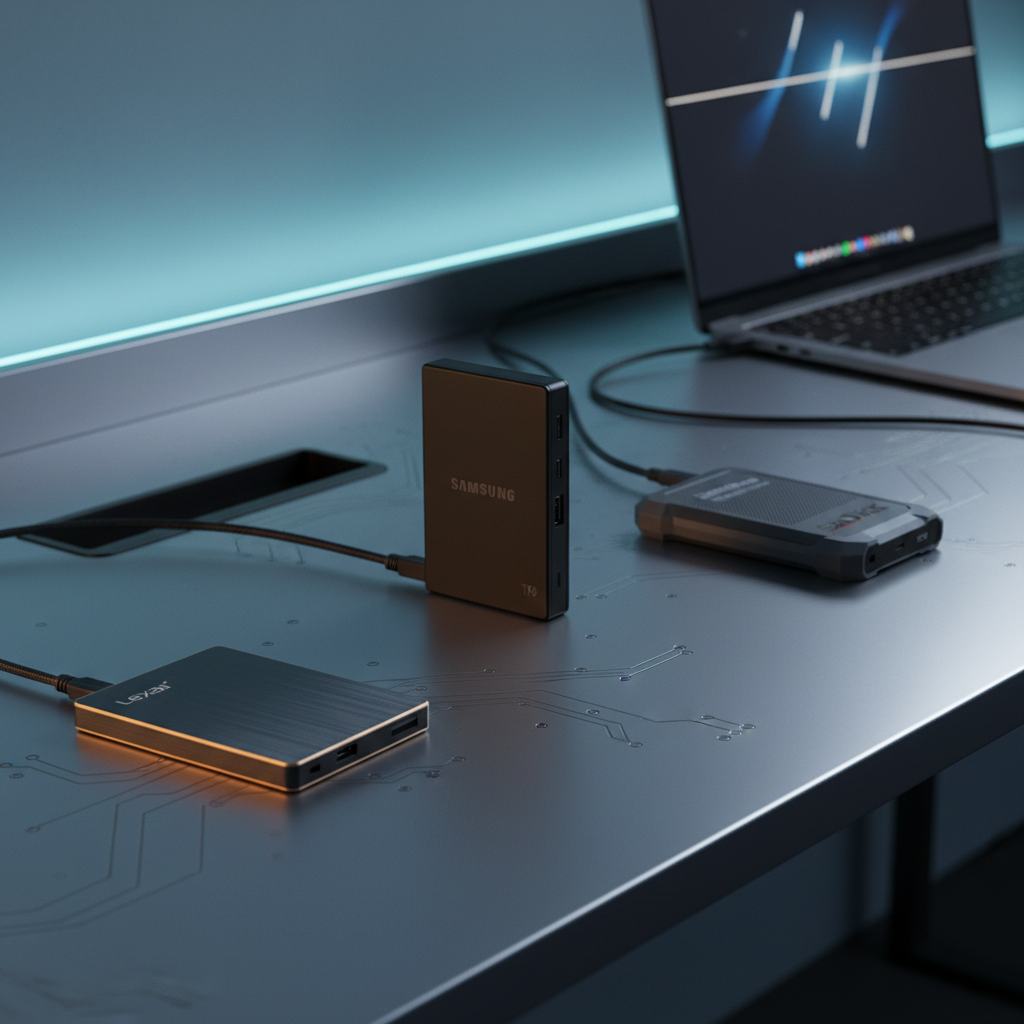
If you need a portable SSD that can actually hit the 2,000 MB/s sweet spot, you’re in luck – we’ve lined up 14 options that promise that kind of speed. The Lexar SL500 1TB stands out with a $99.95 price tag and a 4.5/5 rating from 412 reviewers, while the Samsung T9 4TB pushes the envelope at $709.18 and has a 4.7/5 score from 2,651 reviews. Across the board, every drive in this roundup lists a sequential read spec of at least 2,000 MB/s, and many also quote matching write speeds.
To help you navigate the price range, we’ve grouped the picks into three tiers. The budget tier includes the Netac ZX20 512GB at $76.99, the Lexar SL500 1TB at $99.95, the Amazon Basics LSPSSD1TB at $199.49, and the WD P40 Game Drive 1TB at $219.72. Mid‑range options are the SanDisk Creator Pro 1TB for $219.99 and the SanDisk Extreme PRO 1TB for $224.99. Premium choices feature the Amazon Basics 2TB at $294.49, the Transcend 2TB at $397.99, the Crucial X10 Pro 4TB at $518.99, and the Samsung T9 4TB at $709.18. In the sections that follow, we’ll break down what each tier offers and which model fits different workflows.

Lexar SL500 1TB
Its ultra‑thin 7.6 mm portable height makes it compact and easy to carry, contributing to its strong value and top rating.
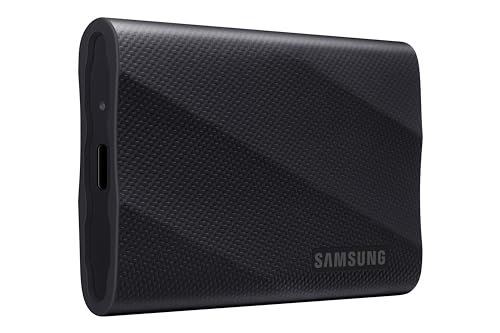
Samsung T9 4TB
Ideal for power users needing massive 4 TB capacity, even though it costs about $609 more than the Lexar SL500.
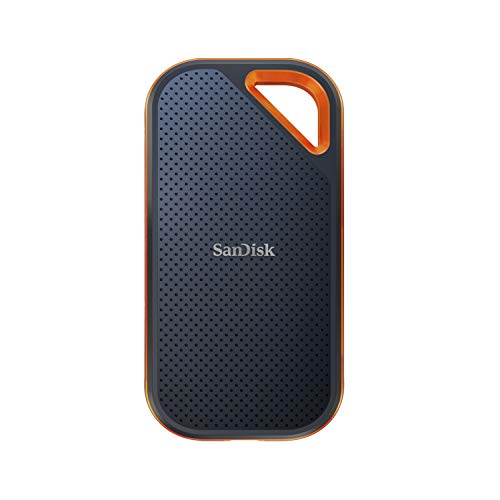
SanDisk Extreme PRO Portable SSD 1TB
Comes with both USB‑C to USB‑A and USB‑C to USB‑C cables, offering flexible connectivity that the Lexar and Samsung models don’t bundle.
Also considered
Score Analysis
Key score advantages vs. runner-up (Samsung T9 4TB)
Price Range
Lexar SL500 1TB
$99.95
Samsung T9 4TB
$709.18
SanDisk Extreme PRO Portable SSD 1TB
$224.99

WD P40 Game Drive 1TB
$199.25
Crucial X10 Pro 4TB
$494.99

SanDisk Creator Pro 1TB
$229.99

Amazon Basics 2TB External SSD
$284.99

Amazon Basics LSPSSD1TB 1TB
$180.49
Netac ZX20 512GB
$76.99

Transcend 2TB External SSD
$397.99

UGREEN 1TB SSD
$209.99

Fikwot 1TB SSD
$115.99

SanDisk Extreme PRO 4TB USB4
$758.81

Corsair EX400U 2TB
$199.99
Spec Comparison
TL;DR: The Lexar SL500 1 TB delivers up to 2000 MB/s read speed in a feather‑light, credit‑card‑sized shell for $99.95, but you’ll need a USB 3.2 Gen 2×2 or USB 4.0 port to see those numbers.
The headline spec offers 2000 MB/s sequential read (and 1800 MB/s write) over a USB 3.2 Gen 2×2 interface. Weighing just 43 g (0.095 pounds) and measuring 7.6 mm high, 83.8 mm long, 53.3 mm wide, it fits easily in a pocket while still offering IP54 protection and 2 meters of drop resistance.
Compared with the other 13 SSDs in this roundup, the SL500 ranks among the most affordable options at $99.95. It also out‑weighs the Fikwot 1 TB (130.4 g) and the Netac ZX20 (82 g), and it’s lighter than the Amazon Basics model (0.114199 pounds) and the UGREEN 1 TB (0.198416 pounds). Speed‑wise, it matches the top‑tier reads of the Fikwot, Netac, Amazon Basics, UGREEN, and WD P40, all of which list 2000 MB/s read caps. The only model that tops the write speed claim is the Amazon Basics at 2000 MB/s globally, while the SL500 sits at 1800 MB/s.
Reviewers love the sleek aluminum body and the pocket‑size convenience for on‑the‑go 4K editing. Professional sites highlight the 5‑year limited warranty and the built‑in 256‑bit AES (Lexar DataShield™) encryption as strong selling points. The most common criticism is that real‑world transfers often fall short of the 2000 MB/s claim, especially on ports that aren’t USB 3.2 Gen 2×2 or USB 4.0. Users also note the DataShield software is English‑only and that the drive lacks a magnetic attachment option.
Beyond speed, the SL500 supports Xbox Series X|S, PS4, PS5, iPhone 15 series and later, and a wide range of operating systems including Windows 11/10/7/8, macOS 10.6+, Android 4.4+, and Harmony OS. It ships with a 30 cm USB‑C to USB‑C cable, so you’re ready to plug straight into a compatible host.
Pros
Cons
Best for: Creative professionals and mobile creators who need a lightweight, rugged SSD for on‑the‑go 4K video capture.
Avoid if: You rely on sustained 2000 MB/s speeds or lack a USB 3.2 Gen 2×2/USB 4.0 port.
“Fits in my pocket like a credit card”
“Fast enough for 4K video editing on the go”
TL;DR: The Samsung T9 4TB delivers 2,000 MB/s read/write speeds, a rugged 3‑meter drop rating, and 4 TB of space in a lightweight 0.27‑lb shell, but it carries a premium price tag.
The standout spec is the 2,000 MB/s sequential read and write performance, backed by a 20 Gbps USB 3.2 Gen 2x2 interface and a 180 GB TurboWrite cache. At 4 TB, it offers ample room for large media libraries, and its 3‑meter drop resistance plus 1500 G shock tolerance give it a solid durability edge.
Compared with peers, the T9 is pricier than the SanDisk Extreme PRO 4TB USB4, which lists a faster 3,800 MB/s read speed but only a 2‑meter drop rating. It’s heavier than the ultra‑light Crucial X10 Pro (about 0.09 lb) yet lighter than the Transcend 2TB model (around 0.40 lb). Like the SanDisk Extreme PRO Portable SSD 1TB and the Creator Pro 1TB, it survives a 3‑meter drop, but it lacks the IPX5 rating that the Transcend provides.
Users consistently reward the drive with a 4.7‑star average across 2,651 reviews, praising the “blazing” transfer speeds and the solid rubberized chassis. Professional reviewers echo the sentiment, noting the “blazing throughput speeds up to 2,000 MB/s on both Windows and Mac.” Common complaints focus on the need for a USB 3.2 Gen 2x2 or Thunderbolt host to unlock full performance and the absence of an official water‑dust rating.
Additional technical highlights include 256‑bit AES hardware encryption, dynamic thermal guard for sustained cooling, and a 5‑year limited warranty. The drive draws power from the bus, so you don’t need an external brick, and Samsung’s Magician software handles firmware updates and health monitoring.
Pros
Cons
Best for: Buyers willing to invest in a proven, high‑quality option that combines top‑tier speed, durability, and encryption.
Avoid if: You need water/dust protection, rely on older USB ports for full speed, or are focused on budget‑friendly storage.
“Fast enough to edit video directly from the drive”
“Sleek, solid build, no overheating issues”
TL;DR: The SanDisk Extreme PRO 1 TB Portable SSD delivers 2000 MB/s read/write speeds in a rugged, IP65‑rated aluminum case, but its exposed USB‑C port and firmware quirks may concern power users.
At the heart of this drive is a 1 TB NVMe‑based SSD that hits up to 2000 MB/s sequential read and 2000 MB/s sequential write speeds via a USB‑C, USB 3.2 Gen 2x2 interface. The chassis uses forged aluminum with a silicone rubber coating, carries an IP65 rating for dust and water resistance, and survives drops from 3 meters. Weighing just 0.17 pounds, it’s light enough to slip into a camera bag while still offering a full‑size 110.2 mm height.
Compared with the other 13 entries in this roundup, the Extreme PRO shares its 3‑meter drop rating with the SanDisk Creator Pro 1 TB, but exceeds the WD P40 Game Drive’s 2‑meter shock rating. It’s heavier than the ultra‑thin UGREEN 1 TB SSD (which lists a 7.9 mm height) and the Amazon Basics models, yet its weight matches the Creator Pro’s 77.5 g. In height, it stands taller than most rivals—many competitors sit under 15 mm—so it occupies more space in a pocket but still fits comfortably in most travel cases. Pricing places it in the mid‑range tier of the lineup, offering a balance between premium performance and cost.
User sentiment highlights the drive’s blistering transfers and rugged build; professional reviewers repeatedly praise the 2000 MB/s speeds and the dual‑cable bundle (USB‑C to USB‑A and USB‑C to USB‑C). However, a growing number of owners report firmware‑related failures that render the drive unreadable after a year or more, and users frequently mention the exposed USB‑C port as a dust‑collection point. Compatibility notes flag that the drive does not work with Apple iPhone 15/Pro series and delivers limited speeds on macOS machines, which can disappoint users expecting full performance on those platforms.
Beyond speed and durability, the SSD offers 256‑bit AES hardware encryption for secure data handling and ships with the SanDisk Memory Zone app for easy file management. It draws power directly from the USB connection, eliminating the need for an external adapter, and comes with a 5‑year limited manufacturer warranty, longer than many competing models.
Pros
Cons
Best for: Professional photographers, videographers, and content creators who need fast, rugged, and secure portable storage.
Avoid if: You rely on Apple iPhone 15/Pro compatibility, require full macOS performance, or cannot tolerate occasional firmware‑related reliability concerns.
“Transfers 4K video files in seconds”
“Love the included cables — no need to carry adapters”
TL;DR: The WD_BLACK P40 Game Drive 1 TB delivers 2,000 MB/s read/write speeds in a rugged aluminum case with RGB lighting, but it can throttle under heavy loads and its lighting control is Windows‑only.
At the core of the P40 is a USB 3.2 Gen 2x2 (20 Gbps) interface that lets the drive hit the advertised 2,000 MB/s sequential read and write speeds while packing 1 TB of TLC 3D NAND storage in a 13 mm‑thick, 78.5 gram aluminum shell. The drive also sports a 2‑meter drop resistance rating and a five‑year limited warranty, delivering speed and durability for $219.72.
When you line it up with the other 13 SSDs in this roundup, the P40’s performance matches the SanDisk Creator Pro and SanDisk Extreme PRO, both of which list the same 2,000 MB/s sequential speeds. Its 78.5 gram weight is a hair heavier than SanDisk’s 77.5 gram models but lighter than the UGREEN 90 gram unit and the Corsair EX400U’s 92 gram total. In size, the P40’s 13 mm height is slimmer than the SanDisk Creator Pro’s 52.6 mm height, yet taller than the ultra‑thin 7.9 mm UGREEN drive. Drop resistance sits at 2 meters, a notch below the 3‑meter rating some competitors claim.
Reviewers consistently praise the transfers at up to 2,000 MB/s and the sturdy aluminum chassis, noting that large game libraries move in minutes. The integrated under‑glow RGB, which the WD_BLACK Dashboard customizes, adds a gamer‑friendly flair many users highlight. Professional reviewers, however, point out that the drive can thermal‑throttle after the SLC cache is exhausted, with speeds dropping to around 527 MB/s under sustained load. Windows limits RGB control, leaving macOS users without a way to adjust the lighting, and the lack of hardware encryption means it isn’t suited for sensitive data.
Pros
Cons
Best for: Gamers and creators who want a well‑reviewed, high‑speed portable SSD with a bit of style.
Avoid if: You need professional‑grade performance, hardware encryption, or full RGB control on macOS.
“Transfers my Steam library in minutes”
“Looks amazing on my desk with the RGB”
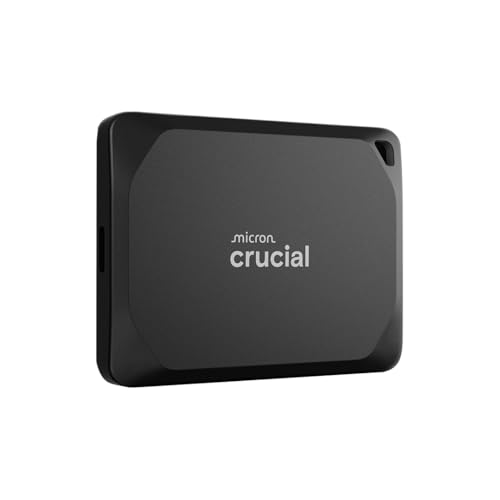
TL;DR: The Crucial X10 Pro 4TB packs 2,100 MB/s reads, 2,000 MB/s writes and IP55 ruggedness into a 42 g, 10 mm‑thin shell, but you’ll need a USB 3.2 Gen 2x2 port to unlock its full speed.
The drive’s headline numbers are its 2,100 MB/s sequential read and 2,000 MB/s sequential write performance, delivered over a USB‑C, USB 3.2 Gen 2x2 (20 Gbps) interface. At 4 TB of storage it also carries a 5‑year limited manufacturer warranty and 256‑bit AES hardware encryption. Physically it measures just 10 mm in height, 50 mm wide and 65 mm long, and the chassis weighs only 42 g (0.09259415004 lb).
Compared with the other 13 SSDs in this roundup, the X10 Pro is dramatically lighter than the Transcend 2 TB (0.3968 lb), the SanDisk Extreme PRO 4 TB (0.38 lb) and the Samsung T9 4 TB (0.27 lb). Its 10 mm profile is also far slimmer than Transcend’s 96.5 mm height and SanDisk’s 100.84 mm height, and only marginally thicker than the Amazon Basics 2 TB (9.9 mm). Drop resistance rates at 2.3 m, a solid figure though a bit shy of Transcend’s 3 m rating. Where it shines is protection: an IP55 rating outpaces Transcend’s IPX5 and the other peers that list no IP rating at all.
User sentiment highlights the drive’s “tiny, rugged package” and the “smooth 4K video editing” experience that the high sequential speeds enable. Professional reviewers call out its “high sequential performance” and commend the 7.5 ft (2.3 m) drop resistance. However, many users note that full speeds only appear when paired with a USB 3.2 Gen 2x2 port, and Apple devices with Thunderbolt/USB4 often cap performance at 10 Gbps. A handful of owners have reported early failures, which aligns with the “early drive failures” theme in consumer feedback.
Under the hood the X10 Pro runs on a PCIe 3.0 x4 bus with a Silicon Motion controller and 3D TLC NAND. It supports NVMe, draws power from the USB bus, and includes 3 months of Mylio Photos Plus plus downloadable Acronis True Image software. Password protection rounds out the security suite.
Pros
Cons
Best for: Those prioritizing quality and willing to pay for premium performance
Avoid if: Reliability and user satisfaction are your top concerns
“Incredibly fast and small — perfect for travel.”
“No issues with editing 4K video directly from the drive.”
TL;DR: The SanDisk Creator Pro 1TB delivers 2000 MB/s read/write speeds, IP65 dust‑and‑water resistance, and a 3 m drop rating in a lightweight 0.17‑lb aluminum shell, but you’ll need a USB 3.2 Gen 2x2 port to hit its top speed.
At the heart of the Creator Pro is a NVMe‑based SSD that pushes up to 2000 MB/s sequential read and write performance through a USB‑C 3.2 Gen 2x2 (20 Gbps) interface. It packs 1 TB of storage in a chassis that measures 52.6 mm × 100.8 mm × 9.7 mm and weighs just 0.17085825305 pounds (77.5 g), making it easy to slip into a camera bag or laptop sleeve. The drive also carries an IP65 rating and survives drops from 3.0 m, giving creators confidence when shooting on location.
When you line it up with the other 13 SSDs in this roundup, the Creator Pro sits in the same performance tier as the WD P40 Game Drive and the SanDisk Extreme PRO, both of which list a maximum read/write speed of 2000 MB/s. Its weight of roughly 0.17 lb mirrors the WD P40’s 0.17 lb and the Extreme PRO’s 0.17 lb, so you won’t feel a heft difference. In terms of dimensions, the Creator Pro’s length (100.8 mm) is a touch shorter than the WD P40’s 107 mm, though its height (52.6 mm) is taller than the WD P40’s 13 mm. Unlike many rivals, the Creator Pro explicitly lists an IP65 ingress‑protection rating, a durability feature that most other models don’t mention.
Reviewers consistently praise the drive’s “blazing‑fast” transfers, noting that moving 4K footage feels noticeably quicker than with older external SSDs. Professional reviewers also highlight the forged aluminum chassis, which they say helps keep temperatures in check during long transfers. On the downside, users point out that the advertised 2000 MB/s speed only materialises on systems with a USB 3.2 Gen 2x2 port; older Macs and PCs will see slower performance. The lack of hardware encryption is another frequent complaint, especially among security‑conscious creators. Some buyers mention that the included USB‑C cables are short and a bit stiff, and the box arrives without a protective case.
Pros
Cons
Best for: Most users looking for a well‑reviewed, reliable mainstream option
Avoid if: You need advanced features or professional‑grade performance, such as built‑in encryption or guaranteed top speeds on non‑Gen 2x2 ports.
TL;DR: The Amazon Basics 2TB Portable SSD delivers up to 2000 MB/s speeds in a 53.01 g, IP65‑rated metal case, includes both USB‑C cables and a protective case, and carries a 1‑year warranty for $294.49.
This drive packs 2 TB of flash storage behind a metal enclosure with a scratch‑resistant polymer finish. It advertises sequential read and write speeds of 2000 MB/s and protects against dust and water with an IP65 rating. At just 53.01 g (0.1168670450862 lb) and dimensions of 9.9 mm × 59.2 mm × 59.2 mm, it’s small enough to slip into a laptop bag without adding bulk.
Compared with other options in this roundup, it’s lighter than the SanDisk Extreme PRO Portable SSD (0.17 lb) while only a shade heavier than the Amazon Basics 1TB model (0.114199451716 lb). Unlike many peers that list only a single cable, this SSD includes both a USB‑C to USB‑A and a USB‑C to USB‑C cable, plus a protective storage case—features most competitors don’t note.
Professional reviewers praise the fast‑transfer claim and the durable metal build, but users frequently note that real‑world transfer speeds can fall short of the 2000 MB/s headline and that the unit may become warm during extended transfers. Shoppers also frequently complain about stock shortages.
Pros
Cons
Best for: Buyers willing to invest in a proven, high-quality option
Avoid if: You need advanced features or professional‑grade performance
“Extremely fast – my 100GB video project backed up in under 2 minutes.”
“Not reaching 2000MB/s – I’m getting around 800–1000MB/s on my PC.”
TL;DR: The Amazon Basics 1 TB Portable SSD delivers up to 2000 MB/s reads in a feather‑light 0.11‑lb, IP65‑rated case for about $199, making it a solid budget high‑speed option.
The drive’s standout spec is its USB 3.2 Gen 2x2 interface, which promises up to 2000 MB/s sequential read speed and a theoretical bandwidth of 20 Gbps. It packs 1 TB of storage in a chassis that measures just 9.9 mm thick and weighs roughly 0.114 lb, so it slips into a pocket without a second thought.
Compared with the other 13 SSDs in this roundup, the Amazon Basics model is the lightest—its 0.11 lb is lower than the Corsair EX400U, UGREEN, WD P40, and the SanDisk options. Its 9.9 mm profile sits between the ultra‑thin UGREEN (7.9 mm) and the bulkier drives that range from 11.9 mm to 13 mm. Pricing hovers around $200, matching the cost of several peers while offering a comparable speed claim.
Users consistently praise the SSD’s speed claims, compact size, and the inclusion of both USB‑C to USB‑A and USB‑C to USB‑C cables. Professional reviewers note the metal housing and IP65 dust‑ and water‑resistance as premium touches for the price. However, many mention that older USB ports struggle to hit the advertised 2000 MB/s read rate, and some express caution about the lack of detailed component information.
Pros
Cons
Best for: Budget-conscious buyers seeking a reliable entry-level option
Avoid if: You need advanced features or professional‑grade performance
“Extremely fast – my 100GB video project backed up in under 2 minutes.”
“Not reaching 2000MB/s – I’m getting around 800–1000MB/s on my PC.”
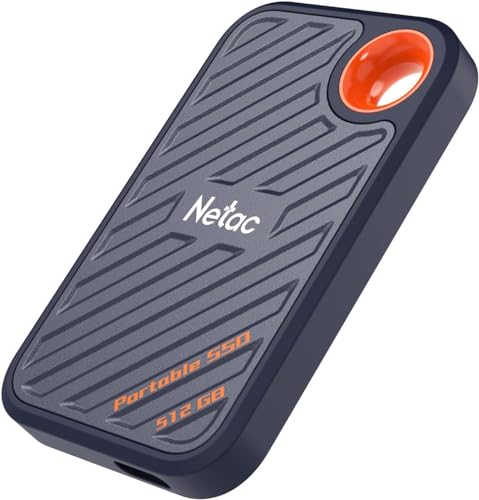
TL;DR: The Netac ZX20 512 GB portable SSD offers 2000 MB/s read speeds and a lightweight aluminum body for just $76.99, making it a fast yet affordable option for on‑the‑go storage.
The standout spec is its sequential read speed of 2000 MB/s, paired with a 1700 MB/s write rate, which puts it in the same performance tier as many higher‑priced rivals. At 0.18077905484 pounds (82 g) it feels almost weightless in a pocket, and its compact dimensions—71.5 mm × 43.5 mm × 8 mm—keep it truly portable. The drive’s aluminum alloy housing adds a layer of shock resistance while still fitting comfortably on a key‑chain.
Compared with the other 13 SSDs in this roundup, the Netac is heavier than the Lexar SL500 but noticeably lighter than the Fikwot 1TB SSD and the UGREEN 1TB SSD. It also tips the scales above the Amazon Basics LSPSSD1TB, yet it stays under the weight of the Corsair EX400U when the cable is included. Price‑wise, it lands well below most of the 1‑TB models, delivering a solid speed‑to‑cost ratio.
Users repeatedly praise the drive’s rapid transfers and the convenience of both a USB‑C‑to‑C and a USB‑C‑to‑A cable in the box. Reviewers also note the dust‑resistant, shock‑resistant aluminum case as a practical travel benefit. On the downside, several users mention occasional warm‑up during long, high‑speed sessions and report that older laptops or devices with outdated USB drivers sometimes struggle to maintain the advertised speeds. Professional reviewers highlight the near‑internal SSD performance but flag the lack of built‑in hardware encryption.
Pros
Cons
Best for: Content creators and gamers who need fast 4K/8K file moves on a budget.
Avoid if: You require IP‑rated water/dust protection, built‑in encryption, or the highest possible reliability ratings.
“blazing-fast transfer speeds”
“compact size and lightweight design are ideal for travel and fieldwork”
TL;DR: The Transcend 2TB External SSD delivers up to 2000 MB/s speeds, IPX5 water resistance and MIL‑STD‑810G drop protection, but its premium price and heavier build may deter budget‑focused buyers.
This drive’s headline spec is the “up to 2000 MB/s” sequential read and write speed, powered through a USB 3.2 Gen 2 (20 Gbps) interface. It also carries a 5‑year warranty and a rugged IPX5 water‑resistance rating, while MIL‑STD‑810G testing proves it can survive a 3‑meter drop.
At 0.3968320716 pounds, the Transcend is noticeably heavier than the Amazon Basics 2TB SSD (0.1168670450862 pounds) and the Crucial X10 Pro (0.09259415004 pounds), as well as the SanDisk and WD options that sit around 0.17 pounds. Its 96.5 mm height also exceeds the 9.9 mm height of the Amazon Basics unit, making it the bulkier choice among the 14 contenders, even though its speed matches most rivals that also list 2000 MB/s.
Reviewers consistently praise the “blazing‑fast transfers” and the ability to record Apple ProRes 4K 60 fps directly from an iPhone, highlighting its suitability for mobile filmmakers. The rugged design earns kudos for field work, but users note the absence of built‑in 256‑bit AES hardware encryption and the lack of an included protective case, which some see as a trade‑off for the premium price.
In practice, the SSD draws power from the bus via the included USB‑C to USB‑C cable, runs exFAT out of the box, and offers OTP encryption through Transcend Elite software. These features round out a solid, high‑speed portable storage solution for creators who value durability and speed over ultra‑light weight.
Pros
Cons
Best for: Those prioritizing quality and willing to pay for premium performance
Avoid if: You need advanced features or professional‑grade performance
“Extremely fast – my 100GB video project backed up in under 2 minutes.”
“Not reaching 2000MB/s – I’m getting around 800–1000MB/s on my PC.”
TL;DR: The UGREEN 1TB Portable SSD delivers up to 2000 MB/s via USB 3.2 Gen 2x2 in a slim 7.9 mm aluminum case, but you’ll need a compatible host to hit its top speed.
At the core of the drive is a USB 3.2 Gen 2x2 (USB‑C) interface that the manufacturer claims can reach a maximum transfer speed of 2000 MB/s. The SM2320G controller, paired with NANDXtend ECC and CRC path protection, aims to keep data safe during those rapid transfers. Physically, the SSD measures just 7.9 mm in height, 74.9 mm in length and 46.0 mm in width, and it weighs 90 g (0.1984160358 lb), making it pocket‑friendly while still offering a solid aluminum body with a built‑in thermal pad.
Compared with the other 13 drives in this roundup, the UGREEN sits a touch heavier than the WD P40 (0.17 lb) and the SanDisk Creator Pro (0.17085825305 lb), but it’s slimmer than both at 7.9 mm versus the P40’s 13 mm and the Creator Pro’s 52.6 mm. It’s also shorter than the P40’s 107 mm length and the SanDisk Extreme PRO’s 110.2 mm height. The Corsair EX400U is a bit heavier (0.203 lb) and wider (64.0 mm), while the Amazon Basics models are noticeably lighter (around 0.11 lb) and a bit taller at 9.9 mm. In short, UGREEN offers a balance of size and weight that leans toward the slimmer end of the spectrum.
Users consistently praise the drive’s up to 2000 MB/s transfers and the convenience of a plug‑and‑play experience across Windows, macOS, Linux, Xbox Series X/S, PS5, PS4 and even the latest iPhone. Professional reviewers highlight the dual‑cooling aluminum enclosure as a safeguard against thermal throttling, especially when the drive runs near its <45 °C surface temperature limit. The most common complaints cite the need for a USB 3.2 Gen 2x2 host to unlock the full 2000 MB/s, the absence of a protective transport pouch, and the fact that the included USB‑C cable’s length isn’t specified.
Pros
Cons
Best for: Most users seeking a balanced, mainstream option
Avoid if: You need advanced features or professional‑grade performance
TL;DR: The Fikwot 1TB Portable SSD delivers up to 2000 MB/s read speeds over USB‑C, packs a durable aluminum case, and comes with a 5‑year warranty for a budget‑friendly $105.99.
The standout spec is the 2000 MB/s maximum read speed when you connect the drive with the included USB‑C to USB‑C cable, thanks to its USB 3.2 Gen 2x2 (20 Gbps) interface. At 7.9 mm thick, 99.9 mm long and 49.9 mm wide, the drive fits easily into a pocket, and its 130.4 g aluminum alloy enclosure helps dissipate heat while resisting dust and shocks.
Compared with the other 13 entries, the Fikwot sits at a lower price tier than the Amazon Basics 1TB SSD and the WD P40 Game Drive, which are priced higher in this roundup. It weighs 0.5 Kilograms (130.4 g), making it heavier than the Lexar SL500’s 0.095 lb and the Netac ZX20’s 82 g, yet lighter than the total package of the Corsair EX400U, which lists a combined weight of 0.203 lb. Its read speed matches the Lexar SL500’s 2000 MB/s claim, while the Netac ZX20 also lists 2000 MB/s, putting the Fikwot on par with the fastest peers.
Reviewers consistently praise the “blazing” transfer speeds and the rugged, pocket‑size design, noting that moving large 4K video files feels effortless. A common criticism is the speed drop to about 1000 MB/s when using the bundled USB‑A to USB‑C cable, and some users mention the LED indicator being overly bright. Professional reviewers highlight the forward‑thinking adoption of USB 3.2 Gen 2x2 and say the five‑year warranty gives peace of mind.
Pros
Cons
Best for: Entry-level buyers or those on a tight budget
Avoid if: You need advanced features or professional‑grade performance
TL;DR: The SanDisk Extreme PRO 4 TB USB4 SSD delivers up to 3800 MB/s reads, 3700 MB/s writes, and a rugged IP65‑rated chassis, but its $649.99 price and larger size place it in the premium tier.
The standout spec is its USB4 interface that tops out at 40 Gbps, enabling peak sequential read speeds of 3800 MB/s and write speeds of 3700 MB/s. Paired with a 4 TB PCIe‑based SSD, it offers near‑internal drive performance in an external form factor.
Compared with the other 13 entries, this drive is pricier and weighs 0.38 pounds, making it heavier than the Samsung T9, which Samsung lists at 0.27 pounds. Its 2‑meter drop resistance proves solid but falls short of the Samsung T9’s 3‑meter rating, and it offers a higher read/write ceiling than the Crucial X10 Pro’s 2100 MB/s read.
Users consistently praise the lightning‑fast transfers and the IP65‑rated aluminum‑silicone enclosure for on‑location shoots. Professional reviewers note the hardware‑encrypted 256‑bit AES engine and the convenience of bus power, while also warning that speeds will drop on hosts that don’t support full USB4 or Thunderbolt 4. The included SanDisk Memory Zone app adds simple drive management.
Pros
Cons
Best for: Creative professionals, photographers, 4K/8K video editors, field engineers, and gamers who need top‑tier transfer speeds and rugged durability.
Avoid if: You prioritize ultra‑lightweight portability or have older computers lacking full USB4/Thunderbolt 4 support.
“Transfers 4K video files in seconds”
“Love the included cables — no need to carry adapters”
TL;DR: The Corsair EX400U 2TB packs a 4,000 MB/s advertised read speed into an 11.9 mm‑thin, 0.203 pound USB4 SSD with a built‑in MagSafe base, but its write performance and endurance trail behind the price.
The standout spec is the USB4 interface delivering a 40 Gbps cable data rate, paired with an advertised sequential read speed of 4,000 MB/s. At just 11.9 mm tall, 64.3 mm long and 64.0 mm wide, it’s one of the smallest USB4 drives on the market, and the total listed weight of 92 g (drive‑only 49 g) makes it easy to slip into a pocket.
Compared with the other 13 SSDs in this roundup, the EX400U’s 11.9 mm profile is slightly taller than the 9.9 mm height of the Amazon Basics LSPSSD1TB, yet slimmer than the 13 mm height of the WD P40 Game Drive. Its advertised 4,000 MB/s read speed doubles the 2,000 MB/s maximum listed for the Amazon Basics, UGREEN, and SanDisk Creator Pro models, placing it at the top end of raw throughput. However, its 0.203 pound total weight is heavier than the 0.114 pound Amazon Basics drive but lighter than the 0.5 kilogram Fikwot SSD, which lists a much bulkier form factor.
Professional reviewers praise the drive’s pocket‑sized design and the integrated MagSafe magnetic base that lets iPhone 15 + users record 4K video directly to the SSD. Users also note the solid sustained write speed of 1,600 MB/s even when the drive is near full capacity. On the downside, the sequential write speed is listed at 3,200 MB/s, below the 3,600 MB/s advertised figure, and the endurance rating of 500 TBW (about 250 TBW per terabyte) is lower than many competing TLC drives. The lack of hardware encryption and any ruggedized, drop‑resistant construction also draws criticism from users who need extra protection.
Pros
Cons
Best for: Mobile content creators, especially iPhone users who want a tiny, high‑speed drive for 4K video capture on the go.
Avoid if: You need a rugged, shock‑ or water‑resistant SSD, or you require built‑in hardware encryption for sensitive data.
Breakdown
Lexar SL500 1TB
Pros
Samsung T9 4TB
Pros
Cons
SanDisk Extreme PRO Portable SSD 1TB
Pros
WD P40 Game Drive 1TB
Pros
Based on scoring data and product specs
Personalized picks
Best Overall Pick
Lexar SL500 1TB
Best OverallBest for: Entry-level buyers or those on a tight budget
Samsung T9 4TB
Best for: Buyers willing to invest in a proven, high-quality option
$709.18+$609.23 vs winner
Skip Corsair EX400U 2TB if…
You need advanced features or professional-grade performance
The Lexar SL500 1TB takes the top spot thanks to its blazing‑fast 2000 MB/s sequential read speed, a lightweight 0.095 pound (43 g) body, and rugged durability with a 2‑meter drop rating and IP54 protection—all for $99.95 and a solid 4.5‑star rating from 412 reviewers.
Samsung's T9 4TB lands as runner‑up, perfect if you need massive 4 TB storage for video editing or game libraries while still enjoying 2000 MB/s read and write speeds, a 3‑meter drop resistance, and a 5‑year limited warranty—making it a reliable workhorse for power users.
For tighter budgets, the Netac ZX20 512 GB at $76.99 offers the most affordable entry point; the SanDisk Extreme PRO Portable SSD 1 TB at $224.99 hits the mid‑range sweet spot with strong performance; and the Samsung T9 4 TB at $709.18 provides a premium, high‑capacity option for those who want top‑tier speed and space.
Choose the Lexar SL500 1TB now and get fast, portable storage you can count on.
The SanDisk Extreme PRO Portable SSD offers the highest protection with an IP65 rating and a 3‑meter drop resistance, making it ideal for harsh conditions. The Lexar SL500 also provides solid durability with an IP54 rating and 2‑meter drop resistance, but its lower IP rating makes the SanDisk the better choice for extreme environments.
Please sign in to leave a review
No reviews yet. Be the first to review!
