⚡ Quick Answer
Picking a first drone can feel like a maze of specs, prices, and promises. In this guide we’ve lined up 11 options that span from the $35.99 Holy Stone HS110D up to the $299.00 DJI Mini 3, with ratings ranging from 4.0/5 to 4.6/5. Whether you want a sturdy indoor toy or a camera‑ready flyer for weekend trips, the list covers every skill level and budget.
We split the roundup into three price tiers so you can focus on what matters most. The budget tier includes the Holy Stone HS110D, Syma X710W, Syma Kids Drone, and Hiturbo Drone—all under $45 and sporting ratings around 4.1–4.4/5. Mid‑range picks are the Relidol Drone at $59.99 (4.6/5) and Holy Stone HS720E at $75.99, each offering 25–46 minutes of total flight time. Premium choices—Holy Stone HS440, HS710, HS360S, and DJI Mini 3—bring longer ranges, higher‑resolution cameras and flight times up to 31 minutes.
Read on to see how each model measures up in weight, camera quality, range and ease of use, so you can land on the drone that fits your first‑flight goals.

DJI Mini 3
Its 2250 mAh battery gives longer flight time, supporting its top rating and brand confidence.

Holy Stone HS110D
Ideal for entry‑level flyers or kids, the HS110D comes in at $35.99—roughly $263 less than the DJI Mini 3—making it a budget‑friendly starter.

Holy Stone HS720E
Stands out with 46 minutes of total flight time using two batteries, offering extended sessions without the premium price of the DJI Mini 3.
Also considered
Score Analysis
Key score advantages vs. runner-up (Holy Stone HS110D)
Price Range
DJI Mini 3
$417.80
Holy Stone HS110D
$29.99
Holy Stone HS720E
$99.99
Relidol Drone
$69.98

Holy Stone HS710
$75.99

Hiturbo Drone
$44.99
Holy Stone HS360S
$179.99

Syma Kids Drone
$42.74

Syma X710W
$79.99

Holy Stone HS440
$79.99

Holy Stone HS175G
$189.89
Spec Comparison
TL;DR: The DJI Mini 3 offers a sub‑250 g, 4K‑capable drone with a 31‑minute flight window, 10 km transmission and beginner‑friendly features, but its $299 price sits above many entry‑level rivals.
The Mini 3 weighs just 0.55 lb (about 246 g), which puts it under the typical 250 g registration threshold in most regions. Its 1/2.3‑inch CMOS sensor captures 12 MP photos and 4K video at 3840×2160 px, while a 3‑axis mechanical gimbal and electronic image stabilization keep footage steady even on breezy days.
Compared with the other ten drones in this roundup, the Mini 3 is a shade lighter than the Holy Stone HS175G (0.55 lb vs 0.55 lb when rounded) and carries a shorter flight time than the HS175G’s 60‑minute dual‑battery claim, but it outlasts the HS360S’s 20‑minute runtime. Its 10 km video transmission range far exceeds the shorter ranges that the rest of the field lists, and while its $299 price tag is higher than many budget options, the combination of brand confidence and feature depth justifies the premium.
Users consistently applaud the drone’s pocket‑size portability and the ease of launching via the DJI Fly app, noting that the auto return‑to‑home and QuickShots modes make it feel “plug‑and‑play.” Professional reviewers point out the “super stable” footage thanks to the gimbal and EIS, and everyday flyers love the reliable signal up to 10 km. The most common gripe is the lack of obstacle‑avoidance sensors, which can lead to bumps in cluttered spaces, and some mention that real‑world flight time drops in windy conditions.
Technical highlights include a max ascent speed of 5 m/s, a max horizontal speed of 16 m/s, and wind resistance up to 10.7 m/s (38 kph). The drone can climb to a max takeoff altitude of 4000 m, and its GNSS suite (GPS, GLONASS, BeiDou) plus a downward vision sensor help maintain stable hover and precise positioning.
Pros
Cons
Best for: Buyers willing to invest in a proven, high‑quality option
Avoid if: You're shopping on a tight budget — it's priced at $299.00
TL;DR: For $35.99, the Holy Stone HS110D offers a 1080p camera, 150 m range and up to 20 minutes of total flight time, making it a solid starter drone despite its light, fragile build.
The HS110D packs a 1080p HD camera with a 120° field of view, a 1000 mAh 3.7 V battery and a charging window of 45 minutes to 2 hours. It lists a maximum altitude of 120 m and stays within control up to 150 m, while the two interchangeable batteries provide 16‑20 minutes of combined flight time.
At roughly 0.33 lb (149 g), the drone is heavier than the Syma X710W’s 0.15 lb frame, yet it delivers a far longer range—150 m versus the X710W’s 30 m—and a higher maximum height than the X710W’s 55 mm stature. Its weight is comparable to the Hiturbo’s 0.32 lb, but the HS110D’s range and camera capability give it an edge over that rival.
Everyday users praise the one‑key takeoff, altitude‑hold sensor and gesture controls for snapping photos with a scissors motion, while professional outlets such as Tom’s Guide note the decent flight speed and maneuverability for a budget model. The common complaints focus on the lightweight plastic chassis feeling flimsy in windy conditions and a tendency to drift, which often forces pilots to make constant manual adjustments.
The drone also includes a 6‑axis gyroscope, gravity sensor, colored LED lights and headless mode, all designed to ease the learning curve for beginners. Voice control and 3‑D flips add a playful element, and the SD card slot supports up to 32 GB for storing footage.
Pros
Cons
Best for: Entry‑level buyers or those on a tight budget
Avoid if: Reliability and user satisfaction are your top concerns
TL;DR: The Holy Stone HS720E retails for $75.99, offers a 4K camera, brush‑less motors and up to 46 minutes of flight time with two batteries, but its 1.09‑lb weight forces FAA registration.
The HS720E's 4K UHD camera (3840×2160 @ 30 fps) pairs with electronic image stabilization and a wide 110–130° field of view. Combined with a 23‑minute per‑battery runtime, the two included batteries give a total of 46 minutes in the air – a rare amount for a drone in this price bracket.
The HS720E flies farther and longer than the other ten drones in our roundup. Its 999‑meter control range dwarfs the 200‑meter app range of the Relidol Drone and the 100‑meter transmission range of the HS440. Flight time also outpaces the HS440’s 20‑minute limit and the Relidol’s 25‑minute total. However, at roughly 1.09 lb the HS720E is heavier than the ultra‑light Syma Kids Drone (0.13 lb) and the Hiturbo (0.32 lb), meaning it won’t slip under the 250‑g threshold that exempts many beginners from registration.
Users praise the long flight sessions and the two batteries plus a carrying case, noting that brushless motors feel more durable than brushed alternatives on entry‑level models. Professional reviewers note the dual IR optical‑flow system, which keeps the drone steady even without GPS at low altitude. On the downside, owners mention the need to register the drone because of its weight, the lack of a powered gimbal versus higher‑end rivals, and occasional hiccups with the 5G app connection.
In addition to the camera, the HS720E packs GPS and optical‑flow positioning, a 3‑axis stabilisation platform, and 5.7–5.8 GHz video transmission for a clear FPV link up to 500 meters. It supports up to a 128 GB Class‑10 microSD card, giving plenty of room for 4K footage, and its foldable frame (58 mm × 177 mm × 104 mm folded) fits nicely into a backpack for travel.
Pros
Cons
Best for: Value-conscious buyers seeking quality at $75.99
Avoid if: You have limited desk space or need portability
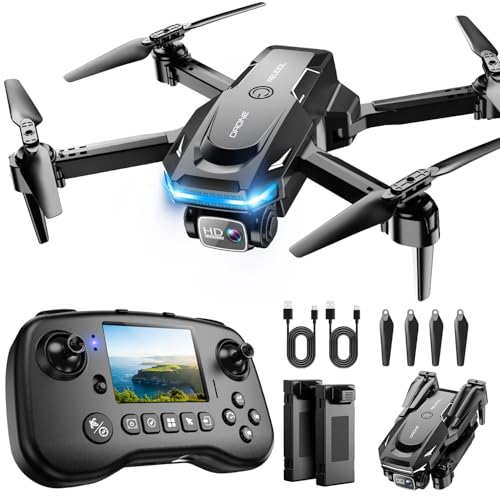
TL;DR: The Relidol X62 offers a fold‑able 1080p drone with a 25‑minute total flight time, one‑key takeoff, and a 400 m remote range, making it a solid starter for kids and beginners.
The X62 ships with two 1100 mAh batteries that together deliver 25 minutes of total flight time, powered by a 7.4 V pack. Its 80° lens field of view and 1080p HD camera give you decent aerial snapshots, while the built‑in controller screen shows altitude, distance, speed and GPS‑like data, so you always know what’s happening up in the air.
At 521 g, the Relidol is heavier than the Hiturbo Drone (which lists its weight in pounds) and the Syma Kids Drone, but still light enough for indoor use. Its 400 m remote control range outpaces the 100 m range of both the Hiturbo and Holy Stone HS440, yet it falls short of the 999 m range claimed by the Holy Stone HS720E. Many entry‑level models offer a comparable 200 m Wi‑Fi range, giving you flexibility whether you prefer the app or the dedicated remote.
Reviewers consistently praise the one‑key takeoff/landing button and headless mode for making the learning curve almost flat for first‑time pilots. Safety‑focused features like propeller guards, an emergency stop button and a child lock also earn high marks from parents. On the flip side, users note that the per‑battery flight time hovers around 12‑15 minutes, so you’ll be swapping batteries fairly often, and the phone mount on the controller can wobble with larger smartphones, which some find inconvenient. The camera, while adequate for casual snaps, doesn’t satisfy anyone looking for high‑detail footage.
Pros
Cons
Best for: Absolute beginners, children, and casual hobbyists who want a lightweight, portable drone with easy‑to‑use controls.
Avoid if: You’re an experienced pilot, need long‑range operation, GPS‑based navigation, or high‑resolution 4K video capabilities.
“拍着玩还不错”
“works well... small and lightweight”
TL;DR: The Holy Stone HS710 is a foldable, brushless‑motor drone with GPS, a 4K camera and dual 1800 mAh batteries, offering up to 50 minutes of total flight time for $119.49.
The HS710’s standout spec is its 600 m transmission distance paired with a 300 m Wi‑Fi live‑view range, letting you keep the video feed while the drone flies well beyond typical backyard limits. It packs two 1800 mAh LiPo batteries that each deliver roughly 24 minutes of flight, so you can chain flights for a total of 46‑50 minutes before needing to recharge. Weighing 240 g (about 0.53 lb) and folding down to just 54 mm × 147 mm × 92 mm, it tucks into a small bag for easy transport.
Compared with the other ten drones in this roundup, the HS710 is heavier than the ultra‑light HS440 (≈0.37 lb) and the HS360S (≈0.47 lb), but lighter than the HS720E (≈1.09 lb) and the Relidol (521 g). Its 600 m transmission outpaces the HS440’s 100 m range yet falls short of the HS720E’s 999 m reach. The 300 m Wi‑Fi view range exceeds many entry‑level models, though the HS720E’s 500 m FPV range is still longer. Battery capacity (1800 mAh) falls slightly below the HS440’s 1900 mAh, but the dual‑battery setup gives the HS710 a longer cumulative flight window than most single‑battery rivals.
Reviewers consistently praise the drone’s portable fold‑able frame and the convenience of having two batteries on hand, noting that the GPS‑enabled return‑to‑home and optical‑flow hover make it forgiving for newcomers. Professional reviewers highlight the brushless motors and GPS stability as strong points for a sub‑$130 drone. On the flip side, users flag the actual weight—often measured just over 250 g—as a possible trigger for FAA registration, and they wish for longer per‑battery flight times and more advanced cinematic modes.
Pros
Cons
Best for: Beginners and casual adult hobbyists who want a portable GPS drone with solid flight time and reliable video link.
Avoid if: You need advanced cinematic features, professional‑grade performance, or a completely registration‑free drone.
TL;DR: The Hiturbo Drone offers a foldable 1080P camera, dual 10‑12 minute batteries and a 100 m range at a budget‑friendly $44.97, making it a solid starter quadcopter for kids and beginners.
This model’s most eye‑catching spec is its 1080P camera with a 120° field of view and an adjustable angle that tilts up to 45°. The drone folds down to a compact 60 mm length, making it easy to slip into a backpack, and it tips the scales at 146 g (0.32187490252 pounds), giving it a sturdy feel without being too heavy for indoor play.
Compared with the other ten contenders, the Hiturbo is heavier than the ultra‑light Syma Kids Drone (about 0.13 pounds) but a touch lighter than the Holy Stone HS110D (around 0.33 pounds). Its 100 m control range beats the Syma X710W’s 30 m reach, yet it doesn’t stretch as far as the Holy Stone HS720E’s nearly 1 km range. Price‑wise it sits above the entry‑level Syma models while remaining below many of the higher‑end Holy Stone options.
User feedback repeatedly praises the S20’s ease of use, with many first‑time flyers noting the intuitive voice and gesture commands and the ability to pull off 3D flips without a steep learning curve. Two included batteries deliver up to 20 minutes of total flight time, though real‑world use often sees each charge lasting only 4‑10 minutes. Professional reviewers point out that the 6‑axis gyro, optical flow and visual positioning keep the drone steady, but they also flag the FPV feed as choppy at 15‑20 fps and note the lightweight frame tends to wobble in breezy conditions.
Pros
Cons
Best for: Entry-level buyers or those on a tight budget
Avoid if: You want the best value‑per‑dollar in its price range
“easier than other drones, perfect first drone”
“"most sold" Amazon drone”
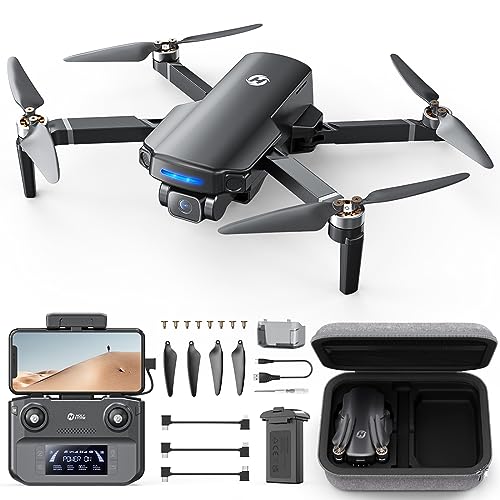
TL;DR: The Holy Stone HS360S offers a sub‑250 g fold‑able drone with a 4K 3840×2160 camera, 20‑minute flight time and a 3048 m transmission range, making it a solid starter for beginners.
This model tips the scales at just 0.46958461806 lb (213 g), so it's under the FAA’s 250‑g registration threshold. Its 1500 mAh Li‑ion battery promises up to 20 minutes of flight, while the 85° field of view—adjustable to 90°—captures wide‑angle 4K stills at 3840×2160 pixels.
At $169.99, the HS360S sits above the budget‑friendly HS440 but remains lighter than the HS710 and HS175G, which weigh 0.5291094288 lb and 0.54895103238 lb respectively. Compared with the HS440’s 0.36596735492 lb frame, the HS360S trades a bit of extra mass for a more powerful camera and GPS‑assisted flight modes.
Reviewers love the drone’s portability and the fact that it doesn’t require FAA registration, noting the foldable design fits easily in a backpack. Professional voices praise the brushless motors and GPS features, but point out the 4K video caps at 20 fps, making footage feel less smooth than higher‑frame‑rate rivals. Users also report that real‑world range often falls short of the advertised 3048 m and that battery life can dip below the stated 20 minutes during spirited flying.
Beyond the camera, the HS360S includes brushless motors, two‑leaf foldable propellers, and GPS‑based Follow Me and Auto Return Home modes. The 5G transmission delivers real‑time FPV streaming to a smartphone‑connected remote, giving beginners a responsive piloting experience.
Pros
Cons
Best for: Beginner to intermediate adult hobbyists, travelers, and content creators who want a lightweight, foldable drone with 4K stills and GPS‑assisted flight.
Avoid if: You need high‑frame‑rate 4K video for professional work or require guaranteed long‑range operation beyond a few kilometres.
TL;DR: The Syma Kids Drone offers a lightweight 58 g nano quadcopter with a 6‑axis gyro, LED lights and one‑key flips, but its 6‑9 minute flight time and 20 m range keep it best for indoor beginners.
This model packs a 6‑axis gyroscope that delivers precise hover stability, a feature reviewers praised for a nano drone. It runs on four AA cells at 6 V, delivers 6‑9 minutes of flight per charge, and can perform one‑key 360° flips thanks to its built‑in flip‑to‑stop design.
At about 0.13 lb (58 g), it’s noticeably lighter than the Hiturbo Drone (≈0.32 lb) and the Holy Stone HS440 (≈0.37 lb). Its indoor control range of 10‑20 m and outdoor range of 10‑15 m fall short of the Hiturbo’s 100 m range, making it a compact, budget‑friendly option at $42.74.
Users repeatedly praise the drone’s stable indoor flight and crash‑resistant ABS body with full‑enclosed prop guards. The LED lights add visual flair for night‑time play, while headless mode and one‑key takeoff/landing simplify operation for kids. However, reviewers note the battery drains quickly during stunt maneuvers, and the modest range limits outdoor use.
Technical extras include infrared obstacle detection up to 30 cm, a 2.4 GHz control link that minimizes interference, and two speed modes (beginner and high‑speed). The drone’s compact dimensions—45 mm height and 131 mm length and width—make it easy to store and transport.
Pros
Cons
Best for: Budget-conscious buyers seeking a reliable entry-level option
Avoid if: You want the best value‑per‑dollar in its price range
“Incredibly entertaining”
TL;DR: The Syma X710W is a fold‑able, 1080p FPV drone that weighs just 0.15 lb, offers up to 24 minutes of total flight with two batteries, and targets beginners and kids.
The standout spec is the dual‑modular lithium‑ion batteries that together deliver 24 minutes of airtime, while a single charge still provides a respectable 12‑minute flight. Coupled with a 1080p (1920×1080) camera that streams real‑time FPV, the X710W gives new pilots a clear view of their flight path without needing a separate transmitter.
Compared with the other ten drones in this roundup, the X710W sits near the lower end of the price spectrum and is lighter than the Holy Stone HS110D, but a bit heavier than the Syma Kids Drone. Its 30‑meter transmission range is shorter than the 100‑meter range of the Holy Stone HS440 and far below the 150‑meter range of the Holy Stone HS110D, placing it firmly in the indoor‑friendly category.
Users consistently praise the ultra‑portable foldable frame and the one‑key takeoff/landing button, noting that the drone fits easily into a backpack for quick outings. Professional reviewers highlight the optical‑flow positioning as a smooth indoor hover aid, while many parents appreciate the headless mode and gravity control for easing the learning curve. The main complaints revolve around the limited 30‑meter range and the relatively brief 12‑minute single‑battery flight, which can feel short for outdoor sessions.
Pros
Cons
Best for: Beginners and children (ages 8‑17) who want a lightweight, easy‑to‑store drone with an HD camera for indoor practice.
Avoid if: You need long‑range control, GPS navigation, or robust wind resistance for advanced outdoor flying.
TL;DR: The Holy Stone HS440 folds to fit in a bag, offers a 1080P camera with a 112° view and 20 minutes of flight, but its 100 m range and long 180‑minute charge may limit longer sessions.
The HS440’s most eye‑catching spec pairs a 1080×1080 pixel camera with a 112° field of view and a 2‑axis gimbal that absorbs shocks. Combined with a live‑view rate of 20 fps, beginners can capture relatively smooth video without a separate stabiliser. The drone folds down to 125 mm × 81 mm × 59 mm, and a supplied carrying case makes it easy to toss in a backpack for a quick outing.
Compared with the other ten drones, the HS440 is noticeably lighter than the Holy Stone HS720E (0.37 lb vs 1.09 lb) yet a touch heavier than the Hiturbo Drone (0.37 lb vs 0.32 lb). Its 20‑minute flight time trails the HS720E’s 23‑minute per‑battery claim, and the 100 m transmission range is far shorter than the HS720E’s 999 m control distance. Price‑wise it sits above the Syma X710W but below the Holy Stone HS710, making it a mid‑tier option in this lineup.
Many reviewers praise the drone’s portability and the convenience of voice and gesture controls, noting that the foldable arms and included case simplify transport. Professional commentary highlights the shock‑mounted camera as a standout for a beginner‑level drone. On the flip side, users often mention the single 1900 mAh battery only grants about 20 minutes of airtime, and the 180‑minute charging period can interrupt longer play sessions. Users also note the 100 m range forces them to stay relatively close to the pilot.
The HS440 runs on a 1900 mAh LiPo pack delivering 7.22 Wh of energy at 3.8 V, and it operates on a 2.4 GHz link. It supports micro‑SD cards up to 128 GB, offers altitude hold, gravity sensing, and headless mode, and the free FPV app streams video in real time. These features round out a solid beginner package without the complexity of GPS navigation.
Pros
Cons
Best for: Beginner pilots, families, and kids who want a portable, easy‑to‑fly FPV drone for casual aerial fun.
Avoid if: You need long flight times, extended range, or professional‑grade performance for advanced hobbyist work.
TL;DR: The Holy Stone HS175G packs a 4K 3840×2160 camera, 60 minutes of combined flight time and roughly 100 km (100,004.9 m) transmission range, but its $189.89 price and 0.55 lb weight position it as a premium option for serious beginners.
The standout feature is the 4K camera (3840×2160) with a 120° field of view, 30 FPS video and electronic image stabilization, plus a 90° adjustable tilt angle that lets you capture high‑resolution footage from many perspectives. Paired with fast‑charging dual batteries, the drone can stay aloft for a total of 60 minutes, and its 5 GHz Wi‑Fi link reaches about 100,004.9 m, giving you a very long‑range FPV experience.
Compared with the other ten drones in this roundup, the HS175G is heavier than the HS360S (0.47 lb) and the HS440 (0.37 lb) but lighter than the HS720E (1.09 lb). Its 60‑minute flight time far exceeds the HS360S’s 20‑minute runtime and the HS720E’s 46‑minute combined time. The transmission range also dwarfs the HS710’s 600 m range, offering far more freedom for outdoor flights.
User reviews repeatedly highlight the long battery life and crisp 4K footage, noting that the GPS‑assisted auto‑return and altitude‑hold features make piloting feel stable even for newcomers. Critics point to the premium price tag and a rating of 4.1/5, which falls below some competitors, while its 0.55 lb weight exceeds many sub‑250 g beginner drones.
Pros
Cons
Best for: Those prioritizing quality and willing to pay for premium performance
Avoid if: You're on a tight budget or only need basic functionality
Breakdown
DJI Mini 3
Pros
Cons
Holy Stone HS110D
Pros
Cons
Holy Stone HS720E
Pros
Relidol Drone
Pros
Based on scoring data and product specs
Personalized picks
Best Overall Pick
DJI Mini 3
Best OverallBest for: Buyers willing to invest in a proven, high-quality option
Holy Stone HS110D
Best for: Entry-level buyers or those on a tight budget
$29.99-$387.81 vs winner
Skip Holy Stone HS175G if…
You're on a tight budget or only need basic functionality
The DJI Mini 3 takes the top spot thanks to its 4.6‑star rating from 6,380 reviewers, a 10 km maximum video transmission distance, and up to 31 minutes of flight time on a single charge. At just 0.55 lb it stays under the 249 g registration threshold, making it legal to fly without paperwork, while its 12 MP 4K camera and 3‑axis gimbal deliver smooth, high‑resolution footage.
The Holy Stone HS110D lands as the runner‑up, ideal if you need an ultra‑affordable starter for kids or indoor practice. Priced at $35.99, it offers 8‑10 minutes of flight per battery (16‑20 minutes total with two batteries) and a 60‑100 m video transmission range, plus beginner‑friendly features like altitude hold, 3D flips and gesture‑controlled photos.
At $35.99, the HS110D serves as the best budget option, delivering solid basics for the lowest cost; for mid‑range, the Holy Stone HS720E at $75.99 offers a step‑up in features; the premium choice, the Holy Stone HS710 at $119.49, provides higher‑end specs for enthusiasts ready to invest more.
Pick the DJI Mini 3 today and start capturing the sky with confidence.
The DJI Mini 3 offers the longest video transmission distance at up to 10 km, far exceeding the 60‑100 m range of the Holy Stone HS110D and the 999 m range of the HS720E, making it the top choice for extended outdoor flying.
No reviews yet — be the first to share your experience.
Please sign in to leave a review