⚡ Quick Answer
Choosing a 4K‑camera quadcopter can feel overwhelming, especially with 11 models to sort. This roundup spreads the field across three price tiers: the budget camp houses Holy Stone HS720E ($75.99), Kingull Drone ($99.99), Oddire Camera Drone ($116.98) and Holy Stone HS710 ($119.49); the mid‑range slot includes ultra‑light DJI Neo at $198.50 and Holy Stone HS360S at $169.99; the premium tier features DJI Mini 4K for $209.00, Holy Stone HS360D at $199.49, Potensic ATOM SE for $198.99, and Holy Stone HS790 at $389.99. All these drones carry a 4K sensor, but they differ in flight time, weight and transmission range, so you can match a unit to your travel habits, skill level and budget.
Look for the details that matter to you: the DJI Mini 4K offers a 31‑minute flight time and a 10 km video link, while the DJI Neo’s 135 g frame lets you launch it from your palm without a controller. Ratings hover around 4.3–4.7 stars, with the Oddire Camera Drone earning the highest 4.7/5 from 514 reviewers. In the sections that follow we break down each drone’s specs, strengths and common user feedback so you can pinpoint the right tool for your aerial projects.

DJI Mini 4K
Its 2250 mAh battery gives longer flight time at a $209 price, delivering solid value.

DJI Neo
Ideal for everyday flyers who want a reliable mainstream drone; at $198.50 it’s about $10.50 less than the Mini 4K.
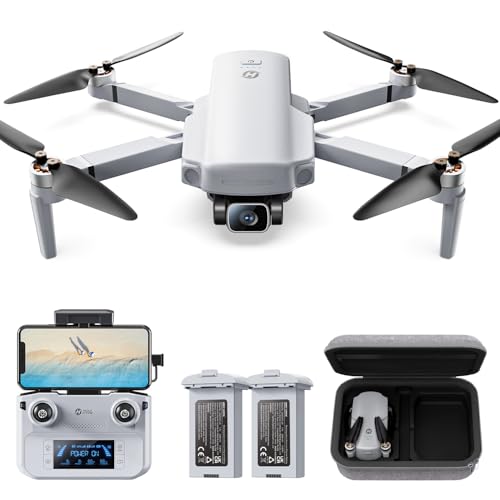
Holy Stone HS360D
Stands out with a 2500 mAh battery and 180‑minute charge time, offering extended sessions for enthusiasts seeking longer aerial runs.
Also considered
Score Analysis
Key score advantages vs. runner-up (DJI Neo)
Price Range
DJI Mini 4K
$298.10
DJI Neo
$149.00
Holy Stone HS360D
$199.49
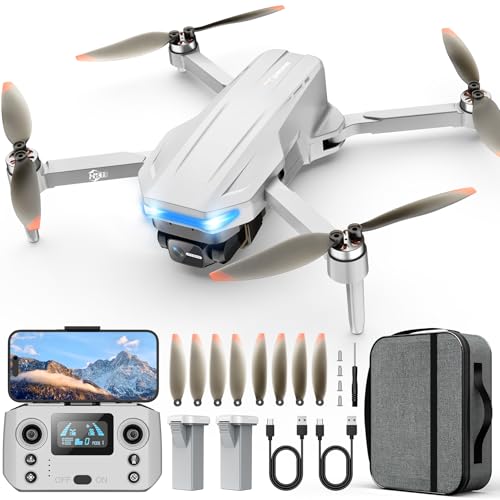
Oddire Camera Drone
$116.99
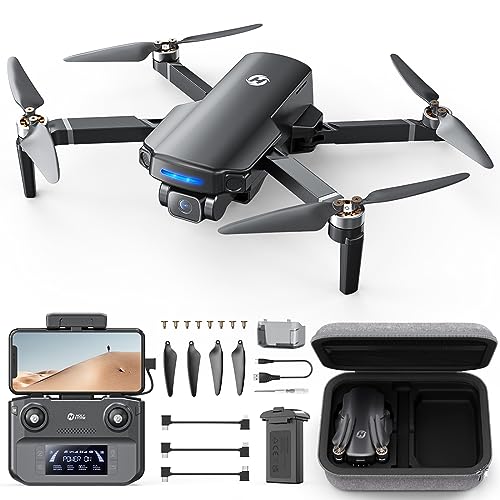
Holy Stone HS360S
$179.99

Potensic ATOM SE
$198.98

Holy Stone HS790
$389.99

Holy Stone HS710
$75.99

Holy Stone HS720E
$99.99

Kingull Drone
$99.99

Holy Stone HS175G
$189.89
Spec Comparison
TL;DR: The DJI Mini 4K delivers 4K video, 31‑minute flights and a 10 km link in a feather‑light 246 g package, making it a top pick for portable aerial shooting.
The Mini 4K packs a 12 MP 1/2.3‑inch CMOS sensor that records 4K video at up to 30 fps, all while staying under the 250 g registration threshold at 246 g (≈0.54 lb). Its 3‑axis mechanical gimbal plus electronic image stabilization keeps footage steady, and a 2250 mAh battery gives you up to 31 minutes of air time.
At 0.54 lb, the Mini 4K is heavier than the Holy Stone HS360D’s 0.28 lb frame but lighter than the DJI Neo’s 0.30 lb design. Its 2250 mAh battery sits between the Neo’s 1435 mAh and the HS360D’s 2500 mAh, while the Potensic ATOM SE pushes 3000 mAh. The 10 km transmission range outstrips the HS360D’s 6 km and the ATOM SE’s 4 km, and even beats the Neo’s 7 km link. Flight time ties the ATOM SE’s 31 minutes and surpasses the HS360S’s 20‑minute endurance.
Everyday users rave about the sub‑250 g chassis for travel‑friendly, registration‑free flights, and they frequently cite the long 31‑minute endurance as a big win for social‑media content. Professional reviewers highlight the stable 3‑axis gimbal and wind resistance up to 10.7 m/s, but they’ve also noted the absence of any obstacle‑sensing system, which can make flying in cluttered spaces riskier.
Technical details add to the appeal: a 4× digital zoom, 83° field of view and f/2.8 aperture deliver crisp footage in moderate light. Latency sits at about 200 ms on the 2.400‑2.4835 GHz link, and the drone can climb at 5 m/s, descend at 3.5 m/s, and cruise horizontally at 16 m/s, giving you enough speed for quick shots without sacrificing control.
Pros
Cons
Best for: Beginners, hobbyists and casual creators who need a lightweight, registration‑free drone with solid 4K video and long flight time.
Avoid if: You’ll require obstacle avoidance, HDR or 60 fps video, or professional‑grade mapping and industrial inspection capabilities.
TL;DR: The DJI Neo costs $198.50, weighs about 0.30 lb, shoots 4K 30p video, flies up to 18 minutes, and reaches a 7 km transmission range, making it a compact, registration‑free option for casual creators.
The standout spec is its 7 km O4 video transmission link, which lets you keep the live feed clear far beyond most entry‑level drones. Coupled with a 12 MP 1/2‑inch sensor that records 4K 30p video and a single‑axis mechanical gimbal, the Neo delivers ultra‑stabilized footage from a palm‑sized frame that weighs just 0.30 lb (135 g).
Among the eleven drones, the Neo weighs less than the Potensic ATOM SE (0.55 lb) and the DJI Mini 4K (0.54 lb), but a touch more than the Holy Stone HS360D (0.28 lb). Its 18‑minute flight time is shorter than the ATOM SE’s 31 minutes and the Mini 4K’s 31 minutes, yet the 7 km range outpaces the ATOM SE’s 4 km and the HS360D’s 6 km transmission distances.
Users consistently praise the instant palm‑launch and the built‑in 22 GB storage that removes the need for a microSD card during quick social‑media shoots. Professional reviewers note that the single‑axis gimbal, while delivering “ultra‑stabilized” 4K clips, can’t match the smoothness of 3‑axis systems, and low‑light scenes may appear grainy. The drone also respects the EU C0 class, it's under the 250 g registration threshold.
Pros
Cons
Best for: Beginners, vloggers, and casual creators who want a lightweight, registration‑free drone for quick social‑media clips.
Avoid if: You need professional‑grade image quality, longer endurance, or 3‑axis stabilization for demanding aerial cinematography.
TL;DR: The Holy Stone HS360D retails for $199.49, offers a 4K camera with electronic stabilization, 40‑minute flight time, and a 6 km transmission range, making it a solid choice for beginners who want long‑range utility flights.
The standout spec is the 6 km (6000 m) transmission range, which dwarfs the 4 km range of the Potensic ATOM SE and rivals the 7 km range of the DJI Neo. Coupled with a 2500 mAh battery, the HS360D delivers up to 40 minutes of airtime—well above the 31‑minute times listed for both the DJI Mini 4K and the Potensic ATOM SE.
Users praise the drone’s long flight time and reliable GPS hover for keeping beginners aloft without constant tweaking. Reviewers also note the 12 MP 4K camera (3840×2160 at 20 fps) with an 85° lens and electronic image stabilization produces sharp stills, though the video frame rate feels choppy for cinematic work. Users commonly complain about the lack of obstacle‑avoidance sensors and a mechanical gimbal, especially in windy conditions where some report drift of up to 10 ft.
Technical highlights include brushless motors for smoother power delivery, foldable arms that shrink the drone to a folded height of 140 mm, and Smart GPS modes such as Follow Me and Auto Return. The HS360D also supports up to a 256 GB Class 10+ microSD card, giving plenty of storage for those long scouting missions.
Pros
Cons
Best for: Beginners, hobbyists, and utility users who need a lightweight, registration‑free drone with long range and extended flight time.
Avoid if: You are a professional videographer, advanced FPV pilot, or require obstacle‑avoidance and ultra‑smooth cinematic video.
“pretty darn stable”
“rolls and doesn't keep stabilized”
TL;DR: The Oddire Camera Drone packs a foldable 4K UHD camera, 48‑minute flight time and GPS‑assisted modes into a lightweight 249 g package, though its app‑based FPV link can be flaky.
At the heart of the Oddire X28 is a 4K UHD camera with an F2.15 aperture and a 110° field of view, paired with a 1800 mAh battery that the manufacturer states can deliver up to 48 minutes of flight per charge. Weighing just 249 g and folding down to a height of 55 mm, it fits easily into the included carrying case for on‑the‑go shooting.
Compared with the other drones in this roundup, the Oddire is heavier than the ultra‑light DJI Neo but sits in the same weight class as the Holy Stone HS710. Its 1800 mAh cells match the HS710’s capacity, yet fall short of the Kingull Drone’s 2200 mAh pack. The 48‑minute flight window edges out the Holy Stone HS720E’s 46‑minute total, while the 500 meter Wi‑Fi range mirrors the HS720E’s FPV reach.
Users love the QR‑code app setup, the sturdy case, and the altitude‑hold function that keeps the drone steady during hover. Professional reviewers note the breadth of GPS‑enabled modes—auto return, waypoint, follow and orbit—adds serious value for a budget flyer. On the downside, many owners report the Wi‑Fi link and Bluetooth are unreliable, causing the live video feed to drop around 30 meters (about 100 ft), and the real‑world video quality often feels below the advertised 4K promise.
Pros
Cons
Best for: Budget‑conscious buyers seeking a reliable entry‑level option
Avoid if: You want the best value‑per‑dollar in its price range
TL;DR: The Holy Stone HS360S is a sub‑250 g fold‑able drone with a 4K camera, 1500 mAh battery for about 20 minutes of flight, and GPS‑assisted modes, all for $169.99.
Weighing just 0.4696 lb (213 g) and folding down to a 56 mm height, the HS360S packs a 4K UHD camera with an 85° field of view that can widen to 90°. Its brushless motors and two‑leaf foldable propellers keep the build sturdy yet lightweight, while the 1500 mAh Li‑ion battery promises up to 20 minutes of airtime under ideal conditions.
Compared with the other drones in this roundup, the HS360S sits in the middle of the price band and is heavier than the DJI Neo but lighter than the Holy Stone HS175G. It also offers a longer transmission range (3048 m) than the HS710’s 600 m range, though it doesn’t reach the 6 km range of the HS360D. The camera’s resolution and the 1500 mAh battery capacity rank among the stronger specs in the group.
Reviewers appreciate the hassle‑free setup, the sub‑250 g weight that eliminates FAA registration, and the crisp 4K stills for social media. However, users note that the 4K video caps at 20 fps, which can feel choppy compared with higher‑frame‑rate rivals, and the real‑world range often falls short of the advertised 3048 m. Battery life also tends to dip to 15‑18 minutes in practice, a point frequently mentioned in consumer feedback.
Beyond the camera, the drone includes GPS positioning, an Auto Return Home function, and a Follow‑Me mode that work well for beginners. The remote controller connects to a smartphone via cable for FPV streaming, and the 5G transmission technology supports a live‑view link up to 3048 m. Extras like spare propellers and a USB‑C charging cable arrive in the box, adding value for first‑time flyers.
Pros
Cons
Best for: Beginner to intermediate adult hobbyists, travelers, and content creators who want a lightweight, portable drone with 4K photo capability.
Avoid if: You need professional‑grade high‑frame‑rate 4K video or guaranteed long‑range operation beyond 2 km.
“pretty darn stable”
“rolls and doesn't keep stabilized”
TL;DR: The Potensic ATOM SE offers 4K video, 31‑minute flight time, and a 4 km transmission range in a sub‑250 g, foldable package that stays registration‑free in most regions.
The ATOM SE’s most eye‑catching spec is its sub‑250 g weight (listed as <0.55 lb) combined with a 4K @ 30 fps camera and a 118° field of view, letting you capture crisp aerial footage without having to register the drone in many jurisdictions.
Compared with the other ten drones in this roundup, the ATOM SE is heavier than the ultra‑light DJI Neo (≈0.30 lb) and Holy Stone HS360D (≈0.28 lb) but sits just under the weight of the Holy Stone HS175G (≈0.55 lb) and is on par with the DJI Mini 4K (≈0.54 lb). Its 4 km transmission range is shorter than the 7 km range of the DJI Neo and the 6 km range of the HS360D, yet far exceeds the 600 m range of the HS710. Flight endurance matches the DJI Mini 4K at 31 minutes, outlasting the HS360S’s 20‑minute claim and rivaling the HS175G’s dual‑battery 60‑minute potential.
Reviewers consistently praise the ATOM SE’s pocket‑size foldability and the crystal‑clear 4K footage, noting that the 3000 mAh battery delivers the advertised 31‑minute flight time even with a 12 MP sensor. Professional editors highlight the 200 ms video latency and the strong 38 km/h wind resistance as notable for a sub‑250 g model. However, the single‑axis gimbal limits stabilization during aggressive maneuvers, and some users report occasional glitches with the PotensicPro smartphone app.
Additional technical details include brushless motors, a 5 m/s max ascent speed, 4 m/s max descent speed, and GNSS support for GPS, GLONASS, Galileo, and BeiDou, giving reliable positioning for GPS tracking modes.
Pros
Cons
Best for: Beginners, travelers, and intermediate pilots who need a lightweight, registration‑free drone with solid 4K video and decent flight time.
Avoid if: You need professional‑grade stabilization, advanced autonomous features, or the highest‑end video performance.
TL;DR: The Holy Stone HS790 packs a 3‑axis gimbal, 6K photos and 60 minutes of total flight on a 3200 mAh battery, but its 0.83 lb weight and $389 price put it in the premium camp.
The standout hardware on the HS790 is its 3‑axis mechanical brushless gimbal paired with a Sony‑class 1/3.2" CMOS sensor. It captures 6K stills and records 3840×2160 @ 30 fps video, while the f/2.0 aperture lets more light in for clearer shots. The 3200 mAh battery and included PD fast‑charging hub provide up to 30 minutes per charge and a combined 60 minutes of flight when you swap the two batteries.
Compared with the other ten drones in this roundup, the HS790 is heavier at 0.83 lb (376 g) than the DJI Mini 4K and the lighter Holy Stone HS360D, but it also offers the longest advertised transmission range at 9 km—well beyond the 6 km of the HS360D, the 4 km of the Potensic ATOM SE, and the 7 km of the DJI Neo. Its 3200 mAh battery capacity exceeds the 2250 mAh of the Mini 4K, the 2500 mAh of the HS360D, and the 3000 mAh of the ATOM SE, translating into a total flight envelope that outlasts most peers, many list 20‑31 minutes per charge.
Users consistently praise the drone’s stability, noting that the 3‑axis gimbal delivers smooth 4K footage even in winds up to 12 m/s. Professional reviewers echo this, calling the gimbal “affordable yet comparable to higher‑priced models.” However, the 377 g weight pushes the HS790 over the 250 g threshold that would exempt it from FAA registration, a common complaint among hobbyists. Reviewers also point out that the “6K” label applies only to photos, while video remains capped at 4K @ 30 fps, which can feel misleading.
Pros
Cons
Best for: Those prioritizing quality and willing to pay for premium performance
Avoid if: You're on a tight budget or only need basic functionality
“pretty darn stable”
“rolls and doesn't keep stabilized”
TL;DR: The Holy Stone HS710 packs a 4K camera, 600 m transmission range and dual 1800 mAh batteries into a foldable, sub‑250 g frame for beginners who want decent video without breaking the bank.
The standout spec is the 4K video sensor paired with a 110° field of view and a fixed 120° lens angle, delivering crisp footage at 15 fps while staying lightweight at 240 g. Its brushless motors and 600 m transmission distance give a reliable link for outdoor flights, and the foldable design collapses to just 54 mm tall, 147 mm long and 92 mm wide for easy transport.
Compared with the other ten drones in this roundup, the HS710 is lighter than the Kingull Drone and the Holy Stone HS720E, but a touch heavier than the ultra‑compact HS360S. It also offers a longer transmission range than the Oddire Camera Drone, while its battery capacity of 1800 mAh sits between the 1500 mAh of the HS360S and the 2200 mAh of the Kingull model.
Users consistently praise the dual‑battery setup that provides up to 46‑50 minutes of total flight time, and professional reviewers highlight the GPS‑enabled return‑to‑home and optical‑flow hover as beginner‑friendly safety nets. The most common complaint is that real‑world weight can edge just over the 250 g registration threshold, and the per‑battery flight time of roughly 23‑25 minutes feels short for extended shoots.
The HS710 also bundles intelligent flight modes such as Follow Me, Waypoint Flight, Tap Fly and Point of Interest, all controlled from a remote that displays signal strength, battery levels and GPS satellites on an LED screen. The 5 GHz Wi‑Fi link supports a live view up to 300 m, and the 7.4 V battery voltage powers the brushless motors for stable performance in light breezes.
Pros
Cons
Best for: Entry‑level buyers or those on a tight budget
Avoid if: You want the best value‑per‑dollar in its price range
“pretty darn stable”
“rolls and doesn't keep stabilized”
TL;DR: The Holy Stone HS720E offers 4K video, brushless motors and up to 46 minutes of combined flight time for $75.99, but its 1.09‑lb weight means U.S. pilots must register it.
The standout spec is the 4K UHD camera (3840×2160 @ 30 fps) paired with electronic image stabilization and a wide 110–130° field of view, letting you capture crisp aerial footage without a mechanical gimbal. Each of the two included batteries provides 23 minutes of air time, so you can enjoy a total of 46 minutes before needing to recharge.
At $75.99, the HS720E sits below the Kingull Drone’s $99.99 price tag and is cheaper than the DJI Neo, yet it’s a bit heavier than Kingull’s 1.06‑lb model and noticeably heavier than the Holy Stone HS710’s 0.53‑lb frame. Its 999‑meter control range outpaces the HS710’s 600 m range and matches the longer reach of many mid‑range drones, while the 500‑meter FPV link keeps the live video feed solid at distance.
Users repeatedly praise the 46‑minute combined flight time and the inclusion of two batteries and a carrying case, calling the setup ideal for weekend outings. Professional reviewers note the brushless motors improve durability and efficiency, and the dual GPS + optical flow system helps the drone hover steadily even when GPS signal drops. The main complaints focus on the 1.09‑lb weight, which pushes the drone above the 250 g FAA threshold and forces U.S. owners to register it, and the absence of a powered gimbal, which some feel limits smoothness compared to higher‑priced rivals.
Beyond the camera, the HS720E runs on brushless motors, supports 5G app connectivity, and communicates on a 5.7–5.8 GHz video link, offering a reliable link for the 500‑meter FPV range. Its GPS and optical flow sensors work together for accurate positioning, and the three‑axis stabilization helps keep footage steady.
Pros
Cons
Best for: Adult recreational pilots and intermediate fliers who want extended flight time, 4K video and a solid control range without breaking the bank.
Avoid if: You need an ultra‑light drone to skip registration, or you require a mechanical gimbal for the smoothest possible footage.
“pretty darn stable”
“rolls and doesn't keep stabilized”
TL;DR: The Kingull G9 offers a 4K UHD camera, 45‑minute advertised flight time, and a suite of intelligent modes at a budget‑friendly price, though real‑world battery life and GPS return can fall short.
The standout spec on the Kingull G9 is its 4K video resolution (3840×2160) paired with a 120° wide‑angle lens that can be adjusted to 90°. Powered by a 2200 mAh lithium‑ion battery pack, the drone claims up to 45 minutes of flight, and its brushless motor promises quieter operation and longer motor life. At just 1.06 pounds (480 g) and a folded size of roughly 25 mm on each side, it’s compact enough to slip into a backpack.
When you line it up against the other ten drones in this roundup, the Kingull sits toward the heavier end – only the Holy Stone HS720E tips the scales. However, its battery capacity outstrips the DJI Neo (1435 mAh) and the Oddire Camera Drone (1800 mAh), giving it a theoretical edge in endurance. Price‑wise, it lands in the budget tier, making it cheaper than many feature‑rich rivals while still delivering a 4K sensor that some higher‑priced models lack.
Users appreciate the G9’s foldable plastic frame and the ease of launching with the One Key Start button. Professional reviewers highlight the brushless motor and the array of smart flight modes – Follow Me, Tap Fly, Auto Return, Optical Flow Positioning, and Headless Mode – as strong points for beginners. The same reviewers say the advertised 45‑minute flight time overstates reality; manufacturer lists typical endurance at around ten minutes per charge, and they find the GPS Auto Return unreliable, especially in obstructed environments. Camera performance holds up in bright daylight but struggles with low‑light scenes and fast‑moving subjects.
Pros
Cons
Best for: Entry-level buyers or those on a tight budget
Avoid if: You need powerful performance or professional‑grade features
“Auto Return functionality is unreliable and "not exactly a GPS expert"”
“The remote control display screen can be distracting rather than helpful, making it difficult to focus on flying”
TL;DR: The Holy Stone HS175G offers a 4K 30 FPS camera, 60 minutes of total flight time with dual batteries, and a 1 km transmission range, but its 0.55‑lb weight pushes it above the sub‑250 g threshold and its price sits at the higher end of the lineup.
The standout spec for the HS175G is its 4K (3840×2160) camera paired with a 120° field of view and electronic image stabilization, delivering crisp video at 30 FPS. Coupled with a 90° adjustable tilt angle, the drone lets you capture dynamic angles without manual re‑mounting. Its dual‑battery system provides up to 60 minutes of combined flight time, a figure that far exceeds the typical 20‑30 minute windows seen in many comparable models.
When you line the HS175G up against the other ten entries, it lands toward the premium side of the price spectrum while offering more comprehensive features than the lighter, budget‑oriented options. It's heavier than several sub‑250 g peers, which means you’ll need to register it with the FAA in the U.S., a step that lighter competitors can often skip. Its folded size of 152 × 80 × 60 mm is larger than the ultra‑compact drones that fold down to under 150 mm on any side, so portability takes a modest hit.
Everyday users consistently praise the drone’s long battery life, clear 4K footage with stabilization, and dependable GPS return‑to‑home, calling it a “professional‑grade tool for advancing hobbyists.” Professional reviewers highlight the 4K EIS camera and the 1 km (≈ 3281 ft) transmission range as key strengths for extended shooting sessions. On the flip side, owners note that the 0.55‑lb weight (≈ 249 g) triggers registration requirements and that the larger folded dimensions can feel bulky when traveling.
Pros
Cons
Best for: Intermediate to advanced hobbyists who want 4K video quality and extended flight time without compromising on GPS stability.
Avoid if: You need a sub‑250 g, ultra‑light drone that avoids registration, or you prioritize ultra‑compact portability for travel.
“pretty darn stable”
“rolls and doesn't keep stabilized”
Breakdown
DJI Mini 4K
Pros
DJI Neo
Pros
Holy Stone HS360D
Pros
Oddire Camera Drone
Pros
Cons
Based on scoring data and product specs
Personalized picks
Best Overall Pick
DJI Mini 4K
Best ValueBest for: Audiophiles and enthusiasts seeking premium sound quality and advanced features
DJI Neo
Best for: Most users looking for a well-reviewed, reliable mainstream option
$149.00-$149.10 vs winner
Skip Holy Stone HS175G if…
Reliability and user satisfaction are your top concerns
The DJI Mini 4K takes the top spot with a solid 4.5‑star rating from 20,205 reviewers, a 31‑minute flight time, and a 12 MP sensor paired with a 3‑axis mechanical gimbal plus EIS. Its 10 km transmission range and lightweight 0.54 lb (246 g) design make it both reliable and easy to carry, delivering true 4K video (3840×2160) without breaking the bank.
The runner‑up, DJI Neo, shines when you need a pocket‑friendly, hands‑free drone for quick social‑media clips. It’s sub‑250 g (registration exempt), offers 4K/30p video from a 12 MP sensor, and stores footage on a built‑in 22 GB memory. With 7 km transmission, 18 minute flight time and AI subject tracking, it lets you launch, gesture‑control, and capture on the fly.
For tighter budgets, the Holy Stone HS720E at $75.99 delivers entry‑level 4K capability at a price that won’t strain your wallet. If you want a solid mid‑range choice, the DJI Neo (already highlighted) balances compactness with built‑in storage and smart controls. For those willing to splurge, the Holy Stone HS790 at $389.99 provides a premium feature set and strong performance for serious aerial creators.
Pick the DJI Mini 4K today and start filming crisp 4K footage right out of the box.
The Oddire Camera Drone lists a 48‑minute flight time, which is the highest among the models. It is followed by the Holy Stone HS360D at 40 minutes and the DJI Mini 4K at 31 minutes.
No reviews yet — be the first to share your experience.
Please sign in to leave a review