⚡ Quick Answer
If you want a lightweight drone that packs solid flight time, a strong user rating and a respectable price, the DJI Mini 4K catches the eye. At $209.00 it sits comfortably in the mid‑range tier, has a 4.5‑star rating from over 20,000 reviewers, and offers up to 31 minutes of airtime on a 2250 mAh battery—all while weighing just 0.54 lb, which keeps it registration‑free in many regions.
This roundup compares 10 models across three price buckets. Budget‑friendly choices start at $59.98 with the Blinory GPS Drone and include the Kingull at $99.99 and Holy Stone HS710 at $119.49. The mid‑range segment features the DJI Mini 4K at $209.00 and Holy Stone HS360S at $169.99, delivering better cameras and longer ranges. Premium options such as the Skyrover S1 ($289.00), FIMI Mini 3 ($369.99), Holy Stone HS790 ($389.99) and the flagship DJI Mavic 4 Pro ($2,199.00) offer 4K‑plus video, extended transmission distances and up to 60 minutes of combined flight time.
Below we break down each drone’s key specs, strengths and potential drawbacks so you can match the right machine to your flying style and budget.
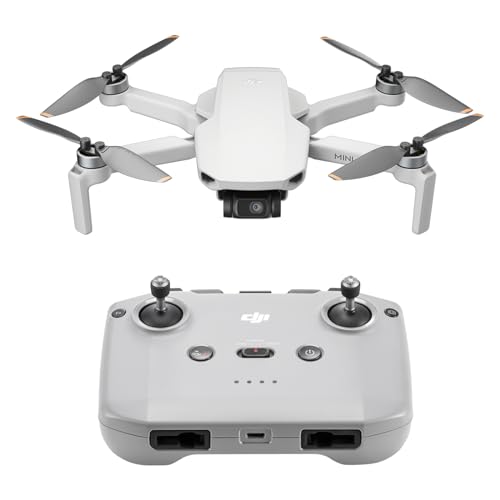
DJI Mini 4K
Its 2250 mAh battery capacity gives solid flight time while keeping the drone lightweight, delivering strong value and reliability for home and office use.

Holy Stone HS790
Audiophiles and feature enthusiasts appreciate its premium sound and advanced controls, but it costs about $181 more than the DJI Mini 4K.

Blinory GPS Drone
With an ultra‑compact 55.1 mm height and 32‑minute battery life, you can fly in tight indoor spaces where larger drones can’t fit.
Also considered
Score Analysis
Key score advantages vs. runner-up (Holy Stone HS790)
Price Range
DJI Mini 4K
$209.00
Holy Stone HS790
$389.99
Blinory GPS Drone
$59.99

Holy Stone HS710
$75.99

Kingull Drone
$99.99

Skyrover S1
$289.00
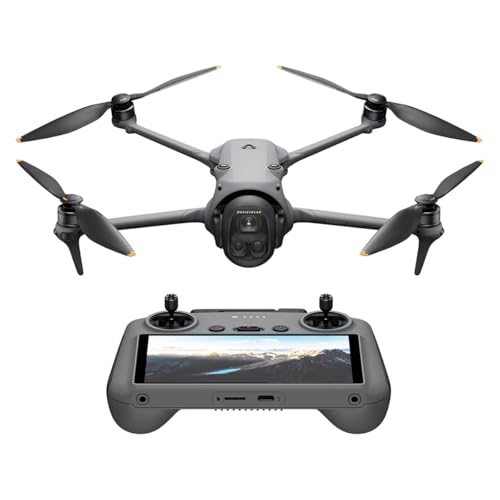
DJI Mavic 4 Pro
$2,199.00

FIMI Mini 3
$369.99
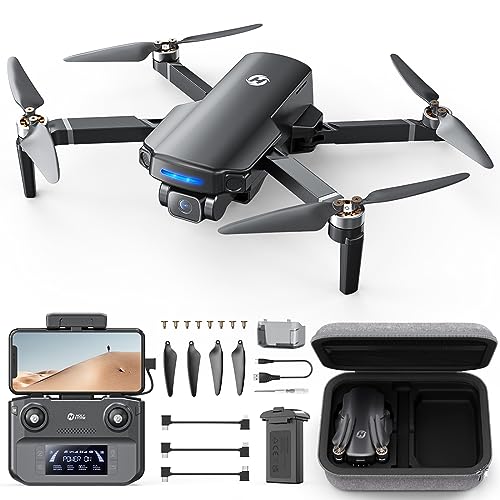
Holy Stone HS360S
$179.99
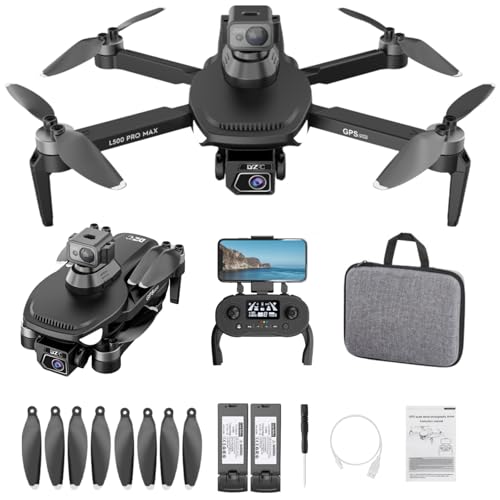
SuperRC Drone
$51.99
Spec Comparison
TL;DR: The DJI Mini 4K weighs just 0.54 lb, flies up to 31 minutes, streams 4K video up to 10 km away, and offers a solid entry point for casual creators who want a registration‑free drone.
The standout spec is its sub‑250 g weight (0.54 lb) combined with a 4K UHD camera (3840×2160) and a 31‑minute flight envelope, all powered by a 2250 mAh battery. A 3‑axis gimbal with electronic image stabilization keeps footage steady, while a 4× digital zoom and 83° field of view give you flexible framing without extra lenses.
Compared with the other nine drones in this roundup, the Mini 4K is a bit heavier than the Holy Stone HS360S (0.47 lb) but lighter than the Skyrover S1 (0.55 lb) and far lighter than the Kingull Drone (1.06 lb). Its 31‑minute flight time outlasts the HS360S’s 20 minutes and the SuperRC Drone’s 25 minutes, though it falls short of the Skyrover S1’s 40‑minute claim and the Kingull’s 45‑minute runtime. The 2250 mAh battery also exceeds the HS360S’s 1500 mAh and the HS710’s 1800 mAh packs, giving it a modest edge in endurance.
Users consistently praise the Mini 4K’s lightweight design for eliminating registration hassles and love the long 31‑minute sessions for travel‑vlog style shoots. Professional reviewers note that the 3‑axis gimbal delivers stable 4K footage even in 38 km/h winds, and the drone tolerates wind speeds up to 10.7 m/s. Some users find the lack of omnidirectional obstacle sensors and the video ceiling at 30 fps without HDR or higher frame‑rate options limiting for more demanding creative work.
On the technical side, the Mini 4K operates on a 2.400‑2.4835 GHz band with about 200 ms latency and can maintain a transmission link up to 10 km in low‑interference environments. Brushless motors, GPS positioning, a max ascent speed of 5 m/s, and a 4000 m ceiling round out its feature set, making it a well‑balanced choice for beginners who still want solid performance.
Pros
Cons
Best for: Beginners, hobbyists, and casual creators who need a portable, registration‑free drone with solid 4K video and long flight time.
Avoid if: You require obstacle avoidance, HDR or 60 fps video, or need a drone for professional mapping and industrial inspections.
TL;DR: The Holy Stone HS790 packs a 3‑axis mechanical gimbal, 4K video, 3200 mAh dual‑battery system and up to 60 minutes of total flight in a foldable package that weighs 376 g.
The standout feature is the 3‑axis mechanical brushless gimbal paired with a 1/3.2" CMOS sensor that captures 6K photos and 3840×2160 @30 fps video, while the 3200 mAh batteries promise 30 minutes per charge and a combined 60 minutes of flight.
Compared with the other nine drones in this roundup, the HS790 weighs more than the FIMI Mini 3 (0.54 lb vs 0.83 lb) and the Skyrover S1 (249 g vs 376 g). Its 9 km transmission range is shorter than the Skyrover S1’s 12 km, and its total 60‑minute flight time is less than the Skyrover S1’s 120‑minute extended time, but it still outpaces the battery capacity of the FIMI Mini 3’s 2200 mAh pack.
Users appreciate the drone’s “excellent stability” and smooth 4K footage even in winds up to 12 m/s, noting the easy out‑of‑the‑box setup and reliable Follow‑Me mode. Reviewers also point out that the 376 g weight pushes it over the 250 g registration threshold, and that the marketing of 6K photos can feel misleading since video tops out at 4K. You must perform a compass calibration before the first flight, adding a small setup step.
Additional technical perks include built‑in Remote ID for FAA compliance, GPS‑assisted flight modes (Follow Me, Return‑to‑Home, Altitude Hold, etc.), and a PD fast‑charging hub that reduces the 110‑minute charge time. The foldable design (66 mm folded height) keeps the drone portable enough for travel despite its larger unfolded dimensions.
Pros
Cons
Best for: Intermediate creators, travelers and hobbyists who need gimbal‑stabilized 4K footage and long‑range FPV without sacrificing portability.
Avoid if: You prefer a sub‑250 g plug‑and‑play drone, want to skip FAA registration, or are a complete beginner looking for the simplest out‑of‑the‑box experience.
“potentially "the best Holystone drone yet"”
TL;DR: The Blinory HK55 offers a 5G FPV link, 2K camera and 32‑minute flight in a 0.32 lb foldable frame for just $59.98, making it the lightest and most affordable GPS‑drone in the lineup.
The standout spec is the 5G (5 GHz) FPV transmission that streams live video to a smartphone, paired with a motorized 90° tilt 2K HD camera. At 0.32 pounds (145 g) and a folded height of 55.1 mm, it’s truly pocket‑friendly, and the modular battery gives you up to 32 minutes of airtime.
Compared with the nine rivals, the Blinory is the lightest – every other model listed weighs between 0.47 pounds and over 1 pound. Its 32‑minute flight time beats SuperRC’s 25‑minute and Holy Stone HS360S’s 20‑minute runtimes, while sitting just above the DJI Mini 4K’s 31 minutes and below Kingull’s 45‑minute claim. The 2K video resolution is lower than the 4K offerings from SuperRC, Kingull, DJI Mini 4K and Skyrover S1, but the drone’s compact dimensions (299.9 mm L × 199.9 mm W) are shorter and narrower than SuperRC’s 318 mm L × 290 mm W frame.
Users love the one‑key takeoff/landing, headless mode and the suite of intelligent flights – auto‑return, follow‑me, waypoint and gesture selfie – that feel “pro‑level” for a budget unit. Professional reviewers note the shock‑absorbing gimbal as a solid stabilizer, while many owners mention a persistent beeping tone and jittery 2K footage that falls short of crispness. Indoor GPS can be finicky, which limits tight‑space flying.
Pros
Cons
Best for: Beginners, kids and casual hobbyists who want an inexpensive GPS‑drone under 250 g with smart flight modes.
Avoid if: You need 4K video quality, advanced piloting features, or plan to fly frequently in windy conditions.
TL;DR: The Holy Stone HS710 packs a 4K camera, 600 m transmission range and two 1800 mAh batteries into a 0.53‑lb foldable frame, making it a solid budget pick for beginners who want decent video without breaking the bank.
The standout spec is the 4K video sensor paired with a 110° field of view and a 120° lens angle, delivering wide‑angle footage that’s rare at this price tier. Its 600 m transmission distance (and a 300 m Wi‑Fi live‑view range) lets you keep the video feed stable even when you’re a few hundred meters away. Powered by two 1800 mAh LiPo cells, the HS710 can log up to 46‑50 minutes of total flight time, with each battery offering roughly 23‑25 minutes per charge.
Compared with the nine other drones in this roundup, the HS710 is lighter than the Kingull Drone (0.53 lb vs 1.06 lb) but a bit heavier than the Holy Stone HS360S (0.53 lb vs 0.47 lb). Its battery capacity sits below the Kingull’s 2200 mAh and the SuperRC’s unspecified 5G system, which means each battery’s flight time falls short of the Kingull’s 45‑minute claim. However, the HS710’s foldable design and brushless motors give it a more portable feel than the bulkier SuperRC and the non‑folding Blinory GPS Drone. Its transmission range of 600 m outpaces the 5G‑enabled SuperRC’s unspecified range and compares to the Wi‑Fi‑only models that list no distance.
Users consistently praise the convenience of the foldable frame and the inclusion of two batteries, noting that the extra power lets them capture longer sessions without swapping cells. Professional reviewers highlight the GPS‑enabled Return‑to‑Home and optical flow stability as beginner‑friendly safety nets. On the flip side, several owners report that the real‑world weight often nudges just over 250 g, which can trigger FAA registration requirements. The per‑battery flight time of 23‑25 minutes also feels limited for those hoping to push the drone farther within a single charge, and the feature set stops short of the more cinematic modes found on higher‑priced rivals.
The HS710’s brushless motors, GLONASS/GPS support and intelligent flight modes—including Follow Me, Waypoint Flight, Tap Fly and Point of Interest—provide a respectable level of automation for newcomers. The remote controller’s LED screen shows signal strength, battery levels, GPS satellites, distance and height, while the dual‑AA power source for the controller keeps things simple. Though it lacks some of the advanced cinematic features of premium drones, its combination of 4K video, a 600 m range and dual‑battery endurance makes it a compelling entry‑level option.
Pros
Cons
Best for: Buyers in the budget price range seeking the best quality at that price point
Avoid if: You need advanced features or professional‑grade performance
“potentially "the best Holystone drone yet"”
TL;DR: The Kingull G9 offers a 4K camera, 120° wide‑angle view and 45‑minute advertised flight time in a lightweight, fold‑up frame for beginners on a $99 budget.
The standout spec is its 4K UHD camera delivering 3840×2160 video through a 120° wide‑angle lens that can be adjusted to 90°, paired with Wi‑Fi 5G FPV transmission for near‑real‑time streaming to your phone.
Compared with the other nine drones, the Kingull’s 2200 mAh battery capacity tops the Holy Stone HS710 (1800 mAh) and Holy Stone HS360S (1500 mAh) but sits just below the DJI Mini 4K (2250 mAh) and matches the FIMI Mini 3 (2200 mAh). Its 45‑minute advertised flight time exceeds the SuperRC Drone’s 25 minutes and the Blinory GPS Drone’s 32 minutes, though the Skyrover S1 claims up to 40 minutes. At 1.06 lb (480 g) the G9's heavier than the Holy Stone HS710 (0.53 lb) and the SuperRC Drone (0.47 lb), but it's lighter than the Holy Stone HS790 (0.83 lb). The 120° field of view is wider than the Holy Stone HS360S’s 85°‑90° range and the DJI Mini 4K’s 83°, while matching the Holy Stone HS710’s 110°.
Users love the foldable, sub‑250 g‑class design that slips into a backpack, and the brushless motor receives praise for quieter operation. Professional reviewers note the intuitive one‑key start and speed‑adjustment features, as well as intelligent flight modes like Follow Me, Tap Fly and GPS Auto Return. However, many owners report the advertised 45‑minute flight time feels optimistic, with real‑world runs closer to 10 minutes per charge, and the GPS Auto Return can be unreliable, especially in cluttered environments. The 4K camera performs well in bright daylight but struggles with low‑light scenes and fast‑moving subjects.
Additional technical perks include optical‑flow positioning, headless mode for orientation‑independent control, and support for an SD card up to 64 GB (not included). The drone’s plastic shell keeps the weight down, while the brushless motor promises longer motor life compared with brushed competitors.
Pros
Cons
Best for: Entry‑level buyers or those on a tight budget
Avoid if: You want the best value‑per‑dollar in its price range
“Auto Return functionality is unreliable and "not exactly a GPS expert"”
“The remote control display screen can be distracting rather than helpful, making it difficult to focus on flying”
TL;DR: The Skyrover S1 delivers a 48 MP Sony sensor, 4K 60 fps video, 40 min flight time and a 12 km transmission range, all in a sub‑250 g, registration‑free frame for under $289.00.
What really sets the Skyrover S1 apart is its 48 MP 1/2‑inch Sony CMOS sensor paired with a 3‑axis mechanical gimbal, enabling crisp 4K 60 fps footage from a tiny 0.55 lb airframe. The drone also offers an 83° field of view and a 24 mm focal length, giving you a wide‑angle perspective without sacrificing detail. With a package weight of 820 g, the S1 remains comfortably portable for travel.
Compared with other mini‑drones in this roundup, the S1 is a touch heavier than the DJI Mini 4K but still under the 0.60 lb threshold that triggers registration in many regions. Its 40 minute flight time outstrips the DJI Mini 4K’s 31 minute endurance and far exceeds the 20 minute runtime of the Holy Stone HS360S. While most peers don’t list a transmission distance, the S1’s 12 km (≈39,000 ft) range is notably longer, positioning it as one of the most capable for long‑distance shoots. The price sits in the premium tier, so it’s pricier than budget options like the Blinory GPS Drone.
Reviewers consistently praise the S1’s lightweight design and the clarity of its Sony‑based camera, noting that the sub‑250 g weight lets you fly without registration hassles. Professional voices highlight the strong spec sheet for under $300, especially the 4K 60 fps capability and 12 km link. The main criticisms focus on the forward‑only obstacle avoidance, which falls short of the 360° sensing found on higher‑end models, and some skepticism about whether the advertised range and 40 minute flight time hold up outside controlled environments.
Additional technical details include a max ascent and descent speed of 5 m/s, a horizontal speed of 15 m/s, and a max takeoff altitude of 5000 m, giving you plenty of headroom for high‑altitude scenery. The S1 resists winds up to 10 m/s and uses GPS + Galileo for positioning, while a forward obstacle sensor adds a basic safety layer during forward flight.
Pros
Cons
Best for: Beginners, travelers, hikers, and casual creators who need a lightweight, registration‑free drone for high‑quality video.
Avoid if: You require omnidirectional obstacle avoidance, professional‑grade durability, or a lower‑cost starter drone.
TL;DR: The DJI Mavic 4 Pro packs a 100 MP tri‑camera, 51‑minute flight time and a 30‑km transmission range, but its 5.23‑lb weight and $2199 price target professional users.
The standout spec is the 100 MP main sensor paired with a 5.1K video mode (5120×2700 px) and a 360° Infinity gimbal, giving you cinema‑grade detail and smooth motion. Two additional lenses add a 3× medium‑tele and a 7× tele optical zoom, so you can capture tight shots without losing quality. The DJI RC Pro controller shines with a 1000‑nit screen, making the live view readable even in bright sunlight.
Compared with the nine other drones in this roundup, the Mavic 4 Pro is considerably heavier at 5.23 lb, while the nearest competitor, the Holy Stone HS790, weighs just 0.83 lb. It also offers a far longer battery life—51 minutes per charge versus the Skyrover S1’s 40 minutes and the DJI Mini 4K’s 31 minutes. The 30‑km (30,000 m) transmission range dwarfs the Skyrover S1’s 12 km range and the HS710’s 600 m limit, giving you far more freedom to fly beyond the line of sight.
Reviewers praise the powerful zoom combo and the vivid 10‑bit colour depth, noting that the ProRes‑enabled Cine version and the 1 TB internal storage suit post‑production workflows. At the same time, users repeatedly call out the drone’s bulk—its 5.23 lb weight makes it less portable than the sub‑1‑lb models—and the steep learning curve of its advanced feature set. The omnidirectional obstacle sensing and night‑vision capability (0.1 Lux) help mitigate the challenge of handling a larger aircraft.
Pros
Cons
Best for: Those prioritizing quality and willing to pay for premium performance
Avoid if: You're on a tight budget or only need basic functionality
“Incredible zoom and color accuracy for filmmaking”
“43‑min flights make long shoots possible without swaps”
TL;DR: The FIMI Mini 3 packs a 48 MP 4K camera, up to 9 km transmission and 30‑37 min of flight into a sub‑250 g, foldable frame for portable aerial shooting.
What really stands out is the 48 MP sensor that records 4K video at 60 fps, paired with a 3‑axis gimbal accurate to 0.005°. The drone also supports HDR and H.265/HEVC encoding, giving you high‑efficiency footage without sacrificing detail. Its 2200 mAh battery delivers the advertised 30‑37 minutes of airtime, while the 27 W USB‑C fast charger tops up the pack in a flash.
In the context of this roundup, the Mini 3’s 0.54 lb weight puts it on par with the DJI Mini 4K and noticeably lighter than the Holy Stone HS790, but a touch heavier than the ultra‑light Blinory GPS Drone at 0.32 lb. Battery capacity sits between the Skyrover S1’s 249 g pack and the Holy Stone HS790’s 3200 mAh cell, giving it solid endurance without the bulk of larger models.
Users love the feather‑light feel that sidesteps registration in many regions, and reviewers praise the reliable SoLink dual‑band transmission that reaches up to 9 km with roughly 120 ms latency. Professional voices note that, while the video quality and latency don’t quite match DJI’s flagship line, the Mini 3 still offers “pro‑grade” features at a beginner‑friendly price point. The Level 5 wind resistance (20‑24 mph) and 18 m/s top speed add confidence for outdoor shoots.
Pros
Cons
Best for: Beginners, casual hobbyists and travel vloggers who need a lightweight, registration‑free drone with solid 4K video and long‑range transmission.
Avoid if: You require professional‑grade video stability, ultra‑low latency, or the most ergonomic controller on the market.
TL;DR: The Holy Stone HS360S offers a foldable 4K drone under 250 g with 20 minute flight time, 5G FPV and GPS, delivering portable, registration‑free aerial shooting at a mid‑range price.
The HS360S weighs just 0.46958461806 pounds (213 g) and folds down to a 56 mm height, making it easy to stash in a backpack. Its 1500 mAh Li‑ion battery promises up to 20 minutes of airtime, while the 1/3″ CMOS GalaxyCore sensor captures 3840×2160 pixel video through an 85° field of view that can be adjusted to 90°.
Compared with the other nine drones in this roundup, the HS360S is lighter than the DJI Mini 4K (0.54233716452 pounds) but a shade heavier than the SuperRC Drone (0.466498146392 pounds). Its $169.99 list price sits between the budget‑friendly SuperRC Drone and the pricier DJI Mini 4K, making it a true mid‑tier option. Feature‑wise it offers more specs than the Blinory GPS Drone, yet fewer than the Skyrover S1, which lists a 12 km transmission range.
Reviewers consistently praise the drone’s portability and note that its sub‑250 g mass means you don't need FAA registration. Professional outlets note the “stunning” 4K stills from the GalaxyCore sensor, while also pointing out that the 20 fps video ceiling can feel choppy for fast‑moving subjects. Users also mention that the advertised 10,000 ft (3048 m) range can be hard to achieve in cluttered environments, and real‑world flight time often falls a few minutes short of the 20‑minute claim.
Beyond the camera, the HS360S streams live video over a 5G link to a smartphone‑connected remote, supports Follow Me and Auto Return Home modes, and brushless motors drive it, paired with two‑leaf foldable propellers. These features combine to give beginners a stable, GPS‑assisted flight experience without the hassle of complex setup.
Pros
Cons
Best for: Beginner to intermediate adult hobbyists, travelers, and casual content creators who want a lightweight, registration‑free drone with 4K video.
Avoid if: You need professional‑grade, high‑frame‑rate 4K footage or guaranteed long‑range performance beyond a few kilometers.
“potentially "the best Holystone drone yet"”
TL;DR: The SuperRC 4K GPS Drone offers 5G FPV transmission, 25‑minute flight time, and 360° laser obstacle avoidance at a budget‑friendly $64.33, though its low review count and modest rating suggest limited user satisfaction.
The standout feature is its 5G FPV transmission, promising low‑latency video feed, paired with a 4K dual‑HD camera and 360° laser obstacle avoidance. At 0.47 lb and a 25‑minute flight window, it packs a solid set of capabilities for its $64.33 price tag.
Compared with the other nine drones, the SuperRC sits in the middle of the weight range—heavier than the 0.32 lb Blinory GPS Drone but lighter than the 1.06 lb Kingull model. Its 25‑minute endurance trails the Blinory’s 32 minutes and Kingull’s 45 minutes, yet it outlasts the Holy Stone HS360S’s 20 minutes. Pricing‑wise it lands on the cheaper side of the lineup, making it more affordable than many of the higher‑spec options.
User sentiment reflects a mixed picture: the 3.6‑star average from seven reviews points to decent performance but also hints at reliability concerns that some owners have noted. Reviewers frequently praise the crisp 4K footage and the safety net of 360° laser avoidance, while a few mention occasional signal drops despite the 5G claim.
Additional technical touches include GPS and optical‑flow positioning plus four auto‑return modes (lost signal, low battery, over‑distance, one‑tap), which help safeguard flights. Its compact 99 mm height, 318 mm length, and 290 mm width translate to a 10.1‑inch footprint that fits comfortably in a backpack.
Pros
Cons
Best for: Entry-level buyers or those on a tight budget
Avoid if: Reliability and user satisfaction are your top concerns
Breakdown
DJI Mini 4K
Pros
Holy Stone HS790
Pros
Blinory GPS Drone
Pros
Holy Stone HS710
Pros
Cons
Based on scoring data and product specs
Personalized picks
Best Overall Pick
DJI Mini 4K
Best Mid-Range PickBest for: Home and office users seeking a balance of features and value
Holy Stone HS790
Best for: Audiophiles and enthusiasts seeking premium sound quality and advanced features
$389.99+$180.99 vs winner
Skip SuperRC Drone if…
Reliability and user satisfaction are your top concerns
The DJI Mini 4K ranks first thanks to its solid 4.5‑star rating from over 20,000 reviewers, a 31‑minute flight time on a single 2250 mAh battery, and a 10 km transmission range that keeps the video link reliable. Its 12 MP 1/2.3‑inch CMOS sensor captures 4K footage at 3840×2160, while a 3‑axis mechanical gimbal plus EIS smooths out motion, giving you crisp, stable shots without extra gear.
The Holy Stone HS790 ranks second, especially if you need extended airtime and higher‑resolution stills. It ships with two 3200 mAh batteries for up to 60 minutes of total flight, and its 1/3.2‑inch CMOS sensor can snap 6K photos, making it a good choice for aerial photography sessions that last longer than a single battery cycle.
For those on a tighter budget, the Blinory GPS Drone offers the lowest entry price at $59.98, giving newcomers a cheap way to try FPV flight. If you’re willing to invest in a premium experience, the DJI Mavic 4 Pro stands out at $2199.00, delivering top‑tier performance and features for professional‑grade projects.
Pick the DJI Mini 4K today and get the most balanced 5G/FPV drone for your needs.
The DJI Mini 4K weighs just 246 g and folds down to 138 × 81 × 58 mm, making it the most compact option. The Blinory GPS Drone is even lighter at 145 g, but its folded size (299.9 mm × 199.9 mm) is larger, so the Mini 4K is generally the better choice for travel.
No reviews yet — be the first to share your experience.
Please sign in to leave a review