⚡ Quick Answer
Choosing a brushless‑motor quadcopter can feel overwhelming, especially when the market offers everything from $49.99 starter kits to $199.99 premium flyers. The roundup covers 11 models, sorting them into the three price tiers the data defines: budget choices like the Tercaso Drone at $49.99, mid‑range options such as the Toladrone TD12LCD for $79.99, and premium contenders including the Potensic ATOM SE at $198.99.
If you travel light and need a sub‑250 g drone that skips registration, the Potensic ATOM SE’s 0.55‑pound weight, 31‑minute flight time and 4 km transmission range make it a strong candidate. For longer sessions on a modest budget, the Oddire Camera Drone offers a 48‑minute flight time and a 4.7‑star rating from 514 reviewers, while the Blinory GPS Drone delivers a 2K camera and shock‑absorbing gimbal for $59.98. Creators who crave crisp footage will appreciate the 4K UHD sensor on the Holy Stone HS360S, which packs a 4.3‑star rating and 20‑minute flight time into a 0.47‑pound frame.
Each model’s performance, features and user feedback are broken down to help match the right drone to your flying style.

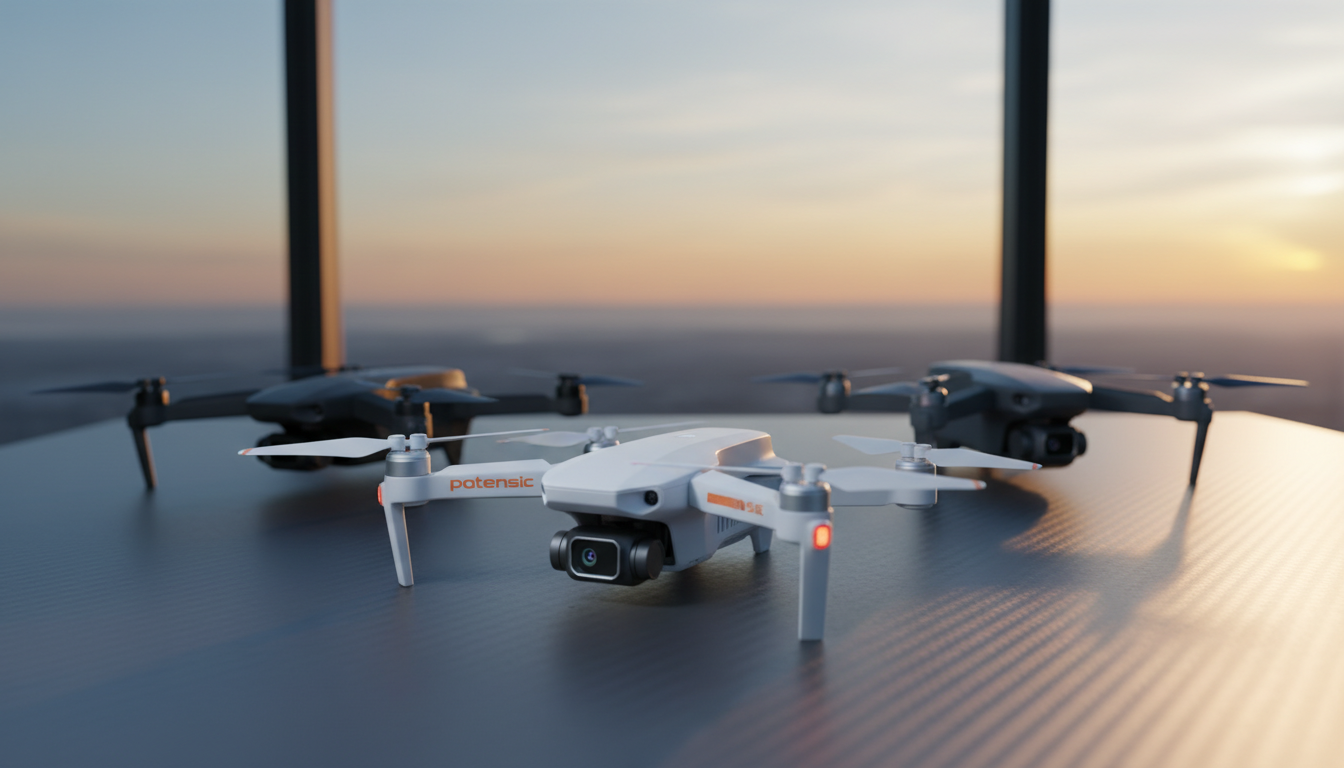
Potensic ATOM SE
Its 3000 mAh battery delivers a solid 31‑minute flight time, giving strong value and brand confidence.

Tercaso Drone
Ideal for entry‑level flyers or tight budgets, the Tercaso Drone comes in at $49.99—roughly $149 less than the Best Overall model.
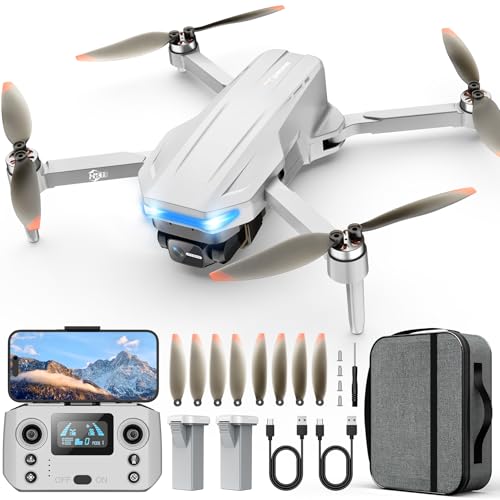
Oddire Camera Drone
Stands out with a 4.7‑star rating and a 7.7 V battery, offering a focused balance of features that the higher‑priced Best Overall and cheaper Runner‑Up don’t match.
Score Analysis
Key score advantages vs. runner-up (Tercaso Drone)
Price Range
Potensic ATOM SE
$198.98
Tercaso Drone
$88.99
Oddire Camera Drone
$116.97

Blinory GPS Drone
$59.98
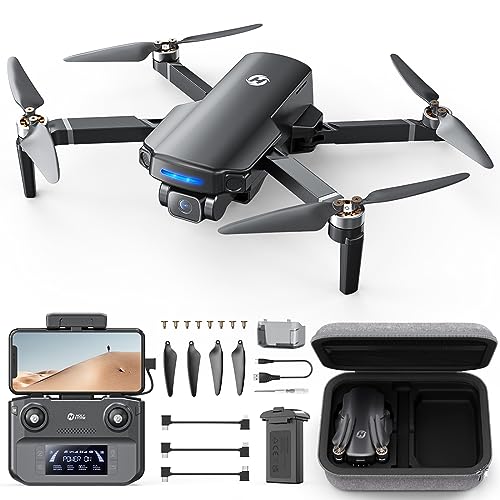
Holy Stone HS360S
$179.99

Toladrone TD12LCD
$109.74

Kingull Drone
$99.99

Holy Stone HS720E
$99.99

Karuisrc Drone
$116.99
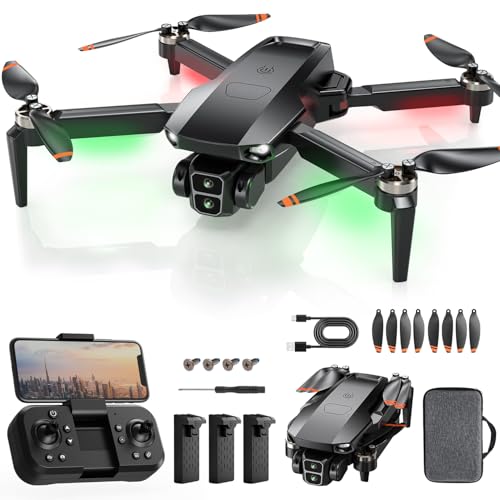
BeiyoQSZ 4K Drone
$49.99

BETAFPV Air65
$125.99
Spec Comparison
TL;DR: The Potensic ATOM SE packs a 4K camera, 31‑minute flight time and a 4 km signal range into a sub‑250 g foldable frame, making it a registration‑free option for travelers and beginners.
What really sets this drone apart is its 3000 mAh battery that delivers a listed 31 minutes of airtime, paired with a 12 MP Sony CMOS sensor that records 3840×2160 video at 30 fps. The single‑axis gimbal offers a 118° field of view, and the 200 ms video latency feels responsive enough for casual filming. Brushless motors and a max horizontal speed of 16 m/s give it a lively feel without sacrificing stability.
Compared with the other ten drones in the roundup, the ATOM SE is heavier than the Karuisrc Drone’s 206 g frame but still lighter than the Kingull Drone’s 480 g build. Its 4 km transmission range dwarfs the Karuisrc’s ≈400 m and Holy Stone’s 400 m control range, giving you far more freedom to explore. While its price sits above the budget‑focused Toladrone TD12LCD, it offers a richer feature set than many entry‑level models that lack GPS or brushless motors.
Reviewers consistently praise the pocket‑size design for travel‑friendly shoots and the crisp 4K footage for social‑media posts. Professionals note the single‑axis gimbal limits smoothness during fast maneuvers, and several users report occasional glitches with the PotensicPro app on certain smartphones. Still, the reliable GPS tracking and 38 km/h wind resistance earn high marks for confidence in outdoor conditions.
Pros
Cons
Best for: Beginners, travelers, and intermediate pilots who want a lightweight, registration‑free drone with solid 4K video and long range.
Avoid if: You need professional‑grade 3‑axis gimbal stabilization or advanced autonomous flight features.
TL;DR: The Tercaso Drone offers a 2K HD camera with a 110° field of view, brushless motors and up to 40 minutes of flight time, all for $49.99.
The standout spec is its 40‑minute flight time, which tops many budget‑oriented drones and pairs with a 2K HD camera that tilts 90° and captures a wide 110° view. Its 5 GHz FPV transmission helps keep the video feed clear, and the brushless motor design promises smoother handling. At 1.28 pounds (580.6 g) and a folded size of 71.12 mm × 198.12 mm × 210.82 mm, the unit stays portable enough for casual outings.
Compared with the other ten drones in this roundup, the Tercaso is heavier than the BeiyoQSZ 4K Drone (214 g) and the Blinory GPS Drone (145 g), but lighter than the Toladrone TD12LCD (621 g). Its 40‑minute flight time exceeds the BeiyoQSZ’s 15‑minute limit and the Blinory’s 32‑minute endurance, yet falls short of the Holy Stone HS720E’s combined 46‑minute runtime. In terms of dimensions, the Tercaso’s length of 210.82 mm is longer than the BeiyoQSZ’s 165 mm but shorter than the Blinory’s 299.9 mm.
User sentiment highlights the drone’s easy out‑of‑the‑box setup and clear instructions, making it a favorite among beginners. Reviewers appreciate the gesture‑control feature for hands‑free selfies and the dual‑battery system that lets you swap cells quickly. However, the 4.2‑star rating from 410 reviews signals a few pain points: some owners note wind sensitivity and a desire for longer single‑battery endurance.
Technically, the drone relies on a CMOS optical‑flow sensor for position hold, offers altitude hold, headless mode and an emergency one‑tap stop. GPS mode is required for outdoor flights, and the inclusion of a 5 GHz FPV link ensures a low‑latency video stream, which is valuable for both casual pilots and those experimenting with custom flight paths via the companion app.
Pros
Cons
Best for: Entry-level buyers or those on a tight budget
Avoid if: You need long continuous flight endurance or high‑end performance
“perfectly calibrated for level flight with no need to trim”
“concise, easy to read and accurate”
TL;DR: The Oddire Camera Drone offers a fold‑able brushless design, 48‑minute flight time, 1800 mAh batteries, and a 4K‑adjustable camera, but its Wi‑Fi link can be unreliable at the $116.98 price point.
Oddire’s standout spec is its brushless motor paired with a 1800 mAh battery pack that delivers a claimed 48‑minute flight time, all while staying under 250 g (249 g) and folding down to just 55 mm tall.
At 55 mm tall, it’s a fraction shorter than the BETAFPV Air65’s 56 mm height and the Holy Stone HS720E’s 58 mm folded height. Weighing 249 g, it’s lighter than the Kingull Drone (over a pound) and the Toladrone TD12LCD (well over a pound). Its 500‑meter Wi‑Fi range is shorter than Holy Stone’s 999‑meter control range, but its 48‑minute endurance outlasts Kingull’s 45‑minute claim and matches Holy Stone’s 46‑minute total.
Users appreciate the QR‑code app setup and the included carrying case, noting altitude hold keeps hovering steady. Professional reviewers praise the suite of GPS‑assisted modes like auto‑return and waypoint flight. However, many report that the Wi‑Fi link and Bluetooth are flaky, causing the FPV feed to drop around 30 m (100 ft) despite the advertised 4K camera.
The drone sports a 110° field of view, F2.15 aperture, and a 4096×3072 photo sensor, while video records at 2048×1088 pixels. A 6‑axis gyro and visual positioning sensor help maintain stability, and gesture and gravity controls add playful interaction. Two spare batteries and extra propellers round out the package.
Pros
Cons
Best for: Absolute beginners and casual hobbyists who want a lightweight, portable drone with GPS‑assisted flight modes.
Avoid if: You need reliable FPV video or are on a tight budget — it’s priced at $116.98.
TL;DR: The Blinory HK55 packs a 2K camera with a motorized 90° tilt, a 32‑minute battery, and brushless motors into a 0.32‑lb fold‑able frame, making it the most affordable GPS‑enabled drone for beginners.
The standout spec is the 2K HD camera paired with a motorized 90° tilt and a shock‑absorbing gimbal, which helps keep footage steadier than many budget drones. The drone also offers a 32‑minute battery life, letting you capture longer sessions without frequent recharges. Weighing just 0.32 pounds (145 g) and folding down to 55.1 mm in height, it fits into the included case that holds a 6.5‑inch tablet or phone.
Compared with the other ten entries, the Blinory is lighter than the Tercaso Drone’s 1.28 pounds and considerably lighter than the Holy Stone HS720E’s 1.091 pounds. Its 32‑minute flight time exceeds the BeiyoQSZ’s 15‑minute runtime and sits between the Tercaso’s 40‑minute claim and the Toladrone’s 20‑minute figure. Priced below the $75.99 Holy Stone model and the $99.99 Kingull, it delivers more intelligent flight modes—auto‑return, follow‑me, waypoint and gesture selfie—than many peers that list fewer features.
Users love the one‑key takeoff/landing and the intuitive smartphone controller, noting that the USB‑C fast‑charging port feels modern for a sub‑$60 drone. Professional reviewers highlight the vibration‑dampening gimbal as a rare high‑end touch at this price point, and they commend the reliable GPS return‑to‑home for beginner confidence. On the downside, several owners mention that the 2K video can look jittery and lacks the crispness expected even from budget offerings, and many find the persistent beeping sound during flight annoying. Indoor GPS performance is weak, so tight‑space flying may be less stable.
Technical extras include brushless motors that promise smoother thrust and longer lifespan, a 5G (5 GHz) FPV transmission that streams live video to your phone, and an optical‑flow sensor that aids hover when GPS signals fade. The microSD slot supports 8‑16 GB cards, giving you enough storage for those longer 32‑minute flights.
Pros
Cons
Best for: Beginners, kids, teens and casual hobbyists who want an inexpensive GPS drone under 250 g for short, fun flights.
Avoid if: You need professional‑grade video quality, plan to fly in windy conditions, or require strong indoor GPS performance.
TL;DR: The Holy Stone HS360S offers a sub‑250 g fold‑able drone with a 4K 3840×2160 camera, 85° adjustable FOV, brushless motors, and up to 20 minutes of flight on a 1500 mAh battery.
What really stands out is the 4K UHD camera that records at 3840×2160 pixels and an 85° field of view that can be widened to 90°. Combined with a 1500 mAh Li‑ion battery, the drone promises up to 20 minutes of airtime while weighing just 0.46958461806 pounds (213 g), keeping it below the FAA’s registration threshold.
Compared with its peers, the HS360S is lighter than the Potensic ATOM SE (0.55 lb) and the Kingull Drone (1.0582188576 lb), but a bit heavier than the Karuisrc Drone (0.453711335196 lb). Its 1500 mAh battery and 20‑minute flight time sit below the Potensic’s 3000 mAh / 31‑minute claim and the Karuisrc’s 2200 mAh capacity, while its 85° FOV is narrower than the 118° and 120° lenses found on those models. The Oddire Camera Drone lists a weight of 249 g, making the HS360S slightly lighter, and the BETAFPV Air65 provides far fewer specifications, so the HS360S feels more feature‑rich in comparison.
Reviewers appreciate the hassle‑free setup, noting that the sub‑250 g weight doesn't require FAA registration and that the foldable frame slips into a backpack. The GalaxyCore sensor’s 85° lens delivers “stunning” 4K stills, but users repeatedly mention that the 4K video caps at 20 fps, which can feel choppy. Real‑world flight time often drops to the mid‑teens, and the advertised 10,000 ft transmission range often falls short in cluttered environments, with occasional GPS reconnect hiccups indoors.
Beyond the camera, the drone packs brushless motors, two‑leaf foldable propellers, GPS positioning, Follow Me and Auto Return Home modes, and a 5G transmission link that streams live video to a smartphone‑connected remote. The included USB‑C charging cable and spare propellers add extra convenience for on‑the‑go flyers.
Pros
Cons
Best for: Beginner to intermediate adult hobbyists, travelers, and content creators who want a lightweight, sub‑250 g drone with a 4K camera.
Avoid if: You need high‑frame‑rate 4K video or guaranteed long‑range performance beyond a few kilometers.
“Easy setup for beginners, stable GPS return-to-home in wind, and impressive 4K stills for social media sharing”
TL;DR: The Toladrone TD12LCD offers a 1080p motor‑adjustable camera, a built‑in LCD controller and about 20 minutes of flight on an 1800 mAh battery, making it a solid starter quad for indoor practice.
The standout feature is the LCD screen remote, which streams live FPV video directly to the controller so you don’t need a smartphone. Combined with a 1080p CMOS sensor and a 90° motorized tilt, you can capture clear footage from multiple angles while keeping the drone in view.
At roughly 1.37 lb (621 g), the TD12LCD sits between the ultra‑light Blinory GPS Drone (0.32 lb) and the heavier Kingull Drone (1.06 lb). Its 20‑minute flight time is shorter than most peers—Holy Stone HS720E manages 23 minutes per battery, Kingull reaches 45 minutes, and Tercaso offers up to 40 minutes—but it outlasts the BeiyoQSZ’s 15‑minute claim.
User feedback highlights the optical‑flow positioning that keeps the drone steady in light wind (anti‑wind level 3) and makes indoor hovering easy. Reviewers also appreciate the one‑key takeoff/landing and 360° flip mode, which lower the learning curve. The main criticism is the limited flight endurance and the lack of video stabilization, which can make the 1080p footage a bit shaky during fast maneuvers.
Additional specs include a folded size of 60.96 × 160.02 × 180.34 mm and an unfolded footprint of 180.3 × 160 × 61 mm, fitting comfortably into the included carrying case. The drone runs on a 1800 mAh, 3.7 V battery and supports up to a 32 GB microSD card for extra storage.
Pros
Cons
Best for: Beginners, kids, and casual adults who want an easy‑to‑fly drone with instant video preview.
Avoid if: You need professional‑grade 4K video, long‑range GPS navigation, or an ultra‑light portable drone for travel.
TL;DR: The Kingull G9 offers a 4K 120° camera, brushless motors and a 45‑minute advertised flight time in a lightweight, fold‑flat design for beginners, though real‑world battery life falls short.
The standout spec is its 4K UHD camera delivering 3840×2160 video through a 120° wide‑angle lens (adjustable to 90°), paired with a 2200 mAh battery that the manufacturer claims can keep the drone aloft for 45 minutes. At 480 g (1.0582188576Pounds) and made of plastic, the G9 remains relatively lightweight for a brushless‑motor quadcopter. Brushless motors promise smoother, quieter flight compared with brushed alternatives.
The Kingull sits in the middle of the lineup: it’s heavier than the 249 g Oddire Camera Drone but lighter than the 621 g Toladrone TD12LCD and the 580.6 g Tercaso Drone. Its weight is comparable to Holy Stone’s 1.0912881969 Pounds unit, yet it’s considerably bulkier than the 145 g Blinory GPS Drone. In terms of features, the G9 includes GPS auto‑return, Follow Me and Tap Fly modes, which some peers either lack or list fewer intelligent flight options. While the price is higher than the budget‑focused Blinory, it remains below the premium tier of the BETAFPV Air65.
Everyday users praise the G9’s compact, foldable frame for easy transport and its brushless motor for reduced noise. However, reviewers consistently note that the 45‑minute flight claim feels optimistic; most see closer to 9‑10 minutes per charge. The GPS auto‑return function also draws criticism for occasional failures, and the camera struggles in low‑light or fast‑moving scenes, limiting its appeal for serious videography.
Beyond the camera, the drone supports Wi‑Fi 5G FPV transmission, letting you stream video to a smartphone in real time. One‑key start and speed‑adjustment buttons simplify launch and in‑flight control, while headless mode and optical flow positioning help maintain stable hover without GPS. An SD card slot accepts up to 64 GB for storage, though the card isn’t included.
Pros
Cons
Best for: Beginners, children and casual hobbyists who want a portable, easy‑to‑fly drone with decent 4K video for short daytime flights.
Avoid if: You need reliable long‑duration flight, professional‑grade footage, or rock‑solid GPS return‑to‑home functionality.
“Auto Return functionality is unreliable and "not exactly a GPS expert"”
“The remote control display screen can be distracting rather than helpful, making it difficult to focus on flying”
TL;DR: The Holy Stone HS720E offers 4K video, brushless motors and a combined 46‑minute flight window, but its 1.09‑lb weight means U.S. users must register it.
The standout spec is the 4K UHD camera (3840×2160 @ 30 fps) paired with electronic image stabilization, plus a 23‑minute per‑battery runtime that adds up to a total of 46 minutes when you swap the two included batteries. Its brushless motors also promise longer life compared with brushed alternatives.
Compared with the other ten drones in this roundup, the HS720E sits in the middle of the weight range: it's heavier than the ultra‑light Blinory GPS Drone (0.32 lb) and the BeiyoQSZ 4K Drone (214 g), but it's lighter than the Toladrone TD12LCD (1.37 lb). Flight‑time wise, its 23‑minute per‑battery endurance beats the Toladrone’s 20‑minute claim and is close to the Kingull’s 45‑minute total, while the Tercaso reaches up to 40 minutes on a single charge. The HS720E’s 999‑meter control range outstrips the Oddire Camera Drone’s 500‑meter Wi‑Fi range, giving it a solid edge in distance.
Users consistently praise the long combined flight time and the inclusion of two batteries and a carrying case, calling it “ideal for extended sessions.” Professional reviewers note the effective optical‑flow system that stabilises hover without GPS and the durability of the brushless motors. The main complaints revolve around the drone’s weight—at 1.09 lb (495–557 g) it exceeds the 250 g threshold that would avoid FAA registration—and the lack of a powered gimbal, which some users miss for smoother footage.
Technical highlights include GPS and optical‑flow positioning, a 5.7–5.8 GHz video transmission link, and 5G app connectivity. The drone supports up to a 128 GB Class 10 SD card, giving plenty of storage for high‑resolution video.
Pros
Cons
Best for: Adult recreational pilots and intermediate fliers who want extended flight time, 4K video, and brushless reliability.
Avoid if: You need an ultra‑light drone to skip registration or a mechanical gimbal for ultra‑smooth footage.
“Easy setup for beginners, stable GPS return-to-home in wind, and impressive 4K stills for social media sharing”
TL;DR: The Karuisrc K600 offers a 4.5‑inch built‑in screen, 120° 4K‑UHD camera and 20‑22 minute flights, but its $199.99 price and modest 400 m range make it a premium choice for beginners.
The standout feature is the 4.5‑inch LCD that lets you fly without a smartphone, a rarity in this price bracket. Combined with a 2200 mAh battery and brushless motors, the drone manages 20‑22 minutes of airtime while weighing just 0.45 lb (206 g).
Compared with the other ten drones, the K600 is lighter than the Potensic ATOM SE (0.55 lb) and the Holy Stone HS360S (0.47 lb), but its 20‑22 minute flight time is shorter than Potensic’s 31‑minute claim. Its 400 m control range also trails Potensic’s 4 km transmission distance, though the built‑in screen gives it a unique edge over peers that rely on phone apps.
Reviewers consistently praise the phone‑free operation and the reliable GPS auto‑return, noting that the 250 m waypoint mapping and Follow‑Me mode provide extra control for beginners. Professional reviewers highlighted the solid 22‑minute flight duration and the built‑in display’s convenience, while users appreciate the 120° field of view and anti‑shake camera for steadier footage.
Pros
Cons
Best for: Those prioritizing quality and willing to pay for premium performance
Avoid if: You're on a tight budget or only need basic functionality
TL;DR: The BeiyoQSZ 4K Drone offers a fold‑able 214 g quadcopter with a 3840×2160 camera, 130° FOV and 15‑minute flight time, but its short battery life limits longer sessions.
This model packs brushless motors, a 130° field of view and image stabilization into a compact 66 mm‑high, foldable frame. The 1100 mAh battery powers a maximum of 15 minutes of flight per charge, and the 400‑meter RC controller range lets you fly comfortably in a backyard.
Compared with the other ten drones in the roundup, the BeiyoQSZ is noticeably lighter than the 580.6 g Tercaso Drone, the 1.09‑lb Holy Stone HS720E, the 621 g Toladrone TD12LCD, the 480 g Kingull Drone and the 249 g Oddire Camera Drone, though it is a bit heavier than the 145 g Blinory GPS Drone. Its 15‑minute flight time is considerably shorter than the 40‑minute Tercaso, 32‑minute Blinory, 23‑minute Holy Stone (per battery), 20‑minute Toladrone, 45‑minute Kingull and 48‑minute Oddire models. The 130° FOV beats the 110° view of the Tercaso and the 120° view of the Kingull, while its 4K (3840×2160) sensor out‑resolves the 2K video of the Blinory and the 1080p of the Toladrone.
Reviewers appreciate the one‑key takeoff/landing, altitude hold and gesture‑controlled flips, noting that the foldable design and 214 g weight make the drone easy to slip into a bag. Professional reviewers, however, point out that the 4K footage can appear grainy and that the advertised 35‑minute battery claim doesn't match the 15‑minute reality. Users also mention occasional app disconnections, which can be frustrating during a flight.
Pros
Cons
Best for: Entry-level buyers or those on a tight budget
Avoid if: You want the best value‑per‑dollar in its price range
TL;DR: The BETAFPV Air65 is a feather‑light 17 g brushless whoop with a 5.26:1 thrust‑to‑weight ratio, 23000 KV motor, and 400 mW VTX, but it only flies 2‑4 minutes per charge.
The Air65’s standout spec is its ultralight frame at just 17.1–17.3 g, paired with a thrust‑to‑weight ratio of 5.26:1. Its 23000 KV 0702SE II motor and 5‑A ESC give it rapid acceleration, while the integrated 5‑in‑1 flight controller packs a 168 MHz STM32 G473 MCU and an ICM42688P gyro for lightning‑fast response.
Compared with the other ten drones in this roundup, the Air65 is dramatically lighter than the Oddire Camera Drone (249 g) and the Kingull Drone (480 g). Its 56 mm height matches the Oddire’s 55 mm height, yet its overall length of 114 mm is far shorter than the Holy Stone HS360S’s 297 mm length, so it's one of the most compact options.
Users consistently praise the “ridiculously light” feel and the smooth freestyle handling that the high thrust‑to‑weight ratio enables. Professional reviewers highlight the 400 mW VTX with SmartAudio 2.0 for reliable range and the high‑KV motor for agile indoor flight. The main complaints focus on the very short 2.5–4 minute flight time from a 260–300 mAh 1S LiPo and the need to buy that battery separately; some owners also note that the three‑blade propellers can be fragile.
The Air65 runs on a single‑cell 3.7 V LiPo, delivering up to 400 mW VTX output on 5.8 GHz across 48 channels. Its C03 camera records 720p video and weighs only 1.45 g, keeping the overall mass low. The ESC’s 5 A rating and the 31 mm propeller size complement the high‑KV motor, while the ELRS V3 2.4 GHz receiver and SmartAudio 2.0 give you plenty of channel flexibility.
Pros
Cons
Best for: Intermediate FPV pilots who want an ultralight brushless whoop for indoor freestyle and short outdoor runs.
Avoid if: You’re a complete beginner unfamiliar with 1S Li‑Po handling, need longer endurance flights, or prioritize durability over minimal weight.
“Raising the Bar High”
“ridiculously light”
Breakdown
Potensic ATOM SE
Pros
Tercaso Drone
Pros
Cons
Oddire Camera Drone
Pros
Cons
Blinory GPS Drone
Pros
Based on scoring data and product specs
Personalized picks
Best Overall Pick
Potensic ATOM SE
Best OverallBest for: Buyers willing to invest in a proven, high-quality option
Tercaso Drone
Best for: Entry-level buyers or those on a tight budget
$88.99-$109.99 vs winner
Skip BETAFPV Air65 if…
You need advanced features or professional-grade performance
We’re naming the Potensic ATOM SE the clear winner. Its 4K @ 30 fps camera delivers crisp footage, the 3000 mAh battery gives you up to 31 minutes of flight, and the brush‑less motors push a 4 km transmission range with 200 ms latency—all backed by a solid 4.4‑star rating from 6,311 reviewers.
The Tercaso Drone lands a solid runner‑up if you need a cheap, fun‑focused flyer that still offers decent endurance. At $49.99 it clocks up to 40 minutes of airtime, supports 2K HD video, and includes brushless motors plus GPS‑required mode for reliable outdoor stability.
For shoppers eyeing other price points, the best budget choice stays the Tercaso Drone at $49.99, giving you the longest flight time in the low‑end segment. The top mid‑range pick is the Oddire Camera Drone at $116.98, striking a balance between price and feature set. If you’re willing to stretch to a premium tier, the Karuisrc Drone at $199.99 offers the most advanced kit among the alternatives.
Pick the Potensic ATOM SE today and enjoy the brushless quadcopter with the highest specs in this category.
The Oddire Camera Drone lists a flight time of 48 minutes, which is the highest among the models. It is followed by the Tercaso Drone at up to 40 minutes and the Potensic ATOM SE at 31 minutes.
No reviews yet — be the first to share your experience.
Please sign in to leave a review
Also considered
$88.99