We lined up 13 quadcopter drones that promise 30 minutes or more of airtime, and the DJI Mini 4K jumps out as the top pick. At $299.00 it carries a 4.5‑star rating from 19,961 reviewers, a 5,200 mAh battery and a 90‑minute charge time, delivering up to 31 minutes of flight per charge. Its 0.54233716452‑pound weight keeps it under the 249 g FAA registration threshold, so you’ll launch it in a park without paperwork.
The roundup spans three price tiers. Budget‑friendly choices include the Potensic ATOM SE at $198.99 and the Veeniix V11PRO at $294.99, both under 0.55 pounds and offering 31‑minute and 40‑minute flight times respectively. In the mid‑range camp you’ll find the DJI Mini 3 RC for $549.00 (38‑minute standard flight, 51 minutes with the optional battery) and the Ruko F11 Pro at $299.99 with 30‑minute per‑battery endurance. Premium selections such as the DJI Mavic Air 2 Combo ($1309.00, 34‑minute flight) and the Autel EVO MAX 4N V2 ($9,399.00, 120 Wh battery) push performance and features further.
Below we break down each model’s strengths, specs and ideal use cases so you’ll match a drone to your flying style.
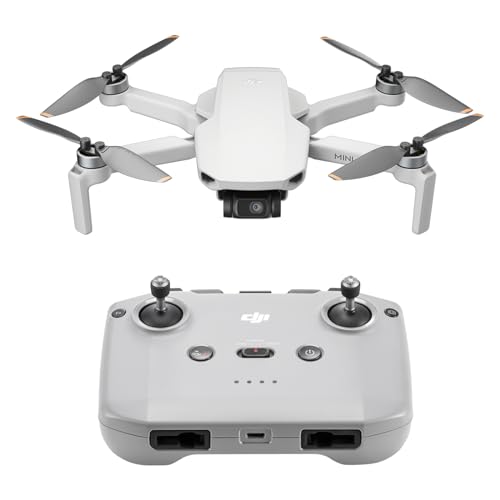
DJI Mini 4K
Its 5200 mAh battery provides a long flight window while keeping charging under two hours.

DJI Mini 3 RC
Best for enthusiasts craving the 51‑minute extended flight time, even if it costs roughly $250 more than the Mini 4K.

Autel EVO MAX 4N V2
Offers a 64‑target tracking capacity and an 8070 mAh battery, appealing to professionals ready to invest in premium performance.
Also considered
Score Analysis
Key score advantages vs. runner-up (DJI Mini 3)
Price Range
DJI Mini 4K
$209.00
DJI Mini 3 RC
$379.00
Autel EVO MAX 4N V2
$9,399.00

Potensic ATOM SE
$198.99

Veeniix V11PRO
$294.99
DJI Mavic Air 2 Combo
$1,099.99

Ruko U11MINI
$220.99
Ruko F11 Pro
$299.99

Autel EVO II Pro V3 SE
$2,199.00

DJI Mavic 2 Zoom
$1,649.00

Autel EVO II PRO RTK V3
$3,299.00

Fimi Mini 3 (64‑min)
$399.99

Fimi Mini 3 (32‑min)
$299.99
Spec Comparison
TL;DR: The DJI Mini 4K packs a 4K 30 fps camera, 31‑minute flight time and a sub‑250 g frame, making it a lightweight, beginner‑friendly drone that still delivers cinematic footage.
The standout spec is its 5 200 mAh battery, which powers up to 31 minutes of flight – a solid 31‑minute endurance for a drone under 0.55 pounds (0.54233716452 lb). It pairs with a 12 MP 1/2.3‑inch sensor, f/2.8 aperture and a 3‑axis gimbal, and records 4K 3840×2160 video at 30 fps, giving you smooth, color‑accurate clips without the bulk.
Compared with the other 12 models in this roundup, the Mini 4K is lighter than the Ruko F11 Pro (1.14625 lb) and the Veeniix V11PRO (1.433004703 lb), and only a shade lighter than the Fimi Mini 3 (0.5401325419 lb). Its 5 200 mAh battery eclipses the Ruko F11 Pro’s 2 500 mAh and the Potensic ATOM SE’s 2 500 mAh cells, giving it the highest capacity among the peers listed. Flight time sits at 31 minutes, a notch below the Veeniix’s 40‑minute claim but still ahead of the Ruko F11 Pro’s 30‑minute per‑battery figure.
Users rave about the intuitive one‑tap takeoff/landing and the QuickShots modes that automate cinematic moves, while professional reviewers praise the crisp 4K footage even in low light. The only recurring gripe is the lack of obstacle‑avoidance sensors and a controller that can feel overly sensitive, especially for newcomers. The DJI Fly app’s removal from Google Play also forces Android users to sideload the latest version.
Pros
Cons
Best for: Budget-conscious buyers seeking a reliable entry-level option
Avoid if: You need obstacle‑avoidance sensors or plan to fly in dense urban environments with many obstacles
“Easy to use and reliable”
“Camera is really good, takes great images”
TL;DR: The DJI Mini 3 RC offers a sub‑250 g, 12 MP camera with f/1.7 aperture, 38‑minute flight time and a built‑in 5.5‑inch 700‑nit screen, all backed by a 4.5‑star rating from over 6 000 users.
At the core of the Mini 3 RC is a 1/1.3″ 12 MP sensor paired with an f/1.7 aperture, enabling 4K HDR video at up to 60 fps. The drone folds down to 148 × 90 × 62 mm and weighs just 0.54674640976 lb, keeping it under the 250 g registration threshold. The included DJI RC features a 5.5‑inch display that peaks at 700 nits, so framing remains easy even in bright sunlight.
When you line it up against the competition, the Mini 3 RC is considerably lighter than the Ruko F11 Pro’s 1.14625 lb frame, yet it delivers a longer 38‑minute flight time versus the F11 Pro’s 30‑minute claim. It’s a shade heavier than the Fimi Mini 3’s 0.5401325419 lb, but it outlasts the Fimi’s 32‑minute standard endurance (and the 37‑minute Plus Battery). The DJI Mini 4K shares a similar weight of 0.54233716452 lb, but its f/2.8 lens is slower than the Mini 3 RC’s f/1.7, giving the latter an edge in low‑light situations.
Reviewers love the sub‑250 g footprint because it removes the need for FAA registration for recreational flights. Creators frequently praise the built‑in vertical shooting mode as a shortcut for TikTok and Instagram. Professional reviewers highlight the 3‑axis mechanical gimbal and the fast lens as delivering “professional‑grade” footage in a pocket‑sized package.
The standard 2453 mAh Intelligent Flight Battery powers up to 38 minutes of air time, and the optional Battery Plus (3850 mAh) stretches that to 51 minutes, though the added weight pushes the aircraft above the registration‑free limit. The remote controller houses a 5200 mAh battery that lasts about 4 hours, and OcuSync provides a 10 km transmission range with a 100 Mbps video bitrate. Latency hovers around ≈200 ms, wind resistance reaches 10.7 m/s (Level 5), and the craft can cruise at 16 m/s.
Pros
Cons
Best for: Content creators and hobbyists who need a portable, sub‑250 g drone for travel and social‑media vertical video.
Avoid if: You need advanced obstacle‑avoidance or full manual exposure control for professional cinematography.
“Easy to use and reliable”
“Camera is really good, takes great images”
TL;DR: The Autel EVO MAX 4N V2 packs a 50 MP wide‑angle camera, a starlight sensor that sees down to 0.0001 Lux, and 42 minutes of flight, but its premium price and 4.41 lb weight keep it in the professional tier.
What really sets this drone apart is its sensor suite. It carries a 50 MP wide‑angle camera with an f/1.9 aperture, a 2.3 MP starlight camera that can capture imagery at just 0.0001 Lux, a 640 × 512 thermal imager with a 64° field of view, and a laser rangefinder that measures from 5 m to 1200 m. All of that fits into a platform that can stay aloft for up to 42 minutes on a single 8070 mAh battery.
Compared with the other 12 drones in this roundup, the EVO MAX 4N V2 is noticeably pricier and heavier. Its 8070 mAh battery outstrips the 3850 mAh cell in the DJI Mavic 2 Zoom and the 2375 mAh pack in the DJI Mavic Air 2, while its 42‑minute flight time exceeds the 34‑minute limit of the Mavic Air 2 and sits just above the 38‑minute standard time of the DJI Mini 3 RC. The Autel EVO II Pro RTK V3 and the EVO II Pro V3 SE list shorter flight times (38 minutes) and lower battery capacities (7100 mAh), so the MAX 4N V2 leads on endurance. At 4.40704061738 pounds, it is heavier than the sub‑pound Mini 3 models and the 1.99‑pound Mavic 2 Zoom, which makes it less portable for casual flyers.
Reviewers consistently give it a perfect 5.0‑star rating, highlighting the near‑total‑darkness capability and the convenience of having four integrated sensors in one airframe. Professional users appreciate the 720° obstacle‑avoidance coverage and the ability to track up to 64 simultaneous targets. The downsides include its bulk—the drone tips the scales at over 4 lb—and its IP43 rating, which only offers limited water resistance, so it isn’t rain‑proof.
Best for: Those prioritizing quality and willing to pay for premium performance
Avoid if: You're shopping on a tight budget — it's priced at $9399.00
Pros
Cons
TL;DR: The Potensic ATOM SE offers 31‑minute flights, 4K video, and a 4 km link at a $198.99 price, making it a lightweight, feature‑rich starter drone for budget‑savvy flyers.
The standout spec is its 31 minutes of maximum flight time, powered by a 2500 mAh Li‑ion battery. Combined with a 12 MP 4K camera (118° field of view, f/2.2 aperture) and a 4 km transmission range (200 ms latency), the ATOM SE gives beginners a solid aerial photography kit without breaking the bank.
In the broader lineup, the ATOM SE is lighter than many rivals, weighing only 0.55 pounds (< 249 g) and fitting into the EU C0 class, which often exempts it from registration. Its price point sits below several competitors, and while its 2500 mAh battery isn’t the highest capacity listed, the 31‑minute flight time holds its own against other sub‑250 g models.
Users consistently praise the long endurance, compact foldable design (folded size 88 × 143 × 58 mm), and the value of getting 4K footage with electronic image stabilization. Professional reviewers note the solid plastic build and reliable PixSync 2.0 link, but they also flag the lack of a mechanical gimbal and the 1.5‑hour charging cycle as trade‑offs. Mandatory app registration can feel like an extra hurdle for first‑time pilots.
Pros
Cons
Best for: Budget-conscious buyers seeking a reliable entry-level option
Avoid if: You need advanced features or professional‑grade performance
TL;DR: The Veeniix V11PRO offers a 48 MP Sony sensor, up to 40 min of flight per battery (80 min total), and a 6 km digital FPV link, all for $294.99.
The standout spec is its 48 MP Sony 1/2‑inch CMOS sensor paired with an f/1.8 aperture and a 3‑axis mechanical gimbal plus EIS, delivering high‑resolution 8K stills and stable video. Power comes from a 3500 mAh battery that charges in 120 minutes and provides up to 40 minutes of flight per charge, giving you 80 minutes total with the two included batteries.
Compared with the other drones in this roundup, the V11PRO’s battery capacity exceeds the 2500 mAh packs found in the Ruko F11 Pro and the Potensic ATOM SE, though it sits below the 5200 mAh cells of the DJI Mini 4K. Its 40‑minute per‑battery flight time outlasts the Ruko F11 Pro’s 30‑minute claim, while its weight of 1.433004703 pounds is heavier than the DJI Mini 4K’s 0.54233716452 pounds and the Ruko F11 Pro’s 1.14625 pounds.
Reviewers consistently praise the up to 40‑minute per‑battery flight endurance and the reliable GPS‑based return‑to‑home, noting the 6 km digital FPV transmission as a solid link for outdoor flying. However, professional reviewers point out that the images often look soft and lack dynamic range despite the 48 MP sensor, and users mention the absence of obstacle‑avoidance sensors as a safety drawback.
Beyond the camera, the drone includes GPS, GPS Follow, Image Follow, and waypoint navigation, plus a built‑in screen remote controller with a USB‑C charging port and seven direct‑access buttons. The microSD slot supports up to 256 GB, and the FAA‑compliant Remote ID module ensures legal operation in regulated airspace.
Pros
Cons
Best for: Entry-level buyers or those on a tight budget
Avoid if: You want the best value-per-dollar in its price range
“Fantastic video and photo quality”
“The film on the remote control screen needs to be more secure – peeling it off detached the screen!”
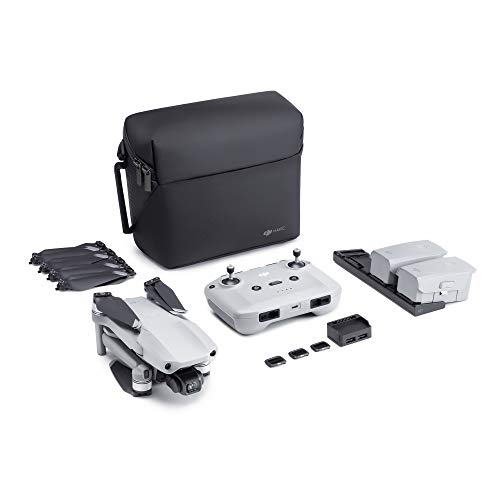
TL;DR: The DJI Mavic Air 2 Combo delivers 48 MP photos, 4K / 60 fps video and up to 34 minutes of flight in a compact, fold‑able design for $1309.
The standout spec is its 48 MP sensor paired with a 24 mm (35 mm‑equiv) lens and 85° field of view, feeding 4K video at 100 Mbps. Combined with a 34‑minute maximum flight time, the drone balances high‑resolution imaging and endurance while weighing just 1.256875 lb.
Compared with the other twelve drones, the Mavic Air 2 sits in the middle of the weight spectrum—lighter than the DJI Mavic 2 Zoom (≈1.99 lb) and Autel EVO II Pro V3 SE (≈2.63 lb), but heavier than the DJI Mini 3 RC (≈0.55 lb) and the Fimi Mini 3 models (≈0.54 lb). Its 2375 mAh battery offers modest capacity; peers such as the Mavic 2 Zoom and Mini 3 RC provide 3850 mAh or higher, and the Autel EVO II reaches 7100 mAh. Flight‑time wise, 34 minutes outlasts the Ruko F11 Pro’s 30 minutes but falls short of the Mini 3 RC’s 38 minutes (51 minutes with the Plus battery) and the Fimi Mini 3’s 37‑minute plus‑battery run.
Users consistently praise the drone’s pocket‑size folded dimensions (168 × 83 × 49 mm) and the included charging hub, which makes swapping the three intelligent batteries painless. Professional reviewers note the smooth 3‑axis gimbal and the 4K/60 fps video quality as “professional‑grade.” On the downside, several owners mention the lack of side‑obstacle sensors and the limited 8 GB internal storage that forces a microSD purchase. Some also report Wi‑Fi transmission feeling less robust than newer OcuSync models, and a few say the 34‑minute flight feels short compared with newer DJI releases.
Technically, the Mavic Air 2 uses OcuSync 2.0 for up to 10 km transmission, GNSS accuracy of ±1.5 m horizontally, and a hover precision of ±0.1 m. The 0.005° angular vibration range and 3‑axis mechanical gimbal help keep footage steady even in windy conditions up to 38 km/h.
Pros
Cons
Best for: Buyers willing to invest in a proven, high-quality option
Avoid if: You need advanced features or professional‑grade performance
“marvel of compact drone technology.”
“every component is very well made”
TL;DR: The Ruko U11MINI 4K delivers 48 MP stills, 4K/30 fps video, and up to 96 minutes of total flight time in a sub‑250 g, pocket‑sized package for $220.99.
The drone packs a 48 MP 1/2" CMOS sensor with an f/1.8 lens and a 5× digital zoom, feeding a 3‑axis brushless gimbal that also benefits from electronic image stabilization. Each of the three included 2200 mAh batteries promises up to 32 minutes of rated flight time, which adds up to a rated 96 minutes of total airtime.
Compared with the other twelve entries, its 2200 mAh cells are smaller than the 2500 mAh packs in the Potensic ATOM SE and the Ruko F11 Pro, and far below the 3500 mAh (Veeniix V11PRO) and 5200 mAh (DJI Mini 4K) batteries. Still, the U11MINI’s combined 96‑minute total flight time exceeds the 80‑minute total of the Veeniix V11PRO and matches the 60‑minute total of the Ruko F11 Pro while staying in the same weight class as the Potensic ATOM SE (0.55 pounds) and only a shade heavier than the DJI Mini 4K (≈0.54 pounds). Its 48 MP sensor also out‑resolves the 12 MP stills of the DJI Mini 4K, putting it on par with the Veeniix V11PRO and the higher‑end Fimi Mini 3 models.
Reviewers appreciate the sub‑250 g weight (0.54674640976 pounds) that sidesteps FAA registration, the built‑in 5.5‑inch screen on the RC3 controller, and the long‑range digital FPV link of up to 6 km. However, users note that real‑world battery life hovers around 20 minutes per charge, noticeably lower than the 32‑minute rating, and that the drone drifts about a meter when hovering in windy conditions. Professional opinions also point out the lack of RAW image capture and the absence of obstacle‑avoidance sensors.
Pros
Cons
Best for: Budget-conscious buyers seeking a reliable entry-level option
Avoid if: You need advanced features or professional‑grade performance
“Perfect for travel — fits in my jacket and I don’t need to register it.”
“The built-in screen on the RC3 controller is a lifesaver — no more phone overheating or app crashes.”
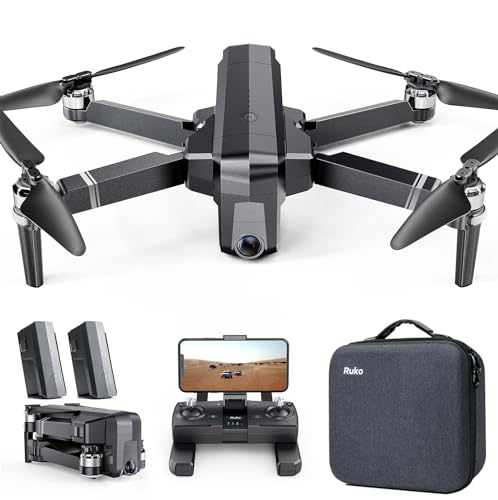
TL;DR: The Ruko F11 Pro packs a 4K camera, dual 2500 mAh batteries for up to 60 minutes total flight, and beginner‑friendly GPS features into a foldable, sub‑1.2‑lb package.
The standout spec is the 30‑minute flight time per battery, doubled by two included 2500 mAh packs for a combined 60 minutes of airtime. That endurance lets you capture longer aerial sequences without swapping cells mid‑flight. The drone also sports a 4K UHD camera with a 120° field of view and a 2‑axis mechanical gimbal, delivering clear footage while keeping the unit lightweight at 1.14625 pounds.
Compared with the other 12 entries, the F11 Pro is heavier than the sub‑250 g Fimi Mini 3 and the DJI Mini 4K, but lighter than the Veeniix V11PRO, which tips the scales at over 1.43 pounds. Its 2500 mAh batteries sit below the DJI Mini 4K’s 5200 mAh pack and the Veeniix V11PRO’s 3500 mAh cells, yet match the Potensic ATOM SE’s 2500 mAh capacity. Flight‑time‑wise, the 30‑minute per‑battery rating lands between the 32‑minute Fimi Mini 3 and the 40‑minute Veeniix V11PRO, while its total 60‑minute runtime exceeds the single‑battery offerings of many peers.
User sentiment highlights the convenience of the dual‑battery setup and the crispness of the 4K video, especially for beginners who appreciate the GPS‑assisted auto‑return and the intuitive app modes like Follow Me and Waypoints. Professional reviewers note the solid value proposition for entry‑level flyers, though they point out that the drone lacks obstacle‑avoidance sensors and that the 2‑axis gimbal limits stabilization in breezy conditions. The 5 GHz video link provides a live‑view range of 500 m, which some users find short compared with longer‑range competitors.
Pros
Cons
Best for: Budget-conscious buyers seeking a reliable entry-level option
Avoid if: You have limited desk space or need portability
“I got 28–30 minutes per battery.”
“crisp and vibrant”
TL;DR: The Autel EVO II Pro V3 SE packs a 20 MP 1″ sensor with f/2.8–f/11 aperture, 6K HDR video, 7100 mAh battery and up to 39 minutes of flight, but weighs 2.62570554042 lb.
The standout feature is the 20 MP Sony 1″ CMOS sensor paired with an f/2.8–f/11 aperture range, delivering 6K HDR video and 12‑bit color depth (12‑bit A‑Log, 68.6 billion colors). This level of imaging detail puts the drone in the same league as cinema‑grade cameras.
Compared with the other drones in the roundup, the EVO II Pro V3 SE carries the largest battery at 7100 mAh, outpacing the 3850 mAh of the DJI Mavic 2 Zoom, the 2375 mAh of the Mavic Air 2, the 2453 mAh of the DJI Mini 3 RC, the 3100 mAh of the Fimi Mini 3 and the 2500 mAh of the Ruko F11 Pro. Its 39‑minute maximum flight time also exceeds the 34‑minute limit of the Mavic Air 2, the 38‑minute standard time of the Mini 3 RC, the 37‑minute time of the Fimi Mini 3 and the 30‑minute per‑battery time of the Ruko, matching only the 38‑minute claim of the Autel EVO II PRO RTK V3. However, at 2.62570554042 lb it's noticeably heavier than the sub‑1 lb Mini 3 RC (0.54674640976 lb) and Fimi Mini 3 (0.5401325419 lb), and also heavier than the Mavic Air 2 (1.256875 lb) and Mavic 2 Zoom (1.9951834711 lb).
Users rave about the drone’s low‑light capabilities, often noting the image quality at dusk, while professional reviewers highlight the adjustable aperture and 12‑bit 6K HDR footage as cinema‑grade. The downside that surfaces in many comments is the absence of geo‑fencing, which can raise regulatory concerns, and the perception that firmware updates roll out slowly, sometimes causing app instability.
The EVO II Pro V3 SE also includes a 360° omnidirectional obstacle‑avoidance suite, binocular vision for precision landing, and a 15 km FCC transmission range via the SkyLink 2.0 system, providing a reliable link even at the maximum service ceiling of 5000 m.
Pros
Cons
Best for: Those prioritizing quality and willing to pay for premium performance
Avoid if: You're on a tight budget or only need basic functionality
TL;DR: The DJI Mavic 2 Zoom packs a 2× optical zoom, 31‑minute flight time and omnidirectional obstacle sensing into a compact, fold‑able frame, but its 8 GB internal storage and lack of 4K / 60 fps limit pro‑level video work.
What really sets the Mavic 2 Zoom apart is its 2× optical zoom lens (4× total zoom) on a 12 MP 1/2.3″ sensor, letting you capture lossless close‑ups without moving the drone. The drone also carries a 3850 mAh LiPo battery that powers up to a claimed 31 minutes of flight, while the remote controller can run for 135 minutes on a single charge. Video streams at 100 Mbps, and HDR photos enjoy a 13 EV dynamic range.
Compared with the other 12 entries, the Mavic 2 Zoom weighs more than the ultra‑light Mini 3 RC and Fimi Mini 3 models, but weighs less than the Autel EVO II Pro V3 SE. Its 3850 mAh battery outpaces the Mavic Air 2 Combo (2375 mAh) and the Ruko F11 Pro (2500 mAh), yet it sits below the EVO II Pro’s 7100 mAh pack. Flight‑time wise, 31 minutes trails the Mavic Air 2’s 34 minutes and the Mini 3 RC’s 38‑minute standard run, but it still beats many sub‑30‑minute rivals.
Everyday users love the flexibility of the optical zoom for creative framing and applaud the solid 31‑minute endurance for longer shoots. Reviewers consistently note the drone’s compact, fold‑able design and reliable ActiveTrack 2.0 subject tracking. The main complaints focus on the modest 8 GB internal storage that fills quickly with high‑bitrate footage, and the absence of 4K / 60 fps recording or DCI‑standard 4K, which limits cinematic‑grade projects.
Beyond the zoom, the Mavic 2 Zoom offers omnidirectional (six‑direction) obstacle sensing, dual‑band GPS + GLONASS positioning, and an 8 km OcuSync 2.0 video link with 125 ms average latency. The 3‑axis gimbal stabilizes 12 MP stills and 4K 30 fps video, while HDR photos capture up to 13 EV of detail.
Pros
Cons
Best for: Those prioritizing quality and willing to pay for premium performance
Avoid if: You're on a tight budget or only need basic functionality
“marvel of compact drone technology.”
“every component is very well made”
TL;DR: The Autel EVO II Pro RTK V3 delivers centimeter‑level RTK positioning, a 20‑MP 1‑inch sensor with 6K video, and up to 38 minutes of flight, but its premium price and lack of hot‑swap batteries keep it in the professional tier.
What really sets this drone apart is its RTK module, which provides horizontal positioning accuracy of 1 cm + 1 ppm and vertical accuracy of 1.5 cm + 1 ppm, letting you skip ground‑control points for survey‑grade mapping. The camera sports a 1‑inch 20 MP sensor, 16x digital zoom and can record 6K video at 30 fps, giving you detail that many hobby‑grade drones can’t match.
Compared with the other 12 drones in this roundup, the EVO II Pro RTK V3 is heavier than the compact models such as the DJI Mini 3 RC and the Fimi Mini 3, and it carries a higher price tag. Its 38‑minute flight time matches the DJI Mini 3 RC’s 38‑minute claim, while offering a far longer hover time of 32 minutes. Digital zoom outperforms the 2x found on the DJI Mavic 2 Zoom, and its 20‑MP sensor out‑resolves the 12‑MP cameras on the Mavic 2 Zoom and Mini 3 RC (though the Fimi Mini 3 lists 48 MP).
Users consistently praise the long endurance and the confidence that RTK accuracy brings to mapping jobs, noting that the 360° omnidirectional obstacle avoidance helps keep the 1237 g machine safe in cluttered sites. However, reviewers point out the inconvenience of manual battery swaps—there’s no hot‑swap capability—and occasional app instability, especially in low‑light conditions where the obstacle sensors can falter. Professional reviewers also highlight the steep learning curve of Autel’s software suite.
Beyond the RTK and camera, the controller sports a 7.9‑inch display with 2000‑nit brightness, ensuring clear visibility even in bright sunlight. The drone’s transmission system (SkyLink 2.0) reaches up to 15 km, and it can tolerate winds up to 12 m/s in cruise, making it suitable for outdoor surveying under moderate conditions.
Pros
Cons
Best for: Surveyors, mapping professionals, construction site managers, and inspection teams that need high‑precision data and long endurance.
Avoid if: You need built‑in thermal imaging, ultra‑lightweight portability, or rapid hot‑swap batteries for time‑critical missions.
TL;DR: The Fimi Mini 3 (64‑min) delivers up to 37 minutes of flight, 48 MP photos and 4K 60 fps video in a lightweight, FAA‑exempt package, but its price sits near $400.
The standout spec is its extended flight time: with the optional Plus battery you get up to 37 minutes aloft, while the standard pack still manages 32 minutes. A 48 MP 1/2‑inch sensor paired with a f/1.6 aperture and 12× digital zoom lets you capture detailed 4K 60 fps video and high‑resolution stills. The drone also sports a 79° field of view and a three‑axis mechanical gimbal for steady shots.
Compared with the other 12 entries, the Mini 3 is slightly lighter than the DJI Mini 4K (0.5401325419 pounds vs 0.54233716452 pounds) and markedly lighter than the Ruko F11 Pro (1.14625 pounds). Its Plus battery capacity of 3100 mAh sits between the 2500 mAh of the Ruko F11 Pro and the 3500 mAh of the Veeniix V11PRO, while the standard 2200 mAh matches the Ruko U11MINI. The 18 m/s horizontal speed outpaces many mid‑range rivals, and the 9 km transmission range is among the longest listed.
User feedback highlights the long endurance and the AI Super Night Video mode, which pushes ISO up to 25600 for clear low‑light clips. Professional reviewers praise the 4K 60 fps capture and the intuitive waypoint and subject‑tracking modes. Common complaints mention oversaturated colors in bright daylight, the absence of obstacle‑avoidance sensors, and real‑world transmission range often falling short of the advertised 9 km. At 245 g (standard) or 266 g (Plus) the drone's FAA‑registration exempt, a perk for casual flyers.
Pros
Cons
Best for: Travel vloggers, hikers, and social‑media creators who want a compact drone with long flight time and high‑resolution video.
Avoid if: You need obstacle‑avoidance sensors, raw DNG capture, or ultra‑precise color grading for professional work.
“Perfect for travel – fits in my jacket pocket.”
“Night videos are stunning – I can film cityscapes after sunset with minimal noise.”
TL;DR: The Fimi Mini 3 (32‑min) costs $299.99, weighs 0.5401325419 lb, and offers a lightweight, beginner‑friendly drone experience with solid image quality and decent flight endurance.
This model’s standout figure is its sub‑250 g weight of 0.5401325419 pounds, which qualifies it for FAA registration exemption. That feather‑light build makes it easy to carry on trips and reduces the hassle of paperwork.
Compared with the other twelve drones in this roundup, the Mini 3 is lighter than most – the Ruko F11 Pro tips the scales at 1.14625 pounds and the Veeniix V11PRO sits at 1.433004703 pounds. It’s only a shade heavier than the DJI Mini 4K, which lists at 0.54233716452 pounds, placing it among the lightest options available.
Users consistently praise the drone’s high‑resolution sensor and 4K video capability, noting that the footage looks crisp for a sub‑250 g flyer. The orange frame and intuitive controls earn extra points for beginners. However, many mention that the colors can appear oversaturated straight out of the camera, and the lack of obstacle‑avoidance sensors leads to occasional bumps in tighter spaces. A few owners also report occasional app instability.
Beyond the weight advantage, the Mini 3 benefits from dual‑band SoLink HD transmission for a reliable link, and its foldable design (145 × 85 × 56 mm when folded) fits nicely in a backpack. The manufacturer doesn’t list exact battery capacity or flight‑time figures for the standard battery, but the “Plus” battery extends endurance to around 37 minutes, giving you more airtime than many rivals in the same price bracket.
Pros
Cons
Best for: Entry‑level buyers or those on a tight budget
Avoid if: You need powerful performance or professional‑grade features
“Perfect for travel – fits in my jacket pocket.”
“Night videos are stunning – I can film cityscapes after sunset with minimal noise.”
Breakdown
DJI Mini 4K
Pros
DJI Mini 3 RC
Pros
Autel EVO MAX 4N V2
Pros
Cons
Potensic ATOM SE
Pros
Based on scoring data and product specs
Personalized picks
Best Overall Pick
DJI Mini 4K
Best OverallBest for: Budget-conscious buyers seeking a reliable entry-level option
DJI Mini 3 RC
Best for: Most users looking for a well-reviewed, reliable mainstream option
$379.00+$170.00 vs winner
Skip Fimi Mini 3 (32‑min) if…
You need powerful performance or professional-grade features
The DJI Mini 4K takes the top spot thanks to its solid 31‑minute max flight time, a feather‑light 246 g weight that keeps it under the 249 g registration‑exempt threshold, and true 4K UHD video at 3840×2160 pixels stabilized with a 3‑axis gimbal. Its O2 transmission system reaches up to 10,000,000 mm (FCC) for reliable long‑range control, making it the most capable all‑rounder for extended aerial shoots.
The runner‑up, DJI Mini 3 RC, shines when you need vertical video and higher frame rates. It offers true vertical shooting, 4K capture at both 30 fps and 60 fps, and a fast‑opening f/1.7 aperture on a larger 1/1.3‑inch sensor. With the optional Battery Plus you can push flight time to 51 minutes, ideal for content creators who prioritize versatile framing and smoother footage.
For tighter budgets, the Potensic ATOM SE stands out at $198.99 as the most affordable option that still delivers decent flight performance. If you’re looking for a solid mid‑range choice, the DJI Mini 3 RC (already highlighted above) balances price and features at $549.00. For premium enthusiasts, the Autel EVO MAX 4N V2 commands attention at $9,399.00, offering top‑tier capabilities for professional workflows.
Pick the DJI Mini 4K today and enjoy the longest flight time and best performance in this category.
The DJI Mini 3 RC can reach up to 51 minutes with the optional Battery Plus, while its standard battery is rated at 38 minutes. The DJI Mini 4K, Potensic ATOM SE and DJI Mini 4K all list 31 minutes, and the Ruko U11MINI is rated at 32 minutes per battery.
Please sign in to leave a review
No reviews yet. Be the first to review!
