⚡ Quick Answer
When it comes to hand sanding, the market is crowded with everything from $19.74 entry‑level tools to $349.00 premium rigs. In this roundup we looked at 11 models that span the budget, mid‑range and premium tiers – from the lightweight WEN 6313 and the popular Black+Decker BDERO100 at the low end, through the Dewalt DWE6423 and Craftsman CMCW220B in the middle, up to the high‑output Bosch GET65‑5N and Makita BO5041K at the top. All units carry strong user approval, with average ratings hovering around 4.5‑4.7 stars.
The Makita BO5041K commands attention with a 5‑inch abrasive disc, a 3.0 A motor and a variable speed range of 4,000‑12,000 OPM, plus an adjustable front handle and a lock‑on trigger for continuous work. Priced at $129.00 and backed by a 4.7/5 rating from 3,196 reviews, it also ships with a dust bag, extra disc and a carrying case, promising cleaner, more controlled sanding in tight spots. Below we’ll break down how each tier performs, so you can match power, ergonomics and price to your own projects.

Makita BO5041K
Eight-hole design lets you switch between sanding tasks quickly, and the 5 in abrasive disc size handles most projects.

DEWALT DWE6423
Ideal for DIY hobbyists who want solid performance without the premium price—at $79 it’s about $50 cheaper than the Makita best‑overall.

SKIL SR211601
Comes with an integrated dust box and three starter sanding sheets, giving entry‑level users a tidy, ready‑to‑go setup the pricier models omit.
Also considered
TL;DR: The Black+Decker BDERO100 delivers 12,000 OPM random‑orbital sanding in a lightweight 3.16‑lb body for $39.99, making it a solid entry‑level choice for DIY surface prep.
This sander’s standout spec is its fixed 12,000 OPM (or 12,000 RPM) speed paired with a 2.0 Amp brushed motor, which users report removes paint and finish quickly while keeping swirl marks low. The 5‑inch sanding pad and hook‑and‑loop attachment let you swap discs in seconds, and the comfort‑grip handle helps you hold the tool steady during longer sessions.
Compared with the other ten models in the roundup, the Black+Decker sits in the middle of the weight range: it is lighter than the SKIL SR211601 (3.44 lb) and DEWALT DWE6423 (3.4 lb) but heavier than the Craftsman CMCW220B (2.545 lb). Its max speed of 12,000 RPM is a notch below the Hychika Random Orbital Sander’s 13,000 RPM, yet it matches the WEN 6313’s 12,000 OPM. Pricing is comparable to the SKIL and Hychika units, while still undercutting the higher‑priced DEWALT and Porter‑Cable options.
Reviewers consistently praise the lightweight feel and the ease of changing sandpaper thanks to the hook‑and‑loop system. The included dust bag provides basic collection, and many users note that the dust‑sealed switch adds durability in dusty workshops. On the flip side, the fixed speed is a frequent complaint when sanding delicate trim, and some users say the bag fills quickly, requiring frequent emptying or an external vacuum for larger jobs. Professional reviewers also point out that the 2.0 Amp motor is best suited for light‑to‑medium tasks rather than heavy stock removal.
Pros
Cons
Best for: Budget‑conscious buyers seeking a reliable entry‑level option — the Black+Decker BDERO100 5‑inch Black offers Motor Power: 2.0 Amp
Avoid if: You want the best value‑per‑dollar in its price range or need a variable‑speed sander for delicate professional work
TL;DR: The SKIL SR211601 offers a 5‑inch random orbital sander with a 2.8‑amp motor, 7,000‑13,000 OPM speed range and an X‑Flow cyclonic dust box, all for a budget‑friendly $37 price.
What really sets this sander apart is its variable‑speed motor that can swing between 7,000 and 13,000 orbits per minute, driven by a 2.8 A, 120 V corded power source. The 5‑in sanding disc (128 mm) sits on an 8‑hole hook‑and‑loop pad, and the built‑in X‑Flow cyclonic dust collector funnels debris into a transparent dust box that comes included.
Compared with the other ten tools in the roundup, the SKIL feels a touch heavier than the DEWALT DWE6423’s 3.4‑pound build, but it’s still heavier than the Black+Decker BDERO100’s 3.16‑pound frame. Its 1560 g overall weight also tops the WEN 6313’s 1361 g, giving it a solid, balanced feel. In terms of size, the 140 mm height is slightly shorter than the Black+Decker’s 6.0‑inch height, while the 200 mm length keeps it compact enough for tight spaces.
Users consistently praise the clean operation that the cyclonic system delivers, noting that the transparent container makes emptying quick and mess‑free. Reviewers also highlight the comfortable soft‑rubber grip and counterweight balance that reduce vibration during extended sanding sessions. Professional reviewers echo these points, calling the 2.8‑amp motor “efficient for wood, metal and plastic” and the variable speed “versatile for a range of DIY projects.”
Pros
Cons
Best for: Budget‑conscious buyers seeking a reliable entry‑level option — the SKIL SR211601 offers Included Dust Box: Yes
Avoid if: You want the best value‑per‑dollar in its price range
“emphasizes aligning 8-hole pads for dust suction, implying ease of use when done correctly but potential frustration otherwise”
TL;DR: The DEWALT DWE6423 delivers a 5‑inch hook‑and‑loop pad, 8,000–12,000 OPM variable speed, and a built‑in dust bag for $79, earning a 4.7‑star rating from over 3,500 users.
What sets this sander apart is its 120 W mechanical output paired with a 3 A motor that runs between 8,000 and 12,000 OPM. The 5‑inch (125 mm) pad and quick‑stop system let you change sandpaper on the fly, while the rubber‑overmold grip keeps fatigue low during longer jobs.
Compared with the other ten sanders in this roundup, the DWE6423 sits in the mid‑price range. It’s heavier than the Craftsman CMCW220B’s 2.545‑lb body and far heavier than the ultra‑light Porter‑Cable PCCW205B, but it matches the weight of Bosch’s 3.5‑lb model and is only a shade lighter than Makita’s 3.5‑lb unit. Its dust‑collection bag, which locks with one hand and fits DWV010/DWV012 accessories, is a feature not listed for many of the competitors.
Reviewers consistently praise the variable‑speed dial and the Controlled Finishing System that eases the tool into motion, making it feel smoother on delicate woodwork. The brushed motor design, however, is noted as less efficient and can run hotter than brushless alternatives, which some DIYers see as a trade‑off for the lower price. At 91 dB(A) sound power, it’s louder than a typical conversation but comparable to other corded orbital sanders.
Additional technical details include a compact 6.375‑inch height, 10.25‑inch length, and a 2.6 mm orbit diameter that balances material removal with a fine finish. The unit runs on 115/230 VAC, so you won’t need a battery, and the dust‑sealed switch helps keep debris out of the internals.
Pros
Cons
Best for: Most users looking for a well‑reviewed, reliable mainstream option — the DEWALT DWE6423 offers Pad Size: 5 inches (125 mm).
Avoid if: You need advanced features or professional‑grade performance, such as a brushless motor or higher power output.
TL;DR: The Makita BO5041K delivers pro‑grade sanding with a 3 A motor, 4,000‑12,000 OPM variable speed and a 4‑7/8″ hook‑and‑loop pad, all in a lightweight 3.09‑lb body.
What really sets this sander apart is its 3.175 mm orbit diameter, which is larger than the 2.5 mm found in the Bosch ROS20VSK and the 2.6 mm in the DEWALT DWE6423. Coupled with a no‑load speed range of 4,000‑12,000 OPM, the tool can tackle anything from delicate finish work to aggressive material removal.
Compared with the ten other sanders in this roundup, the BO5041K sits in the mid‑weight range at 3.09 pounds—lighter than Bosch (3.5 lb) and DEWALT (3.4 lb) but a touch heavier than the Craftsman CMCW220B (2.545 lb). Its 123.8 mm (4‑7/8″) pad is marginally smaller than the 5‑inch pads on most rivals, yet the oversized sealed ball bearings and built‑in pad brake give it a steadier feel that many users praise.
Professional reviewers highlight the variable‑speed dial as a key advantage, noting that it lets you match sanding speed to wood species or finish requirements. The adjustable front handle and rubberized palm grip are repeatedly mentioned as comfort boosters during longer jobs. Users also appreciate the through‑the‑pad dust collection, which keeps workspaces cleaner, although the lack of a listed cord length can make setup planning a bit guess‑work.
Pros
Cons
Best for: Buyers willing to invest in a proven, high‑quality option — the Makita BO5041K offers Pad Size: 123.8 mm (4‑7/8")
Avoid if: You're on a tight budget or only need basic functionality
TL;DR: The Makita BO5041 delivers a 5‑inch pad, 3 Amp motor and 4,000‑12,000 OPM speed range in a compact 3.5 lb body, making it a top‑rated choice for serious woodworkers.
The standout spec is its variable‑speed dial that continuously adjusts from 4,000 to 12,000 OPM, letting you dial in the exact aggressiveness you need. Coupled with a 3 Amp motor delivering 300 watts of input power, the sander can tackle rapid material removal while still maintaining control.
Compared with the other ten models, the BO5041 sits in the same weight class as the Bosch ROS20VSK (both about 3.5 lb) but its pad is slightly smaller at 4‑13/16 in versus Bosch’s 5‑in pad. It’s also heavier than the Craftsman CMCW220B, which weighs 2.545 lb, yet lighter than the DeWalt DWE6423’s 3.4 lb frame. In terms of dimensions, its 6‑in height and 10‑7/8‑in length are on par with most competitors, offering a familiar footprint while providing a larger dust‑collection bag and through‑the‑pad system.
User feedback repeatedly praises the ergonomic adjustable front handle and rubberized palm grip, noting that the sander feels balanced during long sessions. Professionals highlight the lock‑on trigger and the pad brake that stops the pad instantly when you release the trigger, reducing unwanted swirl marks. Common complaints focus on the corded power source, which ties you to an outlet, and the eight‑hole hook‑and‑loop discs that eventually need replacement as the adhesive wears.
Pros
Cons
Best for: Buyers willing to invest in a proven, high‑quality option — the Makita BO5041 offers Pad Size: 4‑13/16 inches
Avoid if: You're on a tight budget or only need basic functionality
“keep it cranked all the way”
“sweet spot with minimal vibration”
TL;DR: The Porter‑Cable PCCW205B delivers 12,000 OPM on a lightweight 5‑inch pad, offering a low‑profile, cordless sander with a detachable dust bag, though you’ll need to buy a battery separately.
The standout spec is its 12,000 OPM sanding speed, powered by a 20 V MAX brushed motor. At just 907 g (about 2 lb) the unit feels light in the hand, and the low‑profile design paired with a rubberized grip keeps it steady in tight spaces. A dust‑proof switch and a 5‑inch pad round out the core features.
Compared with the other ten sanders in this roundup, the Porter‑Cable is noticeably lighter than the Bosch ROS20VSK (3.5 lb), DEWALT DWE6423 (3.4 lb), Craftsman CMCW220B (2.545 lb), Makita BO5041K (≈3.09 lb) and Black+Decker BDERO100 (3.16 lb). Its 5‑inch pad matches the Bosch, DEWALT, Craftsman and Black+Decker models, and its 12,000 OPM speed hits the top end of Bosch’s 7,500‑12,000 OPM range, putting it on par with the fastest options.
In practice, everyday users applaud the rapid material removal and the comfortable rubber grip, especially for DIY projects where cordless freedom matters. Professional reviewers highlight the low vibration level and the solid 3‑year limited warranty. However, reviewers also point out that the brushed motor is less efficient than brushless alternatives, the battery and charger are sold separately, and dust collection works best when hooked up to a vacuum.
Additional technical context includes a detachable dust bag plus a 1‑1/4 in vacuum port, eight hook‑and‑loop sandpaper holes for quick sheet changes, and a low‑profile housing that helps you stay in control on edges and corners.
Pros
Cons
Best for: Most users looking for a well‑reviewed, reliable mainstream option — the Porter‑Cable PCCW205B offers Pad Size: 5 inches
“collects quite a bit”
“effective but basic performance”
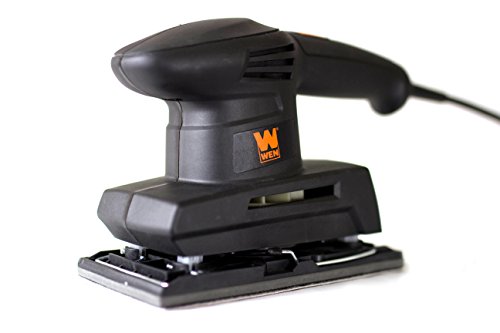
TL;DR: The WEN 6313 offers a lightweight 3‑lb, 12,000 OPM sander with a 6‑foot cord for just $19.74, delivering solid performance for DIY projects despite its fixed speed.
The WEN 6313 packs a 1.2 Amp motor that spins at 12,000 OPM, and its 6‑foot power cord gives you plenty of reach around a typical workshop. At 95 mm tall, 229 mm long and 152 mm wide, it fits comfortably in a small hand, while the 3‑lb weight keeps fatigue low during one‑handed use. It ships for $19.74 and carries a 4.5/5 star rating from 2,124 reviewers, positioning it as a budget‑friendly choice.
Compared with the other ten sanders in this roundup, the WEN is lighter than the Black+Decker model (3.16 lb) and the SKIL SR211601 (3.44 lb), making it the most portable option. Its overall length of about 9 inches matches the Hychika’s 9.17‑inch length but is shorter than DEWALT’s 10.25‑inch unit, so it stays out of the way on tight jobs. While the Hychika offers six variable speeds, the WEN runs at a fixed speed, which some users note limits versatility.
Reviewers consistently praise the tool’s “lightweight design” and “one‑handed operation,” saying the 3‑lb construction reduces arm strain on longer sanding sessions. Professionals highlight the protruding pad edges that make corner work feel more controlled. On the downside, the included dust bag fills quickly and the fixed‑speed motor can struggle with thick material, which aligns with consumer complaints about limited power for heavy stock removal.
Technical details add to its appeal: a Velcro (hook‑and‑loop) base pad lets you swap sandpaper in seconds, and the sanding surface area measures 92 × 187 mm (3‑5/8 × 7‑3/8 in). The package includes a 120‑grit sandpaper sheet and a dust‑collection bag, plus a port that can attach to a vacuum for cleaner operation.
Pros
Cons
Best for: Budget‑conscious buyers seeking a reliable entry‑level option — the WEN 6313 offers Motor Power: 1.2 Amp
Avoid if: You need heavy‑duty stock removal, large‑panel sanding, or a variable‑speed sander for diverse material types
“Lightweight and easy to handle with one hand”
“Great dust collection bag reduces mess”
TL;DR: The Craftsman CMCW220B delivers 12,000 OPM of cordless sanding power in a lightweight 2.55 lb, low‑profile package with built‑in dust collection, making it a solid choice for DIY projects.
This sander’s standout spec is its 12,000 OPM orbital speed, which professional reviewers cite as “high‑performance” for rapid stock removal. Coupled with a 5‑inch (127 mm) hook‑and‑loop disc that features eight sanding holes, the tool balances aggressive material removal with a low‑profile height of 121 mm (4.76 in).
Compared with other models in the roundup, the Craftsman is lighter than the DEWALT DWE6423 (1.54 kg) and the Black+Decker BDERO100 (weight not listed but heavier than the 1156 g Craftsman). It’s also more compact than DEWALT’s 260 mm length, measuring only 175 mm (6.89 in) long. Speed‑wise it matches DEWALT and Black+Decker at 12,000 OPM, while offering a variable‑speed dial that the DEWALT lacks. Its onboard dust bag plus a 1‑1/4 in vacuum hose give it superior dust control versus the WEN 6313, which only provides a basic bag.
User feedback highlights the sander’s “fast material removal” and “effective dust collection,” making setup and cleanup quicker on job sites. However, several owners note that the dust bag can clog if the vacuum hose isn’t attached, and the high speed sometimes leaves swirl marks on delicate finishes. The lack of electronic speed control means you can’t fine‑tune the RPM for ultra‑fine sanding, a point mentioned in consumer reviews.
Pros
Cons
Best for: Most users looking for a well‑reviewed, reliable mainstream option — the Craftsman CMCW220B offers Amperage: 0.0 A
Avoid if: You have limited desk space or need portability
TL;DR: The Hychika OS300W packs a 3.8 A (450 W) motor, six variable speeds up to 13,000 RPM, and an 80 % dust‑collection system, delivering professional‑grade power at a budget price.
The standout spec is its 3.8 Amp motor, which the manufacturer equates to a 450 W output and pushes the sanding pad to a maximum speed of 13,000 RPM. Six variable‑speed settings let you dial the orbit between 6,000 and 13,000 OPM, giving you fine control whether you’re stripping paint or smoothing a delicate veneer.
When you line it up against the other ten sanders in this roundup, the Hychika offers more speed flexibility than the Black+Decker model, which lists a single 12,000 RPM speed. The WEN 6313 runs at 12,000 OPM but only has a 1.2 Amp motor, so the Hychika’s 3.8 Amp motor provides noticeably higher torque. Its dust‑collection efficiency is listed at up to 80 %, while several peers only include a basic dust box without a stated efficiency rating.
Reviewers consistently highlight the tool’s strong sanding capability and the comfortable, textured rubber overmold grip that reduces arm strain. Professional reviewers note the precision counterweight that tames vibration, and users appreciate the high‑efficiency dust bag with micro‑filtration and a built‑in vacuum adapter. Common complaints mention that the corded design limits mobility and that extended sessions can lead to arm fatigue, especially on larger projects.
Beyond raw power, the OS300W is a compact 5‑inch random orbital sander (5‑inch pad diameter) with a short 5.16‑inch height, helping keep the swing tight in tight quarters. It ships with 12 sandpaper sheets (four each of 80, 120 and 240 grit) and a hook‑and‑loop attachment for quick sheet changes. The 120‑Volt cord plugs into any standard outlet, making it ready for a workshop or a home garage.
Pros
Cons
Best for: Budget‑conscious buyers seeking a reliable entry‑level option — the Hychika Random Orbital Sander offers Motor Power: 3.8 Amp (450 W equivalent).
TL;DR: The Bosch ROS20VSK delivers a 5‑inch variable‑speed random orbit with an integrated dampening pad and strong dust collection, offering smooth finishes for DIYers despite its 8‑ft cord.
The standout spec is its variable speed range of 7,500‑12,000 OPM paired with a 5‑inch pad that uses a microcellular backing and an integral dampening system, which professional reviewers say minimizes swirl marks on both flat and contoured surfaces.
At 3.5 lb, the Bosch feels comparable to the Makita premium model and slightly lighter than the DEWALT DWE6423, while being heavier than the Craftsman CMCW220B. Its 8‑ft cord places it behind cordless competitors like the Porter‑Cable PCCW205B, which rely on battery power, but the corded design still provides consistent power without worrying about runtime.
User sentiment highlights low vibration and the soft‑grip handle as comfort boosters for extended sanding sessions. The on‑board microfilter plus a vacuum adapter keep dust down, a point frequently praised by both consumers and experts. The only notable trade‑off is the lack of a brushless motor, which some reviewers note could mean more maintenance over time.
Pros
Cons
Best for: Buyers willing to invest in a proven, high-quality option — the Bosch ROS20VSK offers Pad Size: 5 inches
Avoid if: You need advanced features or professional‑grade performance
TL;DR: The Bosch GET65-5N is a robust 5‑inch dual‑mode random‑orbit sander that packs a 3X turbo mode, built‑in dust port, and die‑cast aluminum housing, but its 5.3 lb weight and premium $349 price set it apart from lighter, cheaper options.
The standout feature is the Turbo mode, which provides 3X faster stock removal than the standard random‑orbit action, and the tool switches seamlessly to a fine‑finish random‑orbit mode. It sports a 5‑inch soft‑microcellular hook‑and‑loop pad and a no‑load orbit speed range of 3300‑7800 OPM, while weighing 5.3 lb.
Compared with the other ten sanders in this roundup, the GET65-5N is noticeably heavier than the Makita BO5041K (about 3.09 lb) and the Bosch ROS20VSK (3.5 lb). Unlike the Makita model, which ships a detachable dust bag, Bosch includes a built‑in dust‑collection port with two hose adapters, giving it an edge in shop‑floor cleanliness. Its 5‑inch pad matches the size found on many peers, but the dual‑bearing mount and integral pad‑dampening are features not listed for most competitors.
Professional reviewers praise the dual‑mode versatility and the vibration‑reducing die‑cast aluminum housing, noting that the integral pad‑dampening effectively prevents swirl marks. Everyday users echo the appreciation for the turbo speed but frequently mention that the 5.3 lb weight can lead to fatigue during long, overhead sanding sessions, and the lack of an electric brake results in a slower spin‑down after shutdown. The corded design also limits mobility on larger jobs.
Technical details round out the picture: the orbit radius measures 0.09 in, the no‑load rotation speed sits between 200‑480 RPM, and the variable‑speed trigger lets you fine‑tune the sanding action. Power comes from a 6.5 A motor at 120 V, and the overall dimensions are 5.5 in high, 13.7 in long, and 5.8 in wide.
Pros
Cons
Best for: Buyers willing to invest in a proven, high-quality option — the Bosch GET65-5N offers Pad Size: 5 inches
Avoid if: You need a lightweight, highly portable sander for long overhead work.
Breakdown
Makita BO5041K
Pros
DEWALT DWE6423
Pros
SKIL SR211601
Pros
Cons

Makita BO5041
Pros
Based on scoring data and product specs
Personalized picks
Best Overall Pick
Makita BO5041K
Best OverallBest for: Buyers willing to invest in a proven, high-quality option — the Makita BO5041K offers Pad Size: 123.8 mm (4-7/8")
DEWALT DWE6423
Best for: Most users looking for a well-reviewed, reliable mainstream option — the DEWALT DWE6423 offers Pad Size: 5 inches (125 mm)
$79.00-$65.00 vs winner
Skip Bosch GET65-5N if…
Reliability and user satisfaction are your top concerns
The Makita BO5041K takes the top spot thanks to its professional‑grade specs at a $129.00 price. It delivers a variable no‑load speed of 4,000 – 12,000 OPM and a 3.175 mm orbit diameter for smooth finishes, while the oversized sealed ball bearings keep the tool running quietly. Its 5‑inch hook‑and‑loop pad (123.8 mm) pairs with a through‑the‑pad dust port, and the ergonomic rubberized palm grip plus adjustable front handle make long sanding sessions comfortable. With a 4.7‑star rating from 3,196 reviews, users consistently praise its power and dust‑collection.
The DEWALT DWE6423 lands as the runner‑up, ideal if you need a capable sander for everyday DIY projects without breaking the bank. It offers a speed range of 8,000 – 12,000 OPM, a quick‑stop pad system, and a separate counterweight design that tames vibration. At 3.4 lb it’s still easy to maneuver, and its one‑handed locking dust bag helps keep the work area clean. Users rate it 4.7 stars from 3,506 reviews, noting the solid performance for its $79.00 price.
Pick the Makita BO5041K for the most capable, dust‑controlled sanding experience you can get right now.
It uses a through‑the‑pad system with a vacuum port that pulls dust directly through the sanding pad, while many competitors rely on an external bag or a separate dust‑bag attachment. This design keeps the work surface cleaner and reduces cleanup time.
No reviews yet — be the first to share your experience.
Please sign in to leave a review