⚡ Quick Answer
If you’re hunting for a random orbital sander that feels like a pro‑tool without blowing your budget, the SKIL SR211601 deserves a close look. At $37.00 it carries a 4.6‑star rating from over 7,000 reviewers, a 2.8 A motor that spins up to 13,000 RPM, and a variable‑speed dial that lets you dial in the perfect orbit for wood, metal or plastic. Its 2.7 mm orbit diameter, 5‑inch pad and cyclonic dust‑collection system keep the work area tidy, while the 1.56 kg weight and dust‑sealed switch make it comfortable for longer sessions.
Our roundup pits twelve random orbital sanders against each other, spanning three price tiers. The budget lane includes the SKIL, Hychika, Avid Power and Dekopro models; mid‑range offers DEWALT and Porter‑Cable; premium brings Makita, Bosch’s GEX18V‑5N, Festool and Bosch GET65‑5N into the mix. We'll break down how they differ in power draw, orbit size, dust‑management and ergonomics, so you can match a tool to your project and wallet. Keep reading for the full side‑by‑side comparison.

SKIL SR211601
It comes with an included dust box, keeping debris contained for easier cleanup.

Makita BO5041K
Ideal for pros or serious DIYers who need a 5‑inch pad, but expect to pay about $92 more than the SKIL mid‑range model.

Hychika Random Orbital Sander
Includes 12 sandpaper sheets (4×80, 4×120, 4×240 grit), so you can start sanding immediately without buying extras.
Also considered
TL;DR: The DEWALT 20V MAX Orbital Sander packs a brushless motor, 8,000–12,000 OPM variable speed and a 5‑inch pad into a 2 lb, low‑profile tool that’s highly rated but sits at a premium price point.
The standout spec is its variable speed range of 8,000–12,000 OPM, driven by a brushless motor that reviewers say delivers strong runtime and efficiency. Coupled with a 5 in. hook‑and‑loop pad and a 1.25 in. dust‑collection port, the sander balances power and dust control while staying compact at 5.75 in. (H) × 8.813 in. (L) × 6.375 in. (W).
Compared with the other eleven sanders in this roundup, the DEWALT is heavier than the ultra‑light Porter‑Cable (which lists a weight of 0.000625 lb) but lighter than Makita’s 3.09 lb model and SKIL’s 3.44 lb unit. Its price of $99.00 places it above the budget‑friendly SKIL SR211601, yet below the higher‑priced Bosch and Makita options. While the Ryobi and Workpro models also feature 5‑inch pads, they lack the brushless motor and dust‑sealed switch that DEWALT offers.
Users consistently praise the tool’s portability and the seamless integration with existing DEWALT 20V batteries, noting that the low‑profile design (8.813 × 6.375 × 5.75 in.) lets them reach tight spots on trim and furniture. The included dust bag and the 1.25 in. port keep workspaces cleaner, a point highlighted by both DIY enthusiasts and professional woodworkers. However, the “tool‑only” configuration means you must already own a 20V battery, a common complaint among first‑time buyers.
Additional technical context: the sander runs on a 20 V MAX XR cordless system, uses a dust‑sealed switch for durability, and comes with a rubber‑overmold grip for comfortable handling during extended sanding sessions. DEWALT backs the unit with a three‑year limited warranty, reinforcing confidence in its build quality.
Pros
Cons
Best for: Most users looking for a well‑reviewed, reliable mainstream option — the DEWALT 20V MAX Orbital Sander offers Speed Range: 8,000–12,000 OPM
“Solid bare-tool addition despite initial skepticism”
TL;DR: The SKIL SR211601 delivers a 5‑inch pad, 2.8 A motor and 7,000‑13,000 OPM variable speed with a cyclonic X‑Flow dust box, all for a modest $37 price.
What really sets this sander apart is its X‑Flow cyclonic dust collection system paired with a transparent dust box that’s included right out of the box. The motor draws 2.8 A at 120 V and can spin up to 13,000 RPM, giving you a sanding speed range of 7,000‑13,000 OPM. The 5‑inch pad and 2.7 mm orbit diameter provide a solid balance between material removal and finish quality, while the soft‑rubber grip and counterweight balance keep vibration low.
In the context of the twelve‑product roundup, the SKIL is a bit heavier than the 2.7‑pound Workpro model but lighter than the 3.66‑pound Dekopro unit. Its 2.7 mm orbit is larger than the 2 mm orbit on Workpro and the roughly 2.38 mm orbits on Ryobi and DEWALT, giving it a slightly more aggressive sanding action. Speed‑wise, the 7,000‑13,000 OPM band sits comfortably between the 7,000‑14,000 OPM range of Workpro and the 8,000‑12,000 OPM range of DEWALT, making it a true mid‑range contender.
Users consistently highlight how clean the workspace stays thanks to the cyclonic system, and they appreciate the variable speed dial for tackling wood, metal or plastic. However, several reviewers note that the 8‑hole pad must be aligned precisely to keep dust suction effective, and a few mention that the motor can bog down under very heavy stock removal, which is expected for a tool without advanced load sensors.
Additional technical touches include a dust‑sealed on/off switch, an ergonomic compact design measuring 140 mm high by 200 mm long, and a package weight of about 4.3 lb. The sander ships with three sanding sheets and the dust box, so you’re ready to start right away.
Pros
Cons
Best for: Most users looking for a well‑reviewed, reliable mainstream option — the SKIL SR211601 offers Included Dust Box: Yes
Avoid if: You have limited desk space or need portability
“emphasizes aligning 8-hole pads for dust suction, implying ease of use when done correctly but potential frustration otherwise”
TL;DR: The Makita BO5041K delivers a 5‑inch pad, 3 A motor and 4,000‑12,000 OPM variable speed for professional sanding, though its 3.09‑lb weight can feel hefty on long jobs.
What really sets this sander apart is its 3 A motor paired with a variable‑speed dial that spans 4,000 to 12,000 orbits per minute, letting you dial in the exact speed your wood needs. The 123.8 mm (4‑7/8 in) hook‑and‑loop pad accepts the standard 5‑inch abrasive disc, and the adjustable front handle gives extra leverage in tight corners.
Compared with the other eleven contenders, the Makita sits in the middle of the weight spectrum: it’s heavier than the Bosch GEX18V‑5N (2.4 lb) and the DEWALT 20V MAX (2.0 lb) but lighter than the SKIL SR211601 (3.44 lb) and the Workpro model (2.7 lb). Its pad size of 123.8 mm is on par with most rivals that use a 5‑inch (≈127 mm) pad, so you won’t lose compatibility with common discs.
Professional reviewers praise the variable‑speed control for matching material‑specific sanding rates and the adjustable handle for reaching confined spaces. Users also like the built‑in pad brake, which stops the pad instantly to prevent gouging. The only recurring gripe is the unit’s 3.09‑lb weight, which some say can cause fatigue during extended sanding sessions.
Additional technical details include an orbit diameter of 3.175 mm (about 1/8 in) and a vibration level of 3.5 m/s², both of which contribute to a smooth finish. Oversized sealed ball bearings and a through‑the‑pad dust collection system with a vacuum port keep the tool running reliably and the work area cleaner.
Pros
Cons
Best for: Buyers willing to invest in a proven, high‑quality option — the Makita BO5041K offers Pad Size: 123.8 mm (4‑7/8")
Avoid if: You're on a tight budget or only need basic functionality
TL;DR: The Porter‑Cable PCCW205B delivers 12,000 OPM with a 5‑inch pad and low‑profile design for $99.99, but you’ll need to buy a battery separately.
This cordless sander pushes 12,000 OPM, letting you strip paint and varnish quickly. Its 5‑inch hook‑and‑loop pad and low‑profile shape make it easy to reach corners, while the rubberized grip and dust‑proof switch add comfort during longer jobs.
At $99.99 it sits in the same price band as the DEWALT 20V MAX model, yet it costs more than the Ryobi One+ and the budget‑friendly SKIL SR211601. It matches the DEWALT in weight at 907 g, but is lighter than the Makita and Bosch options, which tip the scales above 1.3 kg. The 5‑inch pad size is common across the lineup, so you won’t lose compatibility with existing discs.
Reviewers consistently praise the fast 12,000 OPM speed and the comfortable rubber grip, noting that the cordless freedom is a boon for DIY projects around the house. Professional reviewers also highlight the low‑vibration feel and the detachable dust bag with a 1‑1/4‑inch vacuum port for cleaner workspaces. Common criticisms focus on the brushed motor, which is seen as less efficient than brushless rivals, and the fact that batteries and chargers are sold separately, adding to the overall cost. Some users mention that dust collection works best when hooked up to a vacuum.
Pros
Cons
Best for: Most users looking for a well‑reviewed, reliable mainstream option — the Porter‑Cable PCCW205B offers Pad Size: 5 inches
“collects quite a bit”
“effective but basic performance”
TL;DR: The Hychika OS300W delivers a 3.8 A motor, six speed settings and 80 % dust collection at a $32.83 price, making it a solid budget orbital sander for wood and metal projects.
The standout spec is its 3.8 Amp motor, rated at a 450 W equivalent, paired with a maximum speed of 13000 RPM. Six variable speeds let you dial the orbit between 6,000 and 13,000 OPM, while the 5‑inch sanding pad fits standard hook‑and‑loop discs. A high‑efficiency dust bag promises up to 80 % collection efficiency, helping keep your workspace tidy.
Compared with the other eleven sanders in this roundup, Hychika holds its own on several fronts. It shares the six‑speed count of the Workpro model, though its top speed sits just shy of Workpro’s 14,000 OPM ceiling. Its 5.16‑inch height is a touch shorter than the SKIL SR211601’s 140 mm profile, giving it a slightly more compact feel in tight corners. While Ryobi and DEWALT command higher price tags, Hychika’s $32.83 list price keeps it well below those premium options, yet it still offers a full 12‑piece sandpaper set that many rivals omit.
Consumer feedback highlights strong sanding power and a comfortable textured rubber grip, with many reviewers noting the convenience of the included sandpapers and dust bag. The precision counterweight is praised for reducing vibration, making longer sessions easier on the arm. On the flip side, users report that the corded design limits mobility on larger jobs and that the plastic housing can feel basic after extended use. Reviewers also warn that the sander isn’t suited for drywall or plaster, as it may cause surface damage.
Technical notes reinforce the practical design: a micro‑filtration dust bag captures fine particles, the hook‑and‑loop attachment swaps discs quickly, and the vacuum adapter lets you hook up shop vacuums for even cleaner operation. The tool is marketed for wood, metal and plastic, aligning with the majority of DIY and light‑professional projects.
Pros
Cons
Best for: Budget-conscious buyers seeking a reliable entry-level option — the Hychika Random Orbital Sander offers Sandpapers Included: 12 pieces (4x80, 4x120, 4x240 grit)
Avoid if: You need a cordless, lightweight tool for drywall or plaster work, or you require long‑run portability.
TL;DR: The Bosch GET65-5N delivers a 5‑inch pad with a turbo‑mode that removes stock three times faster, but its 5.3 lb weight and premium price make it a professional‑grade choice rather than a budget pick.
What really sets this sander apart is the switchable Turbo mode, which the manufacturer claims provides 3X faster stock removal than the standard random‑orbit action. Coupled with a 5‑inch soft‑microcellular hook‑and‑loop pad, the tool balances aggressive material removal with fine‑finish capability. The no‑load orbit speed ranges from 3,300 to 7,800 OPM, while the rotation speed sits between 200 and 480 RPM, giving you a wide band of control for different wood‑working tasks.
In a lineup that includes the lighter Bosch GEX18V‑5N (2.4 lb) and the ultra‑light Makita BO5041K (3.09 lb), the GET65‑5N is noticeably heavier at 5.3 lb. It also outweighs the Festool ETS 125 REQ‑Plus, which tips the scales at 8.23 lb, placing it in the middle of the weight spectrum. While its 5‑inch pad matches many competitors, the dual‑mode functionality and built‑in dust‑collection port give it more versatility than the single‑mode Ryobi One+ or the DEWALT 20V MAX, which lack a turbo option.
Professional reviewers praise the integral pad‑dampening system for effectively preventing swirl marks, and they note that the die‑cast aluminum housing with a dual‑bearing pad mount reduces vibration during extended use. Everyday users echo this sentiment, highlighting the turbo mode as a time‑saver on large surfaces. However, several reviewers mention that the 5.3 lb weight can cause fatigue during prolonged overhead sanding, and the absence of an electric brake means the disc takes a moment to stop after you release the switch.
Pros
Cons
Best for: Buyers willing to invest in a proven, high‑quality option — the Bosch GET65-5N offers Pad Size: 5 inches
Avoid if: You're on a tight budget or only need basic functionality
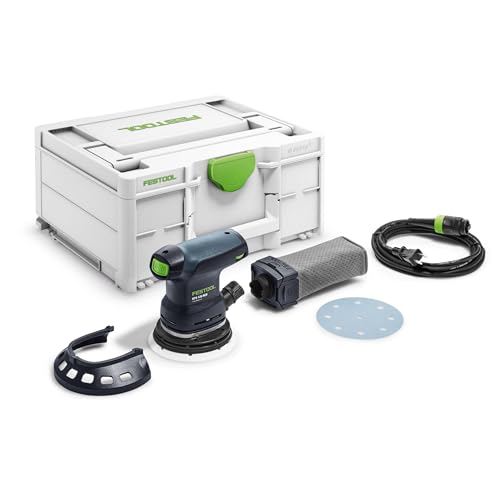
TL;DR: The Festool ETS 125 REQ‑Plus delivers a 2 mm sanding stroke, 6,000‑12,000 RPM speed and Jetstream dust extraction in a compact 2.4 lb tool, but its $299 price puts it at the premium end.
The standout spec is the 2.0 mm sanding stroke combined with a 125 mm (5 in) pad, letting you achieve superfine finishes without noticeable swirl. A step‑less variable speed range of 6,000‑12,000 RPM and the Jetstream dust‑extraction design keep the work surface clean, while the Vibration‑Stop (VS) balancing system reduces hand fatigue during long sessions.
Compared with the other sanders in this roundup, the ETS 125 is heavier than the battery‑powered Bosch GEX18V‑5N (2.4 lb) and the DEWALT 20V MAX model (2.0 lb), yet lighter than the corded Bosch GET65‑5N (5.3 lb). Its overall length of 39.6 cm exceeds the compact Ryobi One+ (4.0 in) and Porter‑Cable (202.2 mm) units, giving it a more substantial feel while still fitting in tighter workspaces.
Professional reviewers repeatedly praise the 2 mm stroke for delivering “exceptional fine and superfine finishes” and note that the pad brake stops rotation instantly, preventing gouges. Users also highlight the low‑vibration feel and the efficiency of the Jetstream dust system. The main trade‑offs mentioned are the corded power source, which limits mobility, and a maximum speed that may feel modest for aggressive stock removal.
The sander draws 250 W from a 120 VAC supply and comes with a 4 m cable, giving you plenty of reach on the bench. Included accessories such as the StickFix soft backing pad, protector edge guard, long‑life dust bag, and a Systainer case add value for detail‑oriented woodworkers.
Pros
Cons
Best for: Buyers willing to invest in a proven, high‑quality option — the Festool ETS 125 REQ‑Plus offers Dust Extraction Connection Diameter: 27 mm
Avoid if: You're shopping on a tight budget — it's priced at $299.00
TL;DR: The Ryobi ONE+ 5‑inch Random Orbit Sander delivers cordless convenience, a 5‑in. pad and 10,000 OPM speed in a lightweight 2.7 lb package, but its single‑speed brushed motor limits aggressive sanding.
Ryobi’s cordless sander runs on the 18 V ONE+ platform and spins at a no‑load speed of 10,000 OPM, while the 5 in. pad size lets you cover typical DIY projects quickly. The brushed motor, fixed‑speed design keeps the tool simple, and the rubberized pommel gives a secure grip for smooth, swirl‑free finishes.
At 3.3 lb with a 4.0 Ah battery, it’s slightly lighter than the SKIL SR211601, which weighs about 3.44 lb, and comparable to the Workpro model that also sits around 2.7 lb bare. However, unlike Workpro’s six‑speed range, Ryobi sticks to a single speed, placing it in the middle of the lineup where variable‑speed competitors offer more flexibility.
Everyday users highlight the tool’s easy handling and the 40% vibration reduction compared with earlier Ryobi versions. Reviewers appreciate the quick hook‑and‑loop pad changes and the reliable operation when paired with a vacuum hose. Common complaints focus on the lack of an onboard LED, the reliance on an external vacuum for dust collection, and the modest material‑removal rate that makes it less suited for heavy‑duty stock removal.
Technically, the sander features a brushed motor, a fixed 10,000 OPM speed, and a 2.38 mm orbit diameter that together produce a swirl‑free finish on wood and similar surfaces. The handle width of just under 3 in. and a compact 6 in. height keep the tool balanced in one‑handed use, while the three‑year warranty adds confidence for Ryobi ecosystem owners.
Pros
Cons
Best for: Most users looking for a well‑reviewed, reliable mainstream option — the Ryobi One+ 5‑Inch Random Orbit Sander offers Pad Size: 5 in. diameter
TL;DR: The Bosch GEX18V-5N is an 18 V cordless random‑orbit sander with a brushless motor, 6,000‑10,000 OPM variable speed, 5‑inch pad and a lightweight 2.4 lb design for professional‑grade sanding at a premium price.
What really stands out is the brushless 18 V motor paired with a 6,000‑10,000 OPM speed range and soft‑start technology, giving you corded‑like material removal while staying cordless. The variable speed control lets you dial in the right RPM for delicate finishes or aggressive stock removal, and the 5‑inch pad matches the industry standard for most sanding jobs.
At 2.4 lb, the Bosch sander is lighter than the Makita BO5041K (3.09 lb) and the SKIL SR211601 (3.44 lb), yet only a shade lighter than the Ryobi One+ (2.7 lb) and Workpro (2.7 lb). Its speed range sits between the DEWALT 20V MAX (8,000‑12,000 OPM) and the higher‑end Workpro (7,000‑14,000 OPM), offering a balanced band that suits both hobbyists and pros. All models in the round‑up share the common 5‑inch pad size, so you won’t need new discs when switching tools.
Reviewers praise the brushless motor for delivering “cord‑like stock removal” and note that the palm‑grip design, combined with vibration‑dampening technology, reduces fatigue during long sanding sessions. The built‑in dust bag or optional vacuum connection keeps the work area tidy, a point highlighted by both professionals and DIY users. The main trade‑off is that the tool is sold bare, so you must already own an 18 V Bosch battery or purchase one separately.
Pros
Cons
Best for: Buyers willing to invest in a proven, high‑quality option — the Bosch GEX18V-5N offers Pad Size: 5 inches
Avoid if: You need advanced features or professional‑grade performance
TL;DR: The Workpro 5‑inch Random Orbit Sander packs a 2.5 Amp motor, 6 variable speeds from 7,000‑14,000 OPM, and a built‑in dust canister into a lightweight 2.7‑lb body for solid DIY sanding at a budget price.
What really stands out is the 6‑speed variable control that spans 7,000 to 14,000 OPM, driven by a 2.5 Amp motor on a 120 V corded line. The 5‑inch sanding disc (125 mm) and 2 mm orbit diameter deliver smooth, swirl‑free finishes, while the hook‑and‑loop pad lets you swap the 15 included sandpapers (three sheets each of P60, P80, P120, P180, P240) in seconds.
Compared with the other eleven sanders in this roundup, the Workpro is lighter than the SKIL SR211601 (3.44 lb) and the Dekopro model (about 3.66 lb), yet it matches the Ryobi One+ at 2.7 lb—though Ryobi is cordless and carries a higher price tag. The Hychika unit sits at a similar price point but tops out at 13,000 RPM, giving the Workpro a speed advantage. The DEWALT 20V MAX is even lighter at 2.0 lb, but its premium cost places it in a different tier.
Reviewers consistently praise the variable‑speed range for handling both aggressive material removal and fine finishing. The hook‑and‑loop system is highlighted as “quick and hassle‑free,” and the built‑in dust canister earns marks for keeping workspaces cleaner. A few users note that dust can escape if the canister isn’t attached to a vacuum, and the tiny Phillips screws on the accessories sometimes require a miniature screwdriver.
From a technical standpoint, the 2 mm orbit provides the random motion that minimizes swirl marks, while the 60 Hz frequency and 2.5 Amp motor ensure steady power delivery. The on/off switch is straightforward, and the corded design eliminates concerns about battery runtime, making it a reliable choice for continuous projects.
Pros
Cons
Best for: Budget‑conscious buyers seeking a reliable entry‑level option — the Workpro Random Orbit Sander offers Speed Range: 7000 to 14000 OPM
Avoid if: You want the best value‑per‑dollar in its price range
TL;DR: The Dekopro Random Orbital Sander packs a 14,000 RPM motor, six speed settings and 16 sandpaper sheets into a lightweight, $26.99 tool that’s ideal for budget‑friendly DIY sanding.
This sander’s standout spec is its 14,000 RPM no‑load speed paired with a 300 W motor, giving you plenty of power for rough wood removal while still staying compact at just 20 mm (0.79 in) in height, length and width. The six‑position speed dial lets you dial back to a gentle finish, and the rubber‑grip handle keeps fatigue low during longer sessions.
Compared with the other eleven models, the Dekopro sits near the low‑end of the price spectrum, making it cheaper than the SKIL SR211601 and Ryobi One+ but a bit pricier than the Avid Power and Hychika units. Its 14,000 RPM rating outpaces the Avid Power’s 12,000 RPM and Hychika’s 13,000 RPM, while its weight of roughly 3.66 lb is heavier than the Workpro’s 2.7 lb body. The tool also offers more included sandpaper (16 pieces) than the Avid Power (12 pieces) and Hychika (12 pieces).
Professional reviewers praise the strong hook‑and‑loop backing that keeps sandpaper from slipping, and users consistently mention the detachable plastic dust box as a convenient way to keep workspaces tidy. However, several reviewers note that the plastic dust collector can struggle in very dusty jobs, and the lack of a vacuum port means it isn’t suited for high‑volume dust extraction. The variable‑speed dial and balanced counterweight design are also highlighted as helpful for smooth, vibration‑free operation.
Pros
Cons
Best for: Budget-conscious buyers seeking a reliable entry-level option — the Dekopro Random Orbital Sander offers Included Sandpapers: 16 pieces
Avoid if: You need heavy‑duty professional performance or high‑volume dust extraction via a vacuum system
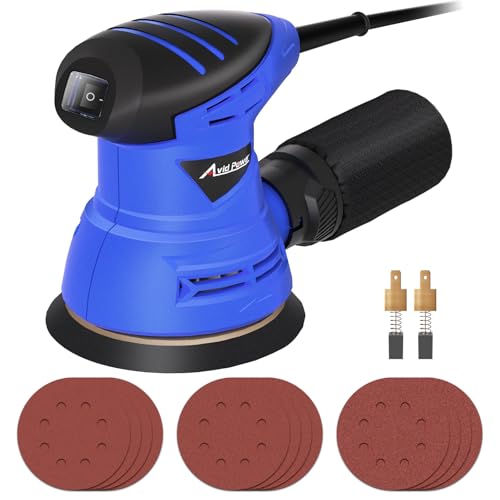
TL;DR: The Avid Power 5‑inch Orbital Sander delivers a steady 12,000 RPM with a 2.0 A motor, low vibration and a dust‑bag, all for $29.99, making it a solid entry‑level choice for DIY projects.
What sets this sander apart is its fixed 12,000 RPM speed driven by a 2.0 A motor, paired with a 5‑inch sanding disc. The tool comes with 12 pieces of sandpaper (grits 80, 100, 120), so you can start sanding wood, paint or metal right out of the box. Its low‑profile design and texturized rubber grip help keep vibration low, which reviewers say makes it comfortable for longer sessions.
In the 12‑item roundup, the Avid Power model lands at the budget end. It’s priced lower than the Hychika and the DEWALT cordless options, while offering fewer adjustable features. For example, Hychika provides six variable speeds up to 13,000 RPM and a 3.8 A motor, whereas Avid Power stays at a single 12,000 RPM setting with a 2.0 A motor. Dekopro pushes the speed to 14,000 RPM and adds six speed settings, but its price sits closer to the mid‑range. The SKIL SR211601 includes a built‑in dust box, yet the Avid Power’s dust‑proof ON/OFF switch and included collection bag keep the workspace tidy without extra accessories.
User feedback highlights the steady motor and low vibration as major positives, especially for beginners who appreciate a tool that “just works.” However, several reviewers note the lack of variable speed as a limitation when working with delicate finishes. The sander’s design also makes it unsuitable for sanding vertical surfaces such as walls, a point that professional reviewers flag as a design constraint.
Pros
Cons
Best for: Budget‑conscious buyers seeking a reliable entry‑level option — the Avid Power 5 Inch Orbital Sander offers Sandpaper Included: 12 pcs
Avoid if: you need variable speed control or must sand vertical surfaces
Breakdown
SKIL SR211601
Pros
Makita BO5041K
Pros
Hychika Random Orbital Sander
Pros
Cons
Avid Power 5 Inch Orbital Sander
Pros
Cons
Based on scoring data and product specs
Personalized picks
Best Overall Pick
SKIL SR211601
Best Mid-Range PickBest for: Most users looking for a well-reviewed, reliable mainstream option — the SKIL SR211601 offers Included Dust Box: Yes
Makita BO5041K
Best for: Buyers willing to invest in a proven, high-quality option — the Makita BO5041K offers Pad Size: 123.8 mm (4-7/8")
$144.00+$107.00 vs winner
Skip Workpro Random Orbit Sander if…
You want the best value-per-dollar in its price range
Winner – SKIL SR211601. This compact, ergonomic sander packs a 5‑in pad, a cyclonic X‑Flow dust collector and a dust‑sealed on/off switch, so dust stays out of your work area. It delivers a 2.7 mm orbit at a variable speed that tops out at 13,000 RPM, driven by a 2.8 A motor on a 120 V corded line, and it weighs just 1.56 kg. Users have rewarded it with a 4.6‑star rating from 7,156 reviews, and it even ships with a transparent dust box and three sanding sheets.
Runner‑up – Makita BO5041K. If you need a tool that handles longer, tougher sanding jobs, the Makita offers an adjustable front handle, an ergonomic rubberized palm grip and a large two‑finger trigger with lock‑on. Its 5‑in pad uses an 8‑hole hook‑and‑loop system, and the variable speed ranges from 4,000 to 12,000 OPM with a 3.0 A motor. Oversized sealed ball bearings and a through‑the‑pad dust port keep performance steady, and the unit weighs about 1.40 kg. It’s priced at $129.00.
Other tiers to consider:
Pick the SKIL SR211601 today and enjoy professional‑grade sanding without paying premium prices.
It packs a 2.8 A motor that spins up to 13,000 RPM and offers variable speed control, letting you match the cut rate to the job. The cyclonic dust‑collection system and dust‑sealed switch keep the workspace cleaner, while its 1.56 kg weight and 5‑in pad give solid handling.
No reviews yet — be the first to share your experience.
Please sign in to leave a review