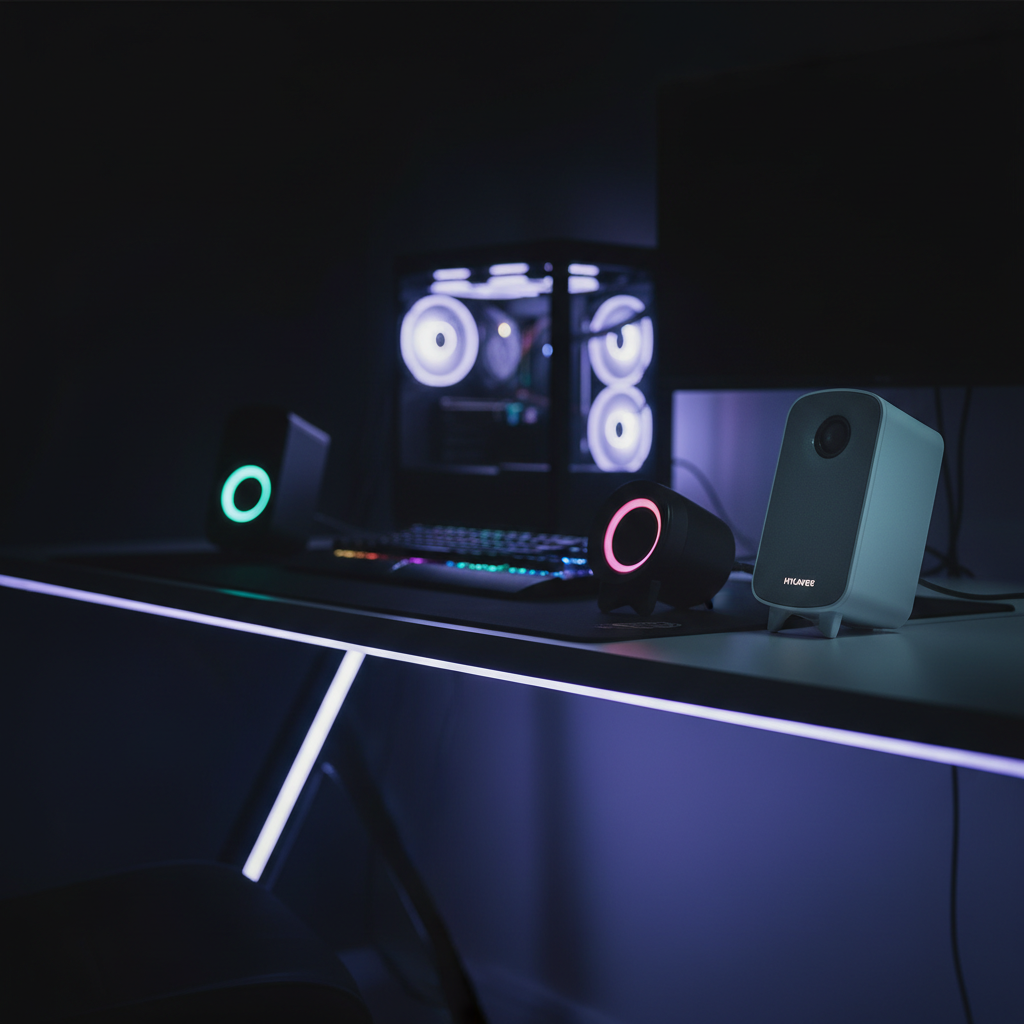
Choosing the right RGB‑LED computer speakers can feel overwhelming, especially when you’ve got 15 models to sort through. Our roundup spans everything from true‑budget picks—like the Redragon GS520 at $25.83 and the Nylavee SK400 at $35.99—to premium powerhouses such as the SteelSeries Arena 9, which tops out at $543.99. The price‑tier map groups the four budget options, two mid‑range choices, and four premium systems, leaving a handful of niche models in between.
If you sit at a desk and want balanced sound with a splash of color, the Edifier G2000 delivers 12 RGB preset effects, a 70 mm driver and a 4.6‑star rating from over 3,300 reviewers, all for $99.99. The Creative Pebble X sits nearby at $94.99, carries a 4.4‑star rating and offers a 45° driver angle plus Bluetooth range of 10 m. For those willing to stretch the budget, the SteelSeries Arena 7 provides a 6.5‑inch subwoofer and 150 W RMS power, while the Edifier G2000 PRO White adds 7.1 virtual surround and 96 dB SNR for $199.99.
Below we break down each model’s strengths, lighting options and connectivity so you can match the speakers to your setup without guessing.
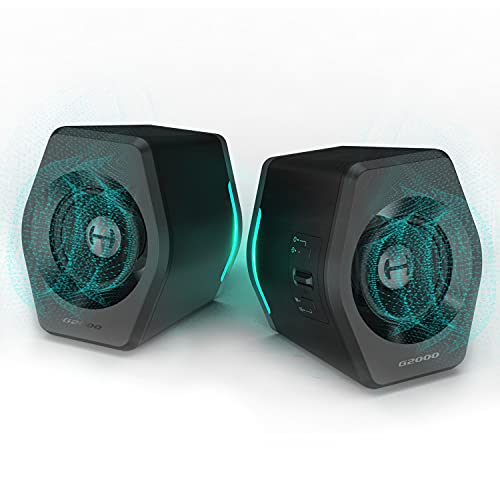
Edifier G2000
70 mm drivers deliver full‑range sound, earning it the top mid‑range spot.
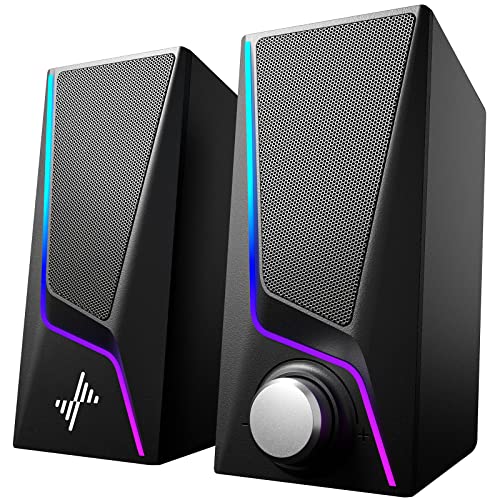
Nylavee SK400
Ideal for budget‑conscious gamers or dorm rooms, the SK400 comes in at $35.99—about $64 cheaper than the Edifier G2000.

SteelSeries Arena 9
With a 100 dB maximum SPL, the Arena 9 delivers stadium‑level loudness that the Edifier G2000 and Nylavee SK400 can’t reach, appealing to true audiophiles.
Also considered
Score Analysis
Key score advantages vs. runner-up (Nylavee SK400)
Price Range
Edifier G2000
$99.99
Nylavee SK400
$35.99
SteelSeries Arena 9
$543.99

Creative Pebble SE
$26.59

Creative Pebble X Plus
$119.99
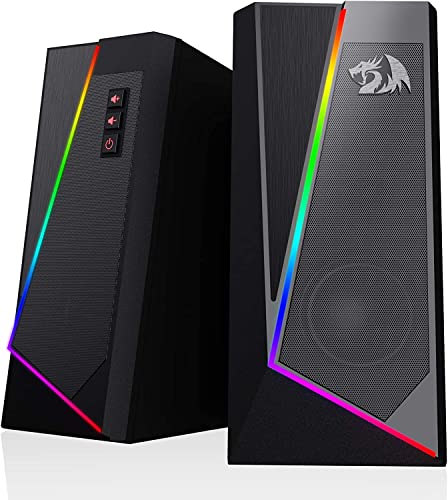
Redragon GS520
$25.82

SteelSeries Arena 7
$299.99
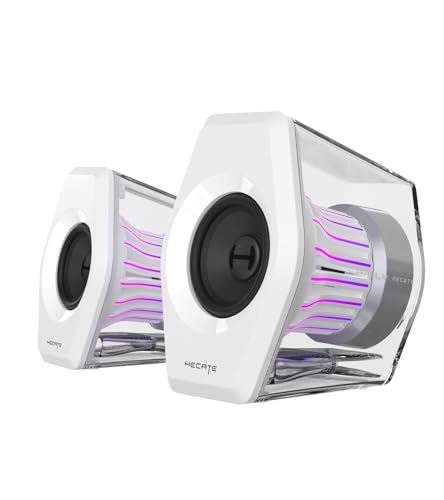
Edifier G2000 PRO White
$199.99

Creative Pebble X
$94.99

Creative Pebble Pro
$64.99

Edifier G1000 II
$53.99

Soulion R50
$17.43

Edifier MG300
$49.99

Razer Nommo V2
$299.99

Uakinat E-1065
$10.99
Spec Comparison
TL;DR: The Edifier G2000 packs a 70 mm driver, 16 W RMS output and 12 RGB presets into a 4.2108292042‑lb desktop pair that scores 4.6/5 stars from over 3 000 reviewers.
The standout spec is the 70 mm full‑range driver paired with 16 W RMS (32 W peak) power, delivering a surprisingly full soundstage for a speaker that weighs just 4.2108292042 pounds. An integrated USB sound card adds a clean digital input, and the 10 m Bluetooth range lets you stream from most rooms without a dongle.
Compared with peers, the G2000 is a bit heavier than the Creative Pebble X (3.41 pounds) but makes up for it with a much longer inter‑speaker cable—180 cm versus Pebble X’s 1.2 m. It also offers more RGB flexibility, featuring 12 preset lighting effects versus the fewer options listed for other budget models.
User sentiment is overwhelmingly positive: reviewers praise the balanced audio and “strong bass for its size,” while professional outlets note the solid build quality and subtle, non‑blinding lighting. The single‑button interface controls both RGB cycles and EQ modes (Music, Game, Movie), which some users find handy but also a bit limiting because custom EQ isn’t available.
Pros
Cons
Best for: Gamers, students, apartment dwellers and home‑office users who want a well‑reviewed desktop speaker with RGB flair.
Avoid if: You need a detachable cable, ultra‑compact footprint, or a studio‑grade, fully customizable EQ.
TL;DR: The Nylavee SK400 delivers 28 W of USB‑powered 2.1 sound with a 3‑inch woofer, 6 RGB lighting modes, and it’s a solid 4.4‑star rating for just $35.99.
The standout spec features a 28 W total output paired with a 3‑inch (76 mm) dynamic woofer, which gives the SK400 noticeably punchier bass than many entry‑level 2‑inch drivers found in rivals such as the Creative Pebble SE and Redragon GS520. Its 73 dB signal‑to‑noise ratio and 4 Ohm impedance keep the audio clear enough for gaming or video calls, while the six customizable lighting modes add a gamer‑friendly glow.
Compared with the other 14 speakers in this roundup, the SK400 sits a touch heavier at 1.94 pounds versus the 1.9‑pound Creative Pebble SE and the 1.8‑pound Redragon GS520. Its driver is larger than the 2‑inch units on those models and also bigger than the 2.5‑inch driver on the Edifier G1000 II, giving it a clear advantage in low‑frequency response. However, its 73 dB SNR trails the Creative Pebble SE’s 86 dB, so the sound isn’t as pristine in very quiet passages. On the lighting front, the SK400’s six modes outshine the Soulion R50’s four‑mode setup.
Users repeatedly praise the SK400 for “clear, bass‑rich sound” and “easy plug‑and‑play USB setup,” noting that the included Type‑C adapter and 3.5 mm aux cable make connection straightforward. Professional reviewers echo this, calling the audio “immersive” and the design “modern.” Common complaints focus on the lack of Bluetooth, which limits wireless flexibility, and the fact that volume can feel modest without a separate EQ tweak. The 18‑month warranty and sturdy ABS‑plus‑metal construction add confidence for budget‑focused shoppers.
Pros
Cons
Best for: Budget-conscious buyers seeking a reliable entry-level option
Avoid if: You want the best value‑per‑dollar in its price range
“Great sound for the price”
“Easy to set up”
TL;DR: The SteelSeries Arena 9 is a premium 5.1 gaming speaker set with 300 W total output, wireless rear speakers, 100 dB SPL and a 16.8‑million‑color RGB system, but it carries a $543.99 price tag.
This system packs a 300 W total output and a maximum SPL of 100 dB, giving you a room‑filling soundstage that most competitors in this roundup can’t match. The subwoofer’s 165.1 mm driver and the front tweeter’s 19.05 mm silk dome combine with a 69.85 mm woofer to cover the full 35–20,000 Hz frequency range. Bluetooth 4.2 connectivity, a monochrome OLED control pod with a touch‑sensitive rotating bezel, and 16.8 million RGB colors across four lighting zones round out the feature set.
At $543.99 the Arena 9 sits well above the price points of the SteelSeries Arena 7 and the Razer Nommo V2, and its 33.2 lb weight makes it noticeably heavier than the Edifier G2000 models. However, it offers more lighting zones and a ten‑band equalizer where many peers list fewer customization options. The wireless rear speakers also give it an edge in cable management compared with the fully wired competitors.
Reviewers consistently praise the immersive positional audio and the deep, down‑firing bass that the large subwoofer delivers. Reviewers highlight the OLED control pod for its intuitive tactile controls, and they laud the wireless rear speakers for decluttering a gaming desk. On the downside, users note that the RGB lighting only works on the front speakers and only when using the PC software, and the system lacks high‑resolution Bluetooth codecs such as aptX or LDAC. Professional reviewers also point out that the USB/Toslink configuration limits PS5 users to 2.1 audio, and the bulk can be a challenge for small setups.
Pros
Cons
Best for: Those prioritizing quality and willing to pay for premium performance
Avoid if: You're shopping on a tight budget — it's priced at $543.99
“The sound is bombastic and pleasing, with strong mids and highs ideal for gaming and music.”
“The system’s substantial speaker build and immersive soundstage really set it apart.”
TL;DR: The Creative Pebble SE offers 2‑inch angled drivers, 4.4 W RMS power, and 7 RGB lighting modes at $26.59, delivering crisp mids and clear vocals in a compact, budget‑friendly design.
The Pebble SE’s 45° upward‑tilted 2″ dynamic drivers deliver stereo sound with a signal‑to‑noise ratio of 86 dB, while the 4.4 W RMS rating provides enough volume for a typical desk setup. Its passive radiators help compensate for the small driver size, and the unit houses seven preset RGB lighting modes; you can cycle them via the touch‑sensitive volume knob. Physically, the speakers sit at 125 mm depth and height and 240 mm width, weighing a total of 1.9 pounds (860 g).
Compared with the other 14 speakers in this roundup, the Pebble SE is slightly heavier than the Redragon GS520 (1.8 pounds) and Soulion R50 (about 1.76 pounds) but lighter than the Edifier MG300 (over 2.5 pounds). Its 2″ driver matches Redragon’s driver size, while the Nylavee SK400 uses a larger 3‑inch woofer. Unlike several peers, the Pebble SE does not include Bluetooth or a detachable power cable, so its connectivity's limited to a USB‑C power line and a 3.5 mm AUX input.
Users consistently praise the Pebble SE for its clear mids, articulate vocals, and eye‑catching RGB lighting, noting it feels like a noticeable upgrade over laptop or monitor speakers. Professional reviewers highlight the 45° driver angle as a key factor in its surprisingly clear audio for the price. Common complaints focus on the permanent cables that add desktop clutter and the modest bass depth that can become distorted at maximum volume.
Beyond the basics, the speakers draw power solely from a USB‑C (5 V, 1 A) connection, eliminating the need for a separate power adapter. The 3.5 mm AUX‑in cable (1.2 m) and interconnect cable (1.5 m) allow direct connection to desktops, laptops, smartphones, tablets, or MP3 players, making the Pebble SE a versatile, plug‑and‑play option for small workspaces.
Pros
Cons
Best for: Buyers in the budget price range seeking the best quality at that price point
Avoid if: You want the best value‑per‑dollar in its price range
“Sound quality is crisp with decent bass for its size.”
“The RGB lighting looks great on my desk.”
TL;DR: The Creative Pebble X Plus delivers 8 W RMS (16 W peak) output, Bluetooth 5.3, and 16.8 million‑color RGB lighting, but its dual‑cable setup and modest bass may limit power‑users.
The standout feature is its RGB lighting system, which can display up to 16.8 million colors across six preset modes. Coupled with a High‑Gain Mode that pushes 8 W RMS (requiring a 5 V 2 A USB adapter), the speakers promise a noticeable boost in volume and presence compared with built‑in laptop audio.
When placed alongside the other 14 entries, the Pebble X Plus sits in a higher price tier than many entry‑level options such as the Edifier G2000, yet it offers a richer color palette despite having fewer preset slots (six versus the G2000’s 12). Its Bluetooth 5.3 connectivity is on par with the newer 5.4 versions found in the Edifier G1000 II and G2000 PRO, ensuring low‑latency wireless streaming.
Reviewers consistently praise the noticeable sound lift and the compact 2.1 layout, noting that the 45° angled satellite drivers help spread audio across the listening area. However, users also flag the need for both a USB‑A power connection and a separate 3.5 mm audio jack, which can be cumbersome on thin laptops, and they mention the short, non‑detachable cables as a limitation. The subwoofer’s output is respectable for its size, but the bass depth is modest, falling short of what audiophiles or serious gamers might expect.
From a technical standpoint, the system delivers a 2.1 channel configuration with a total RMS output of 8 W and a peak rating of 16 W. The signal‑to‑noise ratio sits at ≥ 75 dB, and the frequency response spans 50 Hz – 20 kHz, which is adequate for everyday media consumption. The inclusion of USB‑C digital audio alongside traditional 3.5 mm input adds flexibility for modern setups.
Pros
Cons
Best for: Buyers willing to invest in a proven, high‑quality option
Avoid if: You have limited desk space or need portability
“Sound quality is crisp with decent bass for its size.”
“The RGB lighting looks great on my desk.”
TL;DR: The Redragon GS520 packs a 2‑inch driver, 6‑mode RGB lighting and USB‑powered convenience into a compact 1.8‑lb desktop speaker set for under $30.
At the heart of the GS520 is a 2 in dynamic driver that handles frequencies up to 20 kHz, delivering clear mids and highs that many users praise for gaming and music. The speakers draw power from a 5 V USB source, outputting 3 W per driver for a modest total of 10 W, and they sit on a tabletop footprint of 88.9 mm depth by 101.6 mm width.
Compared with its peers, the GS520's a shade lighter than the Creative Pebble SE (1.8 lb vs 1.9 lb) and noticeably heavier than the ultra‑light Uakinat E‑1065 (0.97 lb). It offers more RGB options than the Soulion R50, which provides four lighting modes versus the GS520’s six. Its 800 mm inter‑speaker cable is shorter than the Soulion’s 1.5 m exposed cable, keeping your desk tidier.
Professional reviewers note the solid build quality and the clarity of mids and highs, while everyday users love the plug‑and‑play USB power and the touch‑controlled lighting. Common complaints focus on the weak bass response, the absence of Bluetooth, and volume buttons that feel a bit stiff. Some users also report occasional hiccups with the RGB staying on the selected color.
Pros
Cons
Best for: Entry-level buyers or those on a tight budget
Avoid if: You need deep bass, wireless/Bluetooth connectivity, or a fully reliable RGB lighting system
“Sounded better than expected”
“RGB light won’t stay on selected color”
TL;DR: The SteelSeries Arena 7 delivers 150 W RMS power, a 6.5‑inch subwoofer and 4‑zone PrismSync RGB, but its $299 price and large footprint make it a premium‑only choice.
At the heart of the Arena 7 is a 150 watts RMS amplifier paired with a 6.5‑inch down‑firing subwoofer, giving the system enough punch for gaming explosions and movie booms. The satellites use a 2‑way design with a 3‑inch organic‑fiber woofer and a 0.75‑inch silk‑dome tweeter, while the frequency response spans 35 Hz to 20 kHz. Connectivity is broad: Bluetooth 5.0 (5 m range), 3.5 mm analog input, optical TOSLINK, USB‑C and USB‑A, plus a headphone jack.
Its price matches the Razer Nommo V2, listed at $299, but the Arena 7’s Bluetooth range of 5 m is shorter than the Nommo V2’s 10 m. It also weighs 23.95 lb, noticeably heavier than budget options like the Edifier G2000 that tip the scales at around 4.2 lb. The larger subwoofer and overall mass make the Arena 7 a more substantial desk presence than many of the other 14 speakers in this roundup.
Reviewers praise the system’s balanced mids and crisp highs, noting that the deep, punchy bass doesn’t drown out dialogue—a point professional reviewers highlight as a strength for both games and movies. The PrismSync RGB lighting, capable of 16.8 million colors across four zones, reacts to on‑screen action and music, adding a visual flair that users love. However, the lack of official Xbox Series X/S support has drawn criticism, and the full suite of lighting and EQ controls sits behind the SteelSeries Sonar software, which some find adds a learning curve.
Additional technical touches include a 10‑band parametric equalizer accessible via Sonar, a 2 m speaker‑to‑subwoofer cable and a 1.98 m power cable, and an onboard volume dial on each satellite. These details give you fine‑tuning options without reaching for external gear.
Pros
Cons
Best for: PC and PlayStation gamers, streamers, and multimedia enthusiasts who want premium sound and immersive lighting.
Avoid if: You’re on a tight budget, own an Xbox Series X/S, or have limited desk space—the $299 price and large footprint may not fit your needs.
“The sound is bombastic and pleasing, with strong mids and highs ideal for gaming and music.”
“The system’s substantial speaker build and immersive soundstage really set it apart.”
TL;DR: The Edifier G2000 PRO White delivers 32 W RMS sound, 7.1 virtual surround, and 270° RGB lighting, but its $199.99 price and bright LEDs may deter budget‑focused or low‑volume listeners.
The standout spec is the 3‑inch full‑range driver paired with 32 W RMS power and a 96 dB signal‑to‑noise ratio, giving the system enough punch for immersive gaming and movies. It also packs 7.1 virtual surround channels and a TempoFlow dynamic sync engine that drives 20 LED strips and 100 RGB beads for a 270° lighting effect.
Compared with its peers, the G2000 PRO is heavier than the lightweight Creative Pebble X Plus (satellite weights 300 g – 340 g) but far lighter than the SteelSeries Arena 7 at 23.95 lb. Its RMS output (32 W) dwarfs the 8 W RMS of the Pebble X Plus and the 10 W total of the Creative Pebble Pro, yet it sits below the 150 W RMS of the Arena 7 and the 65 W of Razer Nommo V2. The driver size matches Razer’s 3‑inch drivers but is larger than the 70 mm driver of the standard Edifier G2000. Bluetooth 5.4 gives it a newer wireless stack than SteelSeries’ 5.0 and Razer’s 5.3, while the 33 ft range matches the Creative Pebble X’s advertised 33 ft range.
Users consistently praise the powerful high‑volume audio and the eye‑catching RGB lighting, noting that the lighting syncs well with on‑screen action. However, many mention that the sound can become muddy at low‑to‑medium volumes, and the Windows‑only HECATE software locks the EQ settings, limiting fine‑tuning. You can't fully turn off the RGB, which some find distracting during darker gaming sessions.
Additional technical notes include anti‑slip MDF drivers with aluminum caps, an inverted‑tube bass‑reflex port for stronger bass, and it passed a durability test of 500+ hours in extreme temperatures. Connectivity covers Bluetooth 5.4, USB‑C, USB‑A, a 3.5 mm AUX input, and a headphone output, making it versatile for PC, consoles, and mobile devices.
Pros
Cons
Best for: Those prioritizing quality and willing to pay for premium performance
Avoid if: You're shopping on a tight budget — it's priced at $199.99
TL;DR: The Creative Pebble X delivers 30 W RMS stereo sound, a 45° driver tilt and 16.8 million‑color RGB lighting in a compact 3.41‑lb desktop package for $94.99.
The standout spec is the 45° driver angle paired with a BassFlex passive radiator, which Creative says it helps direct sound toward your ears and adds extra low‑frequency punch despite the modest 69.85 mm drivers. Power comes through USB‑C, offering up to 15 W RMS (30 W peak) from a standard port, and jumps to 30 W RMS (60 W peak) when you connect a 30 W+ USB‑PD adapter.
At 3.41 pounds, the Pebble X is lighter than the Edifier G2000 (4.21 pounds) but heavier than the Creative Pebble Pro (about 1.72 pounds). Its driver size of roughly 70 mm sits almost exactly alongside the G2000’s 70 mm drivers, while both share a 10 m Bluetooth range, meaning you won’t lose connectivity compared with many peers. The speaker’s depth of 142.90 mm and height of 149.86 mm keep it low‑profile on a desk, yet it still occupies more space than the ultra‑compact Edifier MG300.
Reviewers consistently praise the clear, powerful audio and the way the RGB button cycles six preset lighting modes, adding a visual flair that matches modern gaming rigs. Professional reviewers note the elegant matte‑black design and the front‑mounted rotary volume knob for quick adjustments. However, the brightest lighting and full 30 W RMS output both require an external USB‑PD adapter, which isn’t included in the box.
The Pebble X supports 3.5 mm AUX, headset and microphone inputs, and a USB‑C audio port, giving you plenty of ways to connect a PC, console or mobile device. Bluetooth 5.3 with SBC codec handles wireless streams, though the 10 m range can shrink around obstacles. With 16.8 million RGB colors and six lighting presets, it’s a solid aesthetic upgrade for any desktop.
Pros
Cons
Best for: Most users seeking a balanced, mainstream option
Avoid if: You're shopping on a tight budget — it's priced at $94.99
“Sound quality is crisp with decent bass for its size.”
“The RGB lighting looks great on my desk.”
TL;DR: The Creative Pebble Pro delivers surprisingly rich stereo sound with 2.25‑inch drivers, 30 W RMS output, and customizable RGB lighting at $66.49, making it a solid mid‑range desktop speaker for small spaces.
The standout feature is its USB‑C Power‑Delivery mode, which pushes up to 60 W peak and 30 W RMS total (15 W RMS per satellite). Coupled with the 2.25 in drivers and BassFlex technology, the system claims a signal‑to‑noise ratio of ≥75 dB and a frequency response of 80–20,000 Hz.
Compared with peers, the Pebble Pro is lighter than the Edifier G1000 II (1.7196056436 pounds vs 1.763698096 pounds) and slimmer than the Creative Pebble X (which weighs 3.41 pounds and uses a larger 69.85 mm driver). Its SNR of ≥75 dB sits just below the Edifier G1000 II’s ≥80 dB, while its driver size is modestly smaller than the G1000 II’s 2.5 in unit.
Users consistently praise the clear, balanced audio and the wide soundstage that the angled drivers create. Professional reviewers note the “strong stereo separation” and “palpable bass” thanks to the upward‑tilted design. On the downside, the Bluetooth connection supports only the SBC codec, and the long, non‑detachable inter‑speaker cable hides poorly. In practice, the 10 m Bluetooth range is it's sufficient for most desk setups, and the RGB lighting adds a fun visual element, though some find it unnecessary on the green chassis.
Beyond the power specs, the Pebble Pro offers a 3.5 mm AUX‑in, headphone/headset output, microphone input, and a single USB‑C cable that handles both audio and power. The lighting can cycle, pulsate, stay on a single color, or be turned off, giving you control over the look of your workstation.
Pros
Cons
Best for: Students, remote workers, and gamers who want clear stereo sound and flexible connectivity without breaking the bank.
Avoid if: You have very limited desk space, need portable speakers, or require high‑resolution Bluetooth codecs and deep sub‑bass performance.
“Sound quality is crisp with decent bass for its size.”
“The RGB lighting looks great on my desk.”
TL;DR: The Edifier G1000 II packs 2.5‑inch drivers, Bluetooth 5.4 low‑latency (≤40 ms) and 9 RGB modes into a compact 1.76‑lb desktop pair for gamers and students who want balanced sound without a bulky setup.
What really stands out is the Bluetooth 5.4 module that promises latency of ≤40 ms, a useful figure for fast‑paced gaming, plus a top‑mounted button that cycles through nine dynamic lighting modes. Each speaker houses a 2.5 in (63.5 mm) full‑range driver, and the system can deliver up to 32 W peak power while staying under 4 W RMS total.
Weighing 1.763698096 lb, the G1000 II weighs less than the Edifier MG300 and the Nylavee SK400, yet is only a shade heavier than the Creative Pebble Pro. Its driver exceeds the 2.25‑in unit in the Pebble Pro and the 2‑in drivers in the Creative Pebble SE and Redragon GS520, though the SK400’s 3‑in woofer is bigger. Bluetooth 5.4 outpaces the unspecified versions found in most peers, giving it an edge for low‑latency connections.
Reviewers consistently praise the balanced mids and highs for a speaker of this size, noting the 16‑core high‑magnetic circuit keeps distortion low. The bass‑reflex enclosure adds a bit of low‑end punch, but many users still call the bass “thin” and say the speakers struggle to fill larger rooms. The RGB lighting draws frequent compliments, though a few buyers wish the color palette were more customizable. Professional reviewers also highlight the solid connectivity mix—Bluetooth, USB‑C power/audio, and a 1.5 m AUX cable.
Beyond the eye‑catching lights, the G1000 II offers a signal‑to‑noise ratio of ≥80 dB and an impedance of 3 Ω, which aligns with its modest 4 W RMS output. Input sensitivity sits at 900 mV ± 50 mV, and standby power draws only 0.337 W when Bluetooth is on. The speakers sit on anti‑slip pads, tilt up to 10°, and measure just under 10 in long, 5.55 in wide and 5.24 in tall, making them a tidy fit on most desks.
Pros
Cons
Best for: Gamers, students or remote workers with a modest desk who want balanced sound and customizable lighting without a bulky system.
Avoid if: You need deep bass, high volume for large rooms, or fully programmable RGB colors.
“surprisingly balanced sound for the size”
“loud enough for gaming while sitting close to my laptop”
TL;DR: The Soulion R50 is a $17.43 USB‑powered soundbar with dual 5 W drivers, Bluetooth 5.0+, and four RGB lighting modes, offering clear mids for budget‑focused desktop setups.
The R50’s most eye‑catching spec is its dual 5 W drivers delivering a maximum output of 10 Watts, paired with a 30° upward tilt that aims the sound directly at the listener. It also sports four customizable RGB lighting modes—Gradient, Breathing, Rhythm, and Monochrome—controlled by a dedicated light button.
At 1.7593 pounds, the R50 sits between the lighter Uakinat E‑1065 (0.97 pounds) and the heavier Redragon GS520 (1.8 pounds). Its 10 W peak output matches the Edifier MG300’s 10 W peak but falls short of the Nylavee SK400’s 28 W total output. The manufacturer lists Bluetooth range at 10 meters, matching the Redragon’s range but falling short of the Edifier MG300’s 30‑meter reach.
User feedback highlights the soundbar’s clear mids and plug‑and‑play setup across Windows, macOS, and mobile devices. Reviewers appreciate the sleek slanted design and the ability to switch lighting modes with a single press of the M key. Common complaints mention that the LEDs can be bright in dark rooms, the bass feels thin without a subwoofer, and occasional Bluetooth pairing hiccups.
Technical details include a frequency response up to 20 kHz, 50 Ω impedance, and a 30 dB signal‑to‑noise ratio. Connectivity options cover Bluetooth 5.0+, USB power (5 V), and a 3.5 mm AUX input, while the exposed cable measures 1.5 meters. The soundbar serves indoor tabletop use and comes with an 18‑month manufacturer warranty.
Pros
Cons
Best for: Shoppers on a tight budget who want the most for their money
Avoid if: You need deep bass, high power output, or large‑room coverage
“Perfect for office and study use”
“LEDs look amazing on my desk”
TL;DR: The Edifier MG300 delivers clear mids with dual 52 mm drivers, USB‑plug‑and‑play convenience, and six RGB lighting presets for $49.99, though bass depth and a detachable cable are lacking.
The MG300 packs two 52 mm full‑range drivers and a rated 5 W RMS output (2.5 W + 2.5 W) into a 1,160 g soundbar, while offering a Bluetooth 5.3 range of up to 30 m and six preset RGB effects that top‑mounted tactile buttons control.
Compared with its peers, the MG300 is heavier than the Edifier G1000 II (1.76 lb) and the Creative Pebble SE (1.9 lb), but its RMS power of 5 W tops the G1000 II’s 4 W and matches the Pebble SE’s 10 W total (5 W per satellite). Its driver size of 52 mm is smaller than the G1000 II’s 63.5 mm and the Creative Pebble Pro’s 57.15 mm, while its 85 dB signal‑to‑noise ratio exceeds the G1000 II’s ≥80 dB and the Creative Pebble Pro’s ≥75 dB. The Bluetooth version (5.3) is a step behind the G1000 II’s 5.4, and the MG300 lacks a 3.5 mm analog input that some rivals provide.
Professional reviewers praise the MG300’s clean mids and vocal clarity, noting the strong 30 m Bluetooth range as a practical advantage. Everyday users appreciate the easy USB‑plug‑and‑play setup and the vibrant lighting that adds a gaming vibe, but many mention thin bass and a non‑detachable USB‑A cable that’s prone to wear. The frequency response of 80 Hz – 20,000 Hz and an 85 dB SNR further explain the clear midrange performance.
Pros
Cons
Best for: Value-conscious buyers seeking quality at $49.99
Avoid if: You prioritize deep bass, need a detachable cable, or require a subwoofer‑level audio experience
“Perfect size for under my monitor—clean look and saves space.”
“RGB lights are fun and customizable—great for night gaming.”
TL;DR: The Razer Nommo V2 delivers 65 W RMS power, 98 dB SNR and THX Spatial Audio, wrapped in a hefty 2.1 system with vibrant Chroma RGB, but its premium $299.99 price and large size limit it to spacious gaming rigs.
The system’s 65 W RMS power output and 98 dB signal‑to‑noise ratio give it a clear, room‑filling soundstage, while the 5.5‑inch down‑firing subwoofer adds punchy low‑end that many compact speakers lack. THX Spatial Audio provides virtual 7.1 surround, and the rear‑projection Razer Chroma RGB lighting adds a visual flair that syncs with game action.
Compared with peers, the Nommo V2 costs more than most entry‑level options and weighs dramatically more than the SteelSeries Arena 7 (23.95 lb) and the Edifier G2000 series (around 3–4 lb). Its Bluetooth 5.3 and 10‑meter range outpace the SteelSeries 5.0 Bluetooth and 5‑meter range, and its 65 W RMS power sits between the modest 8 W RMS of the Creative Pebble X Plus and the 150 W RMS of the SteelSeries Arena 7. The 3‑inch satellite drivers match the Edifier G2000 PRO White’s driver size, but the Nommo’s subwoofer is slightly smaller than SteelSeries’ 6.5‑inch unit.
Reviewers consistently praise the crisp mids and highs, the deep bass from the 5.5‑inch subwoofer, and the immersive THX Spatial Audio for single‑player games and movies. Professional reviewers note the solid aluminum‑plastic construction and the deep customization via Razer Synapse. Common complaints focus on the lack of an auto‑power‑off feature, missing headphone jack, and the cable‑heavy setup that can clutter a desk. The total weight of 11800 g also means the system'll need a sturdy surface and ample floor space.
Pros
Cons
Best for: Those prioritizing quality and willing to pay for premium performance
Avoid if: You're on a tight budget or only need basic functionality
“The 5.5” subwoofer is described as “room‑thumping” and capable of delivering physical feedback.”
TL;DR: The Uakinat E-1065 delivers 6 W RMS stereo sound with ultra‑low 0.05 % distortion, adds vibrant RGB lighting, and stays under a pound, making it a solid budget pick for desk setups.
What really stands out is the 6 W RMS output (2 × 3 W) paired with a measured 0.05 % total harmonic distortion, which is unusually low for speakers in this price range. The sealed 2 in dynamic driver covers a frequency range of 60 Hz – 20 kHz, giving you clear highs and decent mids while keeping the cabinet compact at 93 mm tall, 217 mm long and 127 mm wide.
Compared with the other fourteen speakers in this roundup, the E‑1065 is the lightest option – at just 0.97 pounds it undercuts the Soulion R50 (≈1.76 lb), Redragon GS520 (≈1.8 lb), Creative Pebble SE (≈1.9 lb), Nylavee SK400 (≈1.94 lb), Edifier MG300 (≈2.56 lb) and Edifier G1000 II (≈1.76 lb). Its 1 m (39 in) audio/USB cable is shorter than Soulion’s 1.5 m lead, while being a bit longer than Redragon’s 800 mm inter‑speaker cable but shorter than its 1.22 m USB power cord. The 2 in driver matches Redragon and Creative Pebble, yet it’s smaller than Nylavee’s 3 in woofer and Edifier’s 2.5 in unit. In terms of power, the 6 W RMS exceeds the RMS figures listed for Edifier MG300 (5 W) and Edifier G1000 II (4 W), though Soulion advertises a higher peak of 10 W.
Users consistently praise the speakers for “surprising audio clarity and loudness” given the low price, and professional reviewers highlight the low 0.05 % THD and the balanced sealed enclosure as strong points. The built‑in RGB strip offers six to seven color modes with breathing and rainbow effects, adding a visual boost to gaming or movie nights. On the downside, several owners note that certain models don’t let you turn off the lighting, and many complain about the missing dedicated power or mute button. The plastic chassis feels budget‑oriented, and the bass response bottoms out at 60 Hz, which may leave bass‑heavy tracks feeling thin.
Pros
Cons
Best for: Entry-level buyers or those on a tight budget
Avoid if: You need powerful performance or professional‑grade features
Breakdown
Edifier G2000
Pros
Nylavee SK400
Pros
Cons
SteelSeries Arena 9
Cons
Creative Pebble SE
Pros
Cons
Based on scoring data and product specs
Personalized picks
Best Overall Pick
Edifier G2000
Best Mid-Range PickBest for: Most users looking for a well-reviewed, reliable mainstream option
Nylavee SK400
Best for: Budget-conscious buyers seeking a reliable entry-level option
$35.99-$64.00 vs winner
Skip Uakinat E-1065 if…
You need powerful performance or professional-grade features
Edifier’s G2000 takes the top spot thanks to a solid blend of power, connectivity and lighting. It pushes 32 W peak (16 W RMS) through a 70 mm dynamic driver and covers a 75 Hz–20 kHz frequency range, delivering clear mids and punchy lows. The built‑in USB sound card and Bluetooth 4.2 (10 m range) let you stream from laptops or phones without extra adapters, while the 12 RGB preset effects let you match any gaming rig. With a 4.6‑star rating from 3,393 reviewers, it also enjoys strong user approval.
The runner‑up, Nylavee’s SK400, shines for a compact 2.1 system that runs straight from a USB port. At $35.99 it offers 28 W total output, a 3‑inch (76 mm) subwoofer and six lighting modes that add a subtle glow to a desk setup. Its touch‑controlled lighting and volume knob make adjustments quick, and the included USB‑to‑Type‑C adapter means no extra power bricks. Weighing just 1.94 pounds, it’s easy to move around for small‑space gaming or home‑office use.
For those on a tighter budget, the Uakinat E‑1065 at $10.99 provides a basic RGB‑lit speaker pair that gets the job done without breaking the bank. If you’re willing to splurge, the SteelSeries Arena 9 at $543.99 delivers premium‑grade drivers, advanced DSP and a high‑end aesthetic for audiophiles and serious gamers.
Pick the Edifier G2000 today and enjoy powerful, feature‑rich sound with vibrant RGB that fits any mid‑range setup.
The Edifier G2000’s column‑shaped cabinet (231 mm tall × 211 mm wide × 139 mm deep) fits neatly beside a monitor, while the Creative Pebble SE’s compact orb design (125 mm tall × 240 mm wide × 125 mm deep) also saves space. Both are smaller than the Nylavee SK400’s combined satellite‑and‑subwoofer footprint, making them better choices for tight setups.
Please sign in to leave a review
No reviews yet. Be the first to review!
