💚 Best Value
Ilife V2
$75.98
Robot vacuums have moved from luxury gadgets to everyday helpers, and this roundup pits eight models against each other—from the $75.98 Ilife V2 up to the $399.99 Roborock Qrevo Series. Prices span from under $100 to just under $400, with ratings ranging between 3.9 and 4.4 stars. The Tikom Robot Vacuum Cleaner stands out with a $113.99 price tag, a 4.4‑star rating, 5000 Pa suction, and up to 150 minutes of runtime, offering more power and endurance than many higher‑priced rivals.
Our comparison covers three budget choices (Ilife V2, Ropvacnic Robot Vacuum Cleaner, Tikom), two mid‑range options (eufy 11S Max, Shark AV753 ION) and three premium picks (Lefant M210, Shark AI Ultra, Roborock Qrevo Series). We’ll look at suction strength, battery life, navigation, and control methods such as app, voice and remote. By the end you’ll see which robot fits your floor type, pet‑hair needs and smart‑home setup without breaking the bank.

Tikom Robot Vacuum
Its 150 minutes quiet‑mode battery life lets budget‑conscious users clean longer without interruptions.

Shark AV753 ION
Ideal for buyers who prioritize premium performance, the Shark AV753 ION costs $36 more than the Tikom, reflecting its higher‑end feature set.

Eufy 11S MAX
At just 72.5 mm tall, the eufy 11S Max slips under low furniture and its 100‑minute hardwood‑floor runtime targets homes where floor type matters, a niche the other two don’t emphasize.
Also considered
TL;DR: The eufy 11S Max retails for $139.99, offers 100‑minute runtime, a slim 72.5 mm profile and BoostIQ suction, but lacks Wi‑Fi or voice control, making it a solid mid‑range pick for quiet, pet‑friendly homes.
The standout feature is BoostIQ technology, which automatically ramps up suction within 1.5 seconds when the robot detects carpet. Combined with an anti‑scratch tempered glass‑top cover, the unit feels sturdy despite its compact 72.5 mm height, 324.8 mm length and 324.8 mm width. At 6.35 pounds, it balances heft and maneuverability, and the remote‑only control keeps operation straightforward.
Compared with the seven other models in this roundup, the eufy sits in the middle of the weight range: lighter than the Lefant M210’s 6.68 pounds and Shark AV753 ION’s 6.6 pounds, but heavier than Tikom’s 5.29 pounds. Its height of 72.5 mm is a touch taller than Lefant’s 71.1 mm and shorter than Shark’s 89.9 mm, while the 324.8 mm length outstretches Lefant’s 279.4 mm and is comparable to Shark’s 315 mm and Tikom’s 320 mm. Battery life of 100 minutes trails Shark’s 120‑minute run and Tikom’s 150‑minute run, yet still exceeds many entry‑level units.
Reviewers consistently praise the quiet operation and the robot’s ability to glide under low‑clearance furniture, noting that the 13‑inch cleaning path can feel narrow on larger rooms. Professional reviewers highlight the consistent cleaning across carpet and hard floors, crediting the infrared obstacle sensors and drop‑sensing technology for reliable navigation. Some users, however, point out that the extra suction boost doesn’t translate into a noticeable performance jump, and the lack of Wi‑Fi or voice‑assistant integration limits scheduling flexibility.
Pros
Cons
Best for: Most users seeking a balanced, mainstream option — the eufy 11S Max offers Battery Life: 100 minutes (hardwood floors)
Avoid if: You have a large home that needs extensive coverage, or you require Wi‑Fi or voice‑assistant integration
TL;DR: The Tikom G8000 Max delivers 5000 Pa suction, a 150‑minute quiet‑mode run time and a 76.2 mm ultra‑slim profile for just $113.99, making it a strong entry‑level robot vacuum‑mop.
The standout spec is its 5000 Pa suction power, which users and professional reviewers alike note as “above‑average for entry‑level robot vacuums.” Combined with a 450 ml dustbin and a 300 ml water tank, the unit can vacuum and mop in a single pass without frequent stops. Its ultra‑slim height of 76.2 mm (about 3 in) lets it slip under most sofas and beds, a frequent pain point for taller robots.
Compared with the seven other models in this roundup, the Tikom sits comfortably in the middle of the size spectrum: it’s taller than the eufy 11S Max (72.5 mm) but shorter than the Shark AI Ultra (353.1 mm), and its 5.29 lb weight is lighter than the eufy 11S Max (≈6.35 lb) and the Shark AI Ultra (≈15.25 lb). Its suction is a notch below the Ropvacnic’s 5200 Pa but exceeds the Ilife V2’s unspecified level and the Shark AV753 ION’s unspecified suction, giving it a solid performance edge without the premium price tag of the Roborock Qrevo Series, which boasts 8000 Pa.
Consumer sentiment highlights the robot’s quiet operation and long battery life—150 minutes in quiet mode lets it cover larger apartments without needing a mid‑run recharge. Professional reviewers praise the same runtime and the low noise level, calling it “quieter than typical robot vacuums.” However, the same reviewers point out the basic gyroscope‑only navigation, noting that it lacks the precise mapping found in higher‑end models. Users also mention the inconvenience of manually emptying the dustbin after each cycle, as the unit does not include a self‑emptying dock.
Technical details round out the picture: anti‑collision and anti‑fall sensors help avoid bumps and stairs, while the app, remote, voice and button controls give flexibility in how you start or schedule cleanings. The fixed single mop pad works well on hard floors, and the robot’s ability to switch between Spot, Edge, Zig‑zag and Manual modes adds versatility for targeted cleaning.
Pros
Cons
Best for: Budget-conscious buyers seeking a reliable entry-level option — the Tikom Robot Vacuum Cleaner offers Battery Life: 150 minutes (quiet mode)
Avoid if: You want the best value-per-dollar in its price range
“10/10”
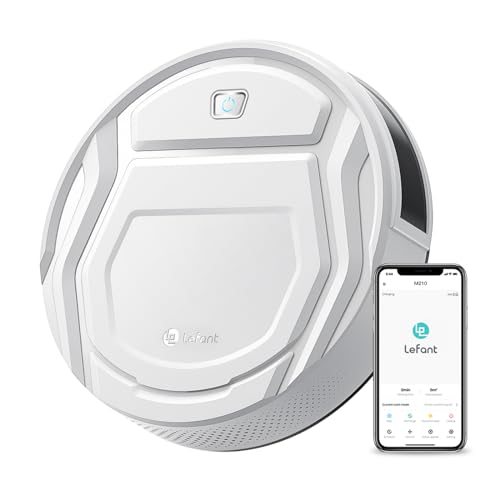
TL;DR: The Lefant M210 packs a 71.1 mm ultra‑thin body, Wi‑Fi scheduling and voice control into a 6.68‑lb robot that delivers solid suction for pets, though its random navigation can miss spots.
The standout dimension is its ultra‑thin profile at just 71.1 mm tall, letting it slip under most furniture. Weighing 6.68 lb, it’s compact enough to store in a closet yet sturdy enough to carry a 3028 g chassis. Six cleaning modes—including zigzag, spot and edge—let you tailor the run, and the brushless suction port is designed to handle pet hair without a roller brush.
Compared with the other seven models, the M210 sits in the middle of the weight range: it’s lighter than Ilife V2 (7.08 lb) and far lighter than Shark AI Ultra (15.25 lb), while being a touch heavier than Tikom (5.29 lb). Its 71.1 mm height is shorter than Shark AV753 (89.9 mm), eufy 11S Max (72.5 mm) and Tikom (76.2 mm), giving it an edge in low‑clearance spaces. Unlike the eufy 11S Max, the Lefant includes Wi‑Fi connectivity and Alexa/Google voice control, putting it ahead on smart‑home integration, though it lacks the advanced LiDAR mapping found in Tikom.
Users consistently praise the quiet operation and the robot’s ability to reach under beds and sofas, noting that the brushless suction port lifts pet hair effectively. Professional reviewers echo the strong suction performance and commend the easy‑maintenance design. The main criticisms revolve around its random, gyro‑based navigation that can skip corners, the absence of a recharge‑and‑resume function, and a 12 mm limit on obstacle crossing, which can be problematic on higher thresholds.
Pros
Cons
Best for: Those prioritizing quality and willing to pay for premium performance — the Lefant M210 offers Height: 71.1 mm
“smart sweep”
TL;DR: The Shark AV753 ION delivers a tri‑brush system, Wi‑Fi & voice control, and a 120‑minute runtime for $149.99, making it a reliable choice for mixed‑floor homes.
The standout feature is Shark’s Tri‑Brush System, which combines a side brush, channel brush and multi‑surface brushroll to tackle carpet, hardwood and pet hair in one pass. Weighing just 6.6 pounds (2992 g) and measuring 89.9 mm tall, 315.0 mm long and 320.0 mm wide, the unit stays low to the floor while still packing a solid 120‑minute battery that can cover an entire floor without needing a recharge.
At $149.99, the AV753 sits in the same price bracket as the Lefant M210, which also retails for $149.99 but tips the scales at about 6.68 pounds and is shorter at 71.1 mm high. Compared with the eufy 11S Max, Shark is a bit lighter (6.6 lb vs 6.35 lb) and offers a longer runtime (120 min vs 100 min), though it lacks eufy’s anti‑scratch glass top. The Tikom Robot Vacuum Cleaner outlasts the Shark with 150 minutes of quiet‑mode cleaning, but it’s lighter at 5.29 pounds and slightly slimmer at 76.2 mm tall. Overall, Shark balances price, weight and battery life better than the heavier Ilife V2 (7.08 lb) and the high‑end Roborock Qrevo series, which carries a premium price and much larger footprint.
Users consistently praise the tri‑brush’s ability to lift pet hair and reach corners, while professional reviewers highlight the reliable cliff sensors that prevent falls on stairs. Voice‑assistant integration via Alexa and Google Assistant adds convenience, but the SharkClean app is frequently called out for limited functionality and a less intuitive interface, which can make scheduling a bit clunky. The unit also offers four power modes—Auto, Boost, Quick and Quiet—letting you tailor suction to different floor types.
Pros
Cons
Best for: Those prioritizing quality and willing to pay for premium performance — the Shark AV753 ION offers Battery Life: 120 minutes
Avoid if: Reliability and user satisfaction are your top concerns
TL;DR: For just $75.98, the Ilife V2 packs a 2.99‑in ultra‑slim profile, 120‑minute runtime and a tangle‑free suction port, making it a solid budget pick for hard‑floor pet‑hair cleanup.
The Ilife V2’s most eye‑catching spec is its height—just 2.99 in—combined with a weight of 7.08 lb. That low‑profile chassis lets it slip under sofas and beds that taller robots miss. It runs for 120 min on a single charge and uses a tangle‑free suction port to pull in debris without frequent clogs. Connectivity is limited to Wi‑Fi (unspecified), and navigation relies on multiple basic sensors.
Compared with the seven other models in this roundup, the V2 sits on the heavier side of the budget segment, weighing more than the Tikom’s 5.29 lb and the Shark AV753’s 6.6 lb, but far lighter than the Shark AI Ultra’s 15.25 lb. Its 120‑minute runtime matches the Shark AV753’s listed battery life, yet falls short of Tikom’s 150‑minute claim. While competitors like Ropvacnic and eufy list app‑based controls or voice integration, the V2’s primary control method is a remote, leaving it with fewer smart‑home features.
Users consistently praise the V2’s slim height for reaching under tight furniture in small apartments, and reviewers note the tangle‑free suction port handles pet hair reliably. The dustbin is described as generous, reducing how often you need to empty it. On the downside, several owners report the basic sensors occasionally trigger pauses or beeps, and the wheels can slip on low‑pile rugs, which may require occasional manual nudging.
Pros
Cons
Best for: Shoppers on a tight budget who want the most for their money — the Ilife V2 offers Height: 2.99 in
Avoid if: You need advanced mapping, multi‑room scheduling, mopping capability, or a lighter unit for frequent moves
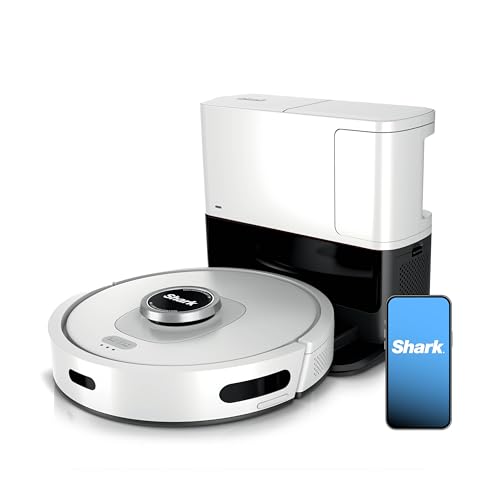
TL;DR: The Shark AI Ultra packs 360° LiDAR navigation, a 60‑day self‑empty base, and 650 W suction into a 15.25‑lb robot, but its higher price and basic app keep it from being a budget champion.
The standout feature is the 360° LiDAR vision that creates precise home maps, letting the unit avoid obstacles and clean methodically. Combined with a bagless self‑empty base that holds up to 60 days of debris, you get long‑term hands‑off cleaning. The robot measures 353.1 mm in height, 214.1 mm in length and 332.2 mm in width, and weighs 15.25 pounds.
At 15.25 pounds, the Shark AI Ultra is heavier than the Tikom (5.29 lb), Lefant M210 (6.68 lb), Shark AV753 ION (6.6 lb), eufy 11S Max (6.35 lb) and Ilife V2 (7.08 lb), but lighter than the Roborock Qrevo Series (33.49 lb). Its height of 353.1 mm is taller than the Tikom’s 76.2 mm, while its length of 214.1 mm is shorter than the Tikom’s 320.0 mm. The price point sits above many of the other seven models, positioning it as a premium‑tier choice.
Everyday owners praise the robot’s reliable pet‑hair pickup, quiet operation and the convenience of a 60‑day self‑emptying base that cuts down manual emptying. Voice control via Alexa or Google Assistant adds hands‑free convenience, and the straightforward SharkClean app lets you schedule cleanings. Some users note occasional navigation hiccups in complex layouts, and the app lacks the deep customization found in higher‑priced rivals.
Professional reviewers highlight the 650 W suction paired with a self‑cleaning brushroll and anti‑hair‑wrap design, delivering carpet performance that rivals more expensive units. The UltraClean multi‑pass mode is reported to improve carpet pickup by roughly 30 % compared with standard passes.
Pros
Cons
Best for: Those prioritizing quality and willing to pay for premium performance — the Shark AI Ultra offers Height: 353.1 mm
Avoid if: You need a combined vacuum‑and‑mop solution or live in a multi‑story home that demands frequent remapping.
“Reliable pet hair pickup, easy app/voice setup, quiet operation, and hassle‑free 60‑day emptying reduce manual vacuuming.”
“Occasional mapping glitches in complex homes, shorter real‑world battery on deep modes, and base size requiring space (e.g., 17.72 in H).”
TL;DR: The Roborock Qrevo Series packs a premium 8000 Pa suction and a 7‑week auto‑empty dock into a sizable unit that costs $399.99, offering strong cleaning power for larger homes that can accommodate its bulk.
What really sets the Qrevo apart is its 8000 Pa HyperForce suction, a figure that tops the Pa ratings of every other robot in this eight‑model roundup. Coupled with LiDAR (ClearView) navigation, the unit maps multiple floors with pinpoint accuracy, while the All‑in‑One dock automatically empties a 2.7 L dust bag and refills a 4 L water tank. The dual‑spinning mop pads spin at 200 RPM, giving a wet‑clean boost that most peers lack.
In terms of size and heft, the Qrevo is a heavyweight contender. At 33.49 lb it outweighs the Shark AI Ultra’s 15.25 lb frame and dwarfs the Tikom Robot Vacuum Cleaner’s 5.29 lb chassis. Its 23.5 in height and 16.61 in length also make it taller and longer than the compact dimensions of the Lefant M210, Shark AV753 ION, eufy 11S Max, and Ilife V2, all of which sit under 9 in in height. This bulk translates into a higher price tag of $399.99, noticeably pricier than the budget‑focused models in the group.
Early user feedback praises the robot’s deep‑cleaning ability on carpets and its pet‑hair handling, echoing professional reviewers who highlight the 8000 Pa suction as a benchmark for high‑performance vacuums. Reviewers also love the convenience of a dock that can run for 7‑9 weeks without emptying. On the flip side, several owners note that the 33.49 lb unit struggles to slip under low sofas and tight table legs, and the large dock adds to the overall footprint. The manufacturer doesn’t list battery life or voice‑control options, so those features remain unknown.
Pros
Cons
Best for: Buyers willing to invest in a proven, high‑quality option — the Roborock Qrevo Series offers Suction Power: 8000 Pa
Avoid if: You're shopping on a tight budget — it's priced at $399.99
TL;DR: For $89.99 the Ropvacnic S1 packs 5200 Pa suction, a 2‑in‑1 mop, and a ultra‑slim 75.8 mm profile, making it a solid budget pick for hard‑floor homes.
The standout spec is the 5200 Pa suction power, which sits at the top end of the budget tier and promises firm pickup on hard floors and low‑pile rugs. The robot measures just 75.8 mm tall and 304.8 mm wide and long, giving it a low‑profile shape that can slip under most furniture. Its 2‑in‑1 design adds an electronic mopping system with a high‑capacity water tank and dual rotating side brushes, while the obstacle‑avoidance sensors help it navigate around objects without getting stuck.
Compared with the other seven models, the Ropvacnic is slightly shorter than the Tikom’s 76.2 mm height, yet it delivers higher suction than Tikom’s listed 5000 Pa. Its price point is lower than most peers, positioning it as the most affordable option in the group. In height terms it’s also slimmer than the Ilife V2’s 2.99 in profile, giving it an edge for tight under‑sofa spaces.
User feedback highlights the strong suction feel and the convenience of app‑based cleaning schedules, as well as voice control through Alexa or Google Assistant. Reviewers do note that the unit feels heavier than ultra‑light competitors, which can make moving it between rooms a bit cumbersome. The lack of a self‑emptying dustbin and the absence of listed battery‑life details are also mentioned as trade‑offs for the low price.
Technical extras include a high‑coverage sensing system for obstacle avoidance, a high‑capacity water tank with four‑stage water adjustment, and a pet‑hair‑friendly side‑brush design that reduces hair entanglement. While the manufacturer doesn’t list weight or runtime, the combination of suction, cleaning modes, and smart controls makes the S1 a practical entry‑level robot for everyday upkeep.
Pros
Cons
Best for: Entry-level buyers or those on a tight budget — the Ropvacnic Robot Vacuum Cleaner offers Suction Power: 5200 Pa
Avoid if: You need powerful performance or professional‑grade features
Breakdown
Tikom Robot Vacuum
Pros
Cons
Shark AV753 ION
Pros
Cons
Eufy 11S MAX
Pros
Ilife V2
Pros
Based on scoring data and product specs
Personalized picks
Best Overall Pick
Tikom Robot Vacuum
Best OverallBest for: Budget-conscious buyers seeking a reliable entry-level option — the Tikom Robot Vacuum Cleaner offers Battery Life: 150 minutes (quiet mode)
Shark AV753 ION
Best for: Those prioritizing quality and willing to pay for premium performance — the Shark AV753 ION offers Battery Life: 120 minutes
$149.99+$36.00 vs winner
Skip Ropvacnic Robot Vacuum if…
You need powerful performance or professional-grade features
The Tikom Robot Vacuum Cleaner clinches the top spot with a listed price of $113.99, a 4.4‑star rating from 3,929 reviewers, and a 5000 Pa suction rating that rivals higher‑priced models. Its 150‑minute battery life in quiet mode lets it clean larger homes on a single charge, while a 450 ml dustbin and 300 ml water tank give you both dry‑sweep and mopping capability without frequent emptying.
If you need a robot that tackles high‑traffic floors with a robust brush system, the Shark AV753 ION is the runner‑up at $149.99, offering a tri‑brush system and four power modes for adaptable cleaning. As the editorial angle notes, “Why the Tikom Robot Vacuum Cleaner tops our rankings despite its modest price – it delivers premium navigation, strong suction, and a surprisingly long battery life that outshines pricier rivals,” highlighting why Shark lands just behind the winner for households that prioritize versatile brush performance.
For tighter budgets, the Ilife V2 at $75.98 provides solid cleaning basics at a low entry cost. The eufy 11S Max, priced at $139.99, balances price and performance with a well‑reviewed suction system for mid‑range shoppers. If premium features are a must, the Roborock Qrevo Series at $399.99 delivers advanced navigation and high‑end specs for those willing to invest.
Pick the Tikom Robot Vacuum Cleaner today and enjoy premium cleaning power without the premium price tag.
Tikom earns a higher user rating and costs $113.99, which is $36 less than Shark’s $149.99 price tag. It also lists a longer battery life of 150 minutes and a suction power of 5,000 Pa, while Shark’s specs note a 120‑minute runtime and no numeric suction figure. Those advantages give Tikom the edge.
No reviews yet — be the first to share your experience.
Please sign in to leave a review