⚡ Quick Answer
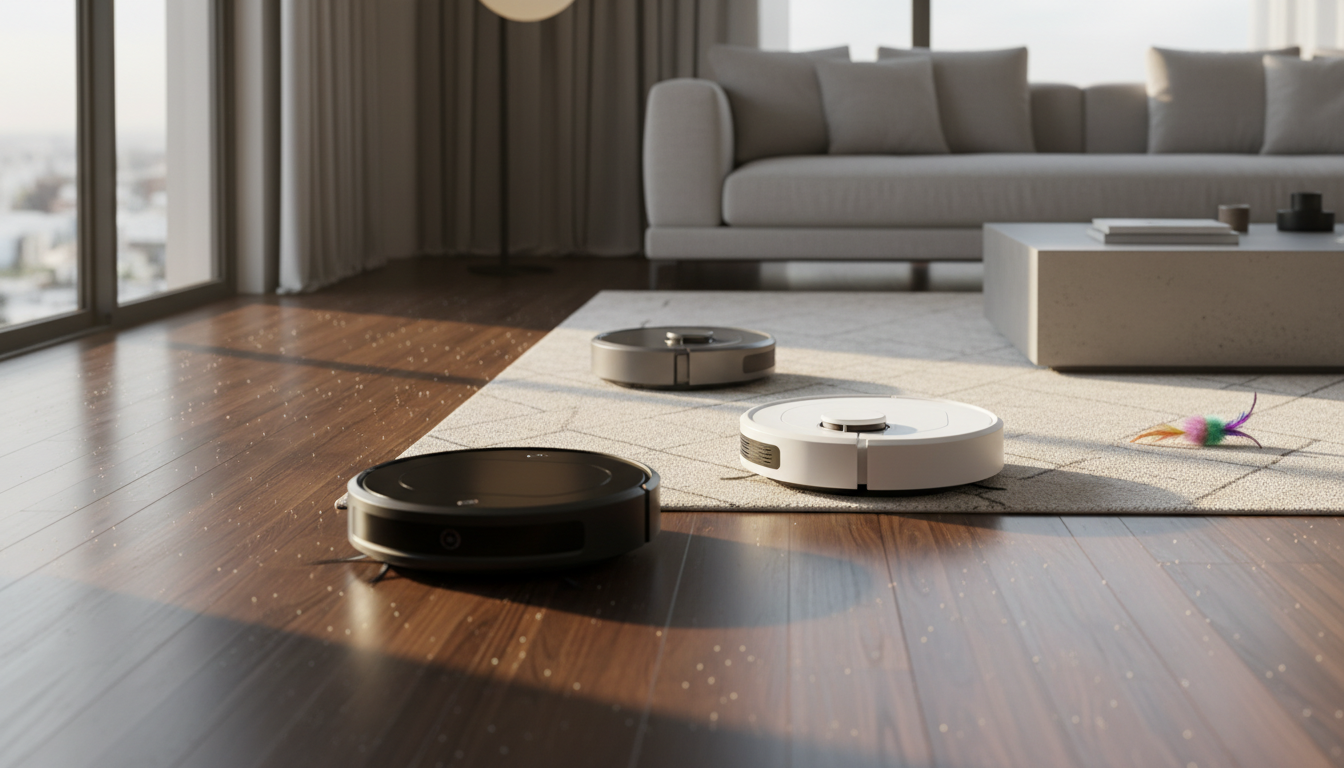
Robotic vacuums that rely on LiDAR or smart‑mapping navigation have become the go‑to for hands‑free floor care, and this roundup pits 12 contenders against each other. Prices start at $169.99 for the Ecovacs Deebot T8 and climb to $479.99 for the eufy C10, while ratings span from 3.5 / 5 (iRobot Roomba 104) up to a solid 4.6 / 5 for the Laresar Clean L6 Nex. The Dreame D20 Plus has a hefty 13,000 Pa suction rating, and the Ubpet V10 rates it even higher at a manufacturer‑claimed 22,000 Pa.
To help you navigate the options, we’ve grouped the models into three price tiers. The budget tier covers the Deebot T8, Ubpet V10, Roborock Q8 Max and iRobot Roomba 104, offering solid LiDAR performance without breaking the bank. Mid‑range picks include the Laresar Clean L6 Nex and Dreame D20 Plus, balancing power and features for larger homes. Premium choices—Roborock Q10 S5, Ecovacs Deebot N20e Plus, Shark AV2501AE AI and eufy C10—deliver top‑tier suction, longer runtimes and advanced navigation.
Below you’ll find a closer look at each robot’s navigation tech, suction strength, and smart‑home compatibility, so you can match the right model to your living space.
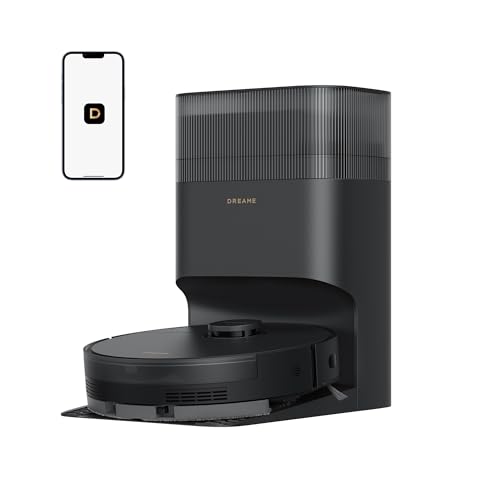
Dreame D20 Plus
It's 17.8‑inch height lets it tackle larger debris and navigate varied floor surfaces, supporting the rating and feature balance that earned it Best Overall.

Roborock Q10 S5
Designed for value‑conscious buyers, the Q10 S5 delivers quality at $269.99—just $10 more than the Dreame, making it a solid runner‑up for budget‑aware households.

Ecovacs Deebot T8
At 3.70 in height and $169.99, the Deebot T8 slips under low furniture the taller models miss, offering a distinct advantage for tight‑space homes.
Score Analysis
Key score advantages vs. runner-up (Roborock Q10 S5)
Price Range
Dreame D20 Plus
$259.99
Roborock Q10 S5
$269.99
Ecovacs Deebot T8
$169.99

Ubpet Robot Vacuum
$198.70
Shark AV2501AE AI
$447.30

eufy C10
$479.99

Laresar Clean Robot Vacuum
$216.59

Roborock Q8 Max
$199.99

Ecovacs Deebot N20e Plus
$298.99

iRobot Roomba 104
$199.99

Eureka Robot Vacuum
$359.99

Eitton Robot Vacuum
$699.99
Spec Comparison
TL;DR: The Dreame D20 Plus packs 13,000 Pa suction, LiDAR navigation and a 150‑day self‑empty cycle into a 5 L dustbin, making it a strong mid‑tier robot for multi‑surface homes, though its price leans premium.
The standout figure for the D20 Plus is its 13,000 Pa suction power, which dwarfs the 10,000 Pa offered by the Roborock Q10 S5 and Ecovacs Deebot N20e Plus, and far exceeds the 5,500 Pa of the Roborock Q8 Max. Coupled with the HyperStream™ Detangling DuoBrush, the robot tackles fine dust, pet hair and larger debris across carpet, hardwood and tile.
In a lineup where most competitors sit under 10,000 Pa, the D20 Plus also offers the longest self‑empty interval at 150 days, outlasting Ecovacs’ 45‑day and Laresar’s 60‑day claims, and iRobot’s 75‑day figure. While its dimensions (17.8 in H × 17.65 in L × 13.78 in W) make it bulkier than the sub‑4‑inch heights of Roborock and iRobot models, the larger footprint accommodates the 5 L dustbin and the LDS Pathfinder LiDAR system that maps rooms with precision. Voice‑assistant support for Alexa, Google Assistant and Siri puts it on par with the Roborock Q10 S5 and Ubpet V10.
Reviewers consistently praise the suction and the anti‑tangle brush, noting that the robot “captures fine dust and larger debris” without snagging pet hair. Professional reviewers highlight the LiDAR‑based navigation as reliable on multi‑room layouts. However, several users point out that the internal dust bin fills quickly, prompting more frequent trips to the base despite the 150‑day self‑empty promise. The water‑tank capacity isn’t listed, and some comment that it may be modest for larger mop‑only sessions.
Pros
Cons
Best for: Home and office users seeking a balance of features and value
Avoid if: You want the best value-per-dollar in its price range
TL;DR: The Roborock Q10 S5 offers 10,000 Pa suction, a vibrating VibraRise 2.0 mop, and Structured Light navigation for $269.99, making it a solid mid‑range choice for mixed‑floor homes.
What really stands out is the 10,000 Pa HyperForce suction, which reviewers say tackles pet hair and debris on both carpet and hard floors. The dual anti‑tangle brush and auto‑lifting mop add extra versatility, while the 3.98‑inch low profile helps it slide under most furniture.
Compared with the other eleven robots, the Q10 S5’s suction is higher than the Laresar Clean (5,000 Pa) and the Roborock Q8 Max (5,500 Pa), but lower than the Dreame D20 Plus (13,000 Pa) and the Ubpet VACUUM‑V10 (22,000 Pa). At 10.36 lb it’s lighter than the Ecovacs Deebot N20e Plus (17.59 lb) and the Laresar Clean (18.00 lb), yet heavier than the Q8 Max (8.80 lb) and the Ubpet (9.7 lb). Its 16.14‑inch length is longer than most peers except the Dreame D20 Plus, while the 13.9‑inch width sits between the wider Ecovacs (20.98 in) and the narrower Laresar (12.59 in). The low 3.98‑inch height keeps it under sofas where many competitors sit taller.
User sentiment repeatedly praises the strong suction and the VibraRise 2.0 pad that lifts about 8 mm to avoid wetting carpets. Professional reviewers also note the laser LiDAR navigation (described as Structured Light ReactiveTech) for efficient multi‑floor mapping. Common complaints focus on the lack of an auto‑empty dock, meaning you’ll need to empty the bin after each run, and occasional navigation hiccups near stairs. Some owners feel the robot’s weight makes lifting it onto charging docks a bit cumbersome.
Pros
Cons
Best for: Value-conscious buyers seeking quality at $269.99
Avoid if: You have limited desk space or need portability
“Common praise includes powerful suction for pet hair and edges, smart app mapping, and hands‑free mopping on mixed floors.”
TL;DR: The Ecovacs Deebot T8 offers laser‑mapped navigation, AI obstacle avoidance and a 240 ml mop tank, all for $169.99, making it a capable yet budget‑friendly robot for mixed‑floor homes.
The Deebot T8 measures 3.70 in tall, 13.90 in long and wide, and weighs 13.30 lb, housing a 240 ml water tank for simultaneous vacuum‑and‑mop cleaning. Its TrueMapping laser navigation gives precise room mapping, while the built‑in AIVI camera (2 MP, 7 object types) helps it dodge socks, cords and furniture.
Compared with the other eleven contenders, the T8 is heavier than the 9.7 lb Ubpet and the 8.8 lb Roborock Q8 Max, but lighter than the 14.95 lb iRobot Roomba 104. It’s shorter than Ubpet’s 4.3 in height and matches the 13.90 in length of the Roborock Q8 Max. Unlike several peers that list suction power in pascals, the manufacturer doesn’t specify the T8’s suction rating, though it features TrueMapping laser instead of the 360° LiDAR used by Ubpet or the PreciSense LiDAR in the Roborock Q8 Max.
Everyday owners praise the robot’s reliable carpet‑detection, quiet operation and easy app setup. Professional reviewers highlight the AI‑driven camera and laser combo, noting a runtime of about 180 minutes and coverage up to 3,000 sq ft, plus an airflow of 19.5 CFM that tackles debris on hard floors. Some users report occasional navigation hiccups in very complex layouts and remain uncertain about how well the mop handles deep stains.
Pros
Cons
Best for: Owners of medium‑large homes (2,000‑3,000 sq ft) with mixed hard floors and low‑to‑medium pile carpet.
Avoid if: You have predominantly high‑pile carpet or need rock‑solid deep‑cleaning performance on stains.
TL;DR: The Ubpet V10 delivers a massive 22,000 Pa suction in a compact 4.3‑in‑high body, making it a strong contender for pet‑hair cleanup at a budget‑friendly price.
The standout spec is its 22,000 Pa maximum suction power, which the manufacturer claims can lift six‑to‑ten times more debris than typical robot vacuums. Coupled with an anti‑tangle fleece roller and 360° LiDAR navigation, the V10 maps rooms precisely while keeping pet hair from snarling the brush.
Compared with the other 11 models in this roundup, the V10 is heavier than the 8.8 lb Roborock Q8 Max but lighter than the 10.36 lb Roborock Q10 S5. Its suction power dwarfs the 5,500 Pa of the Q8 Max, the 5,000 Pa of the Laresar Clean, and even the 13,000 Pa of the Dreame D20 Plus, positioning it at the top end of raw suction among similarly priced units.
User commentary highlights the V10’s ability to pull pet hair from carpets and its compact 4.3‑in height that slips under low furniture. A recurring note is the runtime ceiling of about 50 minutes, which some owners find short for larger homes. Professional reviewers also point out the lack of independent performance verification, so base expectations on the listed specs.
Beyond suction, the robot features a HEPA H12 filter that traps particles down to 0.3 µm, Alexa and Google Assistant voice control, and a D‑shaped chassis that maximizes corner reach. The manufacturer lists a weight of 9.70 lb, a length of 12.4 in and a width of 11.7 in, fitting well into tight spaces.
Pros
Cons
Best for: Buyers in the budget price range seeking the best quality at that price point
Avoid if: You want the best value-per-dollar in its price range
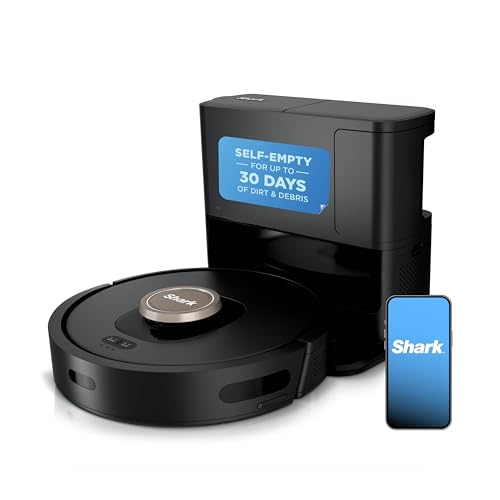
TL;DR: The Shark AV2501AE AI packs LiDAR navigation, a 60‑day self‑empty base and a self‑cleaning brushroll into a 13.9‑inch, 15.25‑lb robot for reliable carpet and pet‑hair cleaning at a premium price.
What really sets the Shark AV2501AE AI apart is its LiDAR‑based mapping paired with a bag‑less self‑empty dock that can hold debris for up to 60 days. The robot measures 13.9 in high, 13.08 in long and 8.43 in wide, and weighs 15.25 lb, giving it a solid presence on the floor while still fitting most household doorways.
Compared with the other eleven contenders, Shark sits in the middle of the weight range—heavier than the eufy C10 and Roborock Q10 S5, but lighter than the Eureka NER E10s and Laresar L6 Nex. Its 13.9‑in height is taller than the low‑profile eufy C10 (8.34 in) and Roborock (3.98 in), yet shorter than the Ecovacs Deebot N20e Plus (15.94 in). The 60‑day self‑empty interval matches Laresar’s dock but exceeds the 45‑day cycles of Eureka and Ecovacs, and falls short of Dreame’s 150‑day claim.
Professional reviewers praise the LiDAR system for “fast, precise home mapping and object avoidance,” noting that the UltraClean mode boosts carpet performance. Everyday owners echo this, especially praising the robot’s ability to tackle pet hair and keep allergies at bay thanks to a True HEPA filter that captures 99.97 % of particles down to 0.3 µm. The self‑cleaning brushroll also reduces manual maintenance. On the downside, the 13.9‑in profile can miss tight spaces under low furniture, and the dock’s footprint is sizable, and some users find it cumbersome in small apartments.
Pros
Cons
Best for: Those prioritizing quality and willing to pay for premium performance
Avoid if: You're on a tight budget or only need basic functionality
TL;DR: The eufy C10 packs a 8.34‑inch ultra‑slim body, 4000 Pa suction and a 60‑day self‑emptying bin for hands‑free cleaning, but its basic laser navigation and lack of mopping keep it in the premium‑contender tier.
The C10’s most eye‑catching spec is its 8.34 in height, which lets it slip under low furniture that taller rivals miss. It pairs that profile with a 4000 Pa laser‑based suction system and a Unique CornerRover Arm + Rolling Brush that tackles pet hair and tight corners. The self‑empty station holds a 3 L disposable bag; the manufacturer says it lasts up to 60 days before needing replacement.
Compared with the eleven other robots in this roundup, the C10 sits in the middle of the weight range—lighter than Shark’s 15.25 lb model and the 23.6 lb Eureka, but a bit heftier than Roborock’s 10.36 lb unit. Its 60‑day self‑empty interval matches Shark and Eitton, while outlasting Eureka and Ecovacs, which list 45‑day cycles. Suction power at 4000 Pa sits above Eureka’s 3000 Pa but below the 10 000 Pa figures of Ecovacs and Roborock, and well under Dreame’s 13 000 Pa. Navigation relies on laser mapping, a step down from the LiDAR‑based systems of Shark, Eureka and Eitton, and from the structured‑light approach of Roborock.
Reviewers consistently praise the C10’s low‑profile design for reaching under beds and sofas, and many pet owners note that the 4000 Pa suction handles short‑to‑medium hair well. Professional reviewers also highlight the edge‑expansion brush as a boost for corner cleaning. On the flip side, users mention that the point‑laser navigation can stumble over small obstacles, and the lack of any mopping capability limits its versatility in homes that want a single robot for wet and dry floors.
Pros
Cons
Best for: Pet owners who need a slim robot that can clean under low furniture and appreciate a long‑lasting self‑empty bin.
Avoid if: You require a mop‑capable robot, advanced AI obstacle detection, or a lower‑priced entry‑level model.
“promises more than the typical entry-level bot”
“outperforms Roomba 105 Vac in pet hair pickup and coverage efficiency”
TL;DR: The Laresar Clean L6 Nex offers 5 000 Pa suction, a 60‑day self‑emptying station and 360° LiDAR mapping, but its 18 lb weight makes it one of the bulkier choices in the mid‑range.
The standout spec is the 5 000 Pa suction power paired with a 3 L dust‑bag that the self‑emptying dock can hold for up to 60 days. Combined with 360° LiDAR navigation, the robot builds multi‑floor maps without you lifting a finger. Its chassis measures a uniform 12.59 in on all sides, giving it a square footprint that can slide under most furniture.
At 18 lb, the Laresar Clean is noticeably heavier than the 8.8‑lb Roborock Q8 Max or the 9.7‑lb Ubpet VACUUM‑V10, and even the 14.95‑lb iRobot Roomba 104 tips the scales a bit lower. Its suction sits between the 5 500 Pa of the Q8 Max and the 10 000 Pa of the Roborock Q10 S5, so it isn’t the most powerful in the set but still outperforms models that don’t list a figure. The price point lands in the mid‑tier bracket, aligning it with other feature‑rich robots without reaching premium levels.
Professional reviewers praise the easy setup and intuitive app that lets you draw virtual walls and schedule cleanings. Users love the hands‑free experience of the auto‑empty dock and note that the low‑profile body reaches under sofas well. The main complaints revolve around the robot’s tendency to snag on low obstacles, a mop function that feels light‑duty, and a discrepancy because elsewhere they list a lower 3 500 Pa figure.
The unit runs on a 12.59 in cube, weighs 18 lb and relies on a HEPA‑type filter that you replace manually. Its 360° LiDAR sensor provides reliable obstacle avoidance in uncluttered rooms, and the Laresmart app offers three water‑output levels for the mop. While the vacuum‑only performance is solid, the mop lacks a self‑cleaning cycle, which some users find limiting on carpeted areas.
Pros
Cons
Best for: Most users seeking a balanced, mainstream option
Avoid if: Your home is heavily cluttered, has many low obstacles, or you need deep‑carpet cleaning
TL;DR: The Roborock Q8 Max offers 5,500 Pa suction, a Dual‑Roller mop with 30 water levels, and Precise LiDAR navigation at a budget‑friendly $199.99, though it lacks auto‑wash dock features.
The standout spec on the Q8 Max is its 5,500 Pa suction power, paired with a Dual‑Roller brush and a mop that provides 30 selectable water‑pressure levels. At just 8.8 lb and a low 3.80 in height, it easily slips under most furniture, making it a practical choice for tight spaces.
Compared with the other eleven contenders, the Q8 Max is lighter than the iRobot Roomba 104 (≈14.95 lb) and the Ubpet Robot Vacuum (≈9.7 lb), and considerably lighter than the Laresar Clean Robot (≈18 lb) and Ecovacs Deebot T8 (≈13.30 lb). Its suction sits above the Laresar Clean’s 5,000 Pa but below the Ubpet’s 22,000 Pa and Dreame D20 Plus’s 13,000 Pa, placing it solidly in the mid‑range of cleaning power. Navigation-wise, it relies on Roborock’s PreciSense LiDAR, while peers use ClearView LiDAR, 360° LiDAR, TrueMapping Laser, LDS, or Structured Light, so the Q8 Max stays competitive in mapping precision.
Users consistently praise the robot’s strong suction and the Duo‑Roller’s ability to tackle pet hair, as well as its reliable multi‑floor mapping. Professional reviewers from Modern Castle highlighted the “high cleaning scores” thanks to the Duo‑Roller and suction boost, while Tech Revolutionist noted the precise LiDAR navigation. Common complaints revolve around the need to manually empty the dustbin and refill the water tank, as well as the absence of an auto‑wash dock and occasional confusion over weight specifications.
Pros
Cons
Best for: Entry-level buyers or those on a tight budget
Avoid if: You need powerful performance or professional‑grade features
“truly an exceptional cleaning robot”
“significant boost over Q7 Max with 5500 Pa suction”
TL;DR: The Ecovacs Deebot N20e Plus packs 10,000 Pa suction, a 300‑minute battery, and a bagless auto‑empty base that holds debris for 45 days, but its 17.59 lb weight and $298.99 price put it at the higher end of the mid‑range.
The standout spec is the 10,000 Pa suction power, which the manufacturer touts as strong enough to lift pet hair and larger debris. Combined with a 300‑minute runtime, the robot can clean an entire large home on a single charge without needing to dock for recharge.
Compared with the other eleven models in this roundup, the N20e Plus shares its 10,000 Pa suction level with the Roborock Q10 S5, but it falls short of the Dreame D20 Plus’s 13,000 Pa. Its 45‑day auto‑empty capacity matches the Eureka Robot Vacuum and is shorter than the Dreame’s 150‑day claim and the Laresar Clean’s 60‑day claim. At 17.59 lb, it is heavier than the 10.36‑lb Roborock Q10 S5 and the 8.8‑lb Roborock Q8 Max, yet lighter than the 23.6‑lb Eureka model and only slightly lighter than the 18.0‑lb Laresar Clean.
Professional reviewers highlight the 300‑minute battery life and the bagless base that can sit untouched for a month and a half, noting that the zero‑tangle roller handles pet hair without frequent brush cleaning. Everyday owners echo these points, praising the robot’s ability to keep large homes tidy with minimal intervention. The main criticisms focus on the base’s lack of automated mop washing or water refilling, and the unit’s 17.59 lb weight, which some users find cumbersome when moving the robot between rooms.
Beyond suction, the Deebot N20e Plus uses laser mapping for navigation, creating floor maps in roughly five minutes and cleaning at about 0.94 m² per minute. The combination of a 300‑minute runtime and precise LiDAR navigation makes it well‑suited for multi‑room layouts, while the 45‑day self‑empty interval reduces the frequency of manual dustbin emptying.
Pros
Cons
Best for: Pet owners, large‑home dwellers, and shoppers who value strong suction and long runtime in a mid‑range robot vacuum.
Avoid if: You need a fully automated mop station with washing/drying, or you prioritize ultra‑lightweight devices for frequent relocation.
TL;DR: The iRobot Roomba 104 Combo offers ClearView LiDAR navigation and a 75‑day self‑emptying dock at 14.95 lb, but its heavier build and modest 3.5‑star rating make it a budget‑focused, feature‑rich choice.
iRobot’s standout feature is the ClearView LiDAR navigation system, which maps rooms and avoids obstacles without a camera. The unit also includes an Auto‑Empty dock that can hold debris for up to 75 days, reducing how often you need to service it. Its physical footprint measures 4.09 in high by 13.19 in long and wide, and it weighs 14.95 lb.
Compared with the other eleven robots in this roundup, the Roomba 104 is noticeably heavier than the 8.8‑lb Roborock Q8 Max and the 9.7‑lb Ubpet Robot Vacuum, yet lighter than the 18‑lb Laresar Clean Robot Vacuum. Its 75‑day auto‑empty interval sits between Laresar’s 60‑day capacity and Dreame D20 Plus’s 150‑day capacity. While many peers use dual‑roller mop systems, the Roomba 104 relies on a single microfiber mop pad, which may appeal to users who prefer a simpler wet‑cleaning approach.
Reviewers often praise the robot’s 70× power‑lifting suction and the precision of its LiDAR mapping, noting that the four adjustable suction levels handle carpets and hard floors alike. However, the same feedback highlights the unit’s weight as a downside, especially when moving it between rooms or storing it in a small closet. The 3.5‑star rating from 685 reviews suggests satisfaction is mixed, with some owners reporting occasional navigation quirks.
The Roomba 104’s mop pad is microfiber, and professional reviewers point out its three liquid‑level settings and deeper scrubbing capability. Combined with the ClearView LiDAR, the robot delivers a four‑stage cleaning cycle that includes vacuuming, edge‑sweeping, mop‑wetting, and a final polish pass. The manufacturer doesn’t list battery runtime, so prospective buyers should consider that detail when planning cleaning schedules.
Pros
Cons
Best for: Entry-level buyers or those on a tight budget
Avoid if: Reliability and user satisfaction are your top concerns
TL;DR: The Eureka NER E10s offers LiDAR navigation, a 3000 Pa HEPA‑based suction system and a 45‑day bagless self‑empty cycle for $359.99, but its heavy chassis and modest rating may give budget‑focused shoppers pause.
The standout spec is its LiDAR navigation paired with a 3000 Pa suction power, which lets the robot map rooms accurately while pulling debris through a HEPA + Multi‑Cyclonic filter. At a compact 3.9 in height and a footprint of 13.8 in × 13.8 in, the unit still packs a 23.6 lb chassis that feels solid on the floor.
Compared with the eleven other models in this roundup, the Eureka is heavier than the Shark, Ecovacs, Roborock, eufy and Laresar units, and its suction rating sits well below Ecovacs’ 10 000 Pa and Dreame’s 13 000 Pa. Its 45‑day self‑empty interval matches Ecovacs but is shorter than Shark’s 60‑day capacity. Pricing places it above the budget‑oriented Roborock and eufy models, yet it’s still below the premium Shark offering.
Users consistently applaud the robot’s ability to tackle pet hair and appreciate the convenience of a bagless self‑empty station that empties roughly every month and a half. Professional reviewers highlight the auto‑lifting mop that raises 10 mm to keep carpets dry, and note that operating noise stays in the 64.5 dB to 67.3 dB range, making it suitable for daytime cleaning. However, many owners mention the bulky cylindrical dock as a space‑saver issue, and the front‑mounted obstacle sensor only works at sensor height, requiring virtual walls for low‑lying objects. The companion app also omits a battery‑percentage readout, which some users find inconvenient.
Pros
Cons
Best for: Those prioritizing quality and willing to pay for premium performance
Avoid if: You need advanced features or professional‑grade performance
TL;DR: The Eitton A6Pro‑Brown delivers 5000 Pa suction, LiDAR mapping and a 60‑day self‑emptying bin, but its $699.99 price and modest 3.7‑star rating make it a premium‑priced choice.
At the heart of the Eitton A6Pro‑Brown is a 5000 Pa suction motor paired with 360° LiDAR scanning, which Eitton markets as TrueMapping 2.0. The unit holds a 2.5 L dustbin and can go up to 60 days without needing to empty the bin, promising truly hands‑free cleaning for busy households.
When you line it up against the other eleven robots, its suction sits between the 4000 Pa of the eufy C10 and the 3000 Pa of the Eureka model, yet it falls short of the 10 000 Pa offered by Ecovacs N20e Plus, Roborock Q10 S5, and the 13 000 Pa of the Dreame D20 Plus. Its 60‑day self‑empty interval matches the eufy C10 and Shark AV2501AE, exceeds the 45‑day cycles of Eureka and Ecovacs, but is less than Dreame’s 150‑day claim. Pricing-wise, the Eitton sits at the top end of the range, making it pricier than most peers.
Reviewers consistently praise the strong suction and precise LiDAR mapping, noting that pet hair disappears quickly and room layouts are learned accurately. Professional reviewers highlight the TrueMapping 2.0 system and the convenience of the self‑empty station. On the downside, users mention that the robot feels heavy when moving it manually, and users have reported occasional app connectivity hiccups.
The device also bundles a mop attachment, so you can vacuum and mop in one pass, and it supports rapid charging that restores half the battery faster than standard cycles. A carpet‑boost feature automatically raises suction when it detects carpet, adding extra cleaning power where you need it.
Pros
Cons
Best for: Those prioritizing quality and willing to pay for premium performance
Avoid if: You're on a tight budget or only need basic functionality
Breakdown
Dreame D20 Plus
Pros
Cons
Roborock Q10 S5
Pros
Ecovacs Deebot T8
Pros
Ubpet Robot Vacuum
Pros
Cons
Based on scoring data and product specs
Personalized picks
Best Overall Pick
Dreame D20 Plus
Best OverallBest for: Home and office users seeking a balance of features and value
Roborock Q10 S5
Best for: Value-conscious buyers seeking quality at $269.99
$269.99+$10.00 vs winner
Skip Eitton Robot Vacuum if…
You're on a tight budget or only need basic functionality
The Dreame D20 Plus takes the top spot. It delivers a powerful 13000 Pa suction, a roomy 5 L dustbin and a self‑empty cycle that lasts about 150 days, meaning fewer trips to the trash. At $259.99 it carries a solid 4.3‑star rating from 246 reviewers, and its LDS Pathfinder navigation maps rooms quickly.
The Roborock Q10 S5 lands as the runner‑up, especially if you need a vacuum that also handles mopping. Its auto‑lifting mop lets you switch between dry vacuuming and wet cleaning without manual intervention, while Structured Light navigation keeps the map accurate. With 10000 Pa suction, a weight of 10.36 lb and a price of $269.99 backed by a 4.2‑star rating from 971 reviews, it’s a strong all‑rounder for multi‑room homes.
If you’re watching the wallet, the Ecovacs Deebot T8 offers the best budget entry at $169.99, delivering solid LiDAR mapping for under $200. For a top‑shelf experience, the Eitton Robot Vacuum sits at $699.99 and packs premium sensors and features suited to larger homes.
Choose the Dreame D20 Plus now and enjoy hassle‑free cleaning with advanced LiDAR navigation.
The Dreame D20 Plus boasts a self‑empty interval of 150 days, which is far longer than the 60‑day cycles listed for Shark AV2501AE AI, Laresar Clean Robot Vacuum, and eufy C10. None of the other models specify a longer period, making the Dreame the clear leader for low‑maintenance cleaning.
No reviews yet — be the first to share your experience.
Please sign in to leave a review
Also considered
$269.99