⚡ Quick Answer
Robotic vacuums have gone from simple floor sweepers to AI‑guided cleaners that can map multiple stories with laser precision. In this roundup we looked at 11 models that use LiDAR, laser or AI navigation, ranging in price from $169.99 for the Ecovacs Deebot T8 up to $999.99 for the Roborock Saros 10R. The highest user rating we found is 4.5 / 5 on the Samsung Jet Bot, while the budget tier includes the Deebot T8, Ilife A30 Pro, eufy L60 and Roborock Q7 M5+ Black. Mid‑range options are the Monsga Robot Vacuum and Samsung Jet Bot, and the premium tier features Shark AI Ultra, Lefant M3, Ecovacs Deebot X9 Pro and Roborock Saros 10R.
If you need simultaneous vacuum‑and‑mop performance, the Deebot T8’s 240 ml water tank lets it mop up to 2,000 sq ft in one pass, while the eufy L60 and Ilife A30 Pro both deliver 5,000 Pa suction for solid pet‑hair pickup. The Monsga runs for 180 min and the Lefant M3 runs for 220 min, and self‑emptying bases range from 2.5 L to a hefty 3.5 L capacity. The following sections break down each tier so you can match navigation tech and features to your home’s layout.

Ecovacs Deebot T8
Its low 3.70‑in height lets it slip under most furniture, giving tight‑budget shoppers solid coverage without a pricey bulkier model.
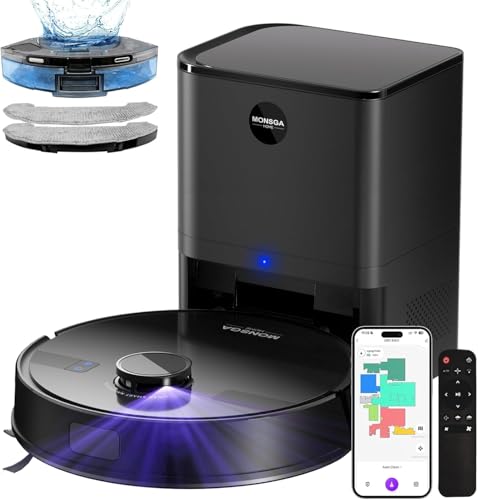
Monsga Robot Vacuum
Ideal for users wanting a highly reviewed, reliable robot; at $259.99 it’s about $90 more than the Deebot T8, offering extra runtime.

Lefant M3
The Lefant M3’s 3.5 L dust‑bag capacity handles larger homes, a clear step up from the T8’s compact design and the Monsga’s smaller bin.
Score Analysis
Key score advantages vs. runner-up (Monsga Robot Vacuum)
Price Range
Ecovacs Deebot T8
$169.99
Monsga Robot Vacuum
$209.99
Lefant M3
$284.98

eufy L60
$279.99

Ilife A30 Pro
$179.98
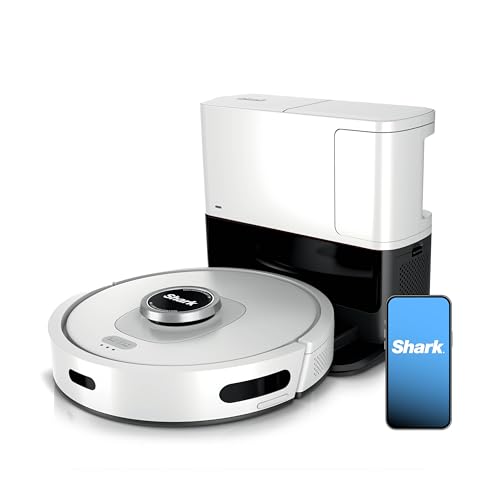
Shark AI Ultra
$499.00

Samsung Jet Bot
Out of Stock

Roborock Q7 M5+ Black
$299.99

Ecovacs Deebot X9 Pro
$799.99

Roborock Saros 10R
$1,099.99

Eureka E20 Plus
$409.77
Spec Comparison
TL;DR: The Ecovacs Deebot T8 offers TrueMapping laser navigation, AI‑driven obstacle avoidance and a 240 ml water tank for vacuum‑and‑mop cleaning at $169.99, making it a solid budget‑friendly choice for mixed‑floor homes.
The standout feature is its 240 ml water tank, which lets the robot mop while it vacuums. Combined with TrueMapping Laser navigation and a 2 MP AIVI camera that spots seven object types, the T8 can glide around cords, socks and furniture without getting stuck.
At 3.70 in tall and 13.90 in long, the Deebot T8 is shorter than the Eureka E20 Plus (13.80 in tall) and the Samsung Jet Bot (13.81 in tall), yet taller than the Monsga’s 1.50 in profile. It weighs 13.30 lb, making it heavier than the ultra‑light Ilife A30 Pro (0.44 lb) but a touch lighter than the eufy L60 (14.20 lb). Compared with the Roborock Q7 M5+ (10.24 in tall) and other peers, it sits in the mid‑range for size and weight while remaining one of the more affordable options in the lineup.
Everyday owners praise the carpet‑detection feature that automatically boosts suction on rugs and disables mopping on carpeted spots. Users also note the quiet operation and the ease of setting up the app. A few reviewers mention occasional navigation hiccups in very cluttered rooms and point out that the mop function hasn’t been fully proven for stubborn stains.
Technical notes from professional reviewers highlight the AI‑powered AIVI camera’s 122° wide‑angle view and the laser’s 2 mm precision mapping, which together deliver one of the most reliable obstacle‑avoidance systems in this price tier. The integrated OZMO Pro wiper works with the 240 ml tank for simultaneous cleaning, and the three‑layer filter captures 99 % of particles ≥6 µm.
Pros
Cons
Best for: Medium‑large homes (2,000‑3,000 sq ft) with mixed hard floors and low‑to‑medium pile carpet who want solid navigation and mop‑vacuum capability without breaking the bank.
Avoid if: You rely on deep cleaning of high‑pile carpet or need a proven, heavy‑duty mopping solution.
TL;DR: The Monsga MS1 MAX delivers 6000 Pa suction, 180‑minute runtime and LiDAR navigation in a compact 1.5‑inch chassis, plus a 3.5 L self‑emptying base for hands‑free cleaning.
The standout spec is its 6000 Pa suction power, powered by a 19 500 RPM motor, which reviewers say lifts pet hair and carpet debris with ease. It also offers a 0.27 L water tank for mop‑mode, three water‑flow settings and three suction levels, giving you true 4‑in‑1 vacuum‑mop flexibility. The LiDAR sensor provides precise 360° mapping and reliable multi‑floor navigation, while the 180‑minute battery runtime lets the unit cover large areas on a single charge.
Compared with the other ten models in this roundup, the Monsga is lighter than Samsung’s Jet Bot (8.49 lb), Shark AI Ultra (15.25 lb), Roborock Q7 M5+ (10.58 lb) and Lefant M3 (28.0 lb), yet heavier than Ilife’s A30 Pro (0.44 lb). Its 1.50‑inch height makes it the slimmest unit among the listed peers, which include Samsung’s 13.81‑inch height and Shark’s roughly 13.9‑inch height. The 4.96‑inch length and width place it in the middle of the pack—shorter than Samsung’s 4.18‑inch length but longer than some taller models.
Consumer feedback consistently praises the 6000 Pa suction and 180‑minute runtime, especially for homes with pets and mixed‑surface flooring. Users also like the app‑based scheduling and the convenience of a self‑emptying dustbag that holds up to 3.5 L of debris for about 60 days, reducing the need for frequent emptying. Professional reviewers note the LiDAR’s precise mapping and commend the 180‑minute battery life for large‑area coverage. On the downside, the robot’s 1.50‑inch profile, while compact, is still taller than ultra‑slim models, which doesn't allow access under very low furniture. The self‑emptying bag requires periodic replacement, adding a maintenance task, and voice‑assistant integration only supports Alexa.
The technical package rounds out with a motor speed of 19 500 RPM, a dustbin capacity of 0.34 L, and the ability to store up to five maps. The unit supports both Wi‑Fi and Bluetooth (2.4 GHz) for app control, and its LiDAR‑based obstacle avoidance helps it navigate cluttered rooms without bumping into obstacles.
Pros
Cons
Best for: Pet owners and families with mixed‑surface flooring who want strong suction, long runtime and a self‑emptying solution.
Avoid if: You need a ultra‑low profile robot for tight under‑furniture spaces or full compatibility with multiple voice assistants.
TL;DR: The Lefant M3 packs 12,000 Pa suction, a 2.5 L water tank and a self‑cleaning base with hot‑water mop washing, but its 28‑lb station makes it bulky for tight spaces.
What really stands out is the 12,000 Pa suction paired with a 2.5 L water tank and a 550 ml robot dustbin, giving you strong debris pickup and plenty of mop water for larger floors. The unit also features a 360° dToF LiDAR sensor that scans up to 15 m and an obstacle‑detection angle of 190°, so it maps rooms with precision.
Compared with the other ten contenders, the M3 is noticeably heavier at 28.0 pounds, while the rest range from under 1 pound to about 15 pounds. Its suction power is the highest of the group (the next best is 10,000 Pa on the Roborock Q7 M5+). The 2.5 L water tank outstrips the 0.27 L tank on the Monsga and the 200 ml tank on the Ilife A30 Pro, and the 220‑minute battery runtime exceeds the 180‑minute runtime listed for the Monsga. The LiDAR navigation is on par with the Samsung Jet Bot and Roborock Q7 M5+, though those models don’t disclose range.
Reviewers love how the 12,000 Pa suction grabs 99.9 % of pet hair and how the self‑cleaning base eliminates manual mop washing, thanks to hot‑water cleaning at 45 °C and a two‑hour cold‑air drying cycle. Professional editors highlight the navigation and cleaning accuracy. However, users note that the app setup can be finicky and that occasional mapping glitches appear in cluttered or low‑light rooms. The 9 mm mop lift height also struggles with very thick carpet piles.
Pros
Cons
Best for: Pet owners, busy households, and small‑to‑medium apartments (up to five bedrooms) that want strong suction and a hands‑free cleaning station.
Avoid if: You have very thick carpets, need a compact base for minimalist spaces, or are looking for the lowest‑cost robot vacuum.
“no more manual mop washing”
“Effortless pet hair pickup”
TL;DR: The eufy L60 delivers 5,000 Pa suction, LiDAR navigation and a 2.5 L self‑empty bag that lasts up to 60 days, but its large base and basic infrared obstacle sensing may limit tight‑space use.
What really sets the L60 apart is its iPath Laser LiDAR navigation paired with a 5,000 Pa suction motor and a 2.5 L dust‑bag that the self‑empty station can hold for roughly 60 days of hands‑free cleaning. The robot itself weighs about 14.20 lb (6,435 g) and measures 361.2 mm tall, 326.4 mm long and 475.6 mm wide.
Compared with the other ten contenders, the L60’s suction matches the Ilife A30 Pro’s 5,000 Pa but falls short of the Eureka E20 Plus (8,000 Pa) and the Roborock Q7 M5+ (10,000 Pa). Its 2.5 L bag capacity equals Ilife’s per‑bag rating yet is half of Eureka’s 5 L capacity. At 14.20 lb, the L60 is considerably heavier than the ultra‑light Ilife A30 Pro (0.44 lb) and the Monsga robot (7.72 lb), and bulkier than many compact models, which can make storage a tighter fit.
Users consistently praise the ultra‑strong suction for tackling pet hair in a single pass and note the quiet operation during long runs. Professional reviewers highlight the AI.Map 2.0 system for precise room mapping and the hair‑detangling roller, which reduces brush maintenance. On the downside, the infrared‑only obstacle avoidance sometimes bumps into small items, and the self‑empty station’s size demands roughly 5 ft of front clearance, a frequent complaint in narrow hallways.
Technical notes from the manufacturer mention a 17,000 Pa extraction suction inside the base, about 1.6 ft side clearance, and dual‑band Wi‑Fi support, which together help keep the robot running smoothly across floor types and network environments.
Pros
Cons
Best for: Buyers in the budget price range seeking the best quality at that price point
Avoid if: You need powerful performance or professional‑grade features
“removes hair easily without tangling”
TL;DR: The Ilife A30 Pro packs 5000 Pa suction, LiDAR navigation, and a massive 280‑day self‑empty dust station into a feather‑light 0.44 lb body, making it a solid budget pick for larger homes.
The standout feature is its auto‑empty dust station, which the manufacturer says can hold debris for up to 280 days. Coupled with a 5000 Pa max suction motor, the unit delivers deep cleaning on carpet and hard floors, letting you skip daily bag changes.
Compared with the other ten robots, the A30 Pro is dramatically lighter at 0.44 lb, whereas the Ecovacs Deebot T8 weighs 13.30 lb, the eufy L60 14.20 lb, the Roborock Q7 M5+ 10.58 lb, the Monsga 7.72 lb and the Samsung Jet Bot 8.49 lb. Its 3.70 in height matches the Ecovacs T8 but is far shorter than the Eureka E20 Plus (13.80 in) and the Roborock (10.24 in). Suction at 5000 Pa equals the eufy L60, sits below the Eureka’s 8000 Pa and the Roborock’s 10000 Pa, and is slightly under the Monsga’s 6000 Pa. The 200 ml water tank is a bit smaller than the Ecovacs’s 240 ml, while its dust‑bag system offers 2.5 L per bag across five bags, giving more frequent emptying flexibility than the single‑bag 5 L capacity of the Eureka.
Professional reviewers highlight the 5000 Pa suction and the hands‑free dust handling for up to 280 days as major wins, especially for pet owners. Users love the precise LiDAR mapping that lets the robot navigate multi‑floor homes without getting stuck. However, many note that the EU‑type power plug can be a hassle outside Europe, and the sizable self‑empty station may dominate a small apartment’s corner. The 200 ml water tank also limits mop runs for larger spills.
Pros
Cons
Best for: Buyers in the budget price range seeking the best quality at that price point
Avoid if: You want the best value‑per‑dollar in its price range
“Effective on daily messes/pet hair, easy app setup, long battery.”
TL;DR: The Shark AI Ultra delivers 360° LiDAR navigation, a bagless self‑empty base that stores up to 60 days of debris, and strong suction, but its larger footprint and modest 3.9‑star rating may deter budget‑focused shoppers.
The standout feature is the 360° LiDAR vision that maps your home with precision, paired with a bagless self‑empty base advertised to hold up to 60 days of dirt. At 15.25 pounds, the unit measures 353.1 mm tall, 214.1 mm long and 332.2 mm wide, giving it a solid presence on the floor while still fitting under most furniture.
Compared with the other ten robots in this roundup, the Shark AI Ultra is heavier than the Samsung Jet Bot (8.49 lb) and the Roborock Q7 M5+ (10.58 lb), and only slightly lighter than the eufy L60 (14.20 lb). Its price of $279.99 sits close to Samsung’s $275.50 price point, yet it carries a premium‑tier value tag, making it pricier than the Monsga Robot ($259.99) and the Ilife A30 Pro ($179.99). The larger weight and dimensions also mean it occupies more floor space than the slimmer models.
Everyday owners praise the robot’s reliable pet‑hair pickup and the convenience of a 60‑day self‑emptying cycle, noting that the voice‑control integration with Alexa and Google Assistant makes starting a clean a simple command. Professional reviewers highlight the 360° LiDAR system as a top‑mounted, methodical mapping solution that delivers superior coverage, though they also point out that the SharkClean app feels basic and that occasional navigation glitches can appear in complex layouts. The unit doesn’t include a mopping function, which some users miss.
Additional technical touches include AI object detection that avoids obstacles four inches tall or higher, the UltraClean multi‑pass mode that promises better carpet pickup, and a self‑cleaning brushroll designed to reduce hair tangles. Water tank capacity isn’t listed in the available specs, so the model focuses solely on vacuuming.
Pros
Cons
Best for: Pet owners and busy households with mixed carpet and hard‑floor surfaces who want hands‑free maintenance.
Avoid if: You need a combined vacuum‑and‑mop solution, live in a multi‑story home requiring frequent remapping, or are on a tight budget.
“Reliable pet hair pickup, easy app/voice setup, quiet operation, and hassle‑free 60‑day emptying reduce manual vacuuming.”
“Occasional mapping glitches in complex homes, shorter real‑world battery on deep modes, and base size requiring space (e.g., 17.72 in H).”
TL;DR: The Samsung Jet Bot offers LiDAR‑based 3D mapping, AI object recognition, and a self‑cleaning brush in a compact 13.81‑inch body, but its $275.50 price puts it at the higher end of the market.
Its LiDAR navigation paired with a 3‑D camera runs Samsung AI, enabling precise room mapping and object avoidance. At 13.81 in tall, 4.18 in wide, and weighing 8.49 lb, it fits under most furniture while staying sturdy enough for thorough cleaning.
Compared with the other ten models, the Jet Bot is lighter than Shark AI Ultra’s 15.25 lb chassis but a bit heavier than Monsga’s 7.72 lb unit. Its height of 13.81 in makes it taller than the ultra‑compact Monsga (1.50 in) and Ilife A30 Pro (3.70 in), yet it sits above Roborock Q7 M5+’s 10.24 in profile. It lands in the mid‑range of size and weight while carrying a premium price tag.
User feedback highlights the reliability of the LiDAR mapping and the convenience of the self‑cleaning brush, noting fewer trips to the bin. Reviewers also praise the Wi‑Fi SmartThings integration that lets you schedule clean‑ups from a phone. However, several owners mention that the robot struggles with heavy pet hair and that the battery runtime isn’t disclosed, which can be a drawback for larger homes.
Technical notes mention a digital inverter motor, powered by a quad‑core R18 processor, that delivers strong suction while keeping noise low. The high‑efficiency brushroll is anti‑static and self‑cleaning, reducing maintenance effort for busy households.
Pros
Cons
Best for: Most users looking for a well‑reviewed, reliable mainstream option
Avoid if: You're shopping on a tight budget — it's priced at $275.50
TL;DR: The Roborock Q7 M5+ offers 10 000 Pa suction, LiDAR navigation and a 7‑9‑week auto‑empty dock for $229.99, making it a solid mid‑range choice for hard‑floor homes.
What really stands out is the 10 000 Pa suction power, which is higher than the 6 000 Pa of the Monsga Robot Vacuum, the 5 000 Pa of the Ilife A30 Pro and the 8 000 Pa of the Eureka E20 Plus. That level of suction helps lift larger particles from hardwood or tile, a point professional reviewers have praised for strong debris pickup on hard surfaces.
At 10.58 lb, the Q7 M5+ sits in the middle of the pack: it’s lighter than the eufy L60 (about 14.20 lb) and the Shark AI Ultra (15.25 lb), but heavier than the Monsga (7.72 lb) and Samsung Jet Bot (8.49 lb). Its 19.57‑in length makes it longer than the compact eufy L60 (≈12.84 in) while still fitting under most furniture. PreciSense LiDAR navigation compares to the Samsung Jet Bot’s LiDAR system, though reviewers note it isn’t as precise as higher‑end models.
User feedback highlights fast cleaning on open hard floors and a quiet dock, but several owners mention needing a second pass on fine carpet debris. The auto‑empty dock can hold up to seven weeks of debris, yet it only empties the bin when it reaches 100 % capacity, which some users find limiting. Professional reviewers also note that below‑average battery efficiency can shorten runtime compared with coverage area.
Pros
Cons
Best for: Value-conscious buyers seeking quality at $229.99
Avoid if: You have heavy carpet, high‑clutter spaces, or need the most precise navigation
“RIPS through open space”
“better dock noise than Roombas”
TL;DR: The Ecovacs Deebot X9 Pro packs 16 600 Pa BLAST suction, AI navigation and a self‑washing OZMO roller into a 15.94‑in tall robot, but its premium $679 price and modest dustbin may limit its appeal for budget‑focused shoppers.
The X9 Pro’s headline feature is its BLAST suction rated at 16 600 Pa, delivering strong pickup on carpets and hard floors. It also sports AI‑driven navigation and an OZMO Roller that washes itself, so you can set it and forget it for daily cleaning.
Compared with the other ten models in this roundup, the X9 Pro sits toward the higher end of the price spectrum and it's heavier at 27.56 lb, making it noticeably heftier than the 25.49 lb Roborock Saros 10R. Its suction outperforms the 6 000 Pa of the Monsga Robot Vacuum and the 10 000 Pa of the Roborock Q7 M5+, yet it falls short of the Saros 10R’s 22 000 Pa. It offers more advanced navigation than many LiDAR‑only rivals, but its dimensions—15.94 in height, 13.78 in length and 20.98 in width—are larger than the compact Shark AI Ultra and Samsung Jet Bot, which may affect fit under low furniture.
Users consistently praise the robot’s ability to pull pet hair and the convenience of the hands‑free mop‑washing station. Professional reviewers highlight the AI stain detection and the high‑pressure suction as top‑tier features. On the downside, owners mention the on‑board dustbin feels small, so they need to empty it more often, and the 15.94‑in height can snag on low‑clearance furniture.
Pros
Cons
Best for: Those prioritizing quality and willing to pay for premium performance
Avoid if: You're on a tight budget or only need basic functionality
TL;DR: The Roborock Saros 10R packs a premium $999.99 price, 22 000 Pa suction and a 3.14‑inch ultra‑slim body that excels on hard floors and under low‑clearance furniture, but its carpet and mop performance are modest.
The standout spec is its 22 000 Pa suction power, which dwarfs the 16 600 Pa of the Ecovacs Deebot X9 Pro and the 10 000 Pa of the Roborock Q7 M5+. Coupled with a 3.14‑inch thickness (7.98 cm), the Saros 10R can slip under sofas and beds that other, bulkier units miss. Its StarSight Autonomous System 2.0 blends solid‑state LiDAR, ToF and RGB sensors for precise obstacle avoidance, professional reviewers highlight it as “best in class” for navigation.
Compared with the ten other robots in this roundup, the Saros 10R sits on the heavier side at 25.49 lb—lighter than the Ecovacs (27.56 lb) and Lefant (28.0 lb) but noticeably heftier than the Shark AI Ultra (15.25 lb) and Samsung Jet Bot (8.49 lb). Its suction advantage also outpaces the Monsga Robot Vacuum’s 6 000 Pa. While many competitors rely on basic AI or LiDAR navigation, the Saros 10R’s StarSight 2.0 offers a more extensive sensor suite, which users praise for gliding past clutter without getting stuck.
Real‑world feedback echoes the specs: owners love the robot’s ability to clean under low‑clearance furniture and its “flawless obstacle avoidance,” earning it a Vacuum Wars award. However, several reviewers note that carpet cleaning feels only adequate, especially on low‑ and high‑pile rugs, and the 8 mm mop lift can struggle with thicker carpeted areas. Users give strong approval to the 10‑in‑1 dock’s auto‑empty bag (2.7 L) and mop‑care functions, though the dock’s size and weight make placement a bit of a chore.
Pros
Cons
Best for: Those prioritizing quality and willing to pay for premium performance
Avoid if: You're on a tight budget or only need basic functionality
TL;DR: The Eureka E20 Plus offers 8 000 Pa suction and a 5 L bagless self‑empty base for $176.99, but its lower 3.7‑star rating and mid‑range price keep it from being a premium pick.
The standout spec is the 8 000 Pa suction power, which professional reviewers note as a clear upgrade over the 5 000 Pa that the Ilife A30 Pro and eufy L60 provide, and it sits comfortably below the 10 000 Pa of the Roborock Q7 M5+. Coupled with a 5 L dust‑bag capacity, the unit promises up to 45 days of hands‑free cleaning according to user feedback.
In the lineup of eleven LiDAR‑enabled vacuums, the E20 Plus is taller than the Ilife A30 Pro’s 3.70 in profile and almost matches the Samsung Jet Bot’s 13.81 in height, yet it’s dramatically narrower at 3.80 in compared with Ilife’s 12.60 in width. Its Dual LiDAR navigation puts it on par with the Ecovacs Deebot T8’s laser mapping and the Roborock’s PreciSense LiDAR, while offering a more affordable price point than many of the higher‑rated competitors.
Consumers repeatedly praise the DuoDetect AI 3D obstacle avoidance, describing it as “human eyes” that handle low‑light corners. Users commend the V‑shaped rubber anti‑tangle brush for keeping pet hair from wrapping, and they highlight the integrated HEPA filter as a boon for allergy sufferers. However, reviewers also flag the unit’s relatively heavy feel and note that it doesn’t have the advanced mop‑washing functions that premium models offer.
Pros
Cons
Best for: Budget‑conscious households that need strong suction and pet‑hair handling.
Avoid if: You require premium mop‑washing features or a lightweight robot vacuum.
Breakdown
Ecovacs Deebot T8
Pros
Monsga Robot Vacuum
Pros
Lefant M3
Pros
eufy L60
Pros
Based on scoring data and product specs
Personalized picks
Best Overall Pick
Ecovacs Deebot T8
Best Budget PickBest for: Shoppers on a tight budget who want the most for their money
Monsga Robot Vacuum
Best for: Most users looking for a well-reviewed, reliable mainstream option
$209.99+$40.00 vs winner
Skip Eureka E20 Plus if…
You need powerful performance or professional-grade features
We’re naming the Ecovacs Deebot T8 the clear winner. It comes in at a modest $169.99, carries a solid 4.0‑star rating from 17,804 reviewers, and sports TrueMapping Laser navigation for reliable room‑by‑room mapping. Its 240 ml water tank also lets you mop while it vacuums, adding extra value at the budget tier.
The runner‑up is the Monsga Robot Vacuum, a solid option if you need longer cleaning sessions and strong suction. Its LiDAR navigation handles obstacles smoothly, and a 180‑minute battery runtime lets it tackle larger homes in one go. With 6000 Pa suction power and a 0.34 L dustbin, it delivers thorough picks‑up of debris and liquids.
For other budgets, the mid‑range choice is the Monsga Robot Vacuum at $259.99, offering the same LiDAR precision and higher suction for bigger spaces. The premium tier points to the Roborock Saros 10R at $999.99, delivering high performance for those who want advanced features.
Pick the Ecovacs Deebot T8 today and enjoy reliable, laser‑guided cleaning without breaking the bank.
The eufy L60 includes a self‑empty station that slices hair from its roller brush, which helps prevent hair wrap. The Deebot T8 does not list a dedicated hair‑handling feature, so the eufy L60 is the stronger choice for shedding pets.
No reviews yet — be the first to share your experience.
Please sign in to leave a review
Also considered
$209.99