⚡ Quick Answer
The most affordable robot on our list, the Mbyulo at $99.99, carries a 4.3/5 rating from 1,410 reviewers—just a hair below the top‑rated models. That tiny price tag doesn’t mean you’re skimping on core performance; the unit still offers 5000 Pa suction and a 130‑minute run time, showing value can coexist with capability.
The guide compares 11 vacuum‑and‑mop combos spanning three price tiers. The budget tier (Mbyulo, Tikom at $113.99, Ecovacs Deebot T8, and Roborock Q7 M5+ at $229.99) packs essentials like 5000 Pa suction and runtimes up to 150 minutes. Mid‑range options (Monsga and Shark Matrix Plus) add features such as LiDAR navigation and self‑emptying bins. Premium picks (Lefant M3, Roborock Q10 S5+, Qrevo S5V, and the flagship Saros 10R) push suction into the 12 000‑22 000 Pa range, water tanks up to 5 L, and advanced mapping.
The following section breaks down how each model’s specs translate into real‑world cleaning, helping you match the right robot to your home’s floor plan, pets, and schedule.

Tikom Robot Vacuum
Its 150‑minute battery life in quiet mode keeps cleaning larger areas without frequent recharges.

Lefant M3
Ideal for users who prioritize premium performance and larger dust capacity, the Lefant M3 costs about $196 more than the Tikom, reflecting its higher‑end feature set.
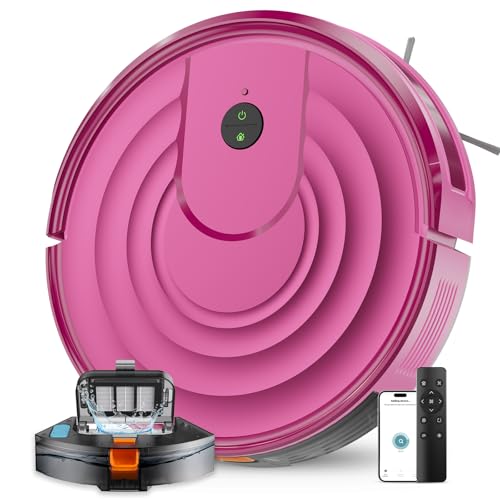
Mbyulo Robot Vacuum
The compact 4.5‑inch profile fits tighter spaces that taller models like the Tikom and Lefant might miss.
Score Analysis
Key score advantages vs. runner-up (Lefant M3)
Price Range
Tikom Robot Vacuum
$113.99
Lefant M3
$284.98
Mbyulo Robot Vacuum
Out of Stock
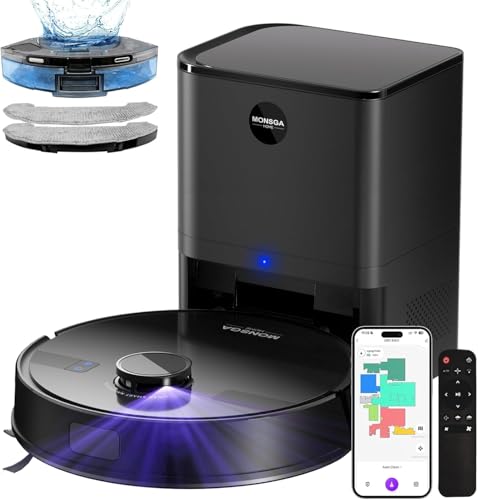
Monsga Robot Vacuum
$209.99

Ecovacs Deebot T8
$169.99

Shark Matrix Plus 2in1
$299.99

Roborock Q7 M5+ Black
$359.99

Roborock Qrevo S5V
$629.99

Roborock Q10 S5+
$399.99

Roborock Saros 10R
$1,099.99

Eureka E20 Plus
$409.77
Spec Comparison
TL;DR: The Tikom G8000 Max delivers 5000 Pa suction, a 0.3 L water tank and 150 minutes of quiet‑mode runtime for $113.99, making it a solid budget‑friendly vacuum‑and‑mop combo.
The standout spec is its 5000 Pa suction power, which reviewers say handles pet hair and dust on hard floors and low‑pile carpets. Coupled with a 0.3 L water tank, the unit can mop while vacuuming, and its 150‑minute battery life in quiet mode lets it cover larger areas without frequent recharging.
At $113.99, it sits well below premium models such as the Roborock Q7 M5+ and Shark Matrix Plus, yet it still offers comparable suction to the Mbyulo (also 5000 Pa). Weighing just 5.29 lb, it’s lighter than the Roborock (10.58 lb) and far lighter than the Shark (16.95 lb). Its 76.2 mm height is taller than the ultra‑slim Monsga (1.50 in) but slimmer than the Ecovacs Deebot T8 (3.70 in), helping it slip under most furniture.
Users consistently praise the 5000 Pa suction, the quiet 60 dB operation and the ability to reach tight spaces thanks to the 76.2 mm profile. Professional reviewers note the long 150‑minute run time and the convenience of app, remote, voice and button controls. The downside is its basic gyroscope‑and‑floor‑tracking navigation, which lacks laser or LiDAR mapping that higher‑end rivals provide, and because it has no self‑emptying dock, you’ll need to empty the 0.45 L dustbin after each run.
Pros
Cons
Best for: Budget-conscious buyers seeking a reliable entry‑level option
Avoid if: You have a home with a complex layout, many obstacles, or need advanced LiDAR mapping
“10/10”
TL;DR: The Lefant M3 delivers 12,000 Pa suction, a 2.5 L hot‑water mop tank and a self‑cleaning base, but its 28 lb station may be bulky for tight spaces.
The standout spec is the 12,000 Pa suction motor, which reviewers say captures 99.9 % of pet hair on both carpet and hard floor. Combined with a 220‑minute battery runtime, the robot can clean large areas without frequent recharging. Its self‑cleaning dock washes the mop with 45 °C water and holds a 3.5 L dust bag that lasts about eight weeks.
At 28.0 lb, the M3 is heavier than the Shark Matrix Plus (16.95 lb), the Roborock Q10 S5+ (14.77 lb) and the Roborock Q7 M5+ (10.58 lb), and considerably heavier than the Monsga (7.72 lb). However, its 12,000 Pa suction outperforms the 10,000 Pa of both Roborock models and the 6,000 Pa of the Monsga, while its 2.5 L water tank dwarfs the 0.27 L tank of the Monsga and the 240 ml tank of the Ecovacs Deebot T8.
User sentiment praises the robot’s pet‑hair pickup that captures 99.9 % of debris and the hands‑free convenience of the base station, yet many note that the 28 lb dock makes it difficult to stash in small apartments. Users describe the app setup as finicky, and occasional mapping glitches appear in cluttered or low‑light rooms. The 9 mm mop lift height also struggles with very thick carpet piles.
Technically, the M3 uses a 360° dToF LiDAR with a 15 m scanning range and a 190° PSD obstacle‑detection angle, feeding the Freemove Tech 3.0 system that learns no‑go zones and maps up to three floors. The dual‑spinning mop runs at 200 RPM, and the dock dries the mop with a 2‑hour cold‑air cycle.
Pros
Cons
Best for: Pet owners, busy households, and small‑to‑medium apartments (up to about 220 ㎡) that want strong suction and hands‑free maintenance.
Avoid if: You have very thick carpets, ultra‑minimalist spaces where a heavy base won’t fit, or a tight budget that can’t accommodate the premium price.
“no more manual mop washing”
“Effortless pet hair pickup”
TL;DR: The Mbyulo R101X0 delivers 5000 Pa suction, 130‑minute runtime and a 0.3 L mop tank at a budget price, but its random navigation can leave areas untouched.
The standout spec of the Mbyulo is its 5000 Pa suction paired with a 26,500 RPM motor, which professional reviewers note handles everyday dust and small debris effectively on hard floors and low‑pile carpet. A 130‑minute battery runtime lets the unit clean larger apartments without frequent recharging, and the 0.3 L water tank provides enough liquid for a single mop pass.
When you line it up against the other ten entries, the Mbyulo sits at the lower end of the price spectrum, making it cheaper than the Tikom Robot Vacuum Cleaner and the Ecovacs Deebot T8. Its 4.5‑inch height stands taller than the Tikom’s 76.2 mm profile but remains slim enough to slip under most furniture. The 0.35 L dustbin compares to the Tikom’s 450 ml bin, while its suction matches the Tikom’s listed 5000 Pa. Unlike higher‑priced models such as the Roborock Q7 M5+, it lacks LiDAR mapping and a self‑emptying dock.
User sentiment highlights the strong suction and long runtime as major wins, especially for budget‑conscious renters. Users praise the app‑based Smartlife control and Alexa voice integration for convenience, and they view the automatically lifted mop pad as a practical 2‑in‑1 feature. On the flip side, many owners complain that the random navigation pattern can miss spots, and the lack of a self‑emptying base means the 0.35 L dustbin must be emptied manually. Expert reviewers also point out that the AI obstacle avoidance claim remains unverified, so obstacle handling may be hit‑or‑miss.
Pros
Cons
Best for: Budget-conscious buyers seeking a reliable entry-level option
Avoid if: You need advanced mapping, self‑emptying, or highly precise navigation for large or obstacle‑dense spaces
“10/10”
TL;DR: The Monsga MS1 MAX delivers 6000 Pa suction, a 180‑minute runtime and a 0.27 L water tank in a low‑profile 1.5‑in design for $259.99.
The standout spec is its 6000 Pa suction power, which reviewers say lifts pet hair and carpet debris effectively. Coupled with a LiDAR navigation system, the robot maps rooms precisely and can store up to five maps for multi‑floor homes.
At 7.72 lb, the MS1 MAX is lighter than the Roborock Q7 M5+ (10.58 lb) and far lighter than the Shark Matrix Plus 2in1 (16.95 lb). Its 1.50‑in height is also considerably slimmer than the 10‑plus‑inch profiles of the Roborock models and the 5.69‑in height of the Shark, giving it an advantage under most furniture. Suction sits between the lower end of the market and the 10 000 Pa found on Roborock’s Q7 and Q10, while the 0.34 L dustbin is modest; however, the 3.5 L self‑emptying bag promises up to 60 days of hands‑free cleaning, comparable to Shark’s 45‑day claim but shorter than Roborock’s 7‑9‑week interval.
Consumers repeatedly praise the long 180‑minute runtime and quiet operation, especially in homes with pets. Professional reviewers highlight the precise LiDAR mapping and the convenience of a 60‑day self‑emptying cycle. A few users note that, despite the 1.5‑in profile, the robot can still miss the tiniest clearance spaces, and the need to replace the self‑emptying bag adds a small maintenance step. The robot supports only Alexa, which some owners find restrictive.
Technical details include a motor speed of 19 500 RPM, three suction levels, three water‑flow settings, and a 0.27 L water tank for mopping. The unit ships with a two‑year warranty, adding confidence for longer‑term use.
Pros
Cons
Best for: Pet owners and families with mixed‑surface flooring who want strong suction and a long‑lasting self‑emptying system.
Avoid if: You need a ultra‑slim robot for very low furniture or require broad voice‑assistant integration.
“10/10”
TL;DR: The Ecovacs Deebot T8 offers AI‑driven AIVI navigation, TrueMapping laser precision and a 0.24 L water tank for simultaneous vacuum‑and‑mop cleaning, all at $169.99.
The standout feature is the AIVI 2 MP camera that recognises seven object types, paired with TrueMapping laser navigation for accurate room mapping. At just 3.70 in tall, the robot fits under most furniture while its 13.30 lb weight keeps it stable during cleaning cycles.
In size, the Deebot’s 13.90 in length matches the Eureka E20 Plus’s 13.80 in length but exceeds the Tikom’s compact height of 76.2 mm. It’s longer than the Roborock Q7 M5+ (19.57 in) and shorter than the Shark Matrix Plus 2in1’s 21.40 in length. The 0.24 L water tank is a bit smaller than the 0.30 L tanks on Tikom and Mbyulo, yet larger than the 0.27 L tank on Monsga. Weighing 13.30 lb, it’s lighter than the Shark’s 16.95 lb unit but heavier than the Tikom’s 5.29 lb model.
Users frequently praise the reliable carpet‑detection that automatically boosts suction on rugs and disables mopping on carpeted areas. The quiet operation and easy app setup also earn positive remarks. However, several reviewers note occasional navigation glitches in very cluttered layouts and remain uncertain about the deep‑cleaning ability of the mop, as many early owners have not yet tested the mopping performance.
Professional reviewers highlight the combination of AI‑driven obstacle avoidance and laser mapping as a strong technical advantage, and they point out the 5200 mAh battery that delivers roughly 180 minutes of runtime, enough to cover up to 3,000 sq ft in a single pass. The integrated OZMO Pro wiper uses the 0.24 L tank to spray water while vacuuming, offering an all‑in‑one solution for hard‑floor maintenance.
Pros
Cons
Best for: Medium‑large homes (2,000‑3,000 sq ft) with mixed hard floors and low‑to‑medium pile carpet.
Avoid if: You need deep cleaning on high‑pile carpet or a tighter‑budget robot vacuum.
TL;DR: The Shark Matrix Plus 2‑in‑1 robot vacuum and mop costs $299.99, weighs 16.95 lb, and offers a 45‑day self‑emptying bin plus sonic mopping, making it a solid premium choice for mixed‑floor homes.
The standout spec is the bagless self‑empty dock that holds up to 45 days of debris, reducing how often you need to intervene. At 5.69 in tall, 21.40 in long and 14.96 in wide, the unit fits under most furniture while still providing a sizable cleaning footprint. Its Sonic Mopping system adds a gentle scrubbing action for hard floors, and the 16.95 lb weight gives it a solid build without being overly cumbersome.
Compared with the other ten robots, Shark is heavier than the Roborock Q10 S5+ (14.77 lb) and the Ecovacs Deebot T8 (13.30 lb), but lighter than the Lefant M3, which tops out at about 28.0 lb. Its 45‑day auto‑empty period sits between the 70‑day capacity of the Roborock Q10 S5+ and the roughly 7‑9‑week window of the Roborock Q7 M5+. In length, Shark’s 21.40 in chassis exceeds the 20.72 in of the Q10 S5+ and the 19.57 in of the Q7 M5+, while its height of 5.69 in is shorter than the 10.18 in of the Q10 S5+ and the 10.24 in of the Q7 M5+. This mix of dimensions makes it a mid‑sized option that balances reach with low‑profile access.
Professional reviewers praise the Matrix Clean multi‑pass algorithm, noting up to a 30 % boost in carpet dirt pickup, and the CleanEdge Detect air‑blast, claimed to improve edge and corner cleaning by about 50 %. Users with pets and allergy concerns often highlight the lint‑roller brush for preventing hair tangles and the long‑lasting self‑empty dock for fewer maintenance trips. However, the lack of dedicated obstacle‑avoidance sensors means the robot may bump into low furniture, and the single lint‑roller brush may struggle on deep‑pile rugs, which some owners have flagged as a trade‑off.
Pros
Cons
Best for: Pet owners, allergy sufferers, and households with mixed hard‑floor and carpet areas up to 2,000‑3,000 sq ft who value a premium, low‑maintenance robot.
Avoid if: Your home is cluttered with many low obstacles, you need advanced obstacle‑avoidance, or you primarily have high‑pile carpets.
“keeps pet hair and string from getting tangled”
TL;DR: The Roborock Q7 M5+ delivers 10 000 Pa suction and a 7‑9‑week auto‑empty dock for $229.99, making it a solid mid‑range vacuum‑mop combo for hard‑floor homes.
The standout spec is its 10 000 Pa suction power, which reviewers say handles larger particles on hardwood and tile with ease. It also packs an auto‑empty dock that can store debris for up to nine weeks, reducing how often you need to intervene.
At 10.58 lb, the Q7 M5+ is lighter than the Shark Matrix Plus 2in1 (16.95 lb), the Roborock Q10 S5+ (14.77 lb), the Ecovacs Deebot T8 (13.30 lb) and the Lefant M3 (28.0 lb), but heavier than the Monsga robot (7.72 lb). Its height of 10.24 in is taller than the ultra‑compact Monsga (1.50 in) and Ecovacs (3.70 in) models, yet still low enough to clear most furniture legs. Width (12.80 in) and length (19.57 in) place it between the compact peers and the larger Shark and Q10 S5+ units.
User feedback highlights fast cleaning on open hard floors and a quieter dock operation, while professional reviewers note the strong suction and reasonable noise levels for its class. Common complaints include the need for a second pass on fine carpet debris, an auto‑empty function that only activates when the bin is completely full, and navigation that isn’t as precise as higher‑end LiDAR models.
Technically, the robot uses PreciSense LiDAR for mapping and charge‑and‑resume cleaning, and its dual anti‑tangle mop system handles pet hair without snagging. The combination of these features with a 10 000 Pa suction rating positions the Q7 M5+ as a capable entry‑level hybrid.
Pros
Cons
Best for: Value-conscious buyers seeking quality at $229.99
Avoid if: You have heavy carpet, high‑clutter spaces, or need precise fine‑debris cleaning
“RIPS through open space”
“better dock noise than Roombas”
TL;DR: The Roborock Qrevo S5V delivers 12 000 Pa suction and a 5 L mop tank, but its premium $499.99 price and sizable 25.57 lb weight make it a high‑end choice for spacious homes.
The standout spec is the 12 000 Pa suction power, which tops the suction figures listed for the other robots in this roundup. Coupled with a 5 L water tank, the Qrevo can mop larger areas without frequent refills, a clear advantage for medium‑to‑large floor plans.
At 25.57 lb, the Qrevo is heavier than the Shark Matrix Plus (16.95 lb) and the Roborock Q10 S5+ (14.77 lb), but lighter than the Lefant M3 (28.0 lb). Its dimensions—20.51 in tall, 13.38 in long and 19.17 in wide—place it between the compact Monsga Robot (1.50 in tall, 4.96 in long) and the bulkier Eureka E20 Plus (13.80 in tall, 13.80 in long). It also carries a higher price tag than those models, positioning it in the premium tier of this list.
Professional reviewers praise the robot’s dual zero‑tangle DuoDivide brushes for handling pet hair on mixed flooring, and the FlexiArm edge‑mopping system is rated highly in dried‑stain tests. Users appreciate the 10‑week dust‑bag storage and the self‑emptying dock, though a few note that the robot’s height can restrict clearance under very low furniture. Review volume is modest, which some buyers see as a drawback when judging long‑term reliability.
The Qrevo navigates with Reactive Tech LiDAR, offering precise mapping and obstacle avoidance. Its dock not only empties the dust bag but also washes and dries the mop pads, streamlining maintenance for busy households.
Pros
Cons
Best for: Those prioritizing quality and willing to pay for premium performance
Avoid if: You need advanced features or professional‑grade performance, or you have very low furniture that the robot may not clear
TL;DR: The Roborock Q10 S5+ delivers 10 000 Pa suction, LiDAR navigation and a 70‑day auto‑empty system for $299.99, making it a strong mid‑range combo for mixed‑floor homes.
What really sets the Q10 S5+ apart is its 10 000 Pa HyperForce suction, which reviewers say lifts sand, debris and pet hair from both carpet and hard floor. It also sports a Sonic Vibration mop that runs at 3000 vpm, giving the mop a scrubbing action that many users find more effective than a static pad.
At 14.77 lb, the robot weighs more than the 7.72‑lb Monsga model but less than Shark’s 16.95‑lb Matrix Plus. Its auto‑empty bag holds enough debris for about 70 days, outlasting Shark’s 45‑day claim and matching the 7‑9‑week range of Roborock’s own Q7 M5+. The 10 000 Pa suction also beats the 6 000 Pa of Monsga and aligns with the Q7’s suction level, while exceeding Eureka’s 8 000 Pa figure.
Professional reviewers highlight PreciSense LiDAR navigation and praise the user‑friendly app that lets you set virtual barriers. Everyday owners love the long runtime—up to 250 minutes according to the manufacturer—and the relatively quiet operation at roughly 58 dB. However, the same experts point out that the obstacle‑avoidance sensors can snag on cords or toys, and the basic mopping mode sometimes leaves streaks.
Pros
Cons
Best for: Those prioritizing quality and willing to pay for premium performance
Avoid if: You're on a tight budget or only need basic functionality
TL;DR: The Roborock Saros 10R delivers flagship suction at 22 000 Pa and a 3.14‑in ultra‑slim profile, but its $999.99 price and modest carpet performance keep it in the premium niche.
What really sets the Saros 10R apart is its 22 000 Pa suction power combined with a 3.14‑in thickness, making it one of the strongest yet most unobtrusive robot vacuums on the market. The StarSight Autonomous System 2.0 blends solid‑state LiDAR, ToF and RGB sensors for precise obstacle avoidance, and the DuoDivide™ anti‑tangle brush reduces the need for frequent cleaning.
Compared with the ten other models in this roundup, the Saros 10R is heavier than the Shark Matrix Plus 2in1 (16.95 lb) and the Q10 S5+ (14.77 lb), and only slightly lighter than the Roborock Qrevo S5V (25.57 lb). Its 19.21‑in height exceeds most peers—only the Qrevo S5V (20.51 in) is taller—while its 15.00‑in length sits between the compact Monsga robot (4.96 in) and the longer Shark Matrix (21.40 in). Most importantly, its 22 000 Pa suction outstrips every competitor, which range from 6 000 Pa (Monsga) to 12 000 Pa (Qrevo S5V).
User feedback repeatedly praises the ultra‑slim 3.14‑in profile for slipping under sofas and beds with as little as 8 cm clearance, and professional reviewers highlight the robot’s edge‑to‑edge hard‑floor pickup as best‑in‑class. The same sources note that carpet cleaning is only adequate, especially on low‑ and high‑pile rugs, and that the 8 mm mop lift can struggle with thicker carpeted areas. The 10‑in‑1 dock’s auto‑empty bag (2.7 L) and mop‑care functions receive praise, though the unit’s 25.49 lb weight can make dock placement a bit cumbersome.
Pros
Cons
Best for: Those prioritizing quality and willing to pay for premium performance
Avoid if: You're on a tight budget or only need basic functionality
TL;DR: The Eureka E20 Plus packs 8 000 Pa suction and a 5 L bagless self‑emptying base into a tall, narrow robot that’s solid for the price but lacks premium mop‑washing features.
The standout spec is the 8 000 Pa suction power, which reviewers say handles carpet piles and heavy debris with confidence. Coupled with a 5 L dust‑bag capacity, the base can run for weeks without you needing to empty it.
At 13.80 in tall, it's taller than most rivals – it exceeds the 10.24 in height of the Roborock Q7 M5+ and dwarfs the 3.70 in profile of the Ecovacs Deebot T8. Its 3.80 in width, however, is much narrower than the 13.90 in width of the Deebot T8 and the 12.80 in width of the Roborock, letting it slip under tighter spaces horizontally. Suction-wise, it outperforms the 5 000 Pa of Tikom, Mbyulo, and Monsga models, though it sits below the 10 000 Pa of the Roborock. Navigation uses Dual LiDAR, putting it on par with the LiDAR‑based systems of the Roborock and Ecovacs units.
User sentiment highlights the strong suction and the anti‑tangle brush that keeps pet hair from wrapping, a point echoed by professional reviewers who note the V‑shaped brush improves carpet cleaning. The 3.7/5 star average from 2,673 reviews signals mixed feelings, with some owners wishing for premium mop‑washing capabilities that higher‑end competitors provide.
The robot's also benefits from Eureka’s 5‑cone cyclonic design and integrated HEPA filtration, which reviewers say helps allergy sufferers by trapping fine particles.
Pros
Cons
Best for: Entry-level buyers or those on a tight budget
Avoid if: You need powerful performance or professional‑grade features
Breakdown
Tikom Robot Vacuum
Pros
Lefant M3
Pros
Mbyulo Robot Vacuum
Pros
Monsga Robot Vacuum
Pros
Cons
Based on scoring data and product specs
Personalized picks
Best Overall Pick
Tikom Robot Vacuum
Best OverallBest for: Budget-conscious buyers seeking a reliable entry-level option
Lefant M3
Best for: Those prioritizing quality and willing to pay for premium performance
$284.98+$170.99 vs winner
Skip Eureka E20 Plus if…
You need powerful performance or professional-grade features
We’re naming the Tikom Robot Vacuum Cleaner the clear winner of the vacuum‑and‑mop combo roundup. It earns top marks with a 4.4‑star rating from 3,929 reviewers, a solid 5000 Pa suction rating, and a 150‑minute battery life in quiet mode—all while weighing just 5.29 lb, which makes it easy to move around the home.
The Lefant M3 takes the runner‑up spot, especially if you need heavy‑duty cleaning for larger homes. Its 12000 Pa suction power outpaces the competition, it carries a 2.5 L water tank for extended mopping, and its 3.5 L dust‑bag capacity includes an 8‑week self‑emptying feature, meaning fewer trips to the trash. A 220‑minute runtime also keeps it working longer on bigger floor plans.
Looking at other budget tiers, the Mbyulo Robot Vacuum stands out as the best budget pick at $99.99, delivering solid basics without breaking the bank. In the mid‑range, the Monsga Robot Vacuum offers a balanced feature set for $259.99. For those willing to invest, the premium Roborock Saros 10R tops the high‑end list at $999.99, delivering top‑shelf performance.
Pick the Tikom Robot Vacuum Cleaner today and enjoy a reliable clean without compromise.
Yes, the Tikom costs about $14 more but carries a higher overall user rating and offers a larger 450 ml dustbin versus the Mbyulo’s 0.35 L bin. It also provides a longer quiet‑mode runtime of 150 minutes compared with the Mbyulo’s 130 minutes, giving it a modest edge in endurance and capacity.
No reviews yet — be the first to share your experience.
Please sign in to leave a review
Also considered
$284.98
