⚡ Quick Answer
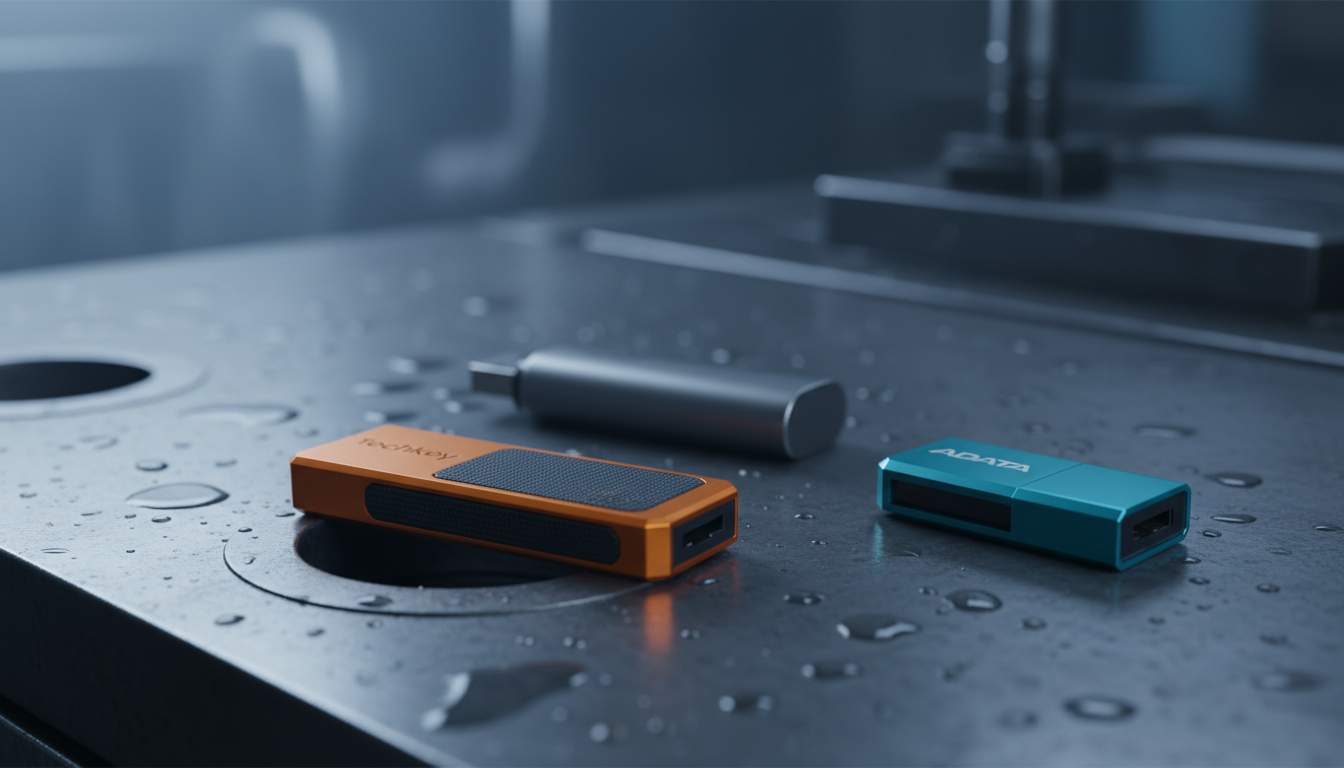
Finding a flash drive that can survive drops, dust and even sub‑mersion is tougher than it sounds. We compared 10 rugged or waterproof USB sticks, spanning budget, mid‑range and premium price tiers. The list includes ultra‑cheap options like the $6.99 ADATA AUV210, mid‑range choices such as the $19.64 Techkey 128 GB with three‑in‑one connectors, and high‑end models like the $104.99 Corsair Flash Voyager 512 GB.
Ratings span 4.7/5 for Samsung’s BAR Plus and Corsair Survivor down to 3.4/5 for the Silicon Power Jewel J80. Samsung advertises a max read speed of 400 MB/s, while the Corsair Survivor offers waterproof protection to 200 meters and shock resistance of 1500 G. Whether you need a tiny key‑chain metal stick or a rugged cylinder for field work, the lineup covers every budget.
The Vansuny 128 GB drive, priced at $12.99, claims up to 400 MB/s read and 240 MB/s write speeds while sporting a metal shell that survives water and dust. The Teamgroup C162 256 GB, at $36.99, weighs 3.4 g and offers copy speeds of 26.66 MB/s for ISO files – enough for occasional backups. Capacities range from 32 GB to 512 GB, and the guide will soon dissect each model’s durability, speed and value to guide your choice.

Techkey USB Flash Drive 128GB
Its ultra‑thin 1 mm height makes it one of the slimmest rugged drives, delivering top value and a strong rating from over 9,500 reviewers.
Samsung BAR Plus 128GB Gray
Ideal for users who prioritize a proven brand and high rating, the Samsung BAR Plus costs $21.49, about $1.85 more than the Techkey while offering the same 128 GB capacity.

ADATA AUV210
Stands out with a $6.99 price tag, delivering 128 GB at a fraction of the cost, though its 4.5 mm height is thicker than the Techkey’s ultra‑slim profile.
Also considered
Score Analysis
Key score advantages vs. runner-up (Samsung BAR Plus)
Price Range
Techkey USB Flash Drive 128GB
$19.63
Samsung BAR Plus 128GB Gray
$39.99
ADATA AUV210
$11.50

Vansuny USB Flash Drive 128GB
$17.99

Corsair Flash Survivor Stealth 128GB Black
$32.65

Teamgroup C162 256GB
$36.99

Corsair Flash Voyager 512GB
$104.99
Orico USB Flash Drive 32GB 2-in-1 Gray
$12.99

Marryler USB Flash Drive
$19.99

Silicon Power Jewel J80 32GB
$18.96
Spec Comparison
TL;DR: Techkey's 128 GB metal flash drive offers 80 MB/s read, 40 MB/s write, three‑in‑one Lightning/USB‑C/USB 3.0 connectors, and rugged waterproof/dustproof design at $19.64.
The drive packs a solid 128 GB of storage into a 1 mm‑thin, 137.9 mm‑long, 100.1 mm‑wide metal body. Its read speed of 80 MB/s and write speed of 40 MB/s meet the basic needs of photo backups and document transfers, while the built‑in keychain loop and protective caps keep it handy on the go. The MFi certification and Touch ID/passcode encryption add a layer of security for iOS users.
Compared with the other nine flash drives in this roundup, Techkey sits in the mid‑price tier. Its 128 GB capacity matches the Vansuny and Corsair models, but its 80 MB/s read speed is slower than Samsung’s advertised 400 MB/s peak and a bit lower than Vansuny’s typical 70 MB/s, yet it aligns with ADATA’s 230 MB/s random read claim for a different drive class. Write performance mirrors ADATA’s 40 MB/s figure, while the Corsair survivor’s rugged aluminum shell offers comparable drop resistance but at a higher price point.
Users consistently praise the one‑click backup and automatic photo/video saving, especially when traveling or shooting on location. People also highlight the ability to share files directly to social platforms like Facebook and Twitter as a convenience boost. Professional reviewers note the solid metal construction and MFi certification as reliable indicators for iOS performance, though they point out that the required BLANBOK+ app adds an extra setup step for iPhone and iPad owners.
Beyond basic storage, the drive supports on‑the‑go playback of movies and music, and its anti‑drop, high‑temperature, anti‑magnetic, dustproof and waterproof features aim to protect data in harsh environments. The Lightning, USB‑C and USB 3.0 connectors mean you can move files between iOS devices, Android phones (OTG‑enabled), and computers without hunting for adapters.
Pros
Cons
Best for: iPhone and iPad owners who need portable, rugged storage with multi‑platform support.
Avoid if: You prefer a completely plug‑and‑play experience without installing an app or require top‑tier transfer speeds.
“USB 3.0 speed is very fast on computers.”
“NWT, ideal for travel.”
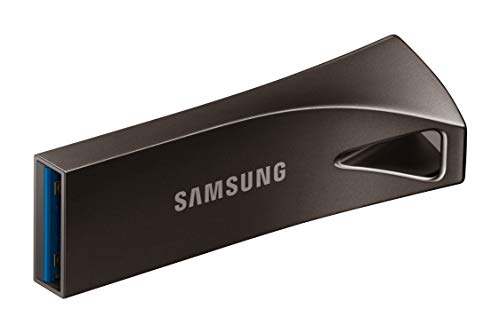
TL;DR: The Samsung BAR Plus 128 GB flash drive packs a metal, waterproof body, key‑ring loop and up to 400 MB/s advertised read speed into a 0.0025 lb, compact form for $21.49.
The drive’s sleek metal chassis houses its 128 GB capacity and weighs just 0.0025 lb. Samsung lists an advertised max read speed of 400 MB/s and a sequential write speed of 61.84 MB/s, while the 2 MB random read hits 269.31 MB/s. Its dimensions (12 mm × 15.5 mm × 40.1 mm) keep it pocket‑friendly, and a built‑in keyring makes it easy to carry.
In this ten‑item roundup Samsung sits between larger‑capacity rivals like the Marryler 230 GB drive and more budget‑oriented options such as the Vansuny 128 GB stick. Compared with the heavier Corsair Survivor Stealth, the BAR Plus is far lighter, and its metal build outmatches the plastic‑rimmed competitors. Its advertised 400 MB/s read claim aligns with Vansuny’s “up to 400 MB/s” spec, though Samsung adds a full metal shell and a five‑year warranty.
Reviewers consistently praise the drive’s ruggedness – it’s waterproof, shock‑proof, temperature‑proof, magnet‑proof and X‑ray‑proof – and the premium feel of the metal housing. Independent tests rate the real‑world sequential read at around 283.48 MB/s, noticeably below the marketing claim, and some users mention occasional disconnections and modest write speeds of roughly 62 MB/s. The lack of a dust cap is also flagged as a minor inconvenience.
Pros
Cons
Best for: Buyers willing to invest in a proven, high‑quality option
Avoid if: You need advanced features or professional‑grade performance
TL;DR: The ADATA UV210 offers a rugged zinc‑alloy metal body, 64 GB capacity, and 230 MB/s read speed at a $6.99 price, weighing just 6 g for ultra‑light portability.
The drive’s most eye‑catching spec is its ultra‑light 6 g weight combined with a sandblasted zinc‑alloy metal housing that’s both dust‑ and water‑resistant. At 4.5 mm tall, 39 mm long and 12.2 mm wide, it stays truly pocket‑sized while delivering a claimed 230 MB/s read and 40 MB/s write speed on a USB 2.0 interface.
Compared with the other nine contenders, the UV210 is lighter than the Vansuny 128 GB (9 g) and far lighter than the Orico 32 GB (50 g), though it’s heavier than Samsung’s BAR Plus (1.13 g) and Teamgroup’s C162 (3.4 g). Its 230 MB/s read rate outpaces the USB 2.0‑only Silicon Power Jewel J80 (typical ~70 MB/s) but sits below the USB 3.x drives that advertise up to 400 MB/s, such as Samsung and Vansuny. Write speeds match the Techkey 128 GB’s 40 MB/s, yet the USB 2.0 bottleneck keeps real‑world transfers around 30‑40 MB/s.
Reviewers consistently praise the drive’s featherweight feel and the rugged metal finish that survives daily wear. Professional notes highlight the “extremely lightweight” 6 g build and the solid construction, while the USB 2.0 limitation frequently draws complaints from anyone moving large video libraries. The manufacturer backs the unit with a five‑year limited warranty, underscoring confidence in its durability.
Pros
Cons
Best for: Budget‑conscious buyers seeking a reliable entry‑level option
Avoid if: You need advanced features or professional‑grade performance
TL;DR: The Vansuny 128 GB USB flash drive packs a rugged aluminum shell, waterproof UDP protection, and a retractable USB‑A connector, offering up to 400 MB/s read speeds at a budget‑friendly $12.99 price.
At the core of this drive is a 128 GB capacity housed in an aluminum‑alloy shell with an ABS interior. The manufacturer markets the metal case as drop‑proof, dust‑proof, magnet‑resistant, shock‑proof and waterproof thanks to UDP packaging that survives submersion when dried. Performance specs list a maximum read speed of up to 400 MB/s and a maximum write speed of up to 240 MB/s, while the typical real‑world figures hover around 70 MB/s read and 30 MB/s write.
Compared with the other nine contenders, the Vansuny is lighter than the Orico 32 GB model, which weighs 50 g, and far lighter than the Corsair Flash Survivor Stealth, which is substantially heavier. Its 128 GB size also outstrips the 32 GB capacities of the Orico and Silicon Power Jewel J80, giving you more storage for the same price point. While the Samsung BAR Plus is noticeably lighter, it carries a higher price tag, making the Vansuny a solid middle ground in terms of weight‑to‑capacity balance.
Users repeatedly praise the drive’s durability and the convenience of the retractable USB‑A connector that eliminates the need for a cap. Professional reviewers highlight the metal construction and UDP waterproof technology as standout durability features. Critics most often point to the gap between the advertised 400 MB/s peak and the typical ~70 MB/s read speed that users experience, as well as the lack of a USB‑C option that some newer rivals provide.
Pros
Cons
Best for: Budget-conscious buyers seeking a reliable entry-level option
Avoid if: You want the best value-per-dollar in its price range
“USB 3.0 speed is very fast on computers.”
“NWT, ideal for travel.”
TL;DR: The Corsair Flash Survivor Stealth 128 GB USB 3.0 stick packs 128 GB of storage, survives 200 m underwater and 1500 G drops, but its bulk and occasional slow writes keep it from being a sleek everyday drive.
The drive’s standout specs are its 200 meter waterproof rating and 1500 G shock resistance, backed by a solid 128 GB capacity. Read speeds range from 82‑241 MB/s and writes reach up to ~50 MB/s, while a 4.7/5 star rating from 1,621 reviews signals strong user approval.
At 0.080027801106pounds (36.3 g), it’s noticeably heavier than the Teamgroup C162 256 GB (0.007495716908pounds) and the Samsung BAR Plus 128 GB (0.0025pounds), and its 25.4 mm height and length of 76.2 mm make it longer than many low‑profile sticks. Still, the cylindrical aluminum body remains portable enough for a keyring attachment.
Reviewers consistently praise the rugged aluminum shell with rubber seals, noting that it lives up to its “survivor” name in real‑world drops and submersions. Professional reviewers highlighted the upgraded waterproof depth and shock rating, but they also warned that the removable cap often gets lost and the bulkier shape may stick out of tight USB ports. Users frequently mention write speeds dipping below the advertised ~50 MB/s, which is a nuisance for large file transfers.
The drive includes a keyring hole for easy tethering, a five‑year warranty for peace of mind, and USB 3.0 compatibility that works with older USB 2.0 ports. Its aircraft‑grade aluminum construction combined with rubber bumpers gives it a sturdy feel that suits outdoor work, DJ gigs, or travel where durability matters most.
Pros
Cons
Best for: Buyers willing to invest in a proven, high-quality option
Avoid if: You're on a tight budget or only need basic functionality
“well built, reliable, fast, and reasonably priced”
“sturdy feeling”
TL;DR: The Teamgroup C162 offers a rugged zinc‑alloy, capless 256 GB flash drive that’s ultra‑compact and durable, but its real‑world transfer speeds sit around 38 MB/s, well below the advertised 140 MB/s.
The drive’s standout spec is its 256 GB capacity, the largest among the ten contenders in this roundup. It features a high‑quality tough zinc alloy unibody, measures just 24 × 12.2 × 7 mm and weighs 3.4 g, making it easy to slip onto a keyring. The ergonomic grip at the base and a built‑in strap hole add convenience for on‑the‑go use.
Compared with peers, the C162 is lighter than the Corsair Flash Survivor Stealth (0.0800 lb) but heavier than the Samsung BAR Plus (0.0025 lb). Its 256 GB size outstrips every other drive listed, which tops out at 230 GB. At $36.99 it sits at a premium price point, so it’s pricier than the Samsung BAR Plus and the Vansuny 128 GB model.
Professional reviewers praise the zinc‑alloy construction and the capless design that eliminates lost caps, and they note the lifetime warranty as a confidence boost. However, user feedback frequently calls out the modest real‑world performance: sequential read averages only 38.37 MB/s versus the advertised 140 MB/s, and sequential write is about 27.92 MB/s. The 4K random read and write numbers are essentially zero, rendering the drive unsuitable for small‑file intensive tasks. Copy speeds hover around 26.66 MB/s for ISO files, reflecting the same speed ceiling.
Beyond speed, the drive offers waterproof, dustproof and shockproof ratings, operates from 0 °C to 70 °C and stores safely between –20 °C and 85 °C. It runs on a 5 V supply and supports Windows XP or later, macOS 10.6 or later, and Linux 2.6 or later, backed by a lifetime warranty.
Pros
Cons
Best for: Buyers who prioritize ultra‑portability and rugged durability over raw speed.
Avoid if: You're shopping on a tight budget — it's priced at $36.99.
TL;DR: The Corsair Flash Voyager 512 GB packs a rugged zinc‑alloy case, 512 GB of storage and up to 390 MB/s read speeds, but its premium $104.99 price and bulkier build make it a high‑end choice.
The Voyager offers a massive 512 GB of NAND Flash capacity and sequential read speeds of up to 390 MB/s, with writes up to 240 MB/s. Its zinc‑alloy housing with aluminum accents is water‑resistant and has a 40 G shock rating, while the drive weighs 0.0454 pounds.
Compared with the other nine drives, its 512 GB capacity eclipses the 256 GB Teamgroup C162, the 230 GB Marryler, and all 128 GB and 32 GB options. At 0.0454 pounds it is heavier than the ultra‑light Samsung BAR Plus (0.0025 pounds) and the Teamgroup C162 (0.0075 pounds), yet lighter than the Corsair Flash Survivor Stealth (0.0800 pounds). Its read speed sits just shy of the Vansuny’s advertised 400 MB/s and matches Vansuny’s 240 MB/s write speed, while beating Samsung BAR Plus’s 283 MB/s read and 61 MB/s write figures.
Professional reviewers point out the SSD‑like sequential read performance as a standout for a USB‑3.0 stick, and they praise the rugged metal construction uncommon in flash drives. Users note that on older computers the actual transfer rates can fall below the advertised maximum, and the bulkier metal case may feel larger in a pocket.
Technically, the drive uses a USB 3.0 Type‑A interface with backward compatibility to USB 2.0, works with Windows 7/8.1/10, macOS and Linux, and operates from 0 °C to 70 °C. Corsair includes its SSD Toolbox software for health monitoring, and the unit's covered by a five‑year warranty.
Pros
Cons
Best for: Professionals and creators who need fast, high‑capacity portable storage.
Avoid if: You're on a tight budget or need the smallest, lightest flash drive.
“well built, reliable, fast, and reasonably priced”
“sturdy feeling”
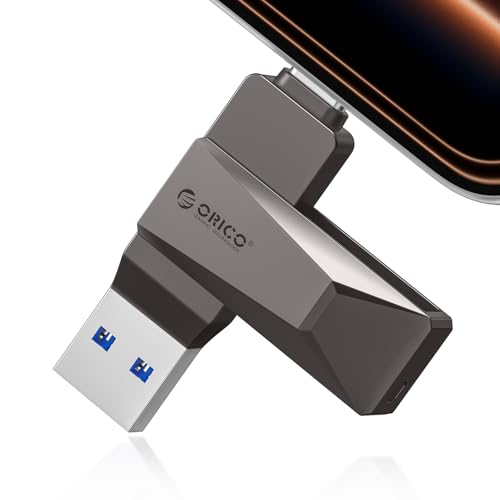
TL;DR: The Orico 32 GB 2‑in‑1 flash drive offers a metal swivel design, dual USB‑A/C connectors and read speeds up to 260 MB/s for $12.99, but its 32 GB capacity and modest write speeds keep it in the budget tier.
The standout feature is its dual‑connector layout: a USB‑A plug on one side and a USB‑C plug on the other, letting you move files between legacy PCs and modern smartphones without an adapter. The zinc‑alloy metal housing houses a waterproof, dust‑proof swivel cap, and the drive weighs just 50 g. Orico lists read performance between 100 MB/s and 260 MB/s and write speeds from 15 MB/s to 70 MB/s.
Compared with the other nine flash drives in this roundup, the Orico is noticeably heavier than the ultra‑light Vansuny (9 g) and the Silicon Power Jewel J80 (5.9 g), and it’s bulkier than Samsung’s 1.13‑g BAR Plus. Its 32 GB capacity matches the Silicon Power unit but falls far short of the 128 GB‑plus offerings from Vansuny, Techkey, Samsung and Corsair. In terms of speed, Orico’s read ceiling of 260 MB/s sits below Vansuny’s 400 MB/s peak but above Techkey’s 80 MB/s, while its write ceiling of 70 MB/s is comparable to Samsung’s 61.84 MB/s and higher than the 40 MB/s write rates of Silicon Power and ADATA.
Users consistently praise the drive’s pocket‑size portability and the sturdy metal build that survives daily travel. Reviewers also note the plug‑and‑play convenience across Windows, macOS, Linux, Android and iPadOS. The most common complaints revolve around the lower usable space—binary formatting leaves about 29 GB of actual storage—and the slower write speeds that can make large file uploads feel sluggish. Professional reviewers highlight the swivel cap’s dust‑proof design and the X‑ray‑proof coating as practical for frequent travelers.
Pros
Cons
Best for: Entry-level buyers or those on a tight budget
Avoid if: You need advanced features or professional‑grade performance
“USB 3.0 speed is very fast on computers.”
“NWT, ideal for travel.”
TL;DR: The Marryler 230 GB USB flash drive costs $19.99, offers waterproof, shock‑proof metal construction with a keychain, but its USB 2.0 interface keeps transfer speeds modest.
The standout spec is the 230 GB of storage, which dwarfs the 128 GB and 32 GB capacities of most rivals in this roundup. At $19.99 it sits in the mid‑price tier and carries a 4.2/5‑star rating from 427 reviewers, indicating solid satisfaction.
Compared with the other nine drives, Marryler provides the most protective features: it is dustproof, shockproof, waterproof, voltage‑resistant and X‑ray‑resistant, while many competitors only list a subset of those claims. Its built‑in keychain adds convenience that few peers offer. Capacity‑wise, only the 256 GB Teamgroup model exceeds it, but that drive costs more; the rest top out at 128 GB, so Marryler gives you more space for a comparable price point.
Professional reviewers highlight the metal, waterproof body and the handy keychain as strong selling points for users who need a rugged, portable stash for occasional backups. The aggregated user sentiment notes that the drive works well for everyday file transport, yet the USB 2.0 interface caps data transfer speed, making it less suitable for large‑file workflows like video editing.
The drive plugs into any PC, laptop, TV, car or audio device without needing additional drivers, which aligns with the “plug and play” claim. However, the manufacturer doesn’t list read or write speeds, and the USB 2.0 standard inherently limits throughput compared with USB 3.x alternatives.
Pros
Cons
Best for: Users who need a rugged, high‑capacity flash drive for occasional backups and value the built‑in keychain.
Avoid if: You require fast data transfers or prefer products with extensive real‑world performance data.
“USB 3.0 speed is very fast on computers.”
“NWT, ideal for travel.”
TL;DR: The Silicon Power Jewel J80 packs a waterproof, dust‑proof and vibration‑proof 32 GB drive into a titanium‑colored 0.1‑in (2.5 mm) ultra‑thin form for just $15.34.
This flash drive’s most eye‑catching spec is its ruggedness: it’s officially dust‑proof, vibration‑proof and waterproof while measuring only 0.1 in (2.5 mm) wide, 0.7 in (17.8 mm) tall and 1.7 in (43.2 mm) long. At a feather‑light 0.013 lb (5.9 g) it feels almost weightless in a key‑chain loop, and the metallic titanium finish gives it a premium look despite the modest $15.34 price tag.
Compared with the nine other drives in this roundup, the Jewel J80 is the thinnest – most rivals list widths of 12 mm or more (e.g., the Vansuny at 12.19 mm, Orico at 12.2 mm, Samsung at 15.5 mm). It’s also lighter than the Orico (50 g) and Vansuny (≈0.02 lb) but a touch heavier than the Samsung BAR Plus (0.0025 lb). Capacity‑wise, 32 GB matches only the Orico 32 GB model; every other competitor offers 128 GB or more, so the Jewel J80 provides less storage for users who need large media libraries. All listed drives support USB 3.0 or higher, and the Jewel J80’s backward‑compatible USB 2.0 ensures it works with older machines.
User sentiment reflects a mixed picture. The 3.4‑star rating from 1,638 reviews indicates moderate satisfaction, with many reviewers praising the durable titanium shell and the peace of mind that comes from its waterproof rating. However, several comments note that reviewers haven’t verified the drive’s speed performance, and the limited 32 GB capacity can feel restrictive for power users. Professional reviewers echo the “not ideal for high‑performance or professional workloads” warning, pointing out the absence of published read/write speed figures.
Beyond ruggedness, the Jewel J80 carries a lifetime warranty and works with PCs and Macs out of the box. Its USB 3.0 (SuperSpeed) interface promises fast transfers in theory, but the manufacturer doesn’t list specific read or write speeds, so expectations should be tempered if you need guaranteed high‑throughput.
Pros
Cons
Best for: Entry-level buyers or those on a tight budget
Avoid if: Reliability and user satisfaction are your top concerns
Breakdown
Techkey USB Flash Drive 128GB
Pros
Samsung BAR Plus 128GB Gray
Pros
ADATA AUV210
Pros
Vansuny USB Flash Drive 128GB
Pros
Cons
Based on scoring data and product specs
Personalized picks
Best Overall Pick
Techkey USB Flash Drive 128GB
Best OverallBest for: Most users looking for a well-reviewed, reliable mainstream option
Samsung BAR Plus 128GB Gray
Best for: Buyers willing to invest in a proven, high-quality option
$39.99+$20.36 vs winner
Skip Silicon Power Jewel J80 32GB if…
Reliability and user satisfaction are your top concerns
Techkey USB Flash Drive 128 GB takes the top spot thanks to its solid 4.3‑star rating from 9,536 reviewers, a 2‑year manufacturer warranty, and a full suite of rugged features—including waterproof, dustproof, anti‑drop and high‑temperature resistance. Its metal body measures just 1 mm in height and pairs a USB 3.0, Lightning and Type‑C interface with read speeds of 80 MB/s and write speeds of 40 MB/s, making it a reliable all‑rounder for on‑the‑go backups.
The runner‑up, Samsung BAR Plus 128 GB Gray, shines when you need a compact, metal stick for daily laptop use and fast file transfers. At only 1.13 g and 12 mm tall, it’s pocket‑friendly, while its advertised max read speed of 400 MB/s and a 5‑year warranty give peace of mind for frequent travelers who still demand speed.
For tighter budgets, the ADATA AUV210 offers the cheapest entry point at $6.99, ideal for occasional file swaps. If you crave top‑tier capacity, the Corsair Flash Voyager 512 GB provides a massive 512 GB store at $104.99, perfect for power users who need plenty of space without compromising durability.
Pick the Techkey drive for the most balanced rugged flash memory experience and start protecting your data today.
The Techkey USB Flash Drive 128 GB is metal‑built, waterproof, dust‑proof, anti‑drop and also includes Touch ID or passcode encryption plus MFi certification, giving both physical and data security. Its price of $19.64 makes it a cost‑effective choice for on‑the‑go travel.
No reviews yet — be the first to share your experience.
Please sign in to leave a review