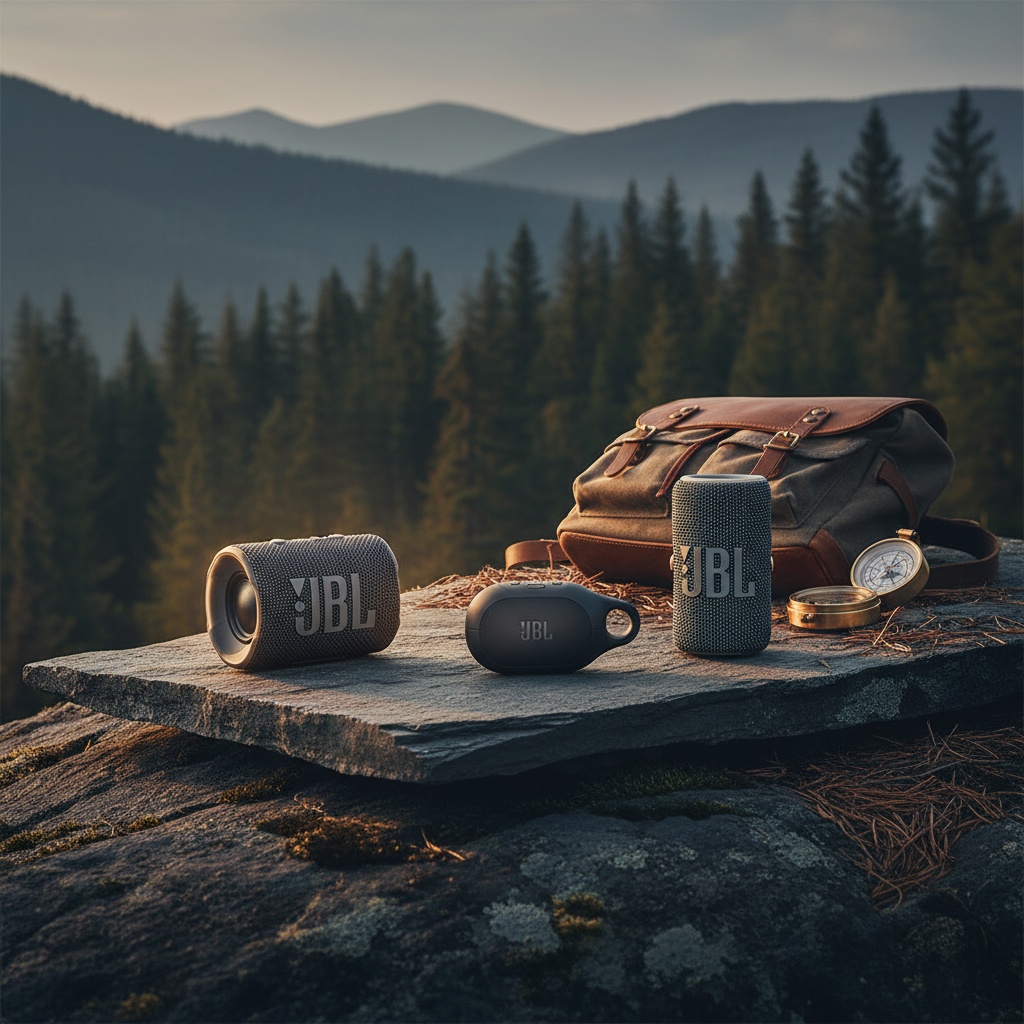
It might catch you off guard that the most wallet‑friendly pick, the JBL Grip at $79.95, shares the top‑tier 4.7/5 rating with the flagship JBL Charge 6, despite the latter costing $199.95. Both earn that score from hundreds of reviewers—276 for the Grip and 3,924 for the Charge 6—showing you don’t have to splurge to find a speaker that people love.
Six rugged portable speakers span three price tiers. In the budget camp you’ll find the JBL Grip and Sony SRS‑XE300, both under $100 and rated 4.7/5 and 4.4/5 respectively. The mid‑range segment offers the JBL Flip 7 ($149.95, 4.6/5) and Marshall Emberton III ($142.99, 4.6/5), each delivering solid power and battery life—16 hours for the Flip 7 and 32+ hours for the Emberton III. Premium choices include the JBL Charge 6 ($199.95) with a massive 28‑hour playtime and a built‑in powerbank, plus the Ultimate Ears BOOM 2, which sits at a premium $13,900 price point.
The following sections break down how each model stacks up on durability, sound quality, and real‑world convenience, helping you match a speaker to your adventure.

JBL Charge 6
It's 28‑hour battery life ensures marathon listening sessions without recharging, matching audiophiles’ demand for premium, uninterrupted sound.
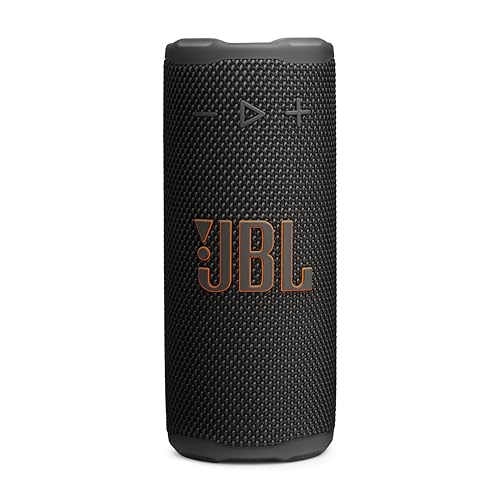
JBL Grip
Ideal for tech‑savvy users needing 16 W RMS output, it comes at $79.95—about $120 less than the Charge 6, delivering solid power on a tighter budget.

JBL Flip 7
With 25 W RMS power, the Flip 7 offers louder output than the Grip while staying below the Charge 6’s price, fitting users who want stronger sound without premium cost.
Also considered
Score Analysis
Key score advantages vs. runner-up (JBL Grip)
Price Range
JBL Charge 6
$159.95
JBL Grip
$99.95
JBL Flip 7
$109.95

Marshall Emberton III
$142.99
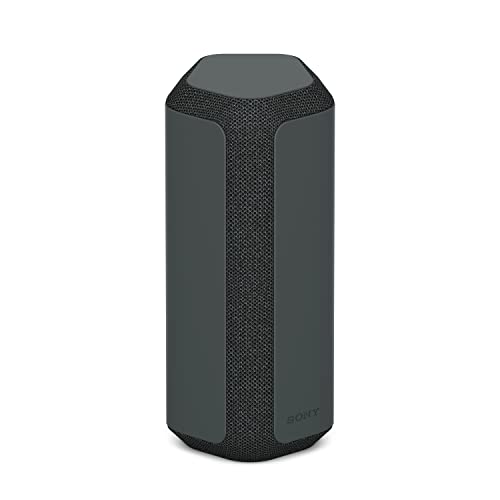
Sony SRS-XE300
$99.99
Ultimate Ears BOOM 2 Portable Waterproof & Shockproof
$13,900.00
Spec Comparison
TL;DR: The JBL Charge 6 packs 45 W of RMS power, IP68 ruggedness, and up to 28 hours of playtime into a 2.18‑lb speaker, making it a top choice for outdoor audio lovers.
JBL’s latest Charge 6 packs a 4722 mAh battery delivering up to 28 hours of continuous music, and a 10‑minute fast‑charge session adds 150 minutes of playback. With a 45 W RMS output and AI Sound Boost, the sound stays rich and balanced even at higher volumes. The IP68 rating protects the unit down to 1.5 meters of water for 30 minutes, and JBL rates it for a 1‑meter drop onto concrete, indicating durability.
Compared with the other five speakers, the Charge 6 is heavier than the JBL Flip 7 (1.23 lb) and the ultra‑light JBL Grip (0.849 lb), yet it’s considerably lighter than the Sony SRS‑XE300 (3.3069 lb). Its 45 W output more than doubles the 25 W of the Flip 7 and outpaces the 20 W of the Marshall Emberton III, while still beating the 16 W total of the Sony and Grip models. Battery life also tops most rivals, outlasting the Flip 7’s 16 hours and the Sony’s 24 hours, though the Emberton III lists a comparable 32+ hour claim.
Reviewers consistently praise the deep bass, marathon battery, and rugged build, noting that the removable carrying strap makes beach or campsite trips effortless. Professional reviewers highlight the rare lossless‑audio support via USB‑C and the AI‑driven sound enhancement. The main drawbacks are the omission of a USB‑C charging cable, reliance on the JBL Portable app for firmware updates, and a bulkier footprint that may feel large for backpack‑only adventures.
Pros
Cons
Best for: Audiophiles and enthusiasts seeking premium sound quality and advanced features
Avoid if: You're on a tight budget or only need basic functionality
“The bass is deep and punchy — sounds much bigger than it looks.”
“Used it at the beach and pool — survived sand, water, and drops with no issues.”
TL;DR: The JBL Grip packs a 16 W RMS driver, IP68 waterproofing, and a 2600 mAh battery into a feather‑light 0.849‑lb body, delivering clear mids for on‑the‑go listening at a budget‑friendly $79.95.
The standout spec is its 16 W RMS full‑range driver (43 × 80 mm) combined with AI Sound Boost, which professional reviewers note gives strong mids and vocal clarity despite the tiny enclosure. Its IP68 rating means it survives a 1 m submersion for 30 minutes, and the 1 m drop resistance adds confidence for outdoor adventures. The 2600 mAh lithium‑ion cell powers up to 720 minutes of standard playback, extending to 840 minutes in boost mode.
At $79.95 the Grip is noticeably lighter than the Sony SRS‑XE300 (over 3 lb) and the Marshall Emberton III (about 1.5 lb), and also lighter than the JBL Flip 7 (around 1.2 lb) and JBL Charge 6 (about 2.2 lb). Its 16 W RMS output matches Sony’s total output, but sits below the 20 W of the Emberton III and the 25 W RMS of the Flip 7. The 2600 mAh battery is more than three times the 0.75 Ah capacity of the Sony, which claims 24 hours of play, suggesting the Grip can outlast it while staying ultra‑compact.
User sentiment praises the Grip’s clear voice reproduction and the fun 4‑zone RGB lighting that you can customize via the JBL Portable app. Everyday users love the waterproof build for shower listening and the built‑in power‑bank function for charging phones. Consistent complaints focus on weak bass, thin sound when cranked up, and tiny tactile buttons that feel hard to press without looking. Expert reviewers echo the bass limitation and note the lack of a passive radiator.
Pros
Cons
Best for: Podcast and audiobook listeners, travelers, shower users, and minimalist owners who value ruggedness, clear vocal reproduction, and long battery life in a pocket‑sized speaker.
Avoid if: You need powerful bass, high volume for big parties, or professional‑grade audio performance.
“Perfect for the shower”
“Love the lights”
TL;DR: The JBL Flip 7 delivers 25 W RMS sound, IP68 ruggedness and up to 16 hours of playtime in a 1.23‑lb, eco‑friendly package for outdoor use.
The standout spec is its 25 Watts RMS power output combined with an IP68 rating, 1 meter drop resistance and the ability to sit submerged for 30 minutes at 1.5 meters depth. Those durability numbers let you toss it in a backpack, a kayak or even a dusty trail without worry.
Compared with the other five speakers, the Flip 7 is lighter than the Marshall Emberton III (1.48 lb) and the Sony SRS‑XE300 (3.31 lb), but heavier than the JBL Grip (0.85 lb). Its 16‑hour battery life outlasts the Grip’s roughly 12‑hour runtime, yet falls short of Marshall’s 32+ hour claim. Power‑wise, the Flip 7’s 25 W RMS tops Sony’s 16 W total output and Marshall’s 20 W, while its 100‑meter Bluetooth range dwarfs the Ultimate Ears BOOM 2’s 30.5 meter range.
User feedback praises the AI Sound Boost for clearer highs and the Auracast feature for future‑ready multi‑speaker setups. Reviewers also note the missing USB‑C charging cable and a bass response that feels lighter than some expect. Professional reviewers highlight the eco‑friendly build—77 % recycled plastic and FSC‑certified packaging—as a solid plus.
Pros
Cons
Best for: Outdoor enthusiasts, travelers, fitness‑goers and audio purists who want a durable, portable speaker with solid sound and eco‑friendly credentials.
Avoid if: You need very high SPL for large open‑air events, bass‑heavy music that demands deep low‑end punch, or a speaker that ships with its own charging cable.
“Amazing sound for a small speaker”
“Fantastic sound, size, and color”
TL;DR: The Marshall Emberton III costs $142.99, delivers 360° True Stereophonic sound with 2‑inch drivers, features IP67 durability, and offers 32+ hours of playback on a quick‑chargeable battery.
Marshall’s third‑generation Emberton packs two full‑range dynamic drivers sized at 2 inches each, a peak SPL of 90 dB @ 1 meter and an RMS power output of 20 W, all controlled by a tactile knob and LED battery indicator. The speaker’s IP67 rating means it’s fully dust‑proof and can sit underwater up to 1 meter for 30 minutes, while the built‑in microphone and Bluetooth 5.3 LE keep you connected up to 100 meters away.
At 1.48371102326 pounds, the Emberton is heavier than the ultra‑light JBL Grip (0.849 pounds) but lighter than Sony’s SRS‑XE300 (3.30693393 pounds) and JBL’s Charge 6 (2.18 pounds). Its 32+ hour battery outlasts the JBL Flip 7’s 16‑hour maximum, the UE Boom 2’s 15‑hour claim, Sony’s 24‑hour runtime, and even the JBL Charge 6’s 28‑hour figure. With a 20‑minute quick‑charge you can get several hours of playback, and its 20 W RMS output sits just below the JBL Flip 7’s 25 W RMS while surpassing Sony’s 16 W total and JBL Grip’s 16 W RMS. The 87 dB signal‑to‑noise ratio also tops the JBL Flip 7’s 80 dB, giving clearer sound in noisy environments.
Professional reviewers highlight the Emberton III’s immersive 360° soundstage and the way its drivers handle high volume without distortion. Everyday users rave about the marathon‑length battery and the rugged IP67 build, often mentioning the fast‑charge convenience. The downsides that surface in both expert and consumer feedback are the lack of a 3.5 mm auxiliary input, an app that only offers preset EQs, and the absence of rubber feet or a clear stereo‑pairing indicator.
Pros
Cons
Best for: Most users looking for a well‑reviewed, reliable mainstream option
Avoid if: You want the best value‑per‑dollar in its price range
“The design is exquisite! Sound is remarkable.”
“This tiny thing pack a PUNCH.”
TL;DR: The Sony SRS‑XE300 delivers 16 W RMS of clear, wide‑dispersion sound, survives a meter of water for half an hour, and runs up to 24 hours on a single charge, but its 3.3 lb weight feels bulky on the go.
What really sets the XE300 apart is its line‑shaped diffuser paired with an X‑Balanced driver that measures 49 mm × 71 mm and pushes 16 W RMS total (8 W per channel). The speaker also supports LDAC, so high‑resolution streams stay crisp, and its IP67 rating lets you dunk it to 1 m depth for 30 minutes without a hiccup.
In the context of the six‑product roundup, the XE300 is noticeably heavier than the JBL Grip (0.849 lb) and the JBL Flip 7 (1.23 lb), but lighter than the Marshall Emberton III (about 1.48 lb). Its 24‑hour battery life outlasts the Grip’s roughly 12‑hour play time, yet falls short of the JBL Charge 6’s 28‑hour claim. Power‑wise, Sony’s 16 W RMS matches the Grip but trails the Emberton III’s 20 W and the Flip 7’s 25 W RMS. Bluetooth range sits at 30 m, which is shorter than the Flip 7’s 100‑meter range but comparable to the Grip’s listed range.
Reviewers consistently praise the speaker’s rich bass, clear mids, and the durability that comes from its rugged ABS housing. Professional reviewers highlight the “superior sound dispersion” thanks to the diffuser and the near‑lossless streaming enabled by LDAC. The most common complaints focus on the 3.3 lb weight, the absence of a 3.5 mm auxiliary jack, and the lack of a power‑bank feature for charging other devices. Some users also note occasional Bluetooth pairing quirks with non‑Sony phones.
Additional technical notes: the unit offers quick‑charge playback of 70 minutes after just 10 minutes of charging, and it can link up to 100 speakers via Party Connect. Multipoint connectivity and touch controls round out the feature set, while the built‑in MEMS microphone adds echo‑cancellation for calls.
Pros
Cons
Best for: Outdoor enthusiasts and party hosts who need a waterproof, shock‑proof speaker that can link many units together.
Avoid if: You prioritize ultra‑lightweight portability, a built‑in handle, or a 3.5 mm auxiliary input.
TL;DR: The BOOM 2 delivers 360° sound, 15 hours of playtime, IPX7 waterproofing, and a 100‑ft Bluetooth range, all in a 1.19‑lb rugged cylinder.
The standout hardware is its 1.625 in full‑range driver paired with a 2 in passive radiator, creating a 360° immersive sound field that fills a backyard or campsite. Built‑in Party Mode can link up to 150 compatible UE speakers, turning a single unit into a massive sound system.
At 1.19 lb, the BOOM 2 is lighter than JBL’s Charge 6 (2.18 lb) but a bit heavier than the ultra‑light JBL Grip (0.849 lb). Its 15‑hour battery outlasts the Grip’s roughly 12‑hour playtime and sits comfortably between the Flip 7’s 14‑hour standard and 16‑hour max runtime. With a depth of 2.625 in, it’s comparable to the Flip 7’s 71.12 mm depth, while still fitting easily in a backpack.
Users rave about the speaker’s durability: the IPX7 rating lets it survive full submersion for 30 minutes at 1 m depth, and the dust‑proof, shock‑proof construction endures drops and sand. Professional reviewers highlight the balanced bass and consistent sound dispersion, and everyday owners appreciate the easy NFC pairing and voice‑assistant button. The built‑in microphone adds hands‑free calling, and up to eight devices can stay paired for easy swaps.
Pros
Cons
Best for: Those prioritizing quality and willing to pay for premium performance
Avoid if: You're on a tight budget or only need basic functionality
“Great sounds from such a small speaker!”
“It totally rocks”
Breakdown
JBL Charge 6
Pros
JBL Grip
Pros
JBL Flip 7
Pros
Marshall Emberton III
Pros
Cons
Based on scoring data and product specs
Personalized picks
Best Overall Pick
JBL Charge 6
Best OverallBest for: Audiophiles and enthusiasts seeking premium sound quality and advanced features
JBL Grip
Best for: Users with specific technical requirements or compatibility needs
$99.95-$60.00 vs winner
Skip Ultimate Ears BOOM 2 Portable Waterproof & Shockproof if…
You're on a tight budget or only need basic functionality
JBL Charge 6 takes the top spot as the best rugged portable speaker. It has an IP68 rating for water and dust resistance, a 1‑meter drop tolerance onto concrete, and a 28‑hour battery life from its 4722 mAh cell. The 45 W output and AI Sound Boost keep the sound loud and clear, while a 4.7‑star rating from 3,924 reviewers underscores its popularity.
The runner‑up, JBL Grip, shines when you need a feather‑light companion for day‑trips or backpacking. Weighing just 0.849 lb (385 g) and also carrying an IP68 seal, it survives a 1 m drop onto concrete. Its 2600 mAh battery delivers up to 720 minutes of standard playtime, and the built‑in power‑bank function lets you charge devices on the go.
Grab the JBL Charge 6 today and enjoy rugged sound that lasts all day.
Both the JBL Charge 6 and JBL Grip are rated IP68, meaning they can handle full submersion up to 1 meter for 30 minutes and are dust‑tight. The Charge 6 also adds a 1‑meter drop‑resistance rating onto concrete, giving it a slight edge for harsh environments.
Please sign in to leave a review
No reviews yet. Be the first to review!
