⚡ Quick Answer
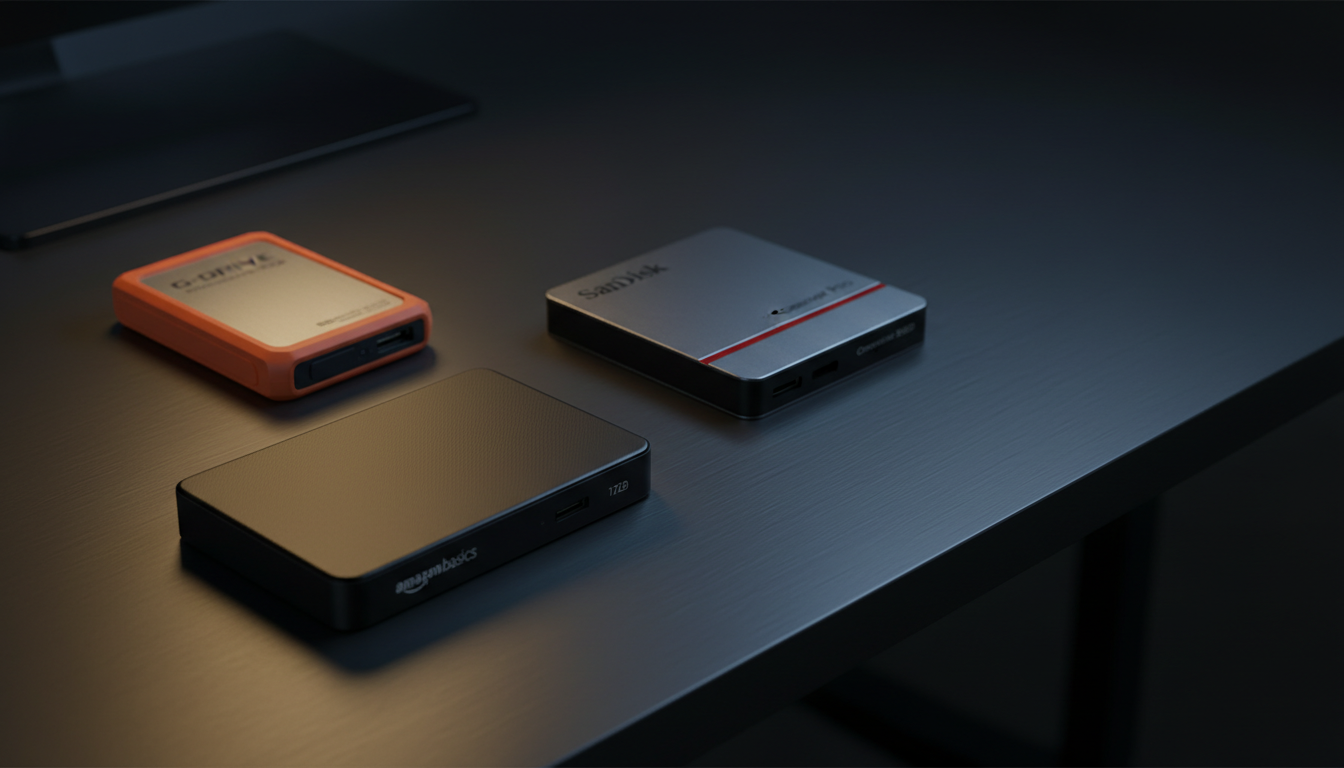
If you need a fast, drop‑proof drive that can survive a commute, a shoot, or a weekend trek, you’ve landed in the right place. Our roundup pits eight rugged portable SSDs against each other, spanning three price tiers: budget options like the $149.99 Lexar Professional Go 1TB and the $229.99 SanDisk Creator Pro, mid‑range picks such as the $284.99 Amazon Basics 2TB, and premium models like the $489.99 G‑Technology G‑DRIVE mobile and the $399.99 Samsung T7 Shield.
Most models carry a 4.7/5 rating, while the Lexar Professional Go hits a perfect 5.0/5 and the Transcend ESD410 and SanDisk Extreme sit at 4.5/5. The SanDisk Creator Pro offers IP65 water‑dust resistance and 3 m drop protection; the Samsung T7 Shield adds a rubber exterior and a carabiner loop. Read speeds range from 1,000 MB/s on the SanDisk Extreme to up to 2,000 MB/s on the Amazon Basics and Transcend ESD410, and weights vary from a 13 g Lexar module to a sturdier 98 g Samsung unit. Whether you prioritize a tiny footprint, the highest transfer rates, or military‑grade durability, one of these eight drives will fit your workflow.
Below we break down each drive’s strengths so you’ll match the right rugged SSD to your needs.

Amazon Basics Portable SSD 2TB
Its slim 9.9 mm profile packs 2 TB into a compact 59.2 mm length, delivering strong value for home and office use.

SanDisk Creator Pro
Ideal for users with specific technical or compatibility needs, and at $229.99 it’s about $55 less than the Amazon Basics mid‑range option.

G-Technology G-DRIVE mobile 2TB
Stands out with a rugged 14.6 mm build and proven G‑Technology brand, catering to buyers ready to invest in a high‑quality, premium SSD.
Also considered
Score Analysis
Key score advantages vs. runner-up (SanDisk Creator Pro)
Price Range
Amazon Basics Portable SSD 2TB
$284.99
SanDisk Creator Pro
$229.99
G-Technology G-DRIVE mobile 2TB
$579.99
Samsung T7 Shield 2TB
$495.00

Transcend ESD410 2TB
$487.04

Lexar Professional Go 1TB USB-C
Out of Stock

SanDisk Extreme 2TB USB-C
Out of Stock
Lexar SL400
Out of Stock
Spec Comparison
TL;DR: The Amazon Basics 2 TB Portable SSD delivers up to 2000 MB/s read/write speeds, IP65 protection, and a feather‑light 53 g metal body for $284.99.
This SSD’s headline spec is its advertised sequential read and write speed of up to 2000 MB/s, paired with an IP65 water‑ and dust‑resistant rating. At just 9.9 mm thick, 59.2 mm square, and weighing only 53 g (0.12 lb), it’s one of the most compact and lightweight options in the roundup.
Compared with the seven peers, the Amazon Basics drive is lighter than every listed competitor – the next lightest, the SanDisk Extreme, tips the scales at 0.15 lb. Its 9.9 mm profile is slimmer than the Lexar SL400’s 35.1 mm height and comparable to the SanDisk Creator Pro’s 10.31 mm. In terms of speed, it matches the Creator Pro and Transcend ESD410’s advertised 2000 MB/s ceiling, while outpacing the SanDisk Extreme (1000 MB/s), Samsung T7 Shield (1050 MB/s), and G‑Technology G‑DRIVE mobile (560 MB/s). The metal casing with a polymer bottom adds durability while avoiding the bulk of heavier models.
Reviewers note the drive’s fast transfers but point out that real‑world speeds often sit between 858 MB/s and 1135 MB/s, depending on the host computer. Everyday users praise the included two USB‑C‑to‑C cables, a USB‑C‑to‑A cable, and a protective case, as well as the thermal design that keeps the drive below its 50 °C maximum operating temperature during extended use. Some describe the build as “kinda” rugged, indicating it’s solid for travel but not as tough as premium‑grade SSDs.
Pros
Cons
Best for: Home and office users seeking a balance of features and value.
Avoid if: You need consistently peak speeds above 2000 MB/s, premium‑grade ruggedness, or Thunderbolt connectivity.
“Excellent customer support from resellers”
“Fast real-world performance for large file transfers (e.g., 42 GB in ~2 minutes)”
TL;DR: The SanDisk Creator Pro delivers 1 TB of NVMe speed at up to 2000 MB/s, wrapped in an IP65‑rated, 3‑meter drop‑proof shell, but its price and 1 TB limit may steer budget‑focused users elsewhere.
The standout spec is its advertised sequential read and write performance of up to 2000 MB/s, using NVMe technology over a USB‑C/USB 3.2 Gen 2 x2 interface. At just 77.5 g and 10.31 mm thick, it stays slim enough for a pocket‑sized kit while offering an IP65 water‑ and dust‑resistance rating and up to 3 meters of drop protection.
Compared with the other seven SSDs in this roundup, the Creator Pro’s speed matches the top‑tier Amazon Basics and Transcend models, and it outpaces the SanDisk Extreme (1000 MB/s), Samsung T7 Shield (≈1050 MB/s), and Lexar SL400 (≈1050 MB/s). It is a bit heavier than the Amazon Basics (53 g) and the SanDisk Extreme (68 g) but lighter than the Lexar SL400 (159 g) and Samsung T7 Shield (98 g). Its 1 TB capacity is smaller than the 2 TB offerings from most rivals, which may matter for users storing massive video libraries.
Reviewers consistently highlight the drive’s ability to zip 4K video files between laptops and editing rigs, noting the “rapid transfer of large 4K video files” as a major plus. The included month of Adobe Creative Cloud receives praise as a useful bonus for creators. Some users point out the premium price tag and the single‑terabyte limit as trade‑offs when larger or cheaper alternatives exist.
Built on an NVMe core and protected by a five‑year limited warranty, the Creator Pro aims squarely at professionals who need both speed and rugged durability. Its USB‑C connector ensures compatibility with modern laptops, and the IP65 rating adds confidence for on‑location shoots where dust or splashes are a concern.
Pros
Cons
Best for: Content creators and professionals who need top‑tier transfer speeds, rugged durability, and creative‑software perks.
Avoid if: You need more than 1 TB of onboard storage or are looking for the lowest‑cost portable SSD.
TL;DR: The G‑Technology G‑DRIVE mobile 2 TB delivers IP67‑rated ruggedness, 1000 lb crush resistance, and 3 m drop protection in a compact 14.6 mm, 0.19 lb case, but its 560 MB/s speed comes at a $489.99 premium.
The G‑Technology G‑DRIVE mobile packs a rugged IP67 rating, 1000 lb crush resistance, and 3 m drop protection into a 14.6 mm‑high, 86 g (0.19 lb) chassis, while delivering up to 560 MB/s transfer speeds on a USB‑C 3.1 Gen 2 interface.
Positioned in the middle of the roundup’s size spectrum—its 14.6 mm height is a hair taller than Transcend’s 14.5 mm and Samsung’s 12.5 mm, but still slimmer than the Lexar SL400’s 35.1 mm. At 95 mm length it’s longer than Transcend (79 mm) and Samsung (86 mm) yet shorter than the SanDisk Extreme (100.8 mm). Its 50 mm width makes it narrower than most peers, which range from 42 mm (Transcend) to 57.83 mm (SanDisk Creator Pro). Weighing 0.19 lb, it’s heavier than the ultra‑light Amazon Basics (0.12 lb) and Transcend (0.14 lb) but lighter than Samsung’s 0.21 lb and Lexar’s 0.35 lb models. While its 560 MB/s rate trails Transcend’s 1,941 MB/s read and 1,128 MB/s write, and Samsung’s up‑to‑1,050 MB/s read, it still outpaces many older USB‑C drives.
Professional reviewers point out that the IP67 seal and 3 m drop tolerance make the G‑DRIVE a solid choice for field photographers and videographers, and users echo the praise for its durability. The 4.7‑star rating from 1,603 reviewers highlights strong satisfaction, especially for quick file handling via USB‑C. However, several users note that the 560 MB/s ceiling feels slow when handling 8K footage, and the need to reformat the drive for Windows adds a setup step.
The SSD powers itself via its USB‑C port, so no external adapter is required, and the 5‑year limited warranty adds peace of mind for long‑term use. With a 2 TB capacity, it provides ample space for high‑resolution media without sacrificing the compact 14.6 mm profile.
Pros
Cons
Best for: Buyers willing to invest in a proven, high-quality option
Avoid if: You're shopping on a tight budget — it's priced at $489.99
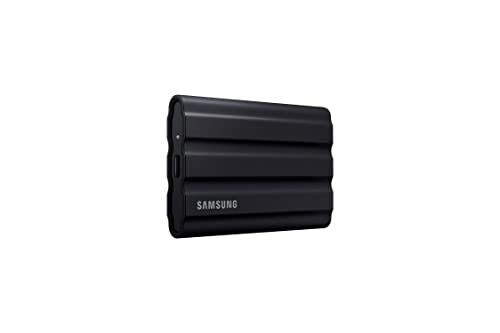
TL;DR: The Samsung T7 Shield 2TB packs 2 TB of rugged, IP65‑rated storage with up to 1,050 MB/s read speeds, a durable rubber shell, and a 3‑meter drop rating, though it sits at a premium price.
The drive measures just 12.5 × 57 × 86 mm and weighs 0.21 lb (98 g), making it compact enough to slip into a pocket while still offering a solid 2 TB of capacity. Samsung advertises sequential read speeds of up to 1,050 MB/s and write speeds of up to 1,000 MB/s, backed by PCIe NVMe and USB 3.2 Gen 2 (10 Gbps) connectivity. Its IP65 rating and 3 m drop resistance mean it'll survive rain, dust, and accidental falls.
When you line it up against the seven other SSDs in this roundup, Samsung’s speed matches the Lexar SL400 and the SanDisk Extreme, but it trails the Transcend ESD410 and Amazon Basics, both of which claim up to 2,000 MB/s. In weight, the T7 Shield (0.21 lb) is heavier than most rivals—Amazon Basics (0.12 lb), SanDisk Extreme (0.15 lb), SanDisk Creator Pro (0.17 lb), and G‑Technology (0.19 lb)—yet lighter than Lexar’s SL400 (0.35 lb) and Lexar Professional Go (0.46 lb). Samsung sets a higher price than many non‑rugged alternatives, reflecting its premium durability.
Reviewers consistently praise the rugged rubber exterior, the IP65 water‑dust protection, and the Dynamic Thermal Guard that keeps temperatures in check during long transfers. Users love the fast transfers for large video files and the handy carabiner loop for clipping the drive to a backpack. A few owners have reported occasional connectivity quirks with certain operating systems or adapters, and the higher price can be a sticking point for budget‑focused shoppers.
Additional technical touches include AES 256‑bit hardware encryption for data security and a three‑year manufacturer warranty. The drive ships in black, but a Moonrock Beige option is also available, letting you match it to your gear aesthetic.
Pros
Cons
Best for: Buyers willing to invest in a proven, high-quality option
Avoid if: You need the lightest possible drive, ultra‑budget pricing, or don’t require rugged protection
TL;DR: The Transcend ESD410 2TB offers military‑grade ruggedness and up to 2000 MB/s read/write speeds, but its $489.99 price places it at the premium end of portable SSDs.
The drive’s headline spec is a maximum read and write speed of 2000 MB/s, paired with a 64 GB pSLC cache that fuels those burst transfers. At just 0.1433004703 lb (65 g) and a slim 14.5 mm height, it stays pocket‑friendly while meeting MIL‑STD‑810G shock resistance and an IPX5 water‑resistant rating.
Compared with the other seven SSDs in this roundup, the Transcend is lighter than the G‑Technology G‑DRIVE mobile (0.1895956 lb) and Samsung T7 Shield (0.21384839414 lb), yet a touch heavier than the Amazon Basics Portable SSD (0.1168670450862 lb). Its 14.5 mm profile matches the G‑Technology’s 14.6 mm height, but is thicker than Amazon Basics’ 9.9 mm. All seven models share a 3 m drop rating, but the Transcend adds IPX5 protection that the others don’t all list. Its price sits at the high end of the group, making it a premium option.
Reviewers consistently praise the rugged build and the 256‑bit AES hardware encryption for field work, noting that the drive feels solid in a backpack or camera rig. Professional reviewers, however, point out that once the 64 GB cache fills up, sustained write performance settles around 1.1 GB/s, and the full 2000 MB/s speed only shows up when you pair it with a USB 3.2 Gen 2x2 host. Those limitations are the main reasons some users advise against it for older machines.
Under the hood, the ESD410 uses 3D NAND flash and a USB 3.2 Gen 2x2 (20 Gbps) interface, delivering the advertised peak bandwidth. It ships with a USB‑C connector and includes a USB‑A cable, and Transcend backs the unit with a five‑year limited warranty, underscoring confidence in its durability.
Pros
Cons
Best for: Those prioritizing quality and willing to pay for premium performance
Avoid if: You're shopping on a tight budget — it's priced at $489.99
TL;DR: Lexar Professional Go 1TB USB‑C packs a 4‑port USB‑C hub, 1050 MB/s read, 1000 MB/s write, IP65 protection, and a thumb‑sized 13 g module for $149.99.
The standout feature is the built‑in 4‑port USB‑C 3.2 Gen 2 hub, which lets you connect multiple devices while still delivering up to 1050 MB/s sequential reads and 1000 MB/s writes. The SSD module itself weighs only 13 g and fits into a compact 8.25 mm depth, 43.5 mm width and 68.8 mm height chassis that weighs 0.46 pounds overall.
Compared with the other seven contenders, this drive is heavier than the SanDisk Creator Pro, SanDisk Extreme, Amazon Basics, Samsung T7 Shield, Transcend, and G‑Technology models, but it's also priced lower than most. Its read/write speeds match the Lexar SL400 and Samsung T7 Shield, though they sit below the 2000 MB/s figures advertised by the SanDisk Creator Pro and Amazon Basics.
Reviewers consistently praise the ultra‑portable 13 g module for on‑the‑go 4K video capture and note the reliable IP65 dust‑and water‑resistance for field work. The only recurring complaints cite the lack of built‑in hardware encryption and the 30 W power draw, which some users say taxes low‑power hosts.
Pros
Cons
Best for: Mobile creators, photographers, and videographers who need a compact, high‑speed storage solution with multiple USB‑C connections.
Avoid if: You require built‑in encryption, low‑power bus‑only operation, or the lightest possible form factor.
TL;DR: The SanDisk Extreme 2 TB USB‑C delivers 2 TB storage, up to 1000 MB/s reads, IP65 dust‑water protection and 3 m drop resistance in a 0.15‑lb, compact package.
The drive packs 2 TB of capacity and advertises up to 1000 MB/s sequential read speed, which professional reviewers note speeds up game transfers. Reviewers call its IP65 rating and 3 m (≈9.8 ft) drop protection “very durable” for a portable SSD, and the chassis measures just 9.7 mm in height, 100.8 mm in length and 52.6 mm in width.
At 0.15 pounds, it’s lighter than most rivals such as the Samsung T7 Shield and Lexar SL400, yet a touch heavier than the Amazon Basics model. However, its read speed trails behind competitors that list up to 2000 MB/s, so performance‑focused users may notice the difference.
Users praise the official PlayStation 5 licensing for smooth integration, and note that the 1000 MB/s ceiling falls far below the PS5’s internal NVMe speeds. Manufacturers repeatedly mention the 5‑year limited warranty as a strong assurance of durability.
Pros
Cons
Best for: Entry-level buyers or those on a tight budget
Avoid if: You need powerful performance or professional‑grade features
TL;DR: The Lexar SL400 offers 2 TB of fast 1050 MB/s read storage with an integrated USB‑C hub, but its bulkier build and modest 3.8‑star rating make it a premium‑priced niche choice.
The standout feature of the Lexar SL400 is its built‑in 4‑port USB‑C hub, letting you plug peripherals directly into the drive while you work. Coupled with a sequential read speed of 1050 MB/s and write speed of 1000 MB/s, the 2 TB capacity can keep 4K video and large photo libraries moving without bottlenecks.
In the context of this roundup, the SL400’s read/write performance matches the Samsung T7 Shield, but it lags behind the Amazon Basics Portable SSD, which advertises up to 2000 MB/s. It’s also heavier than the Samsung (0.35 lb vs 0.21 lb) and considerably thicker than the 12.5 mm profile of the T7 Shield, while the Amazon Basics sits at a slimmer 9.9 mm.
Reviewers appreciate the hub for eliminating extra dongles and note the drive’s compatibility with Apple ProRes, a format prized by video creators. However, the limited pool of four reviews has resulted in a 3.8‑star average, hinting at mixed satisfaction. The 0.35 lb (159 g) weight and 35.1 mm height give it a solid feel, though it’s bulkier than many ultra‑slim competitors.
The SL400 combines professional‑grade speed with a handy hub, yet its larger dimensions and higher price point position it as a specialized tool rather than a universal everyday SSD.
Pros
Cons
Best for: Creators who need fast 2 TB storage with built‑in USB‑C hub connectivity, especially when working with Apple ProRes video.
Avoid if: You prioritize a lightweight, ultra‑slim design or want the highest possible user rating.
Breakdown
Amazon Basics Portable SSD 2TB
Pros
SanDisk Creator Pro
Pros
G-Technology G-DRIVE mobile 2TB
Pros
Cons
Samsung T7 Shield 2TB
Pros
Based on scoring data and product specs
Personalized picks
Best Overall Pick
Amazon Basics Portable SSD 2TB
Best Mid-Range PickBest for: Home and office users seeking a balance of features and value
SanDisk Creator Pro
Best for: Users with specific technical requirements or compatibility needs
$229.99-$55.00 vs winner
Skip Lexar SL400 if…
Reliability and user satisfaction are your top concerns
Amazon Basics Portable SSD 2TB takes the top spot thanks to its solid 4.7‑star rating from 600 reviews, an IP65 water‑ and dust‑resistance rating, and blazing‑fast read and write speeds of up to 2000 MB/s—all while weighing just 53 g and offering a full 2 TB of storage for $284.99.
The runner‑up, SanDisk Creator Pro, is ideal if you need a rugged drive for creative work on the move: it sports the same IP65 protection, a drop‑resistance claim of up to 3 meters, a generous 5‑year limited warranty, and 1 TB of space with 2000 MB/s sequential speeds, all packaged in a 77.5 g, 10.31 mm‑thin shell for $229.99.
For tighter budgets, the Lexar Professional Go 1TB USB‑C delivers an entry‑level price of $149.99, making it the most affordable rugged SSD in the set. At the premium end, G‑Technology’s G‑DRIVE mobile 2TB commands $489.99, making it the high‑end option for users who prioritize premium build quality.
Choose the Amazon Basics Portable SSD 2TB for reliable, rugged storage today.
The Amazon Basics Portable SSD 2TB and the SanDisk Creator Pro both carry an IP65 rating, meaning they can withstand dust and low‑pressure water jets. If you need the highest dust‑proof protection, the G‑Technology G‑DRIVE mobile offers IP67, which adds better water resistance while still providing a 3‑meter drop rating.
No reviews yet — be the first to share your experience.
Please sign in to leave a review