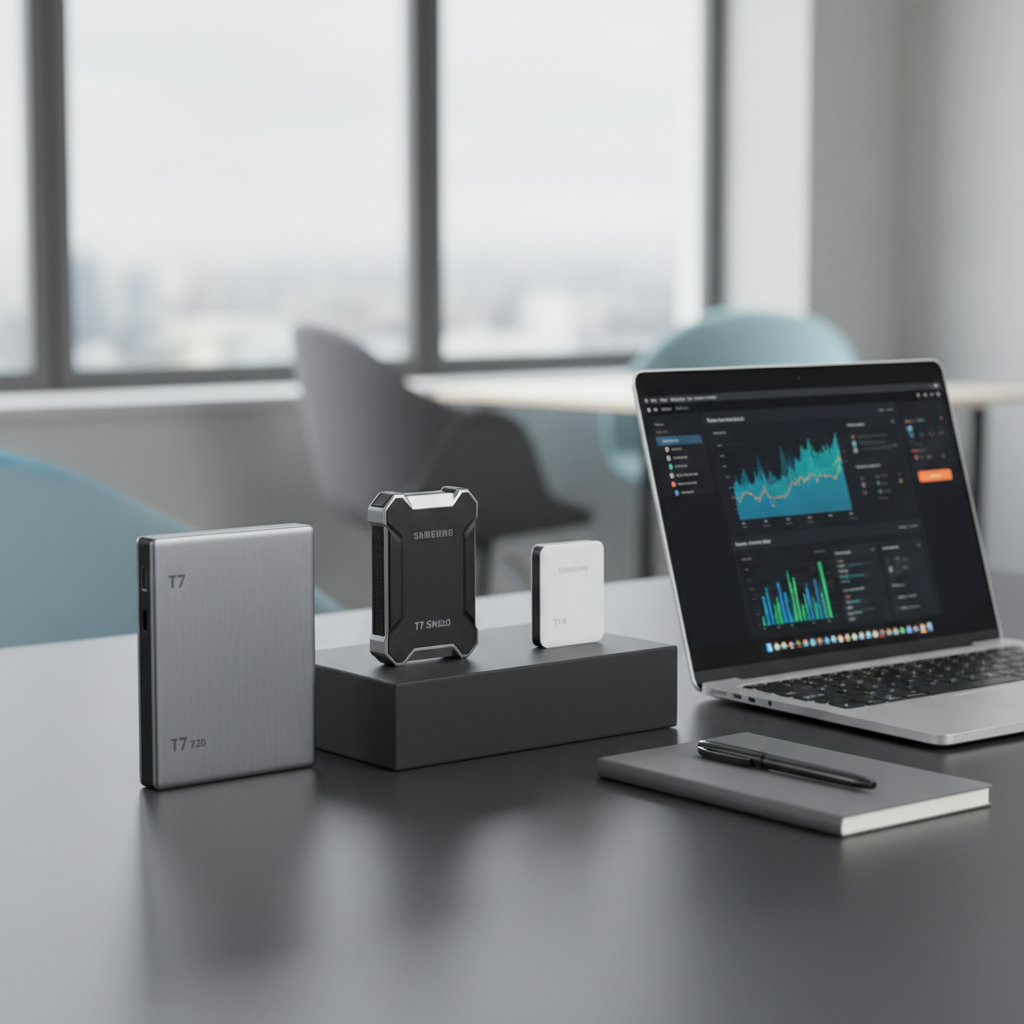
Our top pick is the Samsung T7 2TB Gray, which lands at the sweet spot of speed, security and price. At $314.23 it carries a solid 4.7/5 rating from 37,526 reviewers, and it pushes up to 1,050 MB/s read and 1,000 MB/s write thanks to its PCIe NVMe core. The aluminum unibody is feather‑light at 0.13 pounds (58.97 g) and survives drops of 6.5 feet (2 m), making it a reliable companion for business travelers, creators and gamers alike.
The review covered 10 Samsung portable SSDs across three price tiers. The budget tier offers the T7 1TB, T5 500 GB, and both the T7 Shield 1TB models for under $225 each. Mid‑range choices include the T5 1TB and the T5 EVO 2TB, while the premium tier packs the T7 2TB Gray, T7 Shield 2TB, T9 4TB and the Thunderbolt‑ready X5 2TB for power users who need the fastest transfers and the highest capacities.
Read on to see how each model stacks up in performance, durability and value, so you can pick the perfect Samsung SSD for your workflow.
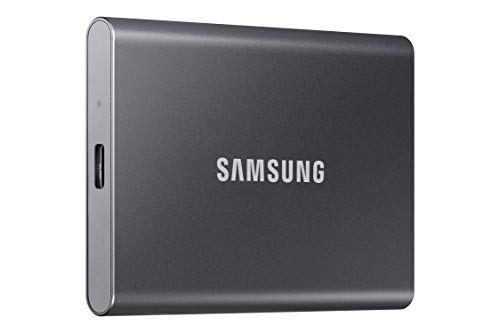
Samsung T7 2TB Gray
Offers a 1,050 MB/s sequential read speed, delivering fast transfers while keeping a solid three‑year warranty.
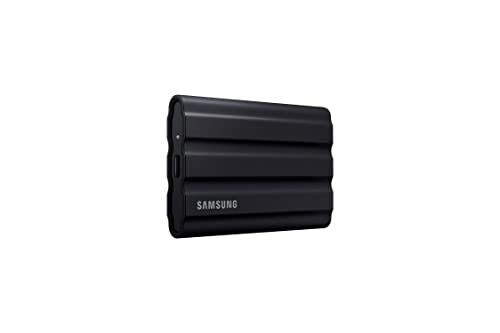
Samsung T7 Shield 2TB Portable SSD
Ideal for users needing extra durability, the T7 Shield serves rugged‑travelers, though it costs about $86 more than the T7 2TB Gray.
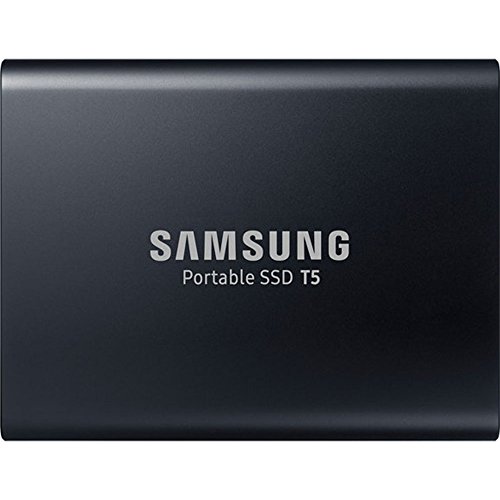
Samsung T5 1TB
Includes 45 cm USB‑A to USB‑C and USB‑C to USB‑C cables, giving you flexible connectivity right out of the box.
Also considered
Score Analysis
Key score advantages vs. runner-up (Samsung T7 Shield)
Price Range
Samsung T7 2TB Gray
$306.77
Samsung T7 Shield 2TB Portable SSD
$399.99
Samsung T5 1TB
$299.99
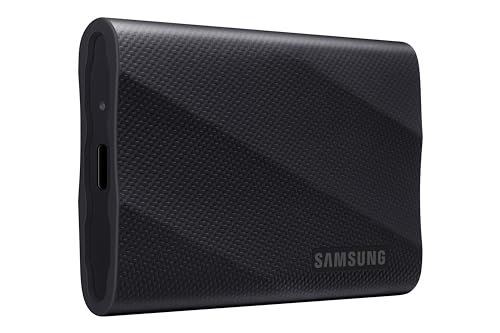
Samsung T9 4TB
$709.18

Samsung T7 Shield 1TB
$224.99

Samsung T5 Portable SSD 500GB
$224.00

Samsung T7 Shield 1TB Beige
$224.99
Samsung T7 1TB
$185.00

Samsung X5 2TB
$699.00

Samsung T5 EVO 2TB
$309.99
Spec Comparison
TL;DR: The Samsung T7 2TB Gray delivers 1,050 MB/s read and 1,000 MB/s write speeds in a 0.13‑pound, aluminum‑body that resists drops from 2 meters, making it a fast, portable, and secure choice for creators on the go.
The standout spec is its PCIe NVMe‑based throughput – up to 1,050 MB/s sequential read and 1,000 MB/s sequential write – paired with a drop‑resistance rating of 2 meters and a feather‑light 0.13 pounds (58.97 grams). Its 7.62 mm height, 83.82 mm length and 55.88 mm width let it slip into a pocket or laptop bag without adding bulk.
Compared with the other nine SSDs in this roundup, the T7 is lighter than the Samsung T5 EVO 2TB (0.22 pounds) and considerably lighter than the T7 Shield models (around 0.21 pounds). It’s a touch heavier than the T5 1TB (0.1125 pounds) but still well under the bulkier T9 4TB (0.27 pounds). Speed‑wise, the T7 outpaces the T5 EVO’s 460 MB/s read/write and the T5 1TB’s 540 / 515 MB/s figures, putting it in a higher performance tier while keeping the same 2‑meter drop rating as the T5 EVO.
Everyday users rave about the “instant‑like” transfer experience and the pocket‑size form factor, noting that the drive feels solid thanks to its aluminum unibody and phase‑change thermal guard. Professional reviewers call out the near‑rated speeds and the ease of setting up 256‑bit AES hardware encryption via Samsung’s software. The most common complaints revolve around the lack of fingerprint security and the fact that Linux doesn’t support password‑protected encryption, which can be a hurdle for open‑source enthusiasts.
Beyond speed, the T7 ships with both USB‑C‑to‑USB‑C and USB‑C‑to‑USB‑A cables, works with Windows 7+, macOS 10.10+, Android 5.0+, and even PlayStation and Xbox consoles, and includes built‑in 256‑bit AES encryption. Its thermal management uses a phase‑change material layer and Dynamic Thermal Guard to keep surface temperatures under 45 °C during heavy use.
Pros
Cons
Best for: Buyers willing to invest in a proven, high‑quality option
Avoid if: You're on a tight budget or only need basic functionality
TL;DR: The Samsung T7 Shield 2TB Portable SSD packs 2 TB of storage, up to 1,050 MB/s reads, 1,000 MB/s writes, and IP65‑rated protection with a 3 m drop rating in a compact, bus‑powered case.
The standout feature is its rugged envelope: an IP65 dust‑ and water‑jet rating combined with a drop‑resistance claim of up to 3 m (9.8 ft). Inside, the drive delivers sequential read speeds of up to 1,050 MB/s and write speeds of up to 1,000 MB/s over a USB‑C 3.2 Gen 2 (10 Gbps) interface, while staying bus‑powered.
Compared with the other nine Samsung SSDs in this roundup, the T7 Shield 2TB is heavier than the standard T7 2TB (0.13 lb vs 0.21384839414 lb) and thicker than that model’s 7.62 mm profile. It also carries a higher drop‑resistance rating than the T5 EVO 2TB (2 m) and the regular T7 1TB (2 m). While the regular T7 2TB matches its read/write speeds, it lacks the IP65 protection and the extra 3 m drop rating. The T9 4TB offers double‑theoretical bandwidth, but at a larger size and higher price tier.
User feedback highlights the drive’s durability in field work and outdoor shoots, with many praising the rubberized shell and the plug‑and‑play experience. Professional reviewers note that write performance often exceeds the spec, yet real‑world read speeds tend to plateau around 835 MB/s, below the advertised 1,050 MB/s. Some users consider the included USB‑C to USB‑C and USB‑C to USB‑A cables short, and the drive can feel warm during prolonged transfers. Samsung’s 256‑bit AES hardware encryption, Dynamic Thermal Guard, and a 3‑year limited warranty round out the technical package.
Pros
Cons
Best for: Buyers willing to invest in a proven, high‑quality option
Avoid if: You need advanced features or professional‑grade performance
TL;DR: The Samsung T5 1TB offers 540 MB/s reads, 256‑bit AES encryption, and a rugged aluminum shell in a feather‑light 51‑gram package, backed by a 3‑year warranty and strong 4.8‑star rating.
The drive’s standout spec is its sequential read speed of 540 MB/s and write speed of 515 MB/s, delivered over a USB 3.1 Gen 2 (10 Gbps) interface. At 0.1125 pounds (51 grams) it fits comfortably in the palm of your hand, while the 57.4 mm × 73.9 mm × 10.4 mm aluminum unibody protects the solid‑state memory that holds a full 1 TB of data. Shock resistance rates drops up to 2 meters, and the included 45 cm USB‑C to‑C and USB‑C to‑A cables keep you connected without an external power brick.
Compared with the other nine Samsung SSDs in this roundup, the T5 is lighter than the T7 2TB (which weighs 0.13 pounds) and considerably lighter than the T5 EVO 2TB (0.22 pounds). Its 540 MB/s read speed matches the older T5 500GB but falls short of the newer T7 and T7 Shield models that list up to 1,050 MB/s. Drop resistance matches the T5 EVO, T7 1TB and T7 2TB (all rated for 2 meters) but is lower than the T7 Shield line, which survives drops up to 3 meters.
Reviewers consistently praise the T5 for lightning‑quick file transfers—especially for RAW photos and 4K video—thanks to the 212 MB/s real‑world speed listed for a 10 GB file. The built‑in 256‑bit AES hardware encryption and optional password protection serve as solid security measures. However, users note that the default exFAT format can’t be used directly with macOS Time Machine and that forgotten passwords make data recovery impossible. A few reports mention the drive getting warm during prolonged transfers, and the 3‑year limited warranty feels shorter than the 5‑year coverage offered on Samsung’s internal SSDs.
Pros
Cons
Best for: Most users looking for a well‑reviewed, reliable mainstream option
Avoid if: You need advanced features or professional‑grade performance
TL;DR: The Samsung T9 4TB delivers up to 2,000 MB/s read/write speeds, 4 TB of space, and a rugged 3 m drop‑resistant design, but it carries a premium $709.18 price tag.
The headline spec is the 2,000 MB/s sequential read and write speed, paired with a massive 4 TB capacity and Samsung’s Dynamic Thermal Guard that keeps the drive cool under heavy workloads. It also ships with 256‑bit AES hardware encryption and a 180 GB TurboWrite cache, which together help maintain those high transfer rates.
Compared with the other nine SSDs in this roundup, the T9 is larger and thicker than the T7 Shield models (12.5 mm vs 15.2 mm) but still slimmer than the X5’s 60.96 mm height. At 0.27 pounds it sits between the lightweight T7 (0.13 pounds) and the heavier X5 (0.33 pounds). Its 3‑meter drop resistance matches the T7 Shield series and exceeds the 2‑meter rating of the X5, T7, and T5 lines. The five‑year limited warranty outlasts the three‑year coverage on most rivals, and the 4 TB capacity dwarfs the 2 TB maximum of the X5 and the 1‑2 TB range of the other models.
Users consistently praise the T9’s speed for direct‑to‑disk video editing and its solid rubberized chassis, noting that the drive feels “like a professional‑grade tool.” Professional reviewers highlight the sustained 1,000 MB/s write speed after the TurboWrite cache depletes and the smooth cross‑platform support via Samsung Magician. Common complaints revolve around the need for a USB 3.2 Gen 2x2 or Thunderbolt host to unlock the full 2,000 MB/s bandwidth, and the absence of an official IP rating despite the rugged exterior.
Pros
Cons
Best for: Buyers willing to invest in a proven, high-quality option
Avoid if: You're shopping on a tight budget — it's priced at $709.18
“Fast enough to edit video directly from the drive”
“Sleek, solid build, no overheating issues”
TL;DR: The Samsung T7 Shield 1TB delivers 1,050 MB/s reads, 3 m drop protection, and IP65 dust‑ and water‑jet resistance in a 13 mm, 98 g rugged package for $224.99.
The standout feature is its durability: it survives drops up to 3 m onto hard surfaces and carries an IP65 rating that guards against fine dust and low‑pressure water jets. Those specs sit alongside a sequential read speed of 1,050 MB/s and write speed of 1,000 MB/s, giving you fast transfers without sacrificing ruggedness.
Compared with the other nine SSDs in this roundup, the T7 Shield 1TB is heavier than the 500 GB Samsung T5 (0.1 pounds) and thicker than the T5’s 10 mm depth, but it matches the T7 1TB’s 1050 MB/s read and 1000 MB/s write rates. Its 3 m drop resistance exceeds the 2 m rating of the standard T7 1TB and the T5 500 GB, while the T7 Shield 2TB shares the same drop and IP65 specs but at a larger capacity. The T9 4TB pushes performance to 2,000 MB/s, but it also costs significantly more and is heavier at 0.27 pounds. In short, the T7 Shield balances speed and ruggedness better than the basic T5 models, though it isn’t the fastest option available.
Professional reviewers note the Dynamic Thermal Guard technology keeps the drive cool during sustained writes, and users consistently praise the plug‑and‑play experience and AES‑256‑bit hardware encryption for peace of mind. Common complaints mention the premium price relative to non‑rugged rivals, the lack of an IP68 seal for full submersion, and occasional heat buildup on long transfers.
Technically, the SSD uses a USB 3.2 Gen 2 (10 Gbps) Type‑C interface, which is backward compatible with USB 3.0 and USB 2.0 devices. It draws power directly from the host, so no external power brick is needed, and the included USB‑C to USB‑C and USB‑C to USB‑A cables let you connect to most modern laptops, consoles, and Android devices. Samsung’s three‑year limited warranty rounds out the package.
Pros
Cons
Best for: Outdoor photographers, videographers, and travelers who need a fast, drop‑proof SSD that can handle dust and water‑jet exposure.
Avoid if: You require full waterproof (IP68) protection or the absolute highest transfer speeds offered by Thunderbolt drives.
TL;DR: The Samsung T5 Portable SSD 500 GB delivers 540 MB/s reads, 520 MB/s writes, AES‑256 encryption and a rugged 2‑meter drop rating in a 45 g, pocket‑sized aluminum case.
The standout spec is its maximum sequential read speed of 540 MB/s and write speed of 520 MB/s, which puts it well above typical external hard drives. At just 45 g (0.1 pounds) and with a depth of 10 mm, height of 56 mm and width of 76 mm, the drive fits comfortably in a pocket or laptop bag while the aluminum unibody protects it from everyday bumps.
Compared with the T7 Shield line, the T5 is noticeably lighter and slimmer but offers lower transfer speeds and a 2‑meter drop resistance versus the Shield’s 3‑meter rating. It also sits below the T7 models in terms of read/write performance, yet it remains more portable than the bulkier 13‑mm‑high T7 Shield units. Price‑wise, it's in the mid‑range of the roundup, making it less expensive than the higher‑capacity T7 options but pricier per gigabyte than the entry‑level offerings.
Users repeatedly praise the “lightning‑quick” transfers and the confidence that AES‑256‑bit hardware encryption provides, noting that the blue LED indicator makes data activity obvious. Professional reviewers highlight the drive’s durable aluminum shell and the plug‑and‑play experience via the included USB‑C‑to‑C and USB‑C‑to‑A cables. On the downside, the 3‑year limited warranty is shorter than Samsung’s internal SSD guarantees, and the lack of a published endurance (TBW) rating leaves long‑term durability unclear.
Pros
Cons
Best for: Budget‑conscious buyers seeking a reliable entry‑level option
Avoid if: You want the best value‑per‑dollar in its price range
“Exceptionally reliable performance across devices”
“Very satisfying transfer speeds, especially when moving large photo or video files”
TL;DR: The Samsung T7 Shield 1TB Beige delivers 1,050 MB/s reads, IP65 dust‑water protection, and 3 m drop resistance in a lightweight 97 g case, backed by 4.7‑star ratings and a 3‑year warranty.
The standout feature is its IP65 rating combined with a 3‑meter drop resistance, meaning the drive can survive water jets, dust, and falls from a typical backpack height. It also pushes up to 1,050 MB/s sequential reads and 1,000 MB/s writes over a USB 3.2 Gen 2 (10 Gbps) interface, while weighing just 0.21384839414 pounds (97 g) and measuring 12.5 mm × 56.97 mm × 86.0 mm.
Compared with the other nine SSDs in this roundup, the T7 Shield is heavier than the 0.1‑pound T5 500 GB and the 0.13‑pound standard T7 1 TB, but it matches the 0.21384839414‑pound T7 Shield 2 TB in weight. Its 3‑meter drop resistance equals the higher‑capacity T7 Shield 2 TB and outperforms the 2‑meter rating of the regular T7 and T5 models, while still being lighter than the 0.27‑pound T9 4 TB.
Users consistently praise the ruggedness, noting that the IP65 rating and drop durability give confidence when shooting outdoors or traveling. Professional reviewers highlight the fast sequential speeds and AES‑256‑bit hardware encryption as solid security and performance for creative workflows. The included Samsung Magician software adds health monitoring and firmware updates, rounds out a package that feels both tough and tech‑savvy.
The drive also uses Dynamic Thermal Guard technology that helps maintain performance under load, and it supports a broad compatibility range—including Windows 7+, macOS 10.10+, Android 5.1+, and major gaming consoles—so you can plug and play across devices.
Pros
Cons
Best for: Outdoor professionals, travel photographers, and anyone needing a fast, rugged portable SSD that can survive harsh environments.
Avoid if: You require immersion‑proof IP68 protection, biometric fingerprint authentication, or Thunderbolt‑level transfer speeds.
TL;DR: The Samsung T7 1TB offers 1050 MB/s read, 1000 MB/s write speeds in a 7.62 mm, 58.95 g aluminum case, backed by 256‑bit AES encryption and a 3‑year warranty.
The standout spec is Samsung’s listed maximum read speed of 1050 MB/s and write speed of 1000 MB/s, delivered through a USB 3.2 Gen 2 (10 Gbps) interface. The drive measures just 7.62 mm in height, 83.82 mm in length and 55.88 mm in width, and it weighs only 0.13 pounds (58.95 g), making it truly pocket‑sized.
Compared with the other Samsung SSDs in this roundup, the T7 is slimmer than the T7 Shield’s 13 mm profile and lighter than the Shield’s 98 g weight. It also sits between the T5 Portable SSD 500GB’s 0.1‑pound weight and the T5 1TB’s 0.1125‑pound weight, offering a balanced size‑to‑weight ratio while keeping the same 2‑meter drop resistance as the T5 models.
Users consistently praise the drive’s “blistering speed” and “tiny form factor,” noting that it handles 4K video recording without throttling. Professional reviewers highlight the premium aluminum build and the inclusion of both USB‑C to USB‑C and USB‑C to USB‑A cables. On the downside, reviewers point out the absence of a fingerprint sensor and that Samsung’s encryption software doesn't support Linux, which can be a hassle for open‑source users.
Pros
Cons
Best for: Budget-conscious buyers seeking a reliable entry-level option
Avoid if: You need advanced features or professional‑grade performance
TL;DR: The Samsung X5 2TB delivers up to 2,800 MB/s read and 2,300 MB/s write via Thunderbolt 3 in a magnesium‑alloy case that survives 2‑meter drops, but it's a premium $799 price tag.
The standout spec is the Thunderbolt 3‑enabled NVMe interface, which Samsung lists as achieving sequential read speeds of up to 2,800 MB/s and sequential write speeds of up to 2,300 MB/s. At 0.33 lb and measuring 2.4 in × 0.8 in × 4.7 in, the drive packs a full 2 TB of storage into a compact, metal shell with Dynamic Thermal Guard cooling.
Compared with the other nine Samsung portable SSDs in this roundup, the X5 is the fastest. The T9 4TB, T7 Shield 2TB, and T7 2TB all top out at 2,000 MB/s or 1,050 MB/s read speeds, while the T5 series lags behind at 460–540 MB/s. The X5 also weighs more than the T9 (0.27 lb) and the T7 Shield (≈0.214 lb) but matches the T7’s 2‑meter drop resistance, falling short of the 3‑meter rating on the T9 and T7 Shield. Its Thunderbolt‑only connection means it lacks the USB‑C fallback that the T7, T7 Shield, and T5 models provide.
Professional reviewers praise the X5 as “the fastest single‑drive external drive ever tested,” noting its ability to shift massive 4K/8K video files in seconds. Users echo this sentiment, highlighting the speed and the sturdy magnesium‑alloy build, while also mentioning occasional detection quirks on Windows PCs and a tendency to run warm under sustained load. The drive includes AES 256‑bit hardware encryption with optional password protection, and Samsung backs it with a 3‑year limited warranty.
Pros
Cons
Best for: Buyers willing to invest in a proven, high‑quality option
Avoid if: You're on a tight budget or only need basic functionality
TL;DR: The Samsung T5 EVO 2TB packs a rugged metal case, 2 TB of storage, 256‑bit AES encryption and 460 MB/s USB 3.2 Gen 1 speeds, but its price and SATA‑class performance keep it in the mid‑range.
The standout spec is the 2 TB capacity housed in a compact 17 mm × 95 mm × 40 mm frame that weighs 0.22 pounds (100 grams). Samsung pairs this with a SATA III‑based controller that delivers up to 460 MB/s sequential read and write speeds, and a 256‑bit AES hardware encryption engine for data security. The drive also survives drops from 2 meters and endures 1500 Gs of shock, making it a solid travel companion.
Compared with the nine other Samsung SSDs in this roundup, the T5 EVO is heavier than the T7 2TB (0.13 pounds) and the T7 Shield models (around 0.21 pounds), yet it matches their 2‑meter drop resistance. Its 460 MB/s speed is noticeably slower than the T7’s 1,050 MB/s read and 1,000 MB/s write rates and the T7 Shield’s similar figures. At $309.99, it’s toward the higher end of the price spectrum, while offering a larger capacity than the 1 TB T7 and T7 Shield options.
Professional reviewers highlight the rugged metal casing and hardware encryption as strong points, noting that field workers and travelers appreciate the durability. Everyday users echo this sentiment, praising the plug‑and‑play simplicity and the generous 2 TB space. Reviewers point out that the SATA‑class speed ceiling feels “premium‑priced for the performance” and can throttle under sustained workloads because of the QLC NAND. In practice, large media transfers will take longer than on faster NVMe‑based drives.
Pros
Cons
Best for: Most users looking for a well‑reviewed, reliable mainstream option
Avoid if: You need advanced features or professional‑grade performance
Breakdown
Samsung T7 2TB Gray
Pros
Samsung T7 Shield 2TB Portable SSD
Pros
Samsung T5 1TB
Pros
Samsung T9 4TB
Pros
Cons
Based on scoring data and product specs
Personalized picks
Best Overall Pick
Samsung T7 2TB Gray
Best ValueBest for: Buyers willing to invest in a proven, high-quality option
Samsung T7 Shield 2TB Portable SSD
Best for: Buyers willing to invest in a proven, high-quality option
$399.99+$93.22 vs winner
Skip Samsung T5 EVO 2TB if…
You need advanced features or professional-grade performance
The Samsung T7 2TB Gray takes the top spot as the best Samsung portable SSD. It has a 4.7‑star rating from 37,526 reviewers, sequential read speeds of up to 1,050 MB/s and write speeds of up to 1,000 MB/s, and a drop resistance of 6.5 feet, all while weighing just 0.13 pounds.
The runner‑up, the Samsung T7 Shield 2TB Portable SSD, offers rugged protection for on‑the‑go work. It carries an IP65 rating for dust‑tight and water‑jet resistance, survives drops up to 9.8 feet, and matches the T7’s 1,050 MB/s read and 1,000 MB/s write performance.
For tighter budgets, the Samsung T7 1TB at $189.99 gives you a solid 1 TB of fast storage at the lowest price. If you want a balanced choice, the Samsung T5 1TB at $299.99 delivers reliable performance in a compact aluminum body. For those who demand the fastest speeds and are willing to pay premium, the Samsung X5 2TB at $799.00 offers the highest‑end Thunderbolt‑compatible SSD in the lineup.
Pick the Samsung T7 2TB Gray now and enjoy fast, reliable storage without overpaying.
The Samsung T7 2TB in Titan Gray costs $314.23 and delivers the same 1,050 MB/s read and 1,000 MB/s write speeds as the T7 Shield 2TB, making it the better value option.
Please sign in to leave a review
No reviews yet. Be the first to review!
