⚡ Quick Answer
Seven Samsung soundbars cover a price spread from $89.95 for the entry‑level HW‑T400 up to $447.99 for the HW‑Q600F. The lineup splits into three price tiers: budget models (HW‑T400, HW‑C450, HW‑B400F), a mid‑range option (HW‑B630F), and premium offerings (HW‑S61D, HW‑S700D, HW‑Q600F). Ratings range from 4.1/5 to 4.5/5, with the HW‑Q600F earning a 4.5 rating from 1,363 reviews, indicating strong approval among buyers.
For a cramped bedroom or studio apartment, the slim, all‑in‑one design that skips a separate subwoofer feels like the most practical pick. A family‑size living room that can accommodate a wireless subwoofer and up‑firing speakers benefits from a model that delivers true Dolby Atmos and DTS Virtual:X height effects. Meanwhile, users who want a premium, ultra‑slim bar with Wi‑Fi integration and automatic room calibration will gravitate toward the high‑end tier.
Below is a breakdown of each model’s key specs, user feedback, and ideal environments so you can match the right Samsung soundbar to your space and listening habits.

Samsung HW-Q600F
Features an 8‑inch passive radiator, delivering a broader soundstage and deeper bass for immersive listening.

Samsung HW-S61D
Ideal for small‑room audiophiles seeking premium performance without the flagship price—costs $278, about $170 cheaper than the HW‑Q600F.
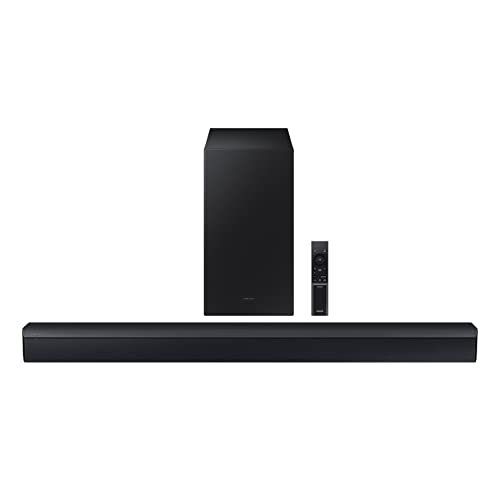
Samsung HW-C450
Stands out with bundled 5‑ft optical and 5‑in Mini‑to‑RCA cables, offering flexible connections at a $129 price point.
Also considered
Score Analysis
Key score advantages vs. runner-up (Samsung HW-S61D)
Price Range
Samsung HW-Q600F
$497.99
Samsung HW-S61D
$278.00
Samsung HW-C450
$174.54
Samsung HW-B630F
$267.99

Samsung HW-B400F
$99.99

Samsung HW-T400
$99.00

Samsung HW-S700D
$397.99
Spec Comparison
TL;DR: The Samsung HW‑Q600F is a 3.1.2‑channel soundbar with up‑firing speakers, 9 drivers and a wireless subwoofer, delivering immersive Dolby Atmos and DTS Virtual:X for Samsung TV owners willing to pay a premium.
The HW‑Q600F packs a 3.1.2 channel layout, nine drivers in total, and two up‑firing speakers that create true height effects. It uses an 8‑inch passive radiator and a 6.5‑inch subwoofer driver, while the main unit draws 34 W and the subwoofer 40 W of operating power. At 20.06 lb, the system feels solid, measuring 11.64 in deep, 13.5 in high and 40.55 in wide.
Compared with the six other Samsung models in this roundup, the Q600F is noticeably heavier than the HW‑B400F’s 4.6‑pound bar and the HW‑T400’s 4.41‑pound unit. Its depth of 11.64 in also exceeds the sub‑inch depths listed for the HW‑S61D and HW‑C450. With a gross width of 967 mm, the HW‑S700D measures slightly narrower, while the Q600F’s nine‑driver array outnumbers the typical two‑driver designs of the HW‑B400F and HW‑C450. These size and driver advantages translate into a richer, more enveloping soundstage.
Professional reviewers praise the Q600F’s “excellent default sound tuning” and the genuine 3‑D lift from its up‑firing speakers. Users consistently note the wide format support—Dolby Atmos, Dolby TrueHD, Dolby Digital Plus, DTS Virtual:X, DTS‑HD MA and DTS‑X—makes movies and games feel immersive right out of the box. The built‑in Q‑Symphony and SpaceFit Sound Pro further sharpen dialogue when paired with a compatible Samsung TV, though the room‑correction feature works only with those TVs. Wireless connectivity restricts itself to Bluetooth, with no Wi‑Fi or companion app, which some users find inconvenient.
Pros
Cons
Best for: Samsung TV owners who want integrated Q‑Symphony, immersive Dolby Atmos/DTS Virtual:X and are comfortable investing in a high‑quality sound system.
Avoid if: You have a non‑Samsung TV, rely on Wi‑Fi or app‑based controls, or need a budget‑friendly entry‑level soundbar.
TL;DR: The Samsung HW‑S61D is a compact 5.0‑channel all‑in‑one soundbar with built‑in woofers, 200 W peak power and virtual Dolby Atmos, offering easy setup and clear dialogue at a premium price.
This model’s most distinctive spec is its 5.0‑channel layout packed into a single unit that weighs just 2700 g and measures 105 mm deep, 62 mm high and 670 mm wide. The all‑in‑one design includes four woofers, three tweeters and a dedicated center speaker, so you don’t need a separate subwoofer or rear speakers.
Compared with the six other Samsung soundbars in the roundup, the HW‑S61D sits in the middle of the size and power spectrum. Its 105 mm depth is deeper than the 75 mm depth of the HW‑B630F and the HW‑C450, but shallower than the 11.64 in depth of the HW‑Q600F. At 2700 g it’s lighter than the HW‑S700D’s 14.9‑pound package and the HW‑Q600F’s roughly 20.06‑pound unit, yet heavier than the HW‑B400F’s 4.6‑pound bar. Power‑wise, the 200 W peak handling trails the 250 W of the HW‑S700D and the 300 W of the HW‑C450, but it still outpaces the lower‑powered HW‑B400F, which lists only 20 W operating consumption.
Reviewers consistently praise the easy, single‑box setup and the dialogue clarity provided by the built‑in center speaker. The virtual Dolby Atmos and DTS Virtual:X processing delivers a sense of height and width without ceiling‑mounted drivers, which many users find notable for a compact bar. However, comments note thin bass on action movies and bass‑heavy music due to the lack of a dedicated external subwoofer. The low standby draw of 0.5 W and Energy Star certification receive positive mentions for energy efficiency.
Pros
Cons
Best for: Users who want a slim, standalone soundbar with easy setup, clear dialogue and virtual immersive audio.
Avoid if: You need deep, powerful bass from a separate subwoofer, are an audiophile seeking true height speakers, or have a tight budget.
TL;DR: The Samsung HW‑C450 delivers 2.1‑channel sound with a 160 W soundbar, 120 W wireless subwoofer and DTS Virtual:X, all in a compact 75 mm‑deep chassis for under $130.
The HW‑C450 packs a 2.1‑channel layout with four 2 in midrange drivers, two 5/8 in dome tweeters and a 6 in side‑firing subwoofer. The soundbar puts out 160 W while the subwoofer contributes 120 W, and DTS Virtual:X adds height‑enhanced surround cues. Adaptive Sound Lite, Bass Boost and Game Mode round out the feature set, and the unit carries Energy Star certification.
At 1.4 kg (1400 g) it’s lighter than the HW‑B400F’s 2100 g and the HW‑T400’s roughly 4.4 lb, and its 75 mm depth is shallower than the 107 mm depth of the HW‑B400F and the 100 mm depth of the HW‑T400. The bar is wider (858.8 mm) than the HW‑B400F’s 641 mm but comparable to the HW‑B630F’s 860 mm. Its subwoofer weighs 4500 g, lighter than the HW‑T400’s 5100 g and the HW‑B630F’s 5000 g. Power‑wise the soundbar draws 25 W and the subwoofer 40 W, a modest increase over the HW‑B400F’s 20 W consumption.
Users praise the easy setup, the “deep, impactful bass” from the wireless subwoofer, and the usefulness of Game and Night modes in smaller living spaces. Professional reviewers note the balanced mids from the four 2 in drivers and the crisp highs from the dome tweeters. The main drawbacks are the lack of HDMI ARC and Wi‑Fi, which limits connection to newer TVs, and Bluetooth that supports only the SBC codec, sometimes resulting in occasional drop‑outs. The subwoofer requires a nearby power outlet.
Pros
Cons
Best for: Budget-conscious buyers seeking a reliable entry-level option
Avoid if: You need advanced features or professional‑grade performance
“Subwoofer requires nearby outlet (not fully wireless power)”
TL;DR: The Samsung HW‑B630F packs a 3.1‑channel, 4‑speaker layout with a 48 W wireless subwoofer and Bluetooth 4.2 for $237.99, offering clear dialogue and solid bass in a mid‑range package.
What really sets this model apart is its dedicated center speaker and a hefty 5 kg (5 000 g) wireless subwoofer that draws 48 W of power. With four speakers total and 3.1‑channel audio, the system can deliver crisp dialogue and a punchy low‑end without needing extra rear speakers right out of the box.
At 4.9 lb, the HW‑B630F's a touch heavier than the 4.6 lb HW‑B400F and the 4.41 lb HW‑T400, yet far lighter than the 14.9 lb HW‑S700D. Its 860 mm soundbar width also outstretches the 641 mm width of the HW‑B400F and the 670 mm width of the HW‑S61D, but stays slimmer than the 967 mm width of the HW‑S700D. Power‑wise, the subwoofer’s 48 W consumption tops the 31 W draw of the HW‑S61D and the 20 W draw of the HW‑B400F, though it’s below the 120 W subwoofer power found in the HW‑C450.
Users consistently praise the clear dialogue that the built‑in center channel provides, and many note the deep, impactful bass from the wireless subwoofer. Professional reviewers echo these points and add that DTS Virtual:X creates convincing virtual surround without extra rear speakers. The downsides that keep popping up are the lack of Dolby Atmos and eARC, no Wi‑Fi or Q‑Symphony integration, and the optional rear‑speaker kit that adds extra cost for a full 5.1 experience.
Beyond the basics, the HW‑B630F offers an AV sync range of 0‑300 ms, dynamic range control, and level adjustment from –6 dB to +6 dB per channel. Bluetooth 4.2 lets you pair two devices simultaneously, and HDMI ARC (without eARC) handles the primary TV connection. The included wall‑mount bracket and remote keep setup straightforward, while free voltage support means the unit can handle multiple input voltages worldwide.
Pros
Cons
Best for: Most users seeking a balanced, mainstream option
Avoid if: You have limited desk space or need portability
“no problem hearing dialog on my 55-inch TV”
“blast music from phone easily”
TL;DR: The Samsung HW‑B400F is a compact 2.0‑channel soundbar with a built‑in woofer, Bluetooth 4.2, and adjustable EQ, weighing 4.6 lb and drawing 20 W of power.
What sets the HW‑B400F apart is its all‑in‑one design: a 2.0‑channel bar with a built‑in woofer and four speakers packed into a 107 mm deep, 66.5 mm high chassis. At 4.6 lb it’s light enough to sit on a TV stand without a dedicated subwoofer, and its 20 W operating power keeps electricity use modest.
Compared with the other six Samsung models, the B400F sits in the middle of the size spectrum. Its depth of 107 mm is deeper than the 75 mm depth of the HW‑C450 and HW‑B630F, yet only a touch deeper than the 105 mm depth of the HW‑S61D. In weight, it matches the 4.4‑lb HW‑T400 and is a shade heavier than the 4.5‑lb HW‑B630F, while remaining far lighter than the 14.9‑lb HW‑S700D and the 20.1‑lb HW‑Q600F. Feature‑wise, the B400F lacks Wi‑Fi and wireless rear speakers that appear on higher‑end models, positioning it as a true entry‑level option.
Reviewers appreciate the built‑in woofer for delivering “deep bass without a separate subwoofer,” and the Bluetooth 4.2 connection makes wireless TV streaming painless. The adjustable treble/bass EQ (‑6 to +6 dB across seven bands) and Voice Enhance mode are highlighted as useful tweaks for dialogue clarity. On the downside, users note that the absence of a dedicated subwoofer or rear speakers limits immersive surround sound, and the lack of Wi‑Fi prevents smart‑home integration.
Technical extras include Night Mode for quieter late‑night listening and a standby draw of just 0.5 W. The remote runs on two AAA batteries, and the Titan Black finish blends into most living‑room décor. Energy Star certification isn’t listed, and the unit isn’t waterproof.
Pros
Cons
Best for: Budget-conscious buyers seeking a reliable entry‑level option
Avoid if: You have limited desk space or need portability
TL;DR: The Samsung HW‑T400 delivers 2.1‑channel sound with 140 W total output and a wireless 5.1 kg subwoofer for just $89.95, making it a solid entry‑level upgrade for small rooms.
The HW‑T400 packs a combined 140 W of power into a compact 100 mm‑deep chassis and drives a wireless subwoofer that weighs 5,200 g. Its two built‑in woofers and Dolby/DTS support give clear dialogue and a modest bass boost, while the 2.1‑channel layout keeps the setup simple.
Within this seven‑product roundup, the HW‑T400 is the most affordable option and lighter than several of its Samsung siblings, which tend to tip the scales above 4 pounds. It also lists fewer connectivity extras than higher‑priced models, but still offers Bluetooth, NFC and an optical digital input, putting it ahead of any competitor that omits wireless subwoofer support.
Professional reviewers praise the soundbar’s easy Bluetooth pairing and the wireless subwoofer’s plug‑and‑play convenience. Everyday users echo the sentiment, noting noticeably clearer TV dialogue and a straightforward setup. The most common complaints revolve around the subwoofer’s modest bass depth and the absence of an HDMI input, which some find limiting for newer TV ecosystems.
Beyond power and connectivity, the HW‑T400 supports a wide range of audio formats—including WAV, MP3, FLAC and AIFF—so most music files play without conversion. Its standby draw is just 0.5 W, keeping energy use low when the TV is off. Features like Adaptive Lite and Voice Enhance aim to improve vocal clarity, a point that several reviewers highlight.
Pros
Cons
Best for: Shoppers on a tight budget who want the most for their money
Avoid if: You have limited desk space or need portability
“Great value for clearer sound and bass over TV alone”
“Wireless sub is easy to place”
TL;DR: The Samsung HW‑S700D delivers ultra‑slim 1.5‑in Dolby Atmos sound with a 6‑kg wireless subwoofer, but its premium $397.99 price and precise wall‑mounting needs may limit budget‑focused buyers.
This soundbar’s standout spec is its 1.5‑in depth combined with a six‑driver layout and 3.1‑channel Dolby Atmos processing, all packed into a net width of 890 mm and net height of 38 mm. It pulls just 18 W while active and 0.5 W on standby, and the wireless subwoofer adds a 6.0 kg bass boost with 28 W operating power.
At 14.9 pounds, the HW‑S700D weighs noticeably more than the HW‑B400F’s 4.6‑pound unit, yet its depth is dramatically slimmer than the HW‑Q600F’s 11.64‑in profile. Compared with the HW‑S61D, which lists fewer specifications, the S700D offers a richer feature set—including AirPlay 2, Chromecast built‑in, and Google Assistant compatibility—while still fitting comfortably beneath a wall‑mounted TV.
Everyday owners praise the immersive Atmos effect and the deep, room‑filling bass from the wireless subwoofer, noting the minimalist look blends well with modern décor. Most owners gripe about the need for exact horizontal and lateral alignment when wall‑mounting; even a one‑inch offset can shift imaging. Professional reviewers also highlight the ultra‑slim profile as a perfect match for Samsung QLED TVs and commend Q‑Symphony’s seamless TV‑speaker integration. Energy Star certifies the system, keeping power draw low without sacrificing the supported Dolby Atmos, DTS Virtual:X, Dolby True HD, and Dolby Digital Plus formats.
Pros
Cons
Best for: Those prioritizing quality and willing to pay for premium performance
Avoid if: Reliability and user satisfaction are your top concerns
“Wall mounting requires precise alignment (horizontal/lateral inch adjustments).”
Breakdown
Samsung HW-Q600F
Pros
Cons
Samsung HW-S61D
Pros
Cons
Samsung HW-C450
Pros
Cons
Samsung HW-B630F
Pros
Based on scoring data and product specs
Personalized picks
Best Overall Pick
Samsung HW-Q600F
Best OverallBest for: Buyers willing to invest in a proven, high-quality option
Samsung HW-S61D
Best for: Those prioritizing quality and willing to pay for premium performance
$278.00-$219.99 vs winner
Skip Samsung HW-S700D if…
Reliability and user satisfaction are your top concerns
The Samsung HW‑Q600F earns the top spot as the best overall soundbar. It has a 4.5‑star rating from 1,363 reviews, a 3.1.2 channel configuration with nine drivers, and full‑stack Dolby Atmos and DTS support. Features like SpaceFit Sound Pro, Q‑Symphony and an 8‑in passive radiator paired with a 6.5‑in subwoofer give it a room‑filling, immersive experience that outpaces the competition.
The runner‑up, the Samsung HW‑S61D, shines when you need a compact all‑in‑one bar with smart connectivity. It supports wireless Dolby Atmos, includes Wi‑Fi, built‑in Alexa, AirPlay and Spotify Connect, and also benefits from Q‑Symphony and SpaceFit Sound Pro. At $278.00 and a 4.2‑star rating from 1,921 reviewers, it’s a solid choice for a living‑room setup that values voice control and streaming flexibility.
For tighter budgets, the Samsung HW‑T400 delivers respectable sound at just $89.95, making the HW‑T400 the best budget pick. If you want a step up without breaking the bank, the Samsung HW‑B630F at $237.99 offers a balanced feature set and richer speaker array, making it the best mid‑range option.
Pick the HW‑Q600F for the most immersive home‑theater experience, or choose the HW‑S61D, HW‑T400, or HW‑B630F to match your specific budget and feature needs.
The HW‑Q600F leads with a 3.1.2 channel layout, two up‑firing speakers for height effects, and a wireless subwoofer, all of which are listed as supporting Dolby Atmos. The HW‑S61D also supports wireless Dolby Atmos but uses a 5.0 channel, side‑firing design and lacks the dedicated up‑firing drivers.
No reviews yet — be the first to share your experience.
Please sign in to leave a review