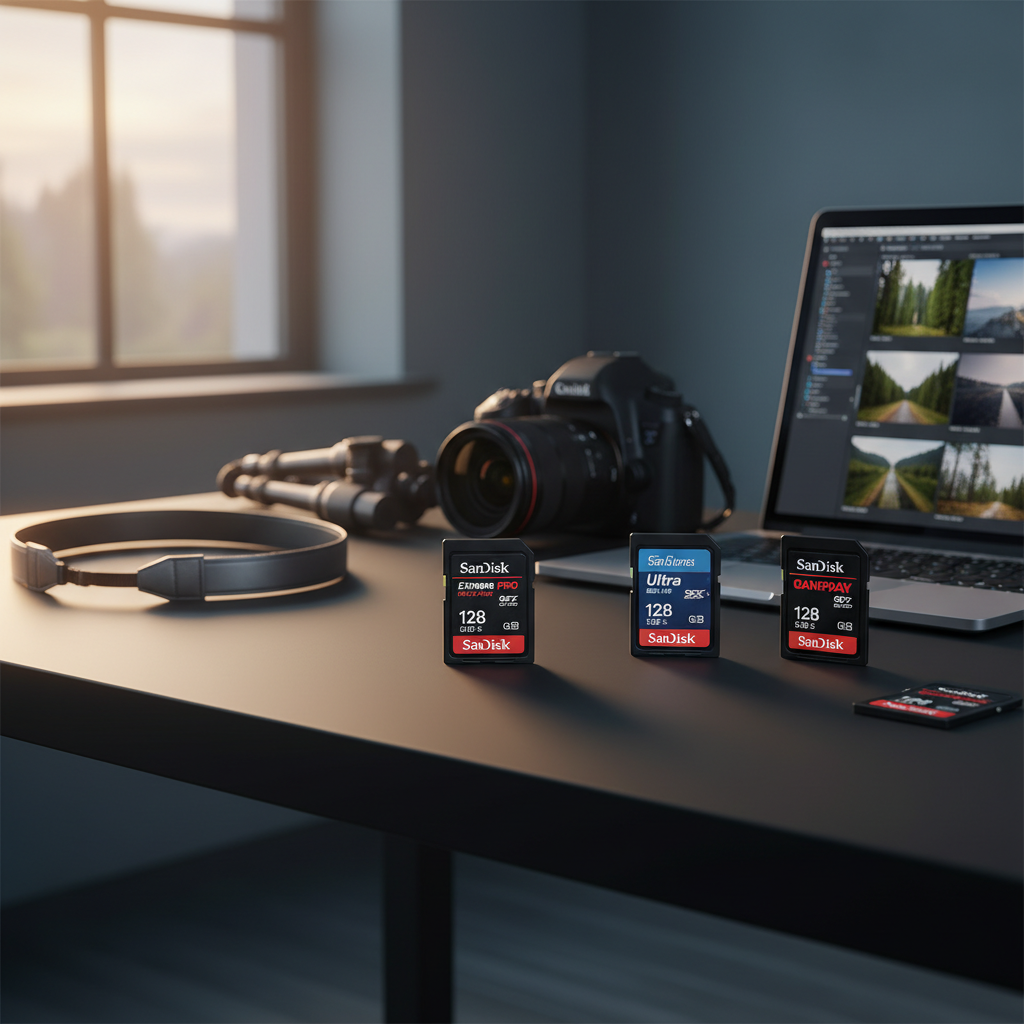
If you value speed above all else, the SanDisk Extreme PRO UHS‑II 128 GB card’s 4.9/5 rating from 2,980 reviews and its advertised 280 MB/s maximum read speed set a high bar for the whole lineup. That card also guarantees a 60 MB/s sustained V60 write rate, making it a go‑to for 6K/4K video capture and rapid RAW burst shooting.
We compare 6 SanDisk cards that span three price tiers. On the budget end, the Ultra 32 GB ($14.20) and Ultra Plus 128 GB ($17.85) deliver reliable performance for everyday photo and app storage. The mid‑range tier includes the Ultra 128 GB SDXC ($21.47) and the Gameplay 128 GB ($43.17), both offering up to 100 MB/s and 190 MB/s read speeds respectively, ideal for casual shooters and mobile gamers. At the premium level, the Extreme PRO UHS‑II 128 GB ($99.99) and the Extreme PRO 128 GB ($197.81) push performance into the 300 MB/s range and provide rugged, water‑ and shock‑proof construction for pros on the move.
Below we break down each card’s strengths, drawbacks, and ideal use cases so you'll match the right SanDisk memory card to your workflow.

SanDisk Extreme PRO UHS-II 128GB
Its 2.6 mm depth keeps the card ultra‑thin, fitting tight camera slots while delivering the high‑speed performance expected from a PRO line.
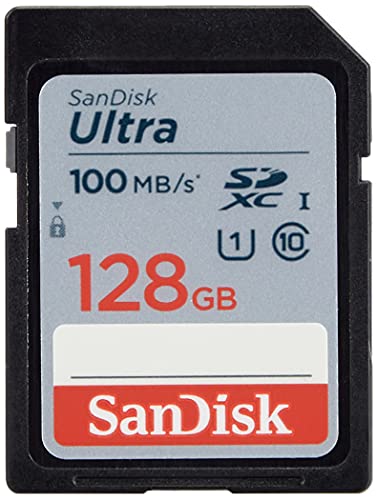
SanDisk Ultra 128GB SDXC
Casual photographers who want reliable storage at a low cost get about $78 savings versus the Extreme PRO, while still enjoying solid performance.

SanDisk Gameplay 128GB
Gamers and office workers get 4000 IOPS and 190 MB/s read speed, a clear performance edge over the Ultra’s basic specs.
Also considered
Score Analysis
Key score advantages vs. runner-up (SanDisk Ultra 128GB)
Price Range
SanDisk Extreme PRO UHS-II 128GB
$99.80
SanDisk Ultra 128GB SDXC
$20.75
SanDisk Gameplay 128GB
$37.99

SanDisk Ultra 32GB
$24.00
SanDisk Ultra Plus 128GB
$29.85

SanDisk Extreme PRO 128GB
$199.99
Spec Comparison
TL;DR: The SanDisk Extreme PRO UHS‑II 128 GB card offers 280 MB/s read, 100 MB/s write and a V60‑guaranteed 60 MB/s sustained speed, wrapped in a rugged IPX7‑rated package.
This card’s headline spec is the 280 MB/s maximum read speed, which makes off‑loading large RAW bursts or 6K video files feel almost instantaneous. It also guarantees a minimum 60 MB/s sustained write speed (V60), enough for smooth 4K/UHD capture, and tops out at 100 MB/s for peak writes. The card measures 32 mm × 24 mm × 2.6 mm and weighs 0.0036817197754 pounds (1.67 g), fitting comfortably in any DSLR or mirrorless slot.
Compared with the other five cards in this roundup, the Extreme PRO UHS‑II sits in the middle of the performance spectrum: it reads faster than the SanDisk Gameplay 128 GB (190 MB/s) and the Ultra Plus (140 MB/s advertised), but a touch slower than the other Extreme PRO variant that lists up to 300 MB/s. Its 100 MB/s write ceiling exceeds the Gameplay’s 90 MB/s and the Ultra 32’s 40–50 MB/s range, yet falls short of the other Extreme PRO’s 300 MB/s max. In weight, it’s heavier than the ultra‑light Gameplay (0.00057 lb) but lighter than the Ultra 128 (0.0176 lb) and far lighter than the Ultra 32 (0.06875 lb). Its dimensions match the Ultra 128’s adapter height (32 mm) and width (24 mm), and it shares the same weight as the other Extreme PRO model.
Users consistently praise the card’s speed and durability. Reviewers highlight the rapid 280 MB/s read for quick file transfers and the reliable 60 MB/s sustained write that keeps 6K and 4K footage from stuttering. The IPX7 waterproof rating, drop‑proof and magnet‑proof construction also earn frequent mentions. However, several owners note occasional compatibility quirks with certain high‑end cameras, and professionals point out that the 100 MB/s write ceiling may not satisfy V90‑rated bodies or the most demanding 8K workflows.
Beyond raw speeds, the card includes a built‑in write‑protect switch and comes with a free two‑year RescuePRO Deluxe license for data recovery. Its lifetime limited warranty (30‑year limited in select regions) adds peace of mind for long‑term storage of critical shoots.
Pros
Cons
Best for: Professional and prosumer photographers or videographers who need fast, reliable performance and rugged durability for 4K/6K capture.
Avoid if: You’re on a tight budget, need V90‑level write speeds, or primarily shoot with cameras that demand continuous ultra‑high‑bitrate recording.
TL;DR: At $21.47 the SanDisk Ultra 128 GB SDXC delivers 100 MB/s read speed, A1 app performance and a 10‑year warranty, making it a solid, budget‑friendly choice for everyday photo and app storage.
The card’s most eye‑catching spec is its sequential read speed of 100 MB/s, paired with 1,700 IOPS random‑read performance. Those numbers translate to swift photo transfers and smooth app launches, especially on Android devices that benefit from the A1 rating (≥1,500 IOPS read, ≥500 IOPS write). At just 8.0 g (0.01763698096 lb) and a slim 2.16 mm profile, it’s light enough to slip into any camera or phone without adding bulk, and the included full‑size SD adapter adds extra convenience.
When you line it up against the other five cards, the Ultra sits in the middle of the speed spectrum. Its 100 MB/s read is a touch faster than the Ultra Plus 128 GB’s benchmarked 99.5 MB/s, yet well below the Gameplay 128 GB’s 190 MB/s and the Extreme PRO UHS‑II’s 280 MB/s. Random‑read IOPS also outpace the Ultra Plus (1,500 IOPS) but lag behind the Gameplay’s 4,000 IOPS. In terms of weight, the Ultra is heavier than the Ultra Plus (2.27 g) and the Extreme PRO models (≈1.67 g), but still lighter than many full‑size adapters.
Users consistently praise the card for quick photo transfers at 100 MB/s and reliable app performance, noting that the built‑in SD adapter never feels flimsy. The durability suite—water, shock, temperature and X‑ray resistance—gets frequent shout‑outs in reviews, reinforcing confidence for travel or outdoor shoots. On the flip side, many mention that the typical write speed of 10 MB/s feels sluggish for large video files, and several users flag incompatibility with certain dashcams or drones that demand higher sustained writes.
Technically, the Ultra conforms to UHS‑I with a U1 speed class (minimum 10 MB/s write) and a C10 class rating, while also meeting the V10 video class. The A1 application performance class ensures that the card can handle random I/O tasks typical of modern mobile apps. SanDisk backs all of this with a 10‑year limited warranty, underscoring its confidence in long‑term reliability.
Pros
Cons
Best for: Casual photographers, smartphone and tablet owners expanding storage for apps, photos, and Full HD video.
Avoid if: You need sustained high write speeds for 4K video, high‑bitrate action‑camera footage, or professional videography.
TL;DR: The SanDisk Gameplay 128GB microSD card delivers 190 MB/s read speeds, A2 app performance, and rugged durability, making it a solid choice for mobile gaming at $43.17.
What really stands out is the 190 MB/s sequential read speed paired with an A2 application performance class that promises 4000 read IOPS and 2000 write IOPS. Those numbers translate into noticeably faster game load times and smoother app switching on supported devices. The card also offers 90 MB/s sustained write speed, with an optimal burst up to 130 MB/s, and a compact 2.54 mm height, 15.0 mm length, and 10.9 mm width.
Compared with the other five SanDisk cards in this roundup, the Gameplay card is significantly lighter at just 0.00057 pounds, making it lighter than the Ultra 128GB SDXC and Ultra Plus models. It costs more than the Ultra series, but it stays lighter than the Extreme PRO cards, which weigh more. While its write speed lags behind the premium Extreme PRO line, the Gameplay card still outperforms many budget‑oriented options in raw read performance.
Users consistently praise the rapid load times and the card’s rugged build—water, temperature, vibration, drop, and X‑ray proof—so it survives the rough handling typical of handheld consoles. Professional reviewers note the gaming‑specific optimization and the proprietary SanDisk tech that pushes the read speed beyond typical UHS‑I limits. Most complaints focus on the lower write speed for high‑bitrate 4K video and the absence of an SD adapter in the package.
The card supports 4K UHD video recording with a V30 video speed class, and it comes with a lifetime limited warranty, underscoring SanDisk’s confidence in its longevity.
Pros
Cons
Best for: Mobile gamers on Android phones, tablets, and handheld consoles who need fast load times and durable storage.
Avoid if: You're shopping on a tight budget — it's priced at $43.17
“works great in jailbroken Sony PSP with Memory Stick Pro Duo.”
TL;DR: The SanDisk Ultra 32 GB SDHC card offers a solid 100 MB/s read speed, rugged durability and a 5‑star rating for just $14.20, making it a reliable entry‑level choice.
The standout spec is the advertised read speed of up to 100 MB/s, paired with a UHS‑I (U1) interface and Class 10 rating, which comfortably handles Full HD video and high‑resolution stills. At 31.99 mm × 23.90 mm × 2.1 mm, the card fits any standard SD slot, and its 0.06875 lb (31.2 g) weight keeps it light enough for travel.
Compared with its siblings in this roundup, the Ultra 32 GB is heavier than the Ultra Plus 128 GB (0.005 lb) and the Extreme PRO models (≈0.0037 lb), yet still lighter than many larger‑capacity cards that bulk up the slot. It also lists fewer performance metrics than the Extreme PRO line, which publishes separate sequential read and write figures, but its core specs cover the essentials for everyday shooting.
Reviewers consistently praise the card’s reliability: the 5.0‑star rating from 4,255 users highlights “flawless operation” and fast transfers at up to 100 MB/s. Professional reviewers note the extensive durability suite—waterproof, shock‑proof, temperature‑proof, X‑ray‑proof and magnet‑proof—plus a 10‑year limited warranty. The main criticism centers on the write speed of 40–50 MB/s, which falls short for 4K video or high‑bitrate burst shooting, and the lack of an included SD adapter.
Pros
Cons
Best for: Budget-conscious buyers seeking a reliable entry-level option
Avoid if: You need advanced features or professional‑grade performance
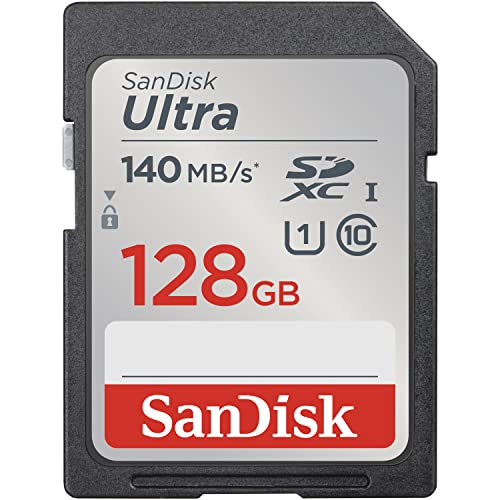
TL;DR: The SanDisk Ultra Plus 128 GB delivers solid A1 app performance, 99.5 MB/s real‑world reads and rugged durability at a budget‑friendly $17.85 price point.
Its Application Performance Class A1 rating, backed by 1,500 IOPS random reads and 500 IOPS random writes, adds a benchmarked sequential read speed of 99.5 MB/s. At just 0.005 pounds (2.27 g) it’s one of the lightest cards in its class, and its 2.16 mm height, 31.99 mm length and 2.1 mm thickness keep it slim enough for any device slot.
Compared with the other five SanDisk options, the Ultra Plus is noticeably lighter than the standard Ultra 128 GB (≈0.018 pounds) and far lighter than the Ultra 32 GB (≈0.069 pounds). It does sit a bit heavier than the Extreme PRO UHS‑II and Extreme PRO models (≈0.0037 pounds each). Speed‑wise, its 99.5 MB/s read is slower than the Gameplay 128 GB’s 190 MB/s and the Extreme PRO line’s 280‑300 MB/s reads, and its peak write of 62.9 MB/s trails the Gameplay’s 90‑130 MB/s and the Extreme PRO’s 90‑300 MB/s writes. Nonetheless, it outpaces many entry‑level cards that lack any published benchmarks.
Users consistently reward the Ultra Plus with a 4.7‑star average from 87,408 reviews, praising its reliability across cameras, drones, smartphones and the Nintendo Switch. Reviewers note the card’s magnetic, drop, water and X‑ray resistance as a big plus for on‑the‑go shooting. The main complaints focus on the guaranteed minimum write speed of 10 MB/s, which can bottleneck higher‑bitrate 4K footage, and the UHS‑I bus that caps performance for devices expecting UHS‑II or V30/U3 speeds. It’s a dependable choice for Full HD and light 4K recording, as well as for speeding up app loading on mobile devices.
Pros
Cons
Best for: Budget-conscious buyers seeking a reliable entry‑level option
Avoid if: You want the best value‑per‑dollar in its price range
TL;DR: SanDisk Extreme PRO 128 GB delivers up to 300 MB/s reads, 90 MB/s sustained writes, V90 video rating, and IP68 ruggedness, but its $197.81 price makes it a premium choice.
The standout spec is the “up to 300 MB/s” read speed paired with a sustained 90 MB/s write floor, backed by a V90 video speed class and U3 minimum of 30 MB/s. Its 32 mm × 24 mm footprint and 2.1 mm thickness keep it compact, while the 0.0036817197754‑pound weight makes it easy to carry.
Compared with the other five cards, this Extreme PRO is faster than the SanDisk Extreme PRO UHS‑II 128 GB (280 MB/s read, 100 MB/s max write) and the SanDisk Gameplay 128 GB (190 MB/s read). It also outpaces the Ultra 128 GB SDXC and Ultra Plus 128 GB, whose advertised reads sit around 140 MB/s. In size, it matches the Extreme PRO UHS‑II’s 32 mm × 24 mm dimensions but is a touch thinner than its 2.6 mm depth. It’s heavier than the ultra‑light Gameplay card (0.00057 lb) yet lighter than the Ultra 128 GB (0.01763698096 lb) and Ultra Plus (0.005 lb). Price‑wise, it sits well above the budget‑oriented Ultra and Ultra Plus models.
Professional reviewers praise its ability to handle 6K and 8K video workflows without dropping frames, and users frequently mention the card’s reliability in harsh environments—thanks to IP68 dust and waterproof protection, 5 m shock resistance, and X‑ray proofing. However, some users have reported occasional video corruption with certain Canon EOS R5 Mark II bodies, and performance can dip noticeably when used in a reader that lacks UHS‑II support.
Technically, the card uses a UHS‑II bus interface and carries an Application Performance Class A2 rating, making it suitable for both high‑bitrate video capture and fast app loading on compatible devices. The included RescuePRO Deluxe software adds a two‑year license for data recovery, making it more valuable to professionals who can’t afford data loss.
Pros
Cons
Best for: Buyers willing to invest in a proven, high‑quality option
Avoid if: You're shopping on a tight budget — it's priced at $197.81
Breakdown
SanDisk Extreme PRO UHS-II 128GB
Pros
SanDisk Ultra 128GB SDXC
Pros
Cons
SanDisk Gameplay 128GB
Pros
Cons
SanDisk Ultra 32GB
Pros
Based on scoring data and product specs
Personalized picks
Best Overall Pick
SanDisk Extreme PRO UHS-II 128GB
Best ValueBest for: Buyers willing to invest in a proven, high-quality option
SanDisk Ultra 128GB SDXC
Best for: Most users looking for a well-reviewed, reliable mainstream option
$20.75-$79.05 vs winner
Skip SanDisk Extreme PRO 128GB if…
You're shopping on a tight budget — it's priced at $197.81
The SanDisk Extreme PRO UHS‑II 128 GB wins outright. It carries a 4.9‑star rating from 2,980 reviews, reaches a maximum read speed of 280 MB/s and a write speed of 100 MB/s, and is IPX7 waterproof, drop‑proof and magnet‑proof – a rare blend of speed and durability at $99.99.
The runner‑up, SanDisk Ultra 128 GB SDXC, is the go‑to choice if you need dependable everyday storage for casual photography or travel. It delivers a consistent 100 MB/s sequential read, uses a UHS‑I interface, includes an SD adapter for flexible use, and costs $21.47.
Grab the SanDisk Extreme PRO UHS‑II 128 GB now for the best mix of speed, ruggedness and value.
The SanDisk Extreme PRO UHS‑II 128 GB, with a V60 video speed class and up to 280 MB/s read and 100 MB/s write, is designed for high‑resolution 4K and 6K capture. Its UHS‑II interface and IPX7 waterproof rating also give it a durability edge over the Ultra 128 GB SDXC, which is limited to V10 and 100 MB/s read.
Please sign in to leave a review
No reviews yet. Be the first to review!
