⚡ Quick Answer
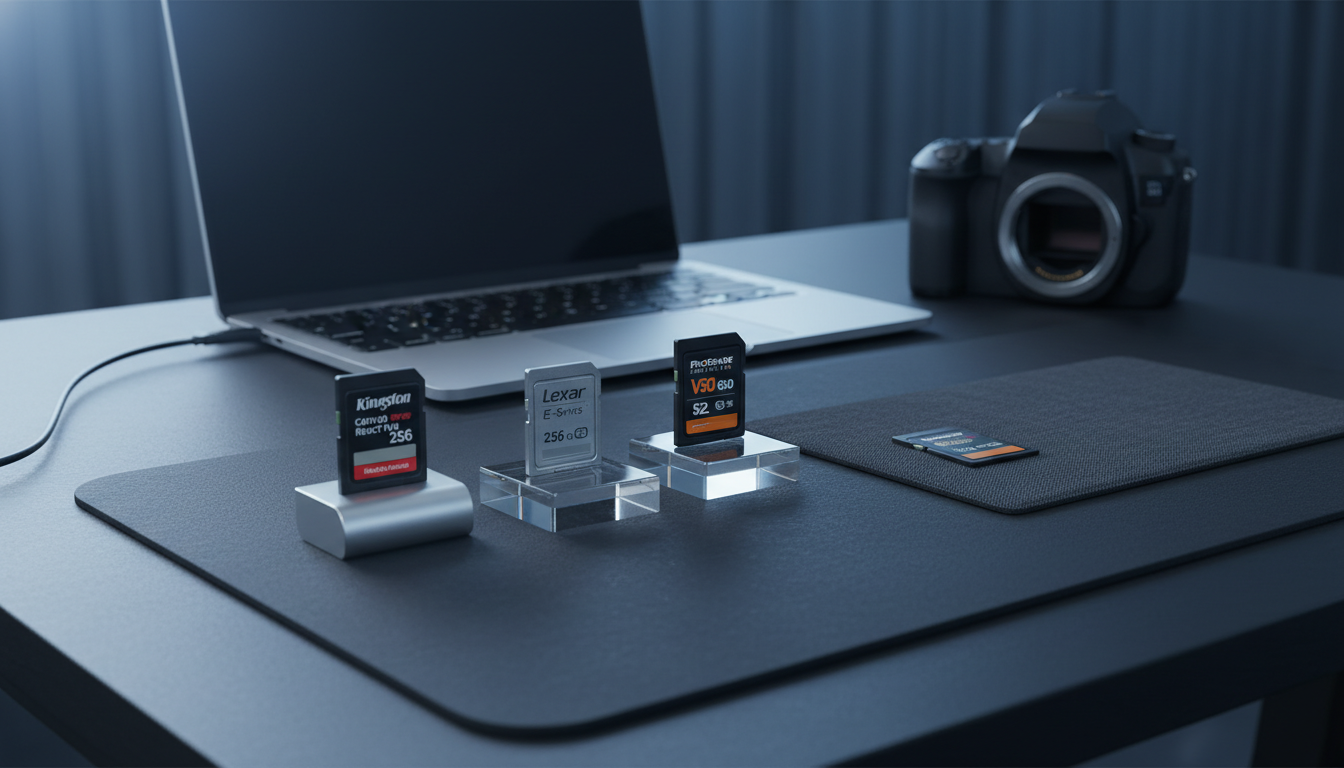
If you need 256 GB or more of fast, reliable storage for 4K video, burst photography, or a massive game library, you’ve come to the right place. We compared 10 SD and microSD cards that span budget, mid‑range, and premium price tiers. The lineup includes ultra‑affordable options under $35, mid‑priced cards around $100, and high‑end models that top $350. All of them carry solid user feedback, with ratings hovering between 4.6 and 4.8 stars out of five.
On the budget side you’ll find the Lexar E‑Series 256 GB for $32.99, offers IPX7 waterproof protection and a full‑size SD adapter. Moving up, the Kingston Canvas React Plus 256 GB retails for $99.99 and promises up to 300 MB/s read speeds, making off‑loading footage fast. The premium corner features the ProGrade Digital V60 512 GB at $369.99, which delivers a maximum read of 250 MB/s and a guaranteed 60 MB/s sustained write for demanding 4K/UHD shoots. Each card’s rating—from 4.6 to 4.8 stars—reflects a large community of reviewers, so you can trust the consensus. Below we’ll break down each card’s specs, strengths, and ideal use cases so you can pick the right match.

Kingston Canvas React Plus 256GB
Its 2.54 mm height fits most devices while delivering strong value and reliability.

Lexar E-Series 256GB
Ideal for budget‑conscious users, it offers reliable entry‑level performance at $32.99—about $67 cheaper than the top pick.

ProGrade Digital V60 512GB
With a 512 GB capacity and a slim 2.1 mm thickness, it serves pros needing high‑capacity, high‑quality storage beyond the 256 GB choices.
Also considered
Score Analysis
Key score advantages vs. runner-up (Lexar E-Series 256GB)
Price Range
Kingston Canvas React Plus 256GB
$120.90
Lexar E-Series 256GB
$32.99
ProGrade Digital V60 512GB
$369.99

ProGrade Digital V90 Iridium 256GB
$279.99

Samsung EVO Plus 256GB
$42.99

Amazon Basics microSDXC 1TB
$164.99

Lexar Blue 1TB
$189.99

Lexar High-Performance 633x 256GB
$47.92

Lexar PLAY 512GB
$130.00

Gigastone Micro SD Card 256GB
$84.99
Spec Comparison
TL;DR: The Kingston Canvas React Plus 256 GB SDXC UHS‑II card delivers up to 300 MB/s read, 260 MB/s write and V90 video speed, making it a solid high‑capacity choice for pros despite a premium price.
What really sets this card apart is its advertised maximum read speed of 300 MB/s and maximum write speed of 260 MB/s, backed by a V90 video speed class that guarantees a minimum sustained write of 90 MB/s for 4K/8K recording. At 256 GB capacity it holds enough footage for long shoots, and the built‑in write‑protect switch adds a layer of data safety.
Compared with the nine other cards in the roundup, the Kingston model sits toward the higher end of the price spectrum and is lighter than the Gigastone 256 GB card (which weighs 11.48 g) but heavier than the ultra‑light Lexar E‑Series 256 GB (0.20 g). Its UHS‑II interface outpaces the UHS‑I speeds listed for the Lexar PLAY 512 GB (up to 205 MB/s read) and the Samsung EVO Plus 256 GB (up to 160 MB/s read). In short, it offers faster performance than most peers while carrying a premium price tag.
Professional reviewers praise the card’s “ultrafast transfers and burst performance” on high‑end mirrorless bodies, and everyday users appreciate the reliable, quick file transfers that keep event‑day workflows moving. The main criticism is that real‑world write speeds often land closer to the typical 204 MB/s figure rather than the advertised 260 MB/s, and the card doesn’t support native 8K raw capture.
Technically, the card conforms to the UHS‑II standard, carries a Class 10 and U3 rating, and Kingston provides a limited lifetime warranty for the card. The dimensions—2.54 mm × 23.88 mm × 31.75 mm—fit standard SDXC slots, and the 1.70 g weight keeps it easy to handle during rapid camera swaps.
Pros
Cons
Best for: Professional photographers and videographers who need high‑speed, high‑capacity storage for 4K/8K video and fast burst shooting.
Avoid if: You are on a tight budget, need ultra‑rugged durability, or require native 8K raw video capture.
“lots of pictures, amazing storage”
TL;DR: The Lexar E-Series 256 GB microSDXC packs 256 GB of storage, IPX7 waterproof protection, and up to 100 MB/s read speed into a 0.20 g, ultra‑compact card, making it a solid budget choice for everyday devices.
The card’s most eye‑catching spec is its 256 GB capacity combined with a read speed of up to 100 MB/s and a write speed of up to 45 MB/s, which comfortably handles Full HD video and large photo libraries. Its IPX7 waterproof, temperature‑proof, and shock‑proof construction adds a layer of durability that many budget cards lack.
Compared with the other nine cards in this roundup, the Lexar E-Series makes it among the lightest at 0.20 g and one of the smallest, measuring just 1.02 mm × 14.99 mm × 10.92 mm. The Samsung EVO Plus weighs slightly more at 0.25 g and a touch larger, while the Lexar High‑Performance 633x tips the scales at over 450 g, adding bulk. In terms of speed, the Lexar E-Series lags behind the Samsung EVO Plus (read up to 160 MB/s, write up to 90 MB/s) and the Kingston Canvas React Plus (read up to 300 MB/s, write up to 260 MB/s), but it matches the read performance of the Lexar High‑Performance 633x’s 96.7 MB/s and offers comparable dimensions.
User feedback highlights the card’s reliable transfer rates and the peace of mind that comes from its rugged IPX7 rating. Reviewers note that the V30 video speed class and Class 10 rating ensure smooth 4K 60p recording on compatible devices, while the A1 application performance class helps apps launch quickly on smartphones and tablets. Some users, however, point out that the modest 45 MB/s write speed may feel limiting when moving large 4K video files to a computer.
Pros
Cons
Best for: Budget‑conscious buyers seeking a reliable entry‑level option
Avoid if: You need the fastest UHS‑II performance for 8K or high‑frame‑rate 4K capture
TL;DR: The ProGrade Digital V60 512 GB SDXC delivers 250 MB/s reads, a guaranteed 60 MB/s sustained V60 write speed, and rugged durability, but its $369.99 price places it at the premium end of the lineup.
The standout spec is the 512 GB storage capacity paired with a maximum read speed of 250 MB/s, which lets you offload large RAW or 4K footage quickly. Its V60 video class guarantees a minimum sustained write speed of 60 MB/s, enough for most 4K/UHD recording scenarios while keeping power draw low.
Compared with the other nine cards, this model sits at the higher end of both price and capacity. It offers more storage than the many 256 GB options and more robust UHS‑II performance than the UHS‑I‑only cards, though it is pricier than the budget‑focused entries and heavier than the ultra‑thin microSD choices.
Professional reviewers note the card’s “blazing‑fast” reliability for 4K and RAW workflows, and users praise the rapid file transfers that match the advertised 250 MB/s read rate. However, several reviewers warn that in devices lacking a UHS‑II slot, speeds can tumble to around 30 MB/s, and the sustained write speed caps at the V60 minimum, which may not satisfy 8K or very high‑bitrate shoots.
Beyond speed, the card includes a laser‑etched serial number for traceability, built‑in error correction, wear‑leveling algorithms, and a mechanical write‑protect switch. Its dustproof, shockproof, waterproof and X‑ray‑proof construction adds confidence for field work, while low power consumption helps preserve battery life in portable cameras.
Pros
Cons
Best for: Buyers willing to invest in a proven, high-quality option
Avoid if: You're shopping on a tight budget — it's priced at $369.99
“The card performs very well for read speeds, with peaks hitting the claimed numbers but occasional drops.”
TL;DR: The ProGrade Digital V90 Iridium 256 GB SDXC delivers 300 MB/s reads, 275 MB/s writes and a guaranteed 90 MB/s sustained write speed, but its $279.99 price makes it a premium choice for pros.
What really sets this card apart is its V90 video‑speed class combined with a maximum read speed of 300 MB/s and a maximum write speed of 275 MB/s. Those figures meet the demands of 6K, 5K and 4K RAW video workflows, and the 90 MB/s minimum sustained write speed satisfies the V90 guarantee for continuous high‑bit‑rate recording.
Comparing it against the other nine cards in this roundup, the Iridium’s read speed matches the Kingston Canvas React Plus 256 GB (300 MB/s) but exceeds its write speed of 260 MB/s. It also outpaces the ProGrade V60 512 GB, which tops out at 250 MB/s read and 130 MB/s write, and the Lexar PLAY 512 GB, which offers up to 205 MB/s read and 140 MB/s write. Even the Lexar Blue 1TB’s advertised 160 MB/s read falls short. Because it sits in the premium price tier, it costs more than the budget‑focused Gigastone 256 GB, Samsung EVO Plus 256 GB, and Lexar E‑Series 256 GB, all of which list lower speeds.
Reviewers consistently praise the card’s speed envelope and the peace of mind from its Refresh Pro™ health‑monitoring software. Professional users note that the V90 rating guarantees a minimum sustained write of 90 MB/s, which is crucial for long takes. A downside is the speed drop when you pair the card with a UHS‑I‑only host, and the manufacturer doesn’t list its weight, leaving you guessing about its heft in a camera bag.
The Iridium also brings a suite of durability features—shock‑proof, X‑ray‑proof, and temperature‑resistant construction—plus error‑correction, wear‑leveling, and a physical write‑protect switch. Its dimensions are 32 mm × 24 mm × 2.1 mm, and a laser‑etched serial number provides traceability for professional workflows.
Pros
Cons
Best for: Buyers willing to invest in a proven, high‑quality option
Avoid if: You're shopping on a tight budget — it's priced at $279.99
“The card performs very well for read speeds, with peaks hitting the claimed numbers but occasional drops.”
TL;DR: The Samsung EVO Plus 256 GB microSDXC delivers 256 GB of space, up to 160 MB/s read speed and a solid 4.7‑star rating at a budget‑friendly price.
The standout spec is its 256 GB capacity paired with a read speed of up to 160 MB/s, which comfortably handles 4K video and large photo libraries. Its U3, V30 and A2 speed class guarantees a minimum sustained write speed of 30 MB/s, while the advertised peak write reaches 90 MB/s.
Compared with the other cards in this roundup, the EVO Plus sits a touch longer at 15 mm and a bit wider at 11 mm than the Lexar E‑Series, yet it’s marginally thinner. It’s also heavier than the Lexar E‑Series but dramatically lighter than the Lexar High‑Performance 633x, which feels noticeably bulkier. Price‑wise, it lands in the budget tier, making it more affordable than premium options such as the Kingston Canvas React Plus.
Users consistently praise the roomy 256 GB storage and the convenience of the included full‑size SD adapter. Professional reviewers note the reliable U3/V30/A2 ratings for steady 4K capture, though they point out that peak read speeds fall short of the very highest‑end cards. Real‑world feedback mentions occasional speed drops on devices that don’t support UHS‑I, and some wish for bundled management software. The card receives a 4.7‑star rating from 4,493 reviewers and carries a 1‑year manufacturer warranty.
Additional technical context includes 10,000 mating cycles for long‑term durability, an operating voltage range of 2.7‑3.6 V, and temperature tolerances from –25 °C to 85 °C (storage –40 °C to 85 °C). Certifications from FCC, CE, VCCI and RCM add confidence for global use.
Pros
Cons
Best for: Budget‑conscious buyers seeking a reliable entry‑level option
Avoid if: You need advanced features or professional‑grade performance
“lots of pictures, amazing storage”
TL;DR: The Amazon Basics 1 TB microSDXC delivers up to 100 MB/s read, 80 MB/s write speeds, includes a full‑size adapter, and offers rugged IPX6 protection for high‑capacity mobile storage.
With a massive 1 TB capacity, this card gives you enough room for 4K video, extensive photo libraries, and large app installations. It meets UHS‑I U3, V30 video speed class and A2 app performance, and the manufacturer lists read speeds up to 100 MB/s and write speeds up to 80 MB/s.
Compared with the nine other cards in the roundup, the Amazon Basics model is heavier than the ultra‑light Lexar Blue 1 TB and Lexar E‑Series 256 GB, but lighter than the Lexar PLAY 512 GB, Kingston Canvas React Plus 256 GB, Gigastone 256 GB, and the Lexar High‑Performance 256 GB that tips the scales at around 1 lb. Its read/write rates sit below the Lexar Blue 1 TB (160 MB/s read) and far under the Kingston Canvas React Plus (300 MB/s read, 260 MB/s write), yet match the Gigastone 256 GB’s advertised 100 MB/s read speed and exceed the Lexar High‑Performance’s measured 96.7 MB/s read.
Users frequently praise the reliable full‑size SD adapter and the card’s accurate capacity reporting, noting smooth transfers without overheating. However, several reviewers mention that real‑world speeds can fluctuate depending on the host device, and a handful of older cameras or phones fail to recognize the 1 TB size. Professional reviewers point out the card’s stable temperature performance during prolonged 4K recording and its value‑focused pricing.
The V30 video speed class guarantees a minimum of 30 MB/s sustained write, which is sufficient for most 4K video workflows, while the U3 class and A2 app rating support fast app loading on compatible smartphones. Its IPX6 rating, shockproof, magnetic‑proof, and X‑ray‑proof construction make it resilient in rugged environments, and it operates from –10 °C to 80 °C.
Pros
Cons
Best for: Buyers willing to invest in a proven, high‑quality option
Avoid if: You need advanced features or professional‑grade performance
“performs faster than most high‑end SanDisk cards”
“at least as good as, if not very slightly better”
TL;DR: The Lexar Blue 1TB microSDXC packs roughly 928 GB of usable space into a 0.25 g, IPX7‑rated card with up to 160 MB/s advertised reads and solid durability for gamers and mobile users.
The standout spec is the massive 1 TB capacity—listed as about 928 GB usable—delivered in a microSDXC UHS‑I form factor that measures just 11 mm × 15 mm × 0.7 mm and weighs 0.25 g. It advertises read speeds up to 160 MB/s and real‑world write speeds of 62 MB/s, while offering IPX7 waterproofing, 1.5 m drop protection, 1,500 G shock resistance, and 15,000 Gauss magnetic resistance.
Compared with the other nine cards, Lexar’s 1 TB model is the only one with that capacity, making it the top‑capacity choice. It’s lighter than the Amazon Basics 1TB (0.91 g) and thinner than its 14.99 mm length, yet its advertised 160 MB/s read speed outpaces Amazon Basics’ 100 MB/s, though its 62 MB/s write speed falls short of Amazon’s 80 MB/s. Against the Lexar PLAY 512 GB, the Play card reads up to 205 MB/s and writes up to 140 MB/s, so the Blue 1TB is slower in both directions. The Kingston Canvas React Plus 256 GB pushes read speeds to 300 MB/s and writes to 260 MB/s, placing the Lexar in the mid‑range for speed while still leading on capacity. Gigastone’s 256 GB offers up to 100 MB/s reads and 85 MB/s writes—both lower than Lexar’s read claim but higher on write. Samsung EVO Plus 256 GB matches the 160 MB/s read claim but delivers up to 90 MB/s writes, giving it a write advantage. Lexar’s durability specs (IPX7, 1,500 G shock, 15,000 Gauss magnetic) are on par or better than most peers, and its inclusion of an SD adapter adds convenience.
Reviewers love the sheer storage for Nintendo Switch games and phone media, noting fast initial transfers and reliable installs. Professionals point out that real‑world read speeds hover around 97 MB/s, which is adequate for 4K video, but they also warn that write speeds can throttle to 40‑62 MB/s during long recordings, and the advertised 160 MB/s read rate only materialises with Lexar’s USB 3.1 card reader. The card’s V30 video class, A2 app performance rating, and 10,000 insert/eject cycles round out a well‑rounded feature set for everyday mobile use.
Pros
Cons
Best for: Buyers willing to invest in a proven, high‑quality option
Avoid if: You need advanced features or professional‑grade performance
“crazy that we're holding one terabyte in the palm of our hand”
“might slow down a little bit”
TL;DR: The Lexar High‑Performance 633x 256 GB microSDXC offers 256 GB of storage, up to 100 MB/s read speed and a V30 rating at a budget‑friendly $30.79.
This card’s standout spec is its 256 GB capacity paired with a manufacturer‑said read speed of up to 100 MB/s and a quoted write speed of 45 MB/s, backed by a measured sequential read of 96.7 MB/s and sequential write of 69.3 MB/s. It also carries a Class 10, U3 and V30 rating, meaning it can sustain the 30 MB/s minimum needed for reliable 4K video capture.
Compared with the other nine cards in the roundup, the Lexar 633x is noticeably heavier at 1.0 pounds, while the Samsung EVO Plus, Lexar E‑Series, Gigastone, Kingston, Lexar PLAY, Amazon Basics, Lexar Blue and ProGrade alternatives all weigh under 0.05 pounds. Its 13.46 mm thickness also makes it bulkier than the Samsung EVO Plus (1 mm) and Lexar E‑Series (1.02 mm). In terms of speed, the Lexar’s 100 MB/s read ceiling and 45 MB/s write rate sit below the Samsung EVO Plus’s up‑to‑160 MB/s read and 90 MB/s write, though its minimum write speed matches the 30 MB/s floor listed for the Lexar E‑Series.
Everyday users appreciate the large 256 GB space, noting that it can hold up to 36 hours of video, 67,600 photos or 58,100 songs, and they value the included microSD‑to‑SD adapter for quick transfers to laptops. The lifetime warranty also earns frequent mentions in reviews, giving buyers confidence that the card will last. Professional reviewers note that while the card’s performance is solid for its price tier, the UHS‑I interface limits it for workflows that demand the higher bandwidth of UHS‑II or UHS‑III cards.
Pros
Cons
Best for: Budget‑conscious buyers seeking a reliable entry‑level option
Avoid if: Professional videographers or users needing the fastest possible write speeds
TL;DR: Lexar PLAY 512 GB microSDXC offers 512 GB storage, up to 205 MB/s reads and 140 MB/s writes, V30/U3 video class, but its UHS‑I speed and write performance lag behind higher‑end cards.
The standout spec is the massive 512 GB capacity paired with a read speed of up to 205 MB/s, which Lexar advertises for quick app launches and media loading. Write speeds peak at 140 MB/s with a minimum of 30 MB/s, and the card carries the Class 10, U3, V30, A2 ratings for reliable 4K video capture on compatible devices.
Compared with the other nine cards in this roundup, the PLAY card reads faster than the Amazon Basics 1TB (100 MB/s) and the Lexar Blue 1TB (160 MB/s), but it trails the Kingston Canvas React Plus and ProGrade Digital V90, both topping 300 MB/s reads. Its maximum write speed outpaces the Amazon Basics 1TB (80 MB/s) and Samsung EVO Plus (90 MB/s) yet falls short of the Kingston and ProGrade models that exceed 250 MB/s. At 0.02 lb (9 g), the card is noticeably heavier than the ultra‑light peers such as Amazon Basics (≈0.002 lb) and Lexar Blue (≈0.0006 lb).
Users consistently praise the generous 512 GB space for large game libraries and 4K media, noting that load times feel snappy thanks to the 205 MB/s read speed. Users frequently complain about limited write performance, especially when moving large video files, and the fact that the UHS‑I bus caps the card’s potential on newer high‑speed readers. Professional reviewers also point out that while the V30/U3 class guarantees at least 30 MB/s sustained video, its speed ceiling is lower than what newer UHS‑II or microSD Express cards can deliver.
Pros
Cons
Best for: Casual gamers, smartphone and tablet owners who need a high‑capacity, well‑reviewed microSD card for everyday use.
Avoid if: You require the fastest possible write speeds for professional video production.
TL;DR: Gigastone’s 256 GB microSDXC offers 100 MB/s read, up to 60 MB/s write, V30/U3 video support and rugged durability at $84.99, making it a solid budget choice for 4K creators.
The card’s headline spec pairs its 256 GB capacity with a rated read speed of up to 100 MB/s and a write speed that manufacturers list as up to 60 MB/s (some listings claim up to 100 MB/s). It carries the V30 video speed class and UHS‑I U3 rating, which guarantees a minimum sustained 30 MB/s for smooth 4K UHD recording. The card also meets the A1 (or A2) application performance class, helping apps launch quickly on phones and tablets.
Compared with the other nine cards in this roundup, Gigastone is heavier than the ultra‑light Lexar E‑Series (0.00044 lb) and Kingston Canvas React Plus (0.00375 lb), but its weight of 0.04 lb (11.48 g)'s still modest for a microSD. Its read speed trails the Kingston and Samsung models, which list maximum reads of 300 MB/s and 160 MB/s respectively, and its write speed is lower than the ProGrade Digital V90 Iridium’s 275 MB/s. However, Gigastone’s price point sits between the budget‑focused Lexar High‑Performance 633x and the higher‑end ProGrade, offering a middle ground for users who don’t need V60/V90 speeds.
Reviewers consistently praise the card’s rugged build—waterproof, shockproof, temperature‑proof and X‑ray‑proof—making it a reliable companion for GoPro, drone and dash‑cam footage. Professional reviewers note the 100 MB/s read and 60 MB/s write performance as “incredibly fast” for entry‑level 4K capture, while everyday users appreciate the included SD adapter and the 5‑year limited warranty with free data recovery. The main criticism is the variability in real‑world write speeds, which some users report as lower than the advertised 60 MB/s, and the fact that the UHS‑I interface caps the card below newer UHS‑II or V60/V90 options.
Pros
Cons
Best for: Budget-conscious buyers seeking a reliable entry-level option
Avoid if: You want the best value-per-dollar in its price range
Breakdown
Kingston Canvas React Plus 256GB
Pros
Lexar E-Series 256GB
Pros
ProGrade Digital V60 512GB
Pros
Cons
ProGrade Digital V90 Iridium 256GB
Pros
Cons
Based on scoring data and product specs
Personalized picks
Best Overall Pick
Kingston Canvas React Plus 256GB
Best OverallBest for: Most users looking for a well-reviewed, reliable mainstream option
Lexar E-Series 256GB
Best for: Budget-conscious buyers seeking a reliable entry-level option
$32.99-$87.91 vs winner
Skip Gigastone Micro SD Card 256GB if…
You want the best value-per-dollar in its price range
Kingston’s Canvas React Plus 256 GB takes the top spot thanks to its UHS‑II interface, a listed maximum read speed of 300 MB/s and a max write speed of 260 MB/s, plus a V90 video speed class that handles 8K raw footage. The card also carries a limited lifetime warranty and earned a 4.7‑star rating from 866 reviews, making it the most reliable high‑performance choice for demanding shooters.
The Lexar E‑Series 256 GB lands as the runner‑up, especially if you need a rugged, budget‑friendly card for smartphones, drones or a Nintendo Switch. It’s rated 4.7 stars by 41,251 reviewers, features IPX7 waterproof protection and can reach up to 280 MB/s read speeds on its GOLD model, all for just $32.99.
For tighter budgets, the Lexar High‑Performance 633x 256 GB at $30.79 offers solid performance at a low price. If you want a professional‑grade upgrade, the ProGrade Digital V60 512 GB at $369.99 provides double the capacity and a V60 video class for serious video work.
Pick the Kingston Canvas React Plus 256 GB today and you’ll have a fast, durable card that covers everything from 4K video to high‑speed bursts.
The Kingston Canvas React Plus 256 GB supports 8K raw recording at 24 p, while the ProGrade Digital V90 Iridium 256 GB tops out at 6K. For true 8K raw capture, Kingston’s higher video class and 8K capability make it the better choice.
No reviews yet — be the first to share your experience.
Please sign in to leave a review