⚡ Quick Answer
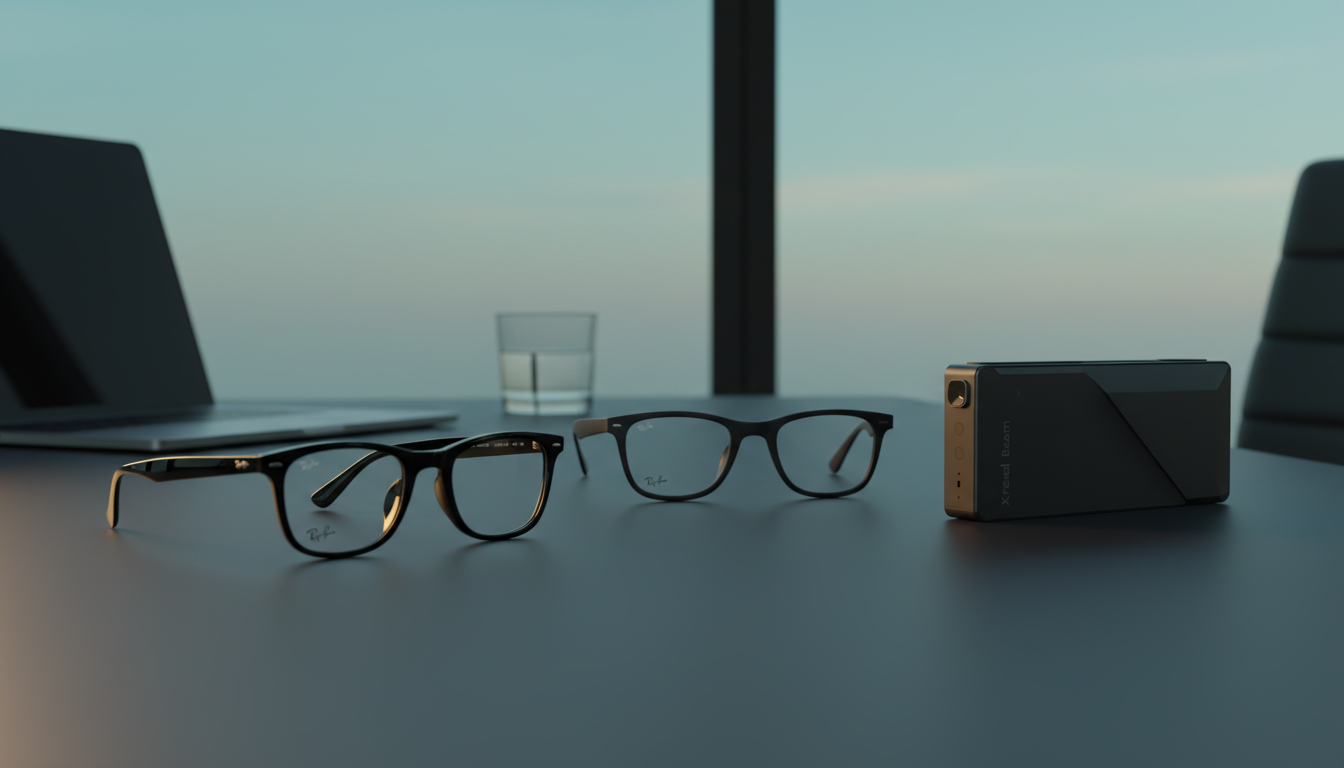
If you want a pair that feels like regular eyewear yet packs a 12 MP ultra‑wide camera, a five‑microphone array and two custom open‑ear speakers, the Ray‑Ban Meta Skyler Black is our strongest recommendation. It stores up to 32 GB of media, offers up to 4 hours of battery on a single charge and weighs just 34 g, all for a list price of $362.77 and a 4.1‑star rating from 655 reviews.
We compare 10 smart‑glasses models across three price tiers. At the budget end you’ll find options like the Luckit Smart Glasses at $12.99 and the Bqxx Camera Glasses at $45.12. Mid‑range choices include the Niluto AI Smart Glasses ($69.99) and Amwentu AI Smart Glasses ($128.65). Premium offerings span the Ray‑Ban Meta Wayfarer Matte at $459.00, the Xreal Beam Pro for $249.00, and the BooaBei AI Smart Glasses at $189.49, each delivering longer battery life, larger storage or higher‑resolution cameras.
Below we break down each model’s strengths, weaknesses and ideal use‑cases so you can match the right pair to your lifestyle.

Ray-Ban Meta Skyler Black
Offers up to 4 hours of battery life in a stylish Ray‑Ban frame, delivering solid performance at $362.77.

Ray-Ban Meta Wayfarer Matte
Ideal for power‑users who need all‑day recording, thanks to 8 hours active battery plus 48 hours with the charging case—though it sits about $96 higher than the Skyler.

Xreal Beam Pro
Stands out with a 4300 mAh battery and 27 W fast charging, letting you quickly top up between shoots—a compact, lower‑priced alternative to the Ray‑Ban models.
Also considered
Score Analysis
Key score advantages vs. runner-up (Ray-Ban Meta Wayfarer)
Price Range
Ray-Ban Meta Skyler Black
$284.25
Ray-Ban Meta Wayfarer Matte
$459.00
Xreal Beam Pro
$249.00

Niluto AI Smart Glasses
$59.99

Bqxx Camera Glasses
$41.99

Amwentu AI Smart Glasses
$128.99

BooaBei AI Smart Glasses
$139.99
Luckit Smart Glasses
$12.99
Koopsse AI Smart Camera Glasses
$59.66

Yenwot Camera Glasses
$39.99
Spec Comparison
TL;DR: Ray‑Ban Meta Skyler offers a 12 MP ultra‑wide camera, voice‑controlled AI assistant, and 32 GB storage in a stylish cat‑eye frame, but its 4‑hour battery and $362.77 price place it in the premium tier.
The standout feature is the ultra‑wide 12 MP camera that captures 4032 × 3024‑pixel photos and 1440 × 1920 30 fps video, letting you record moments without pulling out a phone. It runs on a battery that lasts up to 4 hours and can be topped up with up to 8 additional charges from the case. At 0.551155655 pounds (34 g) it feels solid yet lightweight enough for all‑day wear.
Compared with the other nine glasses, Skyler is heavier than the Ray‑Ban Meta Wayfarer Matte (0.113097140406 pounds) and the BooaBei AI Smart Glasses (0.09259415004 pounds), but lighter than the Xreal Beam Pro (0.6172943336 pounds). Its battery life of up to 4 hours is shorter than the Wayfarer Matte’s 8‑hour active life, while the 32 GB internal storage matches the Wayfarer Matte and BooaBei models. Price‑wise, it sits above budget‑oriented options like Niluto AI Smart Glasses and Koopsse AI Smart Camera Glasses.
Reviewers repeatedly praise the hands‑free voice control and the five‑microphone array that makes commands to Meta AI feel natural, especially for quick photo or video capture. Users also like the anti‑reflective, anti‑scratch, blue‑violet filtering lens coating and the 100 % UVA/UVB protection, which keep the glasses functional outdoors. Critics focus on the limited 4‑hour battery window and the premium $362.77 price tag.
Technical extras include Bluetooth 5.2, Wi‑Fi 6, a capacitive touchpad, and support for iOS 14.4 or Android 10 and above. The prescription range of –6.00 to +4.00 diopters means you can add lenses if needed, and the cat‑eye frame in shiny black gives a fashion‑forward look.
Pros
Cons
Best for: Those prioritizing quality and willing to pay for premium performance
Avoid if: You're shopping on a tight budget — it's priced at $362.77
TL;DR: The Ray‑Ban Meta Wayfarer Matte packs a 12 MP ultra‑wide camera, 8‑hour active battery and 32 GB storage into a lightweight 0.11 lb frame, but its $459 price puts it at the premium end of the market.
The standout spec is the 12 MP camera that records 6.5 MP video (2203×2938 px) at 30 fps and captures 4‑frame bursts, giving you crisp hands‑free footage straight from the glasses. Combined with 32 GB of flash storage, you can store hundreds of photos (500+ per day) and dozens of short videos without reaching for your phone.
In this roundup the Wayfarer is pricier than the Ray‑Ban Meta Skyler Black and heavier than the BooaBei AI Smart Glasses, yet it’s lighter than the Xreal Beam Pro and the Koopsse AI Smart Camera Glasses. Its 8‑hour active battery outlasts the Skyler’s 4‑hour claim and matches the Amwentu’s 8‑hour audio run‑time, while the additional 48 hours from the charging case give it a clear stamina edge over many budget‑focused peers.
Reviewers consistently praise the video quality and the lightweight feel of the 0.11 lb frame, noting the 5‑mic array and Meta AI integration make voice commands and real‑time translation seamless. The most common complaint is intermittent Bluetooth and Wi‑Fi pairing, which can be frustrating for users who rely on a stable connection during recordings.
Beyond the camera, the glasses sport Bluetooth 5.3, Wi‑Fi 6E, two custom‑built open‑ear speakers and touch, voice and Meta AI control methods, rounding out a feature‑rich package that feels more like a wearable computer than a simple accessory.
Pros
Cons
Best for: Those prioritizing quality and willing to pay for premium performance
Avoid if: You're shopping on a tight budget — it's priced at $459.00
TL;DR: The Xreal Beam Pro packs a 6.5‑inch 90 Hz LCD, 4300 mAh battery and dual 50 MP 3D cameras, offering Android app access and expandable storage, but its weight and need for separate AR glasses keep it in the premium niche.
The standout hardware is the dual 50 MP 3D spatial cameras paired with an 8 MP front shooter, letting you capture depth‑rich photos and video directly from the device. A 6.5‑inch LCD running at 90 Hz delivers smooth motion, while the Qualcomm Snapdragon 6 Gen 1 (8‑core) processor powers Android with full Google Play access. At 0.62 lb (280 g) the unit is solid‑built, and the 4300 mAh battery plus 27 W fast‑charging support means you’ll refill it quickly.
Compared with the nine other glasses in this roundup, the Beam Pro is noticeably heavier than the sub‑100 g BooaBei, Amwentu, Niluto and Bqxx models, and even the 220 g Koopsse option. Its 4300 mAh battery dwarfs the 270 mAh, 300 mAh and 220 mAh packs used by most competitors, promising far longer runtime. Storage is another high‑point: 256 GB built‑in and microSD expansion up to 1 TB far outstrip the 32 GB internal memory typical of the other devices. Camera resolution also leads the pack, with dual 50 MP sensors versus the 8 MP or 1080 P video specs other devices list.
Users appreciate the easy integration with Google Play and the vivid 3D captures that feel “socially acceptable” for everyday wear. Professional reviewers highlight the 90 Hz display and Wi‑Fi 6 connectivity as smooth for cloud‑gaming and streaming, and they note the Widevine L1 certification for HD protected content. A common complaint is occasional app lag on the 8 GB RAM configuration, especially when juggling demanding games. The device also depends on a separate pair of Xreal AR glasses to unlock its full spatial‑computing experience, which some users find limiting for a standalone headset.
Under the hood, the Beam Pro runs Android, giving you access to the full Google Play ecosystem. Connectivity includes Bluetooth 5.2, dual USB‑C ports with DisplayPort Alt Mode, and Wi‑Fi 6 for low‑latency streaming. The 27 W fast‑charging system helps you get back to shooting quickly, and the 8 GB of RAM, while adequate for most apps, may feel constrained during heavy multitasking.
Pros
Cons
Best for: AR enthusiasts, mobile gamers, travelers, and content creators who already own Xreal glasses and want a premium Android‑based companion.
Avoid if: You’re on a tight budget, need a lightweight standalone headset, or require long battery life for intensive 3D recording without external power.
“impressive 3D photos ("vivid depth")”
TL;DR: Niluto AI Smart Glasses deliver an 8 MP camera, 64 GB of storage and AI‑driven translation in a featherlight 45 g frame for $69.99, though they’re limited to short video bursts and modest speaker quality.
The standout spec is the 8 MP CMOS sensor that records 1080p video at 30 fps and offers a 130° field of view, f/2.0 aperture and 10‑shot‑per‑second burst mode. Combined with 64 GB of internal storage (expandable to 128 GB) and AI features like 99 % object‑recognition accuracy and real‑time translation in 109 languages, the glasses pack a surprisingly capable toolkit into a 45 g frame.
Compared with the other nine entries, Niluto sits above the Koopsse AI Smart Camera Glasses in price while being dramatically lighter (45 g vs. 220 g) and offering a larger 300 mAh battery versus Koopsse’s 220 mAh. It also outpaces the Luckit Smart Glasses’ 85 mAh capacity, though it trails the Bqxx Camera Glasses’ 360 mAh. In terms of weight, Niluto is lighter than the Koopsse and the Yenwot models, but heavier than the Ray‑Ban Meta Skyler’s 34 g frame.
User sentiment highlights the comfort of the 45 g design and the usefulness of the translation engine for travel, echoing TechRadar’s praise for “featherlight” wear. Professional reviewers note the crisp 1080p footage (PCMag) and the sub‑second AI detection (Android Authority), while also flagging the lack of a true AR heads‑up display and the IP54 rating as insufficient for heavy rain (TechRadar). Users commonly complain about the 90‑minute video limit, occasional overheating after 60 minutes, and the tinny output from the dual 0.8 W speakers.
Pros
Cons
Best for: Budget‑conscious vloggers, travelers and journalists who want a lightweight, AI‑enhanced camera for short‑form recording.
Avoid if: You need rugged weather protection, extended video sessions, or a full‑featured AR heads‑up display for immersive use.
“Battery lasts 2 days for walkie-talkie style use”
“Translation saved me in Japan—spot on”
TL;DR: The Bqxx Camera Glasses cost $45.12, weigh just 40 g, store 32 GB of video, and give about 1.5 hours of recording before a recharge.
What really stands out is the feather‑light 40 g frame combined with a built‑in 32 GB memory chip, so you never need an extra card for short trips. The 360 mAh lithium‑polymer battery delivers roughly 1.5 hours of continuous 1080P HD capture, and each clip is limited to 10 minutes.
Compared with the other nine glasses in this roundup, the Bqxx is lighter than the Yenwot (50 g) and far lighter than the Koopsse AI model (220 g). Its 360 mAh battery capacity outstrips the Koopsse (220 mAh), Niluto (300 mAh), Luckit (85 mAh) and BooaBei (270 mAh) units, though the Xreal Beam Pro dwarfs it with a 4300 mAh pack. At 150 mm long and 35 mm wide, the frames sit between the shorter Niluto (145 mm) and the longer Yenwot (192 mm) designs.
Users consistently praise the snug, discreet look and the “hands‑free” one‑button start, noting the video is clear enough for casual vlogging or rideshare recording. Professional reviewers echo the comfort but point out that colors can look washed out compared with a phone camera, and the 1.5‑hour battery window limits longer sessions.
Other technical touches include a micro‑USB charging port, a microSD card slot for extra storage, Android Wear 2.0 compatibility, and PC/Mac sync support. The glasses come with a one‑year warranty, and only black frames are available.
Pros
Cons
Best for: Entry-level buyers or those on a tight budget
Avoid if: You need advanced features or professional‑grade performance
TL;DR: The Amwentu V03 AI Smart Glasses pack an 8 MP 1080p camera with stabilization, 16‑language translation and a feather‑light 42 g frame for $128.65, but the 12‑minute video cap may limit marathon recordings.
The standout hardware is the 8 MP sensor that records 1080p video with a multi‑frame noise‑reduction and stabilization algorithm, allowing clear footage even while you’re moving. Each clip tops out at 12 minutes, which is enough for short highlights but forces you to stop and start for longer events.
At 42 g, the glasses weigh less than the Koopsse AI Smart Camera Glasses, which tip the scales at 220 g, and sit just under the Niluto AI Smart Glasses (45 g) while matching the BooaBei AI Smart Glasses’ 42 g weight. The Bluetooth range of 10 meters compares to other mid‑range models, though many peers don’t list a range at all. Price‑wise, the Amwentu sits above budget options like the Luckit Smart Glasses and the Bqxx Camera Glasses, but below premium offerings such as the Ray‑Ban Meta Skyler.
Users consistently praise the lightweight comfort and the AI‑driven features. Travelers love the real‑time translation that supports 16 languages, and the built‑in object and text identification helps navigate foreign signs. Professional reviewers single out the stabilized 8 MP camera as high‑value for hands‑free action footage and commend the ChatGPT‑powered voice assistant for quick queries. The most common complaints revolve around the 12‑minute video limit and the fact that the manufacturer doesn’t list battery capacity or on‑device storage, leaving some uncertainty about how long you can record before recharging.
Additional technical notes include dual microphones with environmental noise cancellation, open‑ear Hi‑Fi sound, and a life‑waterproof rating that makes the glasses suitable for everyday outdoor use. Power draws 38 mA at maximum playback, 120 mA during operation and only 6 mA on standby, all fed by a 5 V input.
Pros
Cons
Best for: Travelers, cyclists and daily commuters who want hands‑free 1080p recording, AI translation and a barely‑noticeable frame.
Avoid if: You need long continuous video recordings, extensive built‑in storage, or are shopping on a tight budget — it’s priced at $128.65.
“Battery lasts 2 days for walkie-talkie style use”
“Translation saved me in Japan—spot on”
TL;DR: The BooaBei W610 AI Smart Glasses pack an 8 MP 2K HD camera, 12 hours of music playback, IP67 durability and 32 GB storage into a 42 g, $189.49 wearable.
What really stands out is the 8 MP 2K HD camera with a smart fill‑in flash and anti‑shake stabilization, which reviewers say delivers clear shots even in low light. The glasses also include a GPT‑4‑like AI assistant, real‑time translation and voice wake‑up, all powered by Bluetooth 5.3.
At 42 g, the BooaBei glasses are among the lightest in this roundup—matching the Amwentu pair and edging out the Bqxx unit (≈0.09 lb) while being far lighter than the Xreal Beam Pro (≈0.62 lb) and the Luckit model (≈0.35 lb). Their 270 mAh battery sits between Niluto’s 300 mAh and Koopsse’s 220 mAh cells, offering a solid middle ground without the bulk of the Xreal’s 4300 mAh pack.
Users love the IP67 rating for rain‑or‑shine adventures and the comfortable silicone ear pads, plus the hands‑free AI translation that works well on the go. Professional reviewers praise the crisp stills and the quick AI photo recognition, but they note the video quality feels “HD‑ish” and the AI sometimes behaves like a perpetual beta, causing occasional lag.
The glasses also provide 12 hours of Bluetooth music playback, 32 GB of internal storage for photos and files, dual‑mic noise cancellation with beamforming, and a week of standby time.
Pros
Cons
Best for: Budget‑conscious travelers, outdoor enthusiasts, cyclists, hikers and casual creators who want hands‑free AI features.
Avoid if: You need professional‑grade video quality, expandable storage or fully polished AI performance.
“Battery lasts 2 days for walkie-talkie style use”
“Translation saved me in Japan—spot on”
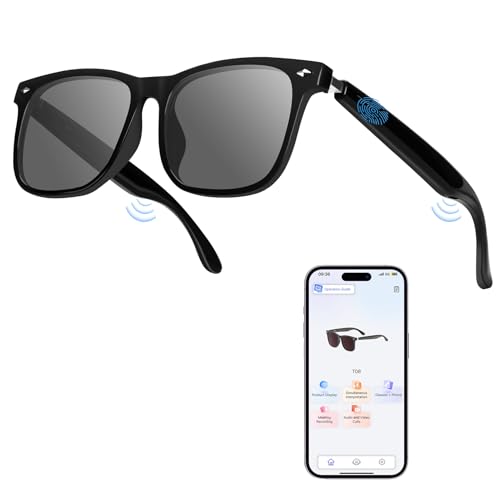
TL;DR: Luckit Smart Glasses give you an 8 MP camera, 12 hours of audio playback and AI translation for $12.99, but thin sound and cheap build keep them in the entry‑level camp.
What really stands out is the combination of an 8 MP camera and a ChatGPT‑powered AI assistant that speaks in 151 languages, all packed into sunglasses with open‑ear directional speakers. The glasses weigh about 0.35 lb (159 g) and run on an 85 mAh battery that lasts up to 12 hours of continuous use. A magnetic charging case adds a 3600 mAh reserve and lets the glasses stay on standby for 168 hours.
Compared with the other nine models, Luckit is heavier than the Yenwot glasses (0.11 lb) and the Bqxx pair (0.09 lb), yet lighter than the Xreal Beam Pro (0.62 lb) and Ray‑Ban Meta Skyler (0.55 lb). Its 85 mAh cell is modest next to the 360 mAh in Bqxx or the 300 mAh in Niluto, so battery capacity is lower than most peers. The 8 MP sensor matches Niluto and Amwentu, but falls short of Koopsse’s claimed 500 MP camera.
Users love the open‑ear design because it lets them stay aware of traffic while taking calls or listening to audio. Professional reviewers highlight the clear call audio and the rapid Bluetooth 5.4 pairing. On the downside, many note that the music sounds thin, with weak bass and low volume, and some feel the glasses cost too much for the build quality and the still‑nascent AI translation features.
Technically, the frames use PC + ABS and feature polarized UV400 lenses, offering genuine sun protection. Bluetooth 5.4 ensures a stable wireless link, and the case’s 70‑minute magnetic charge gets the glasses ready quickly. The device also supports a walkie‑talkie mode and voice control, adding extra utility for outdoor work or travel.
Pros
Cons
Best for: Entry‑level buyers or those on a tight budget
Avoid if: You need advanced features or professional‑grade performance
“Battery lasts 2 days for walkie-talkie style use”
“Translation saved me in Japan—spot on”
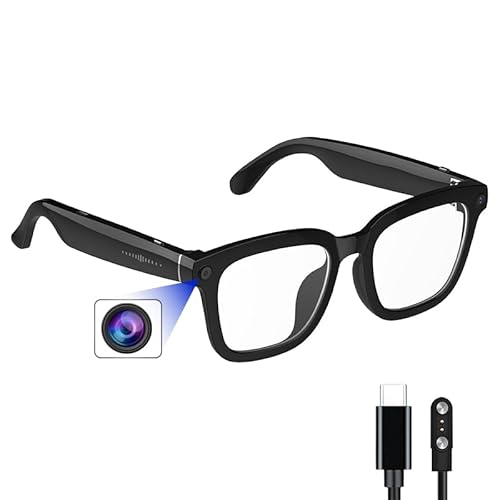
TL;DR: The Koopsse AI Smart Camera Glasses pack a claimed 500 MP camera, 7‑8 hour battery and open‑ear HIFI audio into a 220 g frame for $59.66, making them a budget‑focused option with AI features such as real‑time translation.
What really stands out is the advertised 500 MP resolution sensor paired with 1080P video capture, all housed in a 20 × 8 × 7 cm ABS‑plastic frame that weighs 220 g. The manufacturer says the 220 mAh battery delivers 7‑8 hours of mixed use, and they support Bluetooth 5.3 for calls and music streaming through dual open‑ear HIFI speakers.
Compared with the nine other models in this roundup, the Koopsse units are heavier than Niluto, Bqxx, Yenwot, Luckit, Amwentu, BooaBei and Ray‑Ban Meta, but lighter than the Xreal Beam Pro. Their 220 mAh battery sits in the middle of the pack – larger than Luckit’s 85 mAh cell yet smaller than Niluto’s 300 mAh, Bqxx’s 360 mAh and BooaBei’s 270 mAh. In the resolution department, the claimed 500 MP far exceeds the 8 MP sensors found in Niluto, Luckit, Amwentu, BooaBei and Xreal, as well as the 1080P video‑only spec of Bqxx and the 4K video of Yenwot.
Users consistently praise the glasses for their comfortable fit despite the 220 g weight, noting that the open‑ear HIFI speakers deliver rich sound without covering the ears. Reviewers highlight the built‑in microphone for clear voice calls, and the AI‑powered voice assistant with real‑time translation earns positive remarks from travelers and cyclists. Reviewers also like the interchangeable lenses that switch between polarized UV‑blocking sunglasses and transparent anti‑blue‑light mode, making the glasses versatile for both outdoor and indoor use.
Pros
Cons
Best for: Buyers in the budget price range seeking the best quality at that price point
Avoid if: You need advanced features or professional‑grade performance
“Battery lasts 2 days for walkie-talkie style use”
“Translation saved me in Japan—spot on”
TL;DR: For $39.99, the Yenwot Camera Glasses give you 4K HD video, 32 GB of onboard storage and Bluetooth connectivity in a lightweight (0.11 lb) frame, but the low 2.7‑star rating suggests mixed user satisfaction.
What really stands out is the built‑in 4K HD camera paired with 32 GB of internal storage, letting you capture high‑resolution footage without a phone or separate camcorder. The frames weigh just 0.11 lb (50 g) and measure 91 mm × 192 mm × 96 mm, so they sit comfortably on most heads while still feeling like a pair of sunglasses.
At $39.99, these glasses sit at the low‑end of the price spectrum in this ten‑product roundup. They are lighter than the Koopsse AI Smart Camera Glasses, which tip the scales at 220 g, yet a bit bulkier than the Bqxx Camera Glasses that weigh roughly 0.09 lb. Compared with peers, the Yenwot model lists fewer battery‑related specs, so you’ll need to rely on the manufacturer’s details for runtime.
Customer feedback highlights the convenience of hands‑free outdoor recording and the usefulness of Bluetooth pairing, but the 2.7‑star average from 34 reviews points to concerns about comfort and general reliability. Reviewers also note the relatively large dimensions for a pair of sunglasses, which can feel conspicuous during extended wear.
Beyond the camera, the glasses include a USB port for easy file transfer, two physical buttons for quick control, and come packaged in a 60 × 47 × 42 cm carton weighing 22 kg—useful info if you’re buying in bulk.
Pros
Cons
Best for: Entry-level buyers or those on a tight budget
Avoid if: Reliability and user satisfaction are your top concerns
Breakdown
Ray-Ban Meta Skyler Black
Pros
Cons
Ray-Ban Meta Wayfarer Matte
Pros
Cons
Xreal Beam Pro
Pros
Cons
Niluto AI Smart Glasses
Pros
Based on scoring data and product specs
Personalized picks
Best Overall Pick
Ray-Ban Meta Skyler Black
Best ValueBest for: Those prioritizing quality and willing to pay for premium performance
Ray-Ban Meta Wayfarer Matte
Best for: Those prioritizing quality and willing to pay for premium performance
$459.00+$174.75 vs winner
Skip Yenwot Camera Glasses if…
Reliability and user satisfaction are your top concerns
We’re naming the Ray‑Ban Meta Skyler Black the clear winner in the smart‑glasses showdown. It packs an ultra‑wide 12 MP camera that shoots 4032 × 3024‑pixel photos, a solid 32 GB of internal storage for your media, and a battery that lasts up to 4 hours on a charge. At just 34 g it’s feather‑light, and its 4.1‑star rating from 655 reviewers shows owners are happy with the mix of style and tech for $362.77.
The runner‑up, Ray‑Ban Meta Wayfarer Matte, shines when you need endurance and flexibility. Its active battery stretches to 8 hours, and the charging case adds another 48 hours of power—perfect for all‑day shoots or long travel days. It also offers the same 12 MP sensor and 32 GB storage, but with a higher 4.2‑star score from 1,312 reviews, making it the go‑to choice for power users at $459.00.
For shoppers on a tighter budget, the Luckit Smart Glasses deliver basic camera functionality at just $12.99. If you want a step up without breaking the bank, Niluto AI Smart Glasses sit at $69.99 and balance price with decent performance. And for those who still crave a premium feel after the Skyler, the Wayfarer Matte remains the top high‑end alternative.
Pick the Ray‑Ban Meta Skyler Black today and get the best blend of style, camera quality, and value in one sleek pair.
The Ray‑Ban Meta Wayfarer Matte gives the longest on‑glasses use with up to 8 hours of active battery life and an extra 48 hours from its charging case, plus 100 % UVA/UVB protection. The Skyler model offers solid UV protection too but only about 4 hours of battery, so the Wayfarer is the safer bet for all‑day outdoor use.
No reviews yet — be the first to share your experience.
Please sign in to leave a review