⚡ Quick Answer
We compared 4 smart lever locks that span the entire price spectrum—from the budget‑friendly Yale Assure Lock 2 Bluetooth Black at $163.71 to the premium Yale Assure Lever Satin Nickel at $475.00. The Schlage Encode Accent Lever sits in the premium tier at $273.90 with a solid 4.3/5 rating, Grade 1 security, built‑in Wi‑Fi app control, auto‑lock and support for Alexa and Google Assistant. Its 100‑code capacity and reversible handing make it a versatile choice for garage or interior doors where a deadbolt isn’t practical.
On the budget side, the Philips Wi‑Fi Smart Lever Lock costs $199.99 and boasts a perfect 5.0/5 rating, a 360° fingerprint sensor for up to 50 users, IPX5 weather resistance and auto‑lock, all managed via the Philips Home Access app and voice assistants. The Yale Assure Lock 2 Bluetooth Black, priced at $163.71 with a 4.0/5 rating, offers Bluetooth connectivity, 250 user codes and auto‑lock, though it lacks a physical key override. The premium Yale Assure Lever Satin Nickel, at $475.00, adds a touchscreen keypad, Bluetooth 5.0, 250 codes and a physical key override, while also supporting Alexa, Google and Siri.
Next, we’ll break down how each model performs in installation, daily use and smart‑home integration so you can decide which lever lock fits your home and budget.

Schlage Encode Accent Lever
Its 100‑code capacity lets you grant access to many family members and guests while staying with a proven, high‑quality brand.
Philips Wi-Fi Smart Lever Lock
Ideal for entry‑level buyers on a tight budget, it comes in at $199.99—about $74 less than the Schlage Encode, making smart security more affordable.

Yale Assure Lock 2 Bluetooth Black
Stands out with up to 250 user codes when paired with its network module, letting larger households manage many access codes without a physical key.
TL;DR: The Schlage Encode Accent Lever blends a sturdy lever handle with built‑in Wi‑Fi, supports 100 access codes and auto‑lock, and carries a Grade 1 security rating, making it the most feature‑rich option despite its premium price.
The lock’s standout spec is its native 2.4 GHz Wi‑Fi, so you never need a separate hub. Coupled with a fingerprint‑resistant capacitive touchscreen, it lets you create up to 100 unique access codes and two preset 4‑digit codes, all managed through the Schlage Home app. Its backset options of 60 mm or 70 mm (2.36 in or 2.76 in) fit most residential doors, and the lever’s reversible design handles left‑ or right‑handed installations.
Compared with the Philips Wi‑Fi Smart Lever Lock, the Schlage is pricier and a touch taller than Philips’ 5.86‑inch height, yet it matches Philips’ 100‑code capacity. It is heavier than the Yale Assure Lock 2 Bluetooth, which weighs 1.0 pound, but both share a similar backset range (60‑70 mm). Against the higher‑priced Yale Assure Lever Satin Nickel, Schlage offers a lower price point while still delivering commercial‑grade security.
Users appreciate the illuminated keypad and the convenience of eliminating a deadbolt on single‑hole doors. Professional reviewers note its Commercial Grade 1 (ANSI/BHMA A156.36) certification and a three‑year electronics warranty as strong confidence boosters. The lock auto‑locks with adjustable delays, alerts you when batteries run low, and works with Alexa or Google Assistant, fitting seamlessly into smart‑home routines. Its 4.25‑pound weight and 1925 g construction give a solid feel, and the limited lifetime mechanical warranty adds long‑term peace of mind.
Pros
Cons
Best for: Buyers willing to invest in a proven, high‑quality option — the Schlage Encode Accent Lever offers Backset: 60 mm or 70 mm
Avoid if: You're on a tight budget or only need basic functionality
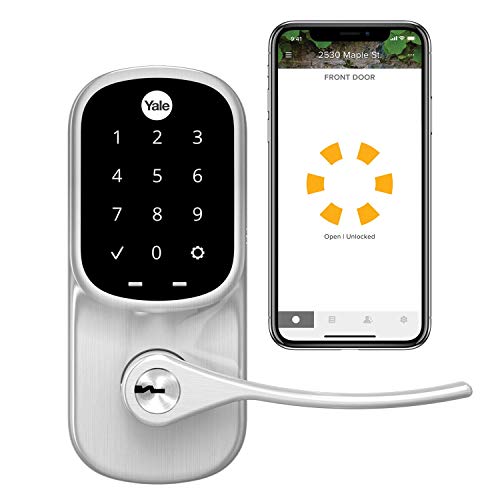
TL;DR: The Yale Assure Lever Satin Nickel costs $475.00, supports up to 250 user codes with a module, and offers Bluetooth 5.0, touchscreen entry, and auto‑unlock geofencing for interior doors.
This lever’s standout spec is its 250‑code capacity when paired with the optional module, far exceeding the 100‑code limit of the Schlage Encode Accent Lever. The built‑in touchscreen keypad accepts 4‑8 digit codes, while Bluetooth 5.0 lets you control the lock via the Yale Access app. Auto‑lock, auto‑relock, and geofencing‑based auto‑unlock round out a feature set aimed at busy households.
Compared with the three other locks in the roundup, the Yale lever is lighter than the 4.25‑pound Schlage model and taller than Philips’ 5.86‑inch high unit, giving it a more substantial presence on the door. It also out‑sizes the Yale Assure Lock 2 Bluetooth Black, which weighs just 1.0 pound and sits only 0.6 in deep, making the lever a bulkier but more feature‑rich retrofit option.
Users frequently praise the simple app setup for sharing codes and the reliable geofencing that lets you walk in without fumbling for a phone. Professional reviewers note the lock’s solid build and the convenience of a physical‑button variant for better battery life. The main complaints revolve around the required Wi‑Fi Bridge needing a nearby power outlet and the touchscreen’s higher battery drain, which some owners replace every 8‑10 months.
Pros
Cons
Best for: Those prioritizing quality and willing to pay for premium performance — the Yale Assure Lever Satin Nickel offers Edge Bore Size: 25 mm.
Avoid if: Reliability and user satisfaction are your top concerns.
TL;DR: Yale Assure Lock 2 Bluetooth Black delivers key‑free entry, auto‑lock, and up to 250 remote codes for under $170, but you’ll need an extra module for Wi‑Fi control.
This lock’s standout spec is the capacity for 250 user codes when paired with Yale’s optional network module, far exceeding the 25‑code limit in standalone mode. It also auto‑locks and auto‑unlocks via Bluetooth proximity, and the built‑in DoorSense sensor reports real‑time door status.
Compared with the other three lever locks, Yale is considerably lighter at 1.0 pound versus Schlage’s 4.25 pounds, and its exterior height of 3.7 inches is shorter than Philips’ 5.86‑inch profile. While Philips offers fingerprint recognition (50 fingerprints) and Schlage provides a 100‑code capacity, Yale’s 250‑code potential with the module gives it the highest user‑code ceiling of the group. The Yale lever also uses a standard 1‑inch edge bore, matching common door preparations.
Reviewers praise the convenience of key‑free access, the reliable auto‑lock feature, and the ease of sharing temporary codes with guests. Professional reviewers note the quick, under‑10‑minute installation and the solid 12‑month battery life on four AA cells. Some users mention occasional Bluetooth disconnects and the extra cost of a separate Wi‑Fi module if remote access is required.
Pros
Cons
Best for: Entry-level buyers or those on a tight budget — the Yale Assure Lock 2 Bluetooth Black offers Edge Bore Size: 1 inch
Avoid if: You need advanced features or professional‑grade performance
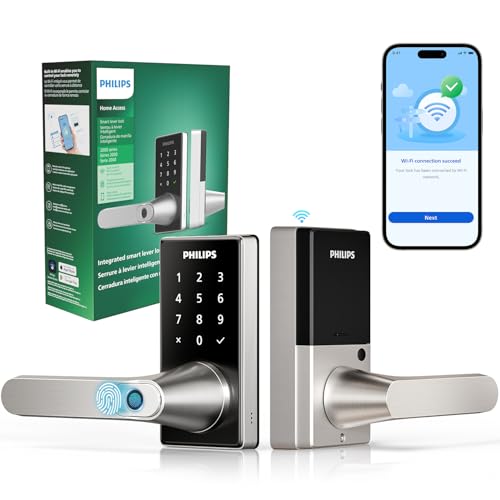
TL;DR: Philips Wi‑Fi Smart Lever Lock blends a 0.3‑second 360° fingerprint sensor, 100 PIN slots and built‑in Wi‑Fi for hub‑free control, though its price sits above budget‑focused rivals.
The lock’s standout spec is its ultra‑fast fingerprint recognition: the semiconductor sensor reads a print in just 0.3 seconds across a full 360° angle, and it can store up to 50 fingerprints. The lever‑style deadbolt measures 5.86 inches high, 6.17 inches long and 2.09 inches wide, fitting standard door thickness while keeping the footprint compact.
Compared with the three other locks in this roundup, Philips offers a larger native PIN capacity than the Yale Assure Lock 2’s 25‑code standalone limit, yet it matches the Schlage Encode Accent Lever’s 100‑code capacity. Unlike the Yale models that list a separate network module for expanded codes, Philips delivers Wi‑Fi and Bluetooth out of the box, so no extra hub is required. Its C‑grade cylinder provides pick resistance of over 270 minutes, putting it on par with the security focus of its peers.
Users appreciate the seamless four‑way unlock experience: a quick fingerprint, a backlit touchscreen PIN entry, a traditional key, or remote app control. Reviewers highlight the anti‑peep keypad and the ability to share or revoke PINs instantly via the Philips Home Access app, which is especially handy for families and short‑term guests. The built‑in IPX5 rating and the “disguise PIN” feature add extra peace of mind for outdoor installations. Professional reviewers note the straightforward DIY installation and the lack of a required hub as strong selling points.
Pros
Cons
Best for: Entry-level buyers or those on a tight budget — the Philips Wi‑Fi Smart Lever Lock offers Pick Resistance: >270 minutes
Avoid if: You want the best value-per-dollar in its price range
Breakdown
Schlage Encode Accent Lever
Pros
Philips Wi-Fi Smart Lever Lock
Pros
Cons
Yale Assure Lock 2 Bluetooth Black
Pros
Cons
Yale Assure Lever Satin Nickel
Pros
Cons
Based on scoring data and product specs
Personalized picks
Best Overall Pick
Schlage Encode Accent Lever
Best ValueBest for: Buyers willing to invest in a proven, high-quality option — the Schlage Encode Accent Lever offers Backset: 60 mm or 70 mm
Philips Wi-Fi Smart Lever Lock
Best for: Entry-level buyers or those on a tight budget — the Philips Wi-Fi Smart Lever Lock offers Pick Resistance: >270 minutes
$199.99-$73.91 vs winner
Skip Yale Assure Lever Satin Nickel if…
Reliability and user satisfaction are your top concerns
We’re naming the Schlage Encode Accent Lever the clear winner. It offers Grade 1 ANSI security, built‑in Wi‑Fi (2.4 GHz) and voice‑assistant support for Alexa and Google Assistant, so you can lock or unlock from anywhere without a hub. The lock stores up to 100 access codes, auto‑locks with adjustable delay, and comes with a limited lifetime mechanical warranty plus a three‑year electronics guarantee—all for $273.90 and a solid 4.3‑star rating from 589 reviewers.
The Philips Wi‑Fi Smart Lever Lock lands as the runner‑up, especially if you need fingerprint access and extra weather protection. It holds 50 fingerprints and 100 PIN codes, features an IPX5 rating for rain resistance, and supports Alexa and Google Assistant through its built‑in 2.4 GHz Wi‑Fi. At $199.99 it also provides a touchscreen keypad and auto‑lock ranging from 5 to 180 seconds.
For tighter budgets, the Yale Assure Lock 2 Bluetooth Black at $163.71 gives solid Bluetooth control and basic smart features. If you’re willing to splurge, the Yale Assure Lever Satin Nickel at $475.00 delivers premium styling and high‑end finish while still supporting smart access.
Pick the Schlage Encode Accent Lever for the most complete smart‑lock experience today.
The Schlage offers built‑in Wi‑Fi, Grade 1 security, reversible installation, and 100 user codes, plus a three‑year electronics warranty. Its auto‑lock and auto‑relock features work with Alexa and Google Assistant, giving a comprehensive smart‑home experience that outweighs the higher price.
No reviews yet — be the first to share your experience.
Please sign in to leave a review