⚡ Quick Answer
If you’re willing to stretch to $209.99, the August Smart Lock Pro + Connect Silver packs a 4.4‑star rating from 9,508 reviewers, a 15‑ft wireless range, and a DoorSense sensor that reports open/closed status. Weighing just 0.87 lb, it installs over your existing deadbolt in about ten minutes and talks to Alexa, Google Home, Apple HomeKit, Z‑Wave and Wi‑Fi via the included bridge – a level of ecosystem flexibility that’s hard to match.
Our comparison spans 11 models, from budget picks like the eufy Smart Lock C30 ($54.99) and Philips Smart Lock ($79.98) up through mid‑range options such as the Wyze Palm Lock ($129.98) and Ultraloq Bolt ($169.99), to premium contenders including the August Pro, Yale Assure Lock ($204.99) and Schlage Encode Plus ($319.00). Even the budget Philips lock offers AES128 encryption and remote access, while the premium Schlage Encode Plus adds AES‑128 encryption, NFC unlocking and a six‑month battery life, highlighting how security features vary across price tiers.
Next, we’ll break down each lock’s design, smart‑home compatibility and real‑world usability so you can decide which balance of price, features and performance fits your home.

August Smart Lock Pro + Connect Silver
Its compact bridge depth of 38.9 mm keeps the hardware low‑profile for easy installation.

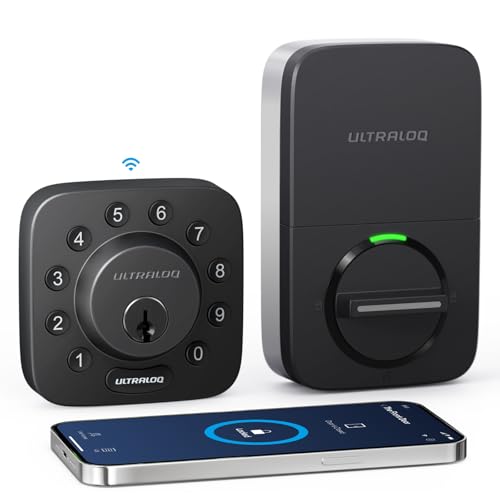
Ultraloq Bolt
Ideal for home or office users who need up to 50 access codes, and it comes at $40 less than the August Pro.

Sifely Smart Lock
Stands out with 200+ key fob/card slots and 150+ passcodes, catering to larger households or shared spaces where the other models lack that volume.
Also considered
TL;DR: The August Smart Lock Pro + Connect Silver installs in under 10 minutes, weighs just 0.87 lb, and adds Bluetooth, Z‑Wave and 15‑ft Wi‑Fi bridge range for a truly integrated smart‑home lock.
What sets this lock apart is its bundled Connect Wi‑Fi Bridge, which extends Bluetooth control to a 15 ft wireless range and adds Z‑Wave support. The lock itself is a compact 3.4 in × 3.4 in × 2.22 in unit that weighs only 0.87 lb, making the whole package easy to handle during installation.
Compared with the other ten entries, the August lock is lighter than the Ultraloq Bolt (3.4 lb) and Wyze Palm Lock (1.9 lb), yet it carries a higher price tag than the Wyze Palm Lock and eufy C210. It also offers more native integrations than the eufy C210, which lists fewer connectivity options, and it provides Z‑Wave plus Wi‑Fi where many competitors rely on a single protocol.
Users consistently praise the 10‑minute retrofit that leaves the original deadbolt and keys untouched—ideal for renters or HOA‑restricted homes. Professional reviewers highlight the DoorSense sensor’s reliable open/closed detection and the seamless digital guest‑access features. The main trade‑off noted in reviews is the extra bulk of the Connect bridge and the lack of a disclosed battery‑life figure.
Technical details reinforce its appeal: the lock clears a 4.75 in door clearance, fits single‑cylinder deadbolts, and is built from a plastic‑metallic material that feels sturdy. Four AA batteries power the lock, and an optional AC adapter can keep the bridge running continuously.
Pros
Cons
Best for: Buyers willing to invest in a proven, high-quality option — the August Smart Lock Pro + Connect Silver offers Installation Time: <10 minutes
Avoid if: You're on a tight budget or only need basic functionality
“simple with just a screwdriver, instructional videos available”
“worth your time”
TL;DR: The Sifely Smart Lock packs 200+ fingerprint slots, 150+ passcodes, and a 200+ key‑fob capacity into a 3.6‑lb lever that installs in under 20 minutes for a solid budget‑friendly entry solution.
The lock’s standout spec is its high‑capacity user management: it stores up to 200 fingerprints, more than 150 passcodes, and over 200 wireless key fobs or cards. Those numbers sit alongside a 1‑year battery life from four AA cells and an anti‑peeping code that randomizes the keypad overlay. At 3.6 lbs, the unit feels solid without being overly heavy, and its 2 1/8‑inch bore fits standard doors without drilling.
Compared with the other ten entries, Sifely is heavier than the 1.4‑lb Philips Smart Lock but only marginally so against the 3.3‑3.5 lb Ultraloq U‑Bolt. Its 7.0‑inch length and 3.0‑inch width make it larger than the compact Philips model (6 in length, 2 in width) while still fitting most lever‑style doors. Unlike bolt‑style competitors that require a face‑hole drill, Sifely needs no drilling, positioning it as a straightforward retrofit for interior doors.
Users consistently praise the lock’s quick <0.3‑second fingerprint reads and the ease of a 10–20 minute installation using just a Phillips screwdriver. Professional reviewers note the reliable Bluetooth connection and the sturdy zinc‑alloy construction. The main complaints focus on fingerprint performance when fingers are wet or greasy and the lack of a weather‑proof rating, which makes the lock less suitable for fully exposed exterior doors in harsh climates.
Pros
Cons
Best for: Budget-conscious buyers seeking a reliable entry‑level option — the Sifely Smart Lock offers Key Fob/Card Capacity: 200+
Avoid if: You need a lock for a fully exposed exterior door in harsh weather conditions
“much better than expected for the price”
“love the fingerprint unlock indoors; it becomes a habitual, quick method”
TL;DR: The Ultraloq Bolt costs $169.99, offers Matter‑enabled Wi‑Fi and Thread, a 360° fingerprint scanner, IP65 protection and up to 50 access codes, but its 3.4‑lb weight and 2.4 GHz‑only Wi‑Fi make it a premium‑priced, heavier option.
What really sets the Ultraloq Bolt apart is its native Matter support over both Wi‑Fi and Thread, paired with 128‑bit AES encryption and an IP65‑rated zinc‑alloy case. The lock’s 360° fingerprint sensor and anti‑peep keypad give you eight keyless entry methods, while the built‑in door‑status alerts let you monitor lock activity from the U‑home app. With a depth of 2.96 inches, height of 2.96 inches and a width of 1.35 inches, the bolt fits a standard deadbolt cutout without sacrificing the robust 3.4‑lb construction.
Compared with the other ten contenders, the Bolt is heavier than the August Smart Lock Pro + Connect (0.87 lb) and the August 2nd Gen (0.87 lb) but matches the weight of the Ultraloq U‑Bolt (3.3–3.5 lb). Its width of 1.35 inches is noticeably slimmer than August’s 2.22‑inch width, giving it a more compact profile on the door. The Bolt also tops many rivals in code capacity, offering up to 50 access codes versus the Yale Assure Lock’s 25‑code limit and the Wyze Palm Lock’s 50‑code limit but with a richer feature set that includes both Wi‑Fi and Thread connectivity.
Reviewers consistently praise the seamless Apple Home integration, noting that Siri can lock or unlock the door without an extra bridge. Users also highlight the convenience of the 360° fingerprint scanner and the peace of mind from the ANSI/BHMA Grade 1 certification. On the flip side, several owners mention the lock’s reliance on a 2.4 GHz Wi‑Fi network, which can be a snag in homes that prioritize 5 GHz bands, and a few comment that the installation feels more involved than plug‑and‑play models.
From a technical standpoint, the Bolt runs on eight AA alkaline batteries (12 V) and carries a lifetime mechanical guarantee plus an 18‑month electronic warranty. It operates in external temperatures from –4 °F to 149 °F and internal temperatures from 14 °F to 131 °F, ensuring reliable performance in most climates.
Pros
Cons
Best for: Home and office users seeking a balance of features and value — the Ultraloq Bolt offers Access Codes Capacity: Up to 50
Avoid if: You're shopping on a tight budget — it's priced at $169.99
“Built-in WiFi, app remote control, and door alerts.”
TL;DR: At $89.99, the eufy C210 packs built‑in Wi‑Fi, bank‑grade encryption and 100,000 lock cycles into a sleek deadbolt with five unlock options, offering solid value for standard US doors.
The standout feature is its integrated Wi‑Fi, so you never need a separate bridge. Combined with bank‑grade encryption and a robust 100,000 lock/unlock cycle rating, the lock feels ready for daily use. It fits doors with a backset of 60 to 70 mm and weighs about 1.48 lb, making it a compact addition to most US deadbolts.
Compared with the other ten models, the C210 is lighter than the Ultraloq U‑Bolt, Sifely Smart Lock, Wyze Palm Lock, Ultraloq Bolt and the eufy C30, while it’s a touch heavier than the Philips Smart Lock. It sits at a higher price point than the Ultraloq U‑Bolt and Philips but below the Wyze Palm Lock, positioning it in the mid‑range tier. Its five unlock methods (app, keypad, physical key, Apple Watch, voice) outnumber the single‑method options of some rivals, though it lacks biometric scanning found on premium units.
Users repeatedly praise the lock’s sleek black design and the quick 15‑minute installation. The eufy Security app’s remote control is described as reliable, especially since the built‑in Wi‑Fi removes range worries. On the flip side, owners note that the battery—four AA alkaline cells—often needs replacement every six months, and the absence of a door sensor can lead to accidental auto‑locking on an open door. Professional reviewers also point out the lightweight feel compared with higher‑priced competitors.
Additional technical details include BHMA Grade 3 certification, an IPX3 rating for light moisture protection, 2000 N pressure resistance, 72‑hour salt‑spray resistance, and a lockdown after five failed entry attempts. The lock can store up to 100 user codes, supports Amazon Alexa and Google Assistant, and works with the Apple Watch via the eufy Security app.
Pros
Cons
Best for: Value‑conscious buyers seeking quality at $89.99 — the eufy C210 offers Backset: 60 to 70 mm
Avoid if: You need advanced features or professional‑grade performance
“compact & capable”
TL;DR: For $54.99 the eufy Smart Lock C30 gives you Wi‑Fi control, a 15‑minute DIY install and a compact 65.28 mm depth, but it lacks Apple HomeKit and Matter support.
The lock’s most eye‑catching spec is its built‑in Wi‑Fi, meaning you can lock or unlock from the eufy Security app without a separate bridge. It measures just 65.28 mm deep, 153.67 mm high and 41.40 mm wide, and weighs 949.9 g (about 2.09 lb), making it a fairly lightweight option for a deadbolt. Its IPX3 rating and operating range from –22 °F to 158 °F let it handle most outdoor door conditions, while a 5‑month battery life on four AA cells keeps you from swapping batteries every month.
Compared with the other ten locks in this roundup, the C30 is among the most affordable and the lightest after the Philips Smart Lock (1.4 lb). It’s noticeably lighter than the Sifely Smart Lock’s 3.6 lb body and slimmer than the Ultraloq Bolt’s 2.96‑inch depth. Unlike several competitors that require a hub or support Matter, the C30 runs on its own Wi‑Fi module and integrates directly with eufy video doorbells and cameras. However, it does not work with Apple HomeKit, IFTTT or Matter, which some higher‑priced rivals do.
Professional reviewers highlight the lock’s straightforward 15‑minute installation and the “wrong‑try protection” that temporarily disables the keypad after multiple incorrect entries. Users appreciate the auto‑lock timer that works whether the door is open or closed, and the low‑battery indicator that warns you before the 5‑month power window ends. The main downside noted is that the four AA batteries are not included, adding a small upfront cost, and the lack of broader smart‑home protocol support can be a deal‑breaker for those invested in Apple or Matter ecosystems.
Beyond the basics, the C30 answers voice commands through Alexa or Google Assistant and offers physical key access, a keypad with tactile buttons, and remote control via the eufy app. Its BHMA Grade 3 security rating and IPX3 splash resistance give extra peace of mind for front‑door use.
Pros
Cons
Best for: Shoppers on a tight budget who want the most for their money — the eufy Smart Lock C30 offers Depth: 65.28 mm and easy Wi‑Fi control.
Avoid if: You need Apple HomeKit, IFTTT or Matter integration, or you prefer a lock that includes batteries out of the box.
TL;DR: The Yale Assure Lock offers Z‑Wave Plus encrypted keyless entry with an adjustable 60‑70 mm backset, a backlit touchscreen, and up to 25 user codes, but its premium $204.99 price and AA‑battery requirement may deter budget‑focused buyers.
The lock’s standout feature is its Z‑Wave Plus secure encryption, which lets you lock and unlock remotely through compatible smart‑home hubs. A touchscreen keypad with illuminated backlit display lets you set 4‑8 digit PIN codes, and the backset is adjustable from 60‑70 mm, accommodating most door preparations. It weighs 1.0 pounds, operates in humidity up to 95%, and tolerates temperatures from –25 °C to 60 °C. Power comes from four AA alkaline batteries, which are included.
Compared with the other ten smart locks in this roundup, the Yale sits in the middle of the weight spectrum: it’s heavier than the August Smart Lock Pro and August Smart Lock 2nd Gen (both 0.87 lb) but lighter than the Ultraloq Bolt and Schlage Encode Plus (each 3.4 lb). It’s also lighter than the Wyze Palm Lock (1.9 lb) and roughly the same as the eufy C210 (1.48 lb). In terms of user‑code capacity, Yale’s 25 codes are fewer than Ultraloq’s 50, Wyze’s 50, and the 100‑code limits of eufy and Schlage, so it may feel restrictive for larger households. Connectivity-wise, Yale is limited to Z‑Wave Plus, whereas some peers bundle Bluetooth or Wi‑Fi bridges for broader ecosystem support.
Users consistently praise the convenience of keyless entry and the reliability of Z‑Wave integration, noting that the backlit keypad works well in low‑light conditions. The main complaints revolve around the need to replace four AA batteries periodically and the lock’s inability to pair directly with Bluetooth‑only or Wi‑Fi‑only hubs, which can be a deal‑breaker for owners of those ecosystems. Professional reviewers highlight the adjustable backset and the robust lifetime limited warranty on finish and mechanical components as strong selling points.
From a technical standpoint, the lock’s Z‑Wave Plus encryption ensures secure communication, while its tolerance for up to 95 % operating humidity makes it suitable for damp climates. The –25 °C to 60 °C temperature range covers most residential environments, and the included two physical keys provide a fallback in case of power loss.
Pros
Cons
Best for: Those prioritizing quality and willing to pay for premium performance — the Yale Assure Lock offers Backset: Adjustable 60-70mm
TL;DR: The Schlage Encode Plus is a premium Wi‑Fi deadbolt with built‑in Apple Home Keys NFC, 100 user codes and AES‑128 encryption, but its $319 price and six‑month battery life make it a high‑end choice.
What really sets this lock apart is the combination of native 2.4 GHz Wi‑Fi and Apple Home Keys support, letting you unlock the door by tapping your iPhone or Apple Watch within a couple of inches. It stores up to 100 access codes, uses 128‑bit AES dual data encryption, and offers keypad, app, voice and NFC unlock methods—all without a separate hub.
At 3.4 pounds, the Encode Plus is noticeably heavier than the August Smart Lock Pro + Connect Silver (0.87 pounds) and the August Smart Lock 2nd Gen Silver (0.87 pounds), and also heavier than the Yale Assure Lock (1.0 pound). It matches the weight of the Ultraloq Bolt (3.4 pounds) but still feels more substantial than the Wyze Palm Lock (1.9 pounds) and the eufy C210 (about 1.48 pounds). In terms of code capacity, its 100 slots outpace Yale’s 25‑code limit and Ultraloq’s “up to 50” limit, giving families and renters more flexibility.
Reviewers repeatedly note the lock’s straightforward installation through the Schlage Home app and the near‑instant NFC unlock experience for Apple users. Professional reviewers praise the AES‑128 encryption and the ANSI/BHMA AAA rating as strong security credentials. However, users also flag the premium $319 price tag and the fact that the lock lacks an IP rating, which could be a concern for exposed exterior doors. The six‑month battery life on four AA alkaline cells means you’ll need to keep spare batteries handy.
Technically, the Encode Plus works with door thicknesses from 35‑45 mm, fits a backset of 60‑70 mm, and operates from –35 °C to 66 °C. It includes a built‑in alarm with selectable sensitivity, a low‑battery indicator, and a lifetime mechanical/finish warranty plus a three‑year electronics warranty, underscoring its premium positioning.
Pros
Cons
Best for: Apple ecosystem users and families who want a premium Wi‑Fi deadbolt with NFC tap access — the Schlage Encode Plus offers Access Codes Capacity: 100
Avoid if: You're shopping on a tight budget — it's priced at $319.00
TL;DR: The Philips Smart Lock offers built‑in Wi‑Fi and Bluetooth, a rapid 0.3‑second fingerprint scanner, and remote access for $79.98, making keyless entry easy for tech‑savvy homes.
The lock’s standout feature is its integrated Wi‑Fi and Bluetooth, so you never need a separate hub. It also packs a fingerprint sensor that reads a print in just 0.3 seconds with a 99% recognition rate, and all data is protected by AES128 encryption. With a backset of 2‑3/8 or 2‑3/4 inch, it fits most standard doors while supporting five unlock methods—including voice via Alexa or Google Assistant.
Compared with the other ten models, the Philips unit is lighter than the Ultraloq U‑Bolt (which weighs over 3 pounds) and sits close to the weight of the eufy C210 at about 1.4 pounds. Its adjustable backset matches the Ultraloq’s flexibility, but its fingerprint capacity of 20 is lower than the Ultraloq’s 50. The lock’s auto‑lock timer of 10‑180 seconds is comparable to many peers, though some competitors list longer ranges.
Reviewers consistently praise the built‑in Wi‑Fi for removing the hub hassle and applaud the swift fingerprint response. Professional reviewers note the seamless integration with the Philips Home Access app and the reliable voice‑assistant support. On the downside, users point out that the lock runs on eight AA batteries (not supplied) and offers no emergency power backup, which can be a concern during outages. The ANSI/BHMA Grade 3 rating is solid for residential use but isn’t aimed at commercial security needs.
The lock operates from –35 °C to 66 °C and tolerates humidity up to 95 %, making it suitable for most climates. It also includes alarms for low battery, wrong entry, and jam detection, plus local storage for entry logs. With a 4.4‑star rating from 689 reviews, owners appreciate its reliable performance and remote access capabilities.
Pros
Cons
Best for: Budget-conscious buyers seeking a reliable entry-level option — the Philips Smart Lock offers Backset: 2‑3/8 or 2‑3/4 inch
Avoid if: You want the best value‑per‑dollar in its price range
TL;DR: The Wyze Palm Lock uses palm‑vein scanning, offers 50 guest codes with anti‑peep protection, and installs in about 20 minutes, but its $129.98 price sits above many rivals.
The standout feature is the palm‑vein recognition sensor, which lets you unlock by simply hovering your hand over the lock. This biometric method is marketed as harder to spoof than fingerprint readers and works alongside a PIN keypad, touchscreen, Wyze app, voice assistants, and a physical key. The lock also auto‑locks using a built‑in gyroscope, and its IP53 rating means it can handle light rain or splashes.
At 1.9 pounds, the Wyze Palm Lock is heavier than the August Smart Lock 2nd Gen Silver (0.87 pounds) but lighter than the Ultraloq Bolt (3.4 pounds) and the Sifely Smart Lock (3.6 pounds). It’s also a bit heavier than the Philips Smart Lock (1.4 pounds) while still weighing more than the eufy C210 (≈1.48 pounds). Pricing-wise, it sits above the budget‑friendly eufy C210 and Philips models, aligning more closely with the Ultraloq Bolt’s premium tier.
Reviewers consistently praise the palm‑vein scanner for its “contactless” convenience and the BHMA3 certification that assures durability against slams and twists. Users also like the ability to program up to 50 guest codes with anti‑peep protection, and the 20‑minute DIY installation is highlighted as straightforward. On the downside, the emergency USB‑C charging cable isn’t included, and the $129.98 price tag is noted as a premium cost compared with other smart locks in the field.
Pros
Cons
Best for: Most users seeking a balanced, mainstream option — the Wyze Palm Lock offers Installation Time: 20 minutes
Avoid if: You're shopping on a tight budget — it's priced at $129.98
TL;DR: The August Smart Lock 2nd Gen Silver retails for $199.99, fits a single‑cylinder deadbolt with an 86 mm depth, and offers app‑based, voice‑controlled access while keeping your existing key.
At just 0.87 pounds and a compact 86 mm depth, this lock slips onto the interior side of most single‑cylinder deadbolts without drilling. Installation is marketed as under 10 minutes, and the original mechanical key stays functional as a reliable backup. The device runs on four AAA alkaline batteries and includes DoorSense to report open/closed status.
In the broader lineup, the August 2nd Gen matches the Pro + Connect model in weight (both 0.87 pounds) but is lighter than the Yale Assure (1.0 pound) and considerably lighter than the Ultraloq Bolt, Wyze Palm, and Schlage Encode Plus, which tip the scales at three pounds or more. Unlike some competitors that embed Wi‑Fi, this lock requires a separate August Connect Bridge for remote access, adding an extra step that the eufy C210 and Ultraloq avoid.
Users consistently praise the convenience of keyless entry, especially the virtual guest keys that can be time‑limited, and the activity logs that show who entered and when. Professional reviewers note the non‑destructive retrofit design and seamless HomeKit integration, letting Siri, Alexa, or Google Assistant lock and unlock the door with a voice command. Auto‑Lock and Auto‑Unlock work automatically as you approach or leave, further reducing the need to fumble with keys.
Technical details round out the picture: Bluetooth connectivity enables iOS/Android app control, while the 2.4 GHz Wi‑Fi band becomes available once the Bridge is installed. The polished metal finish adds a sleek look to any door, and the 56 mm height keeps the lock from protruding excessively.
Pros
Cons
Best for: Those prioritizing quality and willing to pay for premium performance — the August Smart Lock 2nd Gen Silver offers Depth: 86 mm
Avoid if: You're on a tight budget or only need basic functionality
TL;DR: The Ultraloq U‑Bolt Pro Wi‑Fi lock retails for $79.99, packs 8‑in‑1 entry, 128‑bit AES encryption and a 10‑second‑to‑5‑minute auto‑lock window, but its premium price and 2.4 GHz‑only Wi‑Fi may limit value.
What really sets the U‑Bolt apart is its built‑in 2.4 GHz Wi‑Fi, which eliminates the need for a separate hub. It secures connections with 128‑bit AES encryption and lets you choose an auto‑lock delay anywhere from 10 seconds to 5 minutes. The lock also supports up to 50 fingerprints, 50 NFC keys and 50 passcodes, giving you a true 8‑in‑1 entry experience for $79.99.
Compared with the other ten contenders, the U‑Bolt is heavier than the Philips Smart Lock (1.4 lb) and the eufy C210 (about 1.48 lb), and also heavier than the Wyze Palm Lock (1.9 lb). Its 3.3–3.5 lb weight is close to the Sifely Smart Lock (3.6 lb) and a bit more than the Ultraloq Bolt (3.4 lb). The lock’s IP65 rating outpaces the Wyze Palm Lock’s IP53, and its Wi‑Fi‑only design gives it an edge over models that rely on Bluetooth or require a hub.
Everyday users praise the intuitive app, reliable remote control and instant door‑status alerts. Professional reviewers note the improved geofencing auto‑unlock and the precise 10‑second‑to‑5‑minute auto‑lock timer. Common complaints focus on the 2.4 GHz‑only Wi‑Fi, which can clash with networks that favor 5 GHz, and on battery life dropping faster when Wi‑Fi stays active. The lock ships with a micro‑USB backup port and runs on eight AA alkaline cells.
Pros
Cons
Best for: Tech‑savvy homeowners or renters who want hub‑free Wi‑Fi integration, strong encryption and flexible entry methods, and don’t mind a premium price.
Avoid if: You need the best value‑per‑dollar in its price range or require 5 GHz Wi‑Fi connectivity.
“Engineering excellence”
Breakdown
August Smart Lock Pro + Connect Silver
Pros
Ultraloq Bolt
Pros
Cons
Sifely Smart Lock
Pros

Philips Smart Lock
Pros
Cons
Based on scoring data and product specs
Personalized picks
Best Overall Pick
August Smart Lock Pro + Connect Silver
Best OverallBest for: Buyers willing to invest in a proven, high-quality option — the August Smart Lock Pro + Connect Silver offers Installation Time: <10 minutes
Ultraloq Bolt
Best for: Home and office users seeking a balance of features and value — the Ultraloq Bolt offers Access Codes Capacity: Up to 50
$169.99-$98.99 vs winner
Skip Ultraloq U-Bolt if…
You want the best value-per-dollar in its price range
August Smart Lock Pro + Connect Silver takes the top spot, thanks to a solid 4.4 / 5 rating backed by 9,508 reviews, a lightweight 0.87 lb profile and an installation time of under 10 minutes, making it one of the easiest upgrades for any door.
Ultraloq Bolt lands as the runner‑up, perfect if you need a lock that can brave the elements and still recognize you – it carries an IP65 rating and a 360° fingerprint sensor, plus it works without a hub and supports Matter over Wi‑Fi and Thread.
For shoppers on a tighter budget, the eufy Smart Lock C30 shines at $54.99 as the most affordable entry point. If you’re after a solid mid‑range choice, the Ultraloq Bolt (now at $169.99) delivers premium features without the premium price tag. And for those willing to splurge, Schlage Encode Plus stands out at $319.00 as the high‑end option with a reputation for robust security.
Pick the August Smart Lock Pro + Connect Silver today and future‑proof your smart home with confidence.
It bundles a Wi‑Fi bridge, Z‑Wave (908.42 MHz) and Bluetooth v4.0, so you get both Wi‑Fi and Z‑Wave integration without extra hubs. The package also includes the DoorSense sensor for open/closed detection and installs in under 10 minutes using four AA batteries.
No reviews yet — be the first to share your experience.
Please sign in to leave a review