⚡ Quick Answer

🏆 Best Overall
Google Nest Learning Thermostat
$239.00
We've lined up 9 smart thermostats, from the $79.99 Amazon Smart Thermostat up to the $249.99 ecobee3 Smarter, so you can balance comfort, savings, and style. The Google Nest Learning Thermostat tops the list with a 68 mm circular touchscreen and a solid 4.3‑star rating from over 2,000 reviewers, while the Mysa Smart Thermostat earns the highest 4.5‑star score among the group. All models ship with Wi‑Fi connectivity, but the exact features and dimensions vary widely, so you can match a unit to your home’s wiring and aesthetic.
We split the roundup into three price tiers. The budget tier—Amazon Smart Thermostat ($79.99), Google Nest Thermostat ($89.99), and Emerson Sensi Touch ($127.00)—covers the essentials and strong user scores. Mid‑range options like the Honeywell Home RTH9600WF ($152.99), Mysa Smart Thermostat ($159.00), and Honeywell Wireless Thermostat ($168.75) add richer displays and broader smart‑home integrations. Premium picks—the ecobee Smart Thermostat Enhanced ($199.99), Google Nest Learning Thermostat ($239.99), and ecobee3 Smarter ($249.99)—bring larger screens, advanced sensors, and higher energy‑saving claims. Read on to find the thermostat that matches your budget, wiring setup, and comfort goals.
Google Nest Learning Thermostat
Its ultra‑slim 1.1 mm depth lets it sit flush on the wall, delivering premium features without bulk.

ecobee Smart Thermostat Enhanced
Ideal for buyers who want a proven, high‑quality thermostat at $40 less than the Nest, balancing features and value.
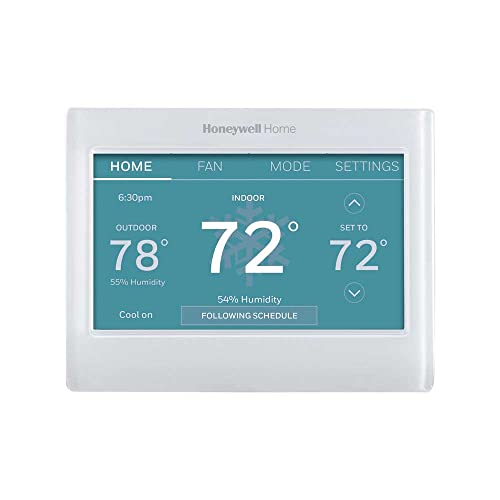
Honeywell Home RTH9600WF
With a 114 mm depth, it accommodates a traditional thermostat cutout, offering a familiar look that the slimmer Nest can’t match.
Also considered
Score Analysis
Key score advantages vs. runner-up (ecobee Smart Thermostat)
Price Range
Google Nest Learning Thermostat
$239.00
ecobee Smart Thermostat Enhanced
$199.99
Honeywell Home RTH9600WF
$153.44

Mysa Smart Thermostat
$159.00

Emerson Sensi Touch
$119.99

Amazon Smart Thermostat
$79.99

Honeywell Wireless Thermostat
$150.99
Google Nest Thermostat
$99.99
ecobee3 Smarter
$249.99
Spec Comparison
TL;DR: The Google Nest Learning Thermostat offers a 68 mm circular touchscreen with 600×600 resolution, AI‑driven scheduling and Matter compatibility, but comes at a premium $239.99 price.
The standout spec is its 68 mm circular touchscreen that delivers a crisp 600×600 pixel layout and Dynamic Farsight, which makes the display about 60 % larger and visible from across the room. Power consumption stays under 1 kWh per month, while the built‑in 256 MB memory handles the learning algorithms that auto‑adjust heating and cooling.
Weighing 162 g (0.36 lb), it’s lighter than the ecobee3 Smarter (1.35 lb) and the Mysa (1.12 lb) but heavier than the Amazon Smart Thermostat (0.24 lb) and the Google Nest Thermostat (0.31 lb). Its 68 mm (~2.7 in) screen is larger than the 2.4‑in display on the Google Nest Thermostat, yet more compact than the 3.5‑in panel on the ecobee3 Smarter. At $239.99, it sits at the premium end of the nine‑product lineup.
Reviewers consistently highlight the auto‑away mode and learning schedule for trimming energy use, noting average savings of 13 % on heating and 15 % on cooling. Users also appreciate Matter, Google Home and Alexa integration for flexible voice control, though a few mention the higher price as a drawback.
Technical details include a rechargeable lithium battery, dual‑band 802.11n Wi‑Fi (2.4 GHz/5 GHz) and a Soli sensor suite that measures motion, temperature, humidity, ambient light, proximity and magnetic fields. The thermostat supports up to three heating stages, two cooling stages and heat‑pump auxiliary heat, making it compatible with most 24 V HVAC systems without a dedicated C‑wire.
Pros
Cons
Best for: Homeowners who want a learning thermostat with extensive smart‑home integration and a large, easy‑to‑read display.
Avoid if: You're shopping on a tight budget — it's priced at $239.99
TL;DR: The ecobee Smart Thermostat Enhanced packs a 4‑inch 540×540 touchscreen, radar occupancy sensing and up to 26% energy savings for $199.99, making it a solid mid‑range choice for single‑zone homes.
What really stands out is the 4 in full‑color display with a crisp 540 × 540‑pixel resolution, paired with a radar‑based occupancy sensor that adjusts temperature without extra hardware. The unit draws only 3.5 VA and runs on a CR2477 lithium‑ion backup battery, while its 915 MHz radio keeps the connection light on your network, using just 15‑20 MB of bandwidth per month.
Compared with the nine‑product field, ecobee’s screen is larger than the 2.4‑in panel on the Google Nest Thermostat and more compact than the 10‑sq‑in display on the Honeywell Wireless model. At 1.1 lb it is a shade heavier than the ultra‑light Google Nest Learning Thermostat (≈0.36 lb) but essentially on par with the Honeywell Wireless’s 1.0 lb. Its depth of 23.88 mm is slimmer than the 114 mm depth of the Honeywell Home RTH9600WF, giving it a low‑profile look on the wall.
Users repeatedly praise the optional Power Extender Kit, which often eliminates the need for a dedicated C‑wire and speeds up the DIY install. Reviewers note the “up to 26%” Eco+ savings claim feels realistic after a few weeks of use. On the flip side, several owners mention occasional Wi‑Fi hiccups and point out the lack of an integrated air‑quality sensor or remote SmartSensors that the Premium model offers. Professional reviewers also highlight the radar occupancy feature as a comfort boost, while noting the feature set's basic compared to higher‑priced rivals.
Pros
Cons
Best for: Buyers who want an Energy Star‑certified thermostat with solid savings, radar occupancy detection and a straightforward install.
Avoid if: You need advanced air‑quality sensors, multi‑zone support or the most feature‑rich premium model.
“Very user-friendly with many features; compact and attractive on the wall; effortless control and energy savings (pays for itself quickly).”
TL;DR: The Honeywell Home RTH9600WF offers a 0.7‑pound, ENERGY STAR‑certified LCD touchscreen with 24 V Wi‑Fi control, but it needs a dedicated C‑wire and won’t work with millivolt or baseboard electric systems.
The thermostat’s most eye‑catching spec is its 114 mm depth combined with a customizable color LCD touchscreen that shows indoor/outdoor temperature, humidity and a daily weather forecast. At 0.7 pounds (318 g) it’s lighter than many full‑size smart thermostats yet still feels solid on the wall.
Compared with the other eight models, the RTH9600WF is deeper than the Mysa Smart Thermostat’s 20.3 mm depth and bulkier than the Google Nest Thermostat’s 27.3 mm depth. It also weighs more than the Nest’s 0.31 pound unit but considerably less than the Mysa’s 1.124 pounds. While the Nest and Amazon Smart Thermostat use smaller IPS or touch‑sensitive displays, Honeywell’s LCD color screen offers backlighting and full‑color customization, a feature most peers don’t list.
Reviewers consistently praise the ENERGY STAR certification, noting that it “provides verified energy savings” and can lower utility bills. Users also love the vibrant, customizable screen, calling it “easy to read” even in bright rooms. On the downside, many mention the need for a dedicated C‑wire; older homes without one may require an adapter, and the thermostat doesn’t work with millivolt heating or 120/240 V baseboard electric heat.
Pros
Cons
Best for: Homeowners with 24 VAC forced‑air, heat‑pump, hydronic or steam systems that already have a C‑wire and want a well‑reviewed, ENERGY STAR‑rated thermostat.
Avoid if: Your home lacks a C‑wire, uses millivolt heating, or relies on 120/240 V baseboard electric heat.
TL;DR: The Mysa Smart Thermostat costs $159.00, promises up to 26% energy savings, and fits electric baseboard or radiant heaters with a quick 15‑minute DIY install.
Mysa’s standout feature is its line‑voltage capability: it handles up to 3800 W at 240 V (or 1900 W at 120 V) and advertises up to 26% energy savings through precise temperature control. The unit measures just 20.3 mm deep, 129.5 mm tall and 88.9 mm wide, and weighs 1.1243575362 lb (510 g), making it compact enough to sit flush on a wall. Mysa markets the installation as a 15‑minute DIY job, and the thermostat offers temperature accuracy of ±0.5°F and humidity accuracy of ±2%.
Compared with the eight other thermostats in this roundup, Mysa sits toward the higher‑priced end – it’s pricier than the Google Nest Thermostat and Amazon Smart Thermostat, but still below the ecobee Smart Thermostat Enhanced. Its 20.3 mm depth is markedly slimmer than the Honeywell Home RTH9600WF’s 114 mm depth, yet also thinner than Google Nest’s 27.3 mm profile. At 1.1243575362 lb, it’s heavier than the Nest’s 0.31 lb but comparable to the ecobee’s 1.1 lb. All models use 2.4 GHz Wi‑Fi, but Mysa uniquely supports Apple HomeKit, Amazon Alexa and Google Home out of the box.
Professional reviewers praise the fast installation and note the manufacturer’s claim of a 26% reduction in heating costs, calling it the top choice for electric baseboard systems. Users echo the convenience of the free iOS/Android app and its geofencing and scheduling features. The main criticisms focus on the need for a neutral or L2 wire and the fact that it only works with 120‑240 V electric heaters, which can block adoption in homes with low‑voltage (24 V) HVAC setups.
Beyond the basics, Mysa adds adaptive brightness, temperature and humidity alerts, and zoning support for multiple heating zones. Sleep/Wake on Approach helps conserve energy when you’re away, and the capacitive touch buttons on the LED display give a modern feel without a bulky interface.
Pros
Cons
Best for: Homeowners with 120‑240 V electric baseboard, convector, radiant ceiling or hydronic heaters who want solid smart‑home integration and energy‑saving features.
Avoid if: You're shopping on a tight budget — it's priced at $159.00, and it won't work in homes lacking a neutral/L2 wire or those that rely on low‑voltage heating systems.
“Very user-friendly with many features; compact and attractive on the wall; effortless control and energy savings (pays for itself quickly).”
TL;DR: The Emerson Sensi Touch offers a 5.63‑inch wide touchscreen with continuous backlight, ENERGY STAR certification, and geofencing, all for $127, making it a solid budget smart thermostat for homes with a C‑wire.
Measuring 5.63 in wide, 3.38 in high and 1.00 in deep, the Sensi Touch fits comfortably on most walls while delivering a color touchscreen LCD that shows temperatures from a low of 32°F up to a high of 99°F. The continuous backlight lets you see the current setting at a glance, even in a dark room.
At $127 it sits above the Google Nest Thermostat’s price point but under the Mysa Smart Thermostat’s cost, positioning it in the mid‑range of this roundup. Unlike the Amazon Smart Thermostat, which lists a single‑button display, the Sensi Touch provides flexible scheduling with up to 8 periods per day and built‑in geofencing—features that some competitors only offer as optional add‑ons. While the Honeywell Home RTH9600WF and ecobee models include weight specs (0.7 lb and 1.1 lb respectively), Emerson doesn’t list a weight, so direct weight comparison isn’t possible.
Reviewers consistently praise the easy‑step installation, which uses a built‑in level and terminal lights, and they highlight the geofencing tool for noticeable energy savings. Professional reviewers note the intuitive menus and the smart alerts that trigger at 99°F high temperature, 45°F low temperature, 70% humidity, or a 5°F change. The most common complaint is the mandatory 24 V C‑wire, which can be a hurdle in older homes, and users also report occasional drops on 2.4 GHz Wi‑Fi networks.
Technically, the thermostat can swing heat as quickly as 0.5°F per cycle and cool at 0.9°F per cycle, with slower rates of 1.9°F (heat) and 1.7°F (cool) for steadier adjustments. It draws up to 2.5 A combined current, with each terminal limited to 1.5 A. You can configure smart alerts for high humidity (70%) and temperature thresholds, and the unit is ENERGY STAR certified, Title 24 compliant, and backed by a three‑year warranty.
Pros
Cons
Best for: Budget‑conscious buyers seeking a reliable entry‑level option with solid smart‑home integration.
Avoid if: You lack a C‑wire, need multi‑room sensor support, or require 5 GHz Wi‑Fi connectivity.
TL;DR: At $79.99, the Amazon Smart Thermostat offers a compact 90.4 mm square design, Alexa‑driven auto‑scheduling, and ENERGY STAR certification, making it a budget‑friendly upgrade for homes with a C‑wire.
The unit measures just 21.4 mm in height and 90.4 mm on each side, weighing only 0.24pounds, so it blends into any wall without crowding the space. Its touch‑sensitive display shows 0.9‑inch numerals, and the thermostat automatically adjusts heating and cooling based on Alexa’s learned patterns.
Compared with the other eight thermostats, it’s lighter than the Google Nest Thermostat (0.31pounds) and the Honeywell Home RTH9600WF (0.7pounds), but heavier than the ultra‑light Nest Learning model (0.36pounds). It’s also much shorter than the Mysa Smart Thermostat’s 129.5 mm height and slimmer than the ecobee Enhanced’s 103.89 mm height, giving it a clear size advantage in tight installations.
Users repeatedly praise the hands‑free Alexa integration and the noticeable energy‑saving estimate of roughly $50 per year, while professional reviewers note the solid 24 V C‑wire power requirement. The most common complaint: users need a C‑wire or an extra adapter, and the Wi‑Fi limitation to 2.4 GHz (802.11 b/g/n) can frustrate households that prefer dual‑band routers.
Pros
Cons
Best for: Shoppers on a tight budget who want the most for their money
Avoid if: Reliability and user satisfaction are your top concerns
“Very user-friendly with many features; compact and attractive on the wall; effortless control and energy savings (pays for itself quickly).”
TL;DR: The Honeywell Wireless Thermostat offers a 10‑sq‑in backlit touchscreen, Alexa support and Wi‑Fi connectivity for $168.75, but its higher price and required professional install may steer budget‑focused shoppers elsewhere.
This model’s standout spec is the 10‑sq‑in adjustable backlit display, which gives you clear visibility even in bright rooms. Weighing just 1.0 lb and measuring 0.88 × 3.5 × 4.5 in, it’s compact enough for most wall mounts while still feeling solid. The thermostat talks to your home network via 802.11 b/g/n 2.4 GHz Wi‑Fi, letting you control temperature from the Total Connect Comfort app or through Alexa.
Compared with the eight rivals in this roundup, Honeywell sits in the middle of the weight range: it’s heavier than the Google Nest Thermostat (0.31 lb) and the Honeywell Home RTH9600WF (0.7 lb), but lighter than the Mysa Smart Thermostat (about 1.12 lb). Its 10‑sq‑in screen also outpaces the 2.4‑inch display on the Google Nest Thermostat, giving you more real‑estate for schedules and weather info. While the Nest Learning Thermostat and ecobee models bring additional sensors, Honeywell’s screen area remains one of the larger ones in this group.
Reviewers consistently praise the adjustable backlight and the “fresh‑air ventilation” feature that pulls in Wi‑Fi weather data to prevent extreme indoor conditions. Users also like the demand‑response support that can automatically lower usage during peak utility periods. On the downside, several commenters note the $168.75 price tag feels steep compared with budget‑friendly options, and professional installation adds another cost layer.
Beyond the display, it supports up to a 3‑stage heating / 2‑stage cooling heat‑pump setup and a 7‑day programmable schedule, giving you fine‑grained control without digging into complex menus. Fan functions include on, auto and circulating modes, and the Energy Savings Mode can be toggled directly from the screen or via the app.
Pros
Cons
Best for: Most users looking for a well‑reviewed, reliable mainstream option
Avoid if: You have limited desk space or need portability
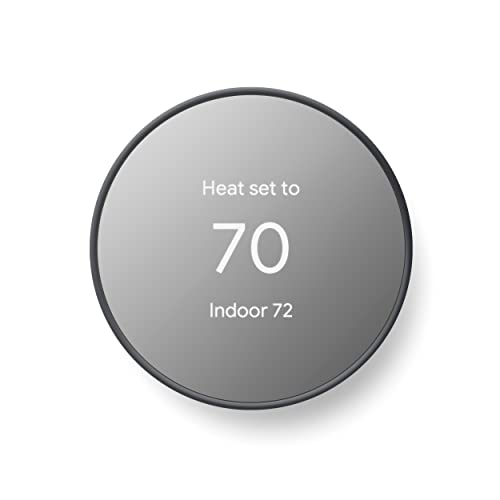
TL;DR: The Google Nest Thermostat costs $89.99, offers a 2.4‑inch IPS LCD screen, and lets you control temperature from your phone, making it a solid, budget‑friendly smart thermostat for most homes.
The Nest Thermostat weighs just 0.31 lb (139 g) and fits behind a standard wall plate with an 84.0 mm width and 27.3 mm depth. Its 2.4‑inch display shows 240 × 320‑pixel resolution, and the unit connects via 802.11b/g/n (2.4 GHz) and 802.11a/n (5 GHz) Wi‑Fi plus Bluetooth Low Energy.
At 0.31 lb it’s heavier than the Amazon Smart Thermostat’s 0.24125 lb, yet far lighter than the Honeywell Home RTH9600WF at 0.7 lb. Its 84.0 mm width is slimmer than Amazon’s 90.4 mm width, while its 27.2 mm height is taller than Amazon’s 21.4 mm height, giving it a compact but noticeable profile compared with the bulkier Mysa Smart Thermostat (1.12 lb) and the larger ecobee Smart Thermostat Enhanced (1.1 lb).
Reviewers praise the remote‑control capability through the Nest mobile app and the seamless Google Home voice integration, noting that the Energy Star certification helps lower utility bills. Some users point out the 4.0/5 star rating is modest for a Google product, and a few homes required a C‑wire despite the “works without C‑wire in most homes” claim.
Technical details include a motion sensor, ambient‑light sensor, humidity and temperature sensors, and a capacitive touch interface. The thermostat runs on HVAC system wiring with a backup of two AAA 1.5 V alkaline batteries, and it supports heating stages W1‑W3, cooling stages Y1‑Y2, and heat‑pump auxiliary functions.
Pros
Cons
Best for: Entry-level buyers or those on a tight budget
Avoid if: You need advanced features or professional‑grade performance
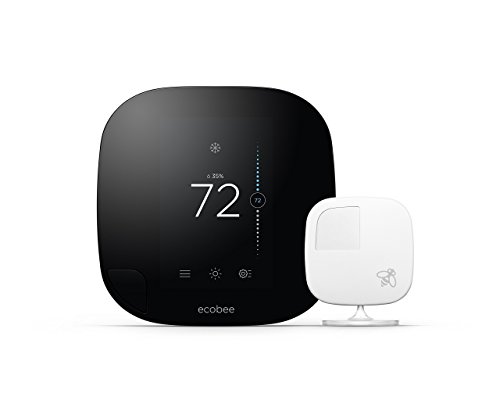
TL;DR: The ecobee3 Smarter offers a 3.5‑inch 320×480 touchscreen, extensive sensor suite and 915 MHz radio for remote sensors, but its premium $249.99 price and C‑wire requirement may deter budget‑focused buyers.
The standout hardware feature is the 3.5‑inch color display with a 320×480 pixel resolution, giving you clear read‑outs of temperature, humidity and motion data right on the wall. Under the hood, the thermostat talks to remote sensors over a dedicated 915 MHz Sub‑GHz radio, a spec that helps maintain reliable sensor communication even through walls.
At 1.35 lb, the ecobee3 Smarter is noticeably heavier than the Google Nest Thermostat (≈0.31 lb) and the Amazon Smart Thermostat (≈0.24 lb), and also heavier than the Nest Learning Thermostat (≈0.36 lb). It's still lighter than the Mysa Smart Thermostat (≈1.12 lb) but larger than most competitors, with a depth and width of 3.95 in each. Its 3.5‑inch screen also outsizes the Nest Learning’s 68 mm panel and the Nest Thermostat’s 2.4‑inch display, giving it a visual edge over those models.
Users consistently praise the built‑in temperature, humidity and motion sensors, noting that the thermostat’s “smart recovery” feature anticipates heating and cooling needs based on weather data. Professional reviewers highlight the humidity control as a comfort booster, especially in colder climates. Most users complain about needing a C‑wire or a Power Extender Kit, which adds complexity for homes without existing wiring, and about the older Wi‑Fi hardware that lacks 5 GHz support.
Technical details include a power draw of less than 3.5 VA and operation on 24 VAC, plus a backup 1 Lithium Metal battery for power outages. Wi‑Fi runs on 802.11 b/g/n at 2.4 GHz, and Bluetooth LE 5.4 is built in for local device pairing. The thermostat’s HVAC compatibility covers roughly 95 % of 24 V systems, from conventional 2H/2C setups to dual‑fuel heat pumps and humidifier/ERV integrations.
Pros
Cons
Best for: Homeowners with multi‑room or large homes who need sensor‑based zoning to eliminate hot/cold spots
Avoid if: You lack a C‑wire and prefer a plug‑and‑play thermostat, or you need the latest Wi‑Fi standards for faster connectivity
“ease of install and Wi‑Fi control”
“seamless Siri/HomeKit remote access”
Breakdown
Google Nest Learning Thermostat
Pros
Cons
ecobee Smart Thermostat Enhanced
Pros
Honeywell Home RTH9600WF
Pros
Mysa Smart Thermostat
Pros
Cons
Based on scoring data and product specs
Personalized picks
Best Overall Pick
Google Nest Learning Thermostat
Best OverallBest for: Audiophiles and enthusiasts seeking premium sound quality and advanced features
ecobee Smart Thermostat Enhanced
Best for: Buyers willing to invest in a proven, high-quality option
$199.99-$39.01 vs winner
Skip ecobee3 Smarter if…
Reliability and user satisfaction are your top concerns
The Google Nest Learning Thermostat ranks as the clear winner. Its 4.3‑star rating from 2,055 reviews shows strong user approval, and the device claims an average 13 % heating and 15 % cooling energy savings. Features like Auto‑Away, Dynamic Farsight and a 600 × 600‑pixel circular touchscreen make it both smart and easy to see from across the room.
The runner‑up is the ecobee Smart Thermostat Enhanced, which shines if you need advanced scheduling and humidity control. It offers up to 26 % energy savings, built‑in geofencing and a dedicated humidity sensor, plus a 4.4‑star rating from 3,458 reviewers—great for homes where precise comfort matters.
For tighter budgets, the Amazon Smart Thermostat at $79.99 delivers basic smart control without breaking the bank. In the mid‑range, the Honeywell Home RTH9600WF at $152.99 balances price and features nicely. If you’re willing to stretch for premium performance, the ecobee3 Smarter at $249.99 provides top‑tier compatibility and a sleek design.
Pick the Google Nest Learning Thermostat today and start saving on heating and cooling right away.
The Nest Learning Thermostat uses a built‑in rechargeable lithium battery and does not require a dedicated C‑wire, while the ecobee Smart Thermostat Enhanced relies on a CR2477 lithium‑ion backup battery and is designed for standard 24 VAC wiring. Physically, the Nest is only 1.1 mm deep compared with the ecobee’s 23.88 mm depth, reflecting the Nest’s slimmer profile.
No reviews yet — be the first to share your experience.
Please sign in to leave a review