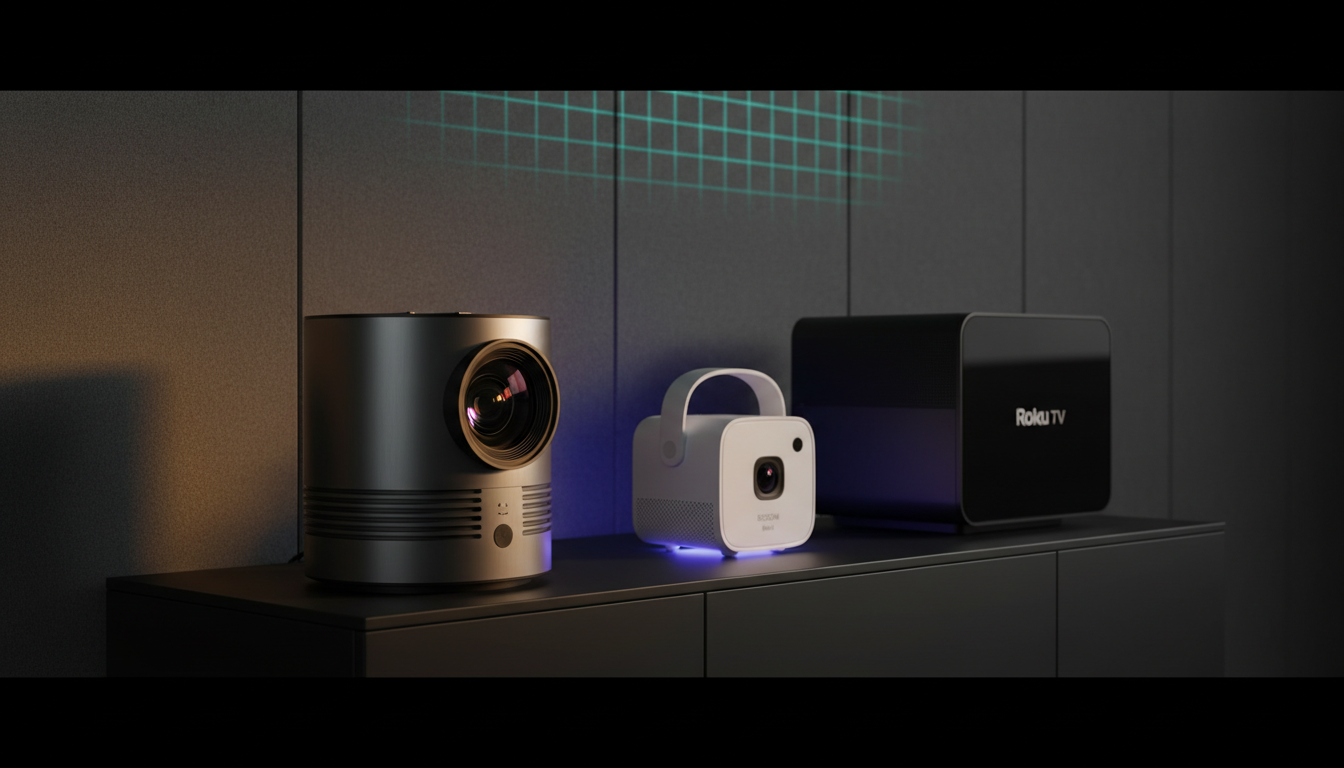
The lineup stretches from a $119.99 entry point up to a $1299.00 flagship, and the brightest model—JMGO’s N1S Ultra—is rated at 3000 ANSI lumens. Even the budget‑focused Putrims K12 packs 1500 ANSI lumens and pulls a solid 4.6‑star rating from 1,914 reviewers, showing you don’t need to splurge for a bright, full‑HD experience.
The review covered 12 smart‑OS projectors that run Android TV, Google TV or Roku. Ratings hover between 4.2 and 4.7 stars, while price tiers are clearly defined: four budget picks (including the $119.99 Aurzen Roku TV), two mid‑range options (the $269.99 Aurzen BOOM Mini and $269.99 Happrun), and four premium models (such as the $549.00 XGIMI Horizon and the $1299.00 JMGO N1S Ultra). This spread lets you match performance, brightness and built‑in audio to your budget and room conditions.
Below is a breakdown of each unit’s strengths, compromises and ideal use‑cases so you can pinpoint the projector that fits your home theater or on‑the‑go setup.

Putrims K12
It packs a 10 W total speaker system, delivering clear audio for an entry‑level projector.

Aurzen BOOM Mini
Ideal for users who want louder sound, the BOOM Mini’s 20 W speakers suit movie nights, though it costs about $60 more than the Putrims K12.
Aurzen Roku TV
Its shallow 199 mm depth lets you slip it behind any TV, and at $119.99 it’s the cheapest of the three, offering solid features in a compact package.
Also considered
Score Analysis
Key score advantages vs. runner-up (Aurzen BOOM Mini)
Price Range
Putrims K12
$210.32
Aurzen BOOM Mini
$269.99
Aurzen Roku TV
$123.49
XGIMI HORIZON
$549.00

Nebula Mars 3
$469.99

JMGO N1S Ultra
$1,299.00

Wanbo X5 Pro
$329.99
XGIMI MoGo 2 Pro
$359.00

Happrun Projector
$269.99

Wanbo T2 Ultra ASA 3.0
$199.59
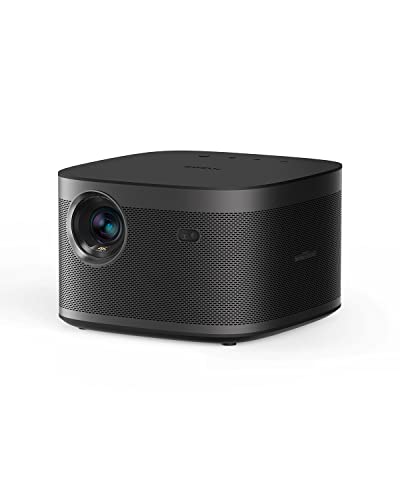
XGIMI Horizon Pro
$899.00

Xiaomi L1 Pro
$369.99
Spec Comparison
TL;DR: The Putrims K12 delivers native 1080p, 1500 ANSI‑lumens brightness and built‑in Google TV for $210.32, making it a solid budget smart projector for low‑light home viewing.
The standout spec is its 1500 ANSI‑lumens brightness paired with a 20 000:1 contrast ratio; the manufacturer says it can fill a wall with up to a 300‑inch image while keeping details visible in modest ambient light. It runs a 5.8‑inch LCD panel at a native 1920 × 1080 resolution and runs on Wi‑Fi 6, Bluetooth 5.2, and Google TV, so you can stream Netflix, Disney+ or YouTube without an extra dongle.
Compared with the other eleven models, the K12 is brighter than the Wanbo T2 Ultra (500 lumens) and the Aurzen Roku TV (330 lumens), and it offers twice the speaker power of the Happrun Projector (5 W) while matching the 10 W total of Wanbo’s T2 and X5 Pro. At 5.5 lb it sits between the lighter Wanbo T2 Ultra (3.3 lb) and the heavier Wanbo X5 Pro (5.94 lb). Its power draw of 180 W tops the 54 W of the T2 Ultra and the ~90 W of the Aurzen BOOM Mini, reflecting the brighter lamp and larger image capability.
Users consistently praise the plug‑and‑play feel, noting that the auto‑focus and auto‑keystone correction make setup almost effortless. Professional reviewers highlight the crisp upscaling from 4K sources to the native 1080p panel, and the built‑in Google TV eliminates the need for external streaming sticks. The most common complaints revolve around the modest 5 W built‑in speakers, which struggle in larger rooms, and the fact that the projector doesn’t display true 4K, limiting appeal for cinephiles. Brightness also drops noticeably in bright daylight, so a dimmer viewing environment yields the best picture.
Additional technical notes include a 30 000‑hour LED lifespan, a 11‑ft (3.35 m) throw distance for a 120‑inch screen, 50‑100 % zoom range, and ceiling‑mount compatibility. Connectivity is generous with two HDMI ports, two USB‑A ports, a 3.5 mm audio jack, and Google Cast support, making it a versatile hub for both movies and presentations.
Pros
Cons
Best for: Budget‑conscious buyers seeking a reliable entry‑level option
Avoid if: You need native 4K resolution, high‑output audio, or plan to watch in bright daylight
“very easy to set up”
“best Google TV projector under £300”
TL;DR: The Aurzen BOOM Mini delivers 500 ANSI lumens, 20 W Dolby‑Audio speakers and full Google TV in a 2.14 kg, compact package for casual movie nights and travel.
The standout feature is its 20 W total speaker power with Dolby Audio support, which dwarfs the 5 W‑10 W range found in most rivals. Coupled with a 36 dB noise level, the projector still manages clear dialogue thanks to the dual‑speaker design. Its 500 ANSI lumens brightness and 1000:1 contrast ratio give a bright, crisp picture on screens from 40″ to 200″, while the native 1920×1080 resolution ensures full HD detail.
Compared with the other eleven entries, the BOOM Mini sits in the middle of the brightness spectrum: it matches the Wanbo T2 Ultra’s 500 lumens, outshines the Happrun’s 400 lumens, but trails the Wanbo X5 Pro’s 1100 lumens and the Putrims K12’s 1500 lumens. In terms of audio, its 20 W output is notably higher than the Happrun’s 5 W, Wanbo X5 Pro’s 10 W, Wanbo T2 Ultra’s 10 W, XGIMI MoGo 2 Pro’s 8 W, and Xiaomi L1 Pro’s 5 W. Weight‑wise, the BOOM Mini at 2.14 kg is lighter than the Wanbo X5 Pro (2.68 kg) and the Putrims K12 (≈2.5 kg), comparable to the Xiaomi L1 Pro (2.0 kg), and considerably lighter than the Happrun (≈4.4 lb). Its dual‑band Wi‑Fi and Bluetooth keep connectivity on par with the competition, though the single HDMI port may feel limiting for users juggling several sources.
Reviewers consistently praise the smooth Google TV experience, noting that the full Play Store access removes the need for an external streaming stick. Professional reviewers also highlight the ToF‑based real‑time autofocus and auto‑keystone correction as a major convenience, cutting setup time dramatically. Everyday users echo the sentiment, calling the BOOM Mini “plug‑and‑play” for couch movie sessions. The main criticisms revolve around the 1080p native resolution, which prevents true 4K detail, and the 500‑lumen output that can struggle in bright rooms. Some users mention a noticeable warm surface during prolonged use and a limited wireless mirroring range.
Pros
Cons
Best for: Casual movie‑watchers, travelers, and hotel‑room entertainment seekers who want a compact, well‑reviewed projector with strong built‑in sound and smart‑TV features.
Avoid if: You need true 4K resolution, high brightness for bright rooms, or extended battery‑only operation.
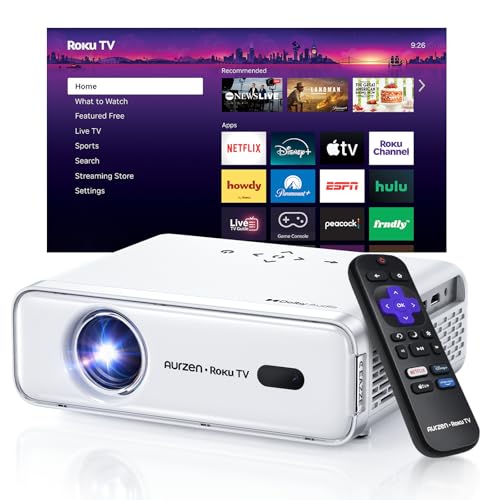
TL;DR: For $119.99, the Aurzen Roku TV offers native 1080p projection up to 150 inches, Roku’s 500‑plus streaming apps, and auto‑focus, but its 330 ANSI‑lumens output limits use to dark rooms.
The projector’s standout spec is its native 1080p Full HD panel, delivering sharp images across a 40–150‑inch screen range. It packs a 330 ANSI‑lumens lamp and Dolby‑certified dual 5 W speakers (10 W total), while the built‑in Roku OS gives instant access to more than 500 live channels, including Netflix‑certified content. Auto‑focus uses a ToF sensor and auto‑keystone handles both horizontal and vertical distortion.
At 330 ANSI lumens, its brightness sits below the Wanbo T2’s 500 lumens and far under the Putrims K12’s 1500 lumens, yet it still outshines the XGIMI MoGo 2 Pro’s 300 lumens. Weighing 1,405 g, it’s lighter than the Putrims K12 (5.5 lb) and Wanbo X5 Pro (5.94 lb), and comparable to the Wanbo T2’s 3.3 lb. The 10 W speaker output matches the Wanbo T2, Putrims K12, and Wanbo X5 Pro, but trails the Aurzen BOOM Mini’s 20 W and exceeds the Happrun’s 5 W.
Many reviewers praise the plug‑and‑play Roku experience and the hassle‑free setup thanks to auto‑focus and auto‑keystone. Professional reviewers note the picture stays crisp at native 1080p, and the AirPlay 2 and Miracast support work smoothly for iPhone and Android casting. The common downside is the modest 330‑lumens output, which washes out in any ambient light, and the lack of HDR support. Users also mention the built‑in speakers are adequate for casual viewing but don’t replace a dedicated sound system, and fan noise can be audible during quiet scenes.
Pros
Cons
Best for: Entry‑level buyers or those on a tight budget
Avoid if: You need advanced features or professional‑grade performance
“"hard to see" even with blinds”
“"fan noise in quiet scenes"”
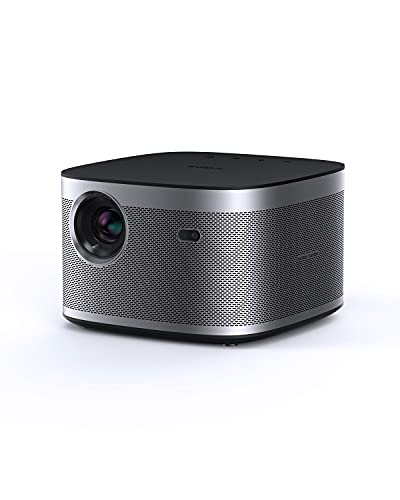
TL;DR: The XGIMI Horizon delivers 2200 ANSI‑lumens brightness and Android TV 10 in a 6.39‑lb portable package, but its 1080p panel and modest rating keep it from being a universal winner.
The standout spec is the 2200 ANSI lumens brightness paired with an LED light source, which ProjectorCentral notes makes daytime viewing feasible and keeps lamp replacements rare thanks to a 25,000‑30,000‑hour lifespan. The projector also packs a full Android TV 10.0 platform, Chromecast built‑in, Google Assistant and over 5,000 Google Play apps, turning it into a ready‑to‑stream hub straight out of the box.
At 6.39 lb (2.9 kg) the Horizon is heavier than most of the compact peers—Nebula Mars 3, Xiaomi L1 Pro, XGIMI MoGo 2 Pro, Aurzen BOOM Mini, Happrun, and Wanbo X5 Pro—but it still stays under 7 lb, making it easy to carry between rooms. Its depth of 218 mm, height of 136 mm and width of 208 mm give it a solid footprint without feeling bulky, and the 250.04 W typical power draw sits comfortably within typical household circuits.
Reviewers consistently praise the integrated 2 × 8 W Harman/Kardon speakers and the low 30 dB audible noise, calling the audio “surprisingly rich for a projector.” Professional outlets also highlight the full suite of intelligent image correction—auto‑focus, ±40° auto‑keystone, obstacle avoidance and screen alignment—as a major convenience. User feedback highlights a downside: the native 1920×1080 resolution; on larger screens the picture can look less detailed compared with 4K rivals, and the 4.2‑star rating suggests some buyers expected more polish for the premium price.
Pros
Cons
Best for: Apartment and dorm residents who need a lightweight, feature‑rich projector with strong built‑in Android TV capabilities.
Avoid if: You require true 4K native resolution or a battery‑powered, ultra‑portable device.
TL;DR: The Nebula Mars 3 delivers full‑HD DLP projection with Google TV, 400 ANSI lumens brightness, and an integrated handle, all in a 3.7‑pound package priced at $469.99.
The standout feature is its built‑in Google TV (Android TV 11.0), giving you instant access to Netflix and other apps without extra hardware. It projects a native 1920×1080 image at a 1.2:1 throw ratio, and the DLP engine provides a contrast ratio of 400:1. The projector’s dual 8 W speakers support Dolby Digital and Dolby Audio, while the < 28 dB noise level keeps the room quiet. Battery life reaches 8 hours for audio‑only use and 2.5 hours for video playback, and Intelligent Environment Adaptation 3.0 completes auto‑focus and keystone setup in about 3 seconds.
Weighing 3.7 Pounds (1.7 kg), it's lighter than the HORIZON (2.9 kg) and the Aurzen BOOM Mini (2.14 kg), yet comparable to the Xiaomi L1 Pro (2.0 kg). Speaker power matches the MoGo 2 Pro’s 8 W dual drivers, outpacing the Xiaomi L1 Pro’s 5 W and the Happrun’s 5 W, while staying below the Aurzen’s 20 W total.
Users love how quickly the projector boots into Google TV and how the integrated handle makes it easy to move between rooms. Reviewers note the picture looks “jaw‑dropping” in dark environments, but the 400 ANSI lumens limit usable size in any ambient light. Many consider the 2.5‑hour video battery too short for marathon movie nights, and some find the 1.7 kg chassis a bit heavy for true handheld use. Nonetheless, the long 8‑hour music playback and built‑in Dolby Audio earn praise for casual parties.
Pros
Cons
Best for: Casual families or travelers who want a portable, app‑ready projector for indoor movie nights, back‑yard gatherings, or quick presentations.
Avoid if: You need bright images in well‑lit spaces, extended video battery life, or an ultra‑light handheld device for constant on‑the‑move use.
TL;DR: The JMGO N1S Ultra delivers 4K images at 3000 ANSI lumens with a 127° rotating gimbal and Google TV, but its premium $1299 price and fixed lens may limit ultra‑portable or budget‑focused buyers.
The standout spec is the 3000 ANSI lumens brightness, which lets you watch crisp 4K content even in well‑lit rooms. Coupled with a 127° rotating gimbal and real‑time autofocus from a 3D TOF sensor, you can place the projector on a shelf, ceiling, or rear‑projection surface, and it will still find the perfect angle without manual keystone tricks.
Compared with the other eleven entries, the N1S Ultra outshines every listed competitor in raw brightness—far above the XGIMI Horizon Pro’s 1500 ISO lumens, the XGIMI Horizon’s 2200 ANSI lumens, and the sub‑500 ANSI lumen units like the Nebula Mars 3, Xiaomi L1 Pro, and Aurzen BOOM Mini. It is heavier than most portable models such as the Nebula Mars 3 (3.7 lb) and Xiaomi L1 Pro (≈4.4 lb), yet lighter than the XGIMI Horizon Pro at roughly 11 lb. Its 20 W speaker system also tops the 8 W dual speakers found in the MoGo 2 Pro and the 5 W unit in the Xiaomi L1 Pro.
Users consistently praise the projector’s vivid daytime picture and the hassle‑free gimbal setup, noting that the built‑in Google TV and Chromecast give instant access to thousands of apps. Professional reviewers highlight the ultra‑high brightness and the auto‑keystone feature as major conveniences. On the flip side, several owners mention the unit’s 9.9 lb weight and the audible fan noise that can reach up to <26 dB in quiet environments. The fixed focal‑length lens, without optical zoom or lens shift, also restricts placement flexibility for tight spaces.
Additional technical perks include >95 % brightness uniformity, >97 % laser speckle reduction, 10‑bit color depth (1.07 billion colors), 110 % BT.2020 color gamut, HDR10 support, and a 30,000‑hour lamp life. The projector runs on 100‑240 V input and offers Wi‑Fi 6, Bluetooth 5.2, two HDMI 2.1 ports (one with eARC), and a USB‑A 2.0 port for extra connectivity.
Pros
Cons
Best for: Those prioritizing quality and willing to pay for premium performance
Avoid if: You're shopping on a tight budget — it's priced at $1299.00
TL;DR: The Wanbo X5 Pro delivers 1100 ANSI lumens, Google TV, and auto‑focus in a compact dark‑blue body for $249.99, making it a bright, feature‑rich entry‑level projector.
The X5 Pro shines with 1100 ANSI lumens brightness, which lets you project a 40–140‑inch image even when the room isn’t completely dark. It runs Google TV on Android 11, so you get native streaming apps and voice control without an extra box. Automatic focus, auto‑keystone (horizontal & vertical) and obstacle‑avoidance sensors handle setup for you, while the dual 5 W speakers deliver stereo sound at a quiet ≤26 dB fan level. Its 1.25:1 throw ratio lets you sit just 1.1–3.9 m away for a full‑size picture.
Compared with other options in this roundup, the X5 Pro is brighter than the Aurzen BOOM Mini’s 500 ANSI lumens but not as bright as the Putrims K12’s 1500 ANSI lumens. Its 10 W speaker output matches Putrims but falls short of Aurzen’s 20 W total. The fan noise of ≤26 dB is quieter than the Wanbo T2 Ultra’s ≤28 dB, yet the X5 Pro’s 5.94 lb weight makes it heavier than the Wanbo T2 Ultra, XGIMI MoGo 2 Pro, and Xiaomi L1 Pro, which are all under 5 lb.
Users repeatedly mention the projector’s portability and the “small but very strong” feel, appreciating the silent fan and bright picture in lit rooms. Professional reviewers highlight the seamless Google TV interface and the convenience of auto‑keystone and obstacle avoidance. The main criticisms focus on the 1080p native resolution—4K content down‑scales to 1080p—and the fact that digital keystone correction can soften image sharpness at extreme angles. The single HDMI port also limits the number of wired sources you can connect at once.
Beyond the basics, the X5 Pro supports HDR10, offers automatic screen alignment, and provides a digital zoom range of 50 %–100 %. With 2 GB of RAM and 16 GB of internal storage, the Android‑based OS runs smoothly for streaming and app use, and the dual‑band Wi‑Fi (2.4/5 GHz) keeps the connection stable.
Pros
Cons
Best for: Budget-conscious buyers seeking a reliable entry-level option
Avoid if: You want the best value‑per‑dollar in its price range
“small but very strong”
“great for home theater”
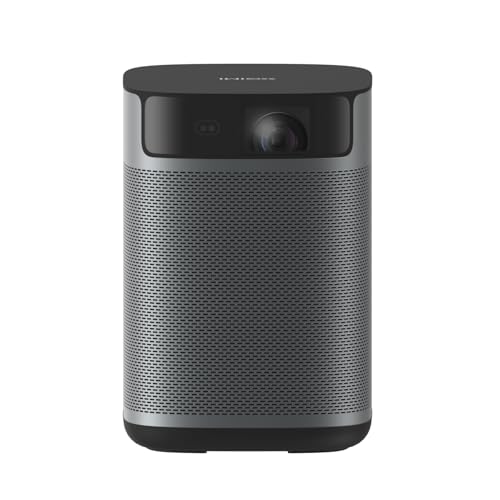
TL;DR: The XGIMI MoGo 2 Pro offers 1080p DLP projection with 300 ANSI lumens, 8 W Harman Kardon audio, and up to 240 minutes of battery‑powered video in a pocket‑size body.
The MoGo 2 Pro stands out thanks to its native 1920×1080 resolution and a 300‑lumen ANSI brightness rating. Its built‑in 8 W dual Harman Kardon speakers deliver richer sound than many mini‑projectors, while the 12 400 mAh battery provides 240 minutes of video playback or 270 minutes of music on a single charge.
Among the 12‑product lineup, the MoGo 2 Pro lands at a sweet spot: it costs slightly less than the Xiaomi L1 Pro, yet the L1 Pro shines brighter at 400 ANSI lumens and carries a 5 W speaker. Compared with the Aurzen BOOM Mini, the MoGo 2 Pro weighs less and feels more portable, though the BOOM Mini’s 20 W audio output is louder. It weighs a shade less than the Happrun Projector (4.41 lb vs 4.14 lb) and considerably less than the Wanbo X5 Pro (5.94 lb). While the Nebula Mars 3 weighs a touch less (3.7 lb), the MoGo 2 Pro matches its 8 W speaker power and outlasts it with a 12 400 mAh battery.
Users consistently praise the projector’s “water‑bottle” size and the sharp 1080p picture that holds up in modest ambient light—professional reviewers called the 300 ANSI lumens “pretty bright even in daylight.” The Android TV platform, powered by an Amlogic T950X2 CPU and Mali‑G31 GPU, provides smooth navigation through 5 000+ apps and voice control via Google Assistant. However, the 30 dB fan can be audible during quiet scenes, and the 8 W speaker output may feel under‑powered in larger rooms. The lamp’s 30 000‑hour lifespan and a 1.20:1 throw ratio (about 76 inches at 2 m) make setup simple, while the digital keystone correction helps keep the image square.
Pros
Cons
Best for: Most users seeking a balanced, mainstream option
Avoid if: You need advanced features or professional‑grade performance
“Nice small compact form factor... truly 1080p... pretty bright even in daylight... extremely recommend 30-100 inches”
TL;DR: The Happrun Projector delivers a 300‑inch image with 400 ANSI lumens, Google TV 11.0 and a 100,000‑hour lamp, making it a solid budget‑friendly home‑theater option for dim‑to‑moderate rooms.
At 4.41 pounds, the Happrun packs a 300‑inch screen capability while staying portable enough for a bedroom or small living area. Its 400 ANSI lumens brightness, 10,000:1 contrast ratio and HDR10+ support provide picture quality backed by those specs in moderate ambient light, and the LED/DLP engine lasts up to 100,000 hours.
Compared with other models in this roundup, the Happrun’s brightness falls short of the Wanbo X5 Pro’s 1,100 ANSI lumens, but it’s lighter than the X5 Pro’s 5.94 pounds. Its built‑in 5 W speaker is quieter than the Aurzen BOOM Mini’s 20 W total output and the Putrims K12’s 10 W system, yet it still provides acceptable audio for casual movies. The projector’s weight also undercuts the Wanbo T2 Ultra’s 3.3 lb, positioning it in the mid‑range of portability and power.
Professional reviewers note the “easy wireless setup” and “decent brightness” for its price class, while everyday users love the smooth Google TV interface and the ability to stream directly without extra devices. The most common complaints revolve around the 400 lumens ceiling in bright rooms and a plastic build that feels less premium than higher‑end rivals.
Pros
Cons
Best for: Budget‑conscious users who want a portable, Google‑TV‑powered projector for casual movie nights in dim‑to‑moderate lighting.
Avoid if: You need high brightness for bright daylight viewing, premium build quality, or advanced audio features.
TL;DR: The Wanbo T2 Ultra ASA 3.0 offers 1080p Android TV streaming, 500 ANSI lumens brightness, and a 120° gimbal in a lightweight 3.3 lb package for under $200.
The standout feature is Wanbo’s ASA 3.0 auto‑setup system, which combines auto‑focus, keystone correction and obstacle avoidance, all driven by a 3‑piece aspherical pure‑glass lens. At just 3.3 lb (8.6 in × 5.7 in × 5.6 in), the projector's truly portable, and the 120° adjustable gimbal lets you mount it on a ceiling or bedside without extra brackets.
Compared with most of the other 11 models in this roundup, the T2 Ultra is lighter than the Putrims K12 (5.5 lb) and the Wanbo X5 Pro (5.94 lb), while delivering more brightness than the Aurzen Roku TV’s 330 ANSI lumens. Its fan noise of ≤28 dB compares to the X5 Pro’s ≤26 dB, keeping it quieter than louder‑speaking units like the Aurzen BOOM Mini (36 dB). The built‑in 10 W speaker and 40 Hz low‑frequency response add decent audio for casual viewing.
Professional reviewers praise the native 1080p LCD panel, the color accuracy after calibration and the convenience of Android TV 11 with Netflix certification. Everyday users love the lightweight design and the ease of one‑tap setup, but they also note that the 500 ANSI lumens rating feels modest in anything brighter than a dark room, and the brightness uniformity can be uneven on larger images. The fan stays quiet enough for most bedrooms, yet some note it's audible when the projector runs for extended periods.
Pros
Cons
Best for: Entry‑level buyers or those on a tight budget who need a portable smart projector for low‑light settings.
Avoid if: You need advanced brightness, professional‑grade uniformity, or daytime viewing capability.
TL;DR: The XGIMI Horizon Pro projects 4K images at 1500 ISO lumens with dual 8 W Harman/Kardon speakers and Android TV, but its $899 price and 30 dB fan noise may turn away budget‑focused buyers.
The Horizon Pro packs a 4K DLP engine (3840 × 2160) into a compact cube that weighs 11.0231131Pounds (2.9 kg). Its 1.77‑inch speaker drivers deliver 2 × 8 W of Harman/Kardon audio, while the projector shines with 1500 ISO lumens, enough for bright daytime viewing on screens up to 200 inches. The device also includes Android TV 10.0, Bluetooth 5.0, and a 3.5 mm headphone jack.
Compared with the other eleven entries, the Horizon Pro is heavier than the Nebula Mars 3 (3.7 Pounds) and the Xiaomi L1 Pro (2.0 kg), but lighter than the JMGO N1S Ultra (9.9 Pounds). Its 1500 ISO lumens outshine the 400 ANSI lumens of the Xiaomi L1 Pro and the 500 ANSI lumens of the Aurzen BOOM Mini, yet it falls short of the 3000 ANSI lumens claimed by the JMGO N1S Ultra. Audible noise matches the 30 dB level of the XGIMI HORIZON, and its input lag of 34.6 ms is lower than many non‑gaming projectors in the set.
Reviewers consistently praise the auto‑focus, auto‑keystone (±40°) and obstacle‑avoidance suite for making setup virtually hands‑free. Users repeatedly call the built‑in Harman/Kardon speakers “cinema‑level” when they don’t want external audio gear. On the flip side, several owners note that the fan can be audible during quiet scenes, and a few report lens‑dust accumulation that affects image clarity. Professional reviewers also point out that the effective brightness feels lower than the manufacturer’s 2200 ANSI‑lumens claim, which can limit performance in very bright rooms.
Under the hood, the Horizon Pro runs X‑VUE 2.0 image processing with MEMC 60 Hz motion smoothing and AI brightness adjustment that adapts to ambient light. The projector supports HDR10 and HLG, covers 110% of the DCI‑P3 color gamut, and offers two HDMI 2.0 ports (one with ARC) plus optical audio out. Its 25,000‑30,000‑hour LED lamp life and power draw under 200 W make it a low‑maintenance choice for long‑term use.
Pros
Cons
Best for: Those prioritizing premium picture quality, built‑in audio performance, and a hassle‑free smart‑OS experience.
Avoid if: You need a budget‑friendly projector, ultra‑quiet operation, or flexible placement with lens shift and zoom.
TL;DR: The Xiaomi L1 Pro offers native 1080p resolution, 400 ANSI‑lumens brightness, Android TV, and a compact 2 kg design for under $370, making it a solid mid‑range portable projector.
The L1 Pro’s standout feature is its full‑HD 1920×1080p LCD engine paired with a sealed optical module that keeps dust out and maintains image clarity. It delivers 400 ANSI lumens and a low ≤30 dB(A) noise floor, while the built‑in 5 W Dolby Audio speaker provides basic sound without extra hardware. At 2.0 kg and with dimensions of 189 mm × 210 mm × 128 mm, it’s truly portable, and the 1.21:1 throw ratio lets you fill a 60‑inch screen from just over a meter away.
Compared with the other eleven models, the L1 Pro is brighter than the XGIMI MoGo 2 Pro’s 300 ANSI‑lumens output but dimmer than the Aurzen BOOM Mini’s 500 ANSI‑lumens. Its 5 W speaker matches the Happrun Projector but falls short of the Nebula Mars 3’s dual 8 W setup and the Wanbo X5 Pro’s 10 W dual drivers. At 2.0 kg it’s heavier than the Nebula Mars 3 (1.7 kg) yet lighter than the Putrims K12 (about 2.5 kg) and the XGIMI MoGo 2 Pro (≈1.9 kg). The L1 Pro also offers Android TV out‑of‑the‑box, whereas several peers rely on external dongles for smart features.
Users repeatedly praise the auto‑focus and auto‑keystone (±15°) that make setup almost hands‑free, and they love the sharp, vibrant picture in dim rooms. Professional reviewers note the sealed engine’s durability and the low‑latency gaming mode that handles casual titles well. The common downside is the 400 lumens ceiling, which can look washed out in well‑lit spaces, and the modest 5 W audio that may need a Bluetooth speaker for larger gatherings.
Under the hood, the projector runs on a MediaTek MT9630 processor with 2 GB DDR3 RAM and 16 GB eMMC storage, giving Android TV smooth navigation. Connectivity includes Bluetooth 5.0, dual‑band Wi‑Fi (802.11 a/b/g/n/ac), HDMI 2.1 (ARC), USB 2.0, and a 3.5 mm jack. Power draws 19.0 V × 6.32 A, stays under ≤120 W when active, and drops to ≤0.50 W in standby, while auto power‑off helps save energy.
Pros
Cons
Best for: Most users seeking a balanced, mainstream option
Avoid if: You need advanced features or professional‑grade performance
Breakdown
Putrims K12
Pros
Aurzen BOOM Mini
Pros
Aurzen Roku TV
Pros
XGIMI HORIZON
Pros
Cons
Based on scoring data and product specs
Personalized picks
Best Overall Pick
Putrims K12
Best Budget PickBest for: Budget-conscious buyers seeking a reliable entry-level option
Aurzen BOOM Mini
Best for: Most users looking for a well-reviewed, reliable mainstream option
$269.99+$59.67 vs winner
Skip Xiaomi L1 Pro if…
You need advanced features or professional-grade performance
The Putrims K12 earns the top spot as the best smart‑OS projector. It delivers 1500 ANSI lumens of brightness, a 4.6‑star rating from 1,914 reviewers, and Wi‑Fi 6 for reliable streaming. Auto horizontal and vertical keystone correction, two HDMI ports, two USB‑A ports, and a maximum 300‑inch screen size make installation a breeze, while its built‑in Google TV apps let you launch Netflix, Disney+, YouTube and more right out of the box.
If you need a projector that stays sharp across a range of distances and offers louder built‑in audio, the Aurzen BOOM Mini is a solid runner‑up. Its time‑of‑flight sensor provides real‑time autofocus from 1.2 m to 6 m, and the 20 W total speaker output outpaces the K12’s 10 W. With 500 ANSI lumens, Google TV (Android) and dual‑band Wi‑Fi, it handles casual movie nights and bright‑room viewing without a hitch.
Other price‑point options that complement the winner:
Choose the Putrims K12 today and enjoy full‑HD, Google‑TV streaming without breaking the bank.
The Nebula Mars 3 stands out for outdoor use because it includes an integrated handle for easy transport, a built‑in battery that lasts up to 2.5 hours of video (8 hours of audio), and a compact 1.7 kg weight. Its 400 ANSI‑lumens LED source is bright enough for dusk viewing, while the other models rely on mains power.
No reviews yet — be the first to share your experience.
Please sign in to leave a review
