⚡ Quick Answer
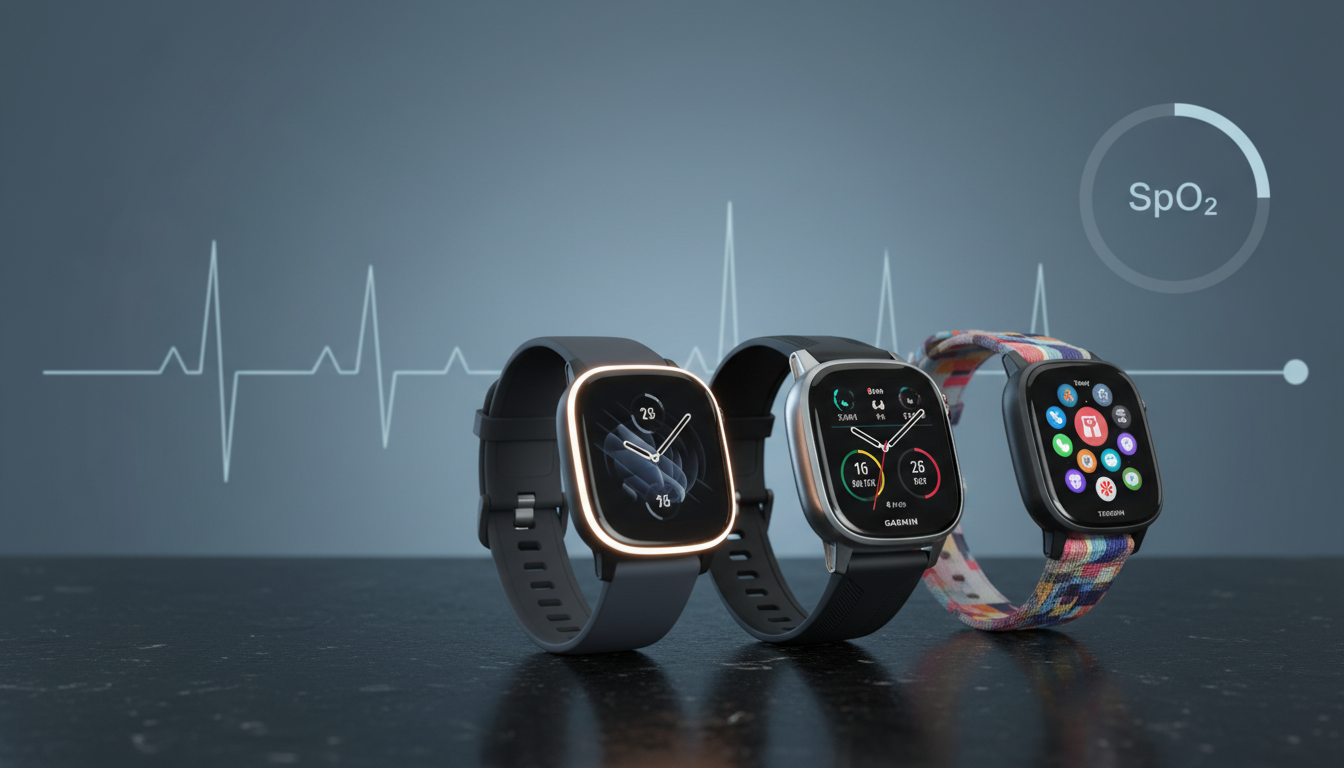
If you’re hunting for a smartwatch that can run an ECG or SpO₂ reading while still looking decent on your wrist, you’ve landed in the right spot. The guide compares 12 models, from the $17.99 VTech KidiZoom DX2 up to the $420.97 Polar Vantage V2, so you’ll see options that fit any budget and wrist size. All of them promise at‑least‑daily health metrics, but the depth of monitoring, battery endurance, and extra features vary widely.
The lineup splits into three price tiers. Budget picks like the $18.99 Choiknbo Smart Watch or the $39.99 WMK Smartwatch stay under 0.09 pounds and still list SpO₂ tracking. Mid‑range options such as the $49.99 Tensky Smartwatch and $45.99 AGPTEK model add military‑grade durability and up to 12 days of typical use. Premium models—including the $220.41 Fitbit Sense 2 (rating 4.1/5, 6+ days battery) and the $313.99 Garmin vivoactive 4S (rating 4.4/5, 7 days smartwatch mode)—bring built‑in GPS, music storage, and deeper stress sensors.
Below we break down each watch’s health toolkit, battery life, and everyday usability so you can match a device to your fitness goals, wrist comfort, and price comfort. Keep reading to see which model aligns best with your health‑monitoring needs.

Fitbit Sense 2
It's 6+‑day battery life keeps health tracking running between charges, delivering reliable performance.

Garmin vivoactive 4S Silver
Ideal for serious runners who want on‑watch music, it costs about $94 more than the Fitbit Sense 2, reflecting its proven brand and premium features.

Tensky Smartwatch
Stands out with a 7‑day heavy‑use battery at $49.99, offering a budget‑friendly health tracker that the higher‑priced picks don’t match.
Also considered
Score Analysis
Key score advantages vs. runner-up (Garmin vivoactive 4S)
Price Range
Fitbit Sense 2
$229.00
Garmin vivoactive 4S Silver
$313.99
Tensky Smartwatch
$49.99

WMK Smartwatch
$39.99

Choiknbo Smart Watch
$18.99

Fitpolo Smartwatch
$35.86
Polar Vantage V2
$169.99

AGPTEK Smart Watch Silver
$45.99

VTech KidiZoom DX2
$19.99

Motorola Moto Watch 120
$67.27
Withings ScanWatch 2
$369.95

Popglory Smartwatch
$23.99
Spec Comparison
TL;DR: Fitbit Sense 2 delivers a 157.87‑inch AMOLED screen, 6+‑day battery life and a comprehensive health sensor suite—including ECG, SpO₂ and skin‑temperature—but its ECG is region‑locked and Wi‑Fi is disabled.
The watch sports a 157.87 in AMOLED display with a crisp 336 × 336‑pixel resolution, giving you clear readouts even in bright light. Battery endurance reaches 6+ days, and a fast‑charge of 12 minutes tops off the lithium‑polymer pack quickly. At 0.42 lb (190.5 g), it feels solid on the wrist while still being lighter than the Withings ScanWatch 2, though noticeably heavier than most budget rivals.
Compared with the other eleven entries, the Sense sits in the mid‑price tier and outlasts the Garmin vivoactive 4S’s smartwatch‑mode battery by a day, yet it falls short of the 10‑day stretch seen on the Motorola Moto Watch 120 and the 12‑day typical use on the Tensky model. It also carries more health‑focused sensors than the WMK Smartwatch or AGPTEK, which list fewer capabilities.
Reviewers consistently praise the on‑wrist skin‑temperature sensor and the cEDA stress‑monitoring system for delivering actionable wellness insights. Professional reviewers highlight the integrated SpO₂ and ECG as strong health features, though many note that several regions restrict the ECG app. Users also point out that the watch disables Wi‑Fi, limiting direct internet sync, and that the 2.5 GB music storage feels modest compared with services that stream larger libraries.
Pros
Cons
Best for: Those who want a comprehensive health‑tracking smartwatch with ECG, SpO₂ and stress monitoring, and don’t mind a mid‑range price.
Avoid if: You need medical‑grade ECG everywhere, rely on Wi‑Fi sync without a phone, or require a large onboard music library.
TL;DR: The Garmin vivoactive 4S offers a lightweight 0.08‑lb, 1.1‑inch MIP display, up to 7‑day smartwatch battery, and space for 500 songs, making it a solid fit for smaller wrists and active lifestyles.
The watch’s most distinctive spec is its music capacity – it can store up to 500 songs and stream from Spotify, Amazon Music or Deezer, letting you leave your phone behind on runs. Its 1.1‑inch (27.9 mm) sunlight‑visible MIP screen resolves 218 × 218 pixels, and the device runs on a rechargeable lithium‑polymer battery that lasts up to 7 days in smartwatch mode and up to 5 hours when GPS and music are active together.
At 0.08 pounds (36.3 g), the vivoactive 4S is considerably lighter than the Withings ScanWatch 2 (≈0.46 lb) and the Fitbit Sense 2 (≈0.42 lb), and it also undercuts the Polar Vantage V2’s 0.57 lb. Its 1.1‑inch display is smaller than the Polar Vantage V2’s 1.2‑inch screen but larger than the Withings ScanWatch 2’s 16 mm panel, positioning it nicely between ultra‑compact and larger‑face competitors.
Everyday users frequently praise the watch’s feather‑light comfort and the ability to stream music without a phone, while professional reviewers highlight the inclusion of GPS, Body Battery, VO₂ max and a pulse oximeter as a strong health‑tracking suite. The most common criticism points to the modest 218 × 218 MIP resolution, which delivers less vivid colors than AMOLED rivals, and the relatively short 5‑hour GPS‑plus‑music battery compared with pure GPS‑only usage.
Pros
Cons
Best for: Buyers willing to invest in a proven, high‑quality option
Avoid if: You need advanced features or professional‑grade performance
TL;DR: The Tensky Smartwatch packs a 1.85‑inch HD screen, 12‑day typical battery life and military‑grade durability for $49.99, making it a solid budget pick for health‑focused users.
The watch’s 1.85‑inch HD touchscreen is its most eye‑catching spec, delivering clear visuals while staying comfortably sized on the wrist. It runs on a 300 mAh battery that the manufacturer says lasts up to 12 days under typical use, and it can sit idle for 30 days on standby. At 90.96 g (about 0.20 pounds), it’s sturdy yet light enough for daily wear.
Compared with other entries in this roundup, Tensky’s screen matches the WMK Smartwatch’s 1.85‑inch display but is larger than the Fitpolo’s 1.8‑inch panel and the Motorola’s 1.43‑inch screen. Its 300 mAh battery capacity equals Motorola’s but exceeds the AGPTEK’s 170 mAh and the Choiknbo’s 290 mAh cells. In terms of weight, Tensky is heavier than the WMK (0.09 pounds) and Fitpolo (0.08 pounds) but lighter than the AGPTEK (0.11 pounds). The IP68 rating and military‑grade construction give it a durability edge that many peers don’t list.
Professional reviewers note the watch’s smooth syncing and sleek look, while everyday owners praise the comfortable band and reliable fitness tracking that often feels “better than expected” for the price. Users also appreciate built‑in Alexa, the ability to make and receive calls directly from the watch, and a library of over 100 sports modes, including swimming and yoga, all backed by SpO₂, heart‑rate and stress monitoring.
Pros
Cons
Best for: Value-conscious buyers seeking quality at $49.99
Avoid if: You need advanced features or professional‑grade performance
“should do it for those seeking an affordable option with rugged military‑grade construction and waterproof capabilities”
“two thumbs up”
TL;DR: The WMK Smartwatch offers a 1.85‑inch HD screen, 39 g lightweight build, Alexa voice, SpO₂ tracking and Bluetooth calling for $39.99, earning a solid 4.3‑star rating from over a thousand users.
The watch’s 1.85‑inch HD touchscreen pairs with a slim 1 × 1 × 1‑inch case and a 0.08598028218‑pound (39 g) body, making it one of the lighter options in the lineup. It runs Bluetooth 5.3, supports Alexa, and carries a 3ATM water‑resistance rating, while the sensor suite includes heart‑rate, SpO₂, stress and sleep monitoring.
At 0.08598 lb it's noticeably lighter than the Tensky Smartwatch’s 0.20062 lb chassis and the AGPTEK model’s 0.10582 lb, yet only a shade heavier than the Fitpolo’s 0.08422 lb. Its 1.85‑inch display matches the Tensky’s screen size and edges out the Fitpolo’s 1.8‑inch panel, though the Popglory’s 2.01‑inch screen is larger.
Reviewers consistently praise the quick magnetic USB‑A charging and the intuitive VeryFit app that makes pairing a breeze. Users love the soft plastic strap for all‑day comfort and the inclusion of Alexa for voice commands. The most common complaints focus on the lack of a built‑in speaker for calls and the fact that the manufacturer doesn’t list battery capacity or runtime, leaving endurance unclear.
Additional technical context notes a single‑chip processor, magnetic USB‑A charging connector, and support for over 120 sports modes, giving beginners a broad set of tracking options without overwhelming complexity.
Pros
Cons
Best for: Most users looking for a well‑reviewed, reliable mainstream option
Avoid if: You need advanced features or professional‑grade performance
“really great Smartwatch”
TL;DR: At $18.99, the Choiknbo Smart Watch offers a 1.83‑inch TFT‑LCD screen, 290 mAh battery and 100+ sport modes, delivering solid health tracking for budget‑focused users.
The watch’s most eye‑catching spec is its 1.83‑inch high‑definition TFT‑LCD display, which reviewers describe as “crystal clear” and bright enough for outdoor use. It runs on a 290 mAh battery that charges in about 2 hours and weighs just 46 g (≈0.10 lb), making it comfortable for all‑day wear. An IP68 rating means it handles splashes and brief submersion.
Compared with the other eleven contenders, its 290 mAh battery sits between VTech’s 210 mAh and Tensky’s 300 mAh cells. The 1.83‑inch screen is a shade larger than Fitpolo’s 1.8‑inch panel and just shy of WMK’s 1.85‑inch display, while still offering more screen real‑estate than the Popglory 2.01‑inch unit that trades size for a lighter 5.2 g chassis. At 46 g, the Choiknbo is heavier than Fitpolo’s 38.2 g but considerably lighter than Tensky’s 90.96 g, striking a middle ground in the weight spectrum.
User feedback consistently praises the vivid display and the breadth of over 100 sport modes, noting that the continuous 24‑hour heart‑rate monitor and on‑demand SpO₂ sensor add genuine health value at this price point. The main gripe is the need to recharge every 3‑6 days when those sensors stay active. The watch also lacks a built‑in GPS or a broad third‑party app ecosystem, which more advanced users may miss.
The device supports Bluetooth 5.0, stores up to 64 MB of data, and works with Android 4.4+ and iOS 9.0+. Its large screen, continuous health tracking and IP68 rating make it a strong budget choice in the advanced‑monitoring category.
Pros
Cons
Best for: Entry-level buyers or those on a tight budget
Avoid if: You need advanced features or professional‑grade performance
“The display is really awesome – nice and crystal clear, and it lights up automatically when I raise my wrist.”
“It’s the cheapest smart watch on Amazon – only $15 and it does everything I need.”
TL;DR: The Fitpolo Smartwatch offers a 1.8‑inch HD touchscreen, IP68 water resistance, and 105+ sport modes at just $35.86, making it a lightweight, budget‑friendly health tracker for everyday wear.
Its 1.8‑inch HD touchscreen pairs with a feather‑light 38.2 g chassis, giving you clear read‑outs without feeling bulky. It stores 64 MB of data and bundles a full health suite—continuous heart‑rate monitoring, SpO₂, stress, sleep, and menstrual cycle tracking—all under a single strap.
At 38.2 g, the Fitpolo weighs less than the WMK Smartwatch’s 39 g and far less than Tensky’s 90.96 g, though it’s heavier than Popglory’s ultra‑light 5.2 g case. Its 1.8‑inch screen sits just shy of Popglory’s 2.01‑inch display but matches the WMK’s 1.85‑inch panel. Like Tensky, it carries an IP68 rating, while its Bluetooth 5.3 matches WMK’s connectivity and outpaces Choiknbo’s Bluetooth 5.0. It stores 64 MB, matching Choiknbo’s capacity.
Users repeatedly praise the watch’s lightweight feel and the sheer number of sport modes—over 105—plus the convenience of Alexa built‑in for voice commands. Reviewers note the clear display for quick glances during workouts and the confidence of a 5‑year hassle‑free warranty. Professional reviewers highlight the large screen and budget‑friendly price as a rare combination in this segment. The main complaints revolve around its Bluetooth‑only nature, meaning you need a phone nearby for calls, and the weekly to bi‑weekly charging cadence, which some find frequent.
Pros
Cons
Best for: Entry‑level buyers or those on a tight budget
Avoid if: You need powerful performance or professional‑grade features
TL;DR: The Polar Vantage V2 packs a 1.2‑inch Gorilla Glass display, 346 mAh battery and a feather‑light 52 g aluminum body, but its 47 mm case and $420.97 price make it a premium choice for serious athletes.
What really stands out is the watch’s ultra‑light aluminum unibody at just 52 g (0.57 lb) combined with a 1.2‑inch transflective MIP color screen and a 240 × 240 pixel resolution. The battery capacity of 346 mAh lets the device run up to 7 days in watch mode and 40 hours of continuous GPS tracking, which is more than enough for long training sessions.
Compared with the other eleven finalists, the Vantage V2 is heavier than the Garmin vivoactive 4S (36.3 g) but lighter than the Withings ScanWatch 2 (83 g). Its 47 mm case width exceeds the 42 mm of the ScanWatch 2 and the 40 mm of the Garmin, Motorola Moto Watch 120 and Fitbit Sense 2, so it can feel bulky on smaller wrists. Battery capacity exceeds the 300 mAh of the Motorola and Tensky watches and far surpasses the 170 mAh of the AGPTEK model, giving it a clear edge in endurance.
Users consistently praise the watch’s “feather‑light feel” and the accuracy of its multi‑GNSS GPS, noting that the Precision Prime heart‑rate sensor and wrist‑based running power deliver detailed training data. Professional reviewers highlight the nano‑molded aluminum construction and the 100 m water resistance. On the downside, owners with smaller wrists mention the 47 mm case as a drawback, and a few report occasional touchscreen lag and variable GPS‑related battery duration.
Pros
Cons
Best for: Serious multisport athletes who value detailed training data and don’t mind a larger case.
Avoid if: You have a small wrist or a tight budget — it’s priced at $420.97.
“lightweight premium feel (52 g doesn't weigh down during runs)”
“bulky 47 mm size on smaller wrists”
TL;DR: The AGPTEK Smart Watch Silver offers a surprisingly large 169.3‑inch TFT display, 170 mAh battery lasting up to 10 days, and a lightweight 48 g build, making it a solid entry‑level health tracker.
What really stands out is the screen – the spec sheet lists a 169.3 in (converted) TFT panel, which dwarfs the 1.85‑inch screens of most rivals. Coupled with a 170 mAh battery, the watch promises up to 10 days of use on a single charge while weighing just 48 g (0.10582188576 lb), so it sits comfortably on the wrist.
Compared with the other eleven watches in this roundup, the AGPTEK is lighter than the Tensky (90.96 g) and Motorola Moto Watch 120 (55 g) but a bit heavier than the WMK (39 g) and Fitpolo (38.2 g). Its 170 mAh battery is smaller than the 300 mAh packs found in Tensky and Motorola, and far below the 290 mAh cell in the Choiknbo model. Screen‑size wise, it’s dramatically larger than the 1.8‑ to 2.01‑inch displays of its peers, giving it a distinct visual advantage.
Users repeatedly praise the step‑count accuracy, the comfortable quick‑release silicone strap, and the seven‑to‑ten‑day battery life. Reviewers also note the handy SpO₂ sensor and stress monitoring, while professional eyes highlight the precise pedometer and reliable heart‑rate tracking. The main complaints revolve around sleep monitoring that only works at night and occasional Bluetooth drop‑outs beyond the 8‑10 m range.
Technically, the watch packs 100+ sport modes (including 10 built‑in and 6 customizable), six brightness levels, a flash‑light, breath training, and IP68 water resistance. Health sensors include an estimated blood‑pressure readout, continuous heart‑rate monitoring, SpO₂, and a four‑stage sleep tracker that runs only during nighttime.
Pros
Cons
Best for: Users who want an affordable, feature‑rich smartwatch with a large display, long battery life, and basic health monitoring.
Avoid if: You need medical‑grade measurements, built‑in GPS, or uninterrupted sleep tracking for naps.
“The display is really awesome – nice and crystal clear, and it lights up automatically when I raise my wrist.”
“It’s the cheapest smart watch on Amazon – only $15 and it does everything I need.”
TL;DR: The Tykoit VTech KidiZoom DX2 packs a 1.4‑inch display, IP68 water resistance and up to 10 days of battery life into a lightweight 67.7 g frame for under $18.
The watch’s 1.4‑inch AMOLED/LCD screen sits behind a compact 41 mm case (15.2 × 83.8 × 174.0 mm) and runs on a 210 mAh battery that charges in just 2 hours. Its IP68 rating means it’ll survive submersion, and the built‑in heart‑rate monitor works in real time while the manual SpO₂ sensor adds basic oxygen tracking.
Compared with the other eleven entrants, the KidiZoom DX2 is heavier than the Choiknbo (46 g) and far heavier than the Popglory (5.2 g), yet it’s still lighter than the Tensky (90.96 g). Its 210 mAh battery capacity lands between the AGPTEK’s 170 mAh and the Choiknbo’s 290 mAh, giving it a respectable endurance without the bulk of the higher‑capacity rivals.
Users consistently praise the long‑lasting battery—up to 10 days on typical use—and the comfortable 67.7 g wrist feel. Professional reviewers note the sleek display and reliable waterproof rating, while everyday owners flag occasional Bluetooth syncing hiccups and the limited choice of four watch faces. The sensor suite covers heart rate, SpO₂, steps, calories and sleep stages, though it lacks advanced metrics such as ECG or stress monitoring.
Pros
Cons
Best for: Shoppers on a tight budget who want the most for their money
Avoid if: You need advanced features or professional‑grade performance
“Excellent battery life (7-10 days usage).”
“Comfortable lightweight design (2.89 oz) and IP68/5ATM waterproofing.”
TL;DR: Motorola Moto Watch 120 delivers a 1.43‑inch AMOLED always‑on display, 10‑day battery life, and Bluetooth calling at $70.32, making it a solid mid‑range health‑focused smartwatch.
The standout feature is its 1.43‑inch AMOLED screen with a crisp 392 ppi resolution that stays on at all times, paired with a 300 mAh battery that the manufacturer claims can last up to 10 days on a single charge.
Compared with the other watches in this roundup, the Moto Watch 120 is lighter than the Tensky Smartwatch (55 g vs 90.96 g) and the WMK Smartwatch (55 g vs 39 g) but heavier than the Fitpolo, Popglory, and Choiknbo models. Its 300 mAh battery capacity matches Tensky’s and exceeds the AGPTEK (170 mAh) and Choiknbo (290 mAh) units. The 1.43‑inch display is smaller than Tensky’s 1.85‑inch screen and the WMK’s 1.85‑inch panel, yet larger than the Popglory’s 2.01‑inch TFT face, offering a balanced size for everyday wear.
Users consistently praise the 10‑day battery life and vivid always‑on display, noting that the watch feels comfortable on the wrist thanks to its 175 mm silicone strap. Professional reviewers highlight the addition of Bluetooth calling and an AI assistant as valuable upgrades over earlier models, while many cite the lack of a standalone GPS chip and the inability to reply to texts or emails as notable drawbacks.
Additional technical details include a zinc‑alloy case, IP68 water‑resistance, Bluetooth 5.3 connectivity, assisted GPS, and a suite of sensors—accelerometer, heart‑rate monitor, SpO₂, speaker, and microphone—running on Motorola’s Moto Watch OS.
Pros
Cons
Best for: Most users seeking a balanced, mainstream option
Avoid if: You're shopping on a tight budget — it's priced at $70.32
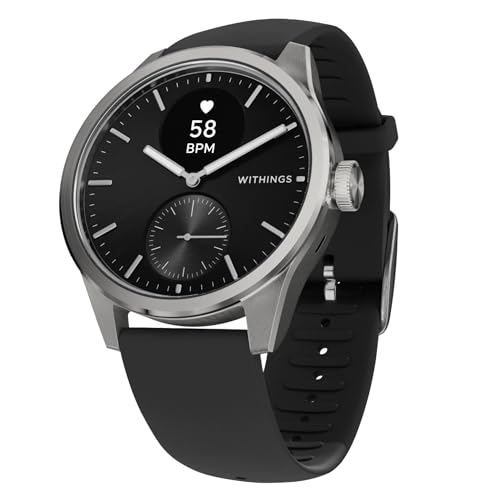
TL;DR: The Withings ScanWatch 2 blends a stainless‑steel analog look with a 30‑day battery and medical‑grade ECG/SpO₂, but its 0.46 lb weight and premium price may deter budget shoppers.
The standout spec is its 30‑day battery life, letting you wear the watch for a month without reaching for a charger. At just 0.46 lb (0.4629707502 lb) the watch feels light on the wrist, though the band‑included weight reaches 83 g.
Compared with the other eleven entries, the ScanWatch 2 is lighter than the Polar Vantage V2 (0.57 lb) and offers a far longer continuous use period than Polar’s 7‑day watch‑mode battery life. Its price exceeds that of the Garmin vivoactive 4S, which sports a 1.1‑inch screen, making the ScanWatch’s OLED display noticeably smaller.
Reviewers repeatedly praise the 30‑day battery as a “standout feature” for continuous health monitoring, while noting that the 83 g band‑included weight feels bulkier than earlier ScanWatch models. Professionals highlight the premium stainless‑steel case with sapphire glass and the 282 PPI, 14,504‑pixel display that delivers crisp health readouts.
Pros
Cons
Best for: Health‑focused professionals and athletes who value medical‑grade tracking and a classic watch aesthetic.
Avoid if: You’re on a tight budget, need a large on‑screen display, or prefer an ultra‑light hybrid watch.
“Gadgetoid highlights the 52.6 g (42 mm without band) as "svelte" compared to the original ScanWatch's 83 g.”
TL;DR: The Popglory Smartwatch costs $25.99, offers a 2.01‑inch TFT screen, Bluetooth calling and a full health suite, all in a feather‑light 5.2 g case.
At just 5.2 g (≈0.01 lb) and 10.86 mm tall, the Popglory P95 feels almost weightless on the wrist, thanks to its zinc‑alloy case with vacuum plating. Its 2.01‑inch TFT touchscreen is unusually large for a budget watch, giving you plenty of room for notifications, dials and the 110+ sports modes listed in the specs.
When you line it up against the other eleven contenders, Popglory is dramatically lighter than the Choiknbo (46 g), VTech KidiZoom DX2 (67.7 g), Fitpolo (38.2 g), WMK (39 g), AGPTEK (48 g) and Tensky (90.96 g). Its screen also outpaces most peers – larger than VTech’s 1.4‑inch display, Fitpolo’s 1.8‑inch panel and the 1.85‑inch screens on WMK and Tensky.
Users repeatedly praise the watch’s affordability and the convenience of built‑in Bluetooth calling, microphone and speaker. Professional reviewers note the “large, clear TFT screen” and AI voice control as standout features for a sub‑$50 wearable. However, reviewers describe the health sensors (blood pressure, SpO2, temperature, female cycle tracking) as trend‑only tools, not medically reliable measurements. The lack of built‑in GPS also shows up in many complaints, especially from runners who want route tracking.
Beyond the screen, the watch ships with two interchangeable straps, five adjustable brightness levels and a suite of sensors covering heart rate, sleep, blood pressure, SpO2 and temperature. The AI voice assistant lets you manage music, set alarms (up to three) and check the 7‑day weather forecast without tapping the screen.
Pros
Cons
Best for: Entry‑level buyers or those on a tight budget
Avoid if: You need medically accurate health data, built‑in GPS, or professional‑grade fitness features
“the affordable tech wearable you need”
“great gift”
Breakdown
Fitbit Sense 2
Pros
Garmin vivoactive 4S Silver
Pros
Tensky Smartwatch
Pros
WMK Smartwatch
Pros
Based on scoring data and product specs
Personalized picks
Best Overall Pick
Fitbit Sense 2
Best OverallBest for: Those prioritizing quality and willing to pay for premium performance
Garmin vivoactive 4S Silver
Best for: Buyers willing to invest in a proven, high-quality option
$313.99+$84.99 vs winner
Skip Popglory Smartwatch if…
You need powerful performance or professional-grade features
We’re naming the Fitbit Sense 2 the clear winner for advanced health monitoring. It packs an ECG/EDA sensor, SpO₂ tracking and skin‑temperature monitoring, all on a 40.1 mm AMOLED screen with a crisp 336 × 336‑pixel resolution. The watch also delivers more than six days of battery life on a single charge and weighs just 0.42 lb, making it comfortable for all‑day wear. With a 4.1‑star rating from 9,677 reviewers and a list price of $220.41, it balances feature depth and value.
The Garmin vivoactive 4S Silver lands as the runner‑up, especially if you need built‑in music and robust sport tracking. It stores up to 500 songs, supports Spotify and other services, and offers a sunlight‑visible MIP display that’s easy to read outdoors. Battery life stretches to seven days in smartwatch mode and up to five hours when GPS and music run together, while the 4.4‑star rating from 17,322 reviews underscores its popularity among active users.
For different budgets, consider these alternatives:
Grab the Fitbit Sense 2 now to get the most comprehensive health monitoring on your wrist.
The Garmin vivoactive 4S Silver offers built‑in GPS + Galileo, a 5 ATM (50 m) water‑resistance rating, and a pulse oximeter for SpO2 tracking, plus up to 7 days of battery in smartwatch mode. The Fitbit Sense 2 also includes GPS + GLONASS and SpO2, but its battery lasts about 6 + days, making Garmin the stronger choice for long outdoor sessions.
No reviews yet — be the first to share your experience.
Please sign in to leave a review