⚡ Quick Answer
When you need a smartwatch that can plot trails, log runs, or guide a hike without a phone, built‑in GPS is non‑negotiable. Seven models span a $74.99‑to‑$587.99 price range, covering everything from the budget‑friendly Amazfit Bip 6 (rated 4.4/5 by 4,977 reviewers) to the premium Garmin Venu 4 Slate (4.6/5 from 783 reviews). The lineup splits into three tiers: three budget options (Amazfit Bip 6, CMF BY Nothing Watch 3 Pro, Amazfit Active 2), a mid‑range pick (Garmin vívoactive 5 Ivory), and three premium contenders (Apple Watch Series 11, Fitbit Sense 2, Garmin Venu 4 Slate).
The Apple Watch Series 11 tops the list with a 4.8/5 rating from 3,682 reviews and a 24‑hour battery that reaches 80 % in just 30 minutes, while the Amazfit Bip 6 delivers up to 14 days of typical use on a single charge. In the mid‑range, the Garmin vívoactive 5 provides up to 11 days of smartwatch life, and the premium Garmin Venu 4 extends GPS endurance to 17 hours. Each watch offers a different balance of price, battery stamina, and feature depth, so you can match the device to your outdoor routine. Read on to see how the specs stack up across the three tiers.
Apple Watch Series 11
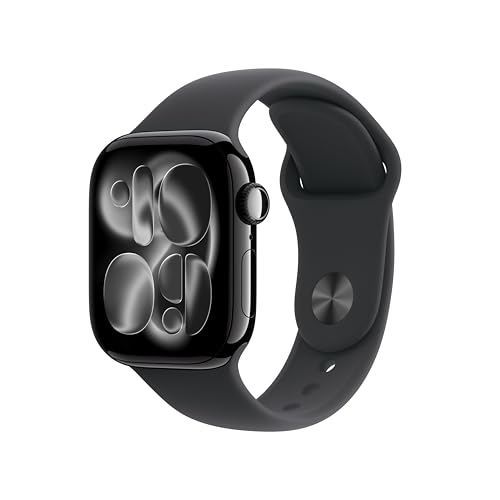
Its 24‑hour battery life plus an 8‑hour boost from just a 15‑minute charge gives you a full day of use and quick top‑ups.

Amazfit Bip 6
Ideal for budget‑conscious buyers, the Amazfit Bip 6 costs $74.99—about $324 less than the Apple Watch Series 11—while still delivering reliable entry‑level GPS tracking.

Garmin vívoactive 5 Ivory
Stands out with an 11‑day battery life in a 42 mm case, giving you longer endurance than the Apple Watch while staying larger than the ultra‑slim Amazfit Bip 6.
Also considered
Score Analysis
Key score advantages vs. runner-up (Amazfit Bip 6)
Price Range
Apple Watch Series 11
$399.00
Amazfit Bip 6
$76.99
Garmin vívoactive 5 Ivory
$178.49

Amazfit Active 2
$104.99

Fitbit Sense 2
$224.99

Garmin Venu 4 Slate
$510.99
CMF BY Nothing Watch 3 Pro
$99.00
Spec Comparison
TL;DR: Apple Watch Series 11 packs a 42 mm aluminum case, 24‑hour battery, 30‑minute fast charge and a full health sensor suite, but its $399 price puts it at the premium end.
The watch sits in a 42 mm × 36 mm × 9.7 mm aluminum case that weighs just 29.7 g, making it one of the lightest options in the lineup. It runs on the Apple S10 chip with 1 GB RAM and 64 GB storage, and offers a sensor array that includes an electrical heart sensor, blood‑oxygen sensor, temperature sensor and an always‑on altimeter. Connectivity is extensive: Bluetooth 5.3, eSIM, L1 GPS plus GLONASS, Galileo, QZSS and BeiDou, and a second‑generation Ultra Wideband chip.
Compared with the six other smartwatches in this roundup, the Series 11’s 24‑hour standard battery life outpaces Garmin Venu 4’s 17‑hour GPS mode, yet it’s shorter than the multi‑day endurance of Fitbit Sense 2, Garmin vívoactive 5 and Amazfit Bip 6. Its low‑power mode stretches to 38 hours, giving it a longer “all‑day” stretch than many rivals. At 29.7 g, it’s heavier than the 26 g Garmin vívoactive 5 but considerably lighter than the 190.5 g Fitbit Sense 2 and the 31.65 g Amazfit Active 2. The 42 mm case matches Garmin vívoactive 5’s size, while it’s a touch larger than Fitbit’s 40.1 mm screen.
Reviewers repeatedly point out the dramatically improved battery life and the 30‑minute fast‑charge that reaches 80 % in half an hour, a clear upgrade from earlier Apple watches. Users love the lightweight feel on the wrist, the seamless cellular call handling, and the breadth of health tracking—from hypertension notifications to depth‑gauge capability down to 6 meters. Professionals note the smooth performance of watchOS 26 on the S10 processor, and the premium Jet Black aluminum finish draws consistent praise.
Pros
Cons
Best for: iPhone users with smaller wrists who want a compact, feature‑rich fitness companion.
Avoid if: You need a larger display or a lower‑price option — it’s priced at $399.00.
“finally fixed the biggest issue—battery life”
TL;DR: The Amazfit Bip 6 offers a 2,000‑nit 1.97‑inch AMOLED screen, lightweight 0.09 lb build and long‑lasting 340 mAh battery for under $75, making it a solid entry‑level GPS smartwatch.
The standout spec is the up‑to‑2,000‑nit brightness of its AMOLED display, which stays clear even in bright sunlight. At 1.97 inches and 302 PPI, the screen delivers crisp visuals on a compact 46.3 × 40.2 × 10.45 mm case.
Weighing just 0.09 lb, the Bip 6 is lighter than the CMF BY Nothing Watch 3 Pro (0.1125 lb) but a bit heftier than the Amazfit Active 2 (0.065 lb). Its brightness also outshines the Nothing Watch 3 Pro’s 600‑nit panel, though it sits below the Active 2’s 3,000‑nit peak.
Users appreciate the 340 mAh battery that the manufacturer describes as supporting typical multi‑day use, and reviewers note the reliable GPS with free maps, AI coaching and more than 140 sport modes. The aluminum‑alloy frame with a fiber‑reinforced polymer case and 5 ATM water rating provides durability for outdoor workouts.
Pros
Cons
Best for: Budget-conscious buyers seeking a reliable entry-level option
Avoid if: you need a premium‑grade feel, NFC payments, or a watch that comfortably fits very large wrists
TL;DR: The Garmin vívoactive 5 Ivory packs a 30.5 mm AMOLED screen, 4 GB storage and five‑satellite GPS into a feather‑light 0.08125 lb case, and it can run for many days between charges.
The watch’s standout spec is its 30.5 mm AMOLED touchscreen, which offers crisp visuals in a compact 42 mm case while keeping the total weight down to just 0.08125 pounds. Garmin also equips the device with 4 GB of internal storage, enough for music files and activity logs without needing a phone.
Compared with the six other watches in this roundup, the vívoactive 5 is dramatically lighter than the Fitbit Sense 2 (0.42 lb) and the CMF BY Nothing Watch 3 Pro (0.1125 lb), yet only a shade heavier than the Amazfit Active 2 (0.065 lb). Its 30.5 mm display is a touch smaller than the Amazfit Active 2’s 1.32‑inch screen, but it still delivers the high‑contrast benefit of an AMOLED panel that many reviewers praise. Garmin also sits at the same weight as the higher‑priced Garmin Venu 4 Slate, while undercutting the Apple Watch Series 11’s 0.07 lb weight by a small margin.
Users consistently highlight the long‑lasting battery, noting it often exceeds a week of daily wear, and pro reviewers point out the new AMOLED display as a clear upgrade over prior models. The watch’s multi‑satellite GPS, tapping into five satellite systems, earns commendations for reliable positioning during runs and bike rides. Health‑focused features such as Body Battery, continuous heart‑rate monitoring, SpO2, respiration tracking and a dedicated wheelchair mode add depth to daily wellness tracking.
Technical details round out the package: an IP 5 ATM rating gives water resistance to 50 m, and it runs on a rechargeable lithium‑ion battery. With over 30 preloaded sport apps and access to 1,600+ custom workouts via Garmin Connect, the vívoactive 5 is ready for almost any activity you throw at it.
Pros
Cons
Best for: Fitness enthusiasts and athletes who want a well‑reviewed, versatile smartwatch with strong health tracking and long battery endurance.
Avoid if: You need built‑in speaker or microphone functionality, as those features aren’t listed.
TL;DR: The Amazfit Active 2 offers a sapphire‑protected 1.32‑in AMOLED screen that can reach 3000 nits, dual‑frequency GPS and about 10 hours of GPS‑plus‑music use, all in a 0.065‑lb stainless‑steel case for $104.99.
The standout spec is the display: a 1.32‑inch AMOLED panel protected by sapphire glass can hit a brightness of up to 3000 nits, making it easy to read in bright sunlight. Coupled with a 5‑satellite dual‑frequency GPS and offline maps, the watch lets you navigate trails without a phone. The 365 mAh battery supplies roughly 10 hours of GPS + music playback, and the 5 ATM water rating means you can swim or shower without worry.
At 0.065 lb, the Active 2 is lighter than the CMF BY Nothing Watch 3 Pro (0.1125 lb), Amazfit Bip 6 (0.09 lb), Garmin vívoactive 5 (0.08125 lb) and the Garmin Venu 4 (0.08125 lb). Its brightness far exceeds the CMF’s 600 nits and the Bip’s 2000 nits. The 365 mAh battery capacity also tops the 340 mAh cells found in both the CMF and the Bip, though the CMF lists an 11‑hour continuous‑monitoring time that’s comparable to the Active 2’s 10‑hour GPS‑plus‑music runtime. The CMF’s 1.96‑in and the Bip’s 1.97‑in displays are larger than the Active 2’s 1.32‑in screen, and the Garmin Venu 4’s 1.4‑in panel is slightly bigger as well.
Reviewers consistently praise the ultra‑bright sapphire screen and the battery that lasts about 10 hours of GPS + music, noting that the watch feels comfortable on the wrist thanks to its lightweight stainless‑steel frame. Professional reviewers highlight the inclusion of offline maps and the Zepp Flow AI voice control as premium touches for its price. On the downside, users mention that the box does not include a USB‑C charging cable, and some have experienced intermittent Bluetooth drops during calls. The modest 1.32‑in screen can feel cramped for power users who prefer more on‑screen data.
Pros
Cons
Best for: Fitness‑focused users who want a sleek, lightweight smartwatch with bright outdoor readability and solid GPS performance.
Avoid if: You need a larger screen for detailed data or expect a charger to be included out of the box.
“premium features without the premium price”
TL;DR: Fitbit Sense 2 packs a 40.1 mm AMOLED screen, built‑in GPS + GLONASS, 4 GB storage and a 12‑minute fast charge, but its 190.5 g weight and 4.1‑star rating make it a premium‑priced, heavy option.
The standout hardware piece is the 40.1 mm AMOLED display, which pairs with a full sensor suite that includes an on‑wrist skin‑temperature sensor, multi‑path optical heart‑rate monitor, ECG and cEDA stress sensors, plus SpO2 and ambient‑light detection. At 190.5 g (0.42 lb) the watch feels solid, and the built‑in speaker delivers 75 dB SPL at 10 cm, which reviewers say is loud enough for clear phone calls outdoors.
Compared with the six other smartwatches in this roundup, the Sense 2 is noticeably heavier than the Garmin vívoactive 5 (36 g total), Amazfit Active 2 (31.65 g), CMF BY Nothing Watch 3 Pro (47 g total), Amazfit Bip 6 (40.8 g), Apple Watch Series 11 (29.7 g) and Garmin Venu 4 Slate (36.86 g). Its 40.1 mm screen is larger than the Garmin vívoactive 5’s 30.5 mm display, and its 4 GB storage matches the vívoactive 5’s capacity, while the other models either list smaller screens or don’t disclose storage.
Users consistently praise the comprehensive health tracking – they highlight the skin‑temperature sensor and cEDA stress monitor as innovative features that add daily wellness insight. Professional reviewers also note the fast‑charge capability, which tops up the battery in just 12 minutes. On the downside, the 4.1‑star rating reflects some disappointment: regional restrictions limit ECG availability, and the deactivated Wi‑Fi means you can’t sync directly without a phone.
Pros
Cons
Best for: Those prioritizing comprehensive health tracking and willing to invest in a premium‑priced smartwatch.
Avoid if: You need medical‑grade ECG everywhere or rely on Wi‑Fi sync without a phone.
TL;DR: The Garmin Venu 4 Slate packs a 1.4‑inch AMOLED screen, 17‑hour GPS battery and 8 GB storage into a 45 mm stainless‑steel case, but its premium price and bulkier wrist feel may deter budget‑oriented users.
The standout spec is the 1.4‑inch AMOLED touchscreen, delivering crisp visuals that stay legible even in bright sunlight. Coupled with a 17‑hour GPS battery life, the watch can power through long trail runs without hunting for a charger. Its 8 GB internal storage means you can stash music, maps and apps directly on the device.
In this seven‑watch lineup the Venu 4 is pricier than the majority of its peers, yet its feature set outstrips many lower‑priced options. It shares the same 0.08125‑pound weight as the Garmin vívoactive 5, is lighter than the Fitbit Sense 2 (0.42 lb) and the CMF BY Nothing Watch 3 Pro (0.1125 lb), but it does feel bulkier than the Apple Watch (0.07 lb) and the Amazfit Active 2 (0.065 lb). Everyday users note that the 45 mm case can feel large on wrists under 135 mm, even though it offers a premium stainless‑steel bezel.
Reviewers consistently praise the Venu 4’s long GPS endurance and the added LED flashlight, noting its usefulness for night‑time hikes. Professional testers highlight the reliable wrist‑based ECG and the solid GPS performance on switchbacks, while also questioning whether the upgrades over the previous generation justify the $587.99 price tag. The watch’s 5 ATM water rating and built‑in microphone/speaker enable calls and voice‑assistant access without pulling out a phone.
Pros
Cons
Best for: Buyers willing to invest in a proven, high‑quality option
Avoid if: You're shopping on a tight budget — it's priced at $587.99
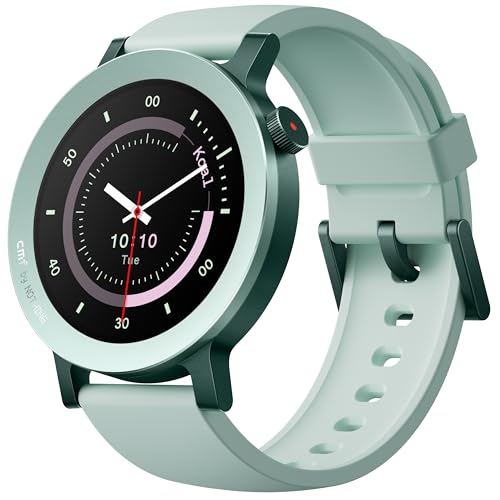
TL;DR: The CMF BY Nothing Watch 3 Pro offers a 1.96‑inch AMOLED screen, multi‑satellite GPS and 11‑hour continuous monitoring battery at a $79 price, making it a solid entry‑level outdoor smartwatch.
The standout spec is its built‑in GPS that taps five satellite constellations—GPS, GLONASS, Galileo, QZSS and Beidou—so you get reliable positioning on trails. It pairs that with a 1.96‑inch AMOLED display that pushes 600 nits of typical brightness, a 332 PPI resolution and a 58 Hz refresh rate, which keeps the watch face clear even in bright sunlight.
Compared with the seven peers, the Watch 3 Pro is heavier than the Apple Watch Series 11 (0.07 lb) but lighter than the Fitbit Sense 2 (0.42 lb). Its 600‑nit screen is dimmer than the Amazfit Bip 6’s up to 2,000 nits, yet the screen size is almost identical to the Bip 6’s 1.97‑inch panel. Battery capacity matches the Bip 6 at 340 mAh, though the Bip 6 advertises up to 14 days of typical use, while the CMF lists 11 hours of continuous monitoring.
Users love the long‑lasting battery that lets them skip daily charging, and reviewers praise the bold aluminum frame and vibrant display. However, the lack of automatic brightness adjustment and the occasional wobble in sleep tracking are common complaints. The rectangular case can feel bulky on petite wrists, and reviewers see the companion app as basic.
Pros
Cons
Best for: Budget‑conscious buyers seeking a reliable entry‑level option
Avoid if: You need advanced features or professional‑grade performance
“Long battery life (up to 13 days) is a game changer!”
“The bright/colorful display makes it easy to read outdoors.”
Breakdown
Apple Watch Series 11
Pros
Cons
Amazfit Bip 6
Pros
Garmin vívoactive 5 Ivory
Pros
Amazfit Active 2
Pros
Cons
Based on scoring data and product specs
Personalized picks
Best Overall Pick
Apple Watch Series 11
Best OverallBest for: Audiophiles and enthusiasts seeking premium sound quality and advanced features
Amazfit Bip 6
Best for: Budget-conscious buyers seeking a reliable entry-level option
$76.99-$322.01 vs winner
Skip CMF BY Nothing Watch 3 Pro if…
You need advanced features or professional-grade performance
The Apple Watch Series 11 takes the top spot thanks to its 4.8‑star rating from 3,682 reviewers, a 24‑hour battery that stretches to 38 hours in low‑power mode, and a full‑suite of satellite‑ready GPS (L1 GPS, GLONASS, Galileo, QZSS, BeiDou). At just 0.07 pounds and a slim 9.7 mm case depth, it feels light on the wrist while still offering 50‑meter water resistance.
The Amazfit Bip 6 lands as the runner‑up, perfect for hikers who need a watch that can last between workouts. Its battery claims up to 14 days of typical use, built‑in GPS with free maps, and a bright 1.97‑inch AMOLED screen that reaches 2,000 nits—all for $74.99.
Pick the Apple Watch Series 11 for the most capable outdoor smartwatch, and you’ll be ready for any adventure.
The Apple Watch Series 11 lists L1 GPS, GLONASS, Galileo, QZSS and BeiDou, covering five major constellations. Garmin Venu 4 mentions a Multi‑GNSS GPS system, but the specific constellations aren’t detailed, so the Apple Watch leads in listed satellite variety.
No reviews yet — be the first to share your experience.
Please sign in to leave a review