⚡ Quick Answer
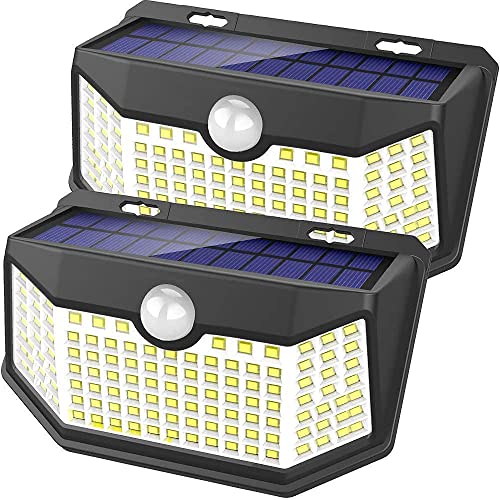
When you need a solar floodlight that can actually light a driveway at night, the Aootek Solar Outdoor Motion Sensor Lights grab attention with a $50.33 price tag, a 4.5‑star rating from 38,360 reviewers, and a bright 2500 lm output. Their PIR sensor reaches 7.9 m, the battery holds 2200 mAh for 8‑10 hours of operation, and the IP65‑rated ABS housing promises rain‑proof durability. Those specs set a high bar, especially for a unit that charges in just 6‑8 hours under a 1.2 W panel.
Our roundup pits 11 models against each other, spanning three price tiers. Budget‑friendly picks include the HMCITY Wall Lights at $12.98 (960 lm) and the Aootek 4‑pack at $18.99, while the Peasur lights sit at $21.99 with 500 lm. Mid‑range options like the Tecknet Security Lights ($26.96, 4200 lm) and Mihani Flood Light ($25.99, 2500 lm) offer higher output and longer runtimes. Premium contenders such as the Tuffenough ($27.44, 2500 lm, 12‑hour battery), Kernowo ($29.99, 3000 lm), the Aootek Outdoor model, and Intelamp ($62.99, 1200 lm, 72‑hour battery) push performance and durability even further.
Next, we’ll break down each tier’s strengths—brightness, detection range, weatherproofing, and value—to help you match a solar light to your yard, budget, and peace‑of‑mind needs.

Aootek Solar Outdoor Motion Sensor Lights
Features a 2200 mAh battery capacity, delivering extended night illumination.

Tecknet Solar Security Lights
Ideal for homeowners wanting reliable security on a tighter budget, it costs about $23 less than the Best Overall at $26.96.

Aootek Solar Motion Sensor Lights
Stands out with a Daylight White color temperature for natural lighting, while staying under $20.
Also considered
TL;DR: The HMCITY Solar Wall Light delivers 960 lumens across a 270° angle, runs 8 hours on a 20.5% efficient panel, and costs $12.98, making it a solid budget pick.
This wall‑mount unit packs 120 high‑power LEDs that output 960 lumens, covering up to 30 square meters with a wide 270° lighting angle. A PIR sensor reaches 26.4 feet (8.0 m) and swings through a 120° sensing angle, while three modes let you choose motion‑only, permanent on, or smart dim‑to‑bright operation. The monocrystalline solar panel’s 20.5% conversion efficiency helps keep the built‑in battery running for 8 hours each night.
At 0.93 pounds and 4.02 inches tall, the HMCITY light is noticeably lighter and shorter than the Aootek Solar Motion Sensor Lights, which weigh 1.8 pounds and stand 6.7 inches high. Its compact footprint also undercuts the bulkier Peasur and Claoner models, positioning it as one of the more space‑efficient options in the eleven‑product roundup. Despite its modest size, the price point sits well below many peers, offering a budget‑friendly alternative without sacrificing core brightness.
Reviewers consistently praise the bright output and the ability to illuminate pathways and patios effectively. Professional reviewers highlight the durable ABS housing and IP65 waterproof rating as strong durability points for year‑round outdoor use. However, several users note that the physical dimensions feel smaller than advertised, leading to a slight disappointment when installed. A few comments also mention that the motion sensor can be finicky, especially in low‑light conditions, which may require occasional adjustment.
Pros
Cons
Best for: Budget-conscious buyers seeking a reliable entry‑level option — the HMCITY Solar Wall Lights White offers Brightness: 960 lumens
TL;DR: The Aootek Solar Motion Sensor Lights pack 120 LEDs, a 26‑foot detection range, and IP65 durability into a 4‑pack for $18.99, but the sensor can be overly sensitive in busy areas.
The standout spec is the 26‑foot motion detection range paired with a 120‑degree sensor angle, letting the light react to movement well before someone reaches your doorstep. A 2200 mAh lithium‑ion battery powers up to 9 hours of illumination, and a 6‑8 hour solar charge restores full capacity thanks to a 20.5 % efficient 1.2 W monocrystalline panel that occupies 15.3 in².
Compared with the other ten lights in this roundup, Aootek’s IP65 rating and three lighting modes (Permanent On, Smart Dim‑to‑Bright, Motion Sensor Only) match the feature set of peers like HMCITY and Tecknet, but it weighs 1.8 pounds—heavier than the 0.93‑pound HMCITY model and lighter than the 2.56‑pound Claoner unit. Its 120 LEDs outshine the 140‑LED Peasur and 149‑LED Claoner lights, while the 270‑degree illumination angle mirrors the wide‑angle designs of HMCITY and Tuffenough.
Reviewers love the brightness that stays visible even in daylight and the quick, wire‑free wall mounting. Professional reviewers note the “exceptional brightness” and “wide‑angle coverage” as strong points for driveways and garages. However, many users report false triggers from distant traffic and a base brightness that can feel too intense in suburban neighborhoods. The 15‑30 second on‑time after motion detection is also seen as brief for prolonged security needs.
Pros
Cons
Best for: Budget-conscious buyers seeking a reliable entry-level option — the Aootek Solar Motion Sensor Lights offers Charging Time: 6-8 hours
Avoid if: You live in a high‑traffic urban area where the sensor’s oversensitivity could cause frequent false alarms, or your installation spot receives limited sunlight.
TL;DR: The Aootek Solar Outdoor Motion Sensor Light packs a 2500‑lm output, 26‑ft PIR detection and IP65 weatherproofing into a wall‑mountable unit for $50.33.
What really sets this light apart is its 26‑foot motion detection range and a bright 2500 Lm output that can illuminate a standard driveway in a single sweep. The PIR sensor covers a 120° angle, while the 270° illumination spread ensures wide‑area coverage. With an IP65 rating and ABS Plastic housing, the fixture is built to survive rain, dust and even tropical storms.
Compared with the ten other lights in this roundup, the Aootek unit sits at the premium end of the price spectrum and is a touch heavier than the lightest rivals, yet it delivers a longer detection range and higher lumen output than most. While some competitors list lower brightness or shorter ranges, this model’s 2500 Lm and 26‑ft detection give it a clear performance edge.
Customers consistently applaud the brightness and reliable motion response, noting that the light “effortlessly illuminates driveways.” Professional reviewers echo this, calling the sensor “consistent” and the construction “durable.” The most common criticism is that the sensor can be overly sensitive in busy neighborhoods, and the smart‑mode brightness sometimes feels too intense for close‑in residents.
The 2200 mAh lithium‑ion battery provides 8‑10 hours of illumination after a 6‑8 hour charge under full sun. A 20.5% solar panel conversion rate and 1.2 W panel power keep the unit topped up even on cloudy days. Three lighting modes—Security, Permanent On and Smart Brightness Control—let you tailor the output to your needs, and auto on/off ensures the light only runs when it’s needed.
Pros
Cons
Best for: Homeowners who need strong security lighting and value a 2500 Lm brightness output.
Avoid if: You’re shopping on a tight budget, as the unit is priced at $50.33.
TL;DR: The Tuffenough Solar Security Lights deliver 2500 lumens from three adjustable heads, detect motion up to 26 feet, and charge in 8‑10 hours, all for $27.44.
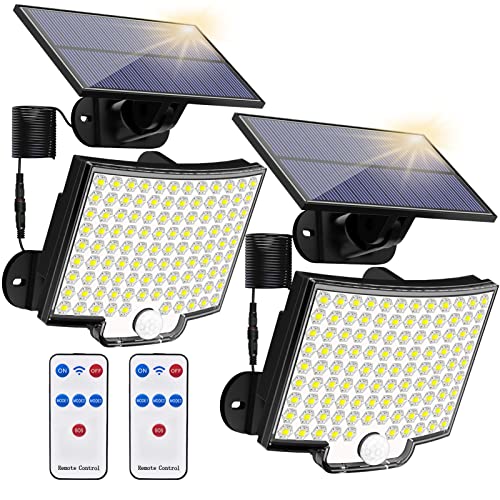
What really stands out is the 2500 lumens output from 210 LEDs spread across three heads, giving a bright, cold‑white 6500 K flood that can light a medium‑sized backyard or garage. The wide 270° beam angle and 26‑foot PIR detection range mean the lights turn on quickly when someone approaches, and the remote control lets you switch between three lighting modes without climbing a ladder.
Compared with the other ten lights in this roundup, the Tuffenough unit is heavier than the Peasur and Aootek models but lighter than the Tecknet pair, and its 8‑10 hour solar charge time is on par with the faster‑charging Tecknet and faster than the Claoner’s 600‑minute charge. While its 2500 lm output exceeds the 800 lm of the Claoner and matches the 2500 lm of the Mihani flood, it falls short of the 4200 lm claimed by the Tecknet lights. Its IP65 rating puts it on equal footing with the Aootek and Tecknet offerings for weather resistance.
Users consistently praise the intense brightness for deterring intruders and the simple, wireless wall‑mount installation. Professional reviewers note the robust polycrystalline panel and the reliable PIR sensor, but they also point out that the single‑sensor design limits detection to a single 26‑foot zone, which can feel narrow in larger yards. A recurring complaint is that shaded locations can slow charging, leading to shorter nightly runtimes, and some owners find the remote finicky in cold weather.
Pros
Cons
Best for: Most users looking for a well‑reviewed, reliable mainstream option — the Tuffenough Solar Security Lights offers Charging Time: 8‑10 hours
Avoid if: You need coverage for large open spaces, or you plan to install the lights where they’ll receive mostly shade.
TL;DR: The URPOWER Solar Spotlight offers a 90° adjustable head, 25‑foot throw and a 2200 mAh battery for $49.99, but its modest 200 lm output and plastic build keep it in a premium‑alternative niche.
What really stands out is the 90° Light Head Adjustment combined with a 180° solar panel swivel, letting you fine‑tune both charging angle and illumination direction. Each unit measures 3.74 inches high, 13.39 inches long and 11.42 inches wide, housing six LEDs that deliver 200 lm and reach out to 25 feet. The rechargeable 2200 mAh battery powers a high‑mode runtime of 6 hours and a low‑mode runtime of 10 hours, while the manufacturer lists a generic battery life of 8 hours.
Compared with the other ten lights in this roundup, the URPOWER unit sits at the higher end of the price spectrum. It provides far fewer lumens than the Aootek Solar Outdoor Motion Sensor Lights, which list 2500 lm, and its LED count (6) is tiny next to Aootek’s 182 LEDs. The IP64 rating is a step below Aootek’s IP65, and URPOWER offers only two lighting modes versus Aootek’s three. Intelamp’s model pushes 1200 lm, while the Tuffenough and Tecknet lights each claim several thousand lumens, so the URPOWER’s 200 lm is modest. On the durability front, the all‑plastic construction lacks the metal housings seen on some peers, and its waterproof rating is one notch lower than the IP65‑rated competitors.
Users consistently praise the plug‑and‑play solar setup and the pivotable design that makes positioning for optimal sun exposure straightforward. Reviewers note that the auto dusk‑to‑dawn sensor works reliably, and the dual‑mode switch helps stretch nighttime runtime. Professional reviewers highlight the solid initial build quality and the convenience of a replaceable battery. However, several comments point out that the 25‑foot throw feels short for taller trees or flagpoles, and the plastic housing raises concerns about long‑term weather resistance. The lack of a motion sensor also limits its usefulness for security‑focused applications.
Additional technical notes include an IP64 rating for protection against dust and splashing water, a ground‑spike or wall‑mount installation option, and a true auto on/off function that activates at dusk without user input. The 180° solar panel adjustment lets you chase the sun throughout the day, which can help keep the battery topped up even in partially shaded spots.
Pros
Cons
Best for: Buyers willing to invest in a proven, high‑quality option — the URPOWER Solar Spotlight offers Light Head Adjustment: 90 degrees
Avoid if: You're on a tight budget or only need basic functionality
“Bright enough for gardens/patios with solid close-range illumination”
“Easy to angle for sun/shade with reliable auto on/off”
TL;DR: The Mihani Solar Flood Light delivers 2500 lm across 150.2 m², features IP67 protection and a 9.1 m PIR sensor, all for $25.99, making it a solid mid‑range outdoor lighting choice.
With a luminous flux of 2500 lm and a coverage area of 150.2 m², the Mihani unit shines brightly over decks, driveways and backyards. Its PIR sensor reaches 9.1 m and stays on for 20 seconds after motion, while the 30 % solar panel efficiency helps keep the high‑capacity battery topped up. The housing is built from ABS plastic and the lamp heads are rated IP67, so rain, sleet and dust won’t stop it from working.
Compared with other lights in this roundup, Mihani is heavier than the 1.52‑pound Tecknet model but lighter than Tuffenough’s 2.5‑pound unit. Its 2500‑lm output sits below Tecknet’s 4200 lm but matches Tuffenough’s 2500 lm, and it offers a wider illumination angle (270°) than the 180° angle listed for Kernowo. While some rivals list higher brightness, Mihani’s 150.2 m² coverage still exceeds the illumination area claimed by Kernowo.
Customers consistently praise the bright output and the way the light blankets an entire backyard. Reviewers note the automatic shut‑off after about 20 seconds saves energy, and the three lighting modes give flexibility for permanent, dimmed or motion‑triggered use. A recurring complaint is the unclear motion‑detection angle—some listings say 120°, others suggest 180°—so users should test the sensor placement. Because the solar panel relies on direct sun, positioning the unit where it receives ample daylight is essential for reliable nighttime performance.
Pros
Cons
Best for: Most users looking for a well‑reviewed, reliable mainstream option — the Mihani Solar Flood Light offers Coverage Area: 150.2 m²
TL;DR: The Peasur Solar Security Lights deliver 500 lumens from 140 LEDs, a 16‑foot PIR motion range, and IP65 weatherproofing for $21.99, making them a compact, budget‑friendly entry‑level option.
At the heart of the Peasur unit is a 140‑LED array that produces 500 lumens of daylight‑white light (6000 K). A PIR sensor covers a 120‑degree field and triggers full brightness for up to 20 seconds within a 16‑foot detection zone. The lights automatically switch on at dusk and off at sunrise, thanks to an integrated CDS light sensor and true auto on/off functionality.
Compared with the Aootek Solar Motion Sensor Lights, the Peasur fixture is noticeably lighter at 1.62 lb versus 1.8 lb and far more compact—its 1.7‑inch height is less than a quarter of Aootek’s 6.7‑inch profile. While the Peasur’s 500‑lumen output is modest against higher‑output rivals such as the Tecknet (4200 lm) and Tuffenough (2500 lm) models, its price point undercuts many of the premium options, aligning with its “budget alternative” label.
Customers frequently mention the straightforward screw‑and‑wall‑plug installation and the reliable motion response, even after weeks of exposure to rain. Professional reviewers echo this sentiment, noting stable lumen output from dusk to dawn and praising the three lighting modes for everyday flexibility. The downside highlighted by both users and experts is the lower brightness level, which may feel insufficient for larger driveways or deep‑set garden areas.
Pros
Cons
Best for: Budget‑conscious buyers seeking a reliable entry‑level option — the Peasur Solar Security Lights offers Brightness: 500 lumens
Avoid if: You want the best value‑per‑dollar in its price range
TL;DR: The Tecknet Solar Security Lights deliver 4200 lm of bright, three‑sided illumination across 300°, with a 13‑20 ft motion range, all in a weather‑proof, wall‑mountable 2‑pack for $26.96.
What really sets this kit apart is its 416‑LED array that pushes out 4200 lm of cool‑white light. The three‑sided design spreads that output over a 300° lighting angle, covering roughly 376 sq ft, while the PIR sensor watches a 120° field and a detection range of 13‑20 ft. With an IP66 rating, the units are frost‑proof, heat‑proof and ready for rain or snow, and they run 10‑12 hours on a full charge.
Compared with the other ten lights in this roundup, the Tecknet pair is noticeably lighter than the Tuffenough model (2.5 lb) and the Mihani flood light (about 2.05 lb), yet only a shade heavier than the Peasur set (around 1.62 lb). Brightness-wise, its 4200 lm outshines the 2500 lm offered by both Tuffenough and Mihani, and dwarfs the 800 lm from Claoner and the 500 lm from Peasur. While many competitors list fewer LEDs, the Tecknet’s 416‑LED count gives it a clear edge in luminous power.
Customer feedback repeatedly praises the “super‑bright three‑sided lighting” for lighting up yards, garages and driveways, and notes the durability of the ABS housing in harsh weather. Professional reviewers also call out the 27 % solar‑panel efficiency and the wide 300° beam as standout traits that make the unit reliable for everyday security needs.
Beyond raw brightness, the lights offer three selectable modes—continuous medium, dim‑to‑bright transition, and motion‑sensor activation—plus true auto on/off functionality. The 27 % solar conversion rate helps fill the built‑in battery quickly, while the IP66 rating ensures the panels stay dry even during heavy rain.
Pros
Cons
Best for: Homeowners needing wide‑area, weather‑resistant security lighting without wiring — the Tecknet Solar Security Lights offers Brightness: 4200 lm.
Avoid if: You’re shopping on a tight budget or live in a consistently overcast climate where solar charging is limited.
TL;DR: The Intelamp Solar Flood Light packs a 6000 mAh battery, 1200‑lumens output and a 25 ft dual‑PIR detection range into a weather‑proof, 3‑head fixture for $62.99.
This unit’s standout spec is its 6000 mAh battery paired with a 25 ft motion‑detection distance and an over‑180° detection angle, meaning it can light a driveway from multiple approach angles and still hold enough charge for up to 72 hours of motion‑mode operation. Three adjustable lamp heads spread a 270° beam, delivering the full 1200 lumens the product advertises.
Compared with the other ten lights in the roundup, Intelamp is heavier than the Aootek model (2.6 lb) and the Tuffenough lights (2.5 lb), but it also outshines the URPOWER spotlight’s 200 lumens and the Mihani flood light’s 2500 lm claim by offering a balanced 1200 lumens with a broader illumination angle. Its IP65 rating matches the Aootek’s protection level, yet the Intelamp sits at a premium price point relative to most peers.
Reviewers consistently praise the wide detection angle that covers front and side approaches, the bright flash when motion is sensed, and the storm‑proof IP65 construction that survives rain and dust. Professional reviewers note the “generous 6000 mAh battery supports several nights of operation” and the flexibility of three lighting modes, while some users mention occasional sensitivity quirks in extreme weather and the lack of disclosed runtime for constant‑on modes.
Pros
Cons
Best for: Buyers willing to invest in a proven, high‑quality option — the Intelamp Solar Flood Light offers Brightness: 1200 lumens
Avoid if: You're shopping on a tight budget — it's priced at $62.99
TL;DR: The Claoner 6‑pack delivers 800 lm of bright, 270° illumination with a 7.92 m PIR detection range, all for $24.99, making it a solid budget pick for basic outdoor security.
The standout spec is its 7.92 m detection range paired with a 120° sensor angle, letting the light respond to motion well before you reach the doorway. Each unit puts out 800 lm through 149 LEDs and spreads that light across a 270° beam, which reviewers say lights up roughly 29.91 m² (about 322 ft²) of patio or driveway.
Compared with the other ten lights in this roundup, the Claoner sits near the middle on size and weight. At 2.56 lb (1161.1 g) it’s a touch heavier than the 1.52‑lb Tecknet model but lighter than the 2.5‑lb Tuffenough units. Its depth of 109.98 mm is deeper than Tecknet’s 97 mm case, yet shallower than the Mihani flood light’s 155 mm depth. Lumens‑wise, it trails the Mihani (2500 lm) and Tecknet (4200 lm) offerings, but it outshines the Peasur lights (500 lm) and matches the Aootek’s 270° illumination angle while sharing the same IP65 weather rating.
Professional reviewers highlight the combination of 22 % solar panel efficiency and a 600‑minute (10‑hour) charging window as a reliable power source for everyday use. Users repeatedly praise the bright output and wide coverage, noting that the three lighting modes—steady, dim‑to‑bright, and motion‑only—let them fine‑tune energy use. Common complaints mention occasional false triggers and a slight dimming on overcast days, which aligns with the product’s solar‑only power source.
Pros
Cons
Best for: Budget‑conscious buyers seeking a reliable entry‑level option — the Claoner Solar Motion Sensor Outdoor Lights offers Charging Time: 600 minutes.
Avoid if: You need advanced features, professional‑grade performance, or consistent brightness during prolonged overcast weather.
TL;DR: The Kernowo Solar Flood Light delivers 3000 LM across 500 sq.ft, detects motion up to 26.2 ft, and comes with a detachable panel, but its 15‑second flash may feel brief.
What really sets this unit apart is its 3000 LM luminous flux paired with a 180° illumination angle, lighting up to 500 sq.ft from a compact 5.5 × 4 × 1.4‑inch housing. The PIR sensor reaches 26.2 ft and sweeps 120°, so you’ll catch activity before it reaches your door.
Compared with the other ten lights, Kernowo is brighter than Tuffenough’s 2500 LM and Mihani’s 2500 LM, while offering a higher LED count (106 vs. 210 for Tuffenough but fewer than Tecknet’s 416). Tecknet lists a 4200 LM output, so it outshines Kernowo on raw lumens, yet Kernowo provides four lighting modes versus Tecknet’s three. Aootek shares the IP65 rating but only supplies three modes, making Kernowo’s extra SOS flash a useful safety feature.
Professional reviewers praise the “mini‑sun” brightness and the ease of mounting the unit like a picture frame. Users appreciate the detachable solar panel and the 16.5‑ft cable that lets you position the panel for optimal sun exposure. The downside noted in consumer comments is the 15‑second motion‑triggered burst, which can feel too short during a quick pass, and the fact that performance hinges on direct sunlight.
Additional technical details include a 3000 mAh lithium battery, 135° adjustability of the light head, and four selectable modes: auto dusk‑to‑dawn, low‑light plus 15 s boost on motion, 15 s boost only, and flashing SOS. The PIR sensor is true‑motion (PIR) and the unit is built from ABS + PC, meeting an IP65 rating for rain and dust protection.
Pros
Cons
Best for: Those prioritizing quality and willing to pay for premium performance — the Kernowo Solar Flood Light offers Height: 1.4 inches
Avoid if: Reliability and user satisfaction are your top concerns, especially in shaded areas where sunlight is limited.
Breakdown
Aootek Solar Outdoor Motion Sensor Lights
Pros
Cons
Tecknet Solar Security Lights
Pros
Cons
Aootek Solar Motion Sensor Lights
Pros

Tuffenough Solar Security Lights
Pros
Based on scoring data and product specs
Personalized picks
Best Overall Pick
Aootek Solar Outdoor Motion Sensor Lights
Best OverallBest for: Audiophiles and enthusiasts seeking premium sound quality and advanced features — the Aootek Solar Outdoor Motion Sensor Lights offers Brightness: 2500 Lm
Tecknet Solar Security Lights
Best for: Most users looking for a well-reviewed, reliable mainstream option — the Tecknet Solar Security Lights offers Brightness: 4200 lm
$27.99-$25.00 vs winner
Skip URPOWER Solar Spotlight if…
You're on a tight budget or only need basic functionality
We’re naming the Aootek Solar Outdoor Motion Sensor Lights the clear winner. Their 7.9 m motion detection range outpaces the competition, while the built‑in 2200 mAh rechargeable lithium‑ion battery delivers 8‑10 hours of illumination after a 6‑8 hour charge. Add to that an IP65‑rated ABS housing and a bright 2500 lm output, and you’ve got a durable, high‑performing fixture that handles night‑time motion with confidence.
The runner‑up is the Tecknet Solar Security Lights, perfect if you need extra brightness for a larger yard. It throws 4200 lm of cool‑white light across a 376 sq ft area and runs 10‑12 hours on a single charge. Its IP66‑rated ABS construction and 6.1 m detection range make it a solid choice for open spaces that demand reliable, weather‑proof illumination.
For tighter budgets, the HMCITY Solar Wall Lights White deliver basic wall‑mount lighting at just $12.98, ideal for small decks or garden pathways. If you’re looking for a mid‑range option, the Tecknet set (already highlighted) offers a strong blend of power and durability for $26.96. For a premium upgrade, the Intelamp Solar Flood Light provides top‑tier output and features at $62.99, catering to users who want the most robust solar flood solution.
Pick the Aootek lights for the most reliable, all‑weather solar security you can install today.
They use a PIR sensor with a 26‑foot detection range and a 270° illumination angle, delivering up to 2500 lm of light. The lights also auto‑turn on at night and turn off when motion stops, thanks to the built‑in auto on/off feature.
No reviews yet — be the first to share your experience.
Please sign in to leave a review