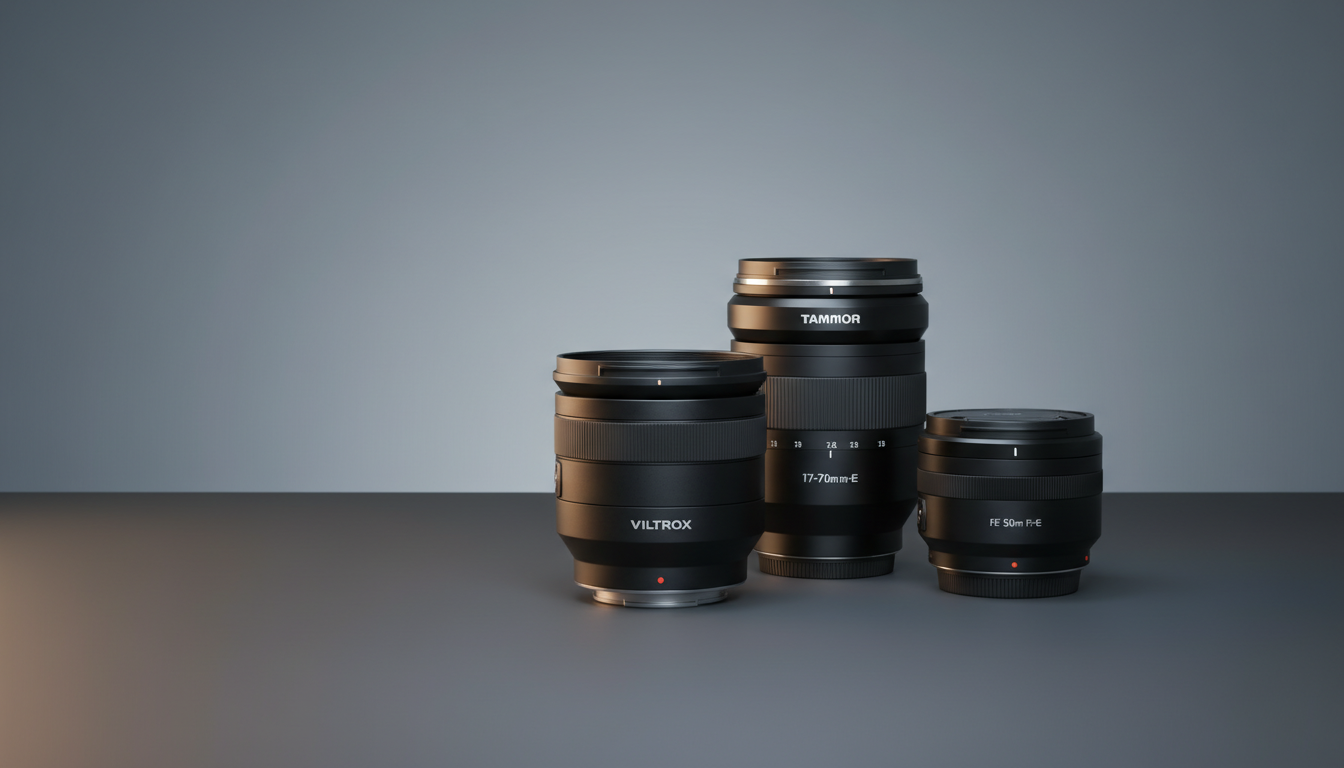
We compared 10 Sony E‑mount lenses, spanning budget, mid‑range and premium tiers. The most unexpected find? The Viltrox 35 mm f/1.7, our #1 “Best Mid‑Range Pick,” carries a $179.00 price tag yet shares the same 4.7/5 rating as the $699.00 Tamron 17‑70 mm f/2.8, proving that high marks don’t always come with a high price.
The lineup includes a wide spectrum: budget options like the $67.99 Benoison 420‑800 mm telephoto (4.1/5) and the $176.00 Viltrox 20 mm f/2.8 (4.5/5); mid‑range choices such as the Viltrox 35 mm (4.7/5) and Sony SELP1650 16‑50 mm OSS (4.4/5); and premium contenders including the Sony FE 50 mm f/1.8 (4.7/5), Samyang 135 mm f/2 (4.6/5), Sigma 18‑50 mm f/2.8 (4.7/5) and Tamron 17‑70 mm f/2.8 (4.7/5). Across these, you’ll find focal lengths from ultra‑wide 16 mm to super‑telephoto 800 mm, apertures ranging from f/1.7 to f/8.3, and weights as low as 116 g.
Below we break down each lens’s strengths, so you can match the right tool to your shooting style.

Viltrox 35mm
Its 35 mm focal length delivers a classic, versatile field of view for everyday shooting.

Tamron 17-70mm
Ideal for enthusiasts needing a flexible 17‑70 mm zoom; at $699 it’s $520 pricier than the Viltrox 35mm.

Sony FE 50mm F1.8
Provides a 50 mm focal length for tighter portraits, a distinct advantage over the 35 mm prime and 17‑70 mm zoom.
Also considered
Score Analysis
Key score advantages vs. runner-up (Tamron 17-70mm)
Price Range
Viltrox 35mm
$179.00
Tamron 17-70mm
$599.00
Sony FE 50mm F1.8
$278.00

Sigma 18-50mm F2.8
$659.00

Samyang 135mm
$449.00

Viltrox 20mm
$176.00

Meike 50mm Portrait Lens
$159.99

Benoison Telephoto Lens
$67.99

Meike 35mm Manual Focus Lens
$69.99
Sony SELP1650 16-50mm OSS
$199.96
Spec Comparison
TL;DR: The Viltrox 35mm f/1.7 delivers a fast aperture in an ultra‑compact, 170 g package, making it a strong budget pick for Sony E‑mount APS‑C shooters.
The lens’s standout spec is its f/1.7 maximum aperture on a 35 mm focal length, paired with a 33 cm minimum focus distance and a 9‑blade diaphragm for smooth bokeh. At 0.37 lb (170 g) and just 54.7 mm long, it’s one of the lightest prime options in this roundup.
Compared with its peers, the Viltrox 35mm sits between the ultra‑light Sony SELP1650 (about 0.26 lb) and the heavier Sony FE 50mm f/1.8 (about 0.41 lb). It’s slightly heavier than the Viltrox 20mm (0.35 lb) but lighter than the Meike 35mm manual focus (0.40 lb) and far lighter than the Sigma 18‑50mm (0.64 lb) or Samyang 135mm (1.9 lb). In length, it’s longer than the retractable 16‑50mm kit zoom (≈30 mm) but shorter than the Meike 50mm portrait (≈103 mm).
Users consistently praise the pocketable size, quiet STM autofocus with eye‑and face‑detection, and the nano multi‑layer coating that tames flare. Professional reviewers note the smooth focus motor and the inclusion of ED, HR and aspherical elements to keep aberrations in check. The most common criticisms are the absence of an aperture ring, a plastic‑feel body despite a metal mount, and a lack of weather sealing, with some saying the lens is a touch softer wide open compared with higher‑priced alternatives.
Technical highlights include an internal focus mechanism that keeps the lens length constant while focusing, a 52 mm filter thread for easy accessory attachment, and USB‑C firmware updates. While it doesn’t offer image stabilization, it works with IBIS‑enabled Sony bodies.
Pros
Cons
Best for: APS‑C mirrorless shooters who need a budget‑friendly, ultra‑compact “nifty fifty” with a fast f/1.7 aperture.
Avoid if: You require an aperture ring, weather sealing, or the absolute highest sharpness at wide open.
“fits in pocket”
TL;DR: The Tamron 17‑70mm f/2.8 offers a constant bright aperture, up‑to‑5‑stop VC stabilization, and a compact 525 g build, but its $699 price makes it a premium choice.
This lens stands out with a constant f/2.8 maximum aperture across the 17‑70 mm (25.5‑105 mm full‑frame equivalent) range and Tamron’s VC system that delivers roughly five stops of shake reduction. It packs 9 diaphragm blades for smooth bokeh, a 67 mm filter thread, and a fluorine‑coated front element, all in a 525 g, 119.3 mm long package.
Compared with other options in the roundup, it’s pricier than the Sigma 18‑50mm (listed at $579.95) and heavier than the Sony FE 50mm (186 g), yet lighter than the Samyang 135mm (1.9 pounds). Its 4.1× zoom ratio is longer than the Sony 16‑50mm’s 3.1× range, giving you more flexibility without the bulk of a longer telephoto.
Users repeatedly praise its portability and the ability to shoot handheld in low light thanks to the f/2.8 aperture and VC. Professional reviewers note the “very homogenous, high image quality” and fast, silent RXD autofocus. Common complaints highlight noticeable vignetting at the widest aperture—often exceeding 2 EV—and a slight drop in corner sharpness at 70 mm. The by‑wire manual focus can also feel less intuitive for precise adjustments.
Pros
Cons
Best for: APS‑C mirrorless shooters who want a single, lightweight f/2.8 zoom with built‑in stabilization.
Avoid if: You need an ultra‑wide angle or rely heavily on full manual focus, and if a tighter budget is a priority given the $699.00 price.
TL;DR: The Sony FE 50mm F1.8 delivers a fast f/1.8 aperture in a feather‑light 0.41‑lb body, making it a portable, high‑rated option for full‑frame shooters willing to trade a bit of edge‑to‑edge sharpness for size and price.
The lens’s standout spec is its 50 mm focal length paired with a maximum aperture of f/1.8, giving you shallow depth‑of‑field control and strong low‑light capability while staying under 0.42 lb (186 g). Its 7‑blade circular diaphragm contributes to the smooth bokeh that reviewers often praise.
Compared with the other nine lenses in this roundup, the Sony 50mm is heavier than the Viltrox 20 mm (157 g) and Viltrox 35 mm (170 g) but lighter than the Samyang 135 mm (1.9 lb). Its 49 mm filter thread is smaller than the Meike 50 mm’s 58 mm and the Samyang’s 77 mm, meaning accessories become easier to find and cheaper. In terms of size, the 59.5 mm barrel length and 68.6 mm diameter keep it more compact than the 16‑50mm OSS’s 64.7 mm diameter when retracted, yet it offers a longer focal length for portrait work.
User sentiment highlights the lens’s “extremely lightweight” build and “sharp central resolution at f/1.8,” while professional reviewers note that edge performance improves when stopping down to f/2.8‑f/8. The double‑Gauss optical design and a single aspherical element help tame spherical aberration, though reviewers still mention soft corners and vignetting at the widest aperture.
Pros
Cons
Best for: Budget‑conscious full‑frame Sony E‑mount shooters, beginners, street photographers and portraitists who value portability and a fast aperture.
Avoid if: You need a lens for harsh weather, macro work, or professional edge‑to‑edge sharpness at f/1.8, or if you’re on an extremely tight budget.
“Image quality is very good... almost that of a 600 euro lens”
TL;DR: The Sigma 18‑50mm F2.8 delivers a constant f/2.8 aperture in a pocket‑sized, 0.64‑lb package, but its premium $579.95 price and lack of stabilization may limit budget‑conscious video shooters.
The lens offers a constant f/2.8 maximum aperture across an 18‑50mm zoom range, and it fits into a compact body that measures 65.4 mm × 74.5 mm and weighs just 0.64 lb (290 g). Its 55 mm filter thread keeps accessories small, and the 7‑rounded diaphragm blades help produce smooth bokeh.
Compared with the other lenses in this roundup, the Sigma is lighter than the Tamron 17‑70mm (525 g) and far lighter than the Samyang 135mm, which tips the scales at 1.9 lb. It’s heavier than the Sony SELP1650 16‑50mm OSS (116 g) and the Viltrox 20mm (0.35 lb), but its filter size is smaller than the Tamron’s 67 mm thread, making it easier to carry spare filters.
Users consistently praise the lens for its pocketable feel and the ability to get close—minimum focus distance is 12.1 cm at the wide end, delivering a 0.36× magnification that feels almost macro‑like. Professional reviewers note the sharp core performance, yet many mention that corner sharpness can soften at 18 mm, especially on high‑resolution sensors. The lens resists dust and splash and comes with a petal‑shaped hood, but it lacks optical image stabilization, which some videographers find limiting.
Pros
Cons
Best for: Buyers willing to invest in a proven, high‑quality option
Avoid if: You're shopping on a tight budget — it's priced at $579.95
“ultimate workhorse”
“excellent image quality”
TL;DR: The Samyang 135mm f/2.0 manual‑focus telephoto lens delivers razor‑sharp images and creamy bokeh, but its 862 g heft and lack of autofocus make it a premium, niche choice at $449.00.
The standout spec is its fast f/2.0 maximum aperture paired with a 9‑blade diaphragm, giving you shallow depth of field and smooth background blur. It’s built around an aluminum alloy barrel, weighs 862 g, and features a 77 mm filter thread—larger than any of the other lenses in this roundup.
Compared with the nine peers, the Samyang is noticeably heavier than the lightweight Sony 16‑50 mm (116 g) and even the Tamron 17‑70 mm (525 g). Its 77 mm filter diameter also exceeds the 55 mm of the Sigma 18‑50 mm and the 49 mm of the Sony 50 mm. While most competitors offer autofocus, this lens is manual‑focus only, which limits fast‑action shooting. Its f/2.0 aperture sits between the f/1.8 of the Sony 50 mm and the f/2.8 of the Sigma 18‑50 mm, giving it a respectable low‑light capability without being the brightest option.
Reviewers consistently praise the lens’s “ridiculously sharp” performance from edge to edge at f/2, noting the Ultra Multi Coating (UMC) keeps flare low and the 9‑blade diaphragm yields buttery bokeh. Users also like the solid aluminum build and the included case, hood, and caps. Professional feedback flags the manual focus ring’s 200° rotation as precise, yet points out that the lack of weather sealing and image stabilization can be limiting for outdoor or handheld work. The 0.8 m minimum focusing distance exceeds that of many primes, making macro or close‑up work less feasible.
Technically, the lens employs a floating‑element design that helps maintain sharpness at its closest focusing distance of 0.8 m. The Ultra Multi Coating reduces ghosting, and the aperture ring offers direct f‑stop control—photographers who enjoy a tactile shooting experience appreciate these features.
Pros
Cons
Best for: Portrait shooters, low‑light telephoto work, and photographers who value manual control and premium optics.
Avoid if: You need fast autofocus, lightweight travel gear, or a budget‑friendly option—its $449.00 price and manual focus may not suit those priorities.
“Ridiculously sharp across the frame from f/2 on... micro contrast slightly higher at f/2.8”
“very good [sharpness] even for 20mpx MFT bodies”
TL;DR: The Viltrox 20mm f/2.8 delivers a full‑frame wide‑angle view in an ultra‑compact 157 g package, with fast STM autofocus, but expects you to correct noticeable vignetting and distortion in post.
The lens’s 20 mm focal length gives a 91.6° diagonal field of view, while the 52 mm filter thread lets you attach standard screw‑in filters.
At just 157 g (0.35 lb) and measuring 65 mm × 59.5 mm, it’s one of the lightest options in the lineup, making it easy to slip into a pocket or small camera bag.
Compared with the nine peers, the Viltrox 20mm sits in the middle of the weight range: it’s heavier than the Sony 16‑50mm (116 g) and the Viltrox 35mm (170 g) but far lighter than the Meike 50mm (382 g) and the Benoison telephoto (770 g). Its 52 mm filter thread matches the Viltrox 35mm and is larger than the Sony 16‑50mm’s 40.5 mm thread, yet smaller than the Samyang 135mm’s 77 mm thread. The 190 mm minimum focus distance (19 cm) is the shortest among most peers, only the Sigma 18‑50mm (12.1 cm) focuses closer.
Reviewers consistently praise the pocketable size and the fast STM motor with eye‑AF support, noting that the autofocus feels reliable for both stills and video. Professional voices also highlight the low focus breathing and the HD nano multi‑layer coating as useful for vloggers. On the downside, users report strong vignetting at f/2.8 and a wavy distortion pattern that often requires software correction, while edge sharpness can be soft when shooting wide open.
Pros
Cons
Best for: Budget-conscious buyers seeking a reliable entry-level option
Avoid if: You need advanced features or professional‑grade performance
“remarkable budget wide-angle”
“super‑cheap”
TL;DR: The Meike 50mm f/1.8 AF lens offers a fast aperture, 9‑blade diaphragm and solid build for $159.99, making it a budget‑friendly full‑frame portrait option with modern features.
The standout spec is the fast f/1.8 maximum aperture on a 50 mm focal length, paired with a nine‑blade diaphragm that helps create smooth, creamy bokeh. It also sports a 58 mm filter thread, a minimum focusing distance of 63 cm, and a compact weight of 382 g. The lens includes a USB‑C firmware upgrade port and double‑sided multilayer coating to reduce flare.
Compared with the Viltrox 20mm, which weighs about 0.35 lb, the Meike lens is heavier but still light enough for handheld shooting. Its 58 mm filter thread is a few millimeters larger than the 52 mm thread on that lens, and the nine‑blade diaphragm outnumbers the Viltrox’s seven blades, promising smoother background blur. Against the Sony FE 50mm f/1.8, the Meike is slightly heavier (382 g vs roughly 0.41 lb) while offering a similar length and an included hood.
Professional reviewers note that the lens delivers tack‑sharp images from f/2.8 onward, with excellent contrast and colour fidelity, while the f/1.8 opening provides striking background separation for portraits. Everyday users echo these points, praising the solid build feel, the pleasing bokeh and the value they get for the price.
Additional technical details include one extra‑low‑dispersion (ED) element and one high‑refraction element, both designed to improve image clarity. The autofocus system comes with an AF/MF switch for quick manual focus when needed, and the supplied hood helps keep stray light at bay.
Pros
Cons
Best for: Entry‑level buyers or those on a tight budget
Avoid if: You need advanced features or professional‑grade performance
TL;DR: The Benoison 420‑800 mm manual‑focus telephoto lens gives full‑frame Sony users super‑telephoto reach at a $67.99 entry price, but its fixed f/8.3‑f/16 aperture and lack of stabilization demand a tripod.
The lens’s standout spec is its 420‑800 mm focal length range paired with a 62 mm filter thread, letting you attach larger filters for creative control. It’s a manual‑focus zoom that covers full‑frame sensors and requires a minimum shutter speed of 1/500 s, which aligns with professional advice for handheld stability.
Compared with the other nine lenses in this roundup, the Benoison reaches far beyond the 35 mm and 50 mm primes from Meike or the 20 mm and 35 mm options from Viltrox. It is heavier than the Meike 35 mm (0.4 pounds) but lighter than the Samyang 135 mm (1.9 pounds). Its 62 mm filter thread is larger than the 49 mm threads on the Meike 35 mm and Sony FE 50 mm, and only the Samyang’s 77 mm thread exceeds it.
Users like the budget‑friendly price and can capture distant wildlife or sports subjects that would otherwise need a much pricier lens. However, review threads frequently mention blur from camera shake at the long end, difficulty mastering manual focus, and the slow f/8.3‑f/16 aperture limiting low‑light shots. Professional reviewers say the lens lacks image stabilization and requires at least 1/500 s shutter speed, even with the camera’s IBIS engaged.
Pros
Cons
Best for: Entry‑level buyers or those on a tight budget
Avoid if: Professional photographers need fast autofocus, stabilization, or strong low‑light performance
“Suitable only for hobbyists due to blurriness without stabilization, manual focus hassle, low‑light struggles, weight, and mediocre quality at 800mm—recommending upgrades for pros.”
“Sharpest on 3D subjects via field curvature's bokeh but poor for landscapes/flat scenes; resolution drops off‑center and faster at 800mm, with visible vignetting; advises mirrorless IBIS but fast shutters (1/500s).”
TL;DR: The Meike 35mm f/1.7 manual lens offers a bright aperture, all‑metal build and a lightweight 0.4 lb profile for under $70, making it a solid entry‑level option for APS‑C Sony E‑mount shooters.
This lens’s standout spec is its fast f/1.7 maximum aperture combined with a 35 mm focal length, giving you a shallow depth of field and good low‑light capability on APS‑C bodies. The all‑metal construction feels solid, and the 49 mm filter thread lets you add UV or ND filters easily. Its minimum focus distance of 30 cm (300 mm) lets you get fairly close to subjects for creative close‑ups.
Compared with the other nine lenses in this roundup, the Meike 35mm sits near the lightest end of the pack, only a bit heavier than the Sony 16‑50mm OSS and lighter than the Meike 50mm Portrait Lens. It’s also slimmer than the Benoison Telephoto and considerably more compact than the Viltrox 35mm, which has a longer barrel. In price terms it’s the most affordable prime, while still offering more specs than the budget telephoto option.
User feedback highlights the tactile manual focus ring with distance and depth‑of‑field scales, and reviewers praise the multi‑layer nano coating for keeping flare low in back‑lit scenes. Professionals note the lens delivers sharp center performance from f/1.7 and produces pleasant bokeh, though they also point out that corners stay soft until you stop down to around f/8 and that vignetting and pincushion distortion can appear at wide apertures.
Pros
Cons
Best for: Beginner to intermediate photographers who want a budget-friendly, manual‑focus prime with a bright aperture for street, travel and portrait work.
Avoid if: You rely on autofocus, need consistently sharp corners for landscape or architectural photography, or shoot fast‑moving subjects regularly.
“excellent budget standard prime”
“metal construction, 172g weight, and low‑light utility for beginners”
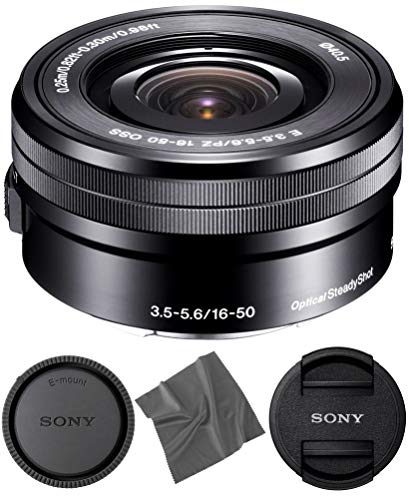
TL;DR: The Sony SELP1650 16‑50mm OSS is a feather‑light, retractable zoom with power‑zoom and OSS, ideal for travel shooters who value pocket‑size convenience over fast apertures.
This lens’s standout spec is its collapsible design: when powered off it folds to just 29.9 mm in length, and it weighs only 116 g, making it one of the most portable options in the roundup. It also packs a motorized power‑zoom and Optical SteadyShot, features that many users praise for smooth video zooms and steadier handheld shots.
Compared with the other nine lenses, the SELP1650 is lighter than the Viltrox 35mm (170 g) and the Viltrox 20mm (157 g), yet a bit heavier than the Meike 35mm manual focus (181 g) when you consider overall handling. Its 40.5 mm filter thread is smaller than the Viltrox lenses’ 52 mm threads and the Sony FE 50mm’s 49 mm, meaning fewer large filters are needed. While the Sigma 18‑50mm offers a constant f/2.8 aperture, the SELP1650’s variable f/3.5‑5.6 aperture is modest, and consumers criticize the variable aperture.
Reviewers consistently highlight the lens’s pocket‑size convenience, noting that it slips into a coat pocket or small travel bag without adding bulk. Professional reviewers credit the ED glass and four aspherical elements for low distortion and good contrast. However, users frequently mention that the f/5.6 endpoint hampers low‑light performance, and the 0.215× maximum magnification falls short for true macro work. The minimum focus distance of about 25‑30 cm is respectable for everyday close‑ups but not enough for detailed macro photography.
Pros
Cons
Best for: Most users seeking a balanced, mainstream option
Avoid if: You prefer products with extensive real‑world feedback and proven track records
Breakdown
Viltrox 35mm
Pros
Tamron 17-70mm
Pros
Cons
Sony FE 50mm F1.8
Pros
Sigma 18-50mm F2.8
Pros
Cons
Based on scoring data and product specs
Personalized picks
Best Overall Pick
Viltrox 35mm
Best Mid-Range PickBest for: Most users seeking a balanced, mainstream option
Tamron 17-70mm
Best for: Audiophiles and enthusiasts seeking premium sound quality and advanced features
$599.00+$420.00 vs winner
Skip Sony SELP1650 16-50mm OSS if…
You prefer products with extensive real-world feedback and proven track records
The Viltrox 35mm f/1.7 takes the top spot with a solid 4.7‑star rating from 393 reviewers, a fast maximum aperture of f/1.7 for low‑light shooting, and a lightweight build of 0.3747858454 pounds. Its 9‑blade diaphragm and 11‑element optical design deliver sharp images, while the included petal‑shaped hood and STM motor with eye/face detection make it a very user‑friendly APS‑C option.
The Tamron 17‑70mm f/2.8 lands as the runner‑up, ideal if you need a versatile zoom that covers 17‑70 mm (25.5‑105 mm full‑frame equivalent) and offers VC image stabilization that provides about five stops. Its 9‑blade diaphragm, moisture‑resistant construction and a 1.2‑pound weight keep it sturdy yet portable for travel or event work.
For tighter budgets, the Benoison Telephoto Lens provides an ultra‑cheap entry point at $67.99, while the Tamron 17‑70mm serves as the premium choice with high‑end stabilization and build quality. The Viltrox 35mm already covers the mid‑range tier, so no additional mid‑range recommendation is required.
Pick up the Viltrox 35mm f/1.7 today and give your Sony APS‑C camera a sharp, fast‑prime upgrade.
The Viltrox 35mm f/1.7 offers a slightly faster maximum aperture (f/1.7 vs. f/1.8) and a closer minimum focusing distance of 0.33 m compared with 0.45 m on the Sony 50mm, letting you get nearer to subjects. It also weighs a bit less at 170 g versus 186 g, making it a more nimble option for discreet street shooting.
No reviews yet — be the first to share your experience.
Please sign in to leave a review
