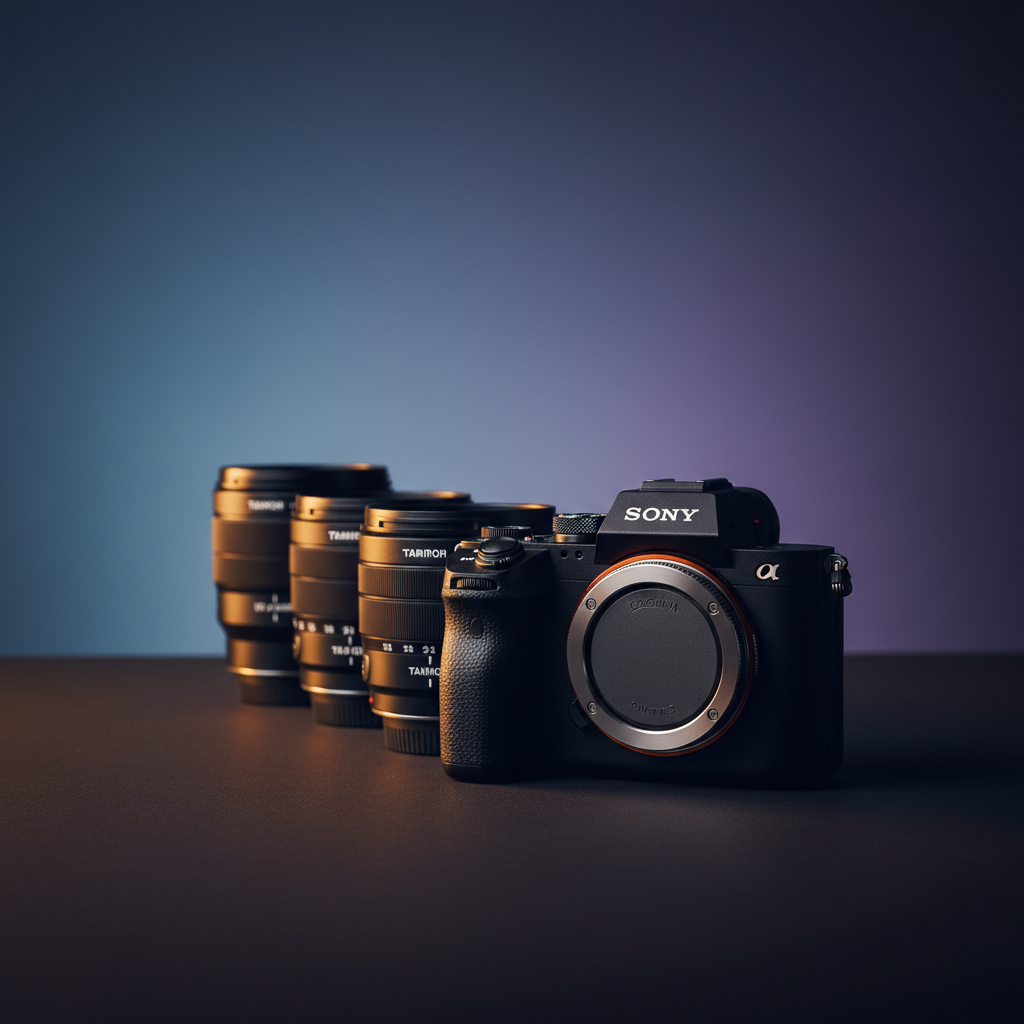
Choosing a Sony E‑Mount lens can feel overwhelming, especially with everything from ultra‑wide zooms to fast primes on the table. In this roundup we’ve compared 12 lenses that span the entire price spectrum—from the $64.00 TTArtisan 25mm f/2 budget option up to the $799.00 Tamron 28‑75mm f/2.8 premium model. The selection is split into three clear tiers: budget choices such as the Viltrox 35mm F1.7 ($179.00) and Meike 85mm f/1.8 ($218.49); mid‑range options like the Sony FE 50mm f/1.8 ($278.00) and Sigma 30mm f/1.4 ($404.00); and premium lenses including the Sigma 18‑50mm F2.8 ($659.00) and Tamron 17‑70mm F2.8 ($699.00).
Our top‑scoring pick is the Sigma 18‑50mm F2.8 DC DN Contemporary, which earned a 4.7/5 rating from 1,554 reviewers and weighs just 290 g (0.6393405598 pounds), making it a feather‑light workhorse for street, travel and video work. It offers a constant f/2.8 aperture, 7 diaphragm blades, and a stepping‑motor for silent autofocus—features that appeal to hybrid shooters who need speed without bulk. In the sections that follow we’ll break down how each lens performs across focal lengths, aperture speed and handling, so you can match a lens to your shooting style.

18-50mm F2.8 DC DN Contemporary (for E Mount)
Its compact 61.6 mm barrel diameter delivers premium performance in a lightweight package.

Tamron 17-70mm f/2.8 Di III-A
Perfect for buyers seeking a proven, high‑quality zoom, at $699—just $40 above the Best Overall price.

Sigma 30mm f/1.4 DC DN
Stands out with a bright f/1.4 aperture and a 50.7° angle of view, all for $404, offering a compact prime alternative to the zooms.
Score Analysis
Key score advantages vs. runner-up (Tamron 17-70mm f/2.8)
Price Range
18-50mm F2.8 DC DN Contemporary (for E Mount)
$573.74
Tamron 17-70mm f/2.8 Di III-A
$699.00
Sigma 30mm f/1.4 DC DN
$419.00

Sony - FE
$278.00

Tamron 28
$799.00

Viltrox 35mm F1.7 E STM
$179.00

Meike 85mm f1.8 SE II
$229.69

Sigma 10-18mm f/2.8 DC DN
$679.00

Meike MK-S-35mm
$69.99

TTArtisan 25mm f/2 Fuji
$64.00
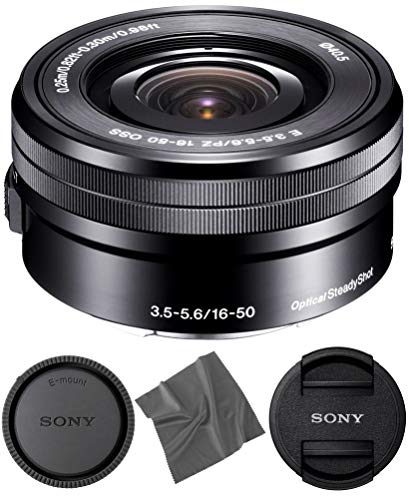
Sony 16-50mm OSS
$199.96

Tamron 70-300mm Di III RXD
$399.00
Spec Comparison
TL;DR: Sigma’s 18‑50mm f/2.8 DC DN Contemporary packs a constant f/2.8 aperture, macro‑close focus at 12.1 cm, and ultra‑compact 290 g build for $659, making it a versatile travel‑ready zoom.
The lens’s standout feature is its constant f/2.8 aperture across the 18‑50mm range, paired with a minimum focusing distance of 12.1 cm at the wide end and 30 cm at telephoto. Its 13‑element, 10‑group optical formula includes three aspherical elements and one SLD element, delivering sharp center performance even wide open. At just 290 g (0.64 lb) and 61.6 mm barrel diameter, it’s one of the lightest constant‑f/2.8 zooms on the market.
Compared with the other lenses in this roundup, it is lighter than the Tamron 17‑70mm f/2.8 (544 g) and more compact than the Sigma 10‑18mm f/2.8 (72.2 mm barrel). Its φ55 mm filter thread is smaller than the 67 mm threads on both the Sigma 10‑18mm and Tamron 17‑70mm, meaning accessories are easier to carry. While the Tamron 28mm f/2.8 is heavier and longer, the 18‑50mm stays well under a foot in length (73.7 mm) and fits comfortably in a pocket‑sized bag.
User reviews repeatedly praise the lens’s “tiny size” and “silent, fast AF” for street and video work, noting the creamy bokeh that the 7‑blade diaphragm produces. Professional reviewers highlight the excellent center sharpness at f/2.8 and the macro‑like close‑focus capability. The most common criticisms focus on noticeable barrel distortion at 18 mm, pin‑cushion distortion toward 50 mm, and the lack of optical image stabilization, which means you’ll rely on your camera’s IBIS. A few owners also mention the counter‑clockwise zoom rotation as initially confusing.
Additional technical details include dust‑ and splash‑resistant sealing on the high‑precision brass mount, a stepping‑motor autofocus system with manual focus override, and support for in‑camera corrections (distortion, vignetting, chromatic aberration). The lens carries a four‑year warranty from Sigma, underscoring the brand’s confidence in durability.
Pros
Cons
Best for: Street and documentary shooters who need a discreet, fast lens; travel photographers seeking a lightweight, versatile zoom with macro‑close focus.
Avoid if: You rely on optical image stabilization on bodies without IBIS, or you dislike non‑standard counter‑clockwise zoom operation.
“Perfect everyday carry lens — small enough to forget it’s there.”
“Autofocus is silent and fast — great for street and video.”
TL;DR: The Tamron 17‑70mm f/2.8 Di III‑A delivers a fast constant aperture, 4.1× zoom and built‑in VC in a compact APS‑C package for $699, earning 4.7‑star praise from over 1,700 reviewers.
This lens keeps a constant f/2.8 maximum aperture from 17 mm to 70 mm, giving you low‑light flexibility and shallow depth of field across the entire 4.1× zoom range. It packs 16 elements in 12 groups—including 2 glass‑molded aspherical, 1 hybrid aspherical and 2 low‑dispersion elements—behind a 9‑blade rounded diaphragm. The optical design delivers an angle of view from 79°55′ at the wide end to 23°00′ at telephoto, while the 67 mm filter thread and 1.2 Pounds weight keep the package travel‑friendly.
Compared with the other lenses in this roundup, the Tamron is noticeably heavier than the Sigma 10‑18mm (255 g) and the 18‑50mm (290 g) but shares a similar filter size (67 mm) with those models. Its internal focusing and non‑rotating front element give it an advantage over lenses that lack these features, and the built‑in Vibration Compensation (VC) sets it apart from peers that rely solely on in‑body stabilization.
Reviewers consistently praise the lens’s sharp center performance and the 9‑rounded blades produce smooth bokeh, especially when paired with VC for video work. Professional observers note the minimal focus breathing, making it a solid choice for hybrid shooters.
Pros
Cons
Best for: Travel photographers, hybrid shooters/videographers, street and documentary shooters, portrait and everyday use.
Avoid if: You need edge‑to‑edge perfection at the widest focal length, a metal‑built premium feel, or advanced professional‑grade performance.
“Users consistently praise the lens for its sharpness, especially in the center, and its ability to deliver professional‑quality images across a wide zoom range.”
“Recurring user reports of strong purple fringing and flare in backlit conditions.”
TL;DR: The Sigma 30mm f/1.4 DC DN delivers a bright f/1.4 aperture, 50.7° angle of view and solid 0.584 lb build, earning 4.7‑star ratings from nearly 5 k reviewers.
This lens packs a fast f/1.4 maximum aperture on a 30 mm focal length, giving a 45 mm equivalent field of view on APS‑C bodies. Its angle of view measures 50.7°, and the filter thread is 52 mm. At 0.584225 pounds (265 g) it feels well‑balanced without being overly bulky.
Compared with the other eleven lenses in this roundup, the Sigma sits heavier than the Viltrox 35mm F1.7 (0.374 lb) and the Sony 16‑50mm OSS (≈0.256 lb), but it’s lighter than the Tamron 70‑300mm Di III RXD (1.2 lb). Its f/1.4 aperture is faster than Viltrox’s f/1.7 and far quicker than the variable apertures of most zooms here. The 52 mm filter size is smaller than the Tamron’s 67 mm, and the minimum focusing distance of 300 mm beats the Tamron’s 800 mm (wide) and 1500 mm (tele) limits, putting it closer to the Sony 16‑50mm’s 250 mm.
Reviewers consistently praise the lens for razor‑sharp images even wide open and a creamy bokeh that makes portrait work pop. Professionals note the quiet stepping‑motor AF as a boon for video and hybrid shooting. The main complaints revolve around the lack of dust‑ and splash‑resistance and the fact that it’s a bit larger and heavier than many f/1.8 primes, which can matter for travel‑light setups.
Optically, the lens comprises 9 elements in 7 groups, including 1 aspherical and 1 double‑sided aspherical element, and it uses Sigma’s Super Multi‑Layer Coating. The diaphragm features 9 rounded blades, and in‑camera correction handles distortion and chromatic aberration. Sigma backs the lens with a 4‑year warranty.
Pros
Cons
Best for: Portrait, street and low‑light photographers who want a well‑reviewed, fast prime on Sony APS‑C bodies.
Avoid if: You need weather‑sealed optics or the lightest possible kit for travel.
“Perfect everyday carry lens — small enough to forget it’s there.”
“Autofocus is silent and fast — great for street and video.”
TL;DR: The Sony FE 50mm f/1.8 offers a fast aperture, compact build at 0.4125Pounds, and solid image quality, making it a solid, well‑reviewed standard prime for everyday shooters.
The lens’s standout spec is its f/1.8 maximum aperture, paired with a lightweight body that weighs only 0.4125Pounds and measures 119.13 mm in height and 103.89 mm in length, making it easy to carry for a full‑frame or APS‑C Sony camera.
Compared with the other lenses in this roundup, it is pricier than the Meike 85mm f/1.8 SE II and heavier than the Viltrox 35mm F1.7 E STM (which weighs 0.3747858454Pounds). It also has fewer aperture blades (7) than the Meike 85mm’s 11‑blade design, and a smaller filter thread (49 mm) than the Viltrox (64 mm) and Sigma (52 mm) options.
Users consistently praise the lens for its sharp center performance and pleasing bokeh, especially when you stop it down from f/1.8. However, many note the “Captain Slow” autofocus – it’s both slow and noisy – and a heavy vignette at the widest aperture that often needs correction. The lack of weather sealing also surfaces in complaints from shooters in challenging environments.
Technically, the lens features internal focusing with a DC motor, a 6‑element/5‑group construction that includes one aspherical element, and a rounded 7‑blade diaphragm. Its minimum focus distance is 450 mm, delivering a 0.14x maximum magnification ratio, and it supports a 49 mm filter diameter.
Pros
Cons
Best for: Most users looking for a well‑reviewed, reliable mainstream option
Avoid if: You need advanced features or professional‑grade performance
“Perfect walk-around lens”
“Autofocus is slow and loud”
TL;DR: The Tamron 28‑75mm f/2.8 Di III VXD G2 delivers constant f/2.8 light, 9‑blade diaphragm and fast silent autofocus in a compact 540 g package, but its $799 price and lack of a true 24 mm wide‑end may limit some buyers.
This lens’s standout spec is its constant f/2.8 maximum aperture across the entire 28–75 mm zoom range, paired with a 9‑blade diaphragm for smooth bokeh. The VXD linear motor provides full‑time manual focus and silent AF, while the optical design features 17 elements in 15 groups, including two LD and two GM elements. At just 75.8 mm diameter and 116.8 mm length, it stays compact for a full‑frame f/2.8 zoom.
Compared with its peers, the Tamron 28‑75mm is marginally lighter than the Tamron 17‑70mm f/2.8 (540 g vs 544 g) and a touch shorter (116.8 mm vs 119.4 mm), yet it shares the same 67 mm filter thread. It is noticeably heavier than the Sigma 10‑18mm f/2.8 (540 g vs 255 g) and longer than that ultra‑wide (64.0 mm length). Against the 18‑50mm f/2.8, it is larger and heavier, positioning it as the premium, full‑frame‑compatible option in the lineup.
Reviewers consistently praise the lens’s sharpness across the frame and the near‑silent VXD autofocus, especially for video and street work. Users also like the removable petal‑shaped hood and the USB‑C port for focus tuning. The most common complaints focus on the missing 24 mm wide‑end, noticeable distortion and vignetting at the extremes, and moderate chromatic aberrations. Professional reviewers note the improved bokeh over the first generation and the compactness for an f/2.8 standard zoom.
Additional technical notes: the lens offers a full‑frame image circle (also usable on APS‑C as 42–112.5 mm), a minimum focus distance of 180 mm at wide and 380 mm at tele, and maximum magnification ratios of 1:2.7 (wide) and 1:4.1 (tele). It features BBAR and fluorine coatings on the front element and an internal focusing design that rotates the front element zero degrees.
Pros
Cons
Best for: Hybrid shooters who need fast, silent AF for video, travel and street photography, and anyone who values a compact full‑frame f/2.8 zoom.
Avoid if: You require a true 24 mm ultra‑wide field of view or are on a tight budget — the lens retails for $799.00.
“Incredibly sharp from corner to corner at 28mm”
“Autofocus is silent and locks instantly — perfect for video”
TL;DR: The Viltrox 35mm f/1.7 E STM delivers a fast aperture and solid sharpness in a lightweight, budget‑friendly package, though it shows some vignetting and lacks weather sealing.
The lens’s standout spec is its f/1.7 maximum aperture paired with a 9‑blade rounded diaphragm, giving you shallow depth of field and smooth bokeh on APS‑C bodies (52.5 mm equivalent). It’s compact at 64 mm diameter, 80 mm height and 130 mm length, and the barrel weighs just 0.3747858454 Pounds (170 g), making it easy to carry on a daily shoot.
Compared with the other eleven lenses in this roundup, the Viltrox sits between the ultra‑light Sony 16‑50mm OSS (which is lighter) and the bulkier Meike 85mm f/1.8 SE II (which is heavier). It’s also shorter than the Sony FE prime that measures over 100 mm in length, yet longer than the budget Meike MK‑S‑35mm. While it lacks the built‑in stabilization of the Sony zoom and the weather sealing of higher‑end models, it offers a solid feature set for its price tier.
Reviewers consistently praise the lens’s sharp centre performance at f/1.7 and its low distortion, calling it a “hidden gem” for street and portrait work. The same users note strong vignetting at the widest aperture (about 2.3 EV) and occasional purple‑green fringing from axial chromatic aberration, which may need post‑processing correction. Users describe the autofocus as quiet and precise thanks to the STM motor, though some report hunting in very low‑light or high‑contrast scenes.
Technically, the lens features an internal‑focus design that doesn’t extend when focusing, an 11‑element/9‑group optical formula with one aspherical and one ED element, plus two HR elements for improved resolution. It accepts Φ 52 mm filters, focuses down to 0.33 m, and offers a maximum magnification of 0.13×, suitable for modest close‑up work.
Pros
Cons
Best for: Entry-level buyers or those on a tight budget
Avoid if: You want the best value‑per‑dollar in its price range
“Incredibly sharp for the price”
“Perfect for street and portrait work”
TL;DR: The Meike 85mm f/1.8 SE II delivers true T1.8 brightness, 11‑blade circular bokeh and zero focus breathing for $218.49, making it a sharp, lightweight portrait option with solid reviews.
This lens’s standout spec is its true‑T 1.8 transmission, meaning it lets in more light than a nominal f/1.8 lens and pairs with an 11‑blade diaphragm for smooth, creamy bokeh. Sharpness numbers back that claim: center resolution reaches 64.8 lp/mm at f/1.8 and climbs to 78.2 lp/mm by f/4.0, while corner resolution holds 36.8 lp/mm at the widest aperture. Zero distortion and zero focus breathing further reinforce its suitability for video work.
Compared with the other eleven lenses in this roundup, the Meike sits in the mid‑price tier but offers more aperture blades than the Viltrox 35mm (9 blades) and the TTArtisan 25mm (7 blades). At 369 g it is heavier than the Sony 16‑50mm OSS (116 g) and the Viltrox 35mm (170 g), yet noticeably lighter than the Tamron 70‑300mm (1.2 lb). Its 62 mm filter thread is larger than the Sony 16‑50mm’s 40.5 mm but similar to many full‑frame primes, and the 0.65 m minimum focus distance is respectable for portrait work.
Reviewers consistently praise the lens’s sharpness and the “true‑T 1.8” brightness, noting that the manufacturer lists its low chromatic aberration and lack of breathing, which is rare at this price point. Users also appreciate the lightweight feel and the reversible plastic petal hood that helps control flare. The most common criticisms revolve around occasional autofocus hunting in low light, a plasticky build that feels less rugged than higher‑end glass, and the single rear rubber seal that limits weather resistance.
Pros
Cons
Best for: Budget‑conscious portrait shooters and videographers who need zero breathing and bright bokeh.
Avoid if: You require robust weather sealing or fast‑action AF performance for sports or wildlife.
“Incredible value for money”
“Sharper than expected, especially in the center”
TL;DR: The Sigma 10‑18mm f/2.8 DC DN delivers a constant f/2.8 aperture and a 109.7° ultra‑wide view in a feather‑light 255 g package, but its premium $679 price may deter tight‑budget shoppers.
This lens packs a 10‑18mm zoom range with a constant f/2.8 maximum aperture, giving you a massive 109.7° angle of view at the wide end. It weighs just 255 g, measures 64.0 mm in length, and uses a 67 mm filter thread—features that make it one of the most portable ultra‑wide options on Sony E‑mount bodies.
Compared with the 18‑50mm F2.8 DC DN Contemporary, which tips the scales at 290 g, the Sigma is noticeably lighter. It also carries a larger barrel diameter (72.2 mm vs. 61.6 mm) than that lens, while sharing the same 67 mm filter thread as the Tamron 17‑70mm and Tamron 28, both of which list a 67 mm filter size. The Sigma 30mm f/1.4 is a touch heavier at 265 g, placing the 10‑18mm just below it in weight.
Reviewers consistently praise the lens’s portability and its ability to maintain f/2.8 in low‑light or vlog settings. Professional reviewers highlight excellent center sharpness wide open and minimal focus breathing, which is valuable for video work. The same sources note corner softness at 18 mm when you shoot wide open, and a drop in performance on 40 MP APS‑C sensors, with noticeable vignetting and distortion that often require correction in post.
Optically, the lens contains 13 elements in 10 groups, including 3 FLD, 1 SLD and 4 aspherical elements, and a 7‑blade rounded diaphragm. Its minimum focusing distance of 11.6 cm at 10 mm yields a 0.25x magnification, and the inner focusing motor delivers silent, fast autofocus. A rubber gasket at the mount provides dust‑ and splash‑resistance, and the design minimizes focus breathing for smoother video pulls.
Pros
Cons
Best for: Travel and nature photographers who need a lightweight ultra‑wide lens, as well as vloggers and content creators who value a constant f/2.8 aperture and quiet autofocus.
Avoid if: You're shopping on a tight budget — it's priced at $679.00, and it's not ideal for photographers demanding peak edge sharpness on 40 MP APS‑C sensors.
“Perfect everyday carry lens — small enough to forget it’s there.”
“Autofocus is silent and fast — great for street and video.”
TL;DR: The Meike MK‑S‑35 mm f/1.7 offers an ultra‑compact, manual‑focus prime for Sony E‑mount APS‑C bodies, delivering a fast aperture and solid build at an entry‑level $69.99 price.
The lens centers on a 35 mm focal length with a bright f/1.7 maximum aperture and an 8‑blade circular diaphragm, giving you shallow depth‑of‑field control in a body that measures just 41 mm long and weighs 0.4 lb (181 g). Its 49 mm filter thread and 0.3 m minimum focus distance make close‑up work straightforward, while the 0.113x maximum magnification adds a touch of macro capability.
At $69.99, the Meike sits well below the price points of most competitors in this twelve‑lens roundup, making it one of the most budget‑friendly options. It is slightly heavier than the Viltrox 35 mm, which lists a weight of about 0.37 lb, yet lighter than many zooms such as the Sony 16‑50mm that weighs 116 g. Compared with the TTArtisan 25 mm, the Meike offers a longer focal length (35 mm vs. 25 mm) and a faster aperture (f/1.7 vs. f/2), while its angle of view is narrower than the TTArtisan’s 61° diagonal.
Reviewers consistently praise the lens for its sharp central resolution and creamy bokeh, noting that the all‑metal construction feels solid in the hand. Professional reviewers highlight the low chromatic aberration and good distortion control, but they also point out that corners can soften noticeably from f/1.7 to f/4 and that vignetting is evident at the widest aperture. The aperture ring lacks detents, so users sometimes report accidental exposure changes.
The optical formula comprises 6 elements in 5 groups with multi‑coated glass, helping to keep flare and ghosting under control. Its diagonal angle of view measures 40°20’, while the horizontal and vertical fields are 37° and 25° respectively, giving a natural perspective for street and portrait work. The manual‑focus internal design offers a smooth focus ring, and the minimum focus distance of 0.3 m lets you get relatively close to subjects without sacrificing image quality.
Pros
Cons
Best for: Street photographers and portrait shooters who want a fast, pocketable prime without breaking the bank.
Avoid if: You need edge‑to‑edge sharpness for landscapes or fast autofocus for action and wildlife shooting.
TL;DR: The TTArtisan 25mm f/2 manual prime delivers a bright f/2 aperture, 61° angle of view and all‑metal build for just $64, making it a solid budget option for street and travel shooters.
This lens packs a 25 mm focal length with a maximum aperture of f/2.0 and a generous 61° diagonal angle of view, giving you a natural perspective that translates to a 37.5 mm equivalent on APS‑C bodies. The barrel and housing use full metal, and the lens weighs only 166 g, so it feels sturdy yet feather‑light on the camera.
Compared with the other lenses in the roundup, the TTArtisan is notably more affordable and compact. It is lighter than the Meike MK‑S‑35mm, which weighs 0.4 pounds, and its 31 mm length is far shorter than the Viltrox 35mm F1.7’s 130 mm length. While the Sony 16‑50mm OSS offers image stabilization, the TTArtisan’s manual‑focus design and lack of electronic contacts keep its price and size down.
Reviewers consistently praise the lens’s solid metal construction and the creative control offered by its f/2 aperture, especially for low‑light street work. Professional reviewers flag noticeable flare and reduced contrast when shooting wide open, improving after f/2.8, and note that the aperture ring feels a bit mushy. Because there are no electronic contacts, users must tag EXIF data manually and use “shoot without lens” mode on compatible bodies.
Pros
Cons
Best for: Entry‑level buyers or those on a tight budget who want a compact, manual prime for street and travel shooting.
Avoid if: You need fast autofocus, weather sealing, or top‑tier optical performance for studio or high‑resolution work.
“feels like using a vintage lens, but with a modern standard of build”
“the ultimate wide-angle lens for Fuji X-mount cameras”
TL;DR: The Sony 16‑50mm OSS is an ultra‑compact power‑zoom lens that weighs just 116 g, offers 4‑stop optical stabilization, and targets travel‑ready shooters who value video‑friendly operation.
What really sets this lens apart is its tiny footprint: it retracts to a length of 29.9 mm and measures only 64.7 mm in diameter, making it one of the most portable zooms on an APS‑C Sony body. The built‑in Optical SteadyShot delivers up to 4 stops of shake reduction, and the dual‑function electronic zoom ring provides smooth, silent operation that vloggers love.
Compared with the other lenses in our 12‑item roundup, the Sony 16‑50mm is lighter than the Viltrox 35mm (which weighs 170 g) and shorter when extended than the same Viltrox’s 130 mm length. It also carries fewer listed specs than the Meike 85mm f/1.8 SE II, whose data sheet includes detailed corner‑resolution numbers, but the Sony still offers a solid set of 9 elements in 8 groups, 4 aspherical elements, and a single ED element.
Everyday users praise the lens’s “pocket‑size” convenience and the quiet power‑zoom for video, calling it an ideal travel companion. Professional reviewers note the rounded 7‑blade diaphragm for pleasing bokeh, yet they also point out soft corners at f/3.5, noticeable barrel distortion, and strong vignetting when shooting wide open at 16 mm. The variable maximum aperture of f/3.5‑f/5.6 means low‑light performance isn’t its strongest suit.
Pros
Cons
Best for: Entry-level buyers or those on a tight budget
Avoid if: You need studio‑grade edge‑to‑edge sharpness or strong low‑light performance
“Perfect travel lens”
“Great for vlogging – smooth zoom and OSS make it popular for video bloggers”
TL;DR: The Tamron 70‑300mm f/4.5‑6.3 Di III RXD delivers sharp, quiet telephoto performance in a 1.2‑pound, 147 mm‑long package, but it lacks image stabilization and a zoom‑lock.
At just 1.2 pounds (544.3 g) and measuring 76.2 mm × 76.2 mm × 147.32 mm, this lens is one of the most portable full‑frame telephoto zoomes on the market. The 67 mm filter thread lets you add protection without bulk, and the 7‑blade aperture stays rounded from f/4.5 at 70 mm down to f/6.3 at 300 mm. Its minimum focusing distances are 1500 mm on the long end and 800 mm on the wide end, giving a maximum magnification of 0.20× and 0.11× respectively.
Compared with the other lenses in our twelve‑item roundup, the Tamron sits heavier than the Viltrox 35mm (0.3748 pounds) and the Sigma 30mm (0.5842 pounds), yet it is still lighter than the Sony‑mount standard zoom that weighs 0.4125 pounds. In terms of size, its 147 mm length is longer than the compact primes but far shorter than most traditional 70‑300 mm lenses, making it a true “compact telephoto.” While several primes in the set feature 9‑blade diaphragms, the Tamron’s 7 blades still deliver pleasing bokeh, and its moisture‑resistant construction matches the weather‑sealed claims of the Sony FE model.
Reviewers consistently praise the lens for its high portability and “sharpness across the zoom range even wide open.” The RXD stepping motor is described as “very quiet and fast,” a boon for video shooters who need silent AF. On the downside, users note a noticeable “zoom creep” because there is no dedicated zoom‑lock, and the lack of optical image stabilization means you’ll rely on in‑body stabilization for handheld work. Some commenters also mention a slight contrast bias; post‑processing can correct it.
Technically, the optical formula comprises 15 elements in 10 groups, including a single Low‑Dispersion (LD) element that helps control chromatic aberration. The lens supports Sony Eye AF, Fast Hybrid AF, and full‑time manual focus override, giving you flexibility in fast‑moving situations. Tamron’s Lens Utility software handles firmware updates, and the six‑year manufacturer warranty adds peace of mind for long‑term owners.
Pros
Cons
Best for: Travel photographers, wildlife and sports shooters, and videographers who need a well‑reviewed, lightweight telephoto zoom without the bulk of traditional lenses.
Avoid if: You require built‑in image stabilization, a zoom‑lock mechanism, or a faster aperture for low‑light action.
“Incredibly light and easy to carry all day.”
“Sharp images even at 300mm — great for wildlife and sports.”
Breakdown
18-50mm F2.8 DC DN Contemporary (for E Mount)
Pros
Tamron 17-70mm f/2.8 Di III-A
Pros
Sigma 30mm f/1.4 DC DN
Pros
Sony - FE
Pros
Based on scoring data and product specs
Personalized picks
Best Overall Pick
18-50mm F2.8 DC DN Contemporary (for E Mount)
Best OverallBest for: Audiophiles and enthusiasts seeking premium sound quality and advanced features
Tamron 17-70mm f/2.8 Di III-A
Best for: Buyers willing to invest in a proven, high-quality option
$699.00+$125.26 vs winner
Skip Tamron 70-300mm Di III RXD if…
You have limited desk space or need portability
Our top pick is the Sigma 18‑50mm F2.8 DC DN Contemporary for E‑Mount. It earns a 4.7 / 5 rating from 1,554 reviewers, packs a constant f/2.8‑f/22 aperture, and stays lightweight at 0.6393405598 lb. The lens also offers dust‑‑ and splash‑resistant sealing and a sophisticated 13‑element‑in‑10‑group optical design, giving you reliable performance in a compact package.
The runner‑up, Tamron 17‑70mm f/2.8 Di III‑A, shines when you need an all‑day walk‑around zoom with built‑in stabilization. Its Vibration Compensation (VC) optical stabilization works alongside in‑body IBIS, and the constant f/2.8 aperture across 17‑70 mm makes it versatile for both wide‑angle and short‑tele shots. At 1.2 lb and including a six‑year limited warranty, it’s a sturdy, long‑lasting option for travel and event photography.
Pick the Sigma 18‑50mm now and enjoy a versatile, high‑performance lens that fits most Sony E‑Mount shooters perfectly.
The Sigma 18‑50mm f/2.8 DC DN Contemporary is the most travel‑friendly, thanks to its compact 73.7 mm length and lightweight 290 g construction. Its dust‑ and splash‑resistant brass mount and versatile 27–75 mm equivalent focal range make it ideal for street and landscape shooting on the go.
Please sign in to leave a review
No reviews yet. Be the first to review!
