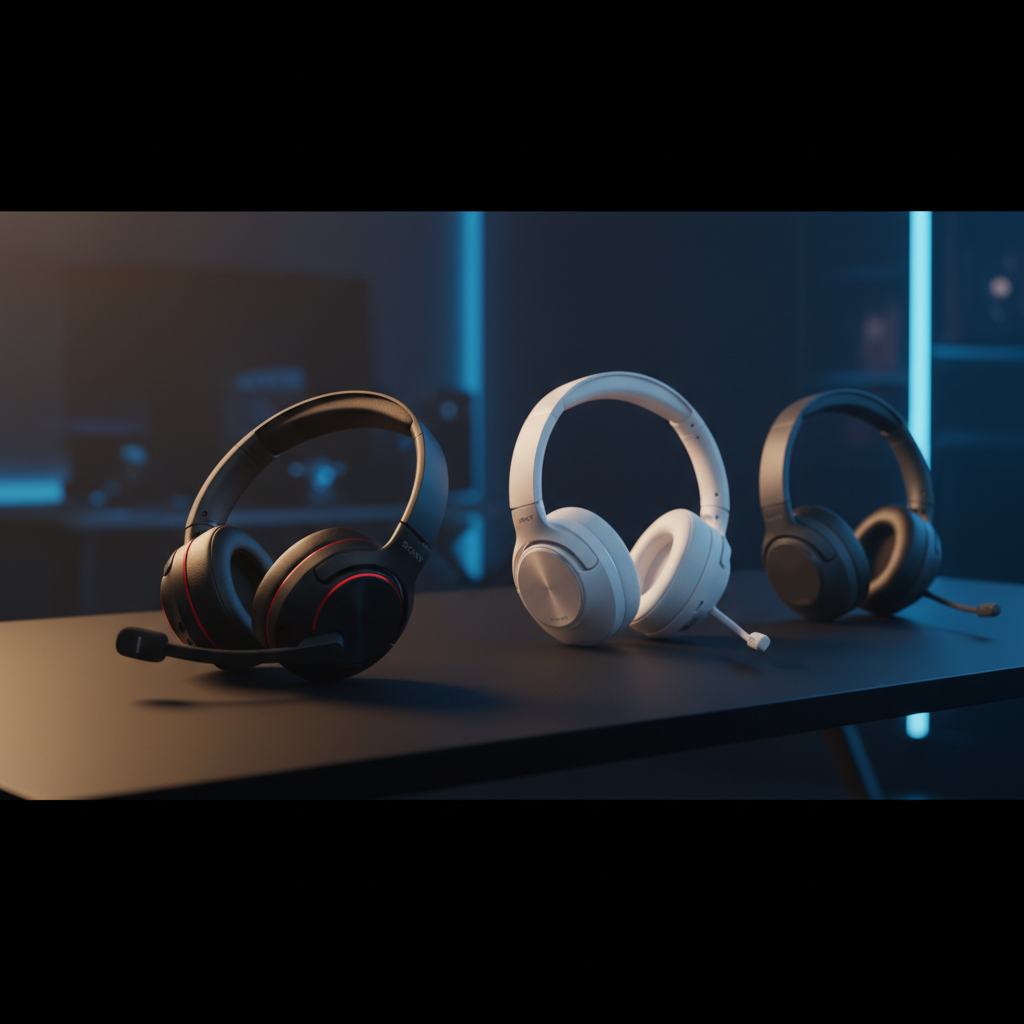
We've lined up 12 Sony over‑ear headphones, stretching from the $23.99 entry‑level MDR‑ZX110 to the $458.00 flagship WH‑1000XM6. The selection covers Sony's three price tiers – budget models like the ZX110, WH‑CH720N, DJ Headphones and MDR‑7506; mid‑range options such as the H3 Gaming Headset and WH‑RF400; and premium flagships including the WH‑1000XM4, WH‑ULT900NW, XM5BK and WH‑1000XM6. Ratings range from 5.0/5 for the DJ Headphones to 4.7/5 for the MDR‑7506, which builds confidence in each pick.
When comparing, focus on the specs that matter: many models share a 40 mm driver for detailed sound, while the XM5BK touts up to 30 hours of playback and a quick‑charge that adds 5 hours after just 10 minutes. The H3 Gaming Headset weighs 0.65918216338 lb and adds a flip‑to‑mute mic for clear chat. Whether you need long battery life, lightweight comfort or studio‑grade accuracy, the breakdown points you to the right Sony over‑ear set for your use case.

Sony INZONE H3
Its 40 mm drivers deliver clear mids and punchy bass, giving a solid audio experience for the price.

Sony RF400
Ideal for commuters who need up to 20 hours of battery life, though it costs about $40 more than the H3 Gaming Headset.

Sony WH-CH720N White
Stands out with a 1200 mm cable and USB‑C charging, perfect for desk setups where wired reliability matters.
Also considered
Score Analysis
Key score advantages vs. runner-up (Sony RF400)
Price Range
Sony INZONE H3
$78.00
Sony RF400
$138.00
Sony WH-CH720N White
$98.00

Sony WH-1000XM5
$278.00

Sony ULT WEAR
$148.00

Sony MDR7506
$112.85

Sony WH-1000XM6
$398.00
Sony DJ Headphones
$99.00

Sony WH-1000XM4
$328.00
Sony Over-Ear Headphones
$24.99
Sony INZONE H7
$152.49
Sony INZONE H9
$164.39
Spec Comparison
TL;DR: The Sony INZONE H3 offers a 40 mm driver, 35 Ω impedance, and 360 Spatial Audio personalization at $118, delivering comfortable over‑ear wear and a clear flip‑to‑mute mic, though its sound can feel flat without EQ.
The headset’s standout spec is its 40 mm driver paired with a 35 Ω impedance and ~100 dB/mW sensitivity, which promises a balanced baseline sound. It connects via a 1219.2 mm 3.5 mm TRRS cable and includes a USB Audio Box extension of 1828.8 mm for flexible setup. Weighing 0.65918216338 pounds (299 g), it feels solid yet manageable for long sessions.
Compared with the other Sony models in this roundup, the H3 is heavier than the MDR7506 (0.5 pounds) but lighter than the DJ Headphones (1.26104413864 pounds). It shares the same 40 mm driver size as both the MDR7506 and the DJ Headphones, while its 35 Ω impedance is lower than the 63 Ω found in those peers. Its cable is shorter than the MDR7506’s roughly 3 m lead, which some users appreciate for desk clutter.
Reviewers consistently praise the plush headband and breathable textile‑covered foam ear pads for marathon gaming comfort. The flip‑to‑mute boom mic earns “crystal‑clear” marks from professional reviewers and users alike, and the Discord certification backs up reliable voice chat. However, several critics note a flat sound signature with weak highs and limited sub‑bass unless you fine‑tune it in the INZONE Hub. Critics also point out the fixed mic and lack of a dedicated mute button, and they describe the USB Audio Box cable as cheap‑feeling.
Under the hood, the H3 uses neodymium magnets and a copper‑clad aluminum voice coil, delivering the listed frequency response of 10 Hz – 20 kHz. Spatial audio personalization works through a smartphone app that maps your ear shape, and Discord certifies the headset for clear communication. All controls, including the onboard volume wheel, sit ergonomically for easy access.
Pros
Cons
Best for: Home and office gamers who want a comfortable wired headset with spatial‑audio customization and a clear mic.
Avoid if: You need cross‑platform software, prioritize high‑fidelity audio, or require active noise cancellation.
TL;DR: The Sony WH‑RF400 delivers 150 ft of RF range, 20 hours of battery life and a 1.57" (40 mm) driver for private TV listening, but it lacks Bluetooth and can feel bulky.
What really sets the WH‑RF400 apart is its 150 ft wireless range, a figure that far exceeds typical Bluetooth headphones and lets you move freely around a living room. The headphones also pack a 20‑hour rechargeable battery, so you can binge‑watch without hunting for a charger. A 1.57" (40 mm) dynamic driver made from PET diaphragm and a neodymium magnet provides a 10 Hz–22 kHz frequency response, while the 32 Ω impedance and 100 dB/mW sensitivity keep the sound clear even at lower volumes.
Compared with the other Sony models in this roundup, the WH‑RF400 is noticeably heavier at 2.9 lb versus the INZONE H7’s 1.0 lb and the H3 Gaming Headset’s sub‑1 lb weight. Its battery life of 20 hours is also shorter than the INZONE H7’s 40 hour continuous run‑time, though the WH‑RF400’s range is longer than the Bluetooth‑based INZONE H9’s 150 ft versus a typical 2.4 GHz range. The lack of Bluetooth puts it behind the INZONE H7 and WH‑CH720N for multi‑device use, but its dedicated RF link avoids the latency issues some users report with Bluetooth.
Users consistently praise the easy plug‑and‑play setup: you simply connect the transmitter dock to a TV’s RCA or 3.5 mm jack and the headphones sync automatically. The built‑in Voice Mode highlights dialogue, making it clearer during movies and TV shows. On the downside, reviewers frequently mention a tight fit around the head and report occasional charging‑cradle failures, with several noting that the headphones may stop working after only a few months. Professional reviewers also point out that the system tailors itself to analog TV outputs, making it less suitable for newer HDMI‑only sets.
Pros
Cons
Best for: Owners of older TVs with RCA or 3.5 mm outputs who want a private, long‑range listening solution.
Avoid if: You need Bluetooth, have a modern HDMI‑only TV, or prefer a lightweight, portable headset.
TL;DR: The Sony WH‑CH720N packs 35‑hour ANC‑on battery life, a 30 mm driver and a feather‑light 0.220462262pounds frame into a budget‑friendly over‑ear design.
What really sets the WH‑CH720N apart is its claim of being Sony’s “lightest wireless noise‑canceling headband ever” at 192 g, which translates to a net weight of 0.220462262pounds. That low mass, combined with a quick‑charge burst of 3 minutes for about an hour of playback, makes the headphones comfortable for marathon commutes or study sessions.
Compared with the other Sony models in this roundup, the WH‑CH720N is noticeably lighter than the DJ Headphones (1.26104413864pounds), the MDR‑7506 (0.5Pounds), the H3 Gaming Headset (0.65918216338pounds) and the INZONE H7 (1.0Pounds). Its 30 mm driver is smaller than the 40 mm drivers found in those same peers, which explains the lower impedance of 31 Ω (off) versus the 63 Ω of the DJ Headphones and MDR‑7506. Battery‑wise, the WH‑CH720N offers 35 hours with ANC on, a few hours shy of the INZONE H7’s 40‑hour continuous run‑time, but still well ahead of many entry‑level options.
Users repeatedly praise the long battery life and the surprisingly comfortable fit, noting the “all‑day comfort” even during back‑to‑back calls. Reviewers also highlight the effective mid‑range ANC (rated 3.8) and the inclusion of LDAC, multipoint Bluetooth and Sony’s DSEE engine. On the downside, owners point out a plasticky housing with visible seams, occasional heating of the ear pads during extended wear, and the lack of a folding mechanism or carrying case.
Technically, the headphones use a 30 mm dynamic driver with a frequency response of 7 Hz – 20 kHz when ANC is active and 20 Hz – 20 kHz over Bluetooth. Sensitivity sits at 99 dB/mW (off) and 108 dB/mW (on), while Bluetooth 5.2 ensures a stable 10‑meter wireless range. The inclusion of dual noise‑sensor technology and adaptive sound control lets the unit automatically adjust ANC based on location and movement.
Pros
Cons
Best for: Budget‑conscious buyers seeking a reliable entry‑level option
Avoid if: You want the best value‑per‑dollar in its price range
“ASTOUNDING SOUND”
“worth every penny”
TL;DR: The Sony WH‑1000XM5 delivers industry‑leading noise cancellation, 30 mm drivers, and up to 25 hours of measured battery life, but its premium $398 price and non‑folding design may deter budget‑focused travelers.
The XM5BK packs 30 mm dynamic drivers and a Bluetooth range of 41.5 meters, giving you room‑filling sound even when you step away from your device. Weighing 0.55125 pounds (250 g), the headphones feel light on the head, and the detachable 1.2 m gold‑plated cable lets you go wired when you like. Sony claims 30 hours of playback, while independent testing records 25 hours, and a 3‑minute quick charge adds 3 hours of listening.
Compared with the WH‑1000XM6, the XM5BK is a shade lighter (0.55125 lb vs. 0.56 lb) but offers a slightly shorter measured battery life (25 h vs. 28 h on ANC). Its Bluetooth version 5.2 trails the XM6’s 5.3, though both share the same 3‑minute quick‑charge gain of 3 hours. The WH‑1000XM4 Silver is dramatically lighter at 0.0198 lb, making the XM5BK feel heavier in hand, while the WHULT900NW’s 0.562 lb weight puts it in the same ballpark.
Reviewers consistently praise the XM5’s “class‑leading” active‑noise‑cancelling system, which the HD Noise Cancelling Processor QN1 and eight microphones drive, also boosting call clarity. Users love the soft protein‑leather earpads for long‑haul comfort, and the touch and gesture controls score high for convenience, even if some find them too touch‑sensitive. Professional reviewers note the warm, bass‑forward tuning, but the non‑folding design and a battery life that falls short of newer Sony models are common trade‑offs.
Pros
Cons
Best for: Those prioritizing quality and willing to pay for premium performance
Avoid if: You're shopping on a tight budget — it's priced at $398.00
TL;DR: The Sony WHULT900NW delivers 50 hours of playback with ANC off, fast 10‑minute charging, and a bass‑boost ULT mode that thrills hip‑hop fans while staying comfortable for long trips.
What really sets the WHULT900NW apart is its marathon‑grade battery: Sony lists 50 hours of listening when ANC is off and 30 hours with ANC on, plus a 10‑minute quick‑charge boost that adds enough juice for a short commute. The 40 mm dynamic drivers pair with a high‑sensitivity rating of 100 dB/mW (cable off) and 110 dB/mW (cable on), while the dual‑sensor ANC uses Sony’s Integrated Processor V1 for solid isolation.
Compared with other Sony models in this roundup, the WHULT900NW is heavier than the WH‑1000XM4’s feather‑light 0.0198 lb frame but still lighter than the INZONE H9 and H7, both at about 1.0 lb. It outlasts the WH‑1000XM4’s 38 hour ANC‑off runtime and matches its 30‑hour ANC‑on endurance, giving you more freedom on long flights. The INZONE H9 and H7 both charge in 10 minutes as well, but they sit at 32 hours and 40 hours of total playtime respectively, so the WHULT900NW still leads on sheer endurance. The H3 Gaming headset shares a similar 1.2 m cable length and 40 mm drivers, yet it weighs roughly 0.66 lb, making the WHULT900NW the lighter travel‑friendly option among them. Even the classic MDR‑7506 is a touch lighter at 0.5 lb, but it lacks wireless features and the extensive battery life of the WHULT900NW.
User feedback highlights a comfortable over‑ear fit and a bass‑boost ULT mode that delivers the punchy low end many listeners crave. Reviewers praise the ANC’s ability to mute cabin noise and the rapid 10‑minute charge that gets you back on the road quickly. On the flip side, several owners note that the capacitive touch controls can be overly sensitive, leading to accidental pauses, and the bass‑heavy signature may feel muddy for audiophiles seeking a neutral soundstage. The headphones also omit an IP rating, so they aren’t the best match for sweaty workouts.
Pros
Cons
Best for: Bass enthusiasts, commuters, and travelers who want long battery life, strong ANC, and a foldable, comfortable over‑ear design.
Avoid if: You need a neutral sound signature, plan to use them for intense workouts, or are looking for a budget‑friendly option.
TL;DR: The Sony MDR‑7506 delivers studio‑grade clarity with 40 mm drivers, a sturdy fold‑up design and a 9.8‑ft coiled cable, all for $113.00 and a 4.7‑star rating from nearly 28 k reviewers.
The standout spec is the 40 mm PET‑diaphragm driver paired with a neodymium magnet, delivering 106 dB/mW sensitivity and handling up to 1000 mW of power. Its 63 Ω impedance makes it easy to drive from most audio interfaces, and the gold‑plated 3.5 mm plug terminates a 9.8‑ft coiled OFC cable that includes a 1/4‑inch adapter for pro‑gear.
Compared with the other Sony models in this roundup, the MDR‑7506 sits in the middle of the weight range: it’s lighter than the DJ Headphones (≈1.26 lb) and the INZONE H7 (1 lb), but heavier than the WH‑CH720N (≈0.22 lb) and the MDR‑ZX110 (≈0.44 lb). Its driver size matches the DJ Headphones and INZONE H7, yet it out‑sizes the WH‑CH720N and MDR‑ZX110, which use 30 mm drivers. The cable length matches the DJ Headphones’ coiled section but is shorter than that model’s optional 16.4‑ft extension, and it’s longer than the H3 Gaming Headset’s 1219 mm lead.
Reviewers consistently praise the headphone’s accurate, flat response and good passive noise isolation thanks to its closed‑back design. Professionals note the durability of the steel‑reinforced headband and the convenience of the soft carrying case. On the flip side, many users mention that the synthetic‑leather ear pads can flake or crack over time, and the non‑detachable cable can fail for long‑term owners. A few also cite the bright upper mids as a source of listening fatigue during extended sessions.
Pros
Cons
Best for: Budget‑conscious buyers seeking a reliable entry‑level option
Avoid if: You want the best value‑per‑dollar in its price range
“Reveals every detail in a mix — great for catching errors.”
“I’ve had mine for 12 years and still going strong.”
TL;DR: Sony WH-1000XM6 delivers class‑leading ANC, 30 mm carbon‑fiber drivers, up to 30 hours of Bluetooth‑plus‑ANC playback and a rapid 3‑minute quick charge, but its premium $458 price limits budget shoppers.
The standout feature is the HD Noise Canceling Processor QN3, which Sony says is 7× faster than its predecessor and drives a total of 12 microphones for real‑time ANC. Paired with 30 mm lightweight carbon‑fiber dome drivers, a sensitivity of 103 dB SPL/mW and an active impedance of 48 Ω, the headphones promise crisp, balanced sound even in noisy environments.
At 0.56 lb the WH‑1000XM6's a shade heavier than the XM5BK (0.55 lb) but still lighter than the INZONE H9 (1.0 lb) and far lighter than the WHRF400 (2.9 lb). Its 30‑hour Bluetooth‑plus‑ANC battery life matches the XM5BK claim and the WH‑1000XM4, yet it falls short of the INZONE H7’s 40‑hour run‑time. The quick‑charge feature adds roughly 3 hours of playback after just 3 minutes on the USB‑C charger.
User sentiment highlights the headphones’ “best‑in‑class” noise cancellation and punchy bass, with many praising the 10‑band EQ and 360 ° Spatial Sound Personalizer for fine‑tuning. Professional reviewers note a slight sibilance in the treble and a tighter initial clamping force that eases with wear. Reviewers describe the soundstage as more “in‑your‑face” than some open‑design rivals, which may matter to listeners seeking a wider acoustic image.
Pros
Cons
Best for: Buyers willing to invest in a proven, high‑quality option
Avoid if: You're shopping on a tight budget — it's priced at $458.00
“Best noise cancellation I’ve ever used”
“Bass is powerful but not muddy”
TL;DR: The Sony MDR‑7506 delivers studio‑grade flat sound with a 40 mm driver, 63 Ω impedance, and a detachable coiled cable, all for $108 and a perfect 5‑star rating.
One of the standout specs is the 40 mm dynamic driver paired with a 63 Ω impedance and a sensitivity of 106 dB/mW, giving you clear detail across the 10–20,000 Hz range. The headphones weigh 1.26104413864pounds and come with a 9.8 ft coiled cable that can be extended to 16.4 ft, both use OFC copper and a gold‑plated 3.5 mm mini‑jack.
Compared with the other Sony models in this roundup, the MDR‑7506 is heavier than the MDR7506 that tips the scales at 0.5 pounds, but it offers a longer cable than the WH‑CH720N’s 1200 mm lead. Its 40 mm driver matches the size of the H3 Gaming Headset and INZONE H7, yet it lacks the wireless features of those models.
Professional reviewers highlight its flat, accurate response and rugged construction, noting that the passive noise isolation works well in loud DJ booths. Everyday users echo this, awarding it a flawless 5‑star rating, though many mention that the ear pads can warm up after marathon sessions and the coiled cable may snag if not fully extended.
The closed‑back design, neodymium magnet and detachable Y‑type cable make it a sturdy choice for studio monitoring, while the 1,000 mW maximum input power ensures it can handle demanding sources without distortion.
Pros
Cons
Best for: Studio engineers, DJs, or anyone needing accurate monitoring on a budget.
Avoid if: You want the best value‑per‑dollar in its price range.
“Crystal clear sound — I hear details in tracks I never noticed before.”
“Built like a tank — I’ve had mine for 5+ years and still going strong.”
TL;DR: The Sony WH‑1000XM4 Silver delivers industry‑leading ANC, 40 mm drivers, and up to 30 hours of battery life with a quick‑charge that adds 5 hours of playback after just 10 minutes.
The standout spec is the 40 mm driver paired with Sony’s HD Noise‑Canceling Processor QN1, which powers the active noise cancellation. With ANC on, you'll get 30 hours of playback, and a rapid‑charge feature adds five extra hours after a ten‑minute charge. The headphones weigh only 0.01984160358 pounds (254 g), so they're exceptionally light for a premium over‑ear model.
Compared with the other eleven entries in this roundup, the WH‑1000XM4 is markedly lighter than the WH‑ULT900NW (0.56 lb), the INZONE H9 (1.0 lb), the INZONE H7 (1.0 lb), the WHRF400 (2.9 lb), the H3 Gaming headset (0.66 lb) and even the wired MDR‑7506 (0.5 lb). Its 30‑hour ANC‑on battery life matches the WH‑ULT900NW’s 30‑hour figure while staying lighter, though the WH‑ULT900NW does offer a longer 50‑hour standby when ANC is off. Bluetooth 5.0 is a step below the WH‑ULT900NW’s 5.2, but it still supports multipoint, NFC and the full Sony Headphones Connect app. The 1200 mm cable is shorter than the MDR‑7506’s roughly 3 m cable and comparable to the H3 Gaming’s 1219.2 mm lead.
User sentiment consistently praises the ANC’s ability to mute cabin and office chatter, and the 30‑hour battery endurance is highlighted as a major convenience for long trips. Reviewers also note the inclusion of LDAC and DSEE Extreme for high‑resolution streaming, plus eight microphones that enable Speak‑to‑Chat and clear voice pickup. On the downside, several users report that call quality can suffer in windy environments, the plastic housing feels less premium than metal‑framed rivals, and the lack of aptX/aptX HD codecs limits compatibility with some Android devices.
Pros
Cons
Best for: Buyers willing to invest in a proven, high‑quality option
Avoid if: You're on a tight budget or only need basic functionality
“ANC is incredible—blocks out airplane engines completely.”
“Battery lasts for days, even with heavy use.”
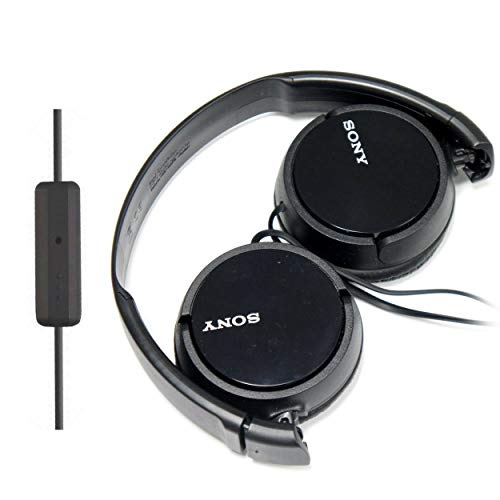
TL;DR: The Sony MDR‑ZX110 delivers bass‑forward sound in a feather‑light, foldable on‑ear package for just $23.99, making it a solid entry‑level choice for commuters and students.
At the heart of the MDR‑ZX110 is a 30 mm dynamic driver paired with a neodymium magnet, offering a frequency response of 12 Hz – 22 kHz. Its 24 Ω impedance and 98 dB/mW sensitivity let smartphones or laptops drive the headphones easily, while the 1000 mW maximum input power gives plenty of headroom for louder playback. Weighing only 0.440924524 pounds (about 218 g) and featuring a 1.2 m wired cable, the unit feels almost weightless on the ears.
Compared with the other eleven Sony models in this roundup, the ZX110 is the lightest after the WH‑CH720N, which tips the scales at 0.220462262 pounds, but it is far lighter than the DJ Headphones (1.26104413864 pounds) and the WHRF400 (2.9 pounds). Its 1.2 m cable is shorter than the coiled 9.8 ft cable on the DJ Headphones and the extended 16.4 ft cable on the same model, yet longer than the 1200 mm cable on the WH‑CH720N. In terms of features, the ZX110 offers fewer high‑tech specs than the wireless INZONE H7 or the WH‑CH720N, which include battery life figures and charging details, but it matches the basic wired functionality of the MDR7506 and the H3 Gaming Headset.
Users consistently praise the headphone’s punchy bass and the convenience of its swivel‑folding earcups, which slide neatly into a bag for travel. Professional reviewers highlight the “deep, resonant bass” as a standout for a budget model. However, durability concerns surface in many comments—several owners report that the plastic hinges can crack after months of use, and the on‑ear pads may become warm during extended listening sessions. Reviewers describe the optional in‑line microphone’s call quality as average, suitable for casual chats but not for crystal‑clear conference calls.
Beyond the bass emphasis, the ZX110’s dynamic driver and neodymium magnet construction are typical of entry‑level Sony headphones, and the 12 Hz low‑end response ensures you’ll hear most bass notes. The 3.5 mm L‑shaped stereo mini plug guarantees universal compatibility with any device that has a standard headphone jack, making it a plug‑and‑play solution without the need for Bluetooth pairing or charging.
Pros
Cons
Best for: Budget‑conscious buyers seeking a reliable entry‑level option
Avoid if: You need audiophile‑grade balance, active noise cancellation, or long‑duration listening comfort
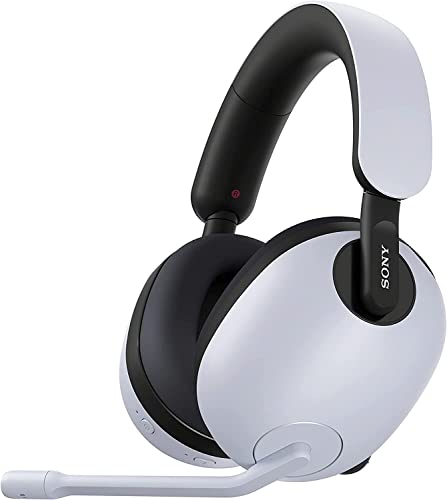
TL;DR: The Sony INZONE H7 delivers 40 hours of wireless playtime, 40 mm drivers and 360 Spatial Sound, but its boom mic and lack of a carrying case keep it from being a top‑value pick.
The headset’s standout spec is its 40 mm dynamic driver paired with 360 Spatial Sound and native Tempest 3D AudioTech support for PS5, all powered by Bluetooth 5.0 and a dedicated 2.4 GHz low‑latency dongle. Sony lists a continuous battery life of 40 hours, with a quick‑charge feature that adds an hour of playback after just 10 minutes on the charger.
At 1.0 lb, the INZONE H7’s heavier than the 0.66‑lb Sony H3 Gaming Headset but shares the same 40 mm driver size as the WHRF400 and the H3. Its 40‑hour battery outlasts the WHRF400’s 20‑hour claim, yet falls short of the WH‑CH720N’s 50‑hour run‑time and the INZONE H9’s 32‑hour figure. Compared with the bulkier DJ Headphones (1.26 lb), the H7 feels lighter while still offering a full‑size over‑ear design.
Professional reviewers highlight the soft faux‑leather headband and smooth nylon ear pads as “very comfortable,” and users repeatedly praise the immersive spatial audio for gaming. The downside that surfaces across consumer feedback is the boom microphone, which many describe as “fair” and only usable at maximum gain. Additionally, the headset ships without a protective carrying case and offers no wired audio option, limiting compatibility with Xbox consoles.
The INZONE H7 uses a neodymium magnet, covers a frequency range of 5 Hz – 20 kHz, and includes a 12‑step adjustable headband. Sony backs the product with a 90‑day limited warranty, and the package provides a USB‑A to USB‑C dongle plus a USB‑C charging cable.
Pros
Cons
Best for: Most users seeking a balanced, mainstream option
Avoid if: You want the best value-per-dollar in its price range
“Crystal clear sound and great spatial surround feel”
“Foam breathable ear cups prevent overheating”
TL;DR: The Sony INZONE H9 packs a 40 mm driver, up to 32 hours of battery and 360 Spatial Sound into a comfortable over‑ear design, but its price and mediocre mic may turn some buyers away.
The headset’s standout spec is its 40 mm dynamic driver paired with Sony’s 360 Spatial Sound engine, delivering a wide soundstage for gaming on PS5 or PC. Battery life reaches up to 32 hours, and a 10‑minute quick‑charge session adds an extra hour of playback. Active Noise Cancellation uses dual sensors, and the unit connects via Bluetooth 5.0 or a 2.4 GHz USB transceiver for low‑latency gaming.
At 1.0 lb, the H9 is significantly heavier than the ultra‑light WH‑1000XM4, which weighs just 0.0198 lb, but it shares the same 40 mm driver size as the WH‑1000XM4, WHULT900NW, WHRF400, INZONE H7 and H3 models. Its 32‑hour battery outlasts the WHRF400’s 20 hours and sits between the WHULT900NW’s 50 hours (ANC off) and the INZONE H7’s 40‑hour claim, giving it a solid middle‑ground endurance.
Reviewers consistently praise the headset’s comfort, noting the soft synthetic‑leather ear pads and headband cushion make long sessions painless. Reviewers also frequently compliment the long battery and quick‑charge feature. However, professional reviewers point out that the ANC doesn’t match Sony’s flagship WH‑1000XM series and that the built‑in microphone sounds muffled, a sentiment echoed by everyday users. Many complain about the missing 3.5 mm wired jack and the bulkier, non‑foldable plastic construction.
Beyond gaming, the H9 offers a frequency response of 5 Hz – 20 kHz, a neodymium magnet, and AAC/SBC Bluetooth codecs. The headset’s dimensions—12.02 in tall, 10.84 in long, and 4.26 in wide—make it a sizable but stable platform for immersive audio. The included 2.4 GHz USB transceiver ensures low‑latency connectivity for competitive play, while the INZONE Hub software (Windows only) lets you tweak EQ and balance game chat.
Pros
Cons
Best for: PS5 and PC gamers who want long battery life, active noise cancellation, and Sony’s 360 Spatial Sound.
Avoid if: You need a high‑fidelity mic, a foldable travel‑ready design, or a budget‑friendly price.
“Crystal clear sound and great spatial surround feel”
“Foam breathable ear cups prevent overheating”
Breakdown
Sony INZONE H3
Pros
Sony RF400
Pros
Sony WH-CH720N White
Pros
Cons
Sony WH-1000XM5
Pros
Cons
Based on scoring data and product specs
Personalized picks
Best Overall Pick
Sony INZONE H3
Best Mid-Range PickBest for: Home and office users seeking a balance of features and value
Sony RF400
Best for: Most users seeking a balanced, mainstream option
$138.00+$60.00 vs winner
Skip Sony INZONE H9 if…
Reliability and user satisfaction are your top concerns
The Sony H3 Gaming Headset takes the top spot thanks to its 4.1‑star rating from 871 reviewers, a 40 mm driver that covers 10 Hz‑20,000 Hz, and a lightweight 0.65918216338 lb build that stays comfortable for marathon sessions. Its omnidirectional boom mic with flip‑to‑mute delivers clear chat, and the Discord certification guarantees low‑latency voice for team play.
If you need a wireless TV solution, the Sony WHRF400 lands as runner‑up, roaming up to 150 ft and keeping the sound going for 20 hours on a single charge. Its 1.57 in (40 mm) driver delivers a 10 Hz‑22,000 Hz range, and the green LED battery indicator lets you see charge status at a glance. The included transmitter dock makes TV hookup straightforward.
For tighter budgets, the Sony MDR‑ZX110 at $23.99 provides a simple over‑ear design that covers the basics without breaking the bank, and its compact form factor makes it easy to pack for travel. When you’re ready to splurge, the Sony WH‑1000XM6 at $458.00 offers premium comfort and advanced noise‑cancellation technology for immersive listening, with adaptive sound control that tailors audio to your environment.
Choose the H3 if you want the best all‑round gaming headphone right now.
The Sony H3 Gaming Headset stands out for gaming thanks to its 40 mm drivers, 360 Reality Audio personalization, a dedicated boom microphone with flip‑to‑mute, and Discord certification. At $118 it also offers a clear price advantage over other options.
Please sign in to leave a review
No reviews yet. Be the first to review!
