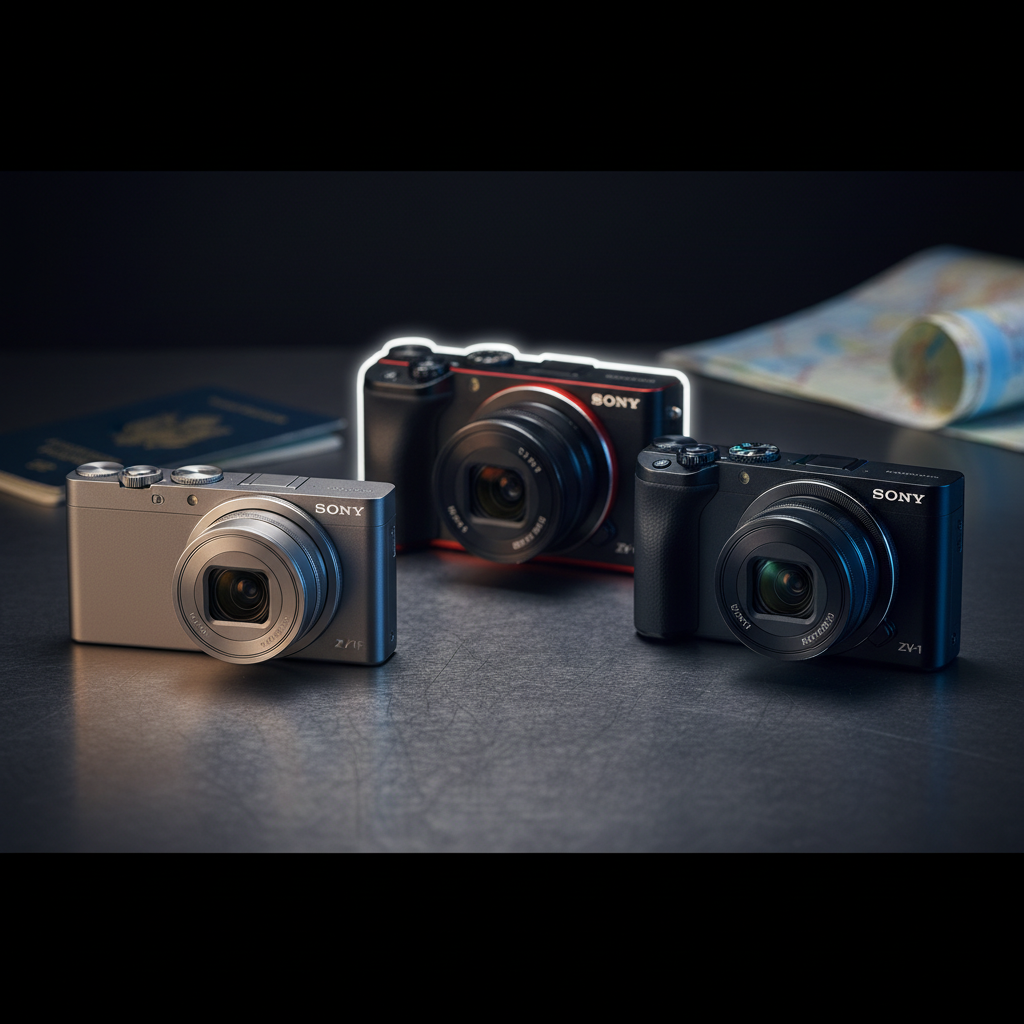
We’ve lined up 12 Sony point‑and‑shoot cameras so you can see how the brand spans from entry‑level to premium territory. On the budget side you’ll find the DSC‑H300 at $187.25, the DSCW830 at $274.98 and the compact DSC‑W730 at $279.99. The WX300 occupies the mid‑range slot, while the premium tier includes the ZV‑1F, ZV‑1 and the RX100 VII. This spread lets you compare everything from basic snap‑shooters to feature‑rich vloggers without guessing where each model lands.
If you’re a beginner vlogger, the ZV‑1F stands out with a 4.5‑star rating from 1,570 reviews, a 20.1 MP sensor and 4K video, all packed into a body that weighs just 0.56 lb. Travelers who need solid zoom on a modest budget will appreciate the WX300’s 20× optical zoom and Wi‑Fi in a pocket‑friendly 166 g package. For everyday family moments, the DSCW830 offers an 8× zoom, 20.1 MP resolution and a lightweight 0.27 lb chassis at its $274.98 price point. Keep reading to see how each camera performs in real‑world scenarios and which one fits your shooting style best.

Sony ZV-1F
Its 425 contrast-detection AF points and 5 cm minimum focus let you capture sharp subjects up close, delivering the high‑quality performance that earned it top marks.
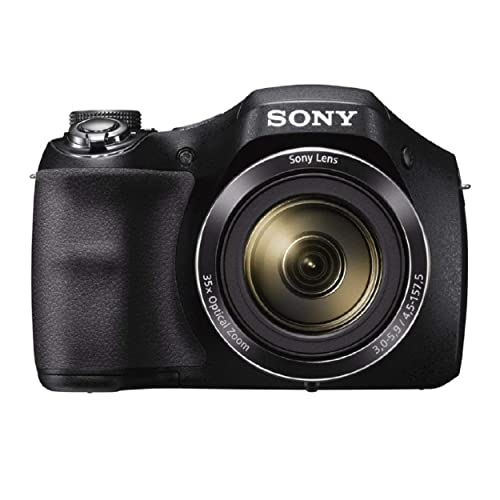
Sony DSC-H300/BM
Ideal for budget‑conscious shooters who need long battery life, it offers 350 shots for just $187.25—roughly $410 cheaper than the ZV‑1F.
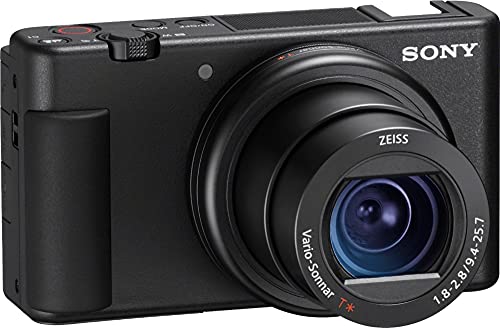
Sony ZV-1
Stands out with 65 minutes of 4K video recording and built‑in Bluetooth 4.1, appealing to creators who prioritize extended high‑resolution video over the ZV‑1F’s focus system.
Also considered
Score Analysis
Key score advantages vs. runner-up (Sony DSC-H300/BM)
Price Range
Sony ZV-1F
$598.00
Sony DSC-H300/BM
$187.25
Sony ZV-1
$898.00

Sony DSC-WX300/W 18 MP Digital Camera
$298.00

Sony DSCW830/B 20.1 MP Digital Camera
$274.98

Sony H400
$561.06

Sony RX100 VII Premium Compact Camera
$1,698.00
Sony Cyber-shot HX1
-$0.01
Sony Cyber-shot HX10V
-$0.01
Sony DSC-W730
$279.99

Sony RX100
$458.00

Sony DSC-W350 14.1MP Digital Camera
-$0.01
Spec Comparison
TL;DR: The Sony ZV-1F packs a 20.1 MP 1‑inch sensor, 425‑point hybrid autofocus and 4K video up to 100 Mbps into a 0.56‑lb, pocket‑sized body, making it a solid entry‑level vlogging camera.
The camera’s standout feature is its 425 contrast‑detection AF points combined with real‑time Eye AF and animal tracking, letting you lock focus on subjects as close as 5 cm. It also shoots 4K video at up to 100 Mbps and can burst at up to 16 fps, giving plenty of flexibility for fast action.
At 0.55997414548 pounds, the ZV-1F is heavier than the Sony RX100 (0.53 pounds) but lighter than the Sony ZV‑1 (0.64815905028 pounds). Its depth of 105.5 mm makes it deeper than the ZV‑1’s 45.9 mm, yet its height of 46.5 mm is shorter than the ZV‑1’s 105.5 mm and the WX300’s 54.9 mm, giving it a balanced pocket profile. It retails for $598, placing it above the DSC‑H300’s $187 price but below the ZV‑1’s $898, putting it in the mid‑range of this lineup.
Reviewers consistently praise the ultra‑wide 20 mm f/2.0 lens and the intuitive Bokeh switch, noting that the camera feels like a serious upgrade from a smartphone. Common complaints focus on the lack of RAW capture, the fixed focal length limiting creative zoom, and a 75‑minute 4K battery life that can feel short for extended shoots. Professionals also point out the absence of a headphone jack for audio monitoring.
The ZV-1F houses a 1.0‑type Exmor RS stacked CMOS sensor with 20.1 MP effective pixels, and its Digital SteadyShot (Active Mode) helps smooth handheld footage. The 3.0‑inch vari‑angle touchscreen (921,600‑dot resolution) supports touch‑to‑focus, touch shutter and swipe‑to‑review, while the 3.5 mm stereo mic input and built‑in directional 3‑capsule mic with wind‑noise reduction give solid audio options. The NP‑BX1 battery (1240 mAh, 3.6 V) delivers about 75 minutes of 4K recording before needing a USB‑C top‑up.
Pros
Cons
Best for: Buyers willing to invest in a proven, high-quality option
Avoid if: You're on a tight budget or only need basic functionality
“Perfect upgrade from smartphone vlogging”
“Autofocus never loses my face, even in busy scenes”
TL;DR: The Sony DSC‑H300 offers a 35× optical zoom, 20.1 MP CCD sensor, and AA‑powered battery life of up to 350 shots, all at a budget‑friendly $187.25 price point.
The standout feature is its 35× optical zoom, reaching a 25–875 mm equivalent range, which lets you capture distant subjects without a separate telephoto lens. Coupled with Optical SteadyShot, the camera helps keep images sharp even at the longest focal lengths.
Compared with its peers, the H300 is noticeably heavier than the ultra‑light DSC‑W830/B and DSC‑W730, both weighing 0.27 pounds, but it compensates with a longer battery life—350 shots per charge versus the DSC‑W830/B’s 210 shots.
User feedback frequently mentions the lack of Wi‑Fi, Bluetooth, or NFC, which makes wireless sharing cumbersome, and the absence of a viewfinder, which can be a hassle in bright sunlight. Reviewers also note that the LCD can be difficult to read outdoors, and the camera only records JPEG files, limiting post‑processing flexibility. Professional reviewers, however, praise the long zoom and the built‑in Optical SteadyShot for reducing blur.
Technically, the camera houses a 1/2.3‑inch (7.76 mm diagonal) CCD sensor delivering 20.1 MP effective resolution. It offers a continuous shooting speed of 0.80 fps and an internal memory of about 55 MB, enough for a handful of shots before you need a memory card. Video recording tops out at 720p (1280 × 720), and the 2.95‑inch LCD provides a clear preview when lighting permits.
Pros
Cons
Best for: Shoppers on a tight budget who want the most for their money
Avoid if: You have limited desk space or need portability
TL;DR: The Sony ZV-1 packs a 20.1 MP 1‑inch sensor, fast f/1.8‑2.8 ZEISS lens and a 3.0‑inch side‑flip touchscreen into a 0.65‑lb body, delivering vlog‑ready video with strong autofocus.
What really sets the ZV-1 apart is its 1.0‑type stacked Exmor RS CMOS sensor with 20.1 megapixels and a ZEISS Vario‑Sonnar T* 24–70 mm equivalent lens that opens to f/1.8 at the wide end. The camera also offers up to 8× optical‑steady‑shot improvement in 4K and a 3.0‑inch side‑articulating touchscreen that flips right for selfie‑style shooting.
At 0.64815905028 pounds, the ZV‑1 is heavier than the Sony ZV‑1F, RX100, WX300, W730 and W830, yet it’s noticeably lighter than the bulkier DSC‑H300. Its depth of 45.9 mm also makes it thinner than the ZV‑1F’s 105.5 mm depth, keeping the package compact enough for a pocket‑sized vlog rig.
Reviewers consistently praise the Real‑time Eye AF and AI‑based tracking for keeping faces sharp, while the dedicated Bokeh button and built‑in ND filter simplify creative control. Users love the forward‑facing 3‑capsule mic with a detachable windscreen for clear voice capture, but many note that the camera can overheat after about five minutes of continuous 4K recording, and it lacks a headphone jack for audio monitoring.
Beyond video, the ZV‑1 records 4K at up to 30 fps with a maximum bitrate of 100 Mbps, and it can capture Full HD slow‑motion up to 120 fps. The built‑in directional microphone records Linear PCM 48 kHz/16‑bit audio, and the USB‑C port supports charging on the go, giving you 65 minutes of 4K video in standard mode before the battery runs down.
Pros
Cons
Best for: Buyers willing to invest in a proven, high-quality option
Avoid if: You're on a tight budget or only need basic functionality
TL;DR: The Sony DSC‑WX300 packs an 18.2 MP sensor, 20× optical zoom and Wi‑Fi into a 0.37‑lb body for $298, offering solid travel‑ready performance but struggles in low‑light.
This camera’s headline feature is its 20× optical zoom paired with Clear Image Zoom that reaches roughly 53× at the 10 MP setting, letting you capture distant subjects without bulk. The 18.2 MP Exmor R CMOS sensor sits behind a f/3.5–6.5 Sony G lens, and the 3.0‑inch LCD delivers 460,800‑dot clarity for framing.
Compared with the other Sony point‑and‑shoots in the roundup, the WX300 is heavier than the DSC‑W730 and DSCW830 (both 0.27 pounds) but lighter than the DSC‑H300’s 1.31 pounds. Its 1240 mAh battery (4.5 Wh) outlasts the W730’s 630 mAh pack and the W830’s 210‑shot rating, giving roughly 500 shots per charge. The maximum ISO of 12800 also exceeds the W830’s 3200‑ISO ceiling, though the sensor size (1/2.3‑type) is the same as many peers, which limits low‑light performance.
Reviewers consistently praise the WX300’s pocketable form factor and the convenience of built‑in Wi‑Fi for remote shooting and quick image transfer. Professionals note the Optical SteadyShot helps keep handheld shots sharp, especially at the telephoto end. Users point out a common drawback: noticeable noise and loss of detail once ISO climbs above 800, due to the small sensor.
Pros
Cons
Best for: Value‑conscious buyers seeking quality at $298.00
Avoid if: You need professional low‑light performance or extensive manual controls
TL;DR: The Sony DSCW830/B packs a 20.1 MP sensor and 8× optical zoom into a 0.27‑lb pocket‑sized body, delivering solid daylight shots for casual shooters at a modest price.
The standout spec features a 20.1 MP Super HAD CCD sensor paired with an 8× optical zoom Carl Zeiss Vario‑Tessar lens, giving you 150 autofocus points and a 62.1° wide‑angle view. Those numbers translate into detailed prints and enough reach for everyday subjects without dragging a bulkier camera around.
At 0.27 pounds, the DSCW830 is as light as the Sony DSC‑W730 and noticeably lighter than the DSC‑WX300 (0.37 pounds) and the much larger DSC‑H300 (1.31 pounds). It keeps connectivity simple with USB and HDMI only, so it offers fewer wireless options than some larger models, but that simplicity matches its point‑and‑shoot focus.
User feedback praises the camera’s pocketable size, the ease of the smile‑shutter and face‑detection modes, and the decent image quality in good light. Common frustrations include noise in low‑light scenes, a dim 2.7‑inch LCD that only shows 230,000 dots, and the lack of manual exposure controls. The battery delivers about 210 shots per charge, and you can shoot continuously at 1.0 fps for up to 100 frames, while video records at 30 fps.
Pros
Cons
Best for: Entry-level buyers or those on a tight budget
Avoid if: You want the best value‑per‑dollar in its price range
TL;DR: The Sony H400 packs a massive 63× optical zoom, 20.1 MP sensor and Optical SteadyShot, delivering detailed shots and long reach while staying simple for everyday users.
What really stands out is the 63× optical zoom, reaching a 24.5–1550 mm equivalent focal length, paired with a 20.1 MP Super HAD CCD sensor that delivers detailed stills.
Compared with the other Sony models in this roundup, the H400’s zoom dwarfs the DSC‑W350’s 4× and the HX1’s 20×, giving you far more reach without swapping lenses. It weighs 658 g, a touch heavier than the H300’s 1.31 pounds, and its battery delivers up to 300 shots—slightly fewer than the H300’s 350‑shot rating.
Everyday users praise the camera’s straightforward Easy Mode and the long battery life, noting that they'll capture distant wildlife or sports moments without a bulky telephoto lens. Professional reviewers, however, point out the lack of RAW capture and the absence of Wi‑Fi or Bluetooth, which makes wireless sharing inconvenient.
The built‑in Optical SteadyShot helps keep images sharp at full zoom, while the 0.2‑in electronic viewfinder (201,000‑dot resolution) offers a clear view in bright conditions. The 2.95‑in LCD screen provides 460,800‑dot detail, and the camera draws roughly 1.5 W in shooting mode, supporting up to 150 minutes of playback.
Pros
Cons
Best for: Casual photographers, beginners, and travelers who need a powerful zoom for wildlife, sports, or travel photography without the complexity of interchangeable lenses.
TL;DR: The Sony RX100 VII Premium packs a 0.02‑second AF lock, 20 fps blackout‑free shooting and an 8× ZEISS zoom into a pocket‑sized body, but its $1,698 price and modest battery life keep it in the premium niche.
What truly sets this camera apart is its autofocus speed – the sensor locks focus in just 0.02 seconds and offers 425 contrast‑detection points plus 357 phase‑detection points. Coupled with real‑time Tracking and Eye AF for both humans and animals, you can capture fleeting moments with confidence. The continuous‑shooting engine pushes up to 20 fps blackout‑free, while a single‑burst mode can hit 90 fps for seven frames, making it one of the fastest pocket cameras on the market.
Compared with its peers, the RX100 VII is pricier than the Sony ZV‑1 at $898.00 and the ZV‑1F at $598.00, but it also brings a richer autofocus system – the ZV‑1F lists only contrast‑detection points, while the RX100 VII adds a full set of phase‑detection points. In terms of heft, it weighs 0.6062712205 pounds, making it slightly lighter than the ZV‑1’s 0.64815905028 pounds yet heavier than the ZV‑1F’s 0.55997414548 pounds. Its 3.0‑inch tilting touchscreen and pop‑up OLED viewfinder also give it more ergonomic flexibility than the simpler screens on many entry‑level compacts.
Reviewers consistently praise the camera’s pocketable size, the versatile 24–200 mm (8×) ZEISS Vario‑Sonnar T* lens, and the professional‑grade video suite – 4K UHD at 30 p, S‑Log3, HLG and a 3.5 mm mic input. At the same time, users flag the limited battery life of roughly 250–300 shots per charge and occasional overheating when recording long 4K clips. The small grip also feels a bit slippery for extended handheld shooting, and several consumer comments echo this point.
Pros
Cons
Best for: Buyers willing to invest in a proven, high‑quality option
Avoid if: You're on a tight budget or only need basic functionality
TL;DR: The Sony Cyber-shot HX1 packs a 20× optical zoom, 10 fps burst shooting, and full‑HD video into a bridge‑style body with a 3.0‑inch tilting LCD, but its EVF and LCD struggle in bright light.
The standout spec is the 20× optical zoom, which lets you reach a 28–560 mm equivalent field of view without digital assistance. Coupled with a 10 fps continuous‑shooting speed and a shutter lag of ≈0.2 sec, the HX1 can capture fast action while keeping the camera responsive.
Compared with the other Sony models in this roundup, the HX1 offers far more reach than the DSC‑W350’s 4× optical zoom and outpaces its modest zoom range. Its burst speed matches the HX10V’s “approx. 10 fps” capability, yet the HX1 is noticeably heavier than the HX10V’s 204 g body‑only weight and deeper than the HX10V’s 33.8 mm depth. The HX1’s 3.0‑inch LCD also matches the HX10V’s screen size, but the HX1 adds a tilting design for flexible framing.
Professional reviewers praised the long zoom and fast shooting, but they also noted a mediocre EVF that shows lag in low‑light scenes and an LCD that suffers from reflections under direct sunlight. Users also point out the lack of an external flash hot shoe and the absence of a microphone input, which limits flash and audio flexibility for more serious shooting.
Under the hood, the camera uses a 1/2.4‑inch Exmor CMOS sensor delivering 9.1 MP effective resolution (10.3 MP gross) and an ISO range of 125–3200. The built‑in flash reaches up to 16.0 m at ISO 3200, while the macro focus can get as close as 1 cm in wide‑angle mode. Battery capacity sits at 870 mAh, providing roughly 390 shots per charge, and internal memory offers 11 MB for quick captures.
Pros
Cons
Best for: Enthusiast photographers who want DSLR‑like controls, a long 20× zoom, and full‑HD video in a compact bridge camera.
Avoid if: You need advanced features or professional‑grade performance.
TL;DR: The Sony Cyber-shot HX10V packs an 18.2 MP sensor, 16× optical zoom and built‑in GPS into a pocket‑sized body, delivering fast 10 fps bursts but limited by a small sensor and modest battery life.
The standout spec is the 18.2 MP Exmor R back‑illuminated sensor paired with a 16× optical zoom lens, giving you a 24 mm wide‑angle start and a 384 mm telephoto reach in a compact form. Built‑in GPS with a compass adds automatic geotagging, a handy feature for travel photography.
Compared with the other cameras in this roundup, the HX10V’s 16× zoom sits between the modest 4× of the Sony DSC‑W350 and the more aggressive 20× of the Sony HX1. Its continuous‑shooting speed of 10 fps matches the HX1’s burst capability, while its CIPA‑rated battery life of 340 shots exceeds the 300‑shot rating of the Sony H400 but falls short of the 350‑shot figure listed for the Sony DSC‑H300.
Reviewers appreciate the fast AF, the DSLR‑like background defocus and the convenience of GPS, but they also note that the 1/2.3‑inch sensor can’t compete with larger‑sensor cameras in low‑light situations, and the lack of Wi‑Fi or Bluetooth makes sharing images on the go more difficult. It's minimal, so a memory card is essential.
Pros
Cons
Best for: Travelers and casual shooters who want a powerful zoom and GPS tagging in a pocket‑friendly camera.
Avoid if: You need advanced features or professional‑grade performance.
TL;DR: The Sony DSC‑W730 packs a 16.1 MP CCD sensor, 8× Carl Zeiss optical zoom and Optical SteadyShot into a 0.27‑lb body, offering a straightforward point‑and‑shoot experience for beginners.
The camera’s standout feature is its 16.1 MP Super HAD CCD sensor combined with an 8× optical zoom lens from Carl Zeiss Vario‑Tessar. Optical SteadyShot reduces blur when you’re shooting at slower shutter speeds, and the 7.75 mm (1/2.3") sensor size keeps the whole package compact.
At 0.27 lb the W730 matches the weight of the DSCW830 and feels noticeably lighter than the 0.37‑lb WX300, the 0.53‑lb RX100 and the bulkier 1.31‑lb H300. Its battery delivers about 200 shots per charge, which is on par with the DSCW830’s 210‑shot rating but trails the WX300’s 500‑shot and H300’s 350‑shot capacities. While the W730’s 8× optical zoom is adequate for everyday subjects, the H300 reaches much farther with its longer reach, making the W730 a more compact, modest‑zoom option.
Users appreciate the camera’s ease of use: ISO can be set from 80 to 3200, focus ranges from 5 cm (wide) to infinity and 150 cm (telephoto) to infinity, and the face‑detection engine handles up to eight faces with a selectable Beauty Effect. The Smile Shutter and built‑in panorama modes add fun without extra gear.
On the back, a 2.7‑inch ClearPhoto TFT LCD offers 230,400 dots of resolution, while video records at 1280×720 p, 30 fps. The flash reaches up to 5.3 m in wide mode at ISO 3200, and internal memory holds 27 MB—enough for a few shots before a memory card is needed.
Pros
Cons
Best for: Entry-level buyers or those on a tight budget
Avoid if: You want the best value-per-dollar in its price range
TL;DR: At $458, Sony’s RX100 earns a 3.6‑star rating from 942 reviewers, praised for its image quality and portability but noted for a fixed screen and lack of Wi‑Fi.
Sony’s RX100 positions itself in the mid‑price range for point‑and‑shoot cameras and carries a solid 3.6‑star rating among the twelve models in this roundup. With a price of $458 it lands near the higher end of the list, reflecting its premium branding.
Users consistently highlight the camera’s excellent image quality, fast lens and strong low‑light performance, along with the ability to capture high‑frame‑rate video and RAW files. The compact aluminum body, long‑lasting battery and USB charging also receive frequent praise. On the downside, reviewers mention the fixed, non‑tilting LCD, the absence of Wi‑Fi or NFC, no built‑in viewfinder, and screen visibility challenges in bright sunlight.
Given its rating and price, the RX100 sits below many of its competitors in this selection, making it a solid choice for enthusiasts who prioritize image quality and portability over modern connectivity features.
Pros
Cons
Best for: Most users seeking a balanced, mainstream option
TL;DR: The Sony DSC‑W350 packs a 14.1‑MP sensor, Carl Zeiss 4× optical zoom lens, and Optical SteadyShot in a pocket‑sized body, making it a handy everyday shooter.
The camera’s standout spec is its 14.1 MP Super HAD CCD sensor paired with a Carl Zeiss Vario‑Tessar lens that offers 4× optical zoom. The aperture range of f/2.7 – f/5.7 lets you capture decent detail across the zoom range, and the 1/2.3‑type (7.76 mm) sensor keeps the overall size very small.
Compared with other Sony point‑and‑shoots in this roundup, its 4× optical zoom is modest next to the Sony Cyber‑shot HX1 and HX10V, which provide 20× optical zoom. The H400 sports a slightly larger 2.95‑inch LCD, while the W350’s screen size isn’t listed, so you’ll likely notice a smaller viewfinder on the W350. In terms of zoom capability, the W350 sits below the high‑zoom models but ahead of any that only list digital zoom.
Reviewers praise the camera’s pocket‑friendly size and the Sweep Panorama mode that makes wide‑angle shots easy. The camera includes Optical SteadyShot stabilization, though reviews point out a weak flash, modest battery life, and a slower shot‑to‑shot interval that can frustrate fast‑action moments. These trade‑offs are typical for a compact aimed at beginners.
Pros
Cons
Best for: Beginners or travelers who want a lightweight, easy‑to‑use point‑and‑shoot with solid zoom and built‑in stabilization.
Breakdown
Sony ZV-1F
Pros
Sony DSC-H300/BM
Pros
Sony ZV-1
Pros
Sony DSC-WX300/W 18 MP Digital Camera
Pros
Based on scoring data and product specs
Personalized picks
Best Overall Pick
Sony ZV-1F
Best OverallBest for: Buyers willing to invest in a proven, high-quality option
Sony DSC-H300/BM
Best for: Shoppers on a tight budget who want the most for their money
$187.25-$410.75 vs winner
Skip Sony RX100 if…
Reliability and user satisfaction are your top concerns
Sony ZV-1F earns the top spot with a 4.5/5 rating from 1,570 reviewers, 425 contrast‑detection autofocus points, and a 16 fps burst rate that keeps fast action crisp. Its 1‑inch 20.1 MP Exmor RS sensor pairs with a bright f/2.0 lens and offers up to 75 minutes of 4K video on a single charge, making it the most versatile all‑rounder in the lineup.
The runner‑up, Sony DSC‑H300/BM, shines when you need serious reach without a DSLR. It delivers a 35× optical zoom covering a 25–875 mm (35 mm‑equivalent) range, and its AA‑battery design gives you up to 175 minutes of shooting time—ideal for travel or wildlife trips where swapping batteries isn’t convenient.
Choose the Sony ZV-1F for the most capable Sony point‑and‑shoot you can buy today.
The Sony ZV‑1F is built for vloggers with its flip‑up vari‑angle touchscreen, a directional 3‑capsule microphone, a 3.5 mm mic input, and wind‑noise reduction, all in a compact 256 g body. While the ZV‑1 offers similar video specs, it costs about $300 more and adds a built‑in ND filter that many casual vloggers don’t need.
Please sign in to leave a review
No reviews yet. Be the first to review!
