
It might catch you off guard that the most affordable earbud in our lineup – the Sony WF‑C510 at $68.00 – still pulls a solid 4.3 / 5 rating from over 3,100 reviewers. That’s only a hair below the 4.5 / 5 score earned by the $68.97 WF‑C500B, proving you don’t have to splurge for a respectable listening experience.
Ten Sony true‑wireless models span a price range from $68.00 up to $328.00. The budget tier (WF‑C510, WF‑C500B, LinkBuds Open, WF‑1000XM3) delivers core features like balanced sound and up to 20 hours of battery life, with the WF‑C500B offering up to 20 hours total playback and a quick‑charge boost of 90 minutes after just 10 minutes on the charger. Mid‑range picks (WF‑C700N, WF‑C500) add active noise cancellation and longer case‑total playtime, while the premium tier (WF‑1000XM4, LinkBuds S, WF‑1000XM6, WF‑1000XM5) brings flagship ANC, LDAC support, and advanced spatial audio features.
Below is a breakdown of each model’s strengths, helping you match the right Sony earbuds to your daily routine.

Sony WF-C500B
Impedance of 140 Ω delivers solid audio performance while keeping the price low.

Sony WF-1000XM3
Ideal for commuters who want premium sound without breaking the bank, it’s $7.30 pricier than the budget pick.
Sony WF-C500
Stands out with a 150‑minute case charging time, letting you power up faster than the other two.
Also considered
Score Analysis
Key score advantages vs. runner-up (Sony WF-1000XM3)
Price Range
Sony WF-C500B
$69.99
Sony WF-1000XM3
$69.08
Sony WF-C500
$73.67

Sony WF-1000XM6
$298.00

Sony WF-C510
$47.18

Sony LinkBuds Open
$75.00

Sony WF-1000XM4
$119.96
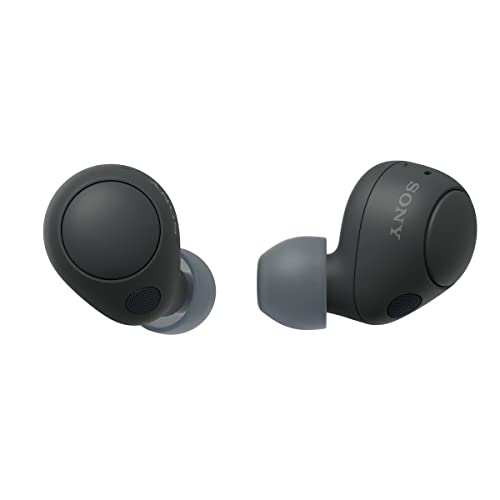
Sony WF-C700N
$79.99

Sony WF-1000XM5
$248.00

Sony LinkBuds S
$128.00
Spec Comparison
TL;DR: The Sony WF‑C500B costs $68.97, delivers 20 hours of total playback, charges 90 minutes after a 10‑minute boost, and scores 4.5 stars from over 9 k reviewers.
What really stands out is the fast‑charge capability: a 10‑minute charge gives you 90 minutes of listening, while the earbuds themselves provide up to 10 hours per charge and a combined 20 hours with the case. At just 86.9 g, they're light in the ear, and the 100 dB sensitivity paired with a 140 Ω impedance promises clear, dynamic audio across the 20 – 20 000 Hz range.
Compared with the other Sony models in this roundup, the WF‑C500B sits between the WF‑C510’s 22‑hour total battery life and the WF‑C700N’s ANC‑enabled design, which is slightly heavier. The LinkBuds Open is lighter at 41 g but offers only 8 hours of playback. Unlike the WF‑1000XM3 and WF‑1000XM4, the WF‑C500B doesn't support high‑resolution codecs such as LDAC or aptX, and it lacks active noise cancellation, placing it in the same category as the WF‑C500 sibling that shares the same driver size and battery specs.
Reviewers consistently praise the balanced mids and vocal clarity, noting that the DSEE technology helps restore detail in compressed streams. Everyday users love the long battery life and the IPX4 splash resistance for workouts. The most common criticisms focus on the absence of ANC, the lack of premium codecs, and touch controls that can trigger unintentionally, especially when the earbuds are in a pocket.
The earbuds use a dynamic driver and support SBC and AAC codecs. With Bluetooth 5.0 and a 10‑meter range, they stay connected reliably for daily commutes or short workouts. The inclusion of a wireless charging case and 100 % plastic‑free packaging adds a sustainability angle that resonates with eco‑conscious buyers.
Pros
Cons
Best for: Budget‑conscious buyers seeking a reliable entry‑level option with solid battery life and water resistance.
Avoid if: You need active noise cancellation, high‑resolution codecs, or prefer less touch‑sensitive controls.
“Great sound for the price — clearer than AirPods at this range.”
“Battery lasts all week with daily use.”
TL;DR: Sony WF‑1000XM3 deliver class‑leading ANC, 6 mm drivers, 90‑minute quick‑charge playback and up to 32 hours total battery life for $76, making them a solid budget‑tier choice for commuters.
The earbuds pack a 6 mm neodymium driver and a quick‑charge system that adds 90 minutes of music after just a short burst of power. With 8 hours of playback when ANC is off (6 hours with ANC on) and a total of 32 hours when the case is fully charged, they outlast many rivals in the same price bracket. The charging case itself weighs 77 g and the earbuds 8.5 g, while the whole package tips the scales at 0.6 lb.
Compared with the other Sony models in this roundup, the WF‑1000XM3 are noticeably heavier than the LinkBuds Open (0.090 lb) and the WF‑C700N (0.069 lb). Their 6 mm driver is smaller than the LinkBuds Open’s 11 mm unit but larger than the WF‑C700N’s 5 mm driver, placing them in the mid‑range for driver size. Battery‑wise, the 32‑hour total playback exceeds the WF‑C700N’s 28‑hour total (ANC off) and the WF‑C500B’s 20‑hour total, giving them a clear endurance edge over those peers.
Professional reviewers have praised the warm, bass‑rich sound signature and the class‑leading active noise cancellation, which set the benchmark in 2019. Everyday users echo this sentiment, especially for travel and commuting, noting that the ANC makes city noise disappear. The downsides that surface in both expert and consumer feedback include wind‑noise bleeding into calls, occasional Bluetooth dropouts, and the absence of Sony’s LDAC codec despite the brand’s reputation for high‑resolution support.
Beyond the core specs, the WF‑1000XM3 bring a 360 Spatial Sound Personalizer that tailors the sound to your ear shape via the companion app, Adaptive Sound Control that switches modes based on activity, and Dual Noise Sensor Technology (one feed‑forward and one feedback microphone per earbud) for refined cancellation. DSEE HX upscales compressed tracks, and NFC on the case enables quick pairing. You can customize touch controls through the app, and the earbuds support both Google Assistant and Alexa.
Pros
Cons
Best for: Buyers in the budget price range seeking the best quality at that price point
Avoid if: You want the best value‑per‑dollar in its price range
“one of the best on the market”
TL;DR: The Sony WF‑C500 delivers 60 minutes of playback after a 10‑minute charge, offers a lightweight 5.4 g earbud design and 20 hours total battery life for $86.98.
What really stands out is the quick‑charge capability – a 10‑minute boost gives you an hour of music, and the case itself charges in just 150 minutes. The earbuds house a 5.8 mm dynamic driver, and the total battery life adds up to 1 200 minutes when the case is full. Those numbers make the WF‑C500 a solid pick for commuters who need a fast top‑up between trips.
At $86.98 it lands between the $79.99 WF‑C700N and the $116.34 WF‑1000XM4, offering a mid‑range price point. It weighs 0.19180216794 lb, which is heavier than the ultra‑light WF‑C700N (0.06875 lb) but considerably lighter than the bulkier WF‑1000XM3 (0.6 lb). Its 5.8 mm driver is a bit larger than the 5 mm driver in the WF‑C700N and smaller than the 6 mm driver in the WF‑1000XM3, positioning its sound reproduction in the middle of the pack. Total playback of 1 200 minutes is comparable to the 22‑hour total listed for the WF‑C510, and its Bluetooth range of 10 000 mm matches the 10‑meter range cited for the WF‑1000XM3.
Reviewers repeatedly praise the comfort of the silicone tips and the balanced, detailed sound that the built‑in DSEE and 360 Reality Audio provide. Professional reviewers note the engaging mids and highs, while everyday users love the quick‑charge feature for workouts and short errands. The earbuds lack active noise cancellation and only support SBC and AAC codecs, which some audiophiles see as a limitation. Reviewers describe touch controls as responsive but occasionally too sensitive, and the plastic case with a frosted‑glass lid feels a bit flimsy to a few owners.
Pros
Cons
Best for: Most users looking for a well‑reviewed, reliable mainstream option
Avoid if: You're shopping on a tight budget — it's priced at $86.98
“Perfect for workouts — they stay in and survive sweat.”
“Sound is surprisingly good for the price — clear and balanced.”
TL;DR: The Sony WF-1000XM6 delivers industry‑leading ANC with an 8‑mic array, 8 hours of playback on a charge, and high‑resolution LDAC audio, but its bulkier design and $328 price make it a premium‑only choice.
What really sets the WF-1000XM6 apart is its 8‑microphone noise‑cancellation system, which the new QN3e processor powers, plus 32‑bit audio processing and LDAC support for high‑resolution sound. The earbuds charge in just 1.5 hours and give you 8 hours of listening time with ANC active, while the case adds another 24 hours of total battery life.
At 0.02875 pounds, the WF-1000XM6 is heavier than the LinkBuds S (0.0110231131 pounds) but lighter than the WF-1000XM4 (0.09038952742 pounds). Its 8‑hour ANC playback matches the WF-1000XM5 and WF-1000XM4, and it outlasts the LinkBuds S’s 6‑hour ANC runtime. The charging case weighs 58 g, which is larger than the 35 g case of the LinkBuds S, contributing to the bulkier feel that reviewers note.
Professional reviewers praise the “best‑in‑class ANC performance” and “rich, detailed sound” thanks to the 8‑mic array and LDAC, while everyday users love the secure fit for travel and work calls. The same reviews flag the foam‑type ear tips for causing pressure buildup and ear fatigue, and some users report inconsistent voice‑control responses. The earbuds also support 360 Spatial Sound Personalizer, head‑tracking, and IPX4 water resistance, adding convenience for commuters and gym‑goers.
Pros
Cons
Best for: Those prioritizing quality and willing to pay for premium performance
Avoid if: You're shopping on a tight budget — it's priced at $328.00
TL;DR: The Sony WF‑C510 packs a 6.5 mm driver, 22‑hour total battery life and multipoint Bluetooth into a 4.5 g, IPX4‑rated earbud that’s comfortable for all‑day wear.
The standout spec is the 6.5 mm dynamic driver paired with a sensitivity of 98 dB and an impedance of 16 Ω, promising balanced sound without demanding a lot of power. The case holds a 10.5 mAh battery, delivering up to 22 hours of playback, while each earbud can run for 4 hours before needing a recharge. A 1.5‑hour charge restores the case, thanks to the 5 W charging speed.
Compared with the other nine earbuds in this roundup, the WF‑C510 is notably lighter than the WF‑C500B (which tips the scales at over 0.19 lb) and carries a larger driver than the WF‑1000XM3’s 6 mm unit. Its per‑earbud runtime of 4 hours is shorter than the WF‑C500B’s 10‑hour earbud life, but the total 22‑hour figure still sits comfortably in the middle of the pack. The compact 12.5 mm depth and 18.5 mm height keep it among the smallest cases, making it easier to slip into a pocket than bulkier competitors.
Users repeatedly praise the “all‑day comfort” of the 4.5 g earbuds and the ability to toggle between two devices thanks to multipoint Bluetooth. The Sony Headphones Connect app lets you fine‑tune the EQ, a feature professional reviewers highlight. On the downside, several owners call the physical buttons “awkward”, and the plastic construction doesn't feel as premium as higher‑priced models. The earbuds also lack wireless charging, which some buyers miss.
Beyond the driver, the WF‑C510 supports SBC, AAC and LDAC codecs, offers an IPX4 rating for sweat resistance, and includes NFC for quick pairing. Ambient Sound Mode lets you stay aware of your surroundings, and the built‑in microphone handles hands‑free calls without needing to pull out your phone.
Pros
Cons
Best for: Budget-conscious buyers seeking a reliable entry-level option
TL;DR: The Sony LinkBuds Open deliver an open‑ear listening experience with an 11 mm driver, 8 hours of playback and a 3‑minute fast‑charge that adds about an hour of music.
The standout hardware is the 11 mm open‑ring dynamic driver, noticeably larger than the 6 mm or 5 mm units found in many Sony true‑wireless models. At 41 g (0.09038952742 pounds), they sit in the middle of the weight range – lighter than the WF‑1000XM3’s 0.6 pounds but heavier than the ultra‑light LinkBuds S at 0.0110231131 pounds. The case holds enough charge for an extra 14–22 hours, and a 3‑minute boost gives roughly 1 hour of listening, matching the quick‑charge performance of other Sony earbuds without needing a wireless pad.
When you line them up against the nine other Sony options in this roundup, the LinkBuds Open’s 8‑hour battery life matches the WF‑1000XM3 and the LinkBuds S, but falls short of the 10‑hour runs of the WF‑C700N, WF‑C500B, and WF‑C500. Their driver size, however, tops the group, delivering a broader soundstage than the 5‑mm drivers in the LinkBuds S or the 6.5 mm unit in the WF‑C510. The Bluetooth 5.3 connection and multipoint support put them on equal footing with the WF‑C510, while the IPX4 splash resistance adds durability that some peers lack.
Users appreciate the open‑ear design for staying aware of traffic or office chatter, and they love the convenience of voice commands and the Sony Sound Connect app’s EQ tweaks. Professional reviewers note the improved battery life over the first generation and the secure silicone stabilizer fin. Common complaints revolve around a flatter bass response, occasional miss‑fires of the touch controls, and the fit slipping during vigorous activity – issues that echo the “weak bass” and “spotty touch” feedback in the broader review sentiment.
Pros
Cons
Best for: Office workers who need situational awareness, cyclists and runners seeking safety, and commuters who value quick charging.
Avoid if: You want the best value‑per‑dollar in its price range or need strong bass and active noise cancellation for noisy environments.
“Many users describe them as "comfortable all day" and "perfect for office or biking."”
“Fast charging and long total battery life (22 hours with case) are frequently highlighted.”
TL;DR: Sony’s WF‑1000XM4 packs adaptive ANC, LDAC‑enabled high‑resolution sound and up to 8 hours of playback with noise‑cancelling on, all in a 41 g charging case for $116.34.
What really sets the WF‑1000XM4 apart is its dual‑sensor adaptive ANC paired with a 6 mm dynamic driver and LDAC support that reaches 20 Hz – 40 kHz in high‑resolution mode. The earbuds also offer a quick‑charge perk: a five‑minute boost gives you a full hour of playback, and a full charge takes just 1.5 hours.
Compared with the other Sony true‑wireless options in this roundup, the WF‑1000XM4 is heavier than the LinkBuds S (0.0110231131 pounds) but lighter than the WF‑1000XM5 (0.025 pounds). Its 6 mm driver matches the WF‑1000XM3 and exceeds the 5 mm drivers in the LinkBuds S and WF‑C700N, though it’s smaller than the 11 mm unit in the LinkBuds Open and the 8.4 mm driver in the WF‑1000XM5. Battery‑wise, the 8‑hour ANC‑on runtime ties with the WF‑1000XM5 and beats the LinkBuds S (6 hours) and WF‑C700N (7.5 hours), while the case adds another 16 hours of charge for a total of 24 hours with ANC on.
Users consistently applaud the “industry‑leading” ANC and the rich sound that LDAC delivers, noting that the earbuds feel like a premium audio experience on a commute or a flight. However, many reviewers mention that the polyurethane foam tips can become uncomfortable after a few hours and that they cost a lot to replace. The Speak‑to‑Chat feature, while handy, sometimes triggers unintentionally, and professional reviewers highlighted the early firmware’s lack of seamless multipoint Bluetooth.
Pros
Cons
Best for: Those prioritizing quality and willing to pay for premium performance
Avoid if: You have very small ear canals, need an ultra‑compact discreet design, or want advanced multipoint connectivity out of the box
“Best noise cancellation I’ve ever used—blocks out airplane engines completely”
“Sound quality is incredible, especially with LDAC on my Android phone”
TL;DR: The Sony WF‑C700N delivers balanced sound, comfortable fit, and up to 10 hours of playback with ANC off for $79.99, though its noise‑cancelling can feel hit‑or‑miss and the case feels plasticky.
At the heart of the WF‑C700N is a 5.0 mm dynamic driver paired with Active Noise Cancellation and an Ambient Sound Mode. The earbuds weigh just 0.06875 pounds each, sit in a compact 80.3 mm × 99.3 mm × 54.1 mm case, and the case itself is only 31 g. Battery life reaches 10 hours with ANC off and 7.5 hours with ANC on (manufacturer), while a quick 10‑minute charge adds roughly 1 hour of listening. Latency in Low‑Latency Mode sits at about ~10 ms, and the units support SBC and AAC codecs with a sensitivity of 100 dB/mW.
Compared with the other nine Sony earbuds in this roundup, the WF‑C700N is notably lighter than the 0.6‑pound WF‑1000XM3 and the 0.1918‑pound WF‑C500, yet heavier than the ultra‑light LinkBuds S at 0.011 pounds. Its 5.0 mm driver is smaller than the 6 mm driver in the WF‑1000XM3 and the 5.8 mm unit in the WF‑C500, matching the 5 mm drivers found in the WF‑1000XM4 and LinkBuds S. Battery‑life-wise, 10 hours (ANC off) beats the WF‑1000XM3’s 8 hours and lines up with the 10‑hour figures of the WF‑C500 and WF‑C500B. The 10‑minute quick‑charge gain of 1 hour falls short of the 90‑minute boost on the WF‑1000XM3 and the 1.5‑hour boost on the WF‑C500B, but still provides a useful shortcut. Sony lists Multipoint Bluetooth—able to link two devices at once—for the WF‑C700N, a capability not mentioned for any of the peers.
Reviewers consistently praise the earbuds for their detailed mids, clear vocals, and a fit that stays secure in small to average ears. Professional outlets note the sound balance as a strong point for the price tier, while everyday users highlight the comfort during long commutes. The downside surfaces in the ANC, which several critics describe as inconsistent and offering limited improvement over passive isolation. Build quality also draws criticism; reviewers say the plastic housing and case feel cheap and scratch easily. Finally, the lack of LDAC support means high‑resolution Android users won’t get the full codec benefit.
The WF‑C700N carries an IPX4 rating, so it handles sweat and light splashes but isn’t built for intense workouts. Physical buttons control playback, and the Sony Headphones Connect app unlocks the Ambient Sound Mode and EQ tweaks. With Bluetooth 5.2, a low‑latency mode of ~10 ms, and a 4.1/5‑star rating from 4,226 reviews, the earbuds sit comfortably in the mid‑range segment.
Pros
Cons
Best for: Value-conscious buyers seeking quality at $79.99
Avoid if: You need rugged workout durability, heavy bass emphasis, or LDAC high‑resolution support
“Extremely comfortable for long listening sessions”
“Sound is rich and balanced, great for vocals and podcasts”
TL;DR: The Sony WF-1000XM5 packs an 8.4 mm driver, industry‑leading ANC and a 3‑minute quick‑charge that gives an hour of playback, but its premium $328 price may be a stretch for budget‑focused buyers.
What really sets the WF-1000XM5 apart is its 8.4 mm dynamic driver paired with Sony’s DSEE Extreme upscaling and LDAC support, promising high‑resolution audio that reaches up to 40 kHz in LDAC mode. The earbuds also feature a dual‑chip ANC system (Integrated Processor V2 and QN2e HD Noise Cancelling Processor) that professional reviewers call “the best implementation of ANC in‑ear buds.” A standout convenience is the 3‑minute quick‑charge that adds roughly one hour of playback, letting you top up on the go.
Compared with the other nine earbuds in this roundup, the WF-1000XM5 sits at the lighter end of the premium tier at 0.025 pounds, lighter than the WF-1000XM6 (0.02875 pounds) but heavier than the ultra‑light LinkBuds S (0.0110231131 pounds). Its charging case weighs 39 g, which is noticeably lighter than the WF-1000XM6’s 58 g case. The case takes 2 hours to fully charge, a bit longer than the WF-1000XM6’s 1.5‑hour charge time, yet both deliver the same 24‑hour total system battery life and 8 hours of playback with ANC on.
User feedback consistently praises the ANC and the immersive sound quality, especially when paired with LDAC‑compatible devices. However, many note that the polyurethane foam ear tips can expand and feel overly tight after a short wear, and the default touch controls—including the four‑tap volume adjustment—are described as unintuitive. The head‑gesture feature (nod to answer, shake to reject) is seen as a gimmick with limited real‑world use, and the IPX4 rating means the case isn’t built for heavy sweat or rain.
Beyond the headline specs, the earbuds support adaptive sound control, AI‑powered DNN, and a suite of codecs (SBC, AAC, LDAC, LC3). They also include three microphones, a bone‑conduction sensor for quick‑attention mode, and multipoint Bluetooth pairing via Google Fast Pair and Microsoft Swift Pair, making them a solid choice for commuters who juggle multiple devices.
Pros
Cons
Best for: Those prioritizing quality and willing to pay for premium performance
Avoid if: You're on a tight budget or only need basic functionality
“unmatched in crowded trains and flights”
“rich and immersive”
TL;DR: Sony’s LinkBuds S are ultra‑light (0.0110231131 lb) true‑wireless earbuds with ANC, LDAC support and a 60‑minute quick‑charge boost, but they carry a modest 3.6‑star rating.
Weighing just 0.0110231131 lb (about 4.8 g per earbud) and housing a 5 mm dynamic driver, the LinkBuds S are among the lightest noise‑canceling true‑wireless earbuds on the market. They deliver active noise cancellation, LDAC high‑resolution audio, Speak‑to‑Chat and multipoint pairing, all packed into a compact case that measures 42.8 × 60 × 27.6 mm and weighs 35 g.
Compared with the other Sony models in this roundup, the LinkBuds S are dramatically lighter than the WF‑1000XM4 (0.09038952742 lb) and the WF‑C500 (0.19180216794 lb). Their 9‑hour ANC‑off playback is shorter than the WF‑1000XM4’s 12‑hour rating and a bit less than the WF‑C700N’s 10‑hour rating, while the 6‑hour ANC‑on time sits between those peers. The 60‑minute quick‑charge boost after a 5‑minute charge matches the WF‑1000XM4’s fast‑charge offering, and both exceed the WF‑C500’s 60‑minute boost after a longer 10‑minute charge.
Reviewers consistently praise the comfort of the 4.8 g earbuds and the surprisingly effective ANC for such a small package. Professional reviewers highlight the rich mids, clear vocals and LDAC‑enabled high‑resolution streaming. On the downside, users report occasional Bluetooth disconnects during calls, inconsistent fit with the default ear tips, delayed Alexa activation, and a charging case that lacks water resistance. The 3.6‑star rating reflects these mixed experiences.
Pros
Cons
Best for: Those prioritizing quality and willing to pay for premium performance
Avoid if: Reliability and user satisfaction are your top concerns
“Many users describe them as "comfortable all day" and "perfect for office or biking."”
“Fast charging and long total battery life (22 hours with case) are frequently highlighted.”
Breakdown
Sony WF-C500B
Pros
Sony WF-1000XM3
Cons
Sony WF-C500
Pros
Cons
Sony WF-1000XM6
Cons
Based on scoring data and product specs
Personalized picks
Best Overall Pick
Sony WF-C500B
Best Budget PickBest for: Budget-conscious buyers seeking a reliable entry-level option
Sony WF-1000XM3
Best for: Buyers in the budget price range seeking the best quality at that price point
$69.08-$0.91 vs winner
Skip Sony LinkBuds S if…
Reliability and user satisfaction are your top concerns
The Sony WF‑C500B clinches the top spot with a list price of $68.97, a strong 4.5‑star rating from 9,439 reviews, and a solid 10‑hour playback time per earbud that adds up to 20 hours total. It also offers a quick‑charge boost of 10 minutes for 1.5 hours of listening, Bluetooth 5.0 connectivity, and an IPX4 water‑resistance rating, making it a well‑rounded, budget‑friendly winner.
If you need active noise cancellation for a noisy commute, the Sony WF‑1000XM3 lands as the runner‑up. It delivers 8 hours of music with noise cancellation off (6 hours with it on), a quick‑charge playback boost of 90 minutes, Bluetooth 5.0 with a 10‑meter range, and NFC pairing for hassle‑free setup.
For those looking to step up a notch, the Sony WF‑C500 offers a slightly higher price at $86.98 and a solid feature set that bridges the gap between entry‑level and premium. If top‑tier performance is the goal, the Sony WF‑1000XM6 stands out as the premium pick at $328.00, bringing the most advanced Sony true‑wireless experience.
Grab the WF‑C500B today and you'll enjoy reliable sound without overspending.
The WF‑C500B offers a lightweight design, IPX4 splash resistance and up to 10 hours of playback per charge, making it a solid all‑day companion. If you prefer active‑noise‑cancelling while still needing IPX4 protection, the WF‑C700N gives 10 hours (ANC off) and 7.5 hours (ANC on) plus a physical‑button layout that stays reliable in motion.
Please sign in to leave a review
No reviews yet. Be the first to review!
