⚡ Quick Answer
Choosing a flash that talks to your Sony camera can feel like a maze, especially when the market stretches from pocket‑size units to studio‑grade powerhouses. This review covers 6 Sony‑compatible flashes, weighing factors such as rating, price, guide number and battery life, so you can match a light to the way you shoot.
The budget lane houses the Viltrox Spark Z3 at $46.74 and the Meike MK‑320S at $59.99, both under 150 g and promising over 600 full‑power flashes per charge. In the mid‑range, the Godox iT30Pro costs $74.90, packs a 2.8‑inch touchscreen and delivers 560 flashes on a 900 mAh battery, while the Commander Optics Flash sits at $115.70 with a 30‑metre wireless range. Premium options include the Flashpoint R2 at $179.00, offering a 60 m guide number at 200 mm and a 100 m radio link, and the Westcott FJ80 II at $369.90, a heavyweight 2.55 lb unit with a 2.8‑inch full‑color LCD and 20 fps burst.
Below is a breakdown of each model’s strengths, helping you see which flash aligns with travel, portrait or event work before the top picks are revealed.

Godox iT30Pro
Its 900 mAh battery delivers long shooting sessions, supporting the balanced performance that earned it top rating.
Meike MK-320S
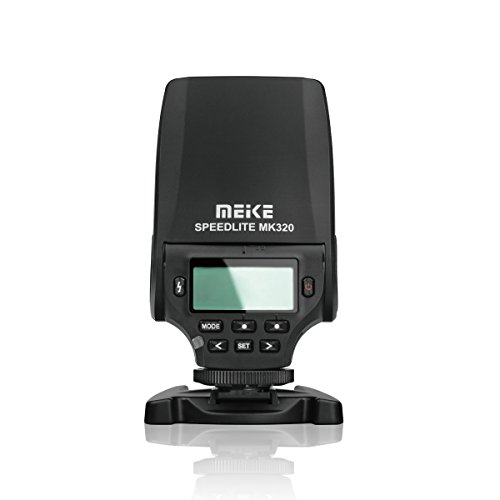
Ideal for budget‑focused shooters, the Meike MK‑320S comes in at $59.99—about $15 less than the Godox iT30Pro—delivering solid value for tight wallets.

Flashpoint R2
The Flashpoint R2 stands out with an 18 Wh battery, offering higher energy storage than the others—professionals who need extended power without sacrificing speed appreciate it.
Also considered
Score Analysis
Key score advantages vs. runner-up (Meike MK-320S)
Price Range
Godox iT30Pro
$74.90
Meike MK-320S
$59.99
Flashpoint R2
$179.00

Viltrox Spark Z3
$54.99

Westcott FJ80 II
$369.90

Commander Optics Flash
$115.70
Spec Comparison
TL;DR: The Godox iT30Pro S delivers a pocket‑sized 120 g TTL flash with a 2.8‑inch touchscreen, 100 m wireless range and a 49.2 ft guide number, ideal for travel shooters on Sony bodies.
At just 120 g, the iT30Pro packs a full‑color 2.8‑inch touchscreen, a 900 mAh rechargeable battery and a guide number of 49.2 ft (≈15 m) at ISO 100. Its 100 m (328 ft) 2.4 GHz X wireless range and 32 channels give reliable off‑camera control, while the built‑in diffuser softens light without extra gear.
Compared with the other five flashes, the iT30Pro sits between the ultra‑light Meike MK‑320S (105 g without batteries) and the heavyweight Westcott FJ80 II. Its 1.5 s recycle time is quicker than the Meike’s 0.08‑minute cycle but slower than the Viltrox Spark Z3’s 1 s. The 100 m radio range outmatches the Commander Optics Flash’s 30 m range, though the Flashpoint R2 shares a similar 100 m reach.
Travelers and solo creators praise the compact size and touchscreen ease of use. Professional reviewers highlight the unique Sony global‑shutter compatibility, allowing HSS up to 1/80,000 sec. Critics note the fixed head—no tilt or swivel—and the modest 49.2 ft guide number, which can limit reach in larger spaces.
The flash runs from 1/1000 to 1/30,000 sec and syncs up to 1/8000 sec (or 1/80,000 sec with Sony’s global shutter). It also offers multi‑strobe mode, optical S1/S2 triggers and a USB‑C charging port, rounding out a feature‑rich mini flash.
Pros
Cons
Best for: Travel and hybrid photographers who need a lightweight on‑camera flash for Sony mirrorless bodies.
Avoid if: You require a high‑output primary light source, studio‑level power, or a flash head that tilts and swivels for precise lighting control.
“first TTL pocket flash for advanced photographers”
“pretty decent output when needed”
TL;DR: The Meike MK‑320S packs a 32 m guide‑number and full TTL control into a 110 × 65 × 35 mm, 150 g unit for $59.99, making it a strong budget flash for Sony mirrorless shooters.
The standout spec is its 32 m guide‑number (ISO 100, 105 mm focal length), which outshines the 16 m GN of the Viltrox Spark Z3 and rivals many higher‑priced options. Coupled with a 5600 K color temperature and an IGBT circuit, it delivers consistent output in a compact metal‑hot‑shoe body that weighs just 105 g without batteries and 150 g with them.
Compared with the five other flashes in this roundup, the MK‑320S is a bit heavier than the Viltrox Spark Z3 (144 g) but lighter than the Westcott FJ80 II (2.55 lb). Its guide‑number sits well above the Viltrox and far below the Flashpoint R2’s 60 m at 200 mm, giving it a middle‑ground power level without the bulk of studio‑grade units. Its recycle time of 0.08 minutes exceeds the sub‑second recycle times of the Viltrox Spark Z3 (1 s) and Godox iT30Pro (1.5 s), which some users note in heavy‑use situations.
Reviewers consistently praise the flash’s portability and the intuitive large dot‑matrix LCD with backlight, which makes setting TTL, manual, or stroboscopic modes straightforward. Professionals highlight the fine‑tuning capability of 29 steps in 1/3‑stop increments and the built‑in LED modeling light for video work. However, users commonly complain that the fixed 24 mm‑equivalent beam angle limits coverage, and the reliance on AA batteries can lead to faster depletion under continuous shooting.
Pros
Cons
Best for: Beginners, travel photographers, and Sony mirrorless users who need a pocket‑size flash with solid TTL performance.
Avoid if: You require a zoom head, high‑power studio output, or radio‑based TTL wireless control.
“small and easy to carry”
TL;DR: The Flashpoint R2 offers a 60 m guide number, 100 m wireless range, and up to 500 full‑power flashes per charge, making it a high‑output, battery‑rich option for Sony shooters.
The standout spec is its 60 m guide number at 200 mm, paired with a 100 m wireless range that works across 32 channels and multiple master/slave groups. Its Li‑ion pack holds 2600‑2980 mAh, delivering 480‑500 full‑power flashes on a single charge and a recycle time of 1.5 s, so you’ll keep shooting without frequent recharging.
Compared with the other five flashes in this roundup, the R2’s wireless reach far exceeds the Commander Optics Flash’s 30 m range. It is heavier than the Godox iT30Pro, Meike MK‑320S, and Viltrox Spark Z3, but still lighter than the Westcott FJ80 II, which tops the scale. In terms of output, its 60 m guide number outclasses the Viltrox’s 16 m and Meike’s 32 m figures, while its battery‑powered design offers more flashes per charge than the Godox’s 560‑flash claim.
Users consistently praise the long battery life and reliable wireless performance, noting that the round head works well with magnetic modifiers for creative bounce. Professional reviewers highlight the solid TTL engine and ±3 EV compensation, though they also point out a noticeable power drop when the zoom reaches the wide end, which can affect uniform lighting. Some owners find the menu system a bit deep, especially when making quick adjustments on location.
The R2 also includes an AF‑assist LED that reaches 0.6‑5 m, a strobe rate of 199 Hz for high‑speed bursts, and a bounce angle that swings from 150° to 330° horizontally and –7° to 120° vertically, giving you plenty of positioning flexibility without extra accessories.
Pros
Cons
Best for: Hybrid shooters such as event, portrait and wedding photographers who need portable, high‑output flash performance.
Avoid if: You prioritize ultra‑compact gear for travel or prefer a simpler menu interface as a beginner.
TL;DR: The Viltrox Spark Z3 offers a pocket‑sized 144 g design, 1‑second recycle, 650‑flash battery life and 16 m guide number, making it a lightweight, budget‑friendly fill flash for Sony shooters.
The flash’s 1 s recycle time and up to 650 full‑power flashes per charge come from its 1800 mAh USB‑C rechargeable battery, letting you shoot quickly without swapping cells. At just 144 g and measuring 78.4 × 67.2 × 55.9 mm, it’s barely noticeable on a Sony hot shoe.
Compared with the Meike MK‑320S, the Spark Z3 is a bit heavier than Meike’s 105 g bare weight but lighter than Meike’s 150 g when its AA cells are installed, and its guide number of 16 m falls short of Meike’s 32 m. It weighs more than the Godox iT30Pro’s 120 g, yet it carries a larger 1800 mAh battery versus Godox’s 900 mAh and recycles faster than Godox’s 1.5 s. The Westcott FJ80 II tops out at 2.55 lb, making the Viltrox a fraction of that weight, while its 1600 mAh battery is also smaller than Viltrox’s.
Users consistently praise the flash’s tiny footprint and the convenience of USB‑C charging, calling it a handy pocket addition for casual shooting. Reviewers note the solid 26 Ws power output and the 7‑stop adjustment range from 1/64 to full power, but they also point out that the fixed head without bounce or swivel limits creative lighting. Professional reviewers highlight the reliable TTL auto mode and the inclusion of a snap‑on diffuser for softer fill.
Pros
Cons
Best for: Entry‑level buyers or those on a tight budget
Avoid if: You want the best value‑per‑dollar in its price range
TL;DR: The Westcott FJ80 II packs an 80 Ws output, 20 fps burst and a 2.8‑inch touchscreen, but its 2.55‑lb weight and premium $369.90 price make it a high‑end choice for serious Sony shooters.
The flash delivers a solid 80 Ws of power across a 9‑stop range with 0.1‑stop increments, and it can fire up to 20 fps in continuous mode. A 2.8‑inch full‑color LCD touchscreen lets you tweak settings on the unit itself, while the built‑in 2.4 GHz transceiver reaches up to 100 m wirelessly. Its 1600 mAh lithium‑ion polymer battery provides more than 500 full‑power flashes per charge, and a 2‑hour USB‑C charge gets you back in action quickly.
Compared with the other five flashes in this roundup, the Westcott’s 100 m wireless range matches the Flashpoint R2 but far exceeds the Commander Optics Flash’s 30 m reach. Its 1600 mAh battery capacity outpaces the Godox iT30Pro’s 900 mAh cell, though it weighs considerably more at 2.55 lb versus the iT30Pro’s 0.26 lb. The Godox model also has a 2.8‑inch screen, but the Westcott adds a larger battery and higher 80 Ws output, dwarfing the Viltrox Spark Z3’s 26 Ws. In depth, the Westcott’s 8.28‑in body measures notably deeper than the Commander Optics Flash’s 76.2‑mm chassis.
Professional reviewers note the flash’s precise 9‑stop control and the reliability of its 328‑ft (100 m) wireless link in crowded event venues. Users appreciate the 500+ full‑power flashes per charge, but the added weight can become tiring during long handheld sessions. Sony users can only use manual mode, which reduces workflow speed, and the lack of a built‑in zoom means you’ll need external modifiers for tighter beam control.
Additional technical highlights include a high‑speed sync capability up to 1/8000 s, a recycle time that varies from 0.05 s to 1.5 s, and a stable 5500 K ± 200 K color temperature across the entire power range. The soft‑round head swivels 360° horizontally and tilts 0–90° vertically, offering flexible positioning for portrait or event lighting.
Pros
Cons
Best for: Those prioritizing quality and willing to pay for premium performance
Avoid if: You're shopping on a tight budget — it's priced at $369.90
TL;DR: The Commander Optics Flash offers Sony‑compatible E‑TTL metering, 1/8000 s high‑speed sync, and 30 m wireless range, but its higher price and modest 3‑star rating make it a mid‑range choice.
One of the most notable specs is the high‑speed sync capability, which reaches up to 1/8000 s. This lets you freeze fast motion or shoot wide‑open in bright light without worrying about the usual shutter‑speed ceiling. The unit also sports a built‑in 2.4 GHz wireless system with a 30 m range, and an intuitive LCD panel for quick adjustments on the fly.
In size terms, the Commander Optics flash measures considerably larger than many rivals. Its height of 241.3 mm dwarfs the Godox iT30Pro’s 46 mm height and its depth of 76.2 mm exceeds the iT30Pro’s 47 mm depth. Compared with the Flashpoint R2, it matches the length (241.3 mm vs 235 mm) but exceeds the R2’s 83 mm depth. The Westcott FJ80 II is bulkier in depth at 210 mm, while the Commander Optics stays taller at 241.3 mm versus the Westcott’s 79 mm height. Pricing-wise, it sits above the more budget‑oriented options in the lineup.
Consumer sentiment is mixed: the flash holds a 3.0/5 star rating from nine reviews, suggesting some users are not fully satisfied. Review highlights praise the fully automatic E‑TTL metering and the high‑speed sync, but note the lack of published details such as guide number, recycle time, or battery type, which makes performance expectations harder to gauge.
Additional technical notes include support for flash exposure compensation, four operating modes (TTL, M, S1, S2), and a zoom range of 24‑105 m. The manufacturer does not list guide number, recycle time, battery capacity, or warranty details, so you’ll need to rely on the core features and Sony compatibility for your decision.
Pros
Cons
Best for: Budget‑conscious Sony Alpha photographers who need reliable E‑TTL and high‑speed sync without extensive feature lists.
Avoid if: Reliability and user satisfaction are your top concerns.
Breakdown
Godox iT30Pro
Pros
Meike MK-320S
Pros
Flashpoint R2
Pros
Viltrox Spark Z3
Pros
Cons
Based on scoring data and product specs
Personalized picks
Best Overall Pick
Godox iT30Pro
Best OverallBest for: Most users seeking a balanced, mainstream option
Meike MK-320S
Best for: Shoppers on a tight budget who want the most for their money
$59.99-$14.91 vs winner
Skip Commander Optics Flash if…
Reliability and user satisfaction are your top concerns
The Godox iT30Pro takes the top spot thanks to its strong 4.7‑star rating from 209 reviewers, a hefty 49.2‑ft (15 m) guide number at ISO 100, and a 328.1‑ft (100 m) wireless range that lets you control the flash from across the room. Its 900 mAh battery delivers up to 560 full‑power flashes per charge, and the 1.5‑second recycle time keeps you shooting without long pauses.
The Meike MK‑320S ranks as the runner‑up, especially if you need a flexible tilt‑and‑swivel head for creative bounce. It offers a tilt range of –7° to 90° and a 150° swivel, a 32‑m guide number, and runs on two AA cells (alkaline or Ni‑MH) with up to 1,500 flashes per charge. At $59.99 it also carries a solid 4.2‑star rating from 264 users.
For tighter budgets, the Viltrox Spark Z3 delivers reliable flash power at $46.74, making it the most affordable entry. If you’re after a premium studio solution, the Westcott FJ80 II stands out at $369.90 with solid build quality and power for demanding shoots.
Pick the Godox iT30Pro now for the most capable Sony‑compatible flash for everyday and advanced photography.
The Godox iT30Pro lists a wireless range of about 328 ft (100 m), which is longer than the 100 m range of the Flashpoint R2 and Westcott FJ80 II. Its 32 wireless channels also give flexible outdoor positioning.
No reviews yet — be the first to share your experience.
Please sign in to leave a review