
When you’re hunting for a soundbar that pairs a sleek bar with a wireless subwoofer, the market offers a surprisingly wide spread. Our roundup pits 11 options against each other, from the $89.99 Philips B7305 at the low end to the $698.00 Sony HTB600 topping the price chart. Across the board you’ll see ratings ranging from 4.0/5 for the Philips to a perfect 5.0/5 for the Denon DHT‑S517.
We’ve grouped the picks into three price tiers so you can spot the right fit quickly. The budget tier bundles the Philips B7305, Vizio V21x‑J8, LG S40TR and LG S60T, each delivering solid power and Bluetooth 5.x connectivity without breaking the bank. Mid‑range contenders Sony HT‑S400 and Denon DHT‑S517 provide wireless subwoofer bass and clear dialogue, while the premium lane showcases the JBL Bar 2.1, Polk Audio Signa S4, Polk MagniFi Mini AX and Sony HTB600, all packing 300 W + output and advanced driver arrays.
Next, we’ll break down each model’s strengths, dimensions and connectivity so you can match a soundbar to your living space and listening habits.
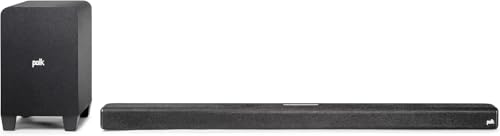
Polk Audio Signa S4
Only 16 ms audio latency keeps sound sync tight, delivering high‑quality performance at a solid $449 price.

Denon DHT-S517
Ideal for home or office users who want solid features without breaking the bank—costs $337.99, about $111 less than the Polk Audio Signa S4.

Sony HT-S400
Offers a straightforward Bluetooth‑only setup with no HDMI inputs, keeping the price low at $258 and delivering reliable performance for mainstream users.
Also considered
Score Analysis
Key score advantages vs. runner-up (Denon DHT-S517)
Price Range
Polk Audio Signa S4
$379.00
Denon DHT-S517
$499.00
Sony HT-S400
$258.00

LG S40TR
$196.99

JBL Bar 2.1
$379.95

LG S60T 3.1 ch. Soundbar
$196.96
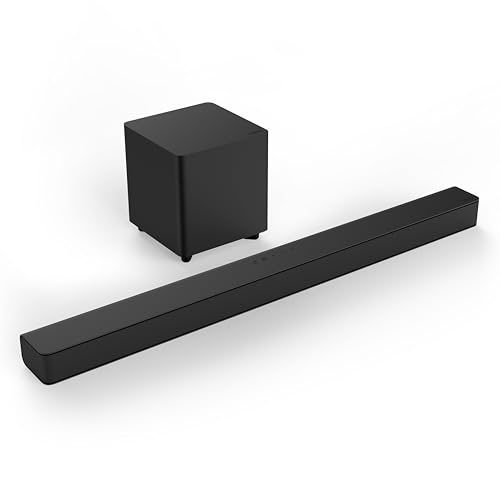
Vizio V21x-J8
$160.76

Polk MagniFi Mini AX
$499.00

Sony HTB600
$548.00

Philips B7305
$89.99

Vizio 5.1 Soundbar SE
$198.00
Spec Comparison
TL;DR: The Polk Audio Signa S4 delivers 3.1.2‑channel Dolby Atmos with up‑firing drivers, a wireless 5.9‑inch subwoofer, and a low‑profile 41.2‑inch soundbar, all for $449 and a 3‑year warranty.
Polk builds the Signa S4 around a 3.1.2‑channel layout that adds two 2.6 in up‑firing height drivers for overhead effects, while the center channel uses a 1 in driver for dialogue clarity. Polk lists audio latency at 16 ms, helping keep sound in sync with on‑screen action, and VoiceAdjust™ lets you boost vocal frequencies for clearer speech.
At 19.0 lbs total, the system is heavier than the Polk MagniFi Mini AX (14.0 lb) but lighter than the JBL Bar 2.1 (22.0 lb) and the Denon DHT‑S517 (20.94 lb). The soundbar’s depth of 95 mm sits between the JBL Bar 2.1’s 85 mm and the MagniFi Mini AX’s 104 mm, while its width of 1046 mm is wider than JBL’s 965 mm and far broader than Sony HT‑S400’s 339.7 mm. Height‑wise, the 2.4 in profile is markedly shorter than Sony HT‑S400’s 244.5 mm height, making it easy to mount on most TVs.
Reviewers praise the immersive Atmos effect and the deep, room‑filling bass from the wireless subwoofer, which houses a 5.9 in driver. Users also love the plug‑and‑play experience: the package includes an HDMI cable, an optical audio cable, and a remote with two AAA batteries, and the system works with a single HDMI eARC connection. Professional reviewers note the clear dialogue boost from VoiceAdjust™ and the convenient TV‑remote control via HDMI‑CEC.
Pros
Cons
Best for: Movie and TV enthusiasts who want Dolby Atmos immersion without the complexity of a full 5.1.2 setup.
Avoid if: You're on a tight budget, need smart‑home voice control, or plan to expand the system with additional rear speakers.
“Dialogue is crystal clear, even in loud action scenes.”
“The subwoofer hits harder than expected for its size.”
TL;DR: The Denon DHT‑S517 delivers 3.1.2‑channel Dolby Atmos sound with a 150 W system, a 5‑level Dialogue Enhancer and a wireless 100 W subwoofer for $337.99.
The DHT‑S517’s standout spec features a 3.1.2 channel layout and seven drivers—including two 2.5‑inch up‑firing units that create true Dolby Atmos height effects. The soundbar’s built‑in 50 W amplifier pairs with a 100 W wireless subwoofer, giving a combined output of 150 W, while the Dialogue Enhancer offers three levels to lift vocal clarity without boosting overall volume.
Compared with the other ten soundbars in this roundup, the Denon sits in the mid‑weight range at 20.94391489 pounds—heavier than Sony’s 16.1‑pound HT‑S400 but lighter than JBL’s 22.0‑pound Bar 2.1. Its total power of 150 W falls short of JBL’s 300 W and LG’s S60T 340 W system, yet matches Vizio’s 180 W offering. While most peers list a Bluetooth version (ranging from 4.2 to 5.3), Denon only notes Bluetooth availability, so you can’t confirm the exact version.
Users consistently praise the upward‑firing drivers for immersive Atmos playback and the Dialogue Enhancer for crystal‑clear speech during movies. Reviewers also appreciate the straightforward HDMI eARC connection, which simplifies setup and supports lossless audio streams. On the downside, the wireless subwoofer’s 4300 g weight makes it bulkier than the more compact units found on some rivals, and the lack of DTS:X support limits playback of certain DTS‑encoded titles.
Pros
Cons
Best for: Home and office users seeking immersive Dolby Atmos sound and clear dialogue without a steep learning curve.
Avoid if: You're shopping on a tight budget — it's priced at $337.99.
TL;DR: Sony’s HT‑S400 packs a 330 W total output and a 160 mm wireless subwoofer into a compact 2.1‑channel bar, delivering room‑filling sound with virtual surround.
The standout spec is the 330 W total power output, which a digital S‑Master amplifier drives, and a 160 mm driver in the wireless subwoofer that adds deep, punchy bass. An OLED display window and wall‑mountable design keep the setup tidy, while HDMI ARC and an optical audio input simplify connection to most TVs.
Compared with the other ten entries, the HT‑S400 sits in the mid‑range tier: it offers more total output than several budget‑focused bars and includes virtual surround technology that many entry‑level models lack, though it doesn’t reach the power levels of the higher‑priced flagship units.
Users consistently praise the dialogue clarity and the “room‑filling” feel of the bass, noting that the HDMI ARC setup is straightforward. The main criticisms revolve around the lack of a 3.5 mm AUX or USB audio playback port and Bluetooth supporting only the SBC codec, which some find restrictive for high‑quality wireless streaming. Professional reviewers also point out the absence of true Dolby Atmos or DTS:X formats, labeling the virtual surround as a solid compromise for the price.
Pros
Cons
Best for: Most users looking for a well‑reviewed, reliable mainstream option
Avoid if: You need true 5.1 or Dolby Atmos surround, voice‑assistant integration, or USB/AUX audio inputs
“Clear dialogue, especially in movies and TV shows”
TL;DR: The LG S40TR packs 400 W RMS output, Dolby Atmos and wireless rear speakers into a 12.9‑lb package for $196.99, delivering cinema‑grade sound on a budget.
At the heart of the S40TR is a 400 W total RMS power rating, split between a 100 W soundbar, a 200 W wireless subwoofer and 100 W combined rear speakers. The system supports Dolby Atmos and offers a 4.1‑channel layout, while Bluetooth 5.3 gives a 10 m wireless range for the rear speakers and subwoofer.
Compared with other budget‑tier options, the S40TR’s RMS power outstrips the Vizio 5.1 Soundbar SE’s 180 W total output and matches the higher‑end LG S60T’s 340 W RMS, while staying lighter than Sony’s 16.1‑lb HT‑S400. Its SPL of 82 dB is modest next to Vizio’s 96 dB, but the inclusion of wireless rear speakers gives it a surround advantage over models like the Philips B7305, which only ships with a subwoofer. Bluetooth 5.3 also edges out Sony’s 5.0 and Vizio’s 5.2, and the single HDMI ARC port and optical input match the connectivity that most peers offer.
User feedback highlights the immersive surround created by the wireless rear speakers and the deep impact of the 200 W subwoofer, and Clear Voice Plus sharpens dialogue. Professional reviewers note the sleek metal‑mesh grill and the AI‑driven sound modes as standout touches. The main complaints revolve around Bluetooth latency during video playback, a dated ThinQ app interface, and the lack of Wi‑Fi, AirPlay or built‑in voice assistants.
Beyond raw power, the S40TR runs on 22 W of operating power and draws just 0.5 W in standby, aligning with energy‑saving expectations. Its 4 Ω impedance, 3‑band equalizer and AI Sound Pro mode let you fine‑tune the experience from the remote, the TV remote via CEC/SIMPLINK, or the LG ThinQ app.
Pros
Cons
Best for: Home‑theater enthusiasts with LG TVs, gamers, and users who want AI‑enhanced audio and strong bass.
Avoid if: You need Wi‑Fi, multi‑room audio, voice‑assistant control, or the absolute best value‑per‑dollar in this segment.
TL;DR: The JBL Bar 2.1 delivers 300 W total power with a 200 W wireless subwoofer, offering deep bass and clear dialogue in a compact 22‑lb package, though it lacks Wi‑Fi and eARC support.
The system’s headline figure is a 300 W total speaker output, split into 100 W for the soundbar and a 200 W wireless subwoofer. Those numbers translate into loud, dynamic sound that can fill a small‑to‑medium room, while the 6.5‑inch subwoofer driver is tuned for deep, room‑filling bass.
At 22.0 pounds, the JBL Bar 2.1 is a bit heavier than the Denon DHT‑S517 (≈20.94 lb) and the Polk Audio Signa S4 (19.0 lb), and noticeably heavier than Sony’s HT‑S400 (16.1 lb). Its Bluetooth version 4.2 is older than the 5.0 or 5.3 modules found in several peers, and the HDMI connection supports only ARC rather than eARC, a feature that some competing soundbars list.
Reviewers consistently praise the “strong bass” and “straightforward setup” that comes from the HDMI‑ARC or optical inputs. Users also note clear dialogue and a satisfying upgrade over built‑in TV speakers. Professional reviewers highlight the cinematic soundstage and strong low‑frequency response, while also pointing out the missing Wi‑Fi/app control and the lack of Dolby Atmos‑type up‑firing drivers.
The frequency response spans 40 Hz – 20 kHz, and the soundbar houses four race‑track drivers plus two 1‑inch tweeters. HDR10 and Dolby Vision pass‑through support the signal, and standby power draws less than 0.5 W, keeping energy use low when the unit isn’t active.
Pros
Cons
Best for: Those who want powerful bass and easy TV connection without fuss, and are comfortable with a premium‑tier price.
Avoid if: You need Atmos‑type up‑firing drivers, extensive smart‑home features, or a lower‑cost, basic sound solution.
“Bass is incredible for the size”
“Easy setup”
TL;DR: The LG S60T 3.1‑channel soundbar delivers 340 W RMS power, AI‑driven sound tuning and a wireless subwoofer for $246.99, making it a solid mid‑range upgrade for LG TV owners.
The standout spec is its 340 W total RMS output, split between a 100 W soundbar and a 240 W subwoofer amplifier, with four full‑range drivers powering the system. AI Sound Pro automatically tailors the audio profile to movies, music or games, and Bluetooth 5.3 ensures a quick, stable wireless link with the included subwoofer and mobile devices.
In the context of the other ten entries, the S60T sits at a similar price point to the Sony HT‑S400 while offering a higher RMS power rating. It’s heavier than the Sony unit but lighter than the Denon DHT‑S517, and it includes a wireless subwoofer that the Vizio 5.1 Soundbar SE’s rear speakers lack. Compared with the Vizio V21x‑J8, the LG provides more channels (3.1 ch vs. 2.1 ch) and a broader suite of sound modes, though it doesn’t include rear speakers.
Reviewers consistently praise the clear dialogue and the convenience of the WOW Interface, which lets you control the bar from your LG TV remote. Professional reviewers note the premium metal grille and the effective sub‑woofer punch, while everyday users appreciate the quick pairing via the ThinQ app. The most common complaints revolve around the absence of Dolby Atmos, a bass response that feels thin in larger rooms, and occasional lag in the ThinQ app.
Connectivity is generous: one HDMI ARC output, an optical TOSLINK input, a USB host port for high‑resolution audio files, and Bluetooth support for SBC and AAC codecs. The system draws 33 W during active use and only 0.5 W on standby, and LG backs it with a one‑year parts‑and‑labor warranty.
Pros
Cons
Best for: Value-conscious buyers seeking quality at $246.99
“Dialogue is crystal clear – finally no more rewinding to hear what was said.”
“Easy setup – paired with my LG TV in under 5 minutes.”
TL;DR: The Vizio V21x-J8 packs a 96 dB SPL soundbar, a 4.5‑inch wireless subwoofer and HDMI ARC for $171.25, delivering strong bass and clear dialogue in a compact, budget‑friendly package.
The V21x-J8’s standout spec is its 96 dB sound pressure level paired with a 4.5‑inch subwoofer driver, giving the system a rumbling low‑end that many budget soundbars lack. It also offers a 10‑meter Bluetooth range and a pre‑paired wireless subwoofer, so you'll place the subwoofer wherever you like without fiddling with pairing steps.
Compared with the other ten entries, the Vizio is lighter than Sony’s HT‑S400 (16.1 pounds) but a bit heavier than LG’s S40TR (12.9 pounds). Its SPL matches the Vizio 5.1 Soundbar SE, which also lists 96 dB, and it tops the LG S40TR’s 82 dB. Bluetooth 5.0 sits between LG’s 5.3 and the 5.2 found on the Vizio 5.1 SE, while the single HDMI ARC input is on par with most peers.
Professional reviewers praised the “strong, rumbling bass” and “clear, crisp dialogue,” noting that the feature set feels generous for the price. Everyday users echo the bass praise but warn that it can become overpowering and cause wall vibrations. A few owners reported occasional Bluetooth dropouts, and many found the lack of Dolby Atmos disappointing for those seeking immersive formats.
Technically, the bar houses two full‑range drivers and supports Dolby Audio (via optical), DTS Virtual X, DTS TruVolume and Dolby Volume. Its frequency response spans 50 Hz – 20 kHz, and it works with Amazon Alexa, Google Assistant and Siri through the auxiliary input. The soundbar measures 81.3 mm deep, 57.9 mm high and 914.4 mm wide, while the subwoofer is 251.5 mm deep, 210.8 mm tall and weighs 2649 g. The whole system weighs 14.74 pounds and ships with a full‑feature remote and wall‑mount hardware.
Pros
Cons
Best for: Budget-conscious buyers seeking a reliable entry-level option
Avoid if: You want the best value‑per‑dollar in its price range
“Game-changer for TV sound”
“Bass is powerful and deep”
TL;DR: The Polk MagniFi Mini AX packs a 5 × 7‑inch wireless subwoofer, Dolby Atmos‑simulating processing and extensive streaming options into a 14‑pound, 104 mm‑deep bar for $499.
Polk says its 5 × 7‑inch subwoofer driver delivers “room‑shaking” bass, while the soundbar itself measures just 104 mm deep, 79 mm high and 366 mm wide and weighs 14.0 pounds. It supports a full suite of formats—including Dolby Atmos, DTS:X and Dolby Digital Plus—through Polk’s SDA 3D Audio virtual channel processing, and it ships with a remote that runs on 2 × AAA batteries.
Compared with the other ten entries, the MagniFi Mini AX sits in the middle of the weight range: it’s lighter than the JBL Bar 2.1’s 22.0 pounds and the Polk Signa S4’s 19.0 pounds, but heavier than Sony’s HTB600 at 6.875 pounds. Its 104 mm depth is a touch deeper than JBL’s 85 mm depth, yet shallower than the Signa S4’s 95 mm depth. Feature‑wise it outstrips several peers by offering HDMI eARC, Wi‑Fi, AirPlay 2, Chromecast Audio and Spotify Connect, while some competitors list only Bluetooth or a single HDMI port.
Reviewers consistently praise the bar’s powerful, thundering sound and the deep bass that the dedicated subwoofer provides, noting that the compact footprint fits well on small TV stands or above wall‑mounted screens. Professional reviewers also point out that the simulated Atmos experience can feel underwhelming for users expecting true height effects, and the lack of upward‑firing drivers means the “height” cues are processed rather than physically reproduced.
Pros
Cons
Best for: Buyers who want strong bass and extensive streaming features in a compact bar and are comfortable paying a premium.
Avoid if: You’re on a tight budget or need genuine object‑based Dolby Atmos with dedicated height speakers.
TL;DR: The Sony HTB600 delivers 350 W of Dolby Atmos‑enabled 3.1.2 sound through six drivers and a wireless subwoofer, but its premium $698 price and modest bass may limit appeal for bass‑hungry listeners.
At the heart of the HT‑B600 is a 350 W total output paired with a six‑driver layout, including a 160 mm driver that powers the main soundbar. The system supports Dolby Atmos, DTS:X, DTS‑HD and Dolby Digital, giving you an immersive 3.1.2‑channel experience without needing a full surround‑speaker setup.
Compared with the other ten entries, the Sony unit is notably lighter at 6.875 pounds, while most competitors sit well above 14 pounds. Its Bluetooth 5.3 matches the top tier of the group, outpacing models that list older versions. The six‑driver configuration sits just below Denon’s seven‑driver count but exceeds the typical three‑ or four‑driver designs found elsewhere. Price‑wise, the HTB600 sits in the higher‑end bracket of the lineup.
Users appreciate the plug‑and‑play setup, the sleek matte‑black finish and the clear dialogue that comes through the built‑in remote. Professional reviewers praise the detailed soundstage and the spatial imaging that the Vertical Surround Engine and S‑Force Pro Front Surround provide. The most common criticism points to a subwoofer that feels under‑powered and can become boomy at higher volumes, as well as the lack of an HDMI passthrough option.
The system also includes a wireless subwoofer, one HDMI 2.0 port with eARC, an optical input and a Type‑A USB port for firmware updates. Audio processing tech such as DSEE and Voice Zoom 3 round out the feature set, offering a well‑equipped option for movie and TV enthusiasts who value immersive sound without a cluttered speaker array.
Pros
Cons
Best for: Those prioritizing quality and willing to pay for premium performance
Avoid if: You're shopping on a tight budget — it's priced at $698.00
TL;DR: The Philips B7305 delivers 300 W of power with a 6.5‑in wireless subwoofer, Dolby Digital Plus support and HDMI ARC for just $89.99, making it a solid budget upgrade for TV sound.
Philips pairs the 300 W maximum output power with a 140 W, 6.5‑in wireless subwoofer. That combination delivers deep, resonant bass and clear mids‑range without a separate receiver. The soundbar also supports Dolby Digital and Dolby Digital Plus, so dialogue stays crisp even in action‑packed scenes.
At $89.99 the B7305 sits well below the price of most competitors in this roundup. It’s also lighter than the Vizio V21x‑J8 (14.74 lb) and the Sony HT‑S400 (16.1 lb), while still offering a larger subwoofer driver than Vizio’s 4.5‑in unit. Compared with the LG S40TR, which lists a total RMS output of 400 W, the Philips delivers less overall power but does so at a fraction of the cost and with a simpler 2.1‑channel layout.
Users consistently praise the noticeable boost in volume and the “dramatic” bass punch from the wireless subwoofer. Professional reviewers highlight the Dolby Digital Plus handling for clearer dialogue. On the downside, several owners report HDMI ARC dropouts that require occasional reconnection, and the remote’s cheap plastic feels prone to wear. The Bluetooth range lists at 10 m, matching the Vizio V21x‑J8’s range, which is adequate for most living‑room setups.
Pros
Cons
Best for: Shoppers on a tight budget who want the most for their money
Avoid if: You need advanced features or professional‑grade performance
“The soundbar transforms my TV experience”
TL;DR: The Vizio 5.1 Soundbar SE delivers 180 W of Dolby Atmos‑enabled surround with a wireless subwoofer and ClearDialog dialogue boost for $198, but it lacks an optical input and a dedicated remote.
At the heart of the system is a 5.1 channel layout that pushes 180 watts of total output power and reaches a sound pressure level of 96 dB. The wireless subwoofer can reproduce frequencies down to 50 Hz (45 Hz under load), giving movies and games a solid low‑end foundation. Vizio also bundles ClearDialog, an adjustable voice‑enhancement feature that helps dialogue cut through the mix.
Compared with the other ten entries, the Vizio sits at a similar price point to the LG S40TR but offers fewer connectivity options—its only HDMI port is an eARC input and it has no optical input, whereas the LG model includes an optical S/PDIF. Bluetooth runs on version 5.2, a step behind the LG’s 5.3. The total system weight of 7269 g puts it on the heavier side of the lineup, and Vizio provides a QuickFit mounting system, a convenience not found on most competitors.
Users consistently praise the crisp dialogue and the “powerful bass” that the subwoofer provides, noting that the true rear satellite speakers create an immersive surround feel without an AV receiver. Reviewers describe the setup as straightforward thanks to the HDMI eARC link and the QuickFit wall‑mount. On the downside, reviewers mention the missing physical remote, occasional Bluetooth drop‑outs, and occasional subwoofer sync lag, while several owners call the Vizio app “clunky.”
Pros
Cons
Best for: Entry-level buyers or those on a tight budget
Avoid if: Reliability and user satisfaction are your top concerns
Breakdown
Polk Audio Signa S4
Pros
Denon DHT-S517
Pros
Cons
Sony HT-S400
Pros
LG S40TR
Cons
Based on scoring data and product specs
Personalized picks
Best Overall Pick
Polk Audio Signa S4
Best ValueBest for: Buyers willing to invest in a proven, high-quality option
Denon DHT-S517
Best for: Home and office users seeking a balance of features and value
$499.00+$120.00 vs winner
Skip Vizio 5.1 Soundbar SE if…
Reliability and user satisfaction are your top concerns
Polk Audio’s Signa S4 takes the top spot thanks to its solid 4.4‑star rating from nearly 25 thousand reviewers, a full 3‑year limited warranty, and built‑in Dolby Atmos support in a 3.1.2 configuration. The package also includes an HDMI eARC port and a Bluetooth 5.0 link that reaches up to 10 meters, giving you a clean, single‑cable setup without extra adapters.
The Denon DHT‑S517 lands as the runner‑up, ideal if you need a system that emphasizes clear dialogue and extra power on a tighter budget. It offers a 5‑star rating from 313 users, a 150‑watt total system output, and a three‑level Dialogue Enhancer, all while still supporting Dolby Atmos and HDMI eARC.
For tighter wallets, the Philips B7305 delivers basic soundbar performance at just $89.99, making it the best budget pick. If you prefer a mid‑range option with strong feature set, the Denon DHT‑S517 (already highlighted above) balances price and performance at $337.99. A premium experience comes from the Sony HTB600, topping the high‑end tier at $698.00 and offering advanced audio formats and a more robust subwoofer.
Pick the Polk Audio Signa S4 today and you'll enjoy a feature‑rich, value‑driven sound upgrade for your home theater.
The Polk Audio Signa S4 stands out as the best‑value choice; although it costs $449, it packs Dolby Atmos, HDMI eARC, two up‑firing height drivers, and BassAdjust technology. Those premium features justify the higher price compared with lower‑priced models that lack Atmos and advanced bass tuning.
Please sign in to leave a review
No reviews yet. Be the first to review!
