⚡ Quick Answer
Choosing a soundbar with a wireless subwoofer often feels like a trade‑off between price and performance. In this round‑up of 11 models, the most budget‑friendly option – the Hisense HS2100 at $119.99 – actually carries the highest user rating at 4.5 out of 5, a surprising flip of the usual expectation. Meanwhile, the Polk Audio Signa S3 costs $329.00 and still earns a solid 4.4 rating while offering a lightweight 3.96‑lb soundbar and a compact 11.46‑lb subwoofer.
To help you navigate, we’ve grouped the lineup into three price tiers. The budget tier – Hisense HS2100, LG S60T ($196.96), LG S40TR ($196.99) and Vizio SV510X‑08 ($198.00) – keeps entry costs under $200 while delivering power outputs from 240 W to 96 dB SPL. Mid‑range contenders like Sony’s HT‑S400 Black ($258.00) and Hisense AX3120Q ($259.99) push total power into the 330‑W to 500‑W range. Premium choices – Klipsch Cinema 400, Polk Signa S3, JBL Bar 2.1 Deep Bass MK2 and Polk MagniFi Mini AX – sit between $299 and $499 and bring higher system weights for deeper bass.
Below we break down each model’s connectivity, driver layout and subwoofer footprint so you can match the right balance of price, size and performance to your living space.
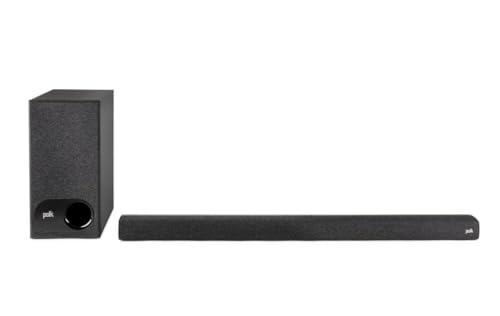
Polk Audio Signa S3
Its shallow 3.22‑in depth keeps the soundbar low‑profile for any TV setup.

Hisense HS2100
Ideal for budget‑conscious renters, the HS2100 delivers solid sound at $119.99—about $209 less than the Polk Signa S3.
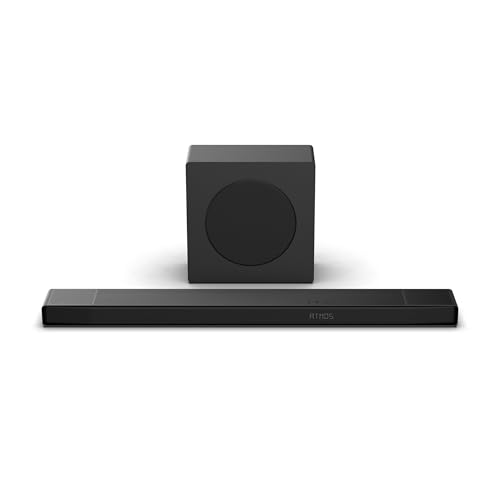
Hisense AX3120Q
Stands out with a 500 W max output, offering louder, room‑filling audio that the lower‑powered Signa S3 and HS2100 can't match.
Also considered
Score Analysis
Key score advantages vs. runner-up (Hisense HS2100)
Price Range
Polk Audio Signa S3
$349.00
Hisense HS2100
$118.99
Hisense AX3120Q
$259.99

Vizio SV510X-08
Out of Stock

Sony HT-S400 Black
$258.00

JBL Bar 2.1 Deep Bass MK2
$379.95

Klipsch Cinema 400
Out of Stock

LG S60T
$249.99

Polk Audio MagniFi Mini AX
$499.00

LG S40TR
$226.99

Hisense HS5100
$169.99
Spec Comparison
TL;DR: The Polk Audio Signa S3 is a low‑profile 2.1‑channel soundbar with a wireless subwoofer, built‑in Chromecast and VoiceAdjust, priced at $329 and backed by a 4.4‑star rating.
The standout spec is its ultra‑thin 2.15‑in soundbar height, making it easy to hide under most TVs. It delivers a 2.1‑channel layout, a 45 Hz‑20 kHz frequency response, and three VoiceAdjust dialogue levels for clearer speech.
At 15 lb total system weight, the Signa S3 is lighter than the Klipsch Cinema 400 (about 28 lb) and JBL Bar 2.1 Deep Bass MK2 (22 lb), while being only a shade heavier than the Sony HT‑S400 (16.1 lb) and noticeably lighter than the LG S40TR (12.9 lb). Its 35.43‑in soundbar width is shorter than the Klipsch’s 1013‑mm length, giving it a more compact footprint than some of the larger competitors.
Reviewers praise the plug‑and‑play setup, noting the included HDMI ARC, optical and Bluetooth connections let you pair with any HD, 4K or 8K TV without fuss. Reviewers highlight the built‑in Chromecast and Google Assistant support as convenient streaming features not always found in entry‑level models. Users also appreciate the solid bass from the 11.46‑lb wireless subwoofer, though the 13.4‑in subwoofer height can be a tight‑fit issue in cramped spaces. Professionals point out the lack of true multi‑channel surround and the absence of detailed power output specs as trade‑offs for its simplicity.
The Signa S3 also packs Dolby Digital decoding, DTS virtual surround, and a 3.22‑in soundbar depth, while the IR remote with batteries keeps control straightforward. With a 1‑year manufacturer warranty plus 2 years on the drivers, it balances modern connectivity with a reliable brand pedigree.
Pros
Cons
Best for: Buyers willing to invest in a proven, high‑quality option
Avoid if: You're on a tight budget or only need basic functionality
TL;DR: The Hisense HS2100 delivers 240 W RMS 2.1‑channel sound with DTS Virtual:X and Bluetooth 5.3, all for $119.99, making it a compact, budget‑friendly TV audio upgrade.
The HS2100 packs a 240 W RMS total output into a slim 800 mm‑wide, 90 mm‑deep soundbar that sits just 60 mm high. It pairs a 120 W wireless subwoofer with DTS Virtual:X virtual surround and six preset EQ modes, covering a 45 Hz‑20 kHz frequency response for balanced bass and clarity.
Compared with other entries, the HS2100's heavier than the Hisense HS5100 (listed at 3.505 lb) but it's lighter than the Hisense AX3120Q’s 18.3 lb. Its 90 mm depth is a touch deeper than the LG S60T’s 88.9 mm, yet still shallower than the Sony HT‑S400’s 88 mm depth. Unlike some rivals, it includes HDMI ARC and Bluetooth 5.3, giving it more flexible connectivity than models that lack ARC.
Reviewers appreciate the strong bass from the 120 W subwoofer and the straightforward setup with a single remote that also controls the TV. The main complaints focus on the lack of Wi‑Fi or multi‑room audio and the single HDMI input, which can be limiting for users with several devices.
Operating power sits at 25 W with standby consumption under 0.5 W, keeping energy use modest. The system ships with a one‑year manufacturer warranty, and the package dimensions (445 mm × 155 mm × 890 mm) fit comfortably in most bedroom or apartment setups.
Pros
Cons
Best for: Budget-conscious buyers seeking a reliable entry-level option
Avoid if: You have limited desk space or need portability
TL;DR: The Hisense AX3120Q delivers 3.1.2‑channel Dolby Atmos sound with 440 W RMS power and a 6.5‑inch wireless subwoofer, but its $259.99 price sits above many entry‑level rivals.
The standout spec delivers 440 W RMS output paired with a 3.1.2‑channel layout that includes Dolby Atmos and DTS:X processing. A 6.5‑inch wireless subwoofer rounds out the system, and AI EQ automatically tailors the sound to your room. The soundbar itself weighs 8.3 kg (about 18.3 pounds), and the whole package draws 120 W of power.
Compared with the other ten models, the Hisense is heavier than Sony’s HT‑S400 at 16.1 pounds but lighter than Klipsch’s Cinema 400, which tips the scales at roughly 28 pounds. Its RMS power of 440 W exceeds Sony’s listed total output of 330 W, giving it a clear edge in raw wattage. The subwoofer’s 6.5‑inch driver exceeds Vizio’s 5‑inch driver and sits between LG’s S40TR (no driver size listed) and the larger 203 mm driver on the Klipsch unit. In terms of weight, it matches LG’s S60T at about 18.2 pounds and is comparable to Polk Audio’s Signa S3 at 18.96 pounds.
Reviewers consistently praise the immersive height effects from Dolby Atmos and the flexibility of the wireless subwoofer, noting that setup feels straightforward. Professional reviewers highlight the strong RMS power and AI EQ as value‑adding features, while consumer comments mention the “cinematic boost” it provides for 48"+ TVs. The system also offers Virtual:X virtual height channels, Night mode for low‑volume clarity, and a Hi‑Concerto engine that aims to separate dialogue from music.
Technical extras include Bluetooth 5.3 streaming, HDMI eARC/ARC with 4K 60 Hz pass‑through, and a suite of seven quick‑touch EQ presets. Power consumption stays modest at 120 W, and the included remote comes with two AAA batteries, so you’re ready to go out of the box.
Pros
Cons
Best for: Most users looking for a well‑reviewed, reliable mainstream option
Avoid if: You're shopping on a tight budget — it's priced at $259.99
“immersive audio that surrounds you" with "rich sound and deep bass”
TL;DR: The Vizio SV510X‑08 delivers 5.1‑channel Dolby Atmos sound with a 5‑inch wireless subwoofer, app control and HDMI eARC for $198, offering solid performance in a compact 33‑inch bar.
The system packs a full 5.1‑channel layout, a 5‑inch wireless subwoofer and a measured 96 dB SPL output, so you can enjoy Dolby Atmos and DTS:X without extra speakers. Its driver size of 1.66" × 2.77" and a frequency response of 45 Hz–16 kHz ±5 dB gives clear mids and decent highs for a mid‑tier bar.
At a similar price point to the LG S40TR, the Vizio’s 5.13‑lb soundbar's lighter than the Sony HT‑S400, which tips the scales at 16.1 lbs, and its subwoofer weighs 7.6 lbs—lighter than many bulkier competitors. While it lists fewer power specifications than the Hisense AX3120Q, the Vizio still offers a solid feature set for its class.
Users appreciate the immersive Atmos effect and the convenience of Bluetooth 5.2 and app control, especially in apartments. However, reviewers say the bass starts at 45 Hz, which can feel thin in larger rooms, and the lack of an optical input limits connectivity options. Some also mention occasional Bluetooth dropouts and a lightweight build that feels less solid than higher‑end models.
Technical perks include HDMI eARC for a single‑cable TV connection, QuickFit mounting that supports up to 25 lb devices, and wireless surround speakers that round out the 5.1 experience without extra wiring.
Pros
Cons
Best for: Value-conscious buyers seeking quality at $198.00
Avoid if: You need advanced features or professional‑grade performance
TL;DR: The Sony HT‑S400 delivers 330 W of total power through a 160 mm driver, a wireless subwoofer and Dolby Digital support, making it a solid mid‑range 2.1 soundbar for clear dialogue and punchy bass.
What sets the HT‑S400 apart is its 330 W total power output backed by a digital amplifier with S‑Master technology and a 160 mm driver. The system also packs Sony’s S‑Force PRO Front Surround, Dolby Digital decoding, Bluetooth 5.0 and an OLED status display, so it provides virtual surround ambience without a wall of speakers.
Compared with the other ten entries, the Sony sits in the middle of the weight range: at 16.1 pounds it’s lighter than the Hisense AX3120Q (18.3 pounds) but heavier than the LG S40TR (12.9 pounds). Its 2.1‑channel layout is simpler than the LG S60T’s 3.1 configuration and the Klipsch Cinema 400’s larger subwoofer driver (203 mm), yet it offers a wireless subwoofer like many rivals while keeping the soundbar depth to just 88 mm.
User feedback highlights the Voice Mode and Night Mode as useful for dialogue‑heavy movies and late‑night TV, with reviewers praising the clear speech and “powerful bass response” from the included subwoofer. The downside that pops up repeatedly is the lack of dedicated surround speakers, which limits true surround immersion, and some users wish for more input options beyond the optical port.
On the power side, the bar draws 35 W in normal operation and 2.0 W on standby, while the subwoofer uses 20 W normally and 0.5 W in quick‑start mode. The compact dimensions—64 mm height, 88 mm depth and 900 mm width—make it easy to slip under most TVs, and the compact remote keeps the setup tidy.
Pros
Cons
Best for: Most users looking for a well‑reviewed, reliable mainstream option
Avoid if: You're shopping on a tight budget — it's priced at $258.00
TL;DR: The JBL Bar 2.1 Deep Bass MK2 packs 300 W of total power and a 6.5‑inch wireless subwoofer into a slim 965 mm‑wide soundbar, delivering strong bass for a modestly premium price.
The system’s headline spec is its 300 W total RMS output, split between a 100 W soundbar and a 200 W wireless subwoofer that uses a 6.5‑inch (165 mm) driver. Coupled with Dolby Digital decoding and virtual surround processing, it promises cinema‑style depth without a full 5.1 setup.
Compared with the other ten entries, this model sits on the higher end of the price spectrum and carries a heftier overall weight of 22.0 lb, making it heavier than many of the more compact competitors. Its 300 W system power outpaces several peers that list lower wattage, while the 6.5‑inch subwoofer is larger than the 5‑inch drivers found in some budget options. The soundbar’s low‑profile dimensions—965 mm wide, 56 mm high, and 85 mm deep—keep it slimmer than many taller bars, yet the package is bulkier than the lightest models.
Users have awarded it a solid 4.4 / 5 stars across 491 reviews, frequently praising the “deep, thrilling bass” that the 200 W subwoofer delivers. Reviewers also note the compact footprint as a good fit for apartments or small‑room setups. On the downside, several commenters point out the 2.1‑channel layout limits true surround immersion, and a few mention that the price tag feels steep for a system without height or rear speakers.
Additional technical details include Bluetooth 4.2 with A2DP v1.3 and AVRCP v1.5 profiles, a 5G wireless band ranging from 5736.35‑5820.35 MHz, and a USB‑A port for playback or firmware updates. JBL backs the unit with a one‑year manufacturer warranty.
Pros
Cons
Best for: Those prioritizing quality and willing to pay for premium performance
Avoid if: You're shopping on a tight budget — it's priced at $379.95
TL;DR: The Klipsch Cinema 400 delivers 2.1‑channel sound with a 203 mm wireless subwoofer, 99 dB peak output and Bluetooth streaming, but its 28 lb weight and modest 3.9‑star rating may deter some buyers.
Klipsch’s Cinema 400 packs a 203 mm (8‑inch) wireless subwoofer into a 2.1‑channel system, and the bar can reach a maximum acoustic output of 99 dB. The frequency response spans 35 Hz to 20 kHz, giving you deep lows and clear highs without a separate rear speaker array.
At roughly 28.00 lb, the system is noticeably heavier than the Polk Audio Signa S3 (about 19 lb) and the Hisense AX3120Q (about 18 lb). Its depth of 86 mm is marginally shallower than the Sony HT‑S400’s 88 mm, but the overall bulk can make wall‑mounting a bit more involved compared with lighter rivals.
Users frequently mention the ease of hooking the bar up via HDMI‑ARC and the convenience of Bluetooth music streaming. Reviewers also praise the low‑profile design that slips neatly under most 40‑55‑inch TVs, while professional reviewers highlight the Tractrix horn‑loaded tweeters for wide dispersion and the 99 dB output for dynamic movie soundtracks. The package includes a remote, HDMI cable and mounting hardware, making the first‑time setup straightforward.
The system ships with a one‑year parts‑and‑labor warranty, and the manufacturer lists Dolby Digital and virtual 5.1 surround processing as part of the audio suite.
Pros
Cons
Best for: Those prioritizing quality and willing to pay for premium performance
Avoid if: You need true discrete surround sound, multi‑room integration, or smart‑home app control
TL;DR: The LG S60T delivers 3.1‑channel sound with a dedicated center speaker, AI Sound Pro processing and a wireless subwoofer, all housed in a sleek 850.9 mm‑wide bar for about $197.
The standout feature is the dedicated center channel paired with AI Sound Pro, which automatically balances dialogue and effects for clearer speech in movies and TV shows. The system packs a 3.1‑channel layout, Dolby Audio support and a wireless subwoofer, all fitting within a depth of 88.9 mm and a height of 63.5 mm.
Weighing 18.2 pounds, the S60T tops the LG S40TR (12.9 pounds) and the Sony HT‑S400 (16.1 pounds), so it's one of the bulkier options in this 11‑product roundup. While it shares Bluetooth and HDMI ARC connectivity with most rivals, fewer competitors list a crest‑style metal grill or the WOW Orchestra interface.
Users consistently praise the crystal‑clear dialogue thanks to the dedicated center speaker and the deep, impactful bass from the wireless subwoofer. Users describe the setup as straightforward, especially with the single remote control. However, some owners have run into wireless connectivity hiccups that force rear speakers to be wired, and a few note occasional stuttering or volume jumps when using the remote.
Beyond the core audio, the S60T offers Auto Volume Leveler, customizable EQ, Night Mode and the WOW Interface, giving you fine‑tuned control without extra accessories. The metal grill adds a premium look while protecting the drivers, and the 1‑year parts‑and‑labor warranty provides basic peace of mind.
Pros
Cons
Best for: Entry-level buyers or those on a tight budget
Avoid if: You want the best value-per-dollar in its price range
TL;DR: Polk Audio's MagniFi Mini AX delivers Dolby Atmos‑enabled 3.1‑channel sound in a compact 15‑inch bar with a wireless subwoofer, but its $499 price makes it the priciest option in the lineup.
The MagniFi Mini AX stands out with its Dolby Atmos and DTS:X certification, giving you true cinematic surround in a 3.1‑channel layout. It packs a 2 in (51 mm) midrange driver, a 0.75 in (19 mm) tweeter, and a 5 in × 7 in (127 mm × 178 mm) wireless subwoofer, all powered by Polk’s SDA 3D Audio Technology and VoiceAdjust.
At 14 lb, the system weighs less than the 22 lb JBL Bar 2.1 Deep Bass MK2, the 18.96 lb Polk Signa S3, the 27.99 lb Klipsch Cinema 400, the 18.3 lb Hisense AX3120Q, and the 16.1 lb Sony HT‑S400, making it the most portable option among the eleven soundbars. Its overall width of 15 in (381 mm) and a depth of just 4.1 in (104 mm) let it slip into tight apartments where a bulkier bar would dominate the TV stand.
Reviewers consistently praise the immersive Atmos and DTS:X experience, noting that the virtual height cues make movies feel larger than the room. Users also appreciate the wireless subwoofer’s ability to add deep bass without a cable clutter. The 4.4/5 rating from 805 reviews underscores broad satisfaction, though many point out that the $499 price tag sits above the budget‑friendly alternatives in the roundup.
Connectivity includes one HDMI eARC input, a digital optical input, a 3.5 mm aux, and a USB‑A port. Bluetooth 5.0 provides a 10 m (32.8 ft) range, and streaming services like Google Chromecast for Audio, Apple AirPlay 2, and Spotify Connect are built‑in, covering most modern listening habits.
Pros
Cons
Best for: Buyers willing to invest in a proven, high‑quality option
Avoid if: You're on a tight budget or only need basic functionality
TL;DR: The LG S40TR is a 4.1‑channel soundbar with wireless rear speakers and subwoofer, priced at $196.99, offering Dolby Atmos and compact dimensions for small‑room setups.
The standout feature of the S40TR is its fully wireless surround package: the rear speakers and 9.3 lb subwoofer connect without cables, while the 28.4‑inch soundbar itself weighs only 3.6 lb. Dolby Atmos support and 4.1‑channel output let you enjoy height‑enhanced audio without a bulky center speaker.
At a shipping weight of 22.1 lb, the S40TR is heavier than the Sony HT‑S400 (16.1 lb) and the LG S60T (18.2 lb), but it still fits comfortably on a TV stand thanks to its slim 2.5‑inch height. Compared with the Vizio SV510X‑08, whose subwoofer weighs 7.6 lb, the S40TR’s subwoofer is a bit heavier, yet the overall package remains competitive for its price tier.
Users appreciate the clutter‑free setup that the wireless speakers provide, and many note the convenience of Auto Power, Night Time Mode, and SIMPLINK integration via the iOS/Android remote app. The most common criticism is the lack of disclosed power output and frequency response, which makes it hard to gauge loudness against other models, and the limited number of professional reviews.
Pros
Cons
Best for: Entry-level buyers or those on a tight budget
Avoid if: You want the best value-per-dollar in its price range
TL;DR: At $179.99, the Hisense HS5100 earns a 3.9‑star rating from 3,749 reviewers, praised for its immersive surround sound but noted for subwoofer drop‑outs and limited connectivity.
The Hisense HS5100 positions itself as the most affordable option in this 11‑product roundup, priced at $179.99. It carries a 3.9‑star average from 3,749 user reviews and lands at rank #11, making it the lowest‑rated entry among its peers.
Reviewers consistently highlight the system’s ability to fill a medium‑sized room with cinematic audio, noting the dedicated sound modes that work well for movies and games. The slim, lightweight soundbar slips easily under most TV stands, a real plus for renters or apartment dwellers. On the downside, users report that the wireless subwoofer can cut out during playback and that the rear speakers must be wired to the subwoofer, reducing the promised all‑wireless experience. The lack of built‑in Wi‑Fi and an HDMI input also limits how the system integrates with modern home‑theater setups.
Given its price and rating, the HS5100 sits at the entry‑level end of the lineup. It offers a full surround experience for a budget‑focused shopper, but the trade‑offs in reliability and connectivity mean it may fall short for those who need a rock‑solid, feature‑rich setup.
Pros
Cons
Best for: Entry-level buyers or those on a tight budget
“this will be the last purchase with this company”
Breakdown
Polk Audio Signa S3
Pros
Hisense HS2100
Pros
Hisense AX3120Q
Pros
Cons
Vizio SV510X-08
Pros
Based on scoring data and product specs
Personalized picks
Best Overall Pick
Polk Audio Signa S3
Best ValueBest for: Buyers willing to invest in a proven, high-quality option
Hisense HS2100
Best for: Budget-conscious buyers seeking a reliable entry-level option
$118.99-$230.01 vs winner
Skip Hisense HS5100 if…
Reliability and user satisfaction are your top concerns
We’re naming the Polk Audio Signa S3 the top choice in the wireless‑subwoofer soundbar showdown. It ships for $329.00, earns a solid 4.4‑star rating from 24,975 reviewers, and packs a 5.1‑channel Dolby Digital decoder plus DTS Virtual Surround. Its low‑profile design (just 2.15 in tall) and built‑in Chromecast keep it looking sleek while staying ready for streaming.
The runner‑up, the Hisense HS2100, shines when you need a budget‑friendly system that still delivers punch. At $119.99 it scores a 4.5‑star rating from 722 users, offers 240 W total power with a 120 W subwoofer, and includes Bluetooth 5.3, HDMI ARC and a USB port for easy hookups—ideal for a first‑time TV upgrade or a small‑room setup.
Here are the broader price tiers:
Pick the Polk Audio Signa S3 today and upgrade your home audio with confidence.
The Signa S3 includes Bluetooth and a built‑in Chromecast that lets you stream over Wi‑Fi, while the HS2100 offers Bluetooth 5.3 and also supports HDMI ARC and an optical input for wired connections. Both units can receive audio from a phone or tablet, but only the Signa S3 adds Wi‑Fi‑based casting.
No reviews yet — be the first to share your experience.
Please sign in to leave a review