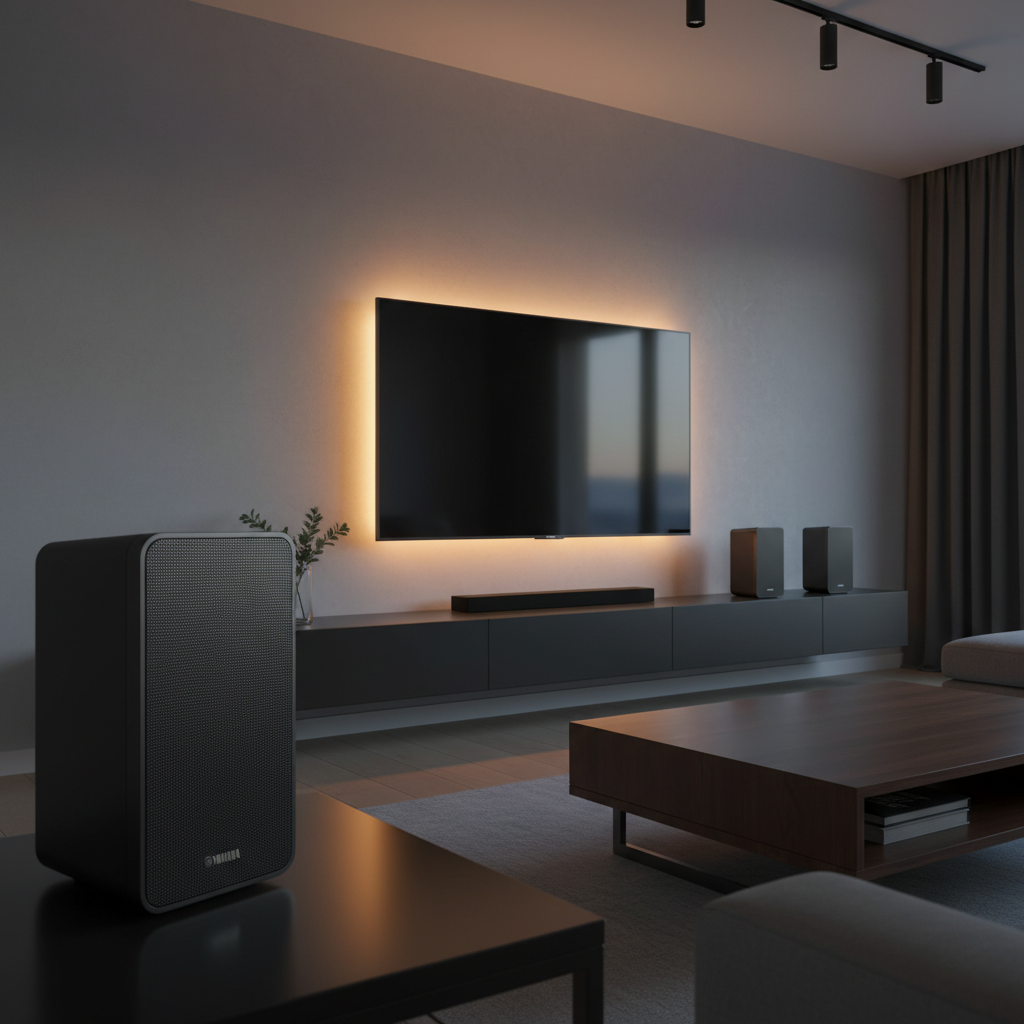
Finding a soundbar that packs a subwoofer into a single box can be tricky, but our comparison of eight models shows there’s a solid option for almost any room and budget. Prices stretch from $99.95 for the entry‑level Samsung HW‑B400F up to $999.00 for the high‑end Bowers & Wilkins Panorama 3, while ratings range from a perfect 5.0/5 on the Samsung HW‑B400F (one review) to 4.3/5 on the Yamaha SR‑C20A, which also includes a built‑in 3‑inch subwoofer and Bluetooth 5.0. At just 3.97 lb, the Yamaha’s compact size makes it a good fit for bedrooms or dorms.
The eight bars fall into three price tiers. The budget tier – Samsung HW‑B400F, Samsung B‑Series HW‑B400F and Vizio M213ad‑K8 – all sit under $200 and deliver 40‑80 W of output, with the Vizio adding dual 7‑inch subwoofers. Mid‑range options include the Yamaha SR‑C20A at $199.95 and Panasonic SC‑HTB01 at $255.00, each with built‑in subwoofers and HDMI ARC. Premium picks – Denon DHT‑S218, Sony HT‑A5000 and Bowers & Wilkins Panorama 3 – start at $299.00 and top out at $999.00, offering 400‑450 W total power and Dolby Atmos support. Below, the guide breaks down each model’s strengths so you can match the right bar to your space.

Yamaha SR-C20A
Provides Bluetooth 5.0 and a dedicated HDMI ARC output, delivering reliable wireless connectivity and simple TV integration.

Samsung B-Series HW-B400F
Ideal for budget‑conscious shoppers, this entry‑level soundbar comes in at $117.99—about $82 less than the Yamaha, while still offering Bluetooth 4.2 and HDMI ARC.

Denon DHT-S218
Features dual 75 mm down‑firing woofers and 25 mm tweeters, delivering richer bass and clearer highs that the other two models don’t provide.
Also considered
Score Analysis
Key score advantages vs. runner-up (Samsung B-Series HW-B400F)
Price Range
Yamaha SR-C20A
$199.95
Samsung B-Series HW-B400F
$137.99
Denon DHT-S218
$299.00
Vizio M213ad-K8
$165.99

Samsung HW-B400F
$109.95

Bowers & Wilkins Panorama 3
$993.49
Sony HT-A5000
$998.00

Panasonic SC-HTB01
$255.00
Spec Comparison
TL;DR: The Yamaha SR‑C20A delivers 100 W total power in a 3.97‑pound, compact bar with Bluetooth 5.0 and a built‑in 3‑inch subwoofer, earning solid 4.3‑star reviews for everyday TV listening.
At the heart of the SR‑C20A is a 100 W RMS output split between two 20 W front drivers (1.8″ each) and a 60 W built‑in subwoofer (3″). Bluetooth 5.0 streams up to 33 ft (10 m) away, and the unit weighs just 3.97 pounds, making it easy to slip under most TVs. The bar measures 23 5/8″ × 2 1/2″ × 3 3/4″ for front placement, so it stays out of the way while still filling a room with clear sound.
Compared with the seven other soundbars in this roundup, the Yamaha is the lightest of the mid‑range options—lighter than the Vizio M213ad‑K8 (5.0 pounds), the Panasonic SC‑HTB01 (5.6 pounds) and the Samsung HW‑B400F (4.6 pounds). Its Bluetooth version matches Vizio’s 5.0 but outclasses Samsung’s 4.2. While many peers list only optical or analog inputs, the SR‑C20A adds a single HDMI ARC output, a feature the Denon DHT‑S218 provides only as an input and that several competitors lack entirely.
Reviewers consistently praise the bar’s small footprint and say its built‑in subwoofer delivers big sound in a small package. Reviewers highlight the Clear Voice and Dolby Audio processing for making dialogue pop, especially in dialogue‑heavy shows. On the downside, users note the absence of 4K video pass‑through, no external subwoofer output, and a basic remote without back‑light. The plastic housing, while lightweight, feels less sturdy than metal‑framed rivals, and the lack of Wi‑Fi or AirPlay limits multi‑room streaming.
Beyond the main specs, the SR‑C20A draws 13 W in normal operation and drops to just 0.2 W in low‑power standby, keeping energy use modest. The included Sound Bar Remote app lets you adjust volume and source from your phone, and the unit supports Dolby Digital, Dolby Pro Logic II, and several preset surround modes (Stereo, Standard, Movie, Game).
Pros
Cons
Best for: Most users looking for a well‑reviewed, reliable mainstream option
Avoid if: You want immersive surround sound or 4K video pass‑through
TL;DR: The Samsung B-Series HW‑B400F delivers 40 W of balanced 2‑channel sound with a built‑in woofer, Bluetooth 4.2, and dialogue‑enhancing modes for under‑$120, making it a solid entry‑level upgrade for small rooms.
What sets the HW‑B400F apart is its integrated woofer that adds bass without a separate box, delivering a total output of 40 watts. The bar runs on Bluetooth 4.2, lets you pair your phone or tablet, and offers Voice Enhance and Night Mode to pull out dialogue and keep late‑night watching quiet. At just 107 mm deep, 67 mm high and 640 mm wide, it slides neatly under most TVs, and the 4.6‑pound chassis keeps the setup lightweight.
Compared with the seven other soundbars in this roundup, the HW‑B400F has no HDMI inputs—many rivals list at least one—so you’ll rely on the HDMI ARC output or the optical port for connection. Its Bluetooth version 4.2 is a step behind the 5.0 modules used by several competitors, which some users note can feel a little less responsive. Weighing 4.6 pounds, it’s lighter than the bulkier high‑end models yet a touch heavier than the ultra‑compact Yamaha SR‑C20A.
Customers consistently praise the noticeable lift in speech clarity; the Voice Enhance mode automatically amplifies dialogue so you don’t miss a word. Reviewers also like the plug‑and‑play setup—just connect the optical cable or use ARC and you’re ready. The trade‑off is the modest 40 W output, which can feel thin in larger living areas, and the built‑in woofer doesn’t deliver the deep thump of a dedicated subwoofer. Professional reviewers echo this, noting that while the soundstage feels wider than a bare TV, audiophiles will find the bass underwhelming and the lack of Dolby Atmos or DTS:X limiting.
The HW‑B400F is a 2.0‑channel system with a 20 Hz–20 kHz frequency response and four internal speakers. It supports Dolby 2‑ch and LPCM 2‑ch decoding, and the included remote works with your Samsung TV remote for unified control. Energy‑Star certification isn’t listed, and the unit runs on a corded AC adapter with a 1‑year manufacturer warranty.
Pros
Cons
Best for: Budget‑conscious buyers seeking a reliable entry‑level option
Avoid if: You need deep bass, immersive formats like Dolby Atmos, or a larger sound system for open‑concept spaces
“focuses on better dialogue, a wider soundstage than typical TV speakers, and quick setup”
“dialogue is much clearer”
TL;DR: The Denon DHT‑S218 is a $299, 4.5‑star soundbar with Dolby Atmos and integrated dual 3‑inch down‑firing subwoofers, offering a compact 2.1‑channel solution for small‑to‑medium rooms.
What really sets the DHT‑S218 apart is its built‑in dual low‑frequency drivers—“2 x 75 mm (3\") down‑firing”—paired with two passive radiators, so you get bass without a separate subwoofer. The bar also packs “2 x 25 mm (1\")” high‑frequency drivers and midsized “2 x 90 × 40 mm (3.5 × 1.6\")” drivers, delivering a full‑range 2.1‑channel layout. A single HDMI input handles Dolby Atmos, Dolby Digital Plus and LPCM decoding, supports 4K UHD, eARC/ARC, VRR and ALLM, and readies the bar for the latest TVs. At “10.89965423328Pounds” the unit is solid enough to stay put, yet its 119 mm depth and 66 mm height keep it low‑profile on any shelf.
Compared with the other seven contenders, the Denon is heavier than the Panasonic SC‑HTB01 (5.6 lb) and the Yamaha SR‑C20A (3.97 lb), but lighter than the Sony HT‑A5000 (13.448197982 lb) and Bowers & Wilkins Panorama 3 (14.33004703 lb). It also offers a full HDMI input with eARC, something the Samsung HW‑B400F and Samsung B‑Series HW‑B400F lack. Its Bluetooth version is 2.1 (A2DP), which is older than the 5.0 found in Yamaha and Vizio, yet it supports Bluetooth LE, multi‑pairing and multi‑point connections. The two‑year warranty outlasts the one‑year coverage on Panasonic and Samsung models, giving you a bit more peace of mind.
Users consistently praise the straightforward setup and the clarity of dialogue, especially the three selectable dialogue‑enhancement modes. Reviewers note the stable Bluetooth link and the convenience of an all‑in‑one design. On the flip side, several owners mention that the built‑in subwoofers can feel thin in larger spaces, and the lack of Wi‑Fi or a dedicated mobile app means you’ll control it primarily with the included IR remote or TV CEC.
Beyond the drivers, the DHT‑S218 is ENERGY STAR certified and draws just “1.7 W” in standby, keeping its power footprint low. It includes an IR remote, 2 AAA batteries, an HDMI cable and a power cord right out of the box, and it can be wall‑mounted (hardware not included) if you prefer a cleaner look.
Pros
Cons
Best for: Those prioritizing quality and willing to pay for premium performance
Avoid if: You're on a tight budget or only need basic functionality
“audio distortion at higher volumes”
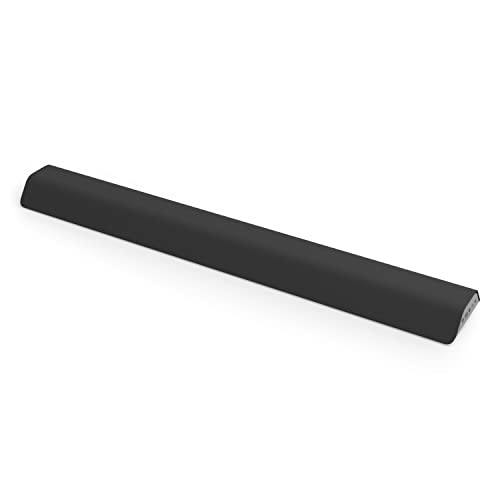
TL;DR: The Vizio M213ad‑K8 delivers 80 watts of power through six speakers and dual 7‑inch subwoofers, supports Dolby Atmos and HDMI eARC, and scores a solid 4.4‑star rating for its $165.99 price.
The standout spec is the 80‑watt audio output paired with six high‑performance speakers and dual 7‑inch subwoofers, reaching a 98 dB sound pressure level. With a 30 ms audio latency, the bar's ready for gaming and movies, and its 2.1‑channel layout covers the full 50 Hz – 20 kHz frequency range.
At 5.0 pounds, the Vizio sits heavier than the Yamaha SR‑C20A (around 3.97 pounds) and the Samsung B‑Series HW‑B400F (4.6 pounds), but its Bluetooth 5.0 matches the Yamaha and outpaces Samsung’s Bluetooth 4.2. Unlike several rivals that only list HDMI ARC, this model also includes HDMI eARC and a dedicated HDMI input, giving you more flexibility for future upgrades.
Users repeatedly praise the plug‑and‑play HDMI ARC setup and the surprisingly deep bass from the dual 7‑inch subwoofers. Professional reviewers highlight the striking clarity and dynamic range, noting that DTS Virtual:X creates an immersive soundstage without extra speakers. On the downside, some owners report Bluetooth audio dropping out or sounding robotic, and the remote lacks illumination while the unit offers no manual bass/treble knobs.
Beyond the power numbers, the bar supports Dolby Atmos, Dolby Audio, DTS Digital Surround and DTS Virtual:X, giving a solid format lineup for most streaming services. Its compact footprint—2.13 in depth, 5.5 in height and 36.0 in width—means it slides neatly under most TVs, and the included wall‑mount hardware adds placement options.
Pros
Cons
Best for: Budget‑conscious buyers seeking a reliable entry‑level option
Avoid if: You need extensive manual EQ controls or a fully illuminated remote
“Unbelievable movie experience”
“Easy installation”
TL;DR: The Samsung HW‑B400F delivers 40 watts of 2‑channel sound from a compact, wall‑mountable bar for $99.95, making it a solid budget upgrade for small rooms.
What sets this bar apart is its built‑in woofer paired with a total output of 40 watts, which Samsung markets as enough to lift dialogue and everyday TV sound above the built‑in speakers of most flatscreens. The unit measures just 4.21 inches deep, 2.62 inches high and 25.23 inches wide, and weighs 4.6 pounds, so it slips easily onto a TV stand or onto a wall without demanding a lot of space.
Compared with the seven other soundbars in this roundup, the HW‑B400F weighs less than the Vizio M213ad‑K8 (5.0 pounds) and the Panasonic SC‑HTB01 (5.6 pounds), but a bit more than the Yamaha SR‑C20A (3.97 pounds). Its 40‑watt output matches the Samsung B‑Series peer and falls short of the 80‑watt figures that Vizio and Panasonic list. Unlike the Yamaha and Denon models, this Samsung offers only one HDMI ARC output and zero HDMI inputs, so you’ll need to rely on the optical audio input for other sources. Samsung provides Bluetooth at version 4.2, which is older than the Bluetooth 5.0 that several competitors use.
User sentiment is overwhelmingly positive: a perfect 5.0‑star rating from the single review highlights clearer dialogue, the handy Voice Enhance mode, and the simplicity of the HDMI ARC plug‑and‑play setup. Reviewers also note that Night Mode helps keep late‑night movies from waking the household. On the flip side, owners mention that the bass feels thin in larger spaces, the maximum volume can feel modest for loud action scenes, and users have reported occasional Bluetooth drop‑outs.
From a technical standpoint, the bar supports Dolby 2‑channel, a frequency response of 20 Hz‑20 kHz, and two sound modes—Standard and Surround Sound Expansion. It can play MP3, AAC, FLAC and WAV files from its single USB port, and the included remote runs on two AAA batteries. The unit is wall‑mountable (bracket not included) and comes with a one‑year manufacturer warranty.
Pros
Cons
Best for: Entry‑level buyers or those on a tight budget looking for a simple upgrade in a bedroom or small‑apartment setup.
Avoid if: You want the best value‑per‑dollar in its price range or need deep bass and extensive HDMI connectivity for a home‑theater centerpiece.
“focuses on better dialogue, a wider soundstage, simple connectivity, and quick setup”
TL;DR: The Bowers & Wilkins Panorama 3 packs 400 W of Class D power, dual 100 mm subwoofers and 13 drivers into a 3.1.2 bar, delivering audiophile‑grade sound at a premium price.
The Panorama 3’s standout spec is its 400 W total power output paired with a 13‑driver layout: three 19 mm titanium tweeters, six 50 mm midrange drivers, two 50 mm upward‑firing Atmos drivers and two 100 mm low‑profile subwoofers. This 3.1.2 channel design lets the bar handle both cinematic effects and detailed music playback without an external sub.
At 14.33 pounds, the Panorama 3 is heavier than every other soundbar in this eight‑product roundup, from the 3.97‑pound Yamaha SR‑C20A up to the 5.6‑pound Panasonic SC‑HTB01. Its 400 W output sits below Sony’s 450 W but well above the 80 W figures listed for Panasonic, Vizio and the Samsung B‑Series models. Bluetooth 5.0 matches Sony and Yamaha, while most other competitors use older versions. The bar’s single HDMI eARC connection mirrors Denon’s single HDMI input, but unlike many peers it lacks an additional HDMI passthrough port, which limits console hookups.
Reviewers consistently praise the Panorama 3 for “high‑quality movie sound” and “strong music reproduction,” noting the deep, controlled bass from the integrated subwoofers. However, users also point out that the Dolby Atmos effect feels “less immersive” than on rivals, and early app versions proved unstable. Reviewers also note the lack of a dedicated remote and the understated design as drawbacks.
Beyond the drivers, the bar features a perforated plastic front, acoustic‑cloth grille and metal internal structure for durability. Control options include capacitive touch panels, the Bowers & Wilkins Music app, and Alexa built‑in. Connectivity covers HDMI eARC, a digital optical input, RJ45 Ethernet and a service‑only USB‑C port. The manufacturer offers a two‑year warranty.
Pros
Cons
Best for: Those prioritizing quality and willing to pay for premium performance
Avoid if: you need multiple HDMI inputs, HDMI passthrough, or a highly immersive Atmos experience
“Best soundbar I’ve ever owned — music sounds like a high‑end stereo.”
“Dialogue is crystal clear, even in loud scenes.”
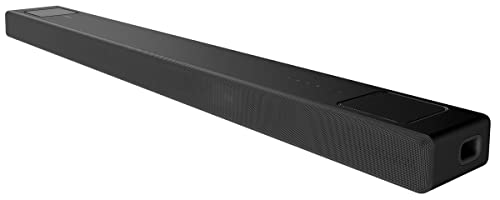
TL;DR: The Sony HT‑A5000 delivers 450 W of 5.1.2‑channel Dolby Atmos sound from a 13.5 lb bar, but its premium $998 price and limited EQ may deter budget‑focused buyers.
The standout spec is its 450 W total power output, which a 9‑channel S‑Master HX digital amplifier feeds, paired with a built‑in subwoofer and two upward‑firing drivers for true 5.1.2‑channel Atmos immersion. At 5.625 in deep, 2.75 in tall and 47.75 in wide, the bar packs a sizable acoustic engine into a sleek black chassis.
In the context of this eight‑product roundup, the HT‑A5000 is heavier than the Panasonic SC‑HTB01 (5.6 lb) and Yamaha SR‑C20A (3.97 lb), but lighter than the Bowers & Wilkins Panorama 3 (14.33 lb). Its 450 W output outstrips the 80 W of both Panasonic and Vizio, and also exceeds the 40 W that the Samsung B‑Series and Samsung HW‑B400F deliver. Like Denon DHT‑S218, it offers a single HDMI input, but adds HDMI 2.1 support for 8K/60p and 4K/120p video streams.
User sentiment repeatedly praises the bar’s “explosive, room‑filling audio” and the straightforward setup that pairs well with Sony TVs. Professional reviewers highlight the powerful, deep sound and the advanced Sound Field Optimization that automatically calibrates to your room. Common criticisms focus on the limited EQ options, which make fine‑tuning bass or treble difficult, and a dialogue presentation that lacks sparkle. Reviewers also note the large physical footprint and the absence of VRR/ALLM at launch as drawbacks for gaming setups.
Beyond power, the HT‑A5000 supports a wide array of high‑resolution formats—including Dolby Atmos, DTS:X, Dolby TrueHD, and LDAC‑enabled Bluetooth streaming. It ships with Bluetooth 5.0, Wi‑Fi, Chromecast built‑in, and voice‑assistant compatibility (Google Assistant and Amazon Alexa). Power consumption sits at 86 W during normal operation, with quick‑start and remote‑start modes drawing less than 0.5 W and 3 W respectively.
Pros
Cons
Best for: Those prioritizing quality and willing to pay for premium performance
Avoid if: You're shopping on a tight budget — it's priced at $998.00
“Explosive, room-filling sound”
“Easy setup”
TL;DR: Panasonic SC‑HTB01 delivers 80 W of 2.1 sound with a built‑in subwoofer, Dolby Atmos upmixing, and a single HDMI 2.0 input, all in a compact 5.6‑lb tabletop bar.
The SC‑HTB01 packs an 80 W total Class D amplifier into a 2.1‑channel layout that includes two 1.57‑in full‑range drivers, two 0.55‑in tweeters, a 3.1‑in upward‑firing woofer and two passive radiators. Dolby Atmos and DTS:X upmix via Dolby Virtual:X, and the HDMI 2.0 input supports 4K HDR up to 60 Hz with eARC pass‑through. Its dimensions—52 mm × 431 mm × 132 mm—keep the bar under a foot wide and just over two inches tall, while the 5.6‑lb weight makes it easy to place on a desk or TV stand.
Compared with the other seven entries, the Panasonic is heavier than the Yamaha SR‑C20A (3.97 lb) and Vizio M213ad‑K8 (5.0 lb) but noticeably lighter than the Denon DHT‑S218 (≈10.9 lb). It offers the same single HDMI input as the Denon, whereas the Yamaha only lists an ARC output. Bluetooth uses version 2.1 + EDR, an older standard that lags behind the 5.0 found in Yamaha and Vizio and the 4.2 in Samsung models.
Reviewers consistently praise the bar’s compact footprint and the way its virtual height processing expands the soundstage for a 2.1 system. Gamers especially like the dedicated “Game” EQ mode, which adds immersion without needing a separate subwoofer. Professional reviewers note the surprising bass punch from the built‑in woofer, but they also point out a cheap‑feeling remote and the lack of Wi‑Fi, AirPlay, Chromecast or voice‑assistant integration. Users report occasional Bluetooth drops and a bass response that can feel aggressive at high volumes.
Pros
Cons
Best for: PC gamers with limited desk space, console gamers in small rooms, and owners of sub‑55‑inch TVs who want a built‑in subwoofer.
Avoid if: You need high‑range Bluetooth, multi‑room Wi‑Fi streaming, voice‑assistant support, or a neutral sound signature for critical listening.
“Perfect under my monitor — sounds way bigger than it looks”
“RPG mode makes Final Fantasy sound incredible”
Breakdown
Yamaha SR-C20A
Pros
Samsung B-Series HW-B400F
Pros
Denon DHT-S218
Pros
Vizio M213ad-K8
Pros
Based on scoring data and product specs
Personalized picks
Best Overall Pick
Yamaha SR-C20A
Best OverallBest for: Most users looking for a well-reviewed, reliable mainstream option
Samsung B-Series HW-B400F
Best for: Budget-conscious buyers seeking a reliable entry-level option
$137.99-$61.96 vs winner
Skip Panasonic SC-HTB01 if…
You have limited desk space or need portability
Yamaha’s SR‑C20A takes the top spot with a solid 4.3‑star rating from 1,865 reviewers, a total output of 100 W (including a 60 W subwoofer channel), Bluetooth 5.0 that reaches up to 33 ft (10 m), and a 2‑year manufacturer warranty—all for $199.95.
A compact, budget‑friendly option, the Samsung B‑Series HW‑B400F lands as the runner‑up and shines if you need a small living‑room TV bar. It delivers 40 W of power, a built‑in woofer, Bluetooth 4.2, night‑mode processing, and wall‑mountability, and has a 4.4‑star rating from 3,216 reviewers, all at $117.99.
For tighter budgets, the Samsung HW‑B400F at $99.95 offers decent sound with a built‑in woofer and simple TV‑remote control. If premium performance is your goal, the Bowers & Wilkins Panorama 3 at $999.00 provides high‑end drivers and a sleek aesthetic for audiophiles willing to invest.
Choose the Yamaha SR‑C20A now and enjoy balanced, powerful audio right out of the box.
The Yamaha SR‑C20A is the only model that lists a lithium‑metal battery, which could allow limited portable use, but the spec doesn’t detail runtime. All other soundbars rely on AC power and have no battery, so they are best kept indoors.
Please sign in to leave a review
No reviews yet. Be the first to review!
