
Picking a soundbar with a built‑in voice assistant can feel overwhelming, so we’ve cut through the noise by comparing 12 models that blend Alexa or Google support with home‑theater performance. From the $189.99 Polk Audio React to the $1099.00 Sonos Arc Ultra, we evaluated each unit on its rating, power output and key connectivity, giving you a clear picture of what’s on the market.
Our roundup spans three price tiers. Budget‑friendly choices like the Samsung HW‑S60D ($347.99) and Bose Smart Soundbar 600 ($499.00) keep the cost low while still offering Alexa integration. In the mid‑range camp, the Sony HT‑A7000 stands out with a 500 W total output, a 4.4/5 rating from 418 reviews, and a $623.03 price tag, while the Bose 892079‑1100 ($549.00) delivers compact Dolby Atmos. Premium options such as the Sony HT‑A5000 ($998.00) and the Sonos ARCG2US1BLK ($1099.00) bring high‑end HDMI 2.1 support, extensive driver arrays and 4.5/5 scores from over 500 reviewers.
Below, we break down each model’s strengths and quirks so you can match a voice‑controlled soundbar to your room size, budget and listening habits.
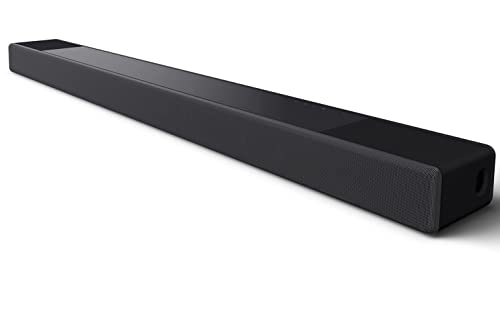
Sony HT-A7000
Its 500 W total power output delivers room‑filling sound, supporting the balanced, mainstream experience most users expect.

Sonos Arc Ultra 9.1.4
Ideal for audiophiles ready to invest in a proven, high‑quality sound system, it sits about $476 higher than the Sony mid‑range pick.
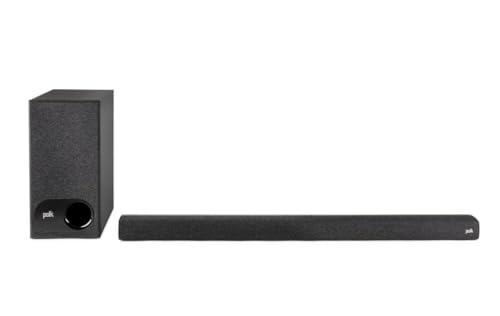
Polk Audio Signa S3
Stands out with an 82 mm depth, making it a compact choice for tight TV setups, and its $349 price keeps it far more affordable than the Sony and Sonos options.
Also considered
Score Analysis
Key score advantages vs. runner-up (Sonos Arc Ultra)
Price Range
Sony HT-A7000
$861.99
Sonos Arc Ultra 9.1.4
$1,069.00
Polk Audio Signa S3
$349.00

Bose Smart Ultra
$999.00

Bose Smart Soundbar
$549.00

Sonos Arc Ultra White
$1,069.99

Samsung S60D
$347.99

Polk Audio React
$189.99

Bose Smart Soundbar 600
$319.99
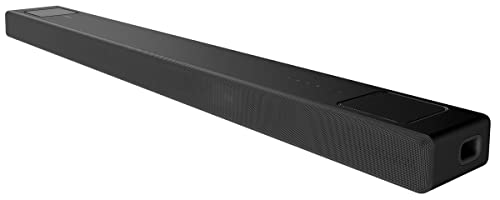
Sony HT-A5000
$998.00

Denon Home 550
$679.99

Bowers & Wilkins Panorama 3
$993.49
Spec Comparison
TL;DR: The Sony HT‑A7000 delivers 500 W of 7.1.2‑channel Dolby Atmos sound, built‑in subwoofers, and Alexa/Google voice control, but its full immersive experience needs optional rear speakers.
The HT‑A7000 packs a 500 W total power output into a sleek metal bar that measures 51.25 in deep, 3.25 in high, and 5.63 in wide, weighing 19.18 lb. Its digital S‑Master HX amplifier drives 11 discrete channels, including dual front‑firing subwoofers, five midrange drivers, beam tweeters, and two upward‑firing units. This configuration lets you enjoy Dolby Atmos, DTS:X, and 360 Reality Audio without a separate subwoofer right out of the box.
Compared with the other eleven entries, the Sony is noticeably heavier than the Bose 892079‑1100 (6.909 lb) and the Denon DENONHOMESB550 (7.3 lb). It also offers two HDMI 2.1 inputs and one HDMI eARC output, a step up from many mid‑range soundbars that provide only a single HDMI port. Bluetooth 5.0 gives it a newer wireless stack than the Denon’s Bluetooth 3.0, and the inclusion of both Alexa and Google Assistant puts it ahead of models that lack built‑in voice assistants.
Reviewers consistently praise the bar’s crystal‑clear dialogue and the breadth of its surround‑format support. Professional testers highlight the “supremely clear dialogue” and the “excellent surround format support.” Everyday users appreciate the hassle‑free pairing with Sony TVs and PS5 consoles, as well as the smooth streaming via AirPlay 2, Chromecast, and Spotify Connect. The main criticisms focus on the modest overhead effect from the upward‑firing drivers, the need for optional rear speakers and wireless subwoofers to achieve a true 7.1.2 setup, and a tiny front LED display that can be hard to read.
Beyond the core audio, the HT‑A7000 includes DSEE Extreme upscaling, four sound modes (Auto Sound, Cinema, Music, Standard), and built‑in microphones for automatic room calibration. Power consumption sits at 65 W during normal operation, and you can wall‑mount the bar with the supplied bracket, making installation flexible for larger rooms.
Pros
Cons
Best for: Home‑theater enthusiasts who want immersive Dolby Atmos sound and integrated voice assistants.
Avoid if: You have limited desk space, need a portable solution, or expect a complete 7.1.2 system straight out of the box.
“Dialogue is crystal clear — no more turning up subtitles.”
“Sound fills the entire room — feels like a full surround system.”
TL;DR: The Sonos Arc Ultra packs a 9.1.4‑channel setup, 15 Class‑D amps and Alexa‑ready voice control into a 12.7‑lb bar that scores 4.5 / 5 stars from 528 reviewers.
The standout hardware is its nine‑channel layout with six mid‑woofers, seven silk‑dome tweeters (two upward‑firing) and a single four‑motor Sound Motion woofer, all driven by 15 Class‑D amplifiers. That architecture delivers the deep, tuneful bass many reviewers praise, while the built‑in Speech Enhancement AI keeps dialogue ultra‑clear. The unit weighs 12.7 pounds, measures 3.13 inches high by 46.18 inches wide, and mounts only 6.5 mm deep.
Compared with its peers, the Arc Ultra shares the same 12.7‑pound weight as the standard Sonos ARCG2US1, but it is a shade heavier than the Bose Smart Ultra’s 12.68 pounds and noticeably lighter than Sony’s HT‑A5000 (≈13.5 pounds) and HT‑A7000 (≈19.18 pounds). Its Bluetooth 5.3 connectivity is newer than Bose’s 4.2 and Sony’s 5.0, and far ahead of Denon’s 3.0. Like the Sonos ARCG2US1 and Bose models, it offers a single HDMI eARC port—no additional HDMI inputs, which some competitors provide.
Professional reviewers highlight the bar’s “deep bass” and “crisp, clear dialogue” without needing speech‑enhancement tricks, and users echo those points, calling the setup “easy” and “perfect for apartments.” The main criticisms focus on the lack of HDMI inputs, the absence of DTS:X or full DTS decoding, and the fact that the system simulates rear‑channel effects instead of using true discrete speakers. A few owners also note occasional Sonos app crashes.
Beyond sound, the Arc Ultra integrates Sonos Voice Control, Amazon Alexa and external Google Assistant, and runs on a quad‑core A55 CPU with 2 GB SDRAM and 8 GB NV storage. It supports Wi‑Fi 6 (802.11ax) and Bluetooth 5.3, though Bluetooth range isn’t listed in the available specs. The bar includes a far‑field microphone array with a physical mute switch, and the Sonos app lets you tweak bass, treble, loudness, night mode and speech enhancement.
Pros
Cons
Best for: Buyers willing to invest in a proven, high‑quality option
Avoid if: You need advanced features or professional‑grade performance
“Bass is shockingly deep for a soundbar—no subwoofer needed for most content.”
“Dialogue is crystal clear, even in action scenes.”
TL;DR: For $349, the Polk Audio Signa S3 delivers a 2.1‑channel soundbar with a 40 W wireless subwoofer, Google Assistant support and Dolby Digital 5.1, earning 4.4‑star ratings from nearly 25 k reviewers.
The Signa S3’s most eye‑catching spec is its 40‑watt wireless subwoofer paired with a compact soundbar that measures just 82 mm deep, 54.6 mm high and 900 mm wide. It adds Google Assistant support through built‑in Chromecast, Bluetooth 4.0 with AAC, aptX and SBC codecs, and Dolby Digital 5.1 decoding, all wrapped in a low‑profile design.
At 18.96 pounds, the system is considerably heavier than the Samsung HW‑S60D’s 6‑pound chassis, yet its 82 mm depth is shallower than Samsung’s 104 mm depth. Compared with the Bose Smart Soundbar 600, the Signa S3 sits a bit lower at 54.6 mm versus Bose’s 56.1 mm height and is also less deep than Bose’s 103.9 mm depth. Sony’s HT‑A7000 weighs about the same (19.18 pounds) but towers at 1302 mm depth, making the Signa S3 far more space‑saving. The Denon DENONHOMESB550 is lighter at 7.3 pounds, but it lacks a wireless subwoofer. Unlike the Polk Audio React, which weighs under 0.01 pounds and offers six drivers, the Signa S3 provides a full 2.1‑channel experience with a dedicated subwoofer.
Reviewers consistently praise the system’s loud, distortion‑free output and the Voice Adjust feature that lifts dialogue clarity. Professional reviewers note the deep, impactful bass from the 5.25‑inch subwoofer, though some users report that the bass can overwhelm mids and highs if not tuned. Because it lacks a built‑in voice assistant, you’ll need an external Google device, and Dolby Digital 5.1 is the only supported format; Dolby Atmos and DTS:X aren’t included.
Technically, the Signa S3 covers a frequency range of 45 Hz → 20 kHz, driven by two 1.25″ × 4.4″ midrange drivers and two 1″ tweeters. Connectivity includes HDMI ARC, an optical Toslink input, a 3.5 mm AUX jack, and Wi‑Fi (Chromecast built‑in). The package includes an infrared remote, a 5‑foot HDMI cable, a 5‑foot optical cable, and power cords for both units.
Pros
Cons
Best for: Budget-conscious buyers seeking a reliable entry-level option
Avoid if: You need advanced features or professional‑grade performance
TL;DR: The Bose Smart Ultra delivers a 5.1.2 Dolby Atmos soundstage with 9 drivers, 120 W output and built‑in Alexa/Google, but its bass needs a subwoofer and its Bluetooth is older than many rivals.
The standout spec is its 5.1.2 channel layout powered by nine drivers—including three tweeters and six racetrack full‑range drivers—producing 120 W of RMS power. AI Dialogue Mode and TrueSpace Technology aim to keep voices clear and up‑mix non‑Atmos content for a wider sound field.
Compared with the other eleven entries, the Ultra is lighter than the Bowers & Wilkins Panorama 3 and the Sony HT‑A5000, yet heavier than the Denon model. Its Bluetooth 4.2 lags behind the Sony HT‑A5000’s 5.0 and Sonos units’ 5.3, and its 120 W output is modest next to Sony’s 450 W or B&W’s 400 W offerings. It does, however, match the premium tier price point of $999.00 and offers a single HDMI eARC port.
Users consistently praise the immersive spatial imaging and the convenience of built‑in Alexa/Google via the Bose Music app. Professional reviewers highlight the ADAPTiQ calibration and the extensive connectivity suite (Wi‑Fi, AirPlay 2, Google Cast, Spotify Connect). Common complaints focus on shallow bass without an added subwoofer, a congested midrange, and the lack of any HDMI inputs for video passthrough.
The Ultra also supports multi‑room audio, wireless subwoofer connections, and a 10‑meter Bluetooth range. Its compact footprint—4.21 in depth, 2.29 in height, and 41.14 in width—lets it sit flush under most TVs, and the optional wall‑mount bracket adds flexibility for tighter spaces.
Pros
Cons
Best for: Those prioritizing quality and willing to pay for premium performance
Avoid if: You're on a tight budget or only need basic functionality
TL;DR: The Bose Smart Soundbar 900 delivers Dolby Atmos immersion and AI‑enhanced dialogue clarity from a compact five‑speaker unit, priced at $549 and backed by built‑in Alexa.
The standout spec is the five built‑in speakers, including two up‑firing drivers, that pack immersive Dolby Atmos and TrueSpace up‑mixing into a 102 mm‑deep chassis. AI Dialogue Mode further sharpens speech so you never miss a line, while a noise‑rejecting mic array powers built‑in Amazon Alexa and Google Assistant support.
At 6.909 pounds, the soundbar weighs noticeably less than the Sony HT‑A7000’s 19.18 pounds and the Polk S3’s 18.96 pounds, yet only a shade heavier than Samsung’s 6‑pound HW‑S60D. Its 58‑inch HDMI cable outstrips the 1.5 m cable supplied with the Bose Smart Soundbar 600, and the single HDMI eARC port aligns with the standard across the lineup. Bluetooth reaches 9 meters, a meter short of Samsung’s and Polk React’s 10‑meter range, but still ample for most living‑room setups.
Reviewers consistently praise the crystal‑clear dialogue that AI Dialogue Mode delivers, and many note the quick setup via the Bose Music app. The sleek, shelf‑mountable design fits easily under most TVs, and Voice4Video lets you control the TV and cable box without a remote. However, users also flag thin bass without an external subwoofer and mention the lack of DTS/DTS:X support as a limitation for some media libraries. A few have experienced occasional Bluetooth or app hiccups, and the remote lacks backlighting.
Technically, the soundbar processes internal channels 3.0.2 and up‑mixes to a 5.1.4 experience, supporting Dolby Atmos, Dolby Digital, Dolby Digital Plus, and Dolby TrueHD. The 3.5 mm IR blaster input and subwoofer output give you flexibility to expand with Bose Ultra Open Earbuds for personal surround sound, though those accessories sell separately.
Pros
Cons
Best for: Apartment dwellers or small‑room users seeking immersive sound without a bulky setup.
Avoid if: You need deep bass, DTS/DTS:X support, or a fully self‑contained subwoofer solution.
TL;DR: The Sonos Arc Ultra delivers a 9.1.4‑channel Dolby Atmos experience with 7 tweeters, 6 woofers, Alexa voice control and a 4.5‑star rating for $1,079, all in a 12.7‑lb sleek bar.
The standout spec is its 9.1.4‑channel speaker configuration, built around seven silk‑dome tweeters, six midrange woofers and a four‑motor Sound Motion woofer. The bar runs on a quad‑core ARM Cortex‑A55 @ 1.9 GHz processor, 2 GB SDRAM and 8 GB NV storage, and connects via Bluetooth 5.3, a single HDMI eARC port and one Ethernet port. Its physical footprint measures 110.5 mm deep, 79.4 mm high and 1173.5 mm wide, while weighing 12.7 pounds.
Compared with peers, the Arc Ultra is lighter than the Sony HT‑A7000, which tips the scales at 19.18 pounds, and sits at a similar weight to the Bose Smart Ultra’s 12.68 pounds. Its depth of 110.5 mm is only a few millimeters deeper than the Bose’s 107 mm, keeping it competitive in tight spaces. Like the Sony HT‑A5000, it offers a single HDMI eARC port, but it outpaces the Bose’s older Bluetooth 4.2 with its newer Bluetooth 5.3 implementation.
Reviewers consistently praise the Arc Ultra for its “spacious three‑dimensional soundstage,” deep, tuneful bass that rivals a separate subwoofer, and crystal‑clear dialogue that shines even in action‑heavy scenes. Professional outlets note the seamless Trueplay calibration and the convenience of Alexa‑enabled voice control. On the downside, users point out the lack of any HDMI inputs (all sources must route through the TV), the absence of DTS:X support, and occasional Sonos app crashes that can interrupt listening.
Additional technical context includes a far‑field microphone array with beamforming and echo cancellation, a physical mic‑mute switch, and capacitive touch controls on the top panel. The mounting system uses a 6.5 mm depth and 0.8 mm thread pitch, making standard wall‑mount installations straightforward. Trueplay offers both quick internal‑mic tuning and an advanced room‑measurement mode via a mobile device.
Pros
Cons
Best for: Buyers willing to invest in a proven, high-quality option
Avoid if: You need advanced features or professional‑grade performance
“Bass is shockingly deep for a soundbar—no subwoofer needed for most content.”
“Dialogue is crystal clear, even in action scenes.”
TL;DR: Samsung HW‑S60D offers a compact 5.0‑channel soundbar with built‑in 8‑inch subwoofer, wireless Dolby Atmos, Alexa integration, and a 10 m Bluetooth range, all for $347.99.
The HW‑S60D is an all‑in‑one 5.0‑channel soundbar that packs an 8‑inch built‑in subwoofer and wireless Dolby Atmos into a chassis that measures just 4.1 inches deep, 2.4 inches high and 26.3 inches wide. It delivers up to 2 Watts of maximum output power, connects via a single HDMI eARC port, and reaches devices up to 10 meters away over Bluetooth. Built‑in Alexa, Chromecast and AirPlay 2 let you control music and TV audio with voice commands.
At 6 pounds, the Samsung unit's much lighter than the Polk Audio Signa S3 (around 19 pounds) but considerably heavier than the ultra‑light Polk Audio React, which weighs less than a pound. Compared with the Bose Smart Soundbar 600, the HW‑S60D lists fewer connectivity details, yet it still offers the essential HDMI eARC link and voice‑assistant support that many competitors lack.
Reviewers appreciate the straightforward setup, clear dialogue and the convenience of Alexa built right into the remote. Professional reviewers note the benefit of Q‑Symphony and SpaceFit Sound Pro for automatic room tuning, as well as Game Mode Pro for low‑latency gaming audio. However, users frequently mention that the bass feels less impactful without a separate subwoofer, and the 2 W power rating raises questions about its loudness.
Samsung backs the HW‑S60D with a one‑year manufacturer warranty and includes a wall‑mount kit, remote (with batteries), power adapter and HDMI cable right out of the box.
Pros
Cons
Best for: Entry‑level buyers or those on a tight budget
Avoid if: You need powerful performance or professional‑grade features
TL;DR: At $189.99, the Polk Audio React delivers 6 drivers, 50 W RMS power and built‑in Alexa in a compact 56 mm‑high bar, offering solid dialogue clarity and expandable 5.1 sound for budget‑conscious homes.
The React’s standout spec is its six built‑in drivers paired with four far‑field microphones, feeding a 50 W RMS amplifier while covering the full 20 Hz‑20 kHz range. Its sealed enclosure and Energy Star certification keep power draw modest, and the single HDMI ARC port plus optical input give you two wired options for TV hookup.
Compared with the Samsung HW‑S60D, the React is heavier (9.7 lb vs. 6 lb) and longer (865 mm vs. Samsung’s 667 mm width), yet it matches Samsung’s 10‑meter Bluetooth range. It also outweighs the Bose 892079‑1100 (6.909 lb) and the Denon DENONHOMESB550 (7.3 lb), while remaining lighter than the Sony HT‑A7000 (19.18 lb). Unlike many peers, Polk lists six drivers and four microphones, and it explicitly includes Amazon Alexa—features not detailed in the other product specs.
Reviewers consistently note the React’s clear vocal dialogue and the punchy bass that becomes even stronger when paired with the optional subwoofer. Reviewers praise the built‑in Alexa for reliable voice calls and messaging, and the quick setup gets most users listening within minutes. Common complaints focus on the lack of Dolby Atmos or DTS:X, the single HDMI ARC input, and the USB‑A port being limited to firmware updates, while the IR remote requires line‑of‑sight.
Additional technical context includes virtual 3D surround via Dolby Digital and DTS 5.1, and the ability to expand to a full 5.1 system with optional Polk wireless surrounds. The bar’s dimensions—56 mm tall, 121 mm wide, and 865 mm long—fit neatly beneath most TVs without sacrificing presence.
Pros
Cons
Best for: Amazon Alexa enthusiasts on a budget who want clear dialogue and the option to grow into a full 5.1 setup.
Avoid if: You need Dolby Atmos, multiple HDMI inputs, or a Google/Apple voice assistant integration.
TL;DR: The Bose Smart Soundbar 600 delivers Dolby Atmos and Alexa voice control in a compact 103.9 mm‑deep chassis for $499, but its bass is thin without a subwoofer.
The soundbar packs 120 W of power across five drivers – a forward‑firing tweeter, two side‑firing drivers and two upward‑firing drivers – and supports Dolby Atmos, Dolby Digital Plus and Dolby TrueHD. Built‑in Alexa lets you change inputs, control the TV and stream music hands‑free, while Bluetooth reaches up to 9 m and the unit includes a 1.5 m HDMI cable and a 1.5 m optical cable.
Weight-wise, the 600 sits in the middle of the range: it’s heavier than the Samsung HW‑S60D at 6 lb but lighter than the Sony HT‑A7000, which tips the scales at about 19 lb. It matches the Bose 892079‑1100 on having a single HDMI eARC port, and it’s slimmer than the Sony’s 51.25 in depth while roughly matching the Samsung’s 104 mm design. The width of 694.2 mm compares to the Bose 892079‑1100’s 694 mm and is narrower than the Polk Signa S3’s 900 mm soundbar panel.
Reviewers praise the “serious Dolby Atmos power in a small form factor” and note the “excellent dialogue clarity” that many users echo in their comments. The consensus is that movies and TV shows sound immersive thanks to the upward‑firing drivers, yet listeners often mention that the bass feels thin unless a separate subwoofer is added. Some reviewers also point out that the high‑frequency response can be harsh on music tracks, and the lack of built‑in rear speakers limits surround‑sound immersion for larger rooms.
Beyond the core audio, the soundbar includes Bose TrueSpace™ upmixing, SimpleSync™ for Bluetooth speaker pairing, Voice4Video™ for TV‑level voice control, Apple AirPlay 2, Google Chromecast built‑in and Spotify Connect. The remote measures 105 mm × 40 mm × 12 mm and weighs 45.4 g, while the main unit itself is 3130 g, making tabletop placement straightforward. The Bluetooth version's 4.2, which aligns with the range of 9 m advertised.
Pros
Cons
Best for: TV and movie viewers who prioritize dialogue clarity and immersive height effects in small to medium rooms.
Avoid if: You need deep bass, balanced music performance, or coverage for a large living area.
TL;DR: The Sony HT‑A5000 delivers 450 W of immersive 5.1.2‑channel sound, supports Google Assistant and Alexa, and offers premium HDMI 2.1 connectivity, but its large size and limited EQ may deter space‑constrained users.
The 9‑channel S‑Master HX digital amplifier feeds the 450 W total power output, driving a 5.1.2 speaker layout with a built‑in subwoofer and two upward‑firing drivers. At 13.5 lb, the bar measures 5.625 in deep, 2.75 in high and 47.75 in wide, which gives it a solid physical presence that matches its audio ambition.
Compared with the other eleven entries, the HT‑A5000 is heavier than the Bose Smart Ultra’s 12.68 lb chassis but lighter than the Bowers & Wilkins Panorama 3’s 14.33 lb build. Its 450 W output dwarfs Bose’s 120 W and sits well above the Denon model’s modest power. Sony equips the bar with a Bluetooth 5.0 module, newer than Bose’s 4.2 version, though the exact Bluetooth range isn’t listed. With a single HDMI eARC output, it offers the same eARC capability as many peers while adding HDMI 2.1 support that some competitors lack.
Reviewers consistently praise the bar for “explosive, room‑filling audio” and a straightforward setup that pairs nicely with Sony TVs. Professional critics highlight the deep bass and extensive connectivity, while everyday users note the ease of streaming via Chromecast, AirPlay 2 and Spotify Connect. The main criticisms revolve around limited EQ options, dialogue that can sound dull, and the absence of VRR/ALLM gaming features at launch. In practice, the auto‑calibration (Sound Field Optimization) helps tame room acoustics, but fine‑tuning remains minimal.
Pros
Cons
Best for: Home‑theater enthusiasts who want true Dolby Atmos, built‑in voice assistants, and a powerful, all‑in‑one sound solution.
Avoid if: You have limited desk space or need a portable, compact audio system.
“Explosive, room-filling sound”
“Easy setup”
TL;DR: The Denon Home 550 delivers hi‑res music playback with Alexa and HEOS in a compact 7.3‑lb bar, but its virtual Atmos and modest volume may fall short for big‑screen movies.
What really sets this soundbar apart is its support for high‑resolution audio: it handles 24‑bit/192 kHz PCM files and even DSD streams up to 5.6 MHz. Coupled with built‑in Alexa and Denon’s HEOS multi‑room platform, you can stream from dozens of services and control the bar with voice or the motion‑sensing touch panel.
At 7.3 pounds, the Home 550 is lighter than Sony’s HT‑A7000 (19.18 lb) but a bit heavier than Bose’s 892079‑1100 model (6.909 lb). Its width of 660 mm makes it considerably wider than Sony’s 143 mm chassis, while the 120 mm depth is far shallower than Sony’s 1302 mm depth, giving you more placement flexibility. Unlike many peers, Denon includes a dedicated Alexa microphone and a single HDMI eARC/ARC port, which some competitors either omit or do not list.
Reviewers consistently praise the bar’s refined music signature, noting that the four 55 mm full‑range drivers and two 19 mm tweeters reproduce detail that rivals larger setups. However, several users point out that the virtual Dolby Atmos processing lacks true height effects, and the total loudness feels limited in larger rooms or during action movies. Bluetooth supports only version 3.0 with SBC codec, which some listeners find restrictive compared with newer codecs.
Beyond the audio core, the Home 550 packs a solid connectivity suite: one HDMI input, one HDMI eARC output, an optical Toslink, a 3.5 mm analog input, a USB‑A port, Ethernet, dual‑band Wi‑Fi and AirPlay 2. The bar also features a passive radiator array (50 mm × 90 mm) that helps extend low‑frequency response without a separate subwoofer.
Pros
Cons
Best for: Music lovers who want high‑resolution playback, Alexa voice control, and seamless integration with Denon/HEOS ecosystems.
Avoid if: You need true immersive Atmos with dedicated height speakers, a louder output for big‑screen movies, or advanced Bluetooth codecs.
TL;LR: The Bowers & Wilkins Panorama 3 delivers audiophile‑grade 3.1.2 sound with 400 W of power, dual integrated 100 mm subwoofers and Alexa, but its $999 price and modest Atmos immersion may limit appeal.
The Panorama 3 packs a 400 W total Class D amplification into a sleek 73.66 mm‑high, 1211.58 mm‑long, 142.24 mm‑wide chassis. Its 13 drivers—three 19 mm titanium‑dome tweeters, six 50 mm midrange drivers, two 50 mm upward‑firing Atmos elevation drivers, and two 100 mm low‑profile subwoofers—feed a 3.1.2 channel layout while the built‑in Alexa lets you control playback hands‑free.
Compared with the other eleven soundbars, the Panorama 3’s 400 W output sits between Bose’s 120 W and Sony HT‑A5000’s 450 W, yet it trails the Sony HT‑A7000’s 500 W. At 14.33 lb it’s heavier than Bose (12.68 lb) and Sony HT‑A5000 (13.5 lb) but lighter than the Sony HT‑A7000 (19.18 lb). Its Bluetooth 5.0 matches Sony HT‑A5000 and exceeds Bose’s 4.2 and Denon’s 3.0, though Sonos models list a newer 5.3 version. All peers feature a single HDMI eARC port, and the Panorama 3 provides one too, while Alexa integration gives a unique voice‑assistant advantage among the listed competitors.
Professional reviewers praise the Panorama 3 for “movie sound with lively, muscular expansion” and “music performance with detailed, balanced playback,” highlighting the deep, controlled bass from the dual 100 mm subwoofers. Everyday owners echo the rich, immersive sound and clear dialogue, though several note that the Atmos effect feels subtle and that the lack of an HDMI passthrough limits console use. The understated design looks less striking than Bowers & Wilkins’ iconic speakers.
Pros
Cons
Best for: Those prioritizing quality and willing to pay for premium performance
Avoid if: You need HDMI passthrough, a highly immersive Atmos experience, or a lower‑priced alternative
“Best soundbar I’ve ever owned — music sounds like a high‑end stereo.”
“Dialogue is crystal clear, even in loud scenes.”
Breakdown
Sony HT-A7000
Pros
Sonos Arc Ultra 9.1.4
Pros
Polk Audio Signa S3
Pros
Bose Smart Ultra
Pros
Based on scoring data and product specs
Personalized picks
Best Overall Pick
Sony HT-A7000
Best Mid-Range PickBest for: Most users seeking a balanced, mainstream option
Sonos Arc Ultra 9.1.4
Best for: Buyers willing to invest in a proven, high-quality option
$1,069.00+$207.01 vs winner
Skip Bowers & Wilkins Panorama 3 if…
Reliability and user satisfaction are your top concerns
We’re naming the Sony HT‑A7000 the clear winner. It pulls ahead with a 7.1.2 channel layout (11 discrete amp channels) and a strong 500 W total power output, delivering room‑filling sound that still keeps dialogue crisp. The bar also ships with built‑in Amazon Alexa and Google Assistant (via firmware update) and supports two HDMI 2.1 inputs plus eARC, so you can connect the latest TV and gaming consoles without a hitch. Its 4.4‑star rating from 418 reviewers shows strong user satisfaction at a price of $623.03.
The runner‑up, Sonos ARCG2US1BLK, shines if you need ultra‑clear dialogue and seamless integration with the Sonos ecosystem. Its 9.1.4‑channel architecture, 15 Class‑D digital amplifiers, and far‑field microphone array give you precise speech enhancement and voice control, while Bluetooth 5.3 and Wi‑Fi 6 keep streaming smooth. A 4.5‑star rating from 528 reviews backs this model, making it ideal for a high‑end living‑room setup where you want both premium sound and smart‑home convenience, priced at $1099.00.
For tighter budgets, the Polk Audio React at $189.99 offers solid voice‑assistant functionality without the premium price tag. If you’re ready to invest in top‑tier performance, the Sonos ARCG2US1BLK at $1099.00 remains the best premium choice, delivering the most immersive soundstage and deep Sonos integration.
Pick the Sony HT‑A7000 today and enjoy powerful, voice‑controlled audio that fits most midsize rooms perfectly.
The Polk Audio Signa S3’s low‑profile design (only 82 mm deep) fits tight spaces, and its 40 W power output still delivers clear TV dialogue. At $349 it also includes built‑in Chromecast and HDMI‑ARC for easy streaming.
Please sign in to leave a review
No reviews yet. Be the first to review!
