⚡ Quick Answer
Looking for a soundbar that supports Dolby Atmos or DTS:X without breaking the bank? We've compared 10 models, from the $79.99 Vizio V20x‑J8 with a 4.5‑star rating from 8,669 reviews to the $1,069.99 Sonos Arc Ultra that carries a 4.5‑star score from 544 users. The lineup is grouped into three price tiers: budget (Vizio V20x‑J8, Vizio SV200M‑08, Hisense HS5100, Hisense AX3120Q), mid‑range (Samsung HW‑S61D, Polk Audio Signa S4), and premium (Sonos Beam Gen 2, Bose Smart Dolby Atmos, Sony HT‑S60, Sonos Arc Ultra).
The budget tier delivers solid loudness—Vizio’s V20x‑J8 peaks at 95 dB—and stays under $100, making it a good fit for a bedroom or small office. Mid‑range options add more drivers and higher wattage, like Samsung’s HW‑S61D with a 200 W peak rating, giving clearer dialogue without a separate subwoofer. Premium picks bring extra channels and advanced processing; the Sonos Beam Gen 2 packs five class‑D amplifiers and voice‑assistant support, while the Sony HT‑S60 includes a subwoofer for true 5.1 immersion.
Below you’ll see how each model stacks up on features, sound performance and value, so you can zero in on the right Atmos‑ready soundbar for your space.

Sonos Beam Gen 2
Its quad‑core 1.4 GHz A‑53 CPU delivers smooth Dolby Atmos processing, supporting the high rating and feature set that earned it Best Overall.

Vizio V20x-J8
Ideal for budget‑conscious shoppers, the Vizio V20x‑J8 delivers solid performance at $79.99—about $289 cheaper than the Sonos Beam, making entry‑level Dolby Atmos accessible.

Sony HT-S60
The Sony HT‑S60’s 64 mm height lets it house larger drivers, delivering a premium sound experience the slimmer Beam and Vizio units can’t match.
Also considered
Score Analysis
Key score advantages vs. runner-up (Vizio V20x-J8)
Price Range
Sonos Beam Gen 2
$477.00
Vizio V20x-J8
$80.01
Sony HT-S60
$798.00

Samsung HW-S61D
$278.00
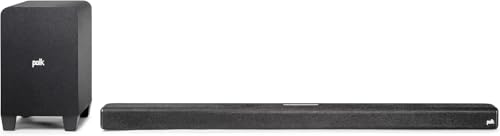
Polk Audio Signa S4
$449.00
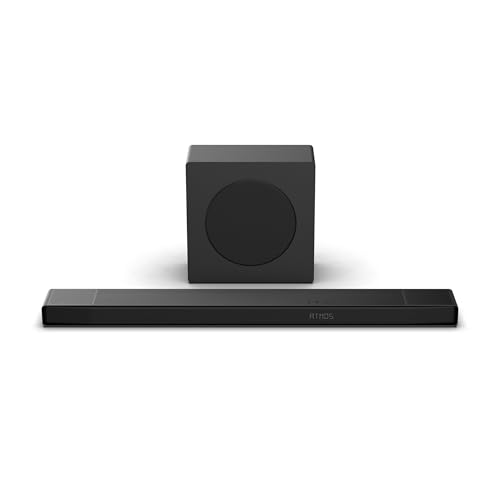
Hisense AX3120Q
$259.99

Sonos Arc Ultra Black
$1,099.00

Bose Smart Dolby Atmos
$549.00

Vizio SV200M-08
$89.97

Hisense HS5100
$169.99
Spec Comparison
TL;DR: The Sonos Beam Gen 2 delivers compact 5‑channel virtual Dolby Atmos, voice‑assistant control and robust Sonos ecosystem integration for $369, though its modest bass and lack of Bluetooth may require a Sub for full impact.
At 6.35 lb and measuring just 3.9 in deep, 2.7 in high and 25.6 in wide, the Beam fits easily beneath a 40‑ to 55‑inch TV. It packs a quad‑core 1.4 GHz A‑53 processor, five Class‑D digital amplifiers and a five‑driver array (four 76 mm mids and a 19 mm tweeter) to drive its 5.0‑channel layout and virtual Dolby Atmos processing.
Compared with the roundup, the Beam is lighter than the Polk Audio Signa S4 (19.0 lb) and Bose Smart Dolby Atmos (6.909 lb), but a bit heavier than Vizio’s SV200M‑08 (3.99 lb) and Sony HT‑S60 (5.75 lb). Its depth of 3.9 in matches Polk’s 3.7 in and is slimmer than Samsung’s 105 mm unit, while its width of 25.6 in exceeds Vizio’s 30 in but stays well within typical TV cabinets.
Users repeatedly praise the quick voice activation through the far‑field microphone array and the seamless Sonos multi‑room experience, noting clear dialogue even at low volumes.
Professional reviewers highlight the balanced mids and detailed virtual surround, but many point out that the bass feels thin without an added Sub and that Bluetooth streaming doesn’t support non‑Apple devices, limiting flexibility.
Technical extras include 1 GB SDRAM, 4 GB NV memory, Apple AirPlay 2, HDMI eARC, dual‑band Wi‑Fi and IR remote support. Trueplay room tuning works only on iOS, and the bar offers Night Sound mode for low‑volume balance, making it a solid choice for apartments or small living rooms where space and smart‑home integration matter.
Pros
Cons
Best for: Buyers willing to invest in a proven, high‑quality option
Avoid if: You're on a tight budget or only need basic functionality
“Easy setup, clear dialogue/music at low volumes, virtual Atmos 'fills the room' without wires, blends into decor.”
TL;DR: The Vizio V20x-J8 is a 24‑inch, 1.7 kg soundbar that delivers 95 dB of clear Dolby Audio and DTS Virtual:X, all for $79.99, making it a strong budget pick for small‑to‑medium rooms.
At just 81.3 mm deep and 57.9 mm tall, the V20x‑J8 slips under most 50‑inch TVs without crowding the tabletop. Its 2.0‑channel layout with two full‑range drivers packs a maximum SPL of 95 dB, which reviewers say fills modest rooms with clear dialogue and decent surround‑like effects thanks to Dolby Audio and DTS Virtual:X.
Weighing only 1700 g (3.84 lb), it is lighter than the Samsung HW‑S61D (2.7 kg) and the Sonos Beam Gen 2 (2.88 kg), and its 609.6 mm width is narrower than the Vizio SV200M‑08’s 30‑inch bar. Those size advantages, combined with a $79.99 price tag, place it at the lower end of the roundup’s price spectrum while still offering more features than many higher‑priced entries.
Consumers praise the bar’s easy HDMI ARC hookup—includes an HDMI cable—and the compact, all‑black textured finish that blends into most décor. Reviewers note the lack of a dedicated subwoofer, which limits low‑frequency impact for bass‑heavy movies and music, and the basic 2.0‑channel setup can’t reproduce true‑surround formats for larger home‑theater enthusiasts.
Pros
Cons
Best for: Budget‑conscious buyers seeking a reliable entry‑level option
Avoid if: You have limited desk space or need portability
TL;DR: The Sony HT‑S60 delivers 5.1‑channel Dolby Atmos/DTS:X sound with a 1000 W output, wireless subwoofer and Bluetooth 5.3, but its premium $698 price and hefty subwoofer make it a high‑end choice.
The HT‑S60 packs a 5.1‑channel layout powered by a digital S‑Master amplifier and a total output of 1000 W, giving you plenty of headroom for cinematic explosions. Its soundbar measures just 90 mm deep and 64 mm high, while the wireless subwoofer adds deep, rumbling bass without a cable running across the room.
At 5.75 lb (2609 g) the system is lighter than the Bose Smart Dolby Atmos’s 6.909 lb and the Sonos Beam Gen 2’s 6.35 lb, and its 90 mm depth is slimmer than Bose’s 104 mm and Sonos’s 99 mm. Its width of 907 mm places it in the same family as the other bar‑style units, but the subwoofer’s 11.6 kg (11600 g) weight is noticeably heavier than the compact rear speakers of many competitors.
Reviewers consistently praise the immersive Atmos and DTS:X imaging and the powerful bass that “you can feel” in action scenes. Professional testers note the straightforward setup and the convenience of BRAVIA SYNC, which lets you control volume from a Sony TV remote. Users also like the Bluetooth 5.3 connection with SBC and AAC codecs for wireless music streaming.
Beyond the core audio, the HT‑S60 supports 1080p video pass‑through, 3D HDMI, and Deep Color, ensuring it won’t bottleneck a modern home‑theater source. The inclusion of optical and analogue inputs covers legacy devices, though the lack of an HDMI ARC port may limit some TV integrations.
Pros
Cons
Best for: Those prioritizing quality and willing to pay for premium performance
Avoid if: You're shopping on a tight budget — it's priced at $698.00
“clean, cinematic audio that's a huge improvement over TV speakers or basic soundbars”
TL;DR: The Samsung HW‑S61D is a $278, 5.0‑channel all‑in‑one soundbar with seven built‑in speakers, 200 W peak power and Energy Star efficiency, delivering solid dialogue and virtual Dolby Atmos without a separate subwoofer.
What really stands out is the seven‑speaker layout that packs into a 105 mm‑deep chassis, including four woofers, three tweeters and a built‑in center speaker. Samsung pairs that with 200 W peak audio power handling while drawing just 31 W during use and a standby draw of 0.5 W, earning Energy Star certification.
Compared with the other nine contenders, the HW‑S61D sits in the middle of the weight range at 2 700 g (about 5.95 lb), lighter than the heavyweight Hisense AX3120Q (18.3 lb) and Polk Signa S4 (19.0 lb) but heavier than Vizio’s V20x‑J8 (1 700 g). Its 31 W operating consumption is far lower than the 120 W draw of the Hisense AX3120Q and the 150 W output of Vizio’s SV200M‑08, while its 200 W peak handling exceeds Vizio’s 150 W output. Channel‑count wise, it matches Bose’s 5‑channel model and Sonos Beam Gen 2’s Atmos‑capable design, and it offers wireless Dolby Atmos support that the Vizio SV200M‑08 also lists.
Reviewers consistently praise the compact, all‑in‑one layout for eliminating the need for a separate subwoofer and for delivering clear dialogue thanks to the built‑in center speaker. In practice, users note that the virtual height processing works well for movies, but the lack of a dedicated external subwoofer can leave bass‑heavy scenes feeling thin. The lack of wireless rear‑speaker modules also means you can’t achieve true surround, which some home‑theater enthusiasts point out.
Pros
Cons
Best for: Most users seeking a balanced, mainstream option
Avoid if: You have limited desk space or need portability
TL;DR: The Polk Audio Signa S4 packs 410 W of Dolby Atmos‑enabled power into a 3.1.2 bar that weighs 19.0 lb, delivers deep wireless bass, but costs $356.04.
The standout spec is its 410 W total power output feeding a seven‑driver array (1 in center, 2.6 in elevation, 5.9 in subwoofer, 1 in tweeter). With a 3.1.2 channel layout and up‑firing height drivers, it creates true‑height effects without a ceiling‑mounted speaker. The bar itself measures 41.2 in wide, 3.7 in deep and 2.4 in high, while the wireless subwoofer adds a solid 13.2 lb of low‑frequency muscle.
At 19.0 lb, the Signa S4 is significantly heavier than most competitors. The Sonos Beam Gen 2 tips the scales at 6.35 lb and the Bose Smart Dolby Atmos sits at 6.909 lb, while the Vizio SV200M‑08 is under 4 lb. Only the Hisense AX3120Q approaches Polk’s heft at 18.3 lb. Depth‑wise, Polk’s 3.7 in profile is a shade shallower than Sonos’s 3.9 in, giving it a sleek look despite the extra mass.
Reviewers consistently praise the “room‑shaking” bass that the compact subwoofer delivers, noting that the BassAdjust feature lets you tame the low end when it gets too dominant. VoiceAdjust is highlighted for boosting dialogue clarity during movies and sports. Professional outlets echo these points, with Reviewed.com calling the 410 W output “surprisingly powerful” and Crutchfield flagging the sub’s impact as a major selling point. Users also love the simple 1‑cable setup and the wireless sub’s auto‑connect, which makes placement straightforward—once you get the sub’s weight under control.
The bar provides HDMI eARC, optical digital audio, Bluetooth, a 3.5 mm AUX port and a USB‑Type‑A slot for media playback. Features like Night Mode, BassAdjust, and a wall‑mountable design round out a package that feels premium for a mid‑tier price, though the lack of a standard HDMI input means you can’t plug a 4K Blu‑ray player directly without an eARC‑compatible TV.
Pros
Cons
Best for: Most users looking for a well‑reviewed, reliable mainstream option
Avoid if: You're shopping on a tight budget — it's priced at $356.04
“huge soundstage”
“powerful bass that rumbles behind couch”
TL;DR: The Hisense AX3120Q delivers 3.1.2‑channel Dolby Atmos sound with 440 W RMS power and a wireless 6.5‑inch subwoofer, all for $259.99, making it a solid budget‑friendly home‑theater upgrade.
The AX3120Q stands out with a 3.1.2‑channel layout that supports both Dolby Atmos and DTS:X, plus a hefty 440 W RMS output. Its wireless subwoofer measures 6.5 inches, and AI EQ automatically tailors the sound profile to your room. The soundbar itself weighs 8.3 kg, while the control box is just 0.36 kg, keeping the core unit sturdy yet manageable.
In power terms, the Hisense’s 440 W RMS far exceeds the 150 W output listed for the Vizio SV200M-08 and even the 200 W peak handling of the Samsung HW‑S61D. The whole system weighs 18.3 pounds, making it heavier than the Vizio V20x‑J8, which weighs 1700 g, and also heavier than the Polk Audio Signa S4’s 8.8 lb bar. However, the control box weighs 0.36 kg, which is lighter than Samsung’s 4100 g gross weight, suggesting a more compact auxiliary unit.
Customers frequently praise the wireless subwoofer’s placement flexibility and the ease of initial setup. Professional reviewers highlight the immersive Atmos experience and the strong RMS power as a strong value proposition, while noting the absence of Wi‑Fi streaming and limited input options (no AUX or coaxial). The system also includes Hi‑Concerto technology, Virtual:X virtual height processing, and a Night mode that tames bass peaks for low‑volume listening.
Technical extras include Bluetooth 5.3, HDMI eARC/ARC with 4K 60 Hz pass‑through, and a total power draw of 120 W. AI EQ and Hi‑Concerto work together to keep dialogue clear and music detailed, and the six built‑in effects (Night, Surround, Voice, AI, Virtual:X) give you quick presets without digging into menus.
Pros
Cons
Best for: Budget-conscious buyers seeking a reliable entry-level option
Avoid if: You want the best value‑per‑dollar in its price range
“immersive audio that surrounds you" with "rich sound and deep bass”
TL;DR: The Sonos Arc Ultra delivers immersive 9.1.4 Dolby Atmos sound with 15 Class‑D amplifiers and a low‑profile 4.35‑in depth, but its premium $1,069.99 price may limit budget‑focused buyers.
The Arc Ultra’s standout hardware includes 15 Class‑D digital amplifiers driving 14 Sonos‑engineered speakers, six mid‑woofers and seven silk‑dome tweeters arranged in a 9.1.4 spatial configuration. Sound Motion™ technology adds a four‑motor dual‑membrane woofer for deeper bass without a separate subwoofer, while AI‑powered speech enhancement clarifies dialogue.
At 12.7 lbs, the Arc Ultra is heavier than the Bose Smart Dolby Atmos (6.909 lbs) and the Sonos Beam Gen 2 (about 6.35 lbs), yet lighter than the Polk Audio Signa S4’s 19.0 lb bar. Its 4.35‑in (110.5 mm) depth exceeds the Sony HT‑S60’s 90 mm depth, and the 46.18‑in (1174 mm) width makes it wider than the Samsung HW‑S61D’s 670 mm panel. Compared with the compact Vizio SV200M‑08, the Arc Ultra offers far more drivers and a full Dolby Atmos implementation.
Professional reviewers applaud the sleek, low‑profile design and the ability to push high volumes without noticeable compression. Users frequently mention the elegant finish and the convenience of TruePlay room correction, but many note the lack of a graphic EQ or preset sound modes, which limits fine‑tuning for audiophiles. The integrated woofer delivers respectable bass, though some listeners miss the rumble of a dedicated subwoofer.
Under the hood, a quad‑core 4×A55 1.9 GHz CPU and 2 GB SDRAM with 8 GB NV storage handle processing, while Wi‑Fi, Bluetooth 5.3, AirPlay 2, and HDMI ARC ensure flexible connectivity. Voice control works via Sonos Voice Control or Amazon Alexa, and the TruePlay feature auto‑optimizes sound for your room.
Pros
Cons
Best for: Buyers willing to invest in a proven, high‑quality option
Avoid if: You're shopping on a tight budget — it's priced at $1069.99
TL;DR: The Bose Smart Dolby Atmos soundbar packs a 5‑channel, upward‑firing speaker array, Alexa voice control and 30‑ft Bluetooth range into a 6.91‑lb, 104‑mm‑deep chassis for premium home audio.
The standout spec is the five‑speaker configuration with two upward‑firing drivers and a dedicated center tweeter, delivering true Dolby Atmos in a single bar that measures just 104 mm deep, 56 mm high and 694 mm wide. It’s sturdy enough to stay put yet slim enough to sit under most TVs without blocking the screen.
Compared with the other nine entries, the Bose is slightly heavier than the Sonos Beam Gen 2 (6.35 lb) but far lighter than the Polk Audio Signa S4 (19 lb). Its depth of 104 mm matches the Sonos’s package depth and is just under the Samsung HW‑S61D’s 105 mm, positioning it among the more compact options. Bluetooth reach of 30 ft exceeds the range listed for several peers, giving you more flexibility for wireless playback.
Reviewers consistently praise the “strong sound‑to‑size ratio,” noting that the upward‑firing drivers create convincing overhead effects in rooms as small as 10 ft × 12 ft. Professionals highlight the TrueSpace upmixing and QuietPort technology as valuable tools for boosting non‑Atmos content and reducing bass turbulence. However, the five‑speaker count falls short of the higher‑end Bose models that use nine drivers, and the lack of an ADAPTiQ automatic room‑calibration system may leave audiophiles seeking precise tuning wanting more.
Beyond the core audio, the bar offers AI Dialogue Mode for clearer speech, SimpleSync for personalized surround mixes, and Multi‑room Grouping to sync with other Bose devices. Built‑in Alexa and support for Apple AirPlay 2, Chromecast and HDMI ARC round out a feature set that rivals many larger systems while staying within a single‑box footprint.
Pros
Cons
Best for: Small‑to‑medium living rooms where you want immersive Dolby Atmos without a separate subwoofer.
Avoid if: You have a large open‑concept space or need the deepest bass possible.
TL;DR: The Vizio SV200M-08 delivers virtual Dolby Atmos and DTS:X height effects in a 2.0‑channel, 30‑inch fabric‑finished bar for $99, but its 70 Hz bass response and lack of a remote keep it in the budget tier.
The standout spec is its support for Dolby Atmos and DTS:X, letting the two full‑range speakers create virtual overhead sound without extra modules. Coupled with ClearDialog dialogue enhancement, the bar promises clearer speech even at lower volumes. It pushes up to 95 dB max SPL and 150 watts of power, while the frequency range spans 70 Hz – 16 kHz.
Compared with the other nine entries, the SV200M‑08 is one of the lightest options at 3.99 lb, beating the Vizio V20x‑J8 (1700 g) and the Hisense HS5100 (3.505 lb). Its 30‑inch width exceeds the V20x‑J8’s 609.6 mm, yet its depth of 3.33 in matches the V20x‑J8’s listed 81.3 mm, keeping the profile slim. Most competitors ship with a remote, whereas this model relies on mobile‑app control only. Channel‑count wise it stays at 2.0, while higher‑end bars like the Bose Smart Dolby Atmos and Sonos Beam Gen 2 move beyond two channels.
Users repeatedly praise the easy Bluetooth 5.2 streaming and the premium fabric finish that blends into a bedroom or apartment TV setup. Reviewers nod to the ClearDialog feature for cutting through movie dialogue without compression. However, reviewers consistently note the limited bass depth at 70 Hz and the absence of a dedicated subwoofer, which can leave action scenes feeling thin. The reliance on an app for EQ tweaks also draws criticism from those who prefer a physical remote.
Pros
Cons
Best for: Entry‑level buyers or those on a tight budget
Avoid if: You need powerful performance or professional‑grade features
TL;DR: At $179.99, the Hisense HS5100 holds a 3.9‑star rating from 3,749 reviewers, who like its immersive sound and slim build but complain about occasional subwoofer drop‑outs.
The Hisense HS5100's the most affordable entry in this ten‑product roundup. It carries a mid‑range rating of 3.9 out of 5, placing it toward the lower end of the list. As a Hisense offering, it benefits from the brand’s reputation for delivering decent value at budget prices.
Reviewers consistently highlight the soundbar’s ability to create a cinematic feel thanks to its surround configuration and a wireless subwoofer that adds noticeable bass. The unit’s lightweight, low‑profile design fits easily under most TV stands, and several preset sound modes let you switch between movies, music, sports and games. On the downside, users report that the subwoofer can lose its connection, and they must wire the rear speakers to the subwoofer, which reduces the promised wireless convenience. The lack of built‑in Wi‑Fi and an HDMI input also limits integration with some modern devices.
Given its price point and the mixed feedback, shoppers who want a full‑surround experience without breaking the bank and who can tolerate a few connectivity quirks should consider the HS5100.
Pros
Cons
Best for: Entry-level buyers or those on a tight budget
“this will be the last purchase with this company”
Breakdown
Sonos Beam Gen 2
Pros
Vizio V20x-J8
Pros
Sony HT-S60
Pros
Cons
Samsung HW-S61D
Pros
Based on scoring data and product specs
Personalized picks
Best Overall Pick
Sonos Beam Gen 2
Best OverallBest for: Buyers willing to invest in a proven, high-quality option
Vizio V20x-J8
Best for: Budget-conscious buyers seeking a reliable entry-level option
$80.01-$396.99 vs winner
Skip Hisense HS5100 if…
Reliability and user satisfaction are your top concerns
The Sonos Beam Gen 2 takes the top spot thanks to its solid 4.4‑star rating from 2,322 reviewers, five Class‑D digital amplifiers and a full‑range 5.0‑channel layout that includes four 76 mm woofers and a 19 mm tweeter. At $369.00 it also offers a balance of price and performance, and its built‑in Dolby Atmos Music support adds an immersive layer without needing up‑firing drivers.
The Vizio V20x‑J8 lands as the runner‑up, ideal if you need a compact, budget‑friendly bar for a small‑to‑medium room or a TV up to 50 in. It costs $79.99, packs a 2.0‑channel setup with Dolby Audio and DTS Virtual:X, and measures just 81.3 mm deep by 57.9 mm high, making it easy to slip onto a tabletop.
For other users, the Vizio V20x‑J8 remains the best budget option – the cheapest entry with solid Dolby and DTS support. The top mid‑range pick is the Samsung HW‑S61D at $278.00, offering a balanced feature set for most living rooms. If you crave a premium experience, the Sonos Arc Ultra Black stands out as the highest‑rated choice at $1,069.99, delivering premium sound and advanced integration.
Pick the Sonos Beam Gen 2 today and upgrade your home audio with confidence.
The Sonos Arc Ultra delivers Dolby Atmos through a 9.1.4 layout with 14 individual drivers—including six mid‑woofers, seven silk‑dome tweeters and two upward‑firing drivers—giving it a much denser sound field than the 5‑channel models. Its dedicated spatial‑audio processing and AI‑powered dialogue enhancement further set it apart for large living‑room installations.
No reviews yet — be the first to share your experience.
Please sign in to leave a review