
Choosing a soundbar that streams music over Wi‑Fi, supports Spotify Connect or AirPlay can feel overwhelming, especially when the market spans eight different models. Our roundup covers everything from the $349.00 Polk Audio Signa S3 – a 4.4/5 rated 2.1‑channel system with a wireless subwoofer – up to the $3,200.00 Bang & Olufsen Beosound Stage Anthracite, the most expensive option. To make sense of the spread, we’ve grouped the lineup into three price tiers: budget picks (Polk Audio, Bose, Denon), mid‑range contenders (Bowers & Wilkins, Sonos) and premium powerhouses (Sony, both Bang & Olufsen models).
For a small‑to‑medium living room that needs a clear dialogue boost, the Signa S3 wins the budget category thanks to its 40 W power and the Voice Adjust feature that sharpens speech. If you crave cinema‑grade immersion without a separate sub, the Sony BAR 9 delivers 13 drivers, Dolby Atmos and HDMI 2.1 support for gaming, making it the premium pick for movie nights. Audiophiles who prioritize music fidelity will feel at home with the Bowers & Wilkins Panorama 3, which packs 400 W total output and integrated dual subwoofers in a sleek wall‑mountable chassis. Below we break down each model’s strengths, streaming features and which room setup they shine in.
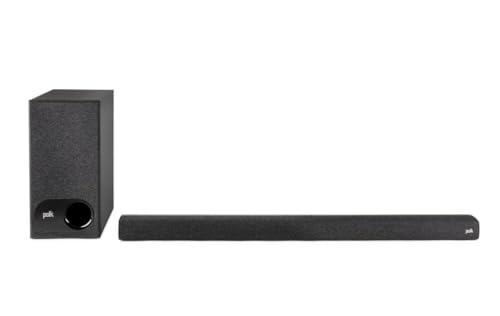
Polk Audio Signa S3
Its slim 82 mm depth lets it fit discreetly under most TVs, delivering solid value and high ratings.

Sonos Arc Ultra 9.1.4
Ideal for home or office users who want a feature‑rich bar, it costs about $750 more than the Polk Audio Signa S3, reflecting its higher‑end positioning.

Sony HT-A9000
Stands out with 13 drivers and Bluetooth 5.2, offering a richer, more immersive soundstage that the Polk and Sonos models don’t match, catering to audiophiles willing to invest more.
Also considered
Score Analysis
Key score advantages vs. runner-up (Sonos Arc Ultra)
Price Range
Polk Audio Signa S3
$349.00
Sonos Arc Ultra 9.1.4
$1,069.00
Sony HT-A9000
$1,298.00

Bose Smart Soundbar
$419.00

Bang & Olufsen Beosound Stage Anthracite
$3,200.00

Bowers & Wilkins Panorama 3
$999.00

Denon Home 550
$679.99

Bang & Olufsen Beosound Stage Aluminum
$2,900.00
Spec Comparison
TL;DR: The Polk Audio Signa S3 delivers powerful 2.1‑channel sound with a 40‑watt wireless subwoofer and built‑in Chromecast streaming for $349, earning a solid 4.4‑star rating from nearly 25 k reviewers.
The Signa S3’s standout feature is its 40‑watt wireless subwoofer paired with a low‑profile soundbar that is only 82 mm deep and spans 900 mm in width, giving you room‑filling bass without a bulky footprint.
At 18.959754532 lb, the Signa S3 is noticeably heavier than the Bose model, which weighs about 6.909 lb, and its 900 mm chassis is wider than Bose’s 694 mm width; however, Polk supplies a newer Bluetooth 4.0 stack compared with Denon’s Bluetooth 3.0 and sits between Sonos’s Bluetooth 5.3 and the other brands that don’t list a version.
Reviewers consistently highlight the deep, distortion‑free bass and the Voice Adjust technology that lifts dialogue clarity, noting that the system feels powerful for a $349 price point; the main complaints revolve around the lack of a built‑in voice assistant and the absence of Dolby Atmos or DTS:X support.
Technically, the soundbar uses two 1.25" × 4.4" midrange drivers and a 1" tweeter to cover a frequency range of 45 Hz → 20,000 Hz, while the 5.25" subwoofer driver handles the low end; connectivity includes HDMI ARC, an optical Toslink, a 3.5 mm AUX input and a service‑only USB port, and the box ships with a remote, HDMI and optical cables, and a quick‑start guide.
Pros
Cons
Best for: Budget‑conscious buyers seeking a reliable entry‑level option
Avoid if: You need Dolby Atmos, DTS:X, or a more compact solution for limited desk space
TL;DR: The Sonos Arc Ultra packs a 9.1.4‑channel layout, 15 class‑D amps and Bluetooth 5.3 into a sleek 12.7‑lb bar that delivers deep bass and clear dialogue, though it lacks HDMI inputs and DTS‑X support.
The standout hardware features a 9.1.4‑channel speaker configuration powered by 15 Class‑D digital amplifiers, six mid‑woofers, seven silk‑dome tweeters (two upward‑firing) and a single Sound Motion woofer with a four‑motor, dual‑membrane design. A quad‑core 4×A55 CPU running at 1.9 GHz, 2 GB SDRAM and 8 GB non‑volatile storage manage Sonos’ Trueplay tuning, speech‑enhancement AI and the full suite of Dolby formats.
At 12.7 pounds, the Arc Ultra is lighter than the Bowers & Wilkins Panorama 3 (≈14.33 lb) and the Polk Audio Signa S3 (≈18.96 lb), but a bit heavier than the Sony BAR 9 (≈12.1 lb) and the Denon model (≈7.3 lb). Its Bluetooth 5.3 connectivity outpaces the Sony BAR 9’s Bluetooth 5.2 and far exceeds the Denon’s Bluetooth 3.0, while the Wi‑Fi 6 (802.11a/b/g/n/ac/ax) dual‑band radio matches the high‑speed networking of the other premium bars. The mounting depth of just 6.5 mm makes it easier to hide behind a TV than many bulkier competitors.
Professional reviewers praise the deep bass that outperforms the original Arc and the crisp, clear dialogue without needing speech‑enhancement, noting a spacious three‑dimensional soundstage that works well for movies and music. Everyday owners echo the deep bass and easy Sonos app setup, but several point out the missing HDMI input, which limits direct connections for consoles or Blu‑ray players, and the lack of DTS‑X support, which can make rear‑channel effects feel simulated.
Additional technical touches include capacitive touch controls on a top‑mounted ledge, LED status indicators for connection and mute, and support for Apple AirPlay 2, Sonos Voice Control, Amazon Alexa and external Google Assistant. The bar also offers a 1‑port HDMI eARC connection with a 1.5 m cable and an Ethernet port for wired networking, while an optional optical adapter is required for legacy audio sources.
Pros
Cons
Best for: Home theater enthusiasts who want premium Dolby Atmos performance, deep bass and smooth Sonos ecosystem integration without a separate subwoofer.
Avoid if: You need multiple HDMI inputs, rely on DTS‑X decoding, or prefer fully dedicated rear speakers for true surround immersion.
“Bass is shockingly deep for a soundbar—no subwoofer needed for most content.”
“Dialogue is crystal clear, even in action scenes.”
TL;DR: The Sony BAR 9 delivers 13 drivers in a 7.0.2 layout with 360 Spatial Sound Mapping, Wi‑Fi dual‑band and HDMI 2.1 for $1,298, offering immersive Atmos sound that shines in gaming and movies.
What sets the BAR 9 apart is its 13‑driver, 7.0.2 channel architecture paired with Sony’s 360 Spatial Sound Mapping, Vertical Surround Engine and S‑Force Pro processing. The bar supports Dolby Atmos, DTS:X and IMAX Enhanced, and it runs on Bluetooth 5.2 plus dual‑band Wi‑Fi (2.4 GHz/5 GHz). At 12.1 pounds it’s slightly lighter than the Sonos ARCG2US1BLK (12.7 pounds) and its 67 mm height is shorter than Sonos’s 79.4 mm, while its 1302 mm width makes it wider than that competitor.
Compared with the other seven entries, the BAR 9 sits in the premium tier. It carries a higher driver count than the Bowers & Wilkins Panorama 3 (which lists only two Atmos elevation drivers) and more channels than the Denon DENONHOMESB550’s single‑speaker setup. Its Bluetooth 5.2 sits just below Sonos’s 5.3 but well above Denon’s 3.0, and the bar’s depth of 114 mm is deeper than the Bose model’s 102 mm, giving it a sturdier presence on a wall mount.
Professional reviewers praise the bar’s “high‑quality spatial audio” and “crisp detailing that never becomes shrill,” noting that the HDMI 2.1 interface delivers 4K/120 Hz pass‑through, ALLM and VRR for low‑latency gaming. Everyday owners echo this sentiment, highlighting clear dialogue and an easy app‑driven setup via the Sony BRAVIA Connect app. The most common complaints revolve around the wired‑only subwoofer requirement and the extra cost of adding rear modules, which can push the total system price well beyond the base $1,298.
Pros
Cons
Best for: Those prioritizing premium audio quality, immersive Atmos sound and gaming features, and who are comfortable investing in a high‑end system.
Avoid if: You need a budget‑friendly solution, a built‑in wireless subwoofer, or a fully automated room‑calibration setup.
TL;DR: The Bose Smart Soundbar 900 delivers Dolby Atmos immersion in a compact 6.909‑pound chassis, with AI Dialogue Mode and Wi‑Fi/Spotify streaming, but its bass may feel thin without an external subwoofer.
The soundbar packs 5 built‑in speakers and 2 up‑firing drivers into a 694 mm‑wide, 56 mm‑high, 102 mm‑deep frame, letting it create a 5.1.4‑like soundstage despite its modest size. Its AI Dialogue Mode actively balances speech and surround effects, which reviewers say makes movie dialogue crystal‑clear.
At 6.909 pounds, it’s lighter than the Denon model (7.3 pounds) and dramatically lighter than the Polk Audio unit (18.959754532 pounds), making it easy to place on a shelf or mount on a wall. Its width of 694 mm sits between the very narrow Bowers & Wilkins bar (142.24 mm) and the broader Polk design (900 mm), offering a balanced footprint for most TV setups.
Consumers consistently praise the easy setup via the Bose Music app and the smooth voice control that built‑in Alexa and Voice4Video deliver. The most common complaint is a thin bass response that often pushes owners toward a separate subwoofer, and the lack of DTS/DTS:X support limits some movie formats.
Beyond Dolby Atmos, the bar supports AirPlay 2, Spotify Connect, Chromecast built‑in, Bluetooth with a 9‑meter range, and a 58‑inch HDMI eARC cable plus a 5‑foot optical cable out of the box. The combination of multiple streaming pathways and a noise‑rejecting mic array makes it a versatile hub for a small‑room entertainment center.
Pros
Cons
Best for: Apartment dwellers or small‑room users seeking immersive sound without a bulky setup.
Avoid if: You need deep, room‑shaking bass or extensive DTS‑based format support.
TL;DR: The Bang & Olufsen Beosound Stage Anthracite delivers 11 drivers and 550 W of sealed‑cabinet power in a premium aluminum‑and‑fabric chassis, but its high $3,200 price and modest bass may limit appeal.
The standout spec is the 11‑driver array—four 4‑inch woofers, four 1.5‑inch full‑range drivers, and three 0.75‑inch tweeters—powered by eleven Class D amplifiers delivering 50 W per driver for a total system output of 550 W. Coupled with an 86 dB SPL bass capability and Dolby Atmos upmixing to 5.1.2, the bar aims for a spacious, detailed soundstage while staying within a shallow 3.0 in depth.
Compared with the seven other contenders, the Beosound Stage is heavier than the Sony BAR 9 (12.1 lb) and the Denon (7.3 lb) but lighter than the Polk Signa S3 (about 19 lb). It offers fewer drivers than Sony’s 13‑driver unit, yet more than the Sonos model, which lists no driver count. Its Bluetooth version 4.2 and 10 m range fall behind Sony’s Bluetooth 5.2, while the HDMI version 2.0 trails Sony’s 2.1. The bar also carries two 10/100 Mbps Ethernet ports, whereas the Bose model lists a single HDMI eARC port only.
Professional reviewers praise the premium build—natural aluminum, bronze‑tone aluminum, and smoked oak options—plus the clear dialogue and refined highs that users frequently mention in the app‑driven streaming experience (AirPlay 2, Chromecast, BeoLink). However, many owners note the bass rolls off at 32 Hz, leaving a lack of deep rumble, and the absence of a dedicated remote forces reliance on the TV remote or the Bang & Olufsen app. The 18.0 lb weight also makes wall‑mounting a bit of a chore.
The bar runs on Wi‑Fi 802.11 b/g/n/ac supporting both 2.4 GHz and 5 GHz bands, and typical power consumption sits at 80 W. With a 10 m Bluetooth range and a single 3.5 mm line‑in, it covers most connectivity needs without a wireless subwoofer or rear‑speaker expansion.
Pros
Cons
Best for: Design‑conscious audiophiles who want a premium‑look soundbar for mid‑sized living rooms and value refined, detailed audio.
Avoid if: You need strong bass impact, a low‑budget solution, or a dedicated remote for easy control.
“Stunning design—looks like art on the wall.”
“Dialogue is crystal clear; perfect for movies and news.”
TL;DR: The Bowers & Wilkins Panorama 3 packs 400 W of Class D power, 13 drivers and dual 100 mm subwoofers into a sleek 73.66 mm‑high bar, delivering audiophile‑grade sound for movies and music.
At the heart of the Panorama 3 is a 400 W total power output feeding a 3.1.2 channel layout that includes 13 drivers: three 19 mm titanium‑dome tweeters, six 50 mm woven‑glass midrange cones, two upward‑firing 50 mm Atmos elevation drivers, and two low‑profile 100 mm subwoofers. The bar measures 73.66 mm high, 1211.58 mm long and 142.24 mm wide, and weighs 14.33004703 pounds, giving it a solid presence without overwhelming a typical living‑room shelf.
Compared with the seven other soundbars in this roundup, the Panorama 3 is heavier than the Sonos Arc (12.7 pounds) and Sony BAR 9 (12.1 pounds) but lighter than the Polk Audio Signa S3 (≈19 pounds) and both Bang & Olufsen Stage models (≈18 pounds). It shares the same 13‑driver count as the Sony BAR 9, yet offers fewer listed connectivity options than the Sonos Arc, which includes an HDMI‑eARC cable and a deeper storage spec. Its Bluetooth 5.0 and built‑in Alexa round out the streaming suite, while Wi‑Fi band support isn’t listed in the specs.
Reviewers consistently praise the Panorama 3 for its “high‑quality movie sound” and “strong music reproduction,” noting the deep, controlled bass from the integrated subwoofers.
Professional editors highlight the “lively, muscular expansion” of the audio, but point out that the Atmos immersion feels subtle and the lack of an HDMI passthrough port can be a hurdle for console gamers. The sleek design also appears less striking than Bowers & Wilkins’ iconic speaker line‑up.
Pros
Cons
Best for: Audiophiles and home‑theater enthusiasts who prioritize high‑fidelity sound and music performance.
Avoid if: You need multiple HDMI inputs, a highly immersive Atmos experience, or a design that makes a bold visual statement.
“Best soundbar I’ve ever owned — music sounds like a high‑end stereo.”
“Dialogue is crystal clear, even in loud scenes.”
TL;DR: The Denon Home 550 delivers hi‑res music playback with 5.6 MHz DSD support, HEOS multi‑room streaming and Alexa, but its virtual Atmos and modest volume make it best suited for smaller rooms.
What really stands out is the support for high‑resolution audio: the bar handles DSD up to 5.6 MHz and PCM at 24‑bit/192 kHz, giving you studio‑grade detail in a compact chassis that measures 660 mm wide, 75 mm high and 120 mm deep. Its four full‑range 55 mm drivers, two 19 mm tweeters and three 50 mm × 90 mm passive radiators work together to create a surprisingly rich soundstage for a unit that weighs just 7.3 pounds.
Compared with the seven other soundbars in this roundup, the Home 550 sits in the middle of the size spectrum. It’s heavier than the Bose model (6.9 pounds) but lighter than every competitor that tops 12 pounds, such as the Sony BAR 9 and the Bang & Olufsen Stage. Its width of 660 mm is narrower than the Bose’s 694 mm and far slimmer than the Sonos or Sony units, which stretch beyond 1 metre. While the Bose and Sony both list HDMI eARC, the Denon adds an optical input, a 3.0 (SBC‑only) Bluetooth module, dual‑band Wi‑Fi (2.4 GHz/5 GHz) and a full suite of streaming services, giving it a broader connectivity palette than most peers.
Reviewers repeatedly praise the bar’s music performance – they note the “high‑quality music playback” and the ease of controlling everything through the HEOS app or Alexa. At the same time, many point out that the maximum loudness feels limited for big‑room movies, and the virtual Dolby Atmos doesn’t deliver the height effects of true up‑firing drivers. The SBC‑only Bluetooth codec also draws criticism from listeners who expect higher‑fidelity wireless playback.
Technically, the Home 550 packs a 4.0 driver configuration, supports Dolby Atmos and DTS:X virtually, and offers AirPlay 2 alongside Alexa built‑in. The motion‑activated touch controls on the top panel add a premium feel, while the included IR remote and TV‑remote learning keep it compatible with most televisions. The 1‑year manufacturer warranty rounds out a well‑specified package for its price tier.
Pros
Cons
Best for: Music enthusiasts who want hi‑res playback and seamless HEOS integration in a compact, stylish soundbar.
Avoid if: You need true immersive Atmos, a dedicated center channel, or high‑volume performance for large home‑theater setups.
TL;DR: The Bang & Olufsen Beosound Stage Black delivers premium Dolby Atmos sound and a luxe design for $2,900, but its high price and modest bass may limit appeal for bass‑hungry viewers.
At the top of the price tier, the Beosound Stage Black lists for $2900.00 and carries a 3‑year manufacturer warranty. It earned a 4.1/5‑star rating from 96 reviewers, indicating solid satisfaction. The unit weighs 18.0 Pounds, which places it on the heavier side of the lineup, and it relies on the Bang & Olufsen app (iOS / Android) plus HDMI‑CEC for volume, power and mute control.
When you line it up against the seven other soundbars, its weight matches the Anthracite version of the same series but exceeds the Sony BAR 9, Sonos, Bowers & Wilkins, Denon and Bose models, all of which sit between about 7 and 13 Pounds. Only the Polk Audio Signa S3 is heavier, tipping the scales above 18 Pounds. In terms of listed specifications, the Beosound Stage provides fewer data points than most competitors, which tend to enumerate driver counts, power output and connectivity details.
Professional reviewers repeatedly highlight the bar’s high‑quality build and premium design, noting the sleek black finish and minimalist aesthetic. Users echo this sentiment, praising the clear dialogue and easy AirPlay/Chromecast setup via the Bang & Olufsen app. However, the same sources point out a noticeable lack of deep sub‑bass, with bass rolling off early, and the absence of a dedicated remote forces reliance on the TV remote or app. Some owners also report Bluetooth pairing that doesn’t always remember devices, and the 18‑Pound weight can make wall‑mounting a bit of a chore.
Beyond the visual appeal, the Beosound Stage supports Dolby Atmos streaming, delivering an immersive three‑dimensional soundstage without the need for a separate subwoofer. Its HDMI‑CEC integration means you can control it with your existing TV remote, and the Bang & Olufsen app adds fine‑grained adjustments for room calibration and streaming services like Spotify Connect and AirPlay.
Pros
Cons
Best for: Design‑conscious audiophiles who value premium aesthetics and Dolby Atmos performance in medium‑size rooms.
Avoid if: You need deep sub‑bass, a separate remote, or a more budget‑friendly option — it’s priced at $2,900.00.
“Stunning design—looks like art on the wall.”
“Dialogue is crystal clear; perfect for movies and news.”
Breakdown
Polk Audio Signa S3
Pros
Sonos Arc Ultra 9.1.4
Pros
Sony HT-A9000
Pros
Bose Smart Soundbar
Pros
Cons
Based on scoring data and product specs
Personalized picks
Best Overall Pick
Polk Audio Signa S3
Best OverallBest for: Budget-conscious buyers seeking a reliable entry-level option
Sonos Arc Ultra 9.1.4
Best for: Home and office users seeking a balance of features and value
$1,069.00+$720.00 vs winner
Skip Bang & Olufsen Beosound Stage Aluminum if…
You're shopping on a tight budget — it's priced at $2900.00
Polk Audio Signa S3 takes the top spot as the overall soundbar with the highest 4.4‑star rating among 24,948 reviews and smart streaming. It’s priced at $349.00, carries a strong 4.4‑star rating from 24,948 reviews, and includes Dolby Digital 5.1 decoding for immersive surround‑sound. The bar also offers built‑in Chromecast Wi‑Fi streaming and a wireless 5.25‑inch subwoofer, giving you both convenience and punchy bass without extra cabling.
The runner‑up, Sonos ARCG2US1BLK, shines when you crave a premium, feature‑rich experience—ideal for a living‑room home‑theater that needs Dolby Atmos, Apple AirPlay 2, and Wi‑Fi 6 connectivity. It packs a 9.1.4 channel layout, 15 Class‑D amplifiers, and a 4.5‑star rating from 528 reviewers, all for $1,099.00.
Looking beyond the top two, the Bowers & Wilkins Panorama 3 stands out as the mid‑range choice priced at $999.00, delivering solid performance and a sleek design for those willing to spend a bit more. For the ultimate high‑end option, the Bang & Olufsen Beosound Stage Anthracite commands $3,200.00 and offers a premium aesthetic with immersive sound that fits a luxury setup.
Pick the Polk Audio Signa S3 today for the best blend of price ($349.00), features, and a 4.4‑star rating.
The Polk Audio Signa S3 has a shallow depth of 82 mm and a sleek black finish, making it easy to fit under most TVs. At $349 it also offers a wireless subwoofer for added bass without taking up floor space, which is a practical advantage in tight rooms.
Please sign in to leave a review
No reviews yet. Be the first to review!
