⚡ Quick Answer
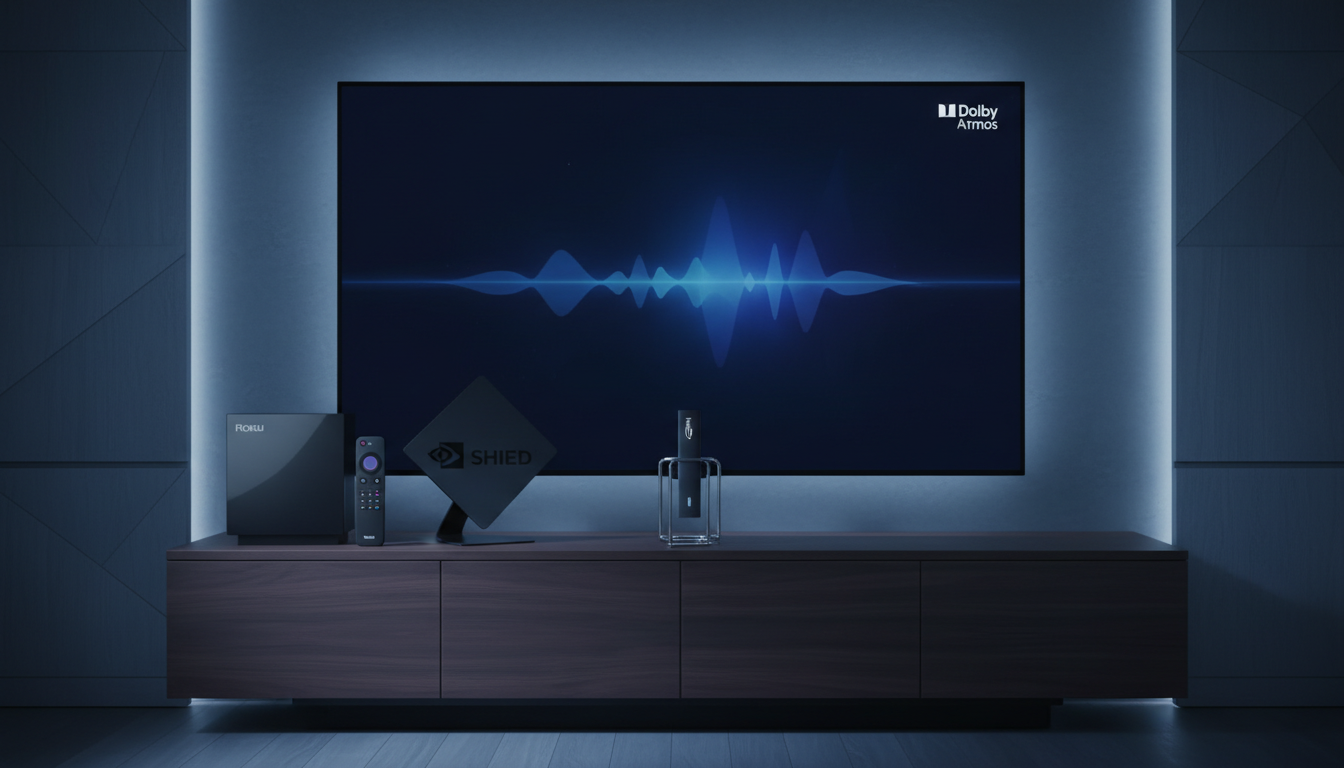
Twelve streaming players that promise Dolby Atmos sound span a price range from $24.99 for the Amazon Fire TV Stick 4K Plus up to $199.00 for the Nvidia SHIELD Pro. The Fire TV Stick 4K Plus not only starts at the lowest price but also has a 4.7/5 rating from 105,885 reviews, while the SHIELD Pro carries a solid 4.4/5 from 13,135 reviewers.
Our lineup is split into three price tiers. Budget‑friendly picks include the $24.99 Fire TV Stick 4K Plus, the $35.99 ONN Android TV 4K, the $49.75 Roku Ultra LT, and the $70.99 Kickpi KP1. Mid‑range options feature the $77.99 Xiaomi TV Box S 3rd Gen and the $79.00 Roku Ultra, both offering 2 GB RAM and Dolby Atmos support. Premium choices—Google TV Streamer 4K at $79.99, Boxy Android TV Box at $99.00, RockTek GX1 at $109.99, and the $199.00 Nvidia SHIELD Pro—bring higher RAM, larger storage, and additional audio codecs alongside Atmos.
Below, we break down each model’s strengths so you'll match the right Dolby Atmos streamer to your home‑theater setup.

Roku Ultra
Its compact depth of 127 mm keeps it easy to fit behind any TV, reinforcing strong value and reliability for most users.

Nvidia SHIELD Pro
Ideal for power users who want premium performance, even at $120 more than the Roku Ultra.
Amazon Fire TV Stick 4K Plus
With an ultra‑compact 17.5 mm height, it slips behind any TV, a portability the larger Roku Ultra and Nvidia SHIELD Pro can’t match.
Also considered
Score Analysis
Key score advantages vs. runner-up (Nvidia SHIELD Pro)
Price Range
Roku Ultra
$79.00
Nvidia SHIELD Pro
$199.00
Amazon Fire TV Stick 4K Plus
$29.99

Xiaomi TV Box S 3rd Gen
$77.99

Google TV Streamer 4K
$79.99

Roku Ultra LT
$49.99

RockTek GX1
$109.99
ONN Android TV 4K
$38.75

Boxy Android TV Box
$99.00

Kickpi KP1
$71.99

Minix U8K-Ultra
$195.90
Xiaomi TV Stick 4K 2nd Gen Black
$69.99
Spec Comparison
TL;DR: The 2024 Roku Ultra delivers 30% faster performance, 4K HDR with Dolby Vision and Dolby Atmos, and a premium rechargeable remote, all in a compact 0.04 lb device for $79.
Roku’s newest Ultra model packs a 2 GB RAM system and 4 GB of internal storage, plus HDMI 2.1 with Dolby Vision at 60 fps and Dolby Atmos audio. The unit measures 127 mm deep, 25.4 mm high and 124.5 mm wide, and it weighs just 0.04 lb (18 g), making it one of the lightest players in the lineup while it's still offering a full‑size HDMI connection.
Compared with its peers, the Ultra is noticeably lighter than the Google TV Streamer 4K (0.36 lb) and the Xiaomi TV Stick 4K (0.06 lb). It also carries a slimmer profile than the Boxy Android TV Box, which weighs over 1 lb. In storage terms, the Ultra’s 4 GB is modest next to the 32 GB found in the Google TV Streamer, Xiaomi TV Box S, and Kickpi KP1, but it matches the 4 GB of the Roku Ultra LT. Its 2 GB RAM aligns with the Kickpi KP1 and Boxy Android TV Box, while the Google TV Streamer offers 4 GB.
Reviewers consistently praise the “ultra‑fast app launches” and smooth 4K streaming over Wi‑Fi 6, noting that the Voice Remote Pro’s backlit buttons, headphone jack, and remote‑finder add real convenience. Professional reviewers highlight the seamless HDR10+, HDR10 and HLG support that delivers vibrant picture quality. Users flag the barrel‑style power connector as less convenient than a standard USB‑C wall wart, and the lack of Apple AirPlay 2 or HomeKit limits integration for iOS‑centric households. Shipping restrictions to PO boxes and certain U.S. territories have also been mentioned as a hassle.
Beyond the core specs, the Ultra includes Gigabit Ethernet for wired stability, Bluetooth headphone mode for private listening, and a multilingual menu with parental controls. Power consumption sits at 3‑4 W for 1080p playback, scaling higher for 4K content, and the device draws 12 V – 1.5 A via its USB‑C input. With access to over 2,000 channels and a 2‑year manufacturer warranty, it'll cover the essentials for most streaming setups.
Pros
Cons
Best for: Most users looking for a well‑reviewed, reliable mainstream option
Avoid if: You need advanced features or professional‑grade performance
TL;DR: Nvidia SHIELD TV Pro delivers AI‑enhanced 4K 60 FPS streaming, Dolby Atmos audio, and GeForce NOW cloud gaming, but its 16 GB internal storage and bulkier box may deter casual users.
The SHIELD TV Pro packs a Tegra X1+ processor with a 256‑core GPU, 3 GB RAM and AI‑enhanced upscaling that pushes any source to 4K (3840 × 2160) at 60 FPS. It offers HDMI 2.0b with HDR10 and Dolby Vision, Dolby Atmos, Dolby Digital Plus and DTS‑X pass‑through, plus a 40 W power adapter and typical consumption of 5‑10 W. Internally it ships with 16 GB of storage and two USB 3.0 ports plus a microSD slot for expansion.
Compared with the other eleven contenders, the SHIELD is noticeably heavier at 2.1 lb, while the Minix U8K‑Ultra weighs about 0.56 lb and the RockTek GX1 about 0.25 lb. Those rivals also sport more RAM—Minix has 8 GB and RockTek 4 GB—whereas the SHIELD holds 3 GB. In storage terms, Minix’s 128 GB eMMC dwarfs the SHIELD’s 16 GB, and the Boxy Android TV Box matches that 16 GB figure but is heavier at roughly 1.10 lb. The SHIELD’s HDMI 2.0b is a step down from the HDMI 2.1 that Minix and Roku Ultra use, and its Bluetooth 5.0 + LE trails RockTek’s Bluetooth 5.2 and Google TV Streamer’s Bluetooth 5.1.
Users consistently praise the AI upscaling and smooth 4K playback at 60 FPS, noting the device’s reliable Plex integration and the ability to stream GeForce NOW games at 4K HDR. Professional reviewers highlight the 25 % faster Tegra X1+ chip as a performance boost. On the flip side, the limited 16 GB internal storage forces most owners to add external drives, and the hardware has remained unchanged since its 2019 launch, leaving out newer standards like HDMI 2.1 and AV1 decoding. The boxy form factor also receives criticism for being bulkier than stick‑style competitors, and users report occasional Wi‑Fi drops.
Pros
Cons
Best for: Buyers willing to invest in a proven, high‑quality option
Avoid if: You're on a tight budget or only need basic functionality
“best for PC game streaming to TV”
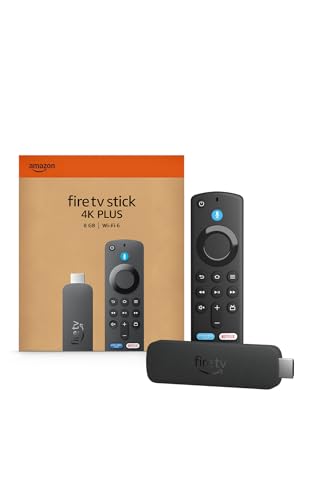
TL;DR: The $24.99 Amazon Fire TV Stick 4K Plus delivers 4K HDR video, Dolby Atmos sound, Wi‑Fi 6, and AI voice search in a compact 45.4 g stick, making it a solid budget streaming choice.
The stick’s standout hardware includes a Mediatek MT8696D processor, 8 GB of internal storage, and Dolby Atmos audio support, all fitting into a 17.5 mm‑high, 141.2 mm‑long, 38.6 mm‑wide body that weighs just 45.4 g. Its 2160p (4K) resolution paired with Dolby Vision, HDR10+, and HLG ensures vibrant picture quality, while the built‑in Alexa Voice Remote lets you launch apps or ask for content using AI‑powered Fire TV Search.
In the lineup of twelve streaming players, the Fire TV Stick 4K Plus is lighter than the ONN Android TV 4K box, which tips the scales at 340 g, but heavier than the ultra‑slim Roku Ultra that weighs about 18 g. It also sits on the lower end of the price spectrum, offering a more affordable entry point than the Xiaomi TV Box S 3rd Gen and the Kickpi KP1, both of which carry higher price tags. Despite its modest size, the stick provides more storage than the Roku Ultra’s 4 GB, though it matches the 8 GB found in several peers.
Users consistently praise the device for its “fast streaming, easy setup, and great apps,” noting that the Wi‑Fi 6 connection keeps 4K playback smooth even when the network is busy. Professional reviewers highlight the lightning‑fast app launches and the intuitive AI‑driven search. The most common criticism is occasional lag during heavy usage, and the limited 8 GB storage can feel restrictive for power users who want many apps installed.
Beyond the specs, the Fire TV Stick 4K Plus offers Xbox Game Pass cloud gaming, free live TV channels, and a USB‑power option that lets you run it directly from a TV’s USB port or the included AC adapter. The Alexa Voice Remote runs on two AAA batteries and supports voice control for smart‑home commands, adding a convenient hands‑free element to everyday viewing.
Pros
Cons
Best for: Budget-conscious buyers seeking a reliable entry‑level option
Avoid if: You need advanced features or professional‑grade performance
“fast streaming, easy to setup, great apps”
“Works fast... perfect for streaming.”
TL;DR: The Xiaomi TV Box S 3rd Gen packs a 2.5 GHz quad‑core CPU, 2 GB RAM and a roomy 32 GB of storage into a 97 mm‑deep, 17 mm‑thin chassis, delivering 4K HDR with Dolby Atmos at a modest $77.99.
What really stands out is the 32 GB of internal storage – a full eight‑times more than the 4 GB found in the Roku Ultra and far beyond the 8 GB of the Xiaomi TV Stick 4K. Coupled with a 2.5 GHz ARM Cortex‑A55 CPU and HDMI 2.1, the box handles 3840 × 2160 @ 60 FPS video and Dolby Vision HDR without a hitch. Its 0.20‑pound weight (91 g) and 97 mm depth make it one of the most compact options in the lineup.
Compared with the other eleven players, the TV Box S is heavier than the ultra‑light Roku Ultra (0.04 lb) but slimmer than both the Roku Ultra (127 mm depth) and the Boxy Android TV Box (100 mm depth). It matches the Roku Ultra’s HDMI 2.1 support while offering newer Bluetooth 5.2/5.3 versus the Google TV Streamer’s 5.1. Storage-wise, it equals the Google TV Streamer and Kickpi KP1 at 32 GB, and it outstrips the Boxy’s 16 GB and the Roku Ultra LT’s unspecified storage. RAM sits at 2 GB, on par with Roku Ultra and Kickpi, but below the Google TV Streamer’s 4 GB.
User feedback praises the smooth 4K streaming and the voice‑controlled 360° Bluetooth remote, especially when paired with Dolby Atmos and Dolby Vision content. Professional reviewers note the 32 GB storage and Wi‑Fi 6 connectivity as major wins, while also flagging the 2 GB DDR3 RAM as a bottleneck for heavy multitasking. Users frequently complain about the lack of an Ethernet port and a basic USB 2.0 slot, limiting wired reliability and fast external storage options.
Pros
Cons
Best for: Most users looking for a well‑reviewed, reliable mainstream option
Avoid if: You have limited desk space or need portability
“faster than before with a clean UI and ton of apps”
“2GB RAM is kind of okay for general use”
TL;DR: The Google TV Streamer 4K packs HDMI 2.1, Dolby Atmos and 4 GB RAM into a compact 0.36‑lb box for smooth 4K HDR streaming, though it lacks Wi‑Fi 6 and expandable storage.
The standout spec is its HDMI 2.1 interface paired with Dolby Vision, HDR10+, HLG and Dolby Atmos audio, delivering 4K (2160p) HDR at 60 FPS. With 4 GB of RAM and 32 GB of internal storage, it’s fast enough for quick app launches and offers ample room for most streaming apps.
Compared with the other eleven streamers, the Google TV Streamer sits in the middle of the size and weight spectrum. It matches Roku Ultra’s 25.4 mm height but is lighter than the Boxy Android TV Box (≈1.10 lb) and heavier than the ultra‑light Roku Ultra (≈0.04 lb). Its 76.2 mm width is narrower than Roku Ultra’s 124.5 mm, while its 162.56 mm length outpaces the compact Kickpi (96 mm) and Xiaomi TV Box S (unspecified length). In memory, it doubles the 2 GB RAM that Roku Ultra, Xiaomi TV Stick and Kickpi have, and it matches the 4 GB RAM of RockTek GX1. Storage-wise, 32 GB tops the 4 GB in Roku Ultra and 8 GB in Xiaomi TV Stick, and equals the 32 GB provided by Kickpi, Xiaomi TV Box S and RockTek GX1.
User feedback praises the fluid 4K playback and the convenience of the voice remote powered by Google’s Gemini assistant. Reviewers also note the solid Ethernet link (10/100/1000 Mbps) and the inclusion of a 1.8 m power cable, which many consider a nice out‑of‑the‑box convenience. However, several users point out the Wi‑Fi 5 (802.11ac) radio as a bottleneck for wireless 4K streams on crowded networks, and the fixed 32 GB storage without a micro‑SD slot as limiting for heavy app collectors.
Pros
Cons
Best for: Most users looking for a well‑reviewed, reliable mainstream option
Avoid if: You have limited desk space or need portability
“did not skip a beat”
TL;DR: The Roku Ultra LT streams 4K HDR video with Dolby Atmos sound, packs a quad‑core 1.5 GHz CPU and 2 GB RAM into a compact 127 mm deep, 167 g box for $49.75.
What really stands out is the combination of Dolby Vision, HDR10+, HDR10 and HLG support at a native 3840 × 2160 resolution and a smooth 60 Hz refresh rate, all run on a quad‑core 1.5 GHz ARM Cortex A55/A53 processor. With 2 GB of RAM, the UI feels quick enough for most 4K apps, and the included voice remote even has a private‑listening headphone slot for Dolby Atmos playback.
Compared with the other eleven entries, the Ultra LT is noticeably heavier than the ultra‑light Roku Ultra (about 18 g) and the Amazon Fire TV Stick 4K Plus (45.4 g), but still lighter than the ONN Android TV 4K box (340 g). Its HDMI 2.0 port falls short of the full Ultra’s HDMI 2.1, and it lacks a USB port that several competitors, like the ONN and Xiaomi TV Box S, provide. On the other hand, its 2 GB RAM matches the memory of most peers, and its Ethernet 10/100 Mbps link gives a reliable wired fallback that the Fire Stick’s Wi‑Fi 6‑only setup can’t match.
Professional reviewers note the Ultra LT’s “small footprint and 4K 60 fps performance” as a strong point, while everyday users rave about the sharp picture quality and the convenience of the voice remote with headphones. The most common complaints revolve around the missing USB port, which limits direct external storage, and occasional Wi‑Fi hiccups despite its 802.11ac dual‑band radios.
Pros
Cons
Best for: Budget‑conscious buyers seeking a reliable entry‑level option
Avoid if: You want the best value‑per‑dollar in its price range
TL;DR: The RockTek GX1 delivers 4K HDR video with Dolby Atmos in a ultra‑compact Google TV box, but its 100 Mbps Ethernet and lack of VC‑1 may limit power users.
The GX1 packs a 4K UHD 2160p60 engine, Dolby Vision, HDR10+ and Dolby Atmos behind a chassis that measures just 93.98 mm deep, 22.86 mm high and 93.98 mm wide, weighing only 0.25 lb (115 g). Its HDMI 2.1 port with eARC and dynamic HDR ensures the full colour and audio range can reach your TV and sound system without extra adapters.
Compared with the other streamers in this roundup, the GX1 sits in the middle of the size and weight spectrum—lighter than the Boxy Android TV Box (over 1 lb) but heavier than the Roku Ultra (under 0.04 lb). It offers double the RAM of the Boxy (4 GB vs 2 GB) and the same 32 GB internal storage as several peers, while its Bluetooth 5.2 edges out the Google TV Streamer’s 5.1. The Ethernet port caps at 100 Mbps, which is slower than the gigabit Ethernet found on the Google TV Streamer and Roku Ultra.
Users consistently praise the GX1’s vivid 4K picture and immersive Dolby Atmos sound, calling the interface “snappy” and the voice remote “convenient.” Professional reviewers highlight the smooth AV1 and YouTube playback and the strong HDR performance at 2160p60. The most common downsides are the 100 Mbps Ethernet limiting high‑bitrate NAS streams, the absence of VC‑1 codec support for older media, and concerns that limited ventilation could affect long‑term heat dissipation.
Pros
Cons
Best for: Those who want premium 4K HDR and Dolby Atmos in a compact Google TV box and they're comfortable with a mid‑range Ethernet speed.
Avoid if: You rely on gigabit Ethernet, need VC‑1 codec compatibility, or prioritize long‑term thermal performance for heavy local media streaming.
“topline product with great RTD1325 performance.”
“"Ok" rating due to this.”
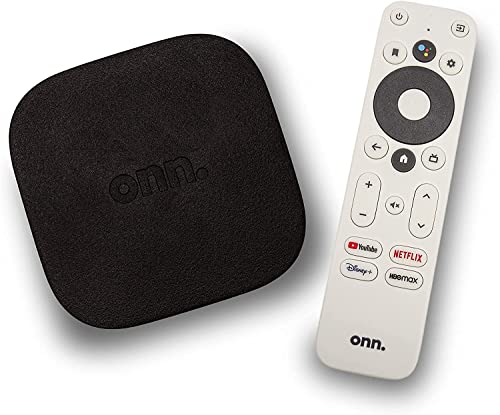
TL;DR: The ONN Android TV 4K streams 4K HDR content with Dolby Vision and Atmos, offers built‑in Chromecast and a voice remote, and does it for just $35.99.
This box’s standout spec is its 3840 × 2160 4K UHD resolution paired with Dolby Vision, HDR10 and HDR10+ support, delivering vibrant picture quality straight from the Amlogic S905Y2 processor. It also passes Dolby Atmos and Dolby Digital Plus audio, so you’ll hear immersive sound when your TV or sound system can decode it.
Weighing roughly 0.75 lb (340 g), the ONN unit feels noticeably heavier than the Amazon Fire TV Stick 4K Plus (about 0.1 lb) and the ultra‑slim Xiaomi TV Stick 4K (around 0.06 lb). Its 2 GB of RAM matches the Roku Ultra LT and Xiaomi TV Stick, while its 8 GB internal storage mirrors the Fire TV Stick 4K Plus but falls short of the 32 GB found in the Kickpi KP1 and Xiaomi TV Box S. All devices in this set share a single HDMI port, making connectivity comparable.
Reviewers consistently praise the ONN’s picture and sound, noting that the Dolby Vision and Atmos passthrough rivals pricier devices. Users also like the convenience of the voice remote with Google Assistant and the built‑in Chromecast for quick casting. However, several users report occasional lag when juggling multiple apps—a symptom of the modest 2 GB RAM—and the lack of an Ethernet port limits wired network stability.
Pros
Cons
Best for: Budget-conscious buyers seeking a reliable entry-level option
Avoid if: You need advanced features or professional‑grade performance
TL;DR: The Boxy Android TV Box delivers certified 4K Dolby Vision and Dolby Atmos streaming, backed by HDMI 2.1, 16 GB storage and a fanless design for a solid home‑theater experience at $99.00.
Boxy builds in a full‑suite of premium video and audio support: Dolby Vision, HDR10+, AV1 codec and Dolby Atmos (TrueHD + MAT), and the device pushes 4Kp60 via HDMI 2.1 with HDCP 2.2. Internally it runs an Amlogic S905X4‑J processor, 2 GB RAM and 16 GB flash, while weighing 1.10 pounds and measuring 100 mm × 20 mm × 100 mm.
Compared with the other eleven contenders, Boxy is heavier than the ultra‑light Roku Ultra (≈0.04 lb) and the compact Xiaomi TV Stick (≈0.06 lb), but lighter than the RockTek GX1 (≈0.25 lb). Its 2 GB RAM matches the Roku Ultra and Kickpi KP1, while the RockTek GX1 and Google TV Streamer 4K have 4 GB. Storage sits at 16 GB, which is double the 8 GB of the Xiaomi TV Stick yet below the 32 GB common to most peers.
Professional reviewers praise Boxy’s flawless ISO 4K Dolby Vision playback with full disc menus via Dune HD, and the Netflix 4K certification guarantees reliable HDR and Atmos out of the box. However, user‑focused commentary flags the 100 Mbit/s Ethernet port as a bottleneck for gigabit‑ready networks, and the modest 2 GB RAM and 16 GB internal flash may feel cramped for heavy app use.
The device stays cool thanks to a passive plastic chassis, and the included Bluetooth remote adds voice search via its built‑in microphone. Audio connectivity is generous, offering both S/PDIF optical and analog AV outputs, while the single USB 3.0 host port simplifies fast external storage expansion.
Pros
Cons
Best for: Those prioritizing quality and willing to pay for premium performance
Avoid if: You need advanced features or professional‑grade performance
“faster than before with a clean UI and ton of apps”
“2GB RAM is kind of okay for general use”
TL;DR: The Kickpi KP1 packs 4K HDR, Dolby Atmos and Google Assistant into a 9.6 × 9.6 × 2.3 cm box, but its 2 GB RAM may feel modest for power users.
The KP1’s most eye‑catching spec is its ultra‑compact footprint – just 23 mm tall and 96 mm square, weighing 122 g. Despite its size it carries HDMI 2.1 with HDCP 2.2 and supports Dolby Atmos, so you’ll stream 4K HDR content with immersive sound without a bulky cabinet.
Against the other eleven players, the KP1 is heavier than the Xiaomi TV Stick 4K 2nd Gen, yet it shares the same HDMI 2.1 capability as the Roku Ultra. It offers twice the internal storage of the Roku Ultra (32 GB vs. 4 GB) but trails the Google TV Streamer’s 4 GB RAM, so multitasking isn’t as fluid.
Reviewers consistently praise the device’s tiny size and the fact that it’s Google‑certified with a built‑in voice remote. They also note the convenience of a 1.5 m power cable and the ability to expand storage via USB. On the downside, users mention that the Amlogic S905Y4 quad‑core Cortex‑A35 CPU and 2 GB LPDDR4 RAM can feel sluggish when many apps are open, and some feel the $70.99 price tag offers less bang‑for‑buck than nearby alternatives.
Pros
Cons
Best for: Budget‑conscious users who want a Google‑integrated 4K streaming box with Dolby Atmos sound.
Avoid if: You want the best value‑per‑dollar in its price range or need strong multitasking and high‑end gaming performance.
TL;DR: The Minix U8K‑Ultra delivers true 8K @ 60 Hz playback with Dolby Vision and Atmos, backed by 8 GB RAM, 128 GB storage and Wi‑Fi 6, but its bulkier chassis and $189.90 price put it at the premium end.
The standout feature is its ability to decode 8K @ 60 Hz video while supporting Dolby Vision, HDR10+, HDR10 and HLG, all through an HDMI 2.1 output. AI‑PQ and AI‑SR upscaling (2× for 1080p, 3× for 720p, 4× for 480p) lifts lower‑resolution sources, and the built‑in Dolby Atmos audio path adds immersive sound without extra hardware.
Compared with the other eleven players, the U8K‑Ultra packs more memory and storage than any listed rival – 8 GB of RAM versus 2‑4 GB on the Nvidia SHIELD Pro, RockTek GX1, Boxy Android TV Box, Google TV Streamer and Roku Ultra, and a 128 GB eMMC drive versus 4‑32 GB on those same models. Its Gigabit Ethernet and Wi‑Fi 6 connectivity also outpace several peers that only list 100 Mbps Ethernet or lack Wi‑Fi 6. Physically, it’s lighter than the Nvidia SHIELD Pro (2.1 lb) but it’s heavier than Roku Ultra (≈0.04 lb), Google TV Streamer (≈0.36 lb) and RockTek GX1 (≈0.25 lb), and its 128 mm depth and 28 mm height are a touch larger than the 127 mm × 25.4 mm profile of the Roku Ultra.
User feedback praises the flawless high‑resolution playback, the ample 128 GB internal space (≈113 GB usable) and the ability to add up to a 1 TB micro‑SD card. Reviewers also note the reliable 8K decoding and the Widevine L1 certification that unlocks HD Netflix streaming. On the downside, several owners mention the bulkier chassis compared with earlier Minix boxes and express concern that the fanless design, limited to a 10 W power draw, can throttle during long, demanding decoding sessions.
Pros
Cons
Best for: Those prioritizing quality and willing to pay for premium performance
Avoid if: You're on a tight budget or only need basic functionality
“It does what it says and plays back 8K video... supports HD streaming with all popular apps.”
“Bigger chassis but appreciate the dedicated hardware decoder for modern codecs.”
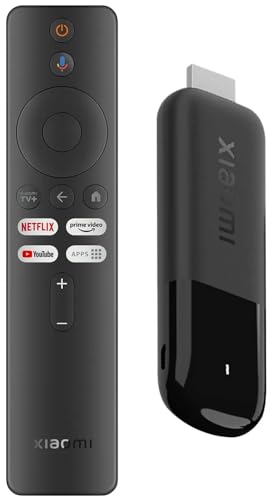
TL;DR: The Xiaomi TV Stick 4K 2nd Gen delivers 4K HDR video and Dolby Atmos sound in a pocket‑sized dongle, with a 2.5 GHz quad‑core CPU and 8 GB storage for under $70.
This stick packs a 2.5 GHz quad‑core Cortex‑A55 CPU and an 850 MHz GPU, giving the device a noticeable performance jump over its predecessor. With 2 GB RAM and 8 GB eMMC storage, it runs Google TV smoothly and supports 4K (3840 × 2160) playback, Dolby Vision, HDR10+ and Dolby Atmos audio decoding.
At 0.06 lb (28 g) it’s far lighter than the Kickpi KP1 (0.27 lb) but a touch heavier than the ultra‑light Roku Ultra (0.04 lb). Its 165 mm length makes it longer than the Kickpi’s 96 mm chassis, yet its 40 mm height and 14 mm thickness keep it unobtrusive behind any TV. Like the Roku Ultra and Google TV Streamer, it includes an HDMI port, though none of the peers list an Ethernet connection, and the Xiaomi stick also lacks a wired LAN option.
Everyday users praise the stick for lag‑free 4K streaming and a responsive UI, calling the portable form factor ideal for secondary TVs or travel. Professional reviewers note the “absolutely crazy smooth” browsing experience, crediting the 80 % CPU boost and 150 % GPU rendering increase. The main complaints focus on the missing AI super‑resolution feature and the absence of an Ethernet port, which some power users see as a limitation.
Pros
Cons
Best for: Entry-level buyers or those on a tight budget
Avoid if: You need advanced features or professional‑grade performance
“fast streaming, easy to setup, great apps”
“Works fast... perfect for streaming.”
Breakdown
Roku Ultra
Pros
Nvidia SHIELD Pro
Pros
Amazon Fire TV Stick 4K Plus
Pros
Xiaomi TV Box S 3rd Gen
Pros
Based on scoring data and product specs
Personalized picks
Best Overall Pick
Roku Ultra
Best Mid-Range PickBest for: Most users looking for a well-reviewed, reliable mainstream option
Nvidia SHIELD Pro
Best for: Buyers willing to invest in a proven, high-quality option
$199.00+$120.00 vs winner
Skip Xiaomi TV Stick 4K 2nd Gen Black if…
You need advanced features or professional-grade performance
Roku Ultra takes the top spot thanks to its solid Dolby Atmos support, a 4.5‑star rating from 7,366 reviewers, and Wi‑Fi 6 (802.11ax) that keeps streams smooth even on crowded networks. The device also ships with HDMI 2.1 (HDCP 2.2) and a 30 % performance boost over previous Roku models, while its 2 GB of RAM and 4 GB of internal storage give plenty of headroom for apps. At a list price of $79.00 it delivers premium features without the premium price tag.
Nvidia SHIELD Pro lands as the runner‑up and shines if you need a gaming‑ready streaming box. It supports Dolby Atmos, adds AI‑enhanced upscaling to 4K 60 FPS, and packs a 256‑core NVIDIA GPU with 3 GB of RAM for smooth gameplay on GeForce NOW. The inclusion of HDMI 2.0b, gigabit Ethernet, and Bluetooth 5.0 + LE rounds out a connectivity suite for power users.
Pick the Roku Ultra for Dolby Atmos streaming excellence and enjoy cinema‑quality sound right from your sofa.
The Nvidia SHIELD Pro costs $199 compared with the Roku Ultra’s $79 price tag, so it’s about $120 more expensive. It adds AI‑enhanced upscaling, built‑in GeForce NOW cloud gaming and a larger 16 GB internal storage, which can justify the premium for gamers and power users. If you only need streaming and Dolby Atmos, the Roku Ultra delivers the core features at a far better value.
No reviews yet — be the first to share your experience.
Please sign in to leave a review