⚡ Quick Answer
If you need rock‑solid streaming without the Wi‑Fi hiccups, you’re in the right place. We’ve lined up 7 streaming players that all ship with an Ethernet port, and organized them into three price tiers: budget choices like the X88 MX Pro ($31.49) and Roku Ultra LT ($49.75), a mid‑range option in the Boxy Android TV Box ($99.00), and premium contenders such as the It’s Brazilian onn 4K Pro ($100.00), TiVo MINI VOX ($249.99) and Zidoo Z20 PRO ($313.65).
Leading the pack for value is the Roku Ultra LT. Priced at $49.75 and carrying a 4.6 / 5 rating from 2,267 reviews, it packs a quad‑core 1.5 GHz ARM Cortex processor, 2 GB RAM, Dolby Vision and Dolby Atmos support, and a built‑in Gigabit Ethernet jack—all inside a compact 167 g chassis. Reviewers praise its quick app launches and stable wired connection, making it a solid pick for a bedroom TV or secondary streaming setup where space and budget matter.
The lineup also includes the faster‑than‑average Roku Ultra with 4 GB storage, the feature‑rich Boxy with multiple audio outputs, and high‑end models like the Zidoo Z20 PRO that offers up to 16 TB expandable storage. Find out how each device stacks up on performance, connectivity and total value.

Roku Ultra LT
Compact depth of 127 mm lets the Ultra LT slip behind any TV without crowding the entertainment center.

Roku Ultra
Power‑users who want Roku’s full feature set get the Ultra, which runs about $29.25 more than the Ultra LT.
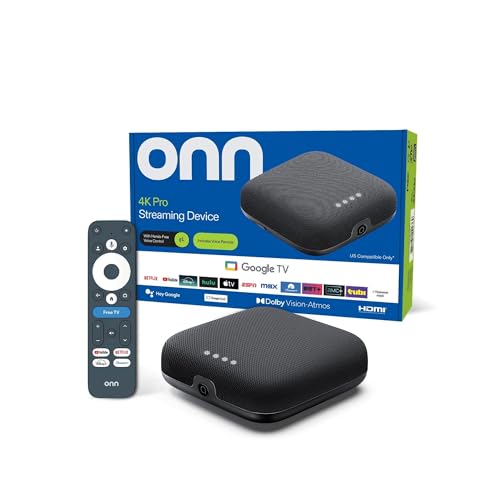
It's Brazilian onn 4K Pro
Its 60 fps maximum frame rate and 60 Hz refresh deliver smoother 4K playback, a step up from the Roku options.
Also considered
Score Analysis
Key score advantages vs. runner-up (Roku Ultra)
Price Range
Roku Ultra LT
$49.99
Roku Ultra
$79.00
It's Brazilian onn 4K Pro
$100.49

Boxy Android TV Box
$99.00

TiVo MINI VOX
$242.99

Zidoo Z20 PRO
$313.65

X88 MX Pro
$31.99
Spec Comparison
TL;DR: The Roku Ultra LT delivers 4K HDR streaming with a 1.5 GHz quad‑core CPU, 2 GB RAM, and Ethernet connectivity at a budget‑friendly $49.75, though it lacks a USB port for external media.
At the heart of the Ultra LT is a quad‑core 1.5 GHz ARM Cortex A55/A53 processor paired with 2 GB of RAM, which professional reviewers note translates to fast navigation and quick app launches. The device pushes a 3840 × 2160 resolution at 60 fps on a 60 Hz panel and supports Dolby Vision, HDR10, HDR10+ and HLG, giving you a vivid 4K picture.
Compared with the other six players, the Ultra LT sits in the middle of the size and weight spectrum. It shares the same 127 mm depth as the full‑size Roku Ultra but is taller (124.4 mm vs. 25.4 mm) and considerably narrower (25.4 mm vs. 124.5 mm). At 167 g, it's lighter than the X88 MX Pro (300 g) and far lighter than the Boxy Android TV Box (500 g) or the Brazilian onn 4K Pro (≈2 lb). Its Ethernet 10/100 Mbps port gives it a wired edge that the TiVo MINI VOX only matches via an optional adapter.
Everyday users praise the sharp 4K picture and the responsive UI, while the voice remote’s lithium‑polymer battery and built‑in headphones earn frequent mentions for convenience. The main complaints revolve around the missing USB port, which limits direct connection of external drives, and occasional Wi‑Fi hiccups despite the 802.11ac (Wi‑Fi 5) radio. The device also offers a microSD slot for limited local playback, and it comes with a one‑year limited warranty.
Pros
Cons
Best for: Budget‑conscious buyers seeking a reliable entry‑level option
Avoid if: You need advanced features or professional‑grade performance
“Fast app loading, vivid colors, easy voice control.”
TL;DR: The Roku Ultra delivers a 30% faster interface, 4K HDR video with Dolby Vision and Dolby Atmos, and a Gigabit Ethernet port, all for $79, that's a solid 4.5‑star rating.
The standout spec is the 30% performance boost over prior Roku models, backed by 2 GB of system RAM and 4 GB of internal storage, which keeps the UI snappy and app launches ultra‑fast. It also packs a Gigabit Ethernet port for rock‑solid wired networking, and HDMI 2.1 (HDCP 2.2) to drive 4K 3840 × 2160 content at 60 fps.
Compared with the six other players in this roundup, the Ultra is dramatically lighter than the Boxy Android TV Box (0.04 lb vs 1.10 lb) and the TiVo MINI VOX (0.04 lb vs 0.78 lb). Its 2 GB RAM matches the Boxy and Roku Ultra LT, but falls short of the Zidoo Z20 PRO’s 4 GB and the Brazilian onn 4K Pro’s 3 GB. Internal storage is modest at 4 GB, far less than the Boxy’s 16 GB or the Zidoo’s 32 GB. Dimensionally, the Ultra’s 127 mm depth equals the Ultra LT’s depth, while its 25.4 mm height is much slimmer than the Ultra LT’s 124.4 mm, making it easier to tuck behind a TV.
Users consistently praise the “ultra‑fast” app launches and smooth 4K streaming over Wi‑Fi 6, as well as the premium Voice Remote Pro with backlit buttons, a finder feature, and a headphone jack for private listening. Professional reviewers note the vivid picture from Dolby Vision (60 fps), HDR10+, and Dolby Atmos. Some users report Wi‑Fi range hiccups when the unit sits far from the router, and a few mention the barrel‑style power connector as it's less convenient than a pure USB‑C solution.
Pros
Cons
Best for: Cord‑cutters and families who want the quickest streaming performance, wired Ethernet reliability, and premium 4K HDR playback.
Avoid if: You're relying heavily on Apple ecosystem features like AirPlay 2 or HomeKit, or need extensive internal storage for offline content.
“Fast app loading, vivid colors, easy voice control.”
TL;DR: At $100, the It's Brazilian onn 4K Pro delivers true 4K HDR with Dolby Vision, Dolby Atmos, Ethernet, and Google Assistant, making it a solid budget streaming box for most households.
Its native 4K resolution (4096 × 2160) stands out, paired with HDR10, HDR10+ and Dolby Vision, backed by Dolby Atmos audio, and it runs at a smooth 60 fps/60 Hz refresh for crisp motion.
Weighing 2.0 pounds, the onn 4K Pro is heavier than the Roku Ultra (≈0.04 pounds) and the Boxy Android TV Box (≈1.10 pounds), but its 32 GB internal storage dwarfs the Boxy’s 16 GB and Roku Ultra’s 4 GB. Its 3 GB of RAM also exceeds the 2 GB found in those rivals, giving it a modest performance edge.
Customers love the low price and the true‑4K HDR picture, plus the built‑in Google Assistant that turns the box into a smart‑home hub. Professional reviewers praise the value and the inclusion of Wi‑Fi 6, but they warn that the 2019‑era Amlogic S905X4 chip could limit future software updates, and the Google TV interface can feel cluttered with recommendations.
The device runs Android TV 12/Google TV on an Amlogic S905X4 processor, supports Ethernet for stable wired streaming, and offers a USB 3.0 port for expandable storage beyond the 32 GB built‑in. The remote includes a customizable button, a Find My Remote shortcut, and a microphone privacy switch that lights red when muted.
Pros
Cons
Best for: Budget‑conscious streamers who want true 4K HDR, Dolby Vision and smart‑home integration.
Avoid if: You need the latest processor for future‑proofing or require DTS:X‑level audio.
TL;DR: Boxy Android TV Box delivers certified 4K Dolby Vision and HDR10+ streaming with AV1 support, but its 10/100 Mbit/s Ethernet and modest 2 GB RAM may limit power users.
The standout feature is its 4K HDR suite – HDR10+, Dolby Vision and Dolby Atmos are built‑in, and the AV1 codec supports next‑gen streaming. Under the hood you get an Amlogic S905X4‑J processor, 2 GB RAM and 16 GB of internal flash, housed in a 100 mm‑deep, 20 mm‑high plastic case that weighs about 1.10 lb. HDMI 2.1 delivers up to 4Kp60 with HDCP 2.2, and a passive cooling design means no fan noise.
Against the six rivals, Boxy sits in the middle of the pack. It offers less RAM than the Brazilian onn 4K Pro’s 3 GB and the Zidoo Z20 PRO’s 4 GB, and its 16 GB storage is half of the 32 GB found in both the Brazilian onn and Zidoo. Roku Ultra’s Gigabit Ethernet outpaces Boxy’s 10/100 Mbit/s link, while the X88 MX Pro shares the same Ethernet speed but is lighter at roughly 0.66 lb. The Roku Ultra and Roku Ultra LT match Boxy’s 2 GB RAM, though the Ultra’s 4 GB internal storage is smaller. TiVo MINI VOX is lighter (≈0.78 lb) and lacks an Ethernet port altogether.
Professional reviewers praise the flawless ISO 4K Dolby Vision playback that Dune HD provides, and the Netflix 4K certification guarantees reliable HDR and Atmos out of the box. Users also like the Bluetooth remote with a microphone for voice search. However, the 10/100 Mbit/s Ethernet can become a bottleneck for high‑bitrate 4K files from a NAS, and the modest 2 GB RAM plus 16 GB flash may feel tight when running many apps.
Pros
Cons
Best for: Most users seeking a balanced, mainstream option
Avoid if: You need advanced features or professional‑grade performance
TL;DR: The TiVo Mini VOX adds 4K HDR10 streaming and voice control to any TiVo DVR, but it needs a wired network and relies on the DVR’s tuners for live TV.
The Mini VOX’s standout spec is its 4K upscaling with HDR10 support, which delivers video through an HDMI 2.0 port. Weighing just 0.78 pounds and measuring 5.7 inches deep, 5.5 inches high and 1.1 inches wide, it’s compact enough to hide behind most TVs. Its voice remote lets you issue TiVo VOX commands hands‑free, and the device can handle 2.0 to 7.1‑channel audio, including Dolby Digital and Dolby Digital Plus.
Compared with the six other streamers in this roundup, the Mini VOX sits in the middle of the weight spectrum. At 0.78 pounds it’s heavier than the ultra‑light Roku Ultra (under 0.04 pounds) and the Roku Ultra LT, yet lighter than the Brazilian onn 4K Pro (2.0 pounds) and the Boxy Android TV Box (about 1.1 pounds). At 5.5 inches tall, it exceeds the Zidoo Z20 PRO’s 68 mm height, while its 1.1‑inch width stays slimmer than the Zidoo’s 197 mm width. In terms of memory and storage, the Mini VOX lists no RAM or internal drive, whereas peers such as the Zidoo and Brazilian onn include 4 GB and 3 GB of RAM respectively and 32 GB of built‑in storage.
Users love how the Mini VOX extends a TiVo DVR’s live‑TV library to any room without adding extra tuners, and professional reviewers highlight the crisp 4K upscaling with HDR10. However, the reliance on the primary DVR’s tuners means simultaneous live‑TV streams can clash, a frequent complaint in consumer feedback. The lack of built‑in Wi‑Fi also forces a wired connection via the TiVo Bridge MoCa 2.0 adapter, which some reviewers note as a limitation for homes without Ethernet runs.
Technically, the Mini VOX supports multi‑room streaming from TiVo DVR tuners, but it offers no standalone streaming capability, no optical audio output, and no internal storage for apps. If you already own a TiVo Bolt or similar DVR, the device’s voice‑control integration and 4K HDR10 playback make it a solid addition. If you need a self‑contained streamer or Wi‑Fi, you’ll likely look elsewhere.
Pros
Cons
Best for: Existing TiVo Bolt VOX owners who want to extend DVR features to secondary rooms.
Avoid if: You need a standalone streaming device, rely on Wi‑Fi, or don’t have a TiVo DVR.
“watch live TV on each of the Minis and still from Bolt”
“can count on one hand how many times”
TL;DR: The Zidoo Z20 PRO delivers cinema‑grade 4K HDR with a fast 1201 Mbps Wi‑Fi link, 4 GB RAM and up to 16 TB expandable storage, but its $313.65 price tags it as a premium‑only option.
The standout spec is the Wi‑Fi 6 module capable of up to 1201 Mbps maximum speed, which dwarfs the 66.5 Mbps downlink the X88 MX Pro lists. Coupled with an ARM Cortex‑A55 quad‑core CPU, a Mali‑G57 GPU and a 1.6 TOPS neural processor, the Z20 PRO handles 4K @ 60 Hz playback with HDR10, HDR10+, Dolby Vision and HLG without a hitch. Its 4 GB DDR4 RAM and 32 GB eMMC storage give it more headroom than the 2‑GB/4‑GB RAM and 4‑16 GB storage that most rivals have.
In size, the Z20 PRO measures 68 mm in height, which is notably slimmer than the TiVo MINI VOX’s 5.5‑inch height, yet its 197 mm length exceeds the Boxy Android TV Box’s 100 mm depth, placing it in the middle of the pack dimensionally. RAM‑wise it outstrips the Boxy (2 GB), Roku Ultra (2 GB) and Roku Ultra LT (2 GB), and even beats the Brazilian onn 4K Pro’s 3 GB. Its Ethernet port is gigabit‑capable, matching the Brazilian onn’s Ethernet support and surpassing the X88 MX Pro’s 10/100 Mbps link.
Professional reviewers applaud the Z20 PRO’s “cinema‑grade” HDR handling and the premium aluminum chassis, noting the build feels solid for a dedicated media player. User comments frequently highlight the smooth 4K playback and the convenience of a built‑in 3.5‑inch SATA bay for large media libraries. On the downside, the $313.65 price point draws criticism from budget‑focused shoppers, and a handful of owners have reported sun‑induced discoloration of the aluminum shell over time.
Pros
Cons
Best for: Those prioritizing quality and willing to pay for premium performance
Avoid if: You're shopping on a tight budget — it's priced at $313.65
TL;DR: The X88 MX Pro delivers 4K HDR streaming and wired Ethernet at a $31.49 price, but the manufacturer overstated its advertised RAM and storage, and Wi‑Fi performance can be limited.
The X88 MX Pro packs a 4K UHD engine (3840×2160 up to 60 fps) with HDR10, HLG and Dolby Vision claims, and it weighs just 0.66 lb while measuring 104.9 mm deep, 19.05 mm high and 104.9 mm wide. It includes a 10/100 Mbps Ethernet port and Bluetooth 5.0, plus Wi‑Fi speeds reach 66.5 Mbps down and 10.8 Mbps up.
Compared with the six other players, the X88 sits in the middle of the weight range: it’s heavier than the ultra‑light Roku Ultra (≈0.04 lb) and Roku Ultra LT (≈0.37 lb) but lighter than the Boxy Android TV Box (≈1.10 lb) and the Brazilian onn 4K Pro (2.0 lb). Its depth of 104.9 mm is close to the Boxy’s 100 mm and a bit shallower than Roku Ultra’s 127 mm. The device advertises 16 GB RAM, but only about 2 GB is usable, matching the 2 GB in Roku Ultra LT and the Boxy, while the Brazilian onn lists 3 GB. The device lists 256 GB internal storage, yet only around 16 GB is usable, which is far less than the Boxy’s 16 GB or the Brazilian onn’s 32 GB.
Users love the out‑of‑the‑box Kodi setup that unlocks thousands of IPTV channels, and professional reviewers praise the low $31.49 entry price and the Ethernet port for stable wired streaming. However, many complain that the advertised 16 GB RAM and 256 GB storage are misleading, that the 5 GHz Wi‑Fi band often fails, and that 4K playback can feel choppy. The 3.4‑star rating from seven reviewers reflects this mixed sentiment.
Under the hood, the device runs Android 11.1/12 on an RK3229 quad‑core Cortex‑A53 CPU paired with a Mali‑450 MP2 GPU. It offers four USB ports (mix of USB 3.0 and 2.0), an SD card slot, HDMI, AV and SPDIF outputs, and draws power from a 5 V DC adapter.
Pros
Cons
Best for: Entry-level buyers or those on a tight budget
Avoid if: Reliability and user satisfaction are your top concerns
Breakdown
Roku Ultra LT
Pros
Roku Ultra
Pros
It's Brazilian onn 4K Pro
Pros
Boxy Android TV Box
Pros
Based on scoring data and product specs
Personalized picks
Best Overall Pick
Roku Ultra LT
Best Budget PickBest for: Budget-conscious buyers seeking a reliable entry-level option
Roku Ultra
Best for: Budget-conscious buyers seeking a reliable entry-level option
$79.00+$29.01 vs winner
Skip X88 MX Pro if…
Reliability and user satisfaction are your top concerns
The Roku Ultra LT wins the “Best Streaming Player with Ethernet Port” title. At $49.75 it undercuts the competition, and its 4.6‑star rating from 2,267 reviewers shows strong user approval. It offers a built‑in 10/100 Mbps Ethernet port for a stable wired connection and supports Dolby Vision, HDR10, HDR10+ and HLG, so you’ll get vivid 4K HDR picture quality right out of the box.
Coming in second, the Roku Ultra is perfect if you’ll need a faster wired link and the newest HDMI features. Priced at $79.00, it upgrades to gigabit Ethernet and HDMI 2.1 (HDCP 2.2), letting you stream 4K at higher frame rates. Its Wi‑Fi 6 (802.11ax) and a rechargeable voice remote with backlit buttons add convenience for a modern living‑room setup, and a 2‑year warranty backs the purchase.
For those looking beyond Roku, the Boxy Android TV Box at $99.00 offers solid mid‑range performance, while the Zidoo Z20 PRO at $313.65 delivers premium‑grade capabilities for power users.
Choose the Roku Ultra LT now for reliable streaming and great value.
The Roku Ultra LT at $49.75 provides solid 4K HDR, Dolby Vision, Dolby Atmos, a 10/100 Mbps Ethernet port, and a reliable quad‑core processor, making it the most cost‑effective choice among the listed options.
No reviews yet — be the first to share your experience.
Please sign in to leave a review